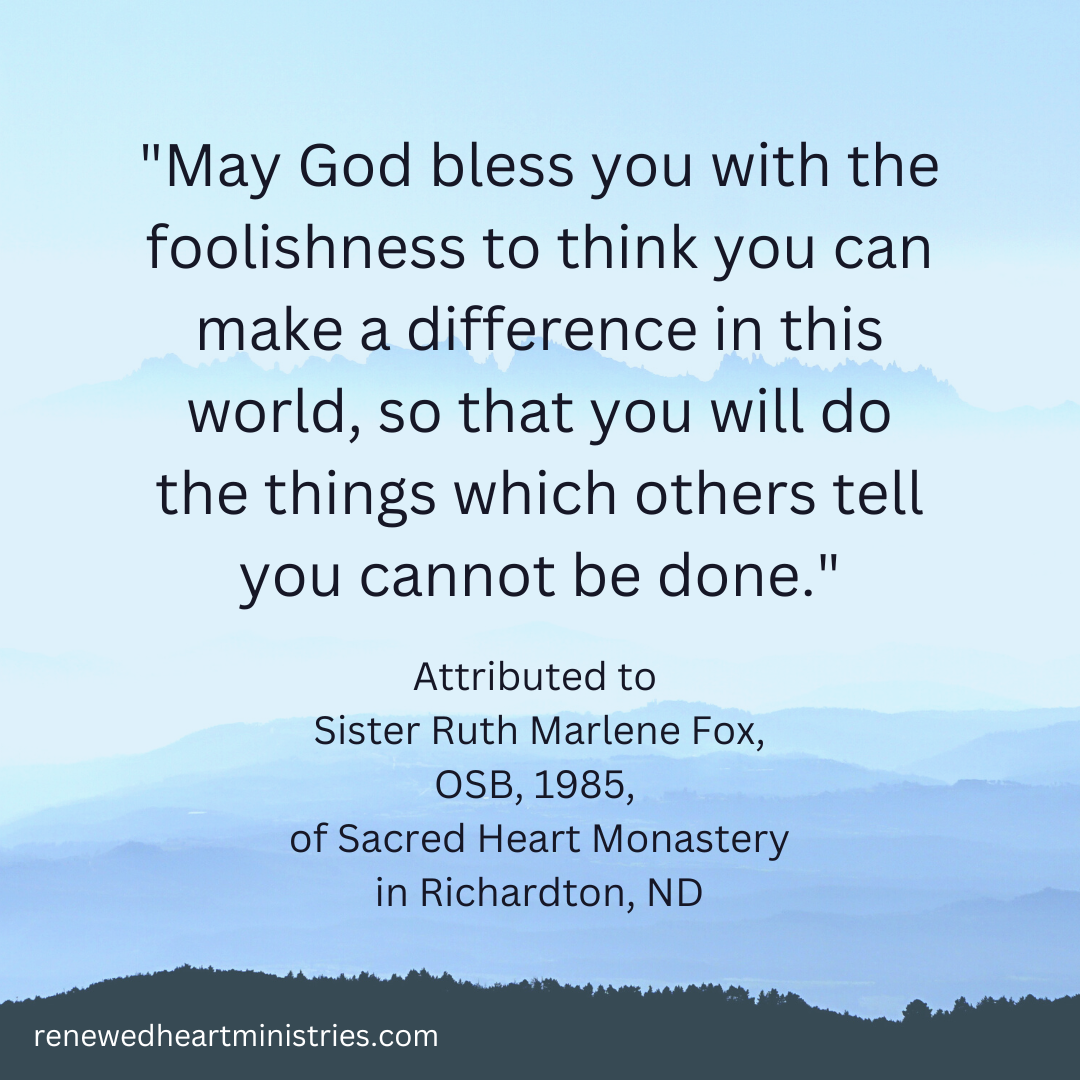
Injustice, Oppression, and Violence Being Put Right

Thank you to all of our supporters.

If you would like to join them in supporting Renewed Heart Ministries’ work you can do so by clicking “donate” above.

New Episode of JustTalking!

Season 1, Episode 27: Matthew 16.13-20. Lectionary A, Proper 16.

Each week, we’ll be talking about the gospel lectionary reading for the upcoming weekend. We’ll be talking about each reading in the context of love, inclusion, and societal justice. Our hope is that our talking will be just talking (as in justice) and that during our brief conversations each week you’ll be inspired to also do more than just talking.

If you teach from the lectionary each week, or if you’re just looking for some thoughts on the Jesus story from a more progressive perspective within the context of social justice, check it out, you might like it.

You can find the latest show on YouTube at https://youtu.be/I0tZzUzbl1o?si=BsitUoNr_ZA6YJOn

 or (@herbandtoddjusttalking)

Please Like, Subscribe, hit the Notification button, and leave us a comment

Thanks in advance for watching!


Herb Montgomery | August 25, 2023

To listen to this week’s eSight as a podcast episode click here.

“For Jesus followers today, do we believe that in the teachings of Jesus there is a path toward healing injustice, oppression, and violence in our world today? Or does Jesus’ death just provide us with a ticket out of this place to a better world? I side with the former.”

Our reading this week is from the gospel of Matthew:

When Jesus came to the region of Caesarea Philippi, he asked his disciples, “Who do people say the Son of Man is?”

They replied, “Some say John the Baptist; others say Elijah; and still others, Jeremiah or one of the prophets.”

“But what about you?” he asked. “Who do you say I am?”

Simon Peter answered, “You are the Messiah, the Son of the living God.”

Jesus replied, “Blessed are you, Simon son of Jonah, for this was not revealed to you by flesh and blood, but by my Father in heaven. And I tell you that you are Peter, and on this rock I will build my church, and the gates of Hades will not overcome it. I will give you the keys of the kingdom of heaven; whatever you bind on earth will be bound in heaven, and whatever you loose on earth will be loosed in heaven.” Then he ordered his disciples not to tell anyone that he was the Messiah. (Matthew 16:13-20)

When Christians today call Jesus “Messiah,” we must take great care not to drift into supersessionism or antisemitism. Let’s talk about it. 

At the time of Jesus, the great Jewish hope was not that humans would one day become disembodied souls in a post mortem blissful realm or some far distant cloud. It was that Jewish liberation from foreign oppression would come, and that this liberation would also mark the end of all injustice, violence, and oppression not only for the Jewish people but for the entire world. This was a time that might begin with local liberation, yet it would swell to the setting right of all injustice, the putting right of all that is wrong with the world, and the end of all oppression and all violence. Establishing justice would usher in an era of peace and safety where no one need be afraid anymore. 

“Of the greatness of his government and peace

there will be no end.

He will reign on David’s throne 

and over his kingdom,

establishing and upholding it 

with justice and righteousness

from that time on and forever.

The zeal of the LORD Almighty 

will accomplish this.” (Isaiah 9:7)

“Here is my servant, whom I uphold,

my chosen one in whom I delight;

I will put my Spirit on him,

and he will bring justice to the nations. (Isaiah 42:1)

“Listen to me, my people;

hear me, my nation:

Instruction will go out from me;

my justice will become a light to the nations. (Isaiah 51:4)

“Everyone will sit under their own vine 

and under their own fig tree,

and no one will make them afraid,

for the LORD Almighty has spoken.” (Micah 4:4)

Again, this was not a hope of one day entering a postmortem heaven, but of establishing a just, compassionate, safe world here on earth, one where each person could experience home.

For many of those within the community of Jewish wisdom, this hope was associated with placing a Jewish King from the line of David back on a Jewish throne again (see Isaiah 9). This is where the idea of a Messiah first emerges. The Messiah (King) was God’s “anointed one”—and that is simply what “Messiah” means: anointed one.

But it wasn’t from the Old Testament that our modern way of thinking of Messiah came about. Our modern understanding developed later in Rabbinic Judaism, after the destruction of Jerusalem. Early Rabbinic Judaism developed alongside the early Jesus movement, and in dialogue with this Jewish wisdom the early Jewish Jesus community began referring to Jesus as the Messiah. 

Here a few examples, most canonical and one non-canonical. Also notice that in each of these stories the claim that Jesus is the Messiah is never directly made by Jesus about himself but always a claim made by Jesus’ followers in the narratives. 

The next day John was there again with two of his disciples. When he saw Jesus passing by, he said, “Look, the Lamb of God!” When the two disciples heard him say this, they followed Jesus. Turning around, Jesus saw them following and asked, “What do you want?” They said, “Rabbi” (which means “Teacher”), “where are you staying?” “Come,” he replied, “and you will see.” So they went and saw where he was staying, and they spent that day with him. It was about four in the afternoon. Andrew, Simon Peter’s brother, was one of the two who heard what John had said and who had followed Jesus. The first thing Andrew did was to find his brother Simon and tell him, “We have found the Messiah” (that is, the Christ). And he brought him to Jesus. Jesus looked at him and said, “You are Simon son of John. You will be called Cephas” (which, when translated, is Peter ). (John 1:35-42)

From this time many of his disciples turned back and no longer followed him. “You do not want to leave too, do you?” Jesus asked the Twelve. Simon Peter answered him, “Lord, to whom shall we go? You have the words of eternal life. We have come to believe and to know that you are the Holy One of God.” (John 6:66-69)

Jesus said to her, “I am the resurrection and the life. The one who believes in me will live, even though they die; and whoever lives by believing in me will never die. Do you believe this?” “Yes, Lord,” she replied, “I believe that you are the Messiah, the Son of God, who is to come into the world.” (John 11:25-27)

Jesus said to his disciples, “If you were to compare me to someone, who would you say I’m like?” Simon Peter said to him, “You’re like a just angel.” Matthew said to him, “You’re like a wise philosopher.” Thomas said to him, “Teacher, I’m completely unable to say whom you’re like.” Jesus said, “I’m not your teacher. Because you’ve drunk, you’ve become intoxicated by the bubbling spring I’ve measured out.” He took him aside and told him three things. When Thomas returned to his companions, they asked, “What did Jesus say to you?” Thomas said to them, “If I tell you one of the things he said to me, you’ll pick up stones and cast them at me, and fire will come out of the stones and burn you up.” (Gospel of Thomas, 13)

Like the story of Peter getting out of the boat and walking on the water with Jesus, the words about Peter after his declaration are Matthew’s addition to the story. Here is the account in the earlier written gospel of Mark:

Jesus and his disciples went on to the villages around Caesarea Philippi. On the way he asked them, “Who do people say I am?” They replied, “Some say John the Baptist; others say Elijah; and still others, one of the prophets.” “But what about you?” he asked. “Who do you say I am?” Peter answered, “You are the Messiah.” Jesus warned them not to tell anyone about him. (Mark 8:27-30)

Luke’s version is closer to Mark’s version of this story than Matthew’s:

Once when Jesus was praying in private and his disciples were with him, he asked them, “Who do the crowds say I am?” They replied, “Some say John the Baptist; others say Elijah; and still others, that one of the prophets of long ago has come back to life.” “But what about you?” he asked. “Who do you say I am?” Peter answered, “God’s Messiah.” Jesus strictly warned them not to tell this to anyone. (Luke 9:18-21)

For the early Jesus community, the idea of calling Jesus the Messiah was, for better or worse, much less about establishing a Jewish King on a Jewish throne to bring about Jewish liberation and much more about seeing Messiah as someone who would establish justice on Earth, ending oppression for all universally, both those Jewish and non-Jewish. 

“For he has set a day when he will order the world with justice by the man he has appointed. He has given proof of this to everyone by raising him from the dead.” (Acts 17:31) 

Today, however, it is much more life giving to speak of Jesus without using the language of messiahs and heroes. For Jesus followers today, do we believe that in the teachings of Jesus there is a path toward healing injustice, oppression, and violence in our world today? Or does Jesus’ death just provide us with a ticket out of this place to a better world? I side with the former. 

There is much to draw from the Jesus story when we see it through the lens of the Jewish hope of putting to right all injustice in our world today. As I mentioned two weeks ago, today we face the injustices of racism, White supremacy, Christian nationalism, misogyny, patriarchy, homophobia, transphobia, biphobia, economic elitism, classism, ableism, xenophobia, and so many more challenges. And though these issues are not all directly named in the Jesus story, his story does model how to be a source of healing and life when facing things that are harmful. Principles for how we can be about healing the harms in our present world are there for us to experiment with. 

Today, I don’t use “Messiah” language to describe Jesus or my claims about Jesus. But I do affirm that in the Jesus of the Jesus story, we encounter values, ethics, and teachings that if actually applied to our lives could make Jesus followers a source of healing for the harms in our world. Let me be clear that Christians are right now largely responsible for many of these harms. And so maybe that’s where we as Jesus followers can start if we haven’t started already. 

Rather than “converting the world” to Jesus, maybe we could focus today on working to win Christianity and those who bear Jesus’ name to the teachings of the Jesus in the gospels. If we could just apply Jesus’s teachings to the list of injustices listed above that are within Christianity today, we’d be a long way toward being a source of healing and life in our larger world. In the words of 1 Peter 4:17, may the putting right of injustice in our world “begin with God’s household.”

HeartGroup Application

1. Share something that spoke to you from this week’s eSight/Podcast episode with your HeartGroup.

2. How does the Jesus story inform how you relate to injustice, today? Share and discuss with your group.

3. What can you do this week, big or small, to continue setting in motion the work of shaping our world into a safe, compassionate, just home for everyone?

Thanks for checking in with us, today.

I want to say a special thank you to all of our supporters out there. And if you would like to join them in supporting Renewed Heart Ministries’ work you can do so by going to renewedheartministries.com and clicking donate. 

You can find Renewed Heart Ministries on Twitter, Facebook and Instagram. If you haven’t done so already, please follow us on your chosen social media platforms for our daily posts. Also, if you enjoy listening to the Jesus for Everyone podcast, please like and subscribe to the JFE podcast through the podcast platform you use and consider taking some time to give us a review. This helps others find our podcast as well.

Also I want to share that we are partnering in a new weekly YouTube show called “Just Talking.” Each week, Todd Leonard and I will be talking about the gospel lectionary reading for the upcoming weekend. We’ll be talking about each reading in the context of love, inclusion, and societal justice. Our hope is that our talking will be just talking (as in justice) and that during our brief conversations each week you’ll be inspired to also do more than just talking.

If you teach from the lectionary each week, or if you’re just looking for some thoughts on the Jesus story from a more progressive perspective within the context of social justice, check it out, you might like it. You can find JustTalking each week on YouTube at youtube.com/@herbandtoddjusttalking. Please Like, Subscribe, hit the Notification button, and leave us a comment.

And if you’d like to reach us here at Renewed Heart Ministries through email, you can reach us at info@renewedheartministries.com.

My new book, Finding Jesus: A story of a fundamentalist preacher who unexpectedly discovered the social, political, and economic teachings of the Gospels is now also available at renewedheartministries.com

Right where you are, keep living in love, choosing compassion, taking action, and working toward justice.

I love each of you dearly,

I’ll see you next week.



Now Available at Renewed Heart Ministries!

Herb’s new book Finding Jesus: A story of a fundamentalist preacher who unexpectedly discovered the social, political, and economic teachings of the Gospels, is available at renewedheartministries.com.

Get your copy today at renewedheartministries.com


Are you receiving all of RHM’s free resources each week?

Begin each day being inspired toward love, compassion, action, and justice. Free Sign-Up HERE

It’s Okay to Discover You Are Wrong 

Thank you to all of our supporters.

If you would like to join them in supporting Renewed Heart Ministries’ work you can do so by clicking “donate” above.


New Episode of JustTalking!

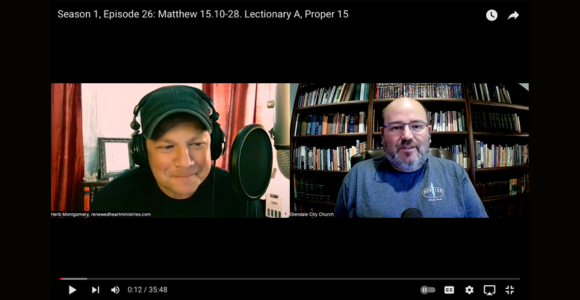
Season 1, Episode 26: Matthew 15.10-28. Lectionary A, Proper 15

Each week, we’ll be talking about the gospel lectionary reading for the upcoming weekend. We’ll be talking about each reading in the context of love, inclusion, and societal justice. Our hope is that our talking will be just talking (as in justice) and that during our brief conversations each week you’ll be inspired to also do more than just talking.

If you teach from the lectionary each week, or if you’re just looking for some thoughts on the Jesus story from a more progressive perspective within the context of social justice, check it out, you might like it.

You can find the latest show on YouTube at https://youtu.be/nauEBogqH10

 or (@herbandtoddjusttalking)

Please Like, Subscribe, hit the Notification button, and leave us a comment

Thanks in advance for watching!


It’s Okay to Discover You Are Wrong

It’s Okay to Discover You Are Wrong 

Herb Montgomery | August 18, 2023

To listen to this week’s eSight as a podcast episode click here.

“She calls him out on the hurtfulness of his rhetoric. She also uses his language against him to show him how blinkered his understanding is. And Jesus models humility. She is right, and Jesus makes an about-face.”

Our reading this week is from the gospel of Matthew:

Then he called the crowd to him and said to them, “Listen and understand: it is not what goes into the mouth that defiles a person, but it is what comes out of the mouth that defiles.” Then the disciples approached and said to him, “Do you know that the Pharisees took offense when they heard what you said?” He answered, “Every plant that my heavenly Father has not planted will be uprooted. Let them alone; they are blind guides of the blind. And if one blind person guides another, both will fall into a pit.” But Peter said to him, “Explain this parable to us.” Then he said, “Are you also still without understanding? Do you not see that whatever goes into the mouth enters the stomach, and goes out into the sewer? But what comes out of the mouth proceeds from the heart, and this is what defiles. For out of the heart come evil intentions, murder, adultery, fornication, theft, false witness, slander. These are what defile a person, but to eat with unwashed hands does not defile.” 

Jesus left that place and went away to the district of Tyre and Sidon. Just then a Canaanite woman from that region came out and started shouting, “Have mercy on me, Lord, Son of David; my daughter is tormented by a demon.” But he did not answer her at all. And his disciples came and urged him, saying, “Send her away, for she keeps shouting after us.” He answered, “I was sent only to the lost sheep of the house of Israel.” But she came and knelt before him, saying, “Lord, help me.” He answered, “It is not fair to take the children’s food and throw it to the dogs.” She said, “Yes, Lord, yet even the dogs eat the crumbs that fall from their masters’ table.” Then Jesus answered her, “Woman, great is your faith! Let it be done for you as you wish.” And her daughter was healed instantly. (Matthew 15:10-20, 21-28)

Before we begin this week I want to address some harmful language in our reading. The first is a generalizing reference to Pharisees. The Pharisees were a very diverse group that held many of the same ethical views of love and inclusion as the early Jesus community did. They were the progressive liberals of their community, and appealed to a large portion of the masses. The Pharisees later evolved into what would become Rabbinic Judaism. Their ethics of love and compassion, justice, and inclusion are a central part of Jewish wisdom today. 

This is important to say because using the term “Pharisee” as a pejorative slur is historically incorrect and has also been the root cause of antisemitism in Christianity over the centuries. 

There was a sect of the Pharisees (the school of Shammai) that opposed the more progressive Jesus community. But this group of Pharisees were just as much opposed to their more progressive fellow Pharisees in the school of Hillel. 

Because of this complex historical reality, as we tell the Jesus story we need to remember that many of the debates we encounter in the Jesus story were not between Christians and Jews (as Jesus himself was never a Christian). They were a debate within the Jewish community, between competing voices in Judaism, over what fidelity to their God looked like. 

The first portion of our reading addresses whether things we eat defile us individually and whether how we relate to one another defile us collectively. This was a debate between Jesus and some of the Pharisees, and also a debate among the Pharisees themselves. 

Second, this passage refers to blindness pejoratively too. Equating a disability like blindness with being inferior, sinful, or adversarial is harmful to people who live with disabilities every day. Again, today we can do better when we tell the Jesus story.

Later in this week’s reading, we encounter a story of a woman whom Matthew refers to as “Canaanite” and Mark calls “Syrophoenician” (Mark 7:26). When Matthew refers to her as a Canaanite, his listeners would have recalled the region’s ancient Indigenous populations within their own cultural stories and folklores of exodus, migration and settlement there. 

The early Jesus movement was not monolithic on the underlying message of this passage. Some members of the early Jesus movement felt their purpose was more in-house: they believed they were to be about winning fellow Jews to follow the Jewish Jesus. Many of these members stayed in Judea, specifically Jerusalem, and recognized the apostleship of Peter and James (see Luke and Acts). Others in the early Jesus community believed they were called to win those outside of the Jewish community to become followers of Jesus. Paul and the Matthean community in Galilee held this view (compare the endings of Matthew’s gospel and Luke’s). In Luke’s gospel, all the disciples remain in Jerusalem and grow the Jesus movement among the Jewish people from there. But in Matthew’s gospel, all the disciples return to Galilee and grow the Jesus movement from there, embracing even those who were not Jews.

The story of the Canaanite woman supports the Matthean community’s view that Jesus teachings should be shared beyond the boundaries of the Jewish community. 

What I love about this story is that we get a picture of a very human Jesus. He models being open to listening to those our theologies, interpretations, or views harm and being willing to grow and change. When we discover that something in our theology or our interpretations is harmful, this Jesus tells us it’s okay to learn and change. It’s okay to admit that once you held a harmful position, you now know more than you knew then, and your mind has changed.

This story forces us to embrace an evolving Jesus, not a fixed one. As the gospel of Luke says, “The child [Jesus] grew and became strong, filled with wisdom; and the favor of God was upon him” (Luke 2:40). 

When Jesus became an adult, did this growing and learning in wisdom stop? Did he just know everything as an adult? It may appeal to some to view Jesus this way, but it doesn’t align with our own experiences or how much we keep learning, evolving, and growing as adults. 

Consider this passage in the New Testament book of Hebrews: “Although he was a Son, he learned obedience through what he suffered.” (Hebrews 5.8)

Jesus learned obedience. And he learned it through those things he suffered. This sounds a lot like the way all of us learn: through experience and the hard way. It’s a picture of a very human Jesus who, when his understanding broadened, embraced change to become even more a source of healing and life to those he came in contact with. 

Again, Matthew’s gospel refers to this woman as a Canaanite woman. I love that the person who teaches Jesus to see the world through a much larger lens is a woman. When Jesus refers to Jewish people as God’s children and non-Jews as less than dogs, she calls him out on the hurtfulness of his rhetoric. She also uses his language against him to show him how blinkered his understanding is. And Jesus models humility. She is right, and Jesus makes an about-face. 

Remember, this is not just any Gentile woman. Matthew refers to her as a Canaanite.

This calls to my mind the words of James Cone in his classic, God of the Oppressed, and Philip Jenkins’ comments in Laying Down the Sword. Here are both:

“Native American theologian Robert Warrior [reads] the Exodus and Conquest narratives ‘with Canaanite eyes.’ The Exodus is not a paradigmatic event of liberation for indigenous peoples but rather an event of colonization.” (James H. Cone, God of the Oppressed, Kindle Edition Location 130)

The story of the Exodus speaks of liberation to some oppressed communities, and to others, this same narrative speaks of colonization. 

“The parallels are all the more painful as European colonialists over the centuries consciously used the conquest of Canaan as a model for their own activities.” (Philip Jenkins, Laying Down the Sword: Why We Can’t Ignore the Bible’s Violent Verses, p. 20-21)

This month’s recommended reading from Renewed Heart Ministries is Randy Woodley’s Indigenous Theology and the Western Worldview: A Decolonized Approach to Christian Doctrine. This volume is well worth reading as we also follow Jesus in listening to and growing our understanding of, relationships with, and reparations toward Indigenous populations today.

Who might our Canaanite women be today? Who might we need to listen to? 

How can we follow the Jesus of this week’s reading and be willing to listen to communities our theologies and interpretation have harmed? Jesus followers who are men could begin by listening to the experiences of women. Jesus followers who are straight and cisgender could begin by listening to the experiences of those who identify as LGBTQ. Jesus followers who are White could listen to the experiences of people of color. Jesus followers who are upper class or middle class could listen to the experiences of those who spend every day trying to survive poverty. The list could go on and on. 

What does it look like for us today to follow the Jesus in our reading this week? Again, who are the Canaanite women that we need to listen to today?

HeartGroup Application

1. Share something that spoke to you from this week’s eSight/Podcast episode with your HeartGroup.

2. Think back to an experience from your own journey where you discovered you were wrong and that you needed a larger worldview through which to relate to others in our shared world? Share and discuss with your group.

3. What can you do this week, big or small, to continue setting in motion the work of shaping our world into a safe, compassionate, just home for everyone?

Thanks for checking in with us, today.

I want to say a special thank you to all of our supporters out there. And if you would like to join them in supporting Renewed Heart Ministries’ work you can do so by going to renewedheartministries.com and clicking donate. 

You can find Renewed Heart Ministries on Twitter, Facebook and Instagram. If you haven’t done so already, please follow us on your chosen social media platforms for our daily posts. Also, if you enjoy listening to the Jesus for Everyone podcast, please like and subscribe to the JFE podcast through the podcast platform you use and consider taking some time to give us a review. This helps others find our podcast as well.

Also I want to share that we are partnering in a new weekly YouTube show called “Just Talking.” Each week, Todd Leonard and I will be talking about the gospel lectionary reading for the upcoming weekend. We’ll be talking about each reading in the context of love, inclusion, and societal justice. Our hope is that our talking will be just talking (as in justice) and that during our brief conversations each week you’ll be inspired to also do more than just talking.

If you teach from the lectionary each week, or if you’re just looking for some thoughts on the Jesus story from a more progressive perspective within the context of social justice, check it out, you might like it. You can find JustTalking each week on YouTube at youtube.com/@herbandtoddjusttalking. Please Like, Subscribe, hit the Notification button, and leave us a comment.

And if you’d like to reach us here at Renewed Heart Ministries through email, you can reach us at info@renewedheartministries.com.

My new book, Finding Jesus: A story of a fundamentalist preacher who unexpectedly discovered the social, political, and economic teachings of the Gospels is now also available at renewedheartministries.com

Right where you are, keep living in love, choosing compassion, taking action, and working toward justice.

I love each of you dearly,

I’ll see you next week.
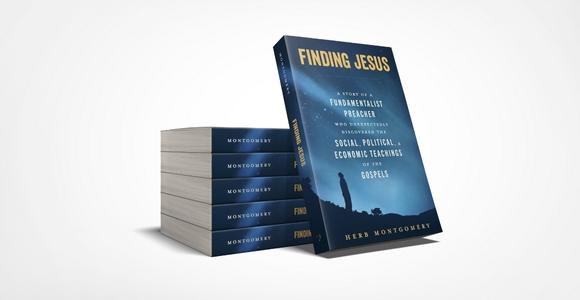


Now Available at Renewed Heart Ministries!

Herb’s new book Finding Jesus: A story of a fundamentalist preacher who unexpectedly discovered the social, political, and economic teachings of the Gospels, is available at renewedheartministries.com.

Get your copy today at renewedheartministries.com


Are you receiving all of RHM’s free resources each week?

Begin each day being inspired toward love, compassion, action, and justice. Free Sign-Up HERE
When Working for Justice Feels Like Walking On Water

Thank you to all of our supporters.

If you would like to join them in supporting Renewed Heart Ministries’ work you can do so by clicking “donate” above.


New Episode of JustTalking!

Season 1, Episode 25: Matthew 14.22-33. Lectionary A, Proper 14

Each week, we’ll be talking about the gospel lectionary reading for the upcoming weekend. We’ll be talking about each reading in the context of love, inclusion, and societal justice. Our hope is that our talking will be just talking (as in justice) and that during our brief conversations each week you’ll be inspired to also do more than just talking.

If you teach from the lectionary each week, or if you’re just looking for some thoughts on the Jesus story from a more progressive perspective within the context of social justice, check it out, you might like it.

You can find the latest show on YouTube at https://youtu.be/Tx_GTZXvuF8

 or (@herbandtoddjusttalking)

Please Like, Subscribe, hit the Notification button, and leave us a comment

Thanks in advance for watching!


Herb Montgomery | August 11, 2022

To listen to this week’s eSight as a podcast episode click here.

“This story was not written for our time and place, but for an audience that looked at the world very differently . . . Nevertheless, for us today, this story  can be a very powerful metaphor.”

Our reading this week is from the gospel of Matthew:

Immediately Jesus made the disciples get into the boat and go on ahead of him to the other side, while he dismissed the crowd. After he had dismissed them, he went up on a mountainside by himself to pray. Later that night, he was there alone, and the boat was already a considerable distance from land, buffeted by the waves because the wind was against it. 

Shortly before dawn Jesus went out to them, walking on the lake. When the disciples saw him walking on the lake, they were terrified. “It’s a ghost,” they said, and cried out in fear. But Jesus immediately said to them: “Take courage! It is I. Don’t be afraid.” “Lord, if it’s you,” Peter replied, “tell me to come to you on the water.” “Come,” he said. Then Peter got down out of the boat, walked on the water and came toward Jesus. But when he saw the wind, he was afraid and, beginning to sink, cried out, “Lord, save me!” Immediately Jesus reached out his hand and caught him. “You of little faith,” he said, “why did you doubt?”

And when they climbed into the boat, the wind died down. Then those who were in the boat worshiped him, saying, “Truly you are the Son of God.” (Matthew 14:22-33)

The earliest canonical version of this story that we have is from the gospel of Mark (6:47-52). Matthew adds the detail of Peter following Jesus by walking on the water too. In Mark’s version, Peter’s attempt is absent. Also, in Mark’s earlier version, the disciples are left befuddled, in not-sure-what-to-think amazement (existemi, Mark 6:51). In Matthew, by contrast, the disciples affirm “Truly you are the Son of God.” We’ll talk about these two different endings in a moment.

First, let’s acknowledge how strange a story like this is to our post-enlightenment, science informed minds today. No one believes it’s possible for any of us to walk on water today. 

This story was not written for our time and place, but for an audience that looked at the world very differently. Let’s look at a few of the possible roots of this story in the Hebrew Scriptures. And let’s keep in mind that in the Matthean Jesus community of Jesus followers, most of the early Jesus followers would have been Jewish.

Describing the Divine, the book of Job reads, 

“[God] alone stretches out the heavens and treads on the waves of the sea.” (Job 9:8)

Compare this to Job 38:16: “Have you journeyed to the springs of the sea or walked in the recesses of the deep?”

Next consider Psalms 77:16-19:

The waters saw you, God,

the waters saw you and writhed;

the very depths were convulsed. 

  The clouds poured down water,

the heavens resounded with thunder;

your arrows flashed back and forth. 

  Your thunder was heard in the whirlwind,

your lightning lit up the world;

the earth trembled and quaked.

  Your path led through the sea,

your way through the mighty waters,

though your footprints were not seen. 

In this ancient story, the waters were parted so the people could follow God’s “way” through the sea, whereas in Matthew, Peter attempts to walk on the sea like Jesus.

Before Jesus, Second Maccabees describes the oppressor of the Jewish people, Antiochus:

“Not content with this, Antiochus dared to enter the most holy temple in all the world, guided by Menelaus, who had become a traitor both to the laws and to his country. He took the holy vessels with his polluted hands, and swept away with profane hands the votive offerings that other kings had made to enhance the glory and honor of the place. Antiochus was elated in spirit . . . Antiochus carried off eighteen hundred talents from the temple, and hurried away to Antioch, thinking in his arrogance that he could sail on the land and walk on the sea.” (2 Maccabees 5:15-21)

Let’s add to this background a Hellenist legend in the culture surrounding Matthew’s Jesus and the community in which he lived. In many Hellenistic stories, characters cross the seas rapidly by various magical means. One story is the story of Orion, son of the god Poseidon. Orion could walk on water. 

“Hesiod says that [Orion] was the son of Eurayle, the daughter of Minos, and of Poseidon, and that there was given him as a gift the power of walking on the waves as though upon the land.” (Eratosthenes, fragment 182, quoted in Eerdmans Commentary on the Bible, James D.G. Dunn and John W. Rogerson, editors)

As strange as this story may be to us today, it would not have been strange at all for those who originally heard it. The story would instead have signaled to the hearers of Matthew’s gospel just what claims the Matthean community was making about Jesus. This story ends with the disciples explicitly proclaiming that Jesus, like the Hellenists’ Orion was “truly the Son of God.”

Again, there is another difference in Matthew’s story: Peter’s attempt to follow Jesus in walking on water. And this is the part of the story that I believe can still speak to us, today. 

In the previous chapter of Matthew’s Jesus story, Jesus has just explained how his gospel of love for one another manifested in inclusion, justice, and shaping a community (“the kingdom”) safe for everyone (see our article from two weeks ago, Kingdom” Parables for Social Change), was considered by the elites, the powerful, propertied, and privileged of his society. They considered it and him to be a weed that must be quickly weeded out before it took over the hearts of the masses, or like a corrupting leaven that if not dealt with would transform the entire dough of their society.

For us today, the story of Jesus walking on water and Peter’s attempt to follow him on those rough seas can be a very powerful metaphor. There are times when following Jesus in working toward a world that is safe, compassionate, and just for everyone is hard. I don’t want to make it sound like it’s harder than it is. But I want to be honest about how difficult, at times, it is. Today, following Jesus means standing up to the winds and waves of racism, White supremacy, Christian nationalism, misogyny, patriarchy, homophobia, transphobia, biphobia, economic elitism, classism, ableism, xenophobia, and so many more. And though these societal issues are not directly named in the Jesus story, his story does model the principles of being a source of healing and life in our world when facing those things that do harm. The principles for how we are to respond are laid out in the Jesus story for us to apply in our time and context. 

When we seek to stand up against those things that do harm today the way Jesus stood up to systemic harm in his own society, we can find ourselves outside the boat at times. In those times, our material survival could be seen as impossible as walking on water. This is why in many grassroots communities of Jesus followers working toward some form of liberation the saying is often repeated, “God makes a way out of no way.” 

Sometimes following Jesus, making the world a better place, and even surviving economically, socially, or materially feels as impossible as walking on water. But that is what it means to choose to follow Jesus in his work. In moments like this, the words of this beautiful story mean something to me: 

“Take courage! It is I. Don’t be afraid.” 

And when Peter tried to follow, but because of the waves and the wind became afraid and found himself beginning to sink, he cried out, “Lord, save me!” The story says that immediately Jesus reached out his hand and caught him with the words, “You of little faith, why did you doubt?”

So this week, let’s be honest. Sometimes following Jesus in working for social change, whether within faith communities or outside of them, can be hard and even feel impossible. When we become afraid. That’s okay. You’re in the right story. Keep doing what you can. Don’t lose heart. Don’t give up. 

Together, even if at times it feels like we are being called to step out of the boat to walk on water, we are making a way out of no way. Together, we are not alone. We don’t know what tomorrow will hold. But I believe our efforts will pay off. 

HeartGroup Application

1. Share something that spoke to you from this week’s eSight/Podcast episode with your HeartGroup.

2. Think of times in your own experience when following the teachings of Jesus felt like getting out of the boat and walking on water for you? Share and discuss with your group.

3. What can you do this week, big or small, to continue setting in motion the work of shaping our world into a safe, compassionate, just home for everyone?

Thanks for checking in with us, today.

I want to say a special thank you to all of our supporters out there. And if you would like to join them in supporting Renewed Heart Ministries’ work you can do so by going to renewedheartministries.com and clicking donate. 

You can find Renewed Heart Ministries on Twitter, Facebook and Instagram. If you haven’t done so already, please follow us on your chosen social media platforms for our daily posts. Also, if you enjoy listening to the Jesus for Everyone podcast, please like and subscribe to the JFE podcast through the podcast platform you use and consider taking some time to give us a review. This helps others find our podcast as well.

Also I want to share that we are partnering in a new weekly YouTube show called “Just Talking.” Each week, Todd Leonard and I will be talking about the gospel lectionary reading for the upcoming weekend. We’ll be talking about each reading in the context of love, inclusion, and societal justice. Our hope is that our talking will be just talking (as in justice) and that during our brief conversations each week you’ll be inspired to also do more than just talking.

If you teach from the lectionary each week, or if you’re just looking for some thoughts on the Jesus story from a more progressive perspective within the context of social justice, check it out, you might like it. You can find JustTalking each week on YouTube at youtube.com/@herbandtoddjusttalking. Please Like, Subscribe, hit the Notification button, and leave us a comment.

And if you’d like to reach us here at Renewed Heart Ministries through email, you can reach us at info@renewedheartministries.com.

My new book, Finding Jesus: A story of a fundamentalist preacher who unexpectedly discovered the social, political, and economic teachings of the Gospels is now also available at renewedheartministries.com

Right where you are, keep living in love, choosing compassion, taking action, and working toward justice.

I love each of you dearly,

I’ll see you next week.


Now Available at Renewed Heart Ministries!

Herb’s new book Finding Jesus: A story of a fundamentalist preacher who unexpectedly discovered the social, political, and economic teachings of the Gospels, is available at renewedheartministries.com.

Get your copy today at renewedheartministries.com


Are you receiving all of RHM’s free resources each week?

Begin each day being inspired toward love, compassion, action, and justice. Free Sign-Up HERE

Enoughism

Thank you to all of our supporters.

If you would like to join them in supporting Renewed Heart Ministries’ work you can do so by clicking “donate” above.


New Episode of JustTalking!

Season 1, Episode 24: Matthew 14.13-21. Lectionary A, Proper 13

Each week, we’ll be talking about the gospel lectionary reading for the upcoming weekend. We’ll be talking about each reading in the context of love, inclusion, and societal justice. Our hope is that our talking will be just talking (as in justice) and that during our brief conversations each week you’ll be inspired to also do more than just talking.

If you teach from the lectionary each week, or if you’re just looking for some thoughts on the Jesus story from a more progressive perspective within the context of social justice, check it out, you might like it.

You can find the latest show on YouTube at https://youtu.be/eg307heGPnw

 or (@herbandtoddjusttalking)

Please Like, Subscribe, hit the Notification button, and leave us a comment

Thanks in advance for watching!


Enoughism

Herb Montgomery | August 4, 2023

To listen to this week’s eSight as a podcast episode click here.

“The early church had a much less individualistic culture than those many Christians practice privately and personally today. Jesus’ teachings taught followers to love their neighbors as themselves: to consider us all connected to each other and part of one another.”

Our reading this week is from the gospel of Matthew:

When Jesus heard what had happened, he withdrew by boat privately to a solitary place. Hearing of this, the crowds followed him on foot from the towns. When Jesus landed and saw a large crowd, he had compassion on them and healed their sick.

As evening approached, the disciples came to him and said, “This is a remote place, and it’s already getting late. Send the crowds away, so they can go to the villages and buy themselves some food.” Jesus replied, “They do not need to go away. You give them something to eat.” “We have here only five loaves of bread and two fish,” they answered. “Bring them here to me,” he said. And he directed the people to sit down on the grass. Taking the five loaves and the two fish and looking up to heaven, he gave thanks and broke the loaves. Then he gave them to the disciples, and the disciples gave them to the people. They all ate and were satisfied, and the disciples picked up twelve basketfuls of broken pieces that were left over. The number of those who ate was about five thousand men, besides women and children. (Matthew 14:13-21)

The news Jesus receives at the beginning of our reading this week is the news that Herod has executed John the Baptist. 

Matthew’s version then condenses the story of shared food that follows from Mark. Matthew also connects the story with the Last Supper Jesus shared with his disciples, an indication that the Matthean community commemorated the eucharist to share resources in Jesus memory more than as a reenactment of the penal substitutionary atonement theories common in Western Christianity today. 

This story had precedents for Jewish Jesus followers in Galilee. They were already familiar with stories like this from their own sacred texts. Consider the story of how Elisha also fed a multitude:

A man came from Baal Shalishah, bringing the man of God twenty loaves of barley bread baked from the first ripe grain, along with some heads of new grain. “Give it to the people to eat,” Elisha said. “How can I set this before a hundred men?” his servant asked. But Elisha answered, “Give it to the people to eat. For this is what the LORD says: ‘They will eat and have some left over.’” Then he set it before them, and they ate and had some left over, according to the word of the LORD. (2 Kings 4:42-44)

These stories of the feeding of multitudes, repeated in each of the synoptic gospels, enlarges the kind of story in 2 Kings and keeps alive an economic lesson about our shared resources and mutuality (see Mark 6:35-44; Luke 9:12-17; John 6:1-15). The story in Kings occurs in the middle of a famine, but other parallels would also have been familiar to Galilean Jesus followers familiar with the Elisha story. Jesus is affirming these universal truths: we collectively have more, enough for everyone, when we pool our resources than we do when we live in individualistic isolation with silos of hoarded resources. 

The path of life for the future is always one of sharing, cooperation, and a commitment to ensure everyone is taken care of and has enough for them, not only to survive, but to thrive. This is a universal truth that has repeatedly been proven. Whether we speak in evolutionary terms of our species’ survival, or in economic, political, or social terms, mutual commitment to the thriving of all is the path of life. 

(One example of a scholarly work that over and over again demonstrates these lessons to be true is The Spirit Level: Why equality is better for everyone by R.G. Wilkinson and K. Pickett. See also How economic inequality harms societies.)

We have discussed repeatedly over the past few weeks how marginalized and disenfranchised Jesus followers very early in the history of Jesus followers saw in Jesus’ teaching a path of concrete salvation in the here and now. The kind of community that Jesus cast before the imaginations of this listeners pointed toward ways they could thrive together: a kind of salvation. As Stephen Patterson puts it, “The empire of God was a way to survive” (in The Lost Way: How Two Forgotten Gospels Are Rewriting the Story of Christian Origins, p. 75, see also Our Dependence on One Another).

Again, Matthew’s gospel ties this story of resource-sharing and mutual thriving to Jesus’ last supper with his disciples: “While they were eating, Jesus took bread, and when he had given thanks, he broke it and gave it to his disciples.” (Matthew 26:26)

Today many Christians commemorate that supper with a small wafer or cracker and a one-ounce cup of juice or sip of wine from a communal grail. This hardly represents the daily communal full course meals early Jesus followers held, where those with more than they needed shared with those who didn’t have enough. 

“All the believers were together and had everything in common. They sold property and possessions to give to anyone who had need. Every day they continued to meet together in the temple courts. They broke bread in their homes and ate together with glad and sincere hearts.” (Acts 2:44-46, emphasis added.)

When the believers lost sight of the purpose of this meal, or the social location of the church changed, they received correctives like Paul’s letter to the Corinthians:

“When you come together, it is not the Lord’s Supper you eat, for when you are eating, some of you go ahead with your own private suppers. As a result, one person remains hungry and another gets drunk. Don’t you have homes to eat and drink in? Or do you despise the church of God by humiliating those who have nothing? What shall I say to you? Shall I praise you? Certainly not in this matter!” (1 Corinthians 11:20-22)

Forgetting the communal purpose of the Eucharist and its lessons of sharing our resources with one another when we have more than we need was equated with eating the bread or drinking the cup of the Lord “in an unworthy manner” and being “guilty of sinning against the body and blood of the Lord.” (1 Corinthians 11:27)

Again, the early church had a much less individualistic culture than those many Christians practice privately and personally today. Jesus’ teachings taught followers to love their neighbors as themselves: to consider us all connected to each other and part of one another. Loving another was a way of loving oneself, because what affected one affected us all. Injustice to one was a threat to justice for all. 

“God’s grace was so powerfully at work in them all that there were no needy persons among them. For from time to time those who owned land or houses sold them, brought the money from the sales and put it at the apostles’ feet, and it was distributed to anyone who had need. (Acts 4:33-35, emphasis added)

Today, what would a community look like if those who had more than they needed to thrive shared their superfluous resources so those who didn’t have enough could also thrive too?

John Dominic Crossan refers to this theme in Jesus’ teaching as Enoughism:

“Do not, by the way, let anyone tell you that [Jesus’ teaching] is Liberalism, Socialism, or Communism. It is—if you need an -ism—Godism, Householdism or, best of all, Enoughism. We sometimes name that biblical vision of God’s World-Household as Egalitarianism but, actually, Enoughism would be a more accurate description.” (The Greatest Prayer: Rediscovering the Revolutionary Message of the Lord’s Prayer, pp. 3-4)

I like Enoughism. 

Practicing a social, political or economic ethic in harmony with the belief that God genuinely loves everyone means we have to ask some questions: 

  • Are our society’s children and dependents well fed? 
  • Do they have adequate clothing and shelter? 
  • What about people who are sick? Can they have adequate health care without risking bankruptcy? 
  • Are elderly people who are past their years of capitalist productivity assured that they will also thrive and be taken care of? 
  • Are the responsibilities and funding for ensuring everyone in our society has enough food, shelter and clothing distributed fairly across community members? 
  • Are those who already have very little made to feel pressured to give even more while those who have so much can opt out of giving? 
  • Does everyone have enough, not simply to scrape by but to thrive and enjoy this life as the beautiful gift that it can be? Or, instead, do some have far too little while others have far too much, more than they could ever possibly need? 
  • For those of us with means, what does it mean to use our social, political, or economic wealth to build the kind of human community that Jesus envisioned where everyone is cared for and taken care of? 

None of these questions even begin to address the myriad reasons our differences from one another are used to exclude some of us from this kind of care. There are environmental implications of ensuring the earth and all its inhabitants are included in the community of enoughism too. 

These are all questions worth asking. Whether we ask them in a religious context or not, our answers will determine what kind of future as human beings we create. Will the future we create today be life-giving or death-dealing for those to whom we leave it? 

HeartGroup Application

1. Share something that spoke to you from this week’s eSight/Podcast episode with your HeartGroup.

2. Discuss with your group at further length any of the above questions Enoughism calls us to ask.

3. What can you do this week, big or small, to continue setting in motion the work of shaping our world into a safe, compassionate, just home for everyone?

Thanks for checking in with us, today.

I want to say a special thank you to all of our supporters out there. And if you would like to join them in supporting Renewed Heart Ministries’ work you can do so by going to renewedheartministries.com and clicking donate. 

You can find Renewed Heart Ministries on Twitter, Facebook and Instagram. If you haven’t done so already, please follow us on your chosen social media platforms for our daily posts. Also, if you enjoy listening to the Jesus for Everyone podcast, please like and subscribe to the JFE podcast through the podcast platform you use and consider taking some time to give us a review. This helps others find our podcast as well.

Also I want to share that we are partnering in a new weekly YouTube show called “Just Talking.” Each week, Todd Leonard and I will be talking about the gospel lectionary reading for the upcoming weekend. We’ll be talking about each reading in the context of love, inclusion, and societal justice. Our hope is that our talking will be just talking (as in justice) and that during our brief conversations each week you’ll be inspired to also do more than just talking.

If you teach from the lectionary each week, or if you’re just looking for some thoughts on the Jesus story from a more progressive perspective within the context of social justice, check it out, you might like it. You can find JustTalking each week on YouTube at youtube.com/@herbandtoddjusttalking. Please Like, Subscribe, hit the Notification button, and leave us a comment.

And if you’d like to reach us here at Renewed Heart Ministries through email, you can reach us at info@renewedheartministries.com.

My new book, Finding Jesus: A story of a fundamentalist preacher who unexpectedly discovered the social, political, and economic teachings of the Gospels is now also available at renewedheartministries.com

Right where you are, keep living in love, choosing compassion, taking action, and working toward justice.

I love each of you dearly,

I’ll see you next week.


Now Available at Renewed Heart Ministries!

Herb’s new book Finding Jesus: A story of a fundamentalist preacher who unexpectedly discovered the social, political, and economic teachings of the Gospels, is available at renewedheartministries.com.

Get your copy today at renewedheartministries.com


Are you receiving all of RHM’s free resources each week?

Begin each day being inspired toward love, compassion, action, and justice. Free Sign-Up HERE