The Parable of the Dishonest Manager

We want to take a moment to express our heartfelt gratitude to each and every one of you who supports the work of Renewed Heart Ministries. Your generosity makes it possible for us to continue our mission of love, justice, and compassion—even in a time when ministries like ours are being called to do more with less.

Your support means the world to us. Whether we’re speaking into the broader society or engaging within our faith communities, we remain committed to advocating for a world that is inclusive, just, and safe for all. Your partnership helps keep that vision alive.

From all of us at Renewed Heart Ministries, thank you. We are so deeply grateful for you—and we couldn’t do this work without you.

If you’d like to join them in supporting our work, please go to renewedheartministries.com and click on “Donate.”  


Image created by Canva

The Parable of the Dishonest Manager

Herb Montgomery | September 19, 2025

If you’d like to listen to this week’s article in podcast version click on the image below:

Our reading this week is from the gospel of Luke:

Then Jesus said to the disciples, “There was a rich man who had a manager, and charges were brought to him that this man was squandering his property. So he summoned him and said to him, ‘What is this that I hear about you? Give me an accounting of your management, because you cannot be my manager any longer.’ Then the manager said to himself, ‘What will I do, now that my master is taking the position away from me? I am not strong enough to dig, and I am ashamed to beg. I have decided what to do so that, when I am dismissed as manager, people may welcome me into their homes.’ So, summoning his master’s debtors one by one, he asked the first, ‘How much do you owe my master?’ He answered, ‘A hundred jugs of olive oil.’ He said to him, ‘Take your bill, sit down quickly, and make it fifty.’ Then he asked another, ‘And how much do you owe?’ He replied, ‘A hundred containers of wheat.’ He said to him, /‘Take your bill and make it eighty.’ And his master commended the dishonest manager because he had acted shrewdly; for the children of this age are more shrewd in dealing with their own generation than are the children of light. And I tell you, make friends for yourselves by means of dishonest wealth so that when it is gone, they may welcome you into the eternal homes.

“Whoever is faithful in a very little is faithful also in much; and whoever is dishonest in a very little is dishonest also in much. If then you have not been faithful with the dishonest wealth, a who will entrust to you the true riches? And if you have not been faithful with what belongs to another, who will give you what is your own? No slave can serve two masters; for a slave will either hate the one and love the other, or be devoted to the one and despise the other. You cannot serve God and wealth.” (Luke 16:1-13)

Our story this week is one that scholars have offered multiple interpretations of. They have spiritualized the story, taken it literally, and sought to apply the story to our context today, but most interpretation give me the feeling that something is being left on the table. One interpretation I find most convincing is by William Herzog in his classic book, Parables as Subversive Speech: Jesus as Pedagogue of the Oppressed. Herzog looks at various parables from the gospels through the lens of the Brazilian educator Paulo Freire’s work Pedagogy of the Oppressed.

With this lens, let’s begin with the context that the manager in this story would have found himself in. Losing his position as a steward and becoming a day laborer means he had fallen from the class of valued a into the ranks of the expendable poor. With only his physical strength to offer, the former steward would stand little chance against seasoned peasants or the surplus sons of village craftsmen who had long been part of the laboring class. Used to regular meals, he will also struggle with an inconsistent food supply and bouts of hunger. As his strength fades, he will eventually be reduced to begging and, like countless others, die from malnutrition and illness. His dismissal from his job as a steward isn’t a result of refusing honest work; it’s effectively a death sentence (see William R. Herzog II, Parables as Subversive Speech: Jesus as Pedagogue of the Oppressed, p. 347).

So the manager comes up with a creative solution: 

“The rich man expects that the steward will take his honest graft, but he does not care as long as the steward does his job, produces the expected profits, and keeps the peasants under control. The steward always has to balance his greed against its consequences. He will do well, but he cannot become conspicuous in his consumption. One possible meaning of the verb diaskorpizōn, translated as “wasting,” is “scattering,” or “dispersing”. . .Thus the steward may have indulged in forms of status display and conspicuous consumption inappropriate to his social standing. If he had been accumulating too much and spending it in ways that caused a stir, he could have set himself up for his fall. To engage in this behavior is to dishonor his patron by taking advantage of his position and competing with the master rather than acknowledging his own subservient and dependent position.” (William R. Herzog II, Parables as Subversive Speech: Jesus as Pedagogue of the Oppressed, p. 361)

So what the manager decides to do is adjust the debts of those indebted to his patron and subtractwhatever amount was accounted for his own graft, the manager’s profit. The manager is using what Herzog refers to as the weapons of the weak: Peasant resistance and revolt could also take everyday forms such as dissimulation, false compliance, looting, feigned ignorance, slander, arson, sabotage and more. Because one class is virtually powerless, they have to find ways of resisting their oppressors that don’t subject them to the dangers of open revolt. This is what we see happening in our reading this week: The manager is exposing the system and betraying the graft built into the system. 

“He reduces the contracts held by the debtors. Assuming a Jewish setting, the reductions represent the difference between the ostensible value of the contract and the hidden interest contained in it. The hidden interest on oil is 50 percent because oil is a commodity susceptible to adulteration and therefore less secure. The interest rate on wheat is lower (20 percent) because the commodity is easier to assess.” (William R. Herzog II, Parables as Subversive Speech: Jesus as Pedagogue of the Oppressed, p. 366)

The indebted merchants begin to talk among themselves and realized the advantage they’ve gained, something the steward likely claimed credit for. By agreeing to the reduced contracts, they’ve put themselves in the steward’s debt and will owe him a favor in return. In public, however, they will only express gratitude and admiration to their noble and generous patron. When they do, the patron faces a choice: he can accept their praise and keep the steward in his position with the newly negotiated amounts, or he can reject the revised agreements and turn the steward into a martyr.

With these moves, the steward reminds the master of his skill. He is responsible for the master’s accumulation of wealth. I’m not convinced that giving the steward temporary housing is the real goal here. It would only have been a temporary solution. What the steward is aiming for is to preserve his position. To preserve his social status, the master needs a steward who is willing to engage in these kinds of practices, and the steward has done that. Whatever faults he may have, he’s not lazy about looking after the master’s concerns. By his actions, therefore, the steward reminds the master of his value (see William R. Herzog II, Parables as Subversive Speech: Jesus as Pedagogue of the Oppressed, p. 369).

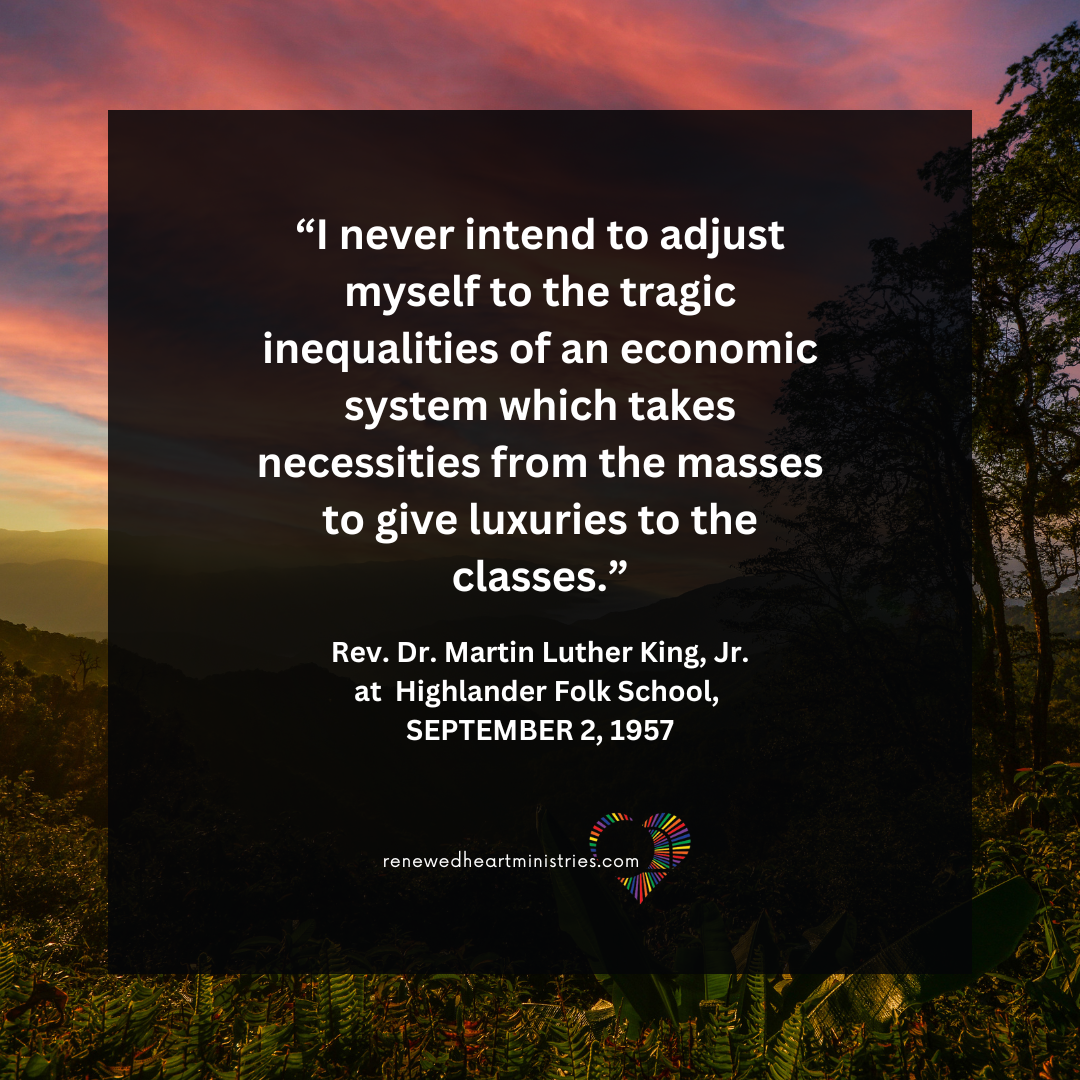
The author of Luke’s gospel takes this story from Jesus and applies another narrative lesson: “Make friends for yourselves by means of dishonest wealth so that when it is gone, they may welcome you into the eternal homes.” Again, I’m not convinced that housing was the steward’s goal in the story, butI can see how it could have been the point of Luke’s gospel. Using wealth created by taking “necessities from the masses to give luxury to the classes” and then using that wealth to create relationships for the kingdom would fit the tactics of the early Jesus movement. This is one of the central themes of the book of Luke as well as its companion book of Acts: 

Sell your possessions, and give them to the poor. Make purses for yourselves that do not wear out, an unfailing treasure in heaven, where no thief comes near and no moth destroys. For where your treasure is, there your heart will be also. (Luke 12:33-34)

All who believed were together and had all things in common; they would sell their possessions and goods and distribute the proceeds to all, as any had need. (Acts 2:44-45)

There was not a needy person among them, for as many as owned lands or houses sold them and brought the proceeds of what was sold. They laid it at the apostles’ feet, and it was distributed to each as any had need. (Acts 4:34-35)

The early Jesus movement built community through what was called ‘dishonest wealth.’ It was about forging bonds through shared resources and mutual aid. Even now, this parable whispers through time, urging us to transform the riches of the few into a wealth shared by all, to redistribute wealth not to the few, but for the good of all, and to create a robust common wealth rooted in compassionate, empathetic care for everyone’s needs.

Discussion Group Questions

1. Share something that spoke to you from this week’s podcast episode with your discussion group.

2. What “tools of the powerless” do you use in your own justice work today? Share and discuss with your group.

3. What can you do this week, big or small, to continue setting in motion the work of shaping our world into a safe, compassionate, just home for everyone? 

Thanks for checking in with us, today.

I want to say a special thank you to all of our supporters out there. And if you would like to join them in supporting Renewed Heart Ministries’ work you can do so by going to renewedheartministries.com and clicking donate. 

My latest book Finding Jesus: A Fundamentalist Preacher Discovers the Socio-Political and Economic Teachings of the Gospels is available now on Amazon in paperback, Kindle and also on Audible in audio book format.

As always, you can find Renewed Heart Ministries each week on Bluesky, Facebook, Instagram and Meta’s Threads. If you haven’t done so already, please follow us on your chosen social media platforms for our daily posts. 

Thank you for listening to The Social Jesus Podcast. If you enjoyed this podcast please take a moment to like and subscribe and if the podcast platform you’re using offers this option, please leave us a positive review. This helps others find our podcast as well.

If you’d like to reach us here at Renewed Heart Ministries through email, you can reach us at info@renewedheartministries.com.

Right where you are, keep living in love, choosing compassion, taking action, and working toward justice.

I love each of you dearly,

I’ll see you next week.


Season 3, Episode 26: Luke 16:1-13, Lectionary C, Proper 20

Just Talking is a weekly conversation centered on the upcoming weekend’s Gospel lectionary reading. Each discussion explores the text through the lenses of love, inclusion, and social justice.

Our hope is that these conversations will be more than just talking—they’ll be just talking, rooted in justice. And maybe, they’ll inspire you to go beyond just talking and into action.

Whether you preach from the lectionary or are simply curious about the Jesus story from a more progressive, justice-oriented perspective, we invite you to join us.

Herb Montgomery is speaker/director of Renewed Heart Ministries.

This week’s special guest is Alicia Johnston.

Watch at:


New Episode of The Social Jesus Podcast

A podcast where we talk about the intersection of faith and social justice and what a first century, prophet of the poor from Galilee might have to offer us today in our work of love, compassion and justice. 

This week:

Season 2 Episode 38: The Parable of the Dishonest Manager

Luke 16:1-13

“Our story this week is one that scholars have offered multiple interpretations of. They have spiritualized the story, taken it literally, and sought to apply the story to our context today, but most interpretation give me the feeling that something is being left on the table. One interpretation I find most convincing is by William Herzog in his classic book, Parables as Subversive Speech: Jesus as Pedagogue of the Oppressed. Herzog looks at various parables from the gospels through the lens of the Brazilian educator Paulo Freire’s work Pedagogy of the Oppressed. The early Jesus movement built community through what was called ‘dishonest wealth.’ It was about forging bonds through shared resources and mutual aid. Even now, this parable whispers through time, urging us to transform the riches of the few into a wealth shared by all, to redistribute wealth not to the few, but for the good of all, and to create a robust common wealth rooted in compassionate, empathetic care for everyone’s needs.”

Available on all major podcast carriers and at:

https://the-social-jesus-podcast.simplecast.com/episodes/the-parable-of-the-dishonest-manager



Finding Jesus: A Fundamentalist Preacher Discovers the Socio-Political & Economic Teachings of the Gospels.

 

by Herb Montgomery

Available now on Amazon!

In Finding Jesus, author Herb Montgomery delves into the profound and often overlooked political dimensions of the gospels. Through meticulous analysis of biblical texts, historical context, and social discourse, this thought-provoking book unveils the gospels’ socio-political, economic teachings as rooted in a profound concern for justice, compassion, and the well-being of the marginalized. The book navigates the intersections between faith and societal justice, presenting a compelling argument for a more socially engaged and transformative Christianity.

Finding Jesus is not just a scholarly exploration; it is a call to action. It challenges readers to reevaluate their understanding of Christianity’s role in public life and to consider how the radical teachings of the gospels can inspire a renewed commitment to justice, equality, and compassion. This book is a must-read for those seeking a deeper understanding of the social implications of Christian faith and a blueprint for building a more just and inclusive society.


Are you getting all of RHM’s Free Resources?

Free Sign Up Here

Sheep, Coins, and a Preferential Option for the Marginalized

We want to take a moment to express our heartfelt gratitude to each and every one of you who supports the work of Renewed Heart Ministries. Your generosity makes it possible for us to continue our mission of love, justice, and compassion—even in a time when ministries like ours are being called to do more with less.

Your support means the world to us. Whether we’re speaking into the broader society or engaging within our faith communities, we remain committed to advocating for a world that is inclusive, just, and safe for all. Your partnership helps keep that vision alive.

From all of us at Renewed Heart Ministries, thank you. We are so deeply grateful for you—and we couldn’t do this work without you.

If you’d like to join them in supporting our work, please go to renewedheartministries.com and click on “Donate.”  


Image created by Canva

Sheep, Coins, and a Preferential Option for the Marginalized

Herb Montgomery | September 12, 2025

If you’d like to listen to this week’s article in podcast version click on the image below:

Our reading this week is from the gospel of Luke:

Now all the tax collectors and sinners were coming near to listen to him. And the Pharisees and the scribes were grumbling and saying, “This fellow welcomes sinners and eats with them.” So he told them this parable: “Which one of you, having a hundred sheep and losing one of them, does not leave the ninety-nine in the wilderness and go after the one that is lost until he finds it? When he has found it, he lays it on his shoulders and rejoices. And when he comes home, he calls together his friends and neighbors, saying to them, ‘Rejoice with me, for I have found my sheep that was lost.’ Just so, I tell you, there will be more joy in heaven over one sinner who repents than over ninety-nine righteous persons who need no repentance. Or what woman having ten silver coins, if she loses one of them, does not light a lamp, sweep the house, and search carefully until she finds it? When she has found it, she calls together her friends and neighbors, saying, ‘Rejoice with me, for I have found the coin that I had lost.’ Just so, I tell you, there is joy in the presence of the angels of God over one sinner who repents. (Luke 15:1-10)

The imagery in the first part of our reading this week is found in both the canonical gospel of Matthew and the non-canonical gospel of Thomas. The lost coin image is unique to Luke. 

In Matthew’s gospel we read:

If a shepherd has a hundred sheep, and one of them has gone astray, does he not leave the ninety-nine on the mountains and go in search of the one that went astray? And if he finds it, truly I tell you, he rejoices over it more than over the ninety-nine that never went astray. So it is not the will of your Father in heaven that one of these little ones should be lost. (Matthew 18:12-14)

In Thomas, we find a little different flavor:

Jesus said, “The kingdom can be compared to a shepherd who had a hundred sheep. The largest one strayed. He left the ninety-nine and looked for that one until he found it. Having gone through the trouble, he said to the sheep: ‘I love you more than the ninety-nine.’” (Gospel of Thomas 107:1-3)

In Matthew’s gospel, this imagery answers the question “Who is the greatest” in the kingdom of heaven. Matthew’s Jesus centers one of the most vulnerable and marginalized populations in his society, children, and then tells the  story of a lost sheep.

In Luke’s gospel, Jesus tells a slightly different story. Luke uses this story to justify Jesus’ fellowship with those whom the powerful, propertied, and privileged felt were inferior: tax collectors and others labelled sinners. 

The term “sinner” is used quite differently in the gospel stories than in Paul’s epistles. I grew up in a very Pauline-flavored expression of the Christian faith. It was drilled into me that we are all, without exception, sinners. But in the gospels, the term “sinner” is not universal but used by those in positions of power and privilege to define someone else as living outside their interpretations of Torah, as outside of the covenantal community’s moral expectations, or simply as their moral inferior. In certain cases, the person was simply someone who disagreed with how Torah was being interpreted in a specific situation. The term was used to label, define and then marginalize others. In many cases, innocent people were being labelled as sinners while those in power, who were exploiting the poor and marginalized and were therefore the real sinners in the story, were deemed righteous, holy, or morally superior.

Using religion and claims of moral superiority to exclude people is, I believe, a misuse of both religious beliefs and ethical principles. At its core, most religions teach compassion, humility, and acceptance, yet individuals and institutions sometimes distort these teachings to justify exclusion. Just like in our story this week, by positioning oneself as morally superior, people succeed in creating an “us vs. them” dynamic, labeling others as sinful, impure, or unworthy. This approach fosters judgment and exclusion rather than an openness to understanding and perceiving our world from different perspectives. It fosters a conformity aligned with power. It then enables discrimination under the guise of righteousness. Such behavior can lead to the marginalization of those who are different, whether those differences are due to race, sexuality, gender, or a difference of belief, all while absolving the perpetrators of responsibility. In fact, it often makes the perpetrators look more holy because they are mistaken as standing up for morality. Ultimately, using religion as a tool for exclusion betrays the inclusive and compassionate values many faiths promote. True moral strength lies in empathy, not in self-righteous condemnation or the gatekeeping of worthiness based on personal biases or prejudices cloaked in religious justification.

In context, the lost sheep story that Jesus tells in Luke’s gospel sparks curiosity about the value of the people whom those in power were pushing to the edges of their world. In a language most of the wealthy elites would understand (livestock then equalled net worth), Jesus taught the value going in search of a lost sheep. In Thomas’ gospel, the lost sheep was also the fattest sheep.  While yes, the other sheep had value, in that moment, they were not in danger. The one sheep was. To insist that the other sheep mattered too would dismiss the systemic harm committed against the marginalized people Jesus was identifying with, ignore the specific struggles of those living on the edges of their society and undermine Jesus’ calls for justice for the “least of these.”

We experience this social phenomenon any time we focus on one specific sector of our diverse society because of systemic harm being done to them. In that moment, the one “lost sheep” is the focus because of their need. One example is the “All Lives Matter” response to calls for racial equality.

The phrase “All Lives Matter” emerged to counter the Black Lives Matter movement, which advocates for justice and equality for Black people facing systemic racism and violence. While the assertion “all lives matter” is fundamentally true, its use in this context often serves to undermine and dismiss the specific struggles Black and marginalized communities face. The response fails to recognize the unique historical and social contexts that contribute to these groups’ disproportionate suffering.

The fallacy of focusing on the 99 sheep rather than the 1 sheep that is in danger can be understood through the lens of selective attention to issues of inequality. When individuals assert that all lives matter in response to calls for justice for a specific group, they divert attention away from the systemic inequalities that make those justice movements necessary to begin with. It is akin to saying, “All houses matter” when a particular house is on fire; it ignores the urgent need for intervention in a specific instance of crisis. As a result, it perpetuates a status quo that keeps certain injustices unaddressed.

In contrast, and in harmony with this week’s parables of the lost sheep and the lost coin, liberation theologies offer frameworks that prioritize the needs of marginalized communities. Rooted in Christian teachings, liberation theologies emphasize the preferential option for communities that are marginalized and oppressed. These theological perspectives assert that God’s love and justice are particularly directed toward those who are suffering due to social, economic, and political injustices. Rather than adopting a universalist stance that diminishes the unique experiences of marginalized groups, liberation theologies call for a focused commitment to those who have historically been or are presently being silenced and oppressed.

The preferential option for the marginalized acknowledges that while all lives are inherently valuable, those who have been subjected to systemic injustice require special attention and immediate, focused advocacy. This approach is not about elevating one group over another but about recognizing disparities and actively working to change them. We are called to solidarity with those who are suffering and to demand justice in light of their specific circumstances.

The parables of the lost sheep and the lost coin in our reading this week both challenge the notion that social justice can be achieved without addressing the root causes of oppression and focusing on communities who suffer harm from inequities. Jesus’ teachings here call us to to confront the structures that perpetuate inequality, advocating for systemic change for people being harmed now rather than mere charity or superficial solutions. This way of reading the parables of the lost sheep and lost coin align with principles of social justice: true equality cannot exist without addressing the historical injustices against specific communities that have led to disparities.

Focusing on the ninety-nine sheep that need no rescue and saying “they matter too” neglects the importance of context and the specific struggles that the specific communities represented by the sheep or coin in our reading face. Universal approaches to the gospel often oversimplify the realities of systemic oppression and what certain communities uniquely need. In contrast, the lens of a preferential option for the marginalized (temporarily focusing on the lost sheep or the lost coin rather than the rest) provides a nuanced understanding that prioritizes those who are suffering. True justice for all requires acknowledging injustice that may be only affecting certain communities, and focusing on those being harmed acknowledges that injustice to any is a threat to injustice to all. 

Our society can work toward a more equitable and just world where the dignity and worth of every individual are upheld. At times, the ninety-nine must be left, and the other nine coins not focused on. In order to restore the whole, our parables call us to practice a preferential option for certain ones: the one sheep, the one coin. And when that which threatens the “ones” has been corrected, the rest will be brought back into the narrative.

Discussion Group Questions

1. Share something that spoke to you from this week’s podcast episode with your discussion group.

2. In what ways do you practice a preferential option for the marginalized in your own life? Share and discuss with your goup.

3. What can you do this week, big or small, to continue setting in motion the work of shaping our world into a safe, compassionate, just home for everyone? 

Thanks for checking in with us, today.

I want to say a special thank you to all of our supporters out there. And if you would like to join them in supporting Renewed Heart Ministries’ work you can do so by going to renewedheartministries.com and clicking donate. 

My latest book Finding Jesus: A Fundamentalist Preacher Discovers the Socio-Political and Economic Teachings of the Gospels is available now on Amazon in paperback, Kindle and also on Audible in audio book format.

As always, you can find Renewed Heart Ministries each week on Bluesky, Facebook, Instagram and Meta’s Threads. If you haven’t done so already, please follow us on your chosen social media platforms for our daily posts. 

Thank you for listening to The Social Jesus Podcast. If you enjoyed this podcast please take a moment to like and subscribe and if the podcast platform you’re using offers this option, please leave us a positive review. This helps others find our podcast as well.

You can watch our YouTube show each week called “Just Talking”. Each week, Todd Leonard and I take a moment to talk about the gospel lectionary reading for the upcoming weekend. We’ll be talking about each reading in the context of love, inclusion, and social justice. Our hope is that our talking will be just talking (as in justice) and that during our brief conversations each week you’ll be inspired to also do more than just talking. If you teach from the lectionary each week, or if you’re just looking for some thoughts on the Jesus story from a more progressive perspective within the context of social justice, check it out, you might like it. You can find JustTalking each week on YouTube at youtube.com/@herbandtoddjusttalking.

Please Like, Subscribe, hit the Notification button, and leave us a comment.

And if you’d like to reach us here at Renewed Heart Ministries through email, you can reach us at info@renewedheartministries.com.

Right where you are, keep living in love, choosing compassion, taking action, and working toward justice.

I love each of you dearly,

I’ll see you next week.


Season 3, Episode 25: Luke 15:1-10, Lectionary C, Proper 19

Just Talking is a weekly conversation centered on the upcoming weekend’s Gospel lectionary reading. Each discussion explores the text through the lenses of love, inclusion, and social justice.

Our hope is that these conversations will be more than just talking—they’ll be just talking, rooted in justice. And maybe, they’ll inspire you to go beyond just talking and into action.

Whether you preach from the lectionary or are simply curious about the Jesus story from a more progressive, justice-oriented perspective, we invite you to join us.

Herb Montgomery is speaker/director of Renewed Heart Ministries.

This week’s special guest is Alicia Johnston.

Watch at:


New Episode of The Social Jesus Podcast

A podcast where we talk about the intersection of faith and social justice and what a first century, prophet of the poor from Galilee might have to offer us today in our work of love, compassion and justice. 

This week:

Season 2 Episode 37: Sheep, Coins, and a Preferential Option for the Marginalized

Luke 15:1-10

“The parables of the lost sheep and the lost coin in our reading this week both challenge the notion that social justice can be achieved without addressing the root causes of oppression and focusing on communities who suffer harm from inequities. Jesus’ teachings here call us to to confront the structures that perpetuate inequality, advocating for systemic change for people being harmed now rather than mere charity or superficial solutions. This way of reading the parables of the lost sheep and lost coin align with principles of social justice: true equality cannot exist without addressing the historical injustices against specific communities that have led to disparities. Focusing on the ninety-nine sheep that need no rescue and saying “they matter too” neglects the importance of context and the specific struggles that the specific communities represented by the sheep or coin in our reading face. Universal approaches to the gospel often oversimplify the realities of systemic oppression and what certain communities uniquely need. In contrast, the lens of a preferential option for the marginalized (temporarily focusing on the lost sheep or the lost coin rather than the rest) provides a nuanced understanding that prioritizes those who are suffering. True justice for all requires acknowledging injustice that may be only affecting certain communities, and focusing on those being harmed acknowledges that injustice to any is a threat to injustice to all.”

Available on all major podcast carriers and at:

https://the-social-jesus-podcast.simplecast.com/episodes/sheep-coins-and-a-preferential-option-for-the-marginalized


Finding Jesus: A Fundamentalist Preacher Discovers the Socio-Political & Economic Teachings of the Gospels.


by Herb Montgomery

Available now on Amazon!

In Finding Jesus, author Herb Montgomery delves into the profound and often overlooked political dimensions of the gospels. Through meticulous analysis of biblical texts, historical context, and social discourse, this thought-provoking book unveils the gospels’ socio-political, economic teachings as rooted in a profound concern for justice, compassion, and the well-being of the marginalized. The book navigates the intersections between faith and societal justice, presenting a compelling argument for a more socially engaged and transformative Christianity.

Finding Jesus is not just a scholarly exploration; it is a call to action. It challenges readers to reevaluate their understanding of Christianity’s role in public life and to consider how the radical teachings of the gospels can inspire a renewed commitment to justice, equality, and compassion. This book is a must-read for those seeking a deeper understanding of the social implications of Christian faith and a blueprint for building a more just and inclusive society.


Are you getting all of RHM’s Free Resources?

Free Sign Up Here

Hating One’s Family

We want to take a moment to express our heartfelt gratitude to each and every one of you who supports the work of Renewed Heart Ministries. Your generosity makes it possible for us to continue our mission of love, justice, and compassion—even in a time when ministries like ours are being called to do more with less.

Your support means the world to us. Whether we’re speaking into the broader society or engaging within our faith communities, we remain committed to advocating for a world that is inclusive, just, and safe for all. Your partnership helps keep that vision alive.

From all of us at Renewed Heart Ministries, thank you. We are so deeply grateful for you—and we couldn’t do this work without you.

If you’d like to join them in supporting our work, please go to renewedheartministries.com and click on “Donate.”  


Image created by Canva

Hating One’s Family

Herb Montgomery | September 6, 2025

If you’d like to listen to this week’s article in podcast version click on the image below:

Our reading this week is from the gospel of Luke:

Now large crowds were traveling with him; and he turned and said to them, “Whoever comes to me and does not hate father and mother, wife and children, brothers and sisters, yes, and even life itself, cannot be my disciple. Whoever does not carry the cross and follow me cannot be my disciple. For which of you, intending to build a tower, does not first sit down and estimate the cost, to see whether he has enough to complete it? Otherwise, when he has laid a foundation and is not able to finish, all who see it will begin to ridicule him, saying, ‘This fellow began to build and was not able to finish.’ Or what king, going out to wage war against another king, will not sit down first and consider whether he is able with ten thousand to oppose the one who comes against him with twenty thousand? If he cannot, then, while the other is still far away, he sends a delegation and asks for the terms of peace. So therefore, none of you can become my disciple if you do not give up all your possessions.” (Luke 14:25-33)

In my opinion, we would be hard-pressed to find a more dangerous passage in the gospels than the passage we’re reading this week. This passage has been used repeatedly to incite families to reject family members over religious differences. Someone in the family is an atheist? Shun them. Someone in the family believes differently? Label them as the bad apple. And God forbid, a child in an evangelical family realizes they are gay, lesbian, transgender, or bisexual? LGBTQ children in Christian families often face insurmountable challenges, particularly when their identities conflict with their family’s traditional religious beliefs. Many Christian faith communities subscribe to heteronormative values, heteronormative ways to interpret scriptures, and a heteronormative lens through which they navigate the world around them. Our reading this week, in this context, has led countless families to condemn and even reject their LGBTQ children. This rejection may come in the form of emotional distancing, forced conversion therapy, or even disowning, and such experiences can have devastating effects on a child’s mental health and lead to increased risks of depression, anxiety, and suicide. For LGBTQ youth, acceptance at home is crucial. When families choose love over exclusion, they create safe environments where their children can thrive, both in identity and faith. But when families choose to read this week’s passage in a way that affirms their biases and phobias, this passage becomes dangerous. 

I have experience with what I’m writing about this week. My own extended family has led group actions against me in my faith community because they view my alliance with LGBTQ folks as heretical. 

But Luke’s context is not choosing one’s religion or faith over loving and affirming a family member. The context is choosing justice and inclusion even when your privileged family rejects you for doing so. This passage is about times when standing up for those being rejected and shunned causes division from those who reject and shun others:

“I came to bring fire to the earth, and how I wish it were already kindled! I have a baptism with which to be baptized, and what stress I am under until it is completed! Do you think that I have come to bring peace to the earth? No, I tell you, but rather division! From now on five in one household will be divided, three against two and two against three; they will be divided:

father against son

and son against father,

mother against daughter

and daughter against mother,

mother-in-law against her daughter-in-law

and daughter-in-law against mother-in-law . . . ” (Luke 12:49-56, NRSV) 

These verses describe division but it’s the kind of division caused when someone is standing up for the vulnerable and marginalized and receive negative pushback as a result. The passage encourages standing up for justice, compassion and the wellbeing of all, even if that brings you into conflict with others you have a relationship with, and even if that relationship is family. (For more, read When Justice Means Division.)

Combine this lesson with the other theme in Luke’s gospel: that family means something very different in Jesus’ society than it has come to mean in ours. Long before our hyper-individualistic, self-reliant form of capitalism, Jesus’ society had an economic system that revolved around the family. This is one reason why widows and fatherless children were so vulnerable to harm: in a patriarchal system, their economic survival depended on them being part of a family and the mutual resource sharing that their family represented (see Lamentations 5:3 and Caring for Those Outside the Tribe).

Luke 14 isn’t about hating family as we think about family today. It is about economics. Jesus wasn’t against family, but was critiquing the economic system of his day. Jesus called his followers away from the family-based economic system that harmed widows and fatherless children who had lost their patriarch, and pointed them to a community-based economic system rooted in access and acceptance, one where social safety nets took care of all in need whether they were family or not. In our passage this week, Jesus is calling his listeners to value their commitment to justice, inclusion, and equity above their commitment to their system of economic survival through family.

In Ched Myers’ book Binding the Strong Man: A Political Reading of Mark’s Story of Jesus, Myers writes, “Among members of a family, goods and services were freely given (full reciprocity)” (p. 48). Members of a clan or family would often give each other help, care, and gifts, but they also balanced giving with  receiving. Members balanced reciprocity: receiving help and being expected to serve the family’s needs as well. In our reading this week, Jesus is calling his audience to stand with justice even when that stance potentially jeopardizes their connection to a family that is powerful, propertied, and privileged.

What I wish our reading this week did not include is the word “hate.” Jesus declares, “If anyone comes to me and does not hate father and mother, wife and children, brothers and sisters—yes, even their own life—such a person cannot be my disciple.” At first glance, this statement is shocking and appears contradictory to Jesus’ message of love and parental honor. However, many Biblical scholars and theologians interpret the phrase not as a literal command to hate, but as a Semitic expression of comparison.

In the cultural and linguistic context of the time, the word “hate” was often used hyperbolically to emphasize preference or priority, not emotional hostility. Jesus is making a radical claim: that loyalty to social justice must come before all other allegiances including the closest of human relationships, especially if those relationships offer us a level of privilege. It’s a call to total commitment where discipleship demands putting justice, love, compassion, and equity above every other cherished bond.

This teaching reflects the high cost of following Jesus’ vision for a safe, compassionate, just home for everyone in a world opposed to such. Jesus often warned that discipleship would divide families (cf. Luke 12:49-59), not because of hatred, but because devotion to him and his vision of a just society could lead to social and relational conflict. The “hatred” that Jesus references is therefore symbolic: it represents willingness to forsake all for the sake of the gospel.

Ultimately, the phrase challenges those on the side of justice to evaluate their priorities and confront the cost of true discipleship. It is not about rejecting family, but radically reordering love and loyalty and making justice, equity, compassion, and safety for all the supreme focus. In this light, the phrase becomes a powerful statement of commitment to a more just world in the face of potential rejection by a family upon whom our survival depends. It’s not a statement of cruelty or a call to reject family members if they don’t align with our religious beliefs. This difference may seem subtle, but it makes a world of difference in the work of justice. 

Discussion Group Questions

1. Share something that spoke to you from this week’s podcast episode with your discussion group.

2. In what ways have you chosen to prioritize justice in your own life? Share and discuss with your group.

3. What can you do this week, big or small, to continue setting in motion the work of shaping our world into a safe, compassionate, just home for everyone? 

Thanks for checking in with us, today.

I want to say a special thank you to all of our supporters out there. And if you would like to join them in supporting Renewed Heart Ministries’ work you can do so by going to renewedheartministries.com and clicking donate. 

My latest book Finding Jesus: A Fundamentalist Preacher Discovers the Socio-Political and Economic Teachings of the Gospels is available now on Amazon in paperback, Kindle and also on Audible in audio book format.

As always, you can find Renewed Heart Ministries each week on Bluesky, Facebook, Instagram and Meta’s Threads. If you haven’t done so already, please follow us on your chosen social media platforms for our daily posts. 

Thank you for listening to The Social Jesus Podcast. If you enjoyed this podcast please take a moment to like and subscribe and if the podcast platform you’re using offers this option, please leave us a positive review. This helps others find our podcast as well.

You can watch our YouTube show each week called “Just Talking”. Each week, Todd Leonard and I take a moment to talk about the gospel lectionary reading for the upcoming weekend. We’ll be talking about each reading in the context of love, inclusion, and social justice. Our hope is that our talking will be just talking (as in justice) and that during our brief conversations each week you’ll be inspired to also do more than just talking. If you teach from the lectionary each week, or if you’re just looking for some thoughts on the Jesus story from a more progressive perspective within the context of social justice, check it out, you might like it. You can find JustTalking each week on YouTube at youtube.com/@herbandtoddjusttalking.

Please Like, Subscribe, hit the Notification button, and leave us a comment.

And if you’d like to reach us here at Renewed Heart Ministries through email, you can reach us at info@renewedheartministries.com.

Right where you are, keep living in love, choosing compassion, taking action, and working toward justice.

I love each of you dearly,

I’ll see you next week.


New Episode of The Social Jesus Podcast

A podcast where we talk about the intersection of faith and social justice and what a first century, prophet of the poor from Galilee might have to offer us today in our work of love, compassion and justice. 

This week:

Season 2 Episode 36: Hating One’s Family

Luke 14:25-33

“Luke’s context is not choosing one’s religion or faith over loving and affirming a family member. The context is choosing justice and inclusion even when your privileged family rejects you for doing so. This passage is about times when standing up for those being rejected and shunned causes division from those who reject and shun others. Jesus often warned that discipleship would divide families (cf. Luke 12:49-59), not because of hatred, but because devotion to him and his vision of a just society could lead to social and relational conflict. The “hatred” that Jesus references is therefore symbolic: it represents willingness to forsake all for the sake of a more just, present world. Ultimately, the phrase challenges those on the side of justice to evaluate their priorities and confront the cost of true discipleship. It is not about rejecting family, but radically reordering love and loyalty and making justice, equity, compassion, and safety for all the supreme focus. In this light, this hyperbolic phrase becomes a powerful statement of commitment to a more just world in the face of potential rejection by a family upon whom our survival depends. It’s not a statement of cruelty or a call to reject family members if they don’t align with our religious beliefs. This difference may seem subtle, but it makes a world of difference in the work of justice.”

Available on all major podcast carriers and at:

https://the-social-jesus-podcast.simplecast.com/episodes/hating-ones-family


Finding Jesus: A Fundamentalist Preacher Discovers the Socio-Political & Economic Teachings of the Gospels.


by Herb Montgomery

Available now on Amazon!

In Finding Jesus, author Herb Montgomery delves into the profound and often overlooked political dimensions of the gospels. Through meticulous analysis of biblical texts, historical context, and social discourse, this thought-provoking book unveils the gospels’ socio-political, economic teachings as rooted in a profound concern for justice, compassion, and the well-being of the marginalized. The book navigates the intersections between faith and societal justice, presenting a compelling argument for a more socially engaged and transformative Christianity.

Finding Jesus is not just a scholarly exploration; it is a call to action. It challenges readers to reevaluate their understanding of Christianity’s role in public life and to consider how the radical teachings of the gospels can inspire a renewed commitment to justice, equality, and compassion. This book is a must-read for those seeking a deeper understanding of the social implications of Christian faith and a blueprint for building a more just and inclusive society.


Are you getting all of RHM’s Free Resources?

Free Sign Up Here