Justice Work is Holy Work

We want to take this moment to express our heartfelt gratitude to all of our supporters for your support of Renewed Heart Ministry’s work of love, justice, and compassion. At a time when ministries like ours are being asked to achieve more with fewer resources, your support is so deeply appreciated, and we want to simply say thank you. Whether in our larger society or within our local faith communities, Renewed Heart Ministries remains committed to advocating for change, working towards a world that is inclusive, just, and safe for everyone, and being a source of love. From all of us here at Renewed Heart Ministries, thank you for your generous support. We deeply appreciate you.

If you’d like to join them in supporting our work, please go to renewedheartministries.com and click on “Donate.”  


Image created by Canva

Justice Work is Holy Work

Herb Montgomery | May 2, 2025

If you’d like to listen to this week’s article in podcast version click on the image below:

Our reading this week is from the gospel of John:

“Afterward Jesus appeared again to his disciples, by the Sea of Galilee. It happened this way: Simon Peter, Thomas (also known as Didymus ), Nathanael from Cana in Galilee, the sons of Zebedee, and two other disciples were together. “I’m going out to fish,” Simon Peter told them, and they said, “We’ll go with you.” So they went out and got into the boat, but that night they caught nothing. Early in the morning, Jesus stood on the shore, but the disciples did not realize that it was Jesus. He called out to them, “Friends, haven’t you any fish?” “No,” they answered. He said, “Throw your net on the right side of the boat and you will find some.” When they did, they were unable to haul the net in because of the large number of fish. Then the disciple whom Jesus loved said to Peter, “It is the Lord!” As soon as Simon Peter heard him say, “It is the Lord,” he wrapped his outer garment around him (for he had taken it off) and jumped into the water. The other disciples followed in the boat, towing the net full of fish, for they were not far from shore, about a hundred yards. When they landed, they saw a fire of burning coals there with fish on it, and some bread. Jesus said to them, “Bring some of the fish you have just caught.” So Simon Peter climbed back into the boat and dragged the net ashore. It was full of large fish, 153, but even with so many the net was not torn. Jesus said to them, “Come and have breakfast.” None of the disciples dared ask him, “Who are you?” They knew it was the Lord. Jesus came, took the bread and gave it to them, and did the same with the fish. This was now the third time Jesus appeared to his disciples after he was raised from the dead . . .” (John 21:1-19)

In the synoptic gospels, a fishing scene is the setting for the calling of the disciples. The author of the gospel of John uses this same setting as a post-resurrection narrative. This story is a call to remember, post-crucifixion, what following Jesus is about, and it harkens back to earlier stories, calling the disciples to follow Jesus once again. This time though, the call is not to return to their previous occupations but to continue the work Jesus left them to do.

Let’s consider how this imagery was used in the synoptics for the disciples’ first call.

Here is Marks version: 

As Jesus walked beside the Sea of Galilee, he saw Simon and his brother Andrew casting a net into the lake, for they were fishermen. “Come, follow me,” Jesus said, “and I will send you out to fish for people.” At once they left their nets and followed him. When he had gone a little farther, he saw James son of Zebedee and his brother John in a boat, preparing their nets. Without delay he called them, and they left their father Zebedee in the boat with the hired men and followed him. (Mark 1:16-20, cf Matthew 4:18-22)

Luke builds on the story:

When he had finished speaking, he said to Simon, “Put out into deep water, and let down the nets for a catch.” Simon answered, “Master, we’ve worked hard all night and haven’t caught anything. But because you say so, I will let down the nets.” When they had done so, they caught such a large number of fish that their nets began to break. So they signaled their partners in the other boat to come and help them, and they came and filled both boats so full that they began to sink. When Simon Peter saw this, he fell at Jesus’ knees and said, “Go away from me, Lord; I am a sinful man!” For he and all his companions were astonished at the catch of fish they had taken, and so were James and John, the sons of Zebedee, Simon’s partners. Then Jesus said to Simon, “Don’t be afraid; from now on you will fish for people.” (Luke 5:4-10)

Our reading this week is very similar to Luke’s, but again, in John, this is happening after the crucifixion and resurrection. The timing in John is intentional. It was to remind his disciples that even though Rome’s crucifixion of Jesus and the resurrection rumors now circulating among the Jesus community had turned their worlds upside down, the work of fishing for people hadn’t changed. I have written at length about how the original audience would have understood this imagery of fishing (see Fishing for People and Speaking Truth to Power). Ched Myers gives us some insight on that:

“There is perhaps no expression more traditionally misunderstood than Jesus’ invitation to these workers to become ‘fishers of men.’ This metaphor, despite the grand old tradition of missionary interpretation, does not refer to the ‘saving of souls,’ as if Jesus were conferring on these men instant evangelist status. Rather the image is carefully chosen from Jeremiah 16:16, where it is used as a symbol of Yahweh’s censure of Israel. Elsewhere the ‘hooking of fish’ is a euphemism for judgment upon the rich (Amos 4:2) and powerful (Ezekiel 29:4). Taking this mandate for his own, Jesus is inviting common folk to join him in the struggle to overturn the existing order of power and privilege.” (Ched Myers, in Binding the Strong Man: A Political Reading of Mark’s Story of Jesus, p. 132)

“In the Hebrew Bible, the metaphor of ‘people like fish’ appears in prophetic censures of apostate Israel and of the rich and powerful: ‘I am now sending for many fishermen, says God, and they shall catch [the people of Israel]…’ (Jeremiah 16:16) ‘The time is surely coming upon you when they shall take you away with fishhooks…’ (Amos 4:2) ‘Thus says God: I am against you, Pharaoh king of Egypt…. I will put hooks in your jaws, and make the fish of your channels stick to your scales…’ (Ezekiel 29:3f) Jesus is, in other words, summoning working folk to join him in overturning the structures of power and privilege in the world!” (Ched Myers, Marie Dennis, Joseph Nangle, Cynthia Moe-Lobeda & Stuart Taylor, in Say to This Mountain: Mark’s Story of Discipleship, p. 10)

The passages the disciples would have associated with Jesus’ call to be fishers of people were rooted in the Hebrew prophetic justice tradition about catching and removing those in positions of power who use their authority unjustly:

“But now I will send for many fishermen,” declares the LORD, “and they will catch them. After that I will send for many hunters, and they will hunt them down on every mountain and hill and from the crevices of the rocks. (Jeremiah 16:16)

Speaking of those who “oppress the poor and crush the needy,” Amos reads:

The Sovereign LORD has sworn by his holiness: “The time will surely come when you will be taken away with hooks, the last of you with fishhooks.” (Amos 4:2)

And speaking of the abusive king of Egypt, Ezekiel reads:

In the tenth year, in the tenth month on the twelfth day, the word of the LORD came to me: “Son of man, set your face against Pharaoh king of Egypt and prophesy against him and against all Egypt. Speak to him and say: ‘This is what the Sovereign LORD says:

  ‘“I am against you, Pharaoh king of Egypt,

you great monster lying among your streams.

You say, “The Nile belongs to me;

I made it for myself.”

  But I will put hooks in your jaws

and make the fish of your streams stick to your scales.

I will pull you out from among your streams,

with all the fish sticking to your scales.

  I will leave you in the desert,

you and all the fish of your streams.

You will fall on the open field

and not be gathered or picked up.

I will give you as food

to the beasts of the earth and the birds of the sky.

Then all who live in Egypt will know that I am the LORD. (Ezekiel 29:1-6)

John’s placement of this story after the crucifixion was a reminder to the post resurrection Jesus community that the nature of what it means to follow Jesus hadn’t changed. Everything the enemies of that work had sought to accomplish through Jesus’ murder had been undone, reversed, and triumphed over through the resurrection. And now the life-giving work of the kingdom must continue in the lives and teaching of Jesus’ followers. It was now time for them to take up Jesus’ ministry themselves. What was meant to permanently stop Jesus’ work had, through the resurrection, proven to only temporarily interrupt it. What happens next is also meaningful.

Next, Jesus feeds them. This part of our post-resurrection story is almost identical to the early story in John of the feeding of the multitude: Jesus once again breaks and blesses bread and fish. This is the earlier story:

When Jesus looked up and saw a great crowd coming toward him, he said to Philip, “Where shall we buy bread for these people to eat?” He asked this only to test him, for he already had in mind what he was going to do. Philip answered him, “It would take more than half a year’s wages to buy enough bread for each one to have a bite!” Another of his disciples, Andrew, Simon Peter’s brother, spoke up, “Here is a boy with five small barley loaves and two small fish, but how far will they go among so many?” Jesus said, “Have the people sit down.” There was plenty of grass in that place, and they sat down (about five thousand men were there). Jesus then took the loaves, gave thanks, and distributed to those who were seated as much as they wanted. He did the same with the fish. When they had all had enough to eat, he said to his disciples, “Gather the pieces that are left over. Let nothing be wasted.” So they gathered them and filled twelve baskets with the pieces of the five barley loaves left over by those who had eaten. (John 6:5-13)

When Jesus recreates the same imagery after the resurrection, the disciples can’t help but recognize who Jesus is. It is in this moment that the story says, “None of the disciples dared ask him, ‘Who are you?’ They knew it was the Lord.” 

Then, after they finished eating we have this exchange with Peter:

 . . . When they had finished eating, Jesus said to Simon Peter, “Simon son of John, do you love me more than these?”

“Yes, Lord,” he said, “you know that I love you.”

Jesus said, “Feed my lambs.”

Again Jesus said, “Simon son of John, do you love me?”

He answered, “Yes, Lord, you know that I love you.”

Jesus said, “Take care of my sheep.”

The third time he said to him, “Simon son of John, do you love me?”

Peter was hurt because Jesus asked him the third time, “Do you love me?” He said, “Lord, you know all things; you know that I love you.”

Jesus said, “Feed my sheep.  

Very truly I tell you, when you were younger you dressed yourself and went where you wanted; but when you are old you will stretch out your hands, and someone else will dress you and lead you where you do not want to go.” Jesus said this to indicate the kind of death by which Peter would glorify God. Then he said to him, “Follow me!” (John 21:1-19)

So much ink has been spent on the differing Greek words used for “love” here. That’s not what I want us to focus on this week. What matters more is Jesus’ response to Peter’s declarations each time. We must be careful not to miss this gospel’s point. As Jesus has fed the disciples, so they must feed others. It’s important not to spiritualize this storty but to read it as it is, materially. Jesus says, “Feed my lambs, take care of my sheep. Feed. My. Sheep.”

The needs of the people are holy. Their needs were holy for Jesus and they must be holy for Jesus followers today, too. Working for people’s material, physical, concrete daily needs (like bread and fish) is sacred, holy work. Others may call it a social gospel, but it is the same work Jesus engages in the gospel stories and the same work he calls each of his followers to engage as well. 

I’m reminded of the words of Bonhoeffer in his letters from a German prison cell. It’s good place to end our contemplation this week:

“There remains an experience of incomparable value . . . to see the great events of world history from below; from the perspective of the outcast, the suspects, the maltreated, the powerless, the oppressed, the reviled — in short, from the perspective of those who suffer.” (Dietrich Bonhoeffer, Letters and Papers from Prison)

The needs of the people are holy. Feeding the people is sacred work. Justice work is holy work.

Discussion Group Questions

1. Share something that spoke to you from this week’s podcast episode with your discussion group.

2. What does the commission “feed my sheep” look like for you? Share and discuss with your group.

3. What can you do this week, big or small, to continue setting in motion the work of shaping our world into a safe, compassionate, just home for everyone? 

Thanks for checking in with us, today.

I want to say a special thank you to all of our supporters out there. And if you would like to join them in supporting Renewed Heart Ministries’ work you can do so by going to renewedheartministries.com and clicking donate. 

My latest book Finding Jesus: A Fundamentalist Preacher Discovers the Socio-Political and Economic Teachings of the Gospels is available now on Amazon in paperback, Kindle and also on Audible in audio book format.

As always, you can find Renewed Heart Ministries each week on Bluesky, Facebook, Instagram and Meta’s Threads. If you haven’t done so already, please follow us on your chosen social media platforms for our daily posts. 

Thank you for listening to The Social Jesus Podcast. If you enjoyed this podcast please take a moment to like and subscribe and if the podcast platform you’re using offers this option, please leave us a positive review. This helps others find our podcast as well.

You can watch our YouTube show each week called “Just Talking”. Each week, Todd Leonard and I take a moment to talk about the gospel lectionary reading for the upcoming weekend. We’ll be talking about each reading in the context of love, inclusion, and social justice. Our hope is that our talking will be just talking (as in justice) and that during our brief conversations each week you’ll be inspired to also do more than just talking. If you teach from the lectionary each week, or if you’re just looking for some thoughts on the Jesus story from a more progressive perspective within the context of social justice, check it out, you might like it. You can find JustTalking each week on YouTube at youtube.com/@herbandtoddjusttalking.

Please Like, Subscribe, hit the Notification button, and leave us a comment.

And if you’d like to reach us here at Renewed Heart Ministries through email, you can reach us at info@renewedheartministries.com.

Right where you are, keep living in love, choosing compassion, taking action, and working toward justice.

I love each of you dearly,

I’ll see you next week.


New Episode of “Just Talking” Now Online!

Lectionary Readings in the context of Love, Inclusion, & Social Justice

New Episodes each week!

Each week, we’ll discuss the gospel lectionary reading for the upcoming weekend in the context of love, inclusion, and justice. We hope that our talking will be “just” talking (as in justice) and that we’ll be inspired to do more than “just talking” during our brief conversations each week. 

If you teach from the lectionary each week, or if you’re just looking for some thoughts on the Jesus story from a more progressive perspective within the context of social justice, check it out.

https://www.youtube.com/@herbandtoddjusttalking


New Episode of The Social Jesus Podcast

A podcast where we talk about the intersection of faith and social justice and what a first century, prophet of the poor from Galilee might have to offer us today in our work of love, compassion and justice. 

This week:

Season 2 Episode 18: Justice Work is Holy Work

John 21:1-19

The needs of the people are holy. Their needs were holy for Jesus, and they must be holy for Jesus followers today, too. Working for people’s material, physical, concrete daily needs (like bread and fish) is sacred, holy work. Others may call it a social gospel, but it is the same work Jesus engages in the gospel stories and the same work he calls each of his followers to engage.   Dietrich Bonhoeffer wrote in Letters and Papers from Prison, “There remains an experience of incomparable value . . . to see the great events of world history from below; from the perspective of the outcast, the suspects, the maltreated, the powerless, the oppressed, the reviled — in short, from the perspective of those who suffer.” The needs of the people are holy. Feeding the people is sacred work. Justice work is holy work.

Available on all major podcast carriers and at:

https://the-social-jesus-podcast.simplecast.com/episodes/justice-work-is-holy-work



Finding Jesus: A Fundamentalist Preacher Discovers the Socio-Political & Economic Teachings of the Gospels.

 

by Herb Montgomery

Available now on Amazon!

In Finding Jesus, author Herb Montgomery delves into the profound and often overlooked political dimensions of the gospels. Through meticulous analysis of biblical texts, historical context, and social discourse, this thought-provoking book unveils the gospels’ socio-political, economic teachings as rooted in a profound concern for justice, compassion, and the well-being of the marginalized. The book navigates the intersections between faith and societal justice, presenting a compelling argument for a more socially engaged and transformative Christianity.

Finding Jesus is not just a scholarly exploration; it is a call to action. It challenges readers to reevaluate their understanding of Christianity’s role in public life and to consider how the radical teachings of the gospels can inspire a renewed commitment to justice, equality, and compassion. This book is a must-read for those seeking a deeper understanding of the social implications of Christian faith and a blueprint for building a more just and inclusive society.


Are you getting all of RHM’s Free Resources?

Free Sign Up Here

So Send I You

We want to take this moment to express our heartfelt gratitude to all of our supporters for your support of Renewed Heart Ministry’s work of love, justice, and compassion. At a time when ministries like ours are being asked to achieve more with fewer resources, your support is so deeply appreciated, and we want to simply say thank you. Whether in our larger society or within our local faith communities, Renewed Heart Ministries remains committed to advocating for change, working towards a world that is inclusive, just, and safe for everyone, and being a source of love. From all of us here at Renewed Heart Ministries, thank you for your generous support. We deeply appreciate you.

If you’d like to join them in supporting our work, please go to renewedheartministries.com and click on “Donate.”  


Image created by Canva

So Send I You

Herb Montgomery; April 25, 2025

If you’d like to listen to this week’s article in podcast version click on the image below:

Our reading this second week of Easter is from the gospel of John:

On the evening of that first day of the week, when the disciples were together, with the doors locked for fear of the Jewish leaders, Jesus came and stood among them and said, “Peace be with you!” After he said this, he showed them his hands and side. The disciples were overjoyed when they saw the Lord.

Again Jesus said, “Peace be with you! As the Father has sent me, I am sending you.” And with that he breathed on them and said, “Receive the Holy Spirit. If you forgive anyone’s sins, their sins are forgiven; if you do not forgive them, they are not forgiven.”

Now Thomas (also known as Didymus), one of the Twelve, was not with the disciples when Jesus came. So the other disciples told him, “We have seen the Lord!”

But he said to them, “Unless I see the nail marks in his hands and put my finger where the nails were, and put my hand into his side, I will not believe.”

A week later his disciples were in the house again, and Thomas was with them. Though the doors were locked, Jesus came and stood among them and said, “Peace be with you!” Then he said to Thomas, “Put your finger here; see my hands. Reach out your hand and put it into my side. Stop doubting and believe.”

Thomas said to him, “My Lord and my God!”

Then Jesus told him, “Because you have seen me, you have believed; blessed are those who have not seen and yet have believed.”

Jesus performed many other signs in the presence of his disciples, which are not recorded in this book. But these are written that you may believe  that Jesus is the Messiah, the Son of God, and that by believing you may have life in his name. (John 20:19-31)

The post crucifixion/resurrection appearance stories of the Jesus tradition were very important to the early church, and they serve a purpose. The story in our reading this week is about the bestowal of the Holy Spirit on the initial group of disciples, and it carefully includes Thomas. Each time an early church leader is named in the gospels, they are named for the purpose of legitimizing their leadership. This is true whether it be James, Peter, John the beloved, Mary Magdalene, or, as in this case, Thomas. 

Each gospel has its own version of these stories. In Luke’s version, the disciples don’t receive the Holy Spirit until Pentecost, while here in John’s version, the disciples receive the Holy Spirit on Resurrection Day. It’s important to let each version of the Jesus story stand on its own rather than trying to force them all to say the same thing. This allows the authors to present the points they were attempting to promote and gives us a more honest picture of the diverse, many-voiced nature of the Jesus community at that time. 

Matthew’s gospel places the disciples’ commission in its last scene:

Then Jesus came to them and said, “All authority in heaven and on earth has been given to me. Therefore go and make disciples of all nations, baptizing them in the name of the Father and of the Son and of the Holy Spirit, and teaching them to obey everything I have commanded you. And surely I am with you always, to the very end of the age.” (Matthew 28:18-20)

Luke’s gospel tells its version of the disciples’ commission in Luke 24 and Acts 1:

“You are witnesses of these things. I am going to send you what my Father has promised; but stay in the city until you have been clothed with power from on high.” When he had led them out to the vicinity of Bethany, he lifted up his hands and blessed them. While he was blessing them, he left them and was taken up into heaven. (Luke 24:48-51)

You will receive power when the Holy Spirit comes on you; and you will be my witnesses in Jerusalem, and in all Judea and Samaria, and to the ends of the earth. (Acts 1:8)

Again, in the Luke/Acts narrative story, this takes place on the day of Pentecost in the upper Room. 

In John’s version, Jesus commissions the disciples earlier and closer to Jesus’ crucifixion when the disciples are locked behind doors for fear of the same elites who crucified their leader. 

In John, the commissioning of the disciples includes their authority to bind and release, to forgive or not forgive. Consider what John’s gospel actually says:

Jesus said, “Peace be with you! As the Father has sent me, I am sending you. . . .  If you forgive anyone’s sins, their sins are forgiven; if you do not forgive them, they are not forgiven.”

This is a tremendous amount of authority that we have no other evidence of than simply the word of the very disciples who claim to have this level of authority. These disciples of Jesus would now be “Jesus” in the world, being sent just by Jesus, just as the Father had sent Jesus himself.

I love how Luke defines the purpose for which the spirit was poured out on Jesus:

“The Spirit of the Lord is on me,

because he has anointed me 

to proclaim good news to the poor.

He has sent me to proclaim freedom for the prisoners 

and recovery of sight for the blind,

to set the oppressed free,

to proclaim the year of the Lord’s favor.” (Luke 4:18-19)

But we are not in Luke’s gospel in this week’s reading. We are in John’s, and John’s gospel has its own take on why Jesus was sent:

“For God did not send his Son into the world to condemn the world, but to save the world through him.” (John 3:17)

For John, Jesus’ focus was not to condemn, but to save. Yet I can’t ignore the strong words in John’s commission that if the disciples forgave anyone’s sins, they would be forgiven. And if they chose not to forgive, that person’s sins would not be forgiven.

The power of condemnation and forgiveness has both blessed people and also been a source of abuse from Christian leaders. I can’t help but think of how many times tortured souls have received peace from hearing from a church leader that where sin abounds grace does much more abound. I also can’t help but think of all those who have been hurt and think God hates them because of the way they were shunned, censored, abused, or excommunicated by the church. And I’m thinking of those who have deeply betrayed, defrauded, or abused others in the church and then stood by church leaders who prioritized oppressors and abusers rather than victims and survivors. Would that these words in John did not exist. But they do. 

The reality is that those who bear Jesus’ name in the world often represent him to those around them whether they want this burden or not. Over the last four decades, so many evangelicals have embraced a politics of harm rather than one of diversity and inclusion and a politics of retribution rather than a politics of compassion in the public sphere. (I know it goes back much much further but I’ve only been cognizant of it for that long.) Today some people can’t stomach even hearing the name Jesus, and it’s not because of the Jesus in the story was so horrible. The Jesus in the story was awesome. He was all about diversity, equity, and inclusion  in his time and culture. He was about justice and standing up for the marginalized, outcast, and oppressed. People recoil even at the sound of Jesus because of the meanings Christians have associated with Jesus today. 

As Jesus was sent into our world, so we Christians have been sent too. But our sending  hasn’t born the same fruit. Rather than standing up to the injustices of the elite and powerful in solidarity with the marginalized, we have too often allowed our religion, like others, to be coopted by those standing behind the wheels of injustice and abuse of rights. How any Christian could support the things we are witnessing transpiring every day around us here in the U.S., I will never understand. And yet, this is our reality. 

This Easter season, let’s take a moment to reflect, to take some personal inventory. As the Father has sent Jesus, Jesus said, “So send I you.” What is the fruit our presence bears in our world? Is our presence life giving or death dealing? Are we part of the movement in our time toward a safer, more compassionate, just society or away from it? Are we working to ensure our world is a safe home for everyone, or just those who are like ourselves? 

We may have been sent by Jesus as he was sent. But it’s up to us to make sure we are following Jesus’ example in the kind of impact we have in our world. 

Discussion Group Questions

1. Share something that spoke to you from this week’s podcast episode with your discussion group.

2. What does being a source of life, justice, and healing in your own sphere of influence look like for you? Share and discuss with your group.

3. What can you do this week, big or small, to continue setting in motion the work of shaping our world into a safe, compassionate, just home for everyone? 

Thanks for checking in with us, today.

I want to say a special thank you to all of our supporters out there. And if you would like to join them in supporting Renewed Heart Ministries’ work you can do so by going to renewedheartministries.com and clicking donate. 

My latest book Finding Jesus: A Fundamentalist Preacher Discovers the Socio-Political and Economic Teachings of the Gospels is available now on Amazon in paperback, Kindle and also on Audible in audio book format.

As always, you can find Renewed Heart Ministries each week on Bluesky, Facebook, Instagram and Meta’s Threads. If you haven’t done so already, please follow us on your chosen social media platforms for our daily posts. 

Thank you for listening to The Social Jesus Podcast. If you enjoyed this podcast please take a moment to like and subscribe and if the podcast platform you’re using offers this option, please leave us a positive review. This helps others find our podcast as well.

You can watch our YouTube show each week called “Just Talking”. Each week, Todd Leonard and I take a moment to talk about the gospel lectionary reading for the upcoming weekend. We’ll be talking about each reading in the context of love, inclusion, and social justice. Our hope is that our talking will be just talking (as in justice) and that during our brief conversations each week you’ll be inspired to also do more than just talking. If you teach from the lectionary each week, or if you’re just looking for some thoughts on the Jesus story from a more progressive perspective within the context of social justice, check it out, you might like it. You can find JustTalking each week on YouTube at youtube.com/@herbandtoddjusttalking.

Please Like, Subscribe, hit the Notification button, and leave us a comment.

And if you’d like to reach us here at Renewed Heart Ministries through email, you can reach us at info@renewedheartministries.com.

Right where you are, keep living in love, choosing compassion, taking action, and working toward justice.

I love each of you dearly,

I’ll see you next week.


New Episode of “Just Talking” Now Online!

Lectionary Readings in the context of Love, Inclusion, & Social Justice

New Episodes each week!

Each week, we’ll discuss the gospel lectionary reading for the upcoming weekend in the context of love, inclusion, and justice. We hope that our talking will be “just” talking (as in justice) and that we’ll be inspired to do more than “just talking” during our brief conversations each week. 

If you teach from the lectionary each week, or if you’re just looking for some thoughts on the Jesus story from a more progressive perspective within the context of social justice, check it out.

https://www.youtube.com/@herbandtoddjusttalking


New Episode of The Social Jesus Podcast

A podcast where we talk about the intersection of faith and social justice and what a first century, prophet of the poor from Galilee might have to offer us today in our work of love, compassion and justice. 

This week:

Season 2 Episode 17: So Send I You

John 20:19-31

“The reality is that those who bear Jesus’ name in the world often represent him to those around them whether they want this burden or not. Over the last four decades so many evangelicals have embraced a politic of harm rather than one of diversity and inclusion and a politic of retribution rather than a politic of compassion in the public sphere. (I know it goes back much much further but I’ve only been cognizant of it for that long.) Today some people can’t stomach even hearing the name Jesus, and it’s not because of the Jesus in the story was so horrible. The Jesus in the story was awesome. He was all about diversity, equity, and inclusion  in his time and culture. He was about justice and standing up for the marginalized, outcast, and oppressed. People recoil even at the sound of Jesus because of the meanings Christians have associated with Jesus, today. As Jesus was sent into our world, so we Christians have been sent too. But our sending hasn’t born the same fruit. Rather than standing up to the injustices of the elite and powerful in solidarity with the marginalized, we have too often allowed our religion, like others, to be coopted by those standing behind the wheels of injustice and abuse of rights. How any Christian could support the things we are witnessing transpiring every day around us here in the U.S., I will never understand. And yet, this is our reality. This Easter season, let’s take a moment to reflect, to take some personal inventory. As the Father has sent Jesus, Jesus said, “So send I you.” What is the fruit our presence bears in our world? Is our presence life giving or death dealing? Are we part of the movement in our time toward a safer, more compassionate, just society or away from it? Are we working to ensure our world is a safe home for everyone, or just those who are like ourselves? We may have been sent by Jesus as he was sent. But it’s up to us to make sure we are following Jesus’ example in the kind of impact we have in our world.”

Available on all major podcast carriers and at:

https://the-social-jesus-podcast.simplecast.com/episodes/so-send-i-you


Finding Jesus: A Fundamentalist Preacher Discovers the Socio-Political & Economic Teachings of the Gospels.


by Herb Montgomery

Available now on Amazon!

In Finding Jesus, author Herb Montgomery delves into the profound and often overlooked political dimensions of the gospels. Through meticulous analysis of biblical texts, historical context, and social discourse, this thought-provoking book unveils the gospels’ socio-political, economic teachings as rooted in a profound concern for justice, compassion, and the well-being of the marginalized. The book navigates the intersections between faith and societal justice, presenting a compelling argument for a more socially engaged and transformative Christianity.

Finding Jesus is not just a scholarly exploration; it is a call to action. It challenges readers to reevaluate their understanding of Christianity’s role in public life and to consider how the radical teachings of the gospels can inspire a renewed commitment to justice, equality, and compassion. This book is a must-read for those seeking a deeper understanding of the social implications of Christian faith and a blueprint for building a more just and inclusive society.


Are you getting all of RHM’s Free Resources?

Free Sign Up Here

The Original Good News of Easter

We want to take this moment to express our heartfelt gratitude to all of our supporters for your support of Renewed Heart Ministry’s work of love, justice, and compassion. At a time when ministries like ours are being asked to achieve more with fewer resources, your support is so deeply appreciated, and we want to simply say thank you. Whether in our larger society or within our local faith communities, Renewed Heart Ministries remains committed to advocating for change, working towards a world that is inclusive, just, and safe for everyone, and being a source of love. From all of us here at Renewed Heart Ministries, thank you for your generous support. We deeply appreciate you.

If you’d like to join them in supporting our work, please go to renewedheartministries.com and click on “Donate.”  


Image created by Canva

The Original Good News of Easter 

Herb Montgomery; April 19, 2025

If you’d like to listen to this week’s article in podcast version click on the image below:

Our reading this Easter is from the gospel of Luke:

On the first day of the week, very early in the morning, the women took the spices they had prepared and went to the tomb. They found the stone rolled away from the tomb, but when they entered, they did not find the body of the Lord Jesus. While they were wondering about this, suddenly two men in clothes that gleamed like lightning stood beside them. In their fright the women bowed down with their faces to the ground, but the men said to them, “Why do you look for the living among the dead? He is not here; he has risen! Remember how he told you, while he was still with you in Galilee: ‘The Son of Man must be delivered over to the hands of sinners, be crucified and on the third day be raised again.’ ” Then they remembered his words.

When they came back from the tomb, they told all these things to the Eleven and to all the others. It was Mary Magdalene, Joanna, Mary the mother of James, and the others with them who told this to the apostles. But they did not believe the women, because their words seemed to them like nonsense. Peter, however, got up and ran to the tomb. Bending over, he saw the strips of linen lying by themselves, and he went away, wondering to himself what had happened. (Luke 24:1-12)

The cross has been the symbol of salvation in Christian history for two millennia. The apostle Paul was among the first to define the good news as being about Jesus’ death. Before Paul, there are signals in our sacred texts that the good news was not originally that Jesus was crucified but that the Jesus whom the Romans had crucified was alive! The original good news was not the cross. It was the resurrection. 

Let’s take a look at some of those early texts. We’ll start in the book of Acts. Notice in each of these verses what the theme of their gospel was.

With great power the apostles gave their testimony to the resurrection of the Lord Jesus, and great grace was upon them all. (Acts 4.33)

You crucified and killed by the hands of those outside the law. But God raised him up, having freed him from death, because it was impossible for him to be held in its power. (Acts 2.22-24)

This Jesus God raised up, and of that all of us are witnesses. (Acts 2.32-33)

You handed over and rejected in the presence of Pilate, though he had decided to release him. But you rejected the Holy and Righteous One and asked to have a murderer given to you, and you killed the Author of life, but God raised from the dead. (Acts 3.12-16)

  Jesus Christ of Nazareth, whom you crucified, but whom God raised from the dead. (Acts 4.10-11)

With great power the apostles continued to testify to the resurrection of the Lord Jesus. And God’s grace was so powerfully at work in them all. (Acts 4:33)

The God of our ancestors raised up Jesus, whom you had killed by hanging him on a tree. (Acts 5.30-32)

They put him to death by hanging him on a tree; but God raised him on the third day. (Acts 10.36-43)

Even though they found no cause for a sentence of death, they asked Pilate to have him killed. When they had carried out everything that was written about him, they took him down from the tree and laid him in a tomb. But God raised him from the dead . . . And we bring you the good news that what God promised to our ancestors he has fulfilled for us, their children, by raising Jesus. (Acts 13.35-38)

Why does this matter?

Christian theologians from multiple marginalized communities have spent years critiquing a theology that centers the good news on Jesus’ suffering rather than God’s triumph over suffering by undoing, overturning, and reversing that death. A theology that defines suffering as good news has real life negative consequences. This week I want to amplify some of these voices once again because they are worthy of our most concentrated attention. 

Consider these observations from feminist scholars Joanne Carlson Brown and Rebecca Parker:

“It is not the acceptance of suffering that gives life; it is commitment to life that gives life. The question, moreover, is not Am I willing to suffer? but Do I desire fully to live? This distinction is subtle and, to some, specious, but in the end it makes a great difference in how people interpret and respond to suffering.” (Christianity, Patriarchy and Abuse, p.18, edited by Joanne Carlson Brown & Carole R. Bohn)

“Jesus did not choose the cross. He chose to live a life in opposition to unjust, oppressive cultures….Jesus chose integrity and faithfulness, refusing to change course because of threat.” (Christianity, Patriarchy and Abuse, p. XX; edited by Joanne Carlson Brown & Carole R. Bohn) Brown and Parker, For God So Loved the World?)

“Such a theology has devastating effects on human life. The reality is that victimization never leads to triumph. It can lead to extended pain if it is not refused or fought. It can lead to destruction of the human spirit through the death of a person’s sense of power, worth, dignity. or creativity. It can lead to actual death.” (Christianity, Patriarchy and Abuse, p. XX; edited by Joanne Carlson Brown & Carole R. Bohn)

Womanist scholar Katie G. Cannon writes similarly in the introduction to Delores S. Williams’ Sisters in the Wilderness: The Challenge of Womanist God-Talk:

“Theologians need to think seriously about the real-life consequences of redemptive suffering, God-talk that equates the acceptance of pain, misery, and abuse as the way for true believers to live as authentic Christian disciples. Those who spew such false teaching and warped preaching must cease and desist.” (Introduction)

Williams correctly states that the synoptic gospels place the emphasis of the good news on Jesus’ resurrection in triumph over the cross as a response to the powers that be seeking to silence Jesus’ teachings on the kingdom:

“Matthew, Mark and Luke suggest that Jesus did not come to redeem humans by showing them God’s ‘love” manifested in the death of God’s innocent child on a cross erected by cruel,

imperialistic, patriarchal power. Rather, the texts suggest that the spirit of God in Jesus

came to show humans life . . . The response to this invitation by human principalities and powers was the horrible deed the cross represents— the evil of humankind trying to kill the ministerial vision of life in relation that Jesus brought to humanity. The resurrection does not depend upon the cross for life, for the cross only represents historical evil trying to defeat good. The resurrection of Jesus and the flourishing of God’s spirit in the world as the result of resurrection represent the life of the ministerial vision gaining victory over the evil attempt to kill it.” (Sisters in the Wilderness: The Challenge of Womanist God-Talk, p. 130)

In her book Stand Your Ground: Black Bodies and the Justice of God, Kelly Brown Douglas writes of the force of the resurrection with specific emphasis on how evil is defeated in the gospels stories:

“The resurrection is God’s definitive victory over crucifying powers of evil. Ironically, the power that attempts to destroy Jesus on the cross is actually itself destroyed by the cross. The cross represents the power that denigrates human bodies, destroys life, and preys on the most vulnerable in society. As the cross is defeated, so too is that power. The impressive factor is how it is defeated. It is defeated by a life-giving rather than a life-negating force. God’s power, unlike human power, is not a “master race” kind of power. That is, it is not a power that diminishes the life of another so that others might live. God’s power respects the integrity of all human bodies and the sanctity of all life. This is a resurrecting power. Therefore, God’s power never expresses itself through the humiliation or denigration of another. It does not triumph over life. It conquers death by resurrecting life. The force of God is a death-negating, life-affirming force. This is significant in two ways. The black feminist literary artist and social critic Audre Lorde once said, “The master’s tools will never dismantle the master’s house. They may allow us to temporarily beat him at his own game, but they will never enable us to bring about genuine change.” What the crucifixion–resurrection event reveals is that God does not use the master’s tools. God does not fight death with death. God does not utilize the violence exhibited in the cross to defeat deadly violence itself. As Lorde suggest, while this may bring a temporary solution, it does not bring an end to the culture of death itself. Rather, one stays entrapped in that very culture. The culture of death is thus granted power over life. As such, “only the most narrow parameters of change are possible and allowable.” If indeed the power of life that God stands for is greater than the power of death, then this must be manifest in the way God triumphs over death-dealing powers. The freedom of God that is life requires a liberation from the very weapons utilized by a culture of death. In other words, these weapons cannot become divine weapons. This liberation was foreshadowed by Jesus’ refusal to cooperate with the powers of death at the time of his crucifixion. The culmination of this liberation is Jesus’ resurrection. (Kelly Brown Douglas, Stand Your Ground: Black Bodies and the Justice of God, p. 182-183)

The earliest form of the good news, good news that we still need today, is not that death brings life. But that

  • Empire doesn’t have the last word.
  • There is a larger universe than that created by oppressors.
  • As powerful as death is, life is even more powerful.
  • This present moment doesn’t last forever.
  • Injustice doesn’t have to win.
  • Justice will continue to strive even in the face of of the deepest obstruction.
  • The universe can be bent toward justice.

I’ll close this week with Joanne Brown’s and Rebecca Parker’s deep insights about the difference between a gospel that focuses on someone’s dying, even Jesus’ dying, and a gospel that focuses on the power of resurrected life to triumph and undo everything accomplished through death and injustice:

“Suffering is never redemptive, and suffering cannot be redeemed. The cross is a sign of tragedy. God’s grief is revealed there and everywhere and every time life is thwarted by violence. God’s grief is as ultimate as God’s love. Every tragedy eternally remains and is eternally mourned. Eternally the murdered scream, Betrayal. Eternally God sings kaddish for the world. To be a Christian means keeping: faith with those who have heard and lived God’s call for justice, radical love, and liberation; who have challenged unjust systems both political and ecclesiastical; and who in that struggle have refused to be victims and have refused to cower under the threat of violence, suffering, and death. Fullness of life is attained in moments of decision for such faithfulness and integrity. When the threat of death is refused and the choice is made for justice, radical love, and liberation, the power of death is overthrown. Resurrection is radical courage. Resurrection means that death is overcome in those precise instances when human beings choose life, refusing the threat of death. Jesus climbed out of the grave in the Garden of Gethsemane when he refused to abandon his commitment to the truth even though his enemies threatened him with death. On Good Friday, the Resurrected One was Crucified.” (For God So Loved the World?)

Discussion Group Questions

1. Share something that spoke to you from this week’s podcast episode with your discussion group.

2. What does the good new of the resurrection mean to you this year? Share and discuss with your group.

3. What can you do this week, big or small, to continue setting in motion the work of shaping our world into a safe, compassionate, just home for everyone? 

Thanks for checking in with us, today.

I want to say a special thank you to all of our supporters out there. And if you would like to join them in supporting Renewed Heart Ministries’ work you can do so by going to renewedheartministries.com and clicking donate. 

My latest book Finding Jesus: A Fundamentalist Preacher Discovers the Socio-Political and Economic Teachings of the Gospels is available now on Amazon in paperback, Kindle and also on Audible in audio book format.

As always, you can find Renewed Heart Ministries each week on Bluesky, Facebook, Instagram and Meta’s Threads. If you haven’t done so already, please follow us on your chosen social media platforms for our daily posts. 

Thank you for listening to The Social Jesus Podcast. If you enjoyed this podcast please take a moment to like and subscribe and if the podcast platform you’re using offers this option, please leave us a positive review. This helps others find our podcast as well.

You can watch our YouTube show each week called “Just Talking”. Each week, Todd Leonard and I take a moment to talk about the gospel lectionary reading for the upcoming weekend. We’ll be talking about each reading in the context of love, inclusion, and social justice. Our hope is that our talking will be just talking (as in justice) and that during our brief conversations each week you’ll be inspired to also do more than just talking. If you teach from the lectionary each week, or if you’re just looking for some thoughts on the Jesus story from a more progressive perspective within the context of social justice, check it out, you might like it. You can find JustTalking each week on YouTube at youtube.com/@herbandtoddjusttalking.

Please Like, Subscribe, hit the Notification button, and leave us a comment.

And if you’d like to reach us here at Renewed Heart Ministries through email, you can reach us at info@renewedheartministries.com.

Right where you are, keep living in love, choosing compassion, taking action, and working toward justice.

I love each of you dearly,

I’ll see you next week.


New Episode of “Just Talking” Now Online!

Lectionary Readings in the context of Love, Inclusion, & Social Justice

Season 3, Episode 10: Luke 24.1-12. Lectionary C, Easter 1

Each week, we’ll discuss the gospel lectionary reading for the upcoming weekend in the context of love, inclusion, and justice. We hope that our talking will be “just” talking (as in justice) and that we’ll be inspired to do more than “just talking” during our brief conversations each week. 

If you teach from the lectionary each week, or if you’re just looking for some thoughts on the Jesus story from a more progressive perspective within the context of social justice, check it out.


New Episode of The Social Jesus Podcast

A podcast where we talk about the intersection of faith and social justice and what a first century, prophet of the poor from Galilee might have to offer us today in our work of love, compassion and justice. 

This week:

Season 2 Episode 16: The Original Good News of Easter

Luke 24:1-12

“The cross has been the symbol of salvation in Christian history for two millennia. The apostle Paul was among the first to define the good news as being about Jesus’ death. Before Paul, there are signals in our sacred texts that the good news was not originally that Jesus was crucified but that the Jesus whom the Romans had crucified was alive! The original good news was not the cross. It was the resurrection. Christian theologians from multiple marginalized communities have spent years critiquing a theology that centers the good news on Jesus’ suffering rather than God’s triumph over suffering by undoing, overturning, and reversing that death. The earliest form of the good news, good news that we still need today, is not that death brings life. But that Empire doesn’t have the last word. There is a larger universe than that created by oppressors. As powerful as death is, life is even more powerful. This present moment doesn’t last forever. Injustice doesn’t have to win. Justice will continue to strive even in the face of of the deepest obstruction. The universe can be bent toward justice. Hope is a discipline that is worth it.”

Available on all major podcast carriers and at:

https://the-social-jesus-podcast.simplecast.com/episodes/the-original-good-news-of-easter


Finding Jesus: A Fundamentalist Preacher Discovers the Socio-Political & Economic Teachings of the Gospels.


by Herb Montgomery

Available now on Amazon!

In Finding Jesus, author Herb Montgomery delves into the profound and often overlooked political dimensions of the gospels. Through meticulous analysis of biblical texts, historical context, and social discourse, this thought-provoking book unveils the gospels’ socio-political, economic teachings as rooted in a profound concern for justice, compassion, and the well-being of the marginalized. The book navigates the intersections between faith and societal justice, presenting a compelling argument for a more socially engaged and transformative Christianity.

Finding Jesus is not just a scholarly exploration; it is a call to action. It challenges readers to reevaluate their understanding of Christianity’s role in public life and to consider how the radical teachings of the gospels can inspire a renewed commitment to justice, equality, and compassion. This book is a must-read for those seeking a deeper understanding of the social implications of Christian faith and a blueprint for building a more just and inclusive society.


Are you getting all of RHM’s Free Resources?

Free Sign Up Here

Peace Through Justice Doesn’t Need A War Horse

We want to take this moment to express our heartfelt gratitude to all of our supporters for your support of Renewed Heart Ministry’s work of love, justice, and compassion. At a time when ministries like ours are being asked to achieve more with fewer resources, your support is so deeply appreciated, and we want to simply say thank you. Whether in our larger society or within our local faith communities, Renewed Heart Ministries remains committed to advocating for change, working towards a world that is inclusive, just, and safe for everyone, and being a source of love. From all of us here at Renewed Heart Ministries, thank you for your generous support. We deeply appreciate you.

If you’d like to join them in supporting our work, please go to renewedheartministries.com and click on “Donate.”  


Image created by Canva

Peace Through Justice Doesn’t Need A War Horse

Herb Montgomery; April 11, 2025

If you’d like to listen to this week’s article in podcast version click on the image below:

Our reading this week is from the gospel of Luke:

After Jesus had said this, he went on ahead, going up to Jerusalem. As he approached Bethphage and Bethany at the hill called the Mount of Olives, he sent two of his disciples, saying to them, “Go to the village ahead of you, and as you enter it, you will find a colt tied there, which no one has ever ridden. Untie it and bring it here. If anyone asks you, ‘Why are you untying it?’ say, ‘The Lord needs it.’ ”

Those who were sent ahead went and found it just as he had told them. As they were untying the colt, its owners asked them, “Why are you untying the colt?”

They replied, “The Lord needs it.”

They brought it to Jesus, threw their cloaks on the colt and put Jesus on it. As he went along, people spread their cloaks on the road.

When he came near the place where the road goes down the Mount of Olives, the whole crowd of disciples began joyfully to praise God in loud voices for all the miracles they had seen:

“Blessed is the king who comes in the name of the Lord!” 

“Peace in heaven and glory in the highest!”

Some of the Pharisees in the crowd said to Jesus, “Teacher, rebuke your disciples!” “I tell you,” he replied, “if they keep quiet, the stones will cry out.” (Luke 19:28-40)

There are many ways to achieve social and political peace. The most popular means empire has used historically is military force. If your military might is great enough, you can keep the peace through the mere threat of reprisal. 

Jesus offered a different path to peace: peace born of distributive justice. Distributive justice is the fair allocation of resources, opportunities, and benefits within a society. It is fairness in the distribution of goods and services as well as the burdens of the work it takes to create those goods and services. Distributive justice takes into account each individual’s needs and contributions, and seeks to balance both with the broader goals of social good and common thriving. When society experiences the fair and just distribution of rights and resources, peace is the result. 

This is the kind of peace envisioned by the Hebrew prophets: 

Everyone will sit under their own vine 

and under their own fig tree,

and no one will make them afraid,

for the LORD Almighty has spoken.  (Micah 4:4)

In the context of our reading this week, Rome practiced the kind of peace born instead out of military might and fear of reprisal after insurrection. When Rome would conquer a territory, the military general would enter the conquered city on a war stallion or steed, leading a military processional and sometimes even parading conquered soldiers in tow. 

But again, the Hebrew prophets envisioned a different kind of peace: peace that is born not through military might but by the spirit of justice. In Zechariah we read:

So he said to me, “This is the word of the LORD to Zerubbabel: ‘Not by might nor by power, but by my Spirit,’ says the LORD Almighty.” (Zechariah 4:6)

In chapter 9, Zechariah contrasts the typical military processional image with Jerusalem’s king bringing liberation and peace in such a way that military warhorses are not needed. This kind of peace isn’t rooted in military might at all.

But I will encamp at my temple 

to guard it against marauding forces.

Never again will an oppressor overrun my people,

for now I am keeping watch.

Rejoice greatly, Daughter Zion!

Shout, Daughter Jerusalem!

See, your king comes to you,

righteous and victorious,

lowly and riding on a donkey,

on a colt, the foal of a donkey.

I will take away the chariots from Ephraim 

and the warhorses from Jerusalem,

and the battle bow will be broken.

He will proclaim peace to the nations.

His rule will extend from sea to sea 

and from the River to the ends of the earth. (Zechariah 9:8-10)

The authors of the gospels, beginning with Mark and repeated by each successive canonical gospel afterward, pick up this imagery of peace through distributive justice from the Hebrew prophets. Each of them associates the peace of Jesus unlike the Pax Romana’s military might with the peace that comes through making sure everyone has enough to thrive. 

It is also interesting to note that our story this week begins Jesus’ entry into Jerusalem in Zechariah-like fashion in the Mount of Olives. Zechariah explains that the liberation that would come for Jerusalem would begin at the Mount of Olives:

Then the LORD will go out and fight against those nations, as he fights on a day of battle. On that day his feet will stand on the Mount of Olives, east of Jerusalem . . . (Zechariah 14:3-4)

In the years leading up to the Jewish Roman War in the late 60s C.E., the Mount of Olives was a wildly popular site of liberation rallies and starting location for insurrections against Rome because of those words in Zechariah. 

The gospel authors have Jesus begin his ride here to tie his entrance to the people’s hope of liberation. The gospel authors even include the liberation cry of the psalmist in Psalm 118:25-26:

“LORD, save us! [Hosanna] LORD, grant us success! [Hosanna] Blessed is he who comes in the name of the LORD. From the house of the LORD [the temple] we bless you.”

The authors of the gospels tap into all of this cultural liberation symbolism in our story this week. But Jesus’ peace and liberation will not come through Jesus leading a stronger military force against Rome’s military forces, but through the holistic and intrinsic work of a distributive justice so powerful, so pervasive, so stable, that it doesn’t require a war steed. It requires nothing more than a colt. 

Both Marcus Borg and John Dominic Crossan write of these contrasting paths to peace (military might versus distributive justice) in their classic volume The First Christmas. Concerning the futility of the kind of peace established through military violence they write:

“The terrible truth is that our world has never established peace through victory. Victory establishes not peace, but lull. Thereafter, violence returns once again, and always worse than before. And it is that escalator violence that then endangers our world.” (Marcus J.Borg and  John Dominic Crossan, The First Christmas: What the Gospels Really Teach About Jesus’s Birth, p. 166)

The kind of peace brought through military violence is temporary. The kind of peace that comes from everyone having what they need to thrive is lasting. This is why the Hebrew prophets also speak of this kind of peace lasting “forever”:

Of the greatness of his government and peace

there will be no end.

He will reign on David’s throne 

and over his kingdom,

establishing and upholding it 

with justice and righteousness

from that time on and forever. (Isaiah 9:7)

Where does this leave us today?

Today the way our global propertied, powerful and privileged elites seek to keep peace is through military might. But what if we sought a world where everyone had enough instead? What would that kind of global community look like? And if the global community is too large for us to try and imagine right now, let’s start closer. What would our local communities look like if each person simply had enough to thrive and we all were committed to making sure we were taking care of each other?

The late Pope John Paul II is just one example of so many who have called for this kind of peace in recent history. On the 1981 World Day for Peace, he stated, “Let us not await the peace of the balance of terror. Let us not accept violence as the way to peace. Let us instead begin by respecting true freedom: the resulting peace will be able to satisfy the world’s expectations; for it will be a peace built on justice, a peace founded on the incomparable dignity of the free human being.” On the 1998 World Day for Peace, he said, “From the justice of each comes peace for all.” And again on the 2002 World Day for Peace he reinforced the message: “No peace without justice.” 

Today, as in the time of Jesus, there are two philosophies of peace in our world. One says, “If you want peace, prepare for war.” The other says, “If you want peace, work for justice.” As MLK and so many other justice workers have rightly reminded us, true peace is not just the absence of conflict, but also the pursuit of fairness and equality for all. It is with peace through justice that the gospel authors align the work and ministry of Jesus. This is why I believe Jesus enters Jerusalem for the last time to protest in the Temple for economic justice on the back of a young donkey. Because peace through justice doesn’t need a war horse.  

Discussion Group Questions

1. Share something that spoke to you from this week’s podcast episode with your discussion group.

2. What does distributive justice mean to you? Share and discuss with your group.

3. What can you do this week, big or small, to continue setting in motion the work of shaping our world into a safe, compassionate, just home for everyone? 

Thanks for checking in with us, today.

I want to say a special thank you to all of our supporters out there. And if you would like to join them in supporting Renewed Heart Ministries’ work you can do so by going to renewedheartministries.com and clicking donate. 

My latest book Finding Jesus: A Fundamentalist Preacher Discovers the Socio-Political and Economic Teachings of the Gospels is available now on Amazon in paperback, Kindle and also on Audible in audio book format.

As always, you can find Renewed Heart Ministries each week on Bluesky, Facebook, Instagram and Meta’s Threads. If you haven’t done so already, please follow us on your chosen social media platforms for our daily posts. 

Thank you for listening to The Social Jesus Podcast. If you enjoyed this podcast please take a moment to like and subscribe and if the podcast platform you’re using offers this option, please leave us a positive review. This helps others find our podcast as well.

You can watch our YouTube show each week called “Just Talking”. Each week, Todd Leonard and I take a moment to talk about the gospel lectionary reading for the upcoming weekend. We’ll be talking about each reading in the context of love, inclusion, and social justice. Our hope is that our talking will be just talking (as in justice) and that during our brief conversations each week you’ll be inspired to also do more than just talking. If you teach from the lectionary each week, or if you’re just looking for some thoughts on the Jesus story from a more progressive perspective within the context of social justice, check it out, you might like it. You can find JustTalking each week on YouTube at youtube.com/@herbandtoddjusttalking.

Please Like, Subscribe, hit the Notification button, and leave us a comment.

And if you’d like to reach us here at Renewed Heart Ministries through email, you can reach us at info@renewedheartministries.com.

Right where you are, keep living in love, choosing compassion, taking action, and working toward justice.

I love each of you dearly,

I’ll see you next week.


New Episode of “Just Talking” Now Online!

Each week, we’ll be talking about the gospel lectionary reading for the upcoming weekend in the context of love, inclusion, and social justice. Our hope is that our talking will be “just” talking (as in justice) and that during our brief conversations each week we’ll be inspired to do more than just talking.

If you teach from the lectionary each week, or if you’re just looking for some thoughts on the Jesus story from a more progressive perspective within the context of social justice, check it out at:

https://www.youtube.com/@herbandtoddjusttalking


New Episode of The Social Jesus Podcast

A podcast where we talk about the intersection of faith and social justice and what a first century, prophet of the poor from Galilee might have to offer us today in our work of love, compassion and justice. 

This week:

Season 2 Episode 15: Peace Through Justice Doesn’t Need A War Horse

Luke 19:28-40

What would our local communities look like if each person simply had enough to thrive and we all were committed to making sure we were taking care of each other? Today, as in the time of Jesus, there are two philosophies of peace in our world. One says, “If you want peace, prepare for war.” The other says, “If you want peace, work for justice.” As MLK and so many other justice workers have rightly reminded us, true peace is not just the absence of conflict, but also the pursuit of fairness and equality for all. It is with peace through justice that the gospel authors align the work and ministry of Jesus. This is why I believe Jesus enters Jerusalem for the last time to protest in the Temple for economic justice on the back of a young donkey. Because peace through justice doesn’t need a war horse. 

Available on all major podcast carriers and at:

https://the-social-jesus-podcast.simplecast.com/episodes/peace-through-justice-doesnt-need-a-war-horse


Finding Jesus: A Fundamentalist Preacher Discovers the Socio-Political & Economic Teachings of the Gospels.


by Herb Montgomery

Available now on Amazon!

In Finding Jesus, author Herb Montgomery delves into the profound and often overlooked political dimensions of the gospels. Through meticulous analysis of biblical texts, historical context, and social discourse, this thought-provoking book unveils the gospels’ socio-political, economic teachings as rooted in a profound concern for justice, compassion, and the well-being of the marginalized. The book navigates the intersections between faith and societal justice, presenting a compelling argument for a more socially engaged and transformative Christianity.

Finding Jesus is not just a scholarly exploration; it is a call to action. It challenges readers to reevaluate their understanding of Christianity’s role in public life and to consider how the radical teachings of the gospels can inspire a renewed commitment to justice, equality, and compassion. This book is a must-read for those seeking a deeper understanding of the social implications of Christian faith and a blueprint for building a more just and inclusive society.


Are you getting all of RHM’s Free Resources?

Free Sign Up Here
Mary, Christian Patriachy and the Existence of Poverty

We want to take this moment to express our heartfelt gratitude to all of our supporters for your support of Renewed Heart Ministry’s work of love, justice, and compassion. At a time when ministries like ours are being asked to achieve more with fewer resources, your support is so deeply appreciated, and we want to simply say thank you. Whether in our larger society or within our local faith communities, Renewed Heart Ministries remains committed to advocating for change, working towards a world that is inclusive, just, and safe for everyone, and being a source of love. From all of us here at Renewed Heart Ministries, thank you for your generous support. We deeply appreciate you.

If you’d like to join them in supporting our work, please go to renewedheartministries.com and click on “Donate.”  


Image created by Canva

Mary, Christian Patriachy and the Existence of Poverty

Herb Montgomery; April 5, 2025

If you’d like to listen to this week’s article in podcast version click on the image below:

Our reading this week is from the gospel of John.

Six days before the Passover, Jesus came to Bethany, where Lazarus lived, whom Jesus had raised from the dead. Here a dinner was given in Jesus’ honor. Martha served, while Lazarus was among those reclining at the table with him. Then Mary took about a pint of pure nard, an expensive perfume; she poured it on Jesus’ feet and wiped his feet with her hair. And the house was filled with the fragrance of the perfume.

But one of his disciples, Judas Iscariot, who was later to betray him, objected, “Why wasn’t this perfume sold and the money given to the poor? It was worth a year’s wages.” He did not say this because he cared about the poor but because he was a thief; as keeper of the money bag, he used to help himself to what was put into it.

“Leave her alone,” Jesus replied. “It was intended that she should save this perfume for the day of my burial. You will always have the poor among you, but you will not always have me.”  (John 12:1-8)

I understand why this passage is a Lectionary favorite during the Lenten season. Before we speak of whether poverty is inevitable or optional, let’s take a look at the woman named Mary mentioned in John’s version of the story. 

John’s version of this story is very different from any of the other gospel versions of this story. In John’s version, we are in Mary, Martha, and Lazarus’ home. Mary’s act is one of gratitude, specifically for the events of the previous chapter. In the previous chapter, Lazarus, Mary’s brother, had gotten sick and died, and Jesus brought him back from the dead to live again. 

Let’s also consider the other versions of this story in the gospels. 

In Mark, the earliest version of this story, this event takes place not at Mary, Martha and Lazarus’ home but at the home of a leper named Simon.

“While he was in Bethany, reclining at the table in the home of Simon the Leper, a woman came with an alabaster jar of very expensive perfume, made of pure nard. She broke the jar and poured the perfume on his head.” (Mark 14:3-4)

Matthew’s gospel repeats to a large degree Mark’s version:

“While Jesus was in Bethany in the home of Simon the Leper, a woman came to him with an alabaster jar of very expensive perfume, which she poured on his head as he was reclining at the table.” (Matthew 26:6-7)

In Luke, we get a different version. Simon is no longer a leper; he’s now a Pharisee. This fits Luke’s overarching theme of Jesus being in conflict with the more nationalist sectors of the Pharisee community. And the woman is not  nameless as in the previous gospels, but a woman who had “lived a sinful life.” This evolved detail also fits conflict growing in Luke of certain Pharisees being upset with Jesus’ association with tax collectors and “sinners.”

“When one of the Pharisees invited Jesus to have dinner with him, he went to the Pharisee’s house and reclined at the table. A woman in that town who lived a sinful life learned that Jesus was eating at the Pharisee’s house, so she came there with an alabaster jar of perfume. As she stood behind him at his feet weeping, she began to wet his feet with her tears. Then she wiped them with her hair, kissed them and poured perfume on them.” (Luke 7:36-38)

But in our reading this week, we are in Mary, Martha, and Lazarus’ home, not the home of Simon the Leper (Mark and Matthew) or Simon the Pharisee (Luke). The woman who interacts with Jesus is Mary of Bethany (Martha and Lazarus’ sister), not a woman who has lived a sinful life (Luke), nor an unnamed, morally upright woman who simply wants to anoint Jesus’ body before his death (Mark and Matthew).

What I believe is most important in all these versions of this story is that the woman mentioned is definitely not Mary Magdalene. Why is this clarification important?

In the early Jesus movement, Mary Magdalene was both an influential leader in the early movement and a symbol of support for women in leadership in the early church. Beginning in the 4th Century, though, we witness a shift to disparage women leaders, and Christianity moved toward a purely patriarchal form. The different versions of this story played a part in this history.

By the close of the 6th Century, Pope Gregory’s sermon conflates all these women to disparage Mary Magdalene. It calls Mary Magdalene a “sinful” prostitute, furthering the patriarchy’s accusation that women are innately morally inferior to men, and it forever changed Mary Magdalene’s reputation: she is never referred to as a prostitute in the gospels. It is interesting that the Eastern Orthodox Church never made Pope Gregory’s error of conflating Mary of Magdala with Mary of Bethany but kept them as separate and distinct figures. Thus, Mary Magdalene in the Eastern tradition was also never conflated with Luke’s “sinful” woman and never believed to have been a prostitute.

I want to say here that women whose work is prostitution should be valued in the same way as any other human being. Work is work. At the same time, prostitution today is very dangerous work due to its legal status and other social stigmas. We need to move away from using “prostitute” as a derogatory or disparaging slur.

The transition in the 4th to 6th Centuries that took Mary Magdalene from an influential early church leader to a “sinful” prostitute advanced the goals by the patriarchy of disparaging women women as leaders in the Western Christian church.

One more note about Luke’s gospel. Mary Magdalene and Mary of Bethany and the woman who anoints Jesus are always portrayed as distinct and separate women in Luke’s narratives. 

In Luke 7 we have the woman who with the alabaster box. This story ends with Jesus blessing this woman.

Jesus said to the woman, “Your faith has saved you; go in peace.” (Luke 7:50)

In the very next chapter (Luke 8), we read:

After this, Jesus traveled about from one town and village to another, proclaiming the good news of the kingdom of God. The Twelve were with him, and also some women who had been cured of evil spirits and diseases: Mary (called Magdalene) from whom seven demons had come out; Joanna the wife of Chuza, the manager of Herod’s household; Susanna; and many others. These women were helping to support them out of their own means. (Luke 8:1-3)

Luke refers to Mary here as “called Magdalene” (from Magdala in Galilee) “out of whom seven demons were cast out.” Luke could have easily said this was Mary, the same sinful woman I was just writing about! But no, this Mary is a new woman added to the story, and she financially supported Jesus in his work.

In addition, Luke also mentions Mary of Bethany. In Luke 10, she and Martha are still sisters, but they have no brother named Lazarus in Luke’s gospel. Mary of Bethany is an additional woman in the story. 

As Jesus and his disciples were on their way, he came to a village where a woman named Martha opened her home to him. She had a sister called Mary, who sat at the Lord’s feet listening to what he said. (Luke 10:38-19)

So, in Luke, we have the woman in Luke 7, Mary of Magdala (Galilee) in Luke 8, and Mary, Martha’s sister, of Bethany (Judea, outside Jerusalem) in Luke 10. Never does Luke even remotely hint that these three are all the same women. 

By the time we get to the last gospel in our canon, John has now lifted this story from being about a sinful woman to being about Mary of Bethany, Martha’s sister. In John’s version she has a brother named Lazarus whom Jesus raises from the dead.

“Now a man named Lazarus was sick. He was from Bethany, the village of Mary and her sister Martha. (This Mary, whose brother Lazarus now lay sick, was the same one who poured perfume on the Lord and wiped his feet with her hair.) (John 11:1-2)

It’s curious that Luke never mentions Lazarus as the brother of Mary and Martha of Bethany. Stop and ponder that. Luke never mentions something so significant in John’s gospel as to be the cause of Jesus’ crucifixion. In Luke, Jesus is crucified not because he raises Lazarus but because of his protest in the temple courtyard with the money changers. Why is this significant?

So many Christians take Jesus’ words in our reading to mean that there is nothing we can do about the inevitability of poverty. After all, Jesus says here, “The poor you will always have with you.” 

However we interpret this statement, we should acknowledge its roots in the book of Deuteronomy:

At the end of every seven years you must cancel debts. This is how it is to be done: Every creditor shall cancel any loan they have made to a fellow Israelite. They shall not require payment from anyone among their own people, because the LORD’S time for canceling debts has been proclaimed. You may require payment from a foreigner, but you must cancel any debt your fellow Israelite owes you. However, there need be no poor people among you, for in the land the LORD your God is giving you to possess as your inheritance, he will richly bless you, if only you fully obey the LORD your God and are careful to follow all these commands I am giving you today. For the LORD your God will bless you as he has promised, and you will lend to many nations but will borrow from none. You will rule over many nations but none will rule over you.Ifanyone is poor among your fellow Israelites in any of the towns of the land the LORD your God is giving you, do not be hardhearted or tightfisted toward them. Rather, be openhanded and freely lend them whatever they need. Be careful not to harbor this wicked thought: “The seventh year, the year for canceling debts, is near,” so that you do not show ill will toward the needy among your fellow Israelites and give them nothing. They may then appeal to the LORD against you, and you will be found guilty of sin. Give generously to them and do so without a grudging heart; then because of this the LORD your God will bless you in all your work and in everything you put your hand to. There will always be poor people in the land. Therefore I command you to be openhanded toward your fellow Israelites who are poor and needy in your land. (Deuteronomy 15:1-11, emphasis added.)

Notice that while there “will always be” poor people in the land, there is “no need for there to be” poor people among them. And if there are poor people among the people, they have instruction in the law on how to reverse their poverty.  

The early church in the book of Acts did not take Jesus’ words as saying poverty is inevitable and there’s nothing we can do about it except for charity. They saw his words as a call to enact the principles of the book of Deuteronomy to reverse poverty. 

Notice what they did:

They devoted themselves to the apostles’ teaching and to fellowship, to the breaking of bread and to prayer. Everyone was filled with awe at the many wonders and signs performed by the apostles. All the believers were together and had everything in common. They sold property and possessions to give to anyone who had need. (Acts 2:42-45)

What effect did this practice have “among them” to quote Deuteronomy?

All the believers were one in heart and mind. No one claimed that any of their possessions was their own, but they shared everything they had. With great power the apostles continued to testify to the resurrection of the Lord Jesus. And God’s grace was so powerfully at work in them all that there were no needy persons among them. For from time to time those who owned land or houses sold them, brought the money from the sales and put it at the apostles’ feet, and it was distributed to anyone who had need. (Acts 4:32-35, emphasis added)

In this instance, Jesus may have been saying it was okay for them to care for him rather than the poor . In Mark 14:7, he says “The poor you will always have with you, and you can help them any time you want. But you will not always have me.” Jesus may also have been making a proclamation against the greed of their society, saying that because they refused to follow the debt cancellation and wealth redistribution of Deuteronomy, they would “always” have people in poverty among them. However we interpret these words, we must remember that Jesus’ gospel was good news to the poor. Jesus’ politics were good news for the poor. For Jesus, the concrete, material needs of the people were holy.

“The Spirit of the Lord is on me,

because he has anointed me 

to proclaim good news to the poor.

He has sent me to proclaim freedom for the prisoners 

and recovery of sight for the blind,

to set the oppressed free.” (Luke 4:18, italics added)

So he replied to the messengers, “Go back and report to John what you have seen and heard: The blind receive sight, the lame walk, those who have leprosy are cleansed, the deaf hear, the dead are raised, and the good news is proclaimed to the poor.” (Luke 7:22, italics added)

To say that poverty is inevitable and there’s nothing we can do to eliminate it is not good news to the poor. It fails the litmus test here and it is contrary to the gospel of Jesus.

I close this week with two statements for us to ponder, one by the late Nelson Mandela and the other by the late Gustav Gutierrez. 

Like slavery and apartheid, poverty is not natural. It is man-made and it can be overcome and eradicated by the action of human beings. (Nelson Mandela, in a 2005 speech at the Make Poverty History rally in London’s Trafalgar Square)

The poor person does not exist as an inescapable fact of destiny. His or her existence is not politically neutral, and it is not ethically innocent. The poor are a by-product of the system in which we live and for which we are responsible. They are marginalized by our social and cultural world. They are the oppressed, exploited proletariat, robbed of the fruit of their labor and despoiled of their humanity. Hence the poverty of the poor is not a call to generous relief action, but a demand that we go and build a different social order. (Gustavo Gutierrez, The Power of the Poor in History, p. 44)

Lent is about course corrections and recommitting our lives to the gospel of Jesus. This Lent, maybe one of the matters we should repent of is that poverty exists among us as Christians and as a society. 

Discussion Group Questions

1. Share something that spoke to you from this week’s podcast episode with your discussion group.

2. What does Jesus’ words in John, “The poor you will always have with you,” mean to you? Share and discuss with your group.

3. What can you do this week, big or small, to continue setting in motion the work of shaping our world into a safe, compassionate, just home for everyone? 

Thanks for checking in with us, today.

I want to say a special thank you to all of our supporters out there. And if you would like to join them in supporting Renewed Heart Ministries’ work you can do so by going to renewedheartministries.com and clicking donate. 

My latest book Finding Jesus: A Fundamentalist Preacher Discovers the Socio-Political and Economic Teachings of the Gospels is available now on Amazon in paperback, Kindle and also on Audible in audio book format.

As always, you can find Renewed Heart Ministries each week on Bluesky, Facebook, Instagram and Meta’s Threads. If you haven’t done so already, please follow us on your chosen social media platforms for our daily posts. 

Thank you for listening to The Social Jesus Podcast. If you enjoyed this podcast please take a moment to like and subscribe and if the podcast platform you’re using offers this option, please leave us a positive review. This helps others find our podcast as well.

You can watch our YouTube show each week called “Just Talking”. Each week, Todd Leonard and I take a moment to talk about the gospel lectionary reading for the upcoming weekend. We’ll be talking about each reading in the context of love, inclusion, and social justice. Our hope is that our talking will be just talking (as in justice) and that during our brief conversations each week you’ll be inspired to also do more than just talking. If you teach from the lectionary each week, or if you’re just looking for some thoughts on the Jesus story from a more progressive perspective within the context of social justice, check it out, you might like it. You can find JustTalking each week on YouTube at youtube.com/@herbandtoddjusttalking.

Please Like, Subscribe, hit the Notification button, and leave us a comment.

And if you’d like to reach us here at Renewed Heart Ministries through email, you can reach us at info@renewedheartministries.com.

Right where you are, keep living in love, choosing compassion, taking action, and working toward justice.

I love each of you dearly,

I’ll see you next week.


New Episode of “Just Talking” Now Online!

Season 3, Episode 8: John 12.1-8. Lectionary C, Lent 5

Each week, we’ll be talking about the gospel lectionary reading for the upcoming weekend in the context of love, inclusion, and social justice. Our hope is that our talking will be “just” talking (as in justice) and that during our brief conversations each week we’ll be inspired to do more than just talking.

If you teach from the lectionary each week, or if you’re just looking for some thoughts on the Jesus story from a more progressive perspective within the context of social justice, check it out at:


New Episode of The Social Jesus Podcast

A podcast where we talk about the intersection of faith and social justice and what a first century, prophet of the poor from Galilee might have to offer us today in our work of love, compassion and justice. 

This week:

Season 2 Episode 14: Mary, Christian Patriachy and the Existence of Poverty

John 12:1-8

Our story this week involving Mary was used to disparage women leaders within Christianity toward a purely patriarchal form. Characterizing Mary Magdalene as a prostitute advanced the patriarchal goals of disparaging women as somehow morally inferior to men and therefore unfit as leaders in the Western Christian church. Lastly, the latter portion or our reading this week is used to perpetuate the myth that poverty is an inevitable part of society and there is nothing we can do to erradicate it. But the Torah and prophets taught differently, and the early church interpreted these words in John differently. Today, we understand that Poverty is a by-product of the system in which we live. And we are responsible for whatever system exists. Poverty is man-made and it can be overcome and eradicated by the action of human beings. In the words of Gustavo Gutierrez, “The poverty of the poor is not a call to generous relief action, but a demand that we go and build a different social order.”

Available on all major podcast carriers and at:

https://the-social-jesus-podcast.simplecast.com/episodes/mary-christian-patriachy-and-the-existence-of-poverty


Finding Jesus: A Fundamentalist Preacher Discovers the Socio-Political & Economic Teachings of the Gospels.


by Herb Montgomery

Available now on Amazon!

In Finding Jesus, author Herb Montgomery delves into the profound and often overlooked political dimensions of the gospels. Through meticulous analysis of biblical texts, historical context, and social discourse, this thought-provoking book unveils the gospels’ socio-political, economic teachings as rooted in a profound concern for justice, compassion, and the well-being of the marginalized. The book navigates the intersections between faith and societal justice, presenting a compelling argument for a more socially engaged and transformative Christianity.

Finding Jesus is not just a scholarly exploration; it is a call to action. It challenges readers to reevaluate their understanding of Christianity’s role in public life and to consider how the radical teachings of the gospels can inspire a renewed commitment to justice, equality, and compassion. This book is a must-read for those seeking a deeper understanding of the social implications of Christian faith and a blueprint for building a more just and inclusive society.


Are you getting all of RHM’s Free Resources?

Free Sign Up Here

We Won’t Be Great Until Everyone Is Great

We want to take this moment to express our heartfelt gratitude to all of our supporters for your support of Renewed Heart Ministry’s work of love, justice, and compassion. At a time when ministries like ours are being asked to achieve more with fewer resources, your support is so deeply appreciated, and we want to simply say thank you. Whether in our larger society or within our local faith communities, Renewed Heart Ministries remains committed to advocating for change, working towards a world that is inclusive, just, and safe for everyone, and being a source of love. From all of us here at Renewed Heart Ministries, thank you for your generous support. We deeply appreciate you.

If you’d like to join them in supporting our work, please go to renewedheartministries.com and click on “Donate.”  


Image created by Canva

We Won’t Be Great Until Everyone Is Great

Herb Montgomery; March 30, 2025

If you’d like to listen to this week’s article in podcast version click on the image below:

Our reading for this fourth week of Lent is from the gospel of Luke:

Now the tax collectors and` sinners were all gathering around to hear Jesus. But the Pharisees and the teachers of the law muttered, “This man welcomes sinners and eats with them.” . . . Then Jesus told them this parable: Jesus continued: “There was a man who had two sons.  The younger one said to his father, ‘Father, give me my share of the estate.’ So he divided his property between them. “Not long after that, the younger son got together all he had, set off for a distant country and there squandered his wealth in wild living. After he had spent everything, there was a severe famine in that whole country, and he began to be in need. So he went and hired himself out to a citizen of that country, who sent him to his fields to feed pigs. He longed to fill his stomach with the pods that the pigs were eating, but no one gave him anything. When he came to his senses, he said, ‘How many of my father’s hired servants have food to spare, and here I am starving to death! I will set out and go back to my father and say to him: Father, I have sinned against heaven and against you. I am no longer worthy to be called your son; make me like one of your hired servants.’ So he got up and went to his father. But while he was still a long way off, his father saw him and was filled with compassion for him; he ran to his son, threw his arms around him and kissed him. The son said to him, ‘Father, I have sinned against heaven and against you. I am no longer worthy to be called your son.’ But the father said to his servants, ‘Quick! Bring the best robe and put it on him. Put a ring on his finger and sandals on his feet. Bring the fattened calf and kill it. Let’s have a feast and celebrate. For this son of mine was dead and is alive again; he was lost and is found.’ So they began to celebrate. Meanwhile, the older son was in the field. When he came near the house, he heard music and dancing. So he called one of the servants and asked him what was going on. ‘Your brother has come,’ he replied, ‘and your father has killed the fattened calf because he has him back safe and sound.’ The older brother became angry and refused to go in. So his father went out and pleaded with him. But he answered his father, ‘Look! All these years I’ve been slaving for you and never disobeyed your orders. Yet you never gave me even a young goat so I could celebrate with my friends. But when this son of yours who has squandered your property with prostitutes comes home, you kill the fattened calf for him!’ “ ‘My son,’ the father said, ‘you are always with me, and everything I have is yours. But we had to celebrate and be glad, because this brother of yours was dead and is alive again; he was lost and is found.’” (Luke 15:1-3, 11-32)

I want to begin this week by addressing the pejorative use of the term “sinner” in our reading this week. In the Pauline letters the term “sinner” applies to everyone universally, but in the gospels, the label “sinner” was assigned to anyone being politically or socially marginalized. William Herzog shares how “sinner” was assigned in the context of grain purchasing and consumption in Jesus’ society:

“According to Leviticus 11:38 if water is poured upon seed it becomes unclean. The passage, however, does not distinguish between seed planted in the soil and seed detached from the soil . . . In years of poor harvests, a frequent occurrence owing to the poor soil, drought, warfare, locust plaques and poor methods of farming, this text was a source of dispute. Why? During such lean years, grain was imported from Egypt. But the Egyptians irrigated their fields (putting water on seed) so their grain was suspect, perhaps even unclean. The Sadducees judged that such grain was unclean and anyone consuming it also become unclean. They were quite willing to pay sky rocketing prices commanded by the scarce domestic grain because they could afford it . . . One senses economic advantage being sanctioned, since the Sadducees were often large landowners whose crops increased in value during such times. By contrast the Pharisees argued the the Pentateuchal ordinance applied only to seed detached from soil [before being planted]; therefore . . . one could be observant and still purchase Egyptian grain.” (In Ched Myers’ book Binding the Strong Man)

Those who could not afford to live up to the Sadducees’ interpretation were labelled as sinners and that effectively marginalized them and their voice in their society. The Sadducees’ position was financially advantageous to them. It also kept them centered in their community as more righteous than others because they could afford a more expensive definition of “righteous” behavior.

By contrast, the Pharisees’ position that buying Egyptian grain didn’t make one unclean was more liberal and would have been more popular among working class people in Jesus’ society. Jesus went even further than the Pharisees with a gospel for the working class who could not afford the more expensive domestic grain of the Sadducees and for the poor who could not afford the cheaper imported, irrigated Egyptian grain either. In this sense, Jesus’ gospel for the poor was also a gospel for those marginalized with the label “sinner”. 

But in reality, these “sinners” were not less moral. They were simply less affluent. Applying the term sinner to the poor gave them a lesser moral value and meant those who had more means could afford to practice a more costly definition of righteousness. This impacted the working class too, even though their social status would have been marginally above the poor. What we can’t miss here is that people weren’t morally inferior, they were simply economically exploited, and moral value (or the lack of it) was then heaped on top of their economic plight. All of this kept wealthy property owners centered in the various political, social and economic systems of their day. In Jesus’ gospel of economic justice, his work would have most definitely attracted those the more wealthy had labelled or mislabelled as “sinner.”

Today Christians do the same thing. We pick something that triggers our own bigotry and attach moral value to it, describing it as sinful when intrinsically there really is nothing harmful or “wrong” involved and we are simply triggered by someone being different than ourselves. A example today would be certain denominations that still refuse to acknowledge women as equals to men in ministry though women are by no means less qualified or less righteous than men. But somehow they are defined as less than. Certain Christian communities continue to label members of the LGBTQ community as “sinners” when in all actuality they are simply different than cisgender, straight Christians. Different is not synonymous with sinful. Differences simply reveal the rich and beautiful diversity of our human family.

The “sinners” were not the only ones that Pharisees used to marginalize Jesus by associating him with them. Tax collectors were also named.  In the story Jesus tells in Luke, the “Pharisees and teachers of the law” were the older brother and the tax collectors were the younger brother. The Pharisees were more liberal with access to the present economic, social and political systems of their time. But just providing equal access or a level playing field to compete in an exploitative system doesn’t go far enough. It’s not enough to grant equal opportunity in system that in the end will produce a winner and a loser. What we want is a world that no longer creates losers, where some has to suffer for someone else to win. We want a world where we all thrive, where we all have enough. We want a world rooted not in competition with others for our survival but in cooperation where all are “made great” together.  As Rev. Jacqui Lewis states, a world where, “No one is saved without all of us being saved.” The tax collectors had chosen complicity with Rome. We cannot gloss over that. Similarly, the younger brother in the story had also violated the values of the family to which he belonged. Yet many of the tax collectors in the story were responding to Jesus’ gospel of economic justice and resigning from their cooperation with the harm being committed to their fellow members of Jewish society. One example in Luke is Zacchaeus. Jesus was calling for those who had more than they needed to sell all of their superfluous possessions and give them to the poor (see Luke 12:33 and Luke 18:22). But Zacchaeus only offered “half” when he said: “Here and now I give half of my possessions to the poor” (Luke 19:8). Nonetheless the journey in his heart and choices had begun and this was enough to garner the proclamation of Jesus: “Today salvation has come to this house, because this man, too, is a son of Abraham” (Luke 19:9).

This parable isn’t really about giving assurance to prodigals. It affirms prodigals in their return, but the real conviction of the story is the way it critiques those who act in the way of the older brother or the Pharisees in our reading. The Pharisees were failing to understand and embrace God’s just future through their own kind of complicity with Roman oppression and their own lust for power. The tax collectors and sinners (the younger siblings in the parable) were embracing Jesus’ gospel vision for this kind of world in the here and now. The Pharisees of our story were only seeing how Jesus’ new world threatened their own aggrandizement and the place they had carved out in the Temple State’s complicity with Rome. Their vision of what our world could be wasn’t big enough. It wasn’t enough to enable more people to compete for power (so they could hold a place among the Sadducees). Jesus’ gospel was one where we all rise, and we rise by lifting each other up. 

Discussion Group Questions

1. Share something that spoke to you from this week’s podcast episode with your discussion group.

2. Go back and reread the stories of Luke 15 and every place it reads “sinner/s”, replace it with “poor person/people”? What difference does this slight change make? Share and discuss with your group.

3. What can you do this week, big or small, to continue setting in motion the work of shaping our world into a safe, compassionate, just home for everyone? 

Thanks for checking in with us, today.

I want to say a special thank you to all of our supporters out there. And if you would like to join them in supporting Renewed Heart Ministries’ work you can do so by going to renewedheartministries.com and clicking donate. 

My latest book Finding Jesus: A Fundamentalist Preacher Discovers the Socio-Political and Economic Teachings of the Gospels is available now on Amazon in paperback, Kindle and also on Audible in audio book format.

As always, you can find Renewed Heart Ministries each week on Bluesky, Facebook, Instagram and Meta’s Threads. If you haven’t done so already, please follow us on your chosen social media platforms for our daily posts. 

Thank you for listening to The Social Jesus Podcast. If you enjoyed this podcast please take a moment to like and subscribe and if the podcast platform you’re using offers this option, please leave us a positive review. This helps others find our podcast as well.

You can watch our YouTube show each week called “Just Talking”. Each week, Todd Leonard and I take a moment to talk about the gospel lectionary reading for the upcoming weekend. We’ll be talking about each reading in the context of love, inclusion, and social justice. Our hope is that our talking will be just talking (as in justice) and that during our brief conversations each week you’ll be inspired to also do more than just talking. If you teach from the lectionary each week, or if you’re just looking for some thoughts on the Jesus story from a more progressive perspective within the context of social justice, check it out, you might like it. You can find JustTalking each week on YouTube at youtube.com/@herbandtoddjusttalking.

Please Like, Subscribe, hit the Notification button, and leave us a comment.

And if you’d like to reach us here at Renewed Heart Ministries through email, you can reach us at info@renewedheartministries.com.

Right where you are, keep living in love, choosing compassion, taking action, and working toward justice.

I love each of you dearly,

I’ll see you next week.


New Episode of “Just Talking” Now Online!

Season 3, Episode 7: Luke 15:1-3, 11b-32. Lectionary C, Lent 4

Each week, we’ll be talking about the gospel lectionary reading for the upcoming weekend in the context of love, inclusion, and social justice. Our hope is that our talking will be “just” talking (as in justice) and that during our brief conversations each week we’ll be inspired to do more than just talking.

If you teach from the lectionary each week, or if you’re just looking for some thoughts on the Jesus story from a more progressive perspective within the context of social justice, check it out at:


New Episode of The Social Jesus Podcast

A podcast where we talk about the intersection of faith and social justice and what a first century, prophet of the poor from Galilee might have to offer us today in our work of love, compassion and justice. 

This week:

Season 2 Episode 13: We Won’t Be Great Until Everyone Is Great

Luke 15:1-3, 11-32

Today Christians pick something that triggers our own bigotry and attach moral value to it, describing it as sinful when intrinsically there really is nothing harmful or “wrong” involved and we are simply triggered by someone being different than ourselves. A example today would be certain denominations that still refuse to acknowledge women as equals to men in ministry though women are by no means less qualified or less righteous than men. But somehow they are defined as less than. Certain Christian communities continue to label members of the LGBTQ community as “sinners” when in all actuality they are simply different than cisgender, straight Christians. Different is not synonymous with sinful. Differences simply reveal the rich and beautiful diversity of our human family. In our story this week, “sinner” simply meant a person living in poverty that could not afford a more expensive interpretation of “righteousness.”  

Available on all major podcast carriers and at:

https://the-social-jesus-podcast.simplecast.com/episodes/we-wont-be-great-until-everyone-is-great


Finding Jesus: A Fundamentalist Preacher Discovers the Socio-Political & Economic Teachings of the Gospels.


by Herb Montgomery

Available now on Amazon!

In Finding Jesus, author Herb Montgomery delves into the profound and often overlooked political dimensions of the gospels. Through meticulous analysis of biblical texts, historical context, and social discourse, this thought-provoking book unveils the gospels’ socio-political, economic teachings as rooted in a profound concern for justice, compassion, and the well-being of the marginalized. The book navigates the intersections between faith and societal justice, presenting a compelling argument for a more socially engaged and transformative Christianity.

Finding Jesus is not just a scholarly exploration; it is a call to action. It challenges readers to reevaluate their understanding of Christianity’s role in public life and to consider how the radical teachings of the gospels can inspire a renewed commitment to justice, equality, and compassion. This book is a must-read for those seeking a deeper understanding of the social implications of Christian faith and a blueprint for building a more just and inclusive society.


Are you getting all of RHM’s Free Resources?

Free Sign Up Here

Social Repentance Not Private Piety

We want to take this moment to express our heartfelt gratitude to all of our supporters for your support of Renewed Heart Ministry’s work of love, justice, and compassion. At a time when ministries like ours are being asked to achieve more with fewer resources, your support is so deeply appreciated, and we want to simply say thank you. Whether in our larger society or within our local faith communities, Renewed Heart Ministries remains committed to advocating for change, working towards a world that is inclusive, just, and safe for everyone, and being a source of love. From all of us here at Renewed Heart Ministries, thank you for your generous support. We deeply appreciate you.

If you’d like to join them in supporting our work, please go to renewedheartministries.com and click on “Donate.”  


Image created by Canva

Social Repentance Not Private Piety

Herb Montgomery; March 22, 2025

If you’d like to listen to this week’s article in podcast version click on the image below:

Our reading this week is from the gospel of Luke:

Now there were some present at that time who told Jesus about the Galileans whose blood Pilate had mixed with their sacrifices. Jesus answered, “Do you think that these Galileans were worse sinners than all the other Galileans because they suffered this way? I tell you, no! But unless you repent, you too will all perish. Or those eighteen who died when the tower in Siloam fell on them—do you think they were more guilty than all the others living in Jerusalem? I tell you, no! But unless you repent, you too will all perish.”

Then he told this parable: “A man had a fig tree growing in his vineyard, and he went to look for fruit on it but did not find any. So he said to the man who took care of the vineyard, ‘For three years now I’ve been coming to look for fruit on this fig tree and haven’t found any. Cut it down! Why should it use up the soil?’ ‘Sir,’ the man replied, ‘leave it alone for one more year, and I’ll dig around it and fertilize it. If it bears fruit next year, fine! If not, then cut it down.’” (Luke 13:1-9)

This time of year is the season of Lent for many Christians. Lent centers on the theme of repentance, and our reading this week is one  where Jesus is calling his listeners to repentance. This year, I’d like to offer a broader way to consider Jesus’ teachings on repentance in Luke.

First, Jesus isn’t speaking about personal, individual, or private repentance for individual misdeeds in this reading. He’s speaking, like the Hebrew prophets of old, of social repentance.

The context of our reading this week is that Jesus has been critiquing the elites and powerful for their complicity with the Roman Empire. Rome’s way of extracting loyalty and resources from client regions like Galilee and Judea had a devastating economic effect on Jesus’ society. A few who were already rich but were also well connected became even richer, at the expense of the masses. Some of the wealthy who weren’t so well connected lost their wealth, and became indentured servants on the land they used to own. As those who were wealthy became richer, the poor, as is often the case, became poorer. 

In our reading this week, some objected to Jesus’ critique of complicity with the Roman Empire. After all, who can stand up to Rome? Rome’s response to any noncooperation or rebellion was brutal. A little background history about resistance movements before and after Jesus is necessary here.

One insurrectionist, Judas the Galilean (Acts 5:27), led a insurrection in 6 C.E. To prepare for whatever rebellious action they were going to attempt, those involved would often reject Roman allegiance by gathering to offer sacrifices to God and God alone. Judas the Galilean proclaimed the Jewish state, independent, recognizing God alone as their king and ruler and the Torah as first and foremost. He led a rebellion in Sepphoris that the Roman army put down with harsh brutality, crucifying over 2,000 Jewish rebels in the streets. The army then burned Sepphoris to the ground and enslaved the remaining residents.

Rome didn’t slaughter these people simply because they were offering sacrifices. They were slaughtered because their sacrifices were in preparation for an insurrection against the empire. In Luke, this case from Galilee is raised to object to Jesus’ call to embrace his “kingdom of God” rather than the empire of Rome. In the face of such brutality, what can we do?

The second case in this passage is about Judea, specifically Jerusalem and the tower of Siloam. This example is much more cryptic. We have no historical accounts about the falling of this tower, but do know that it was connected to aqueducts that fed the pool of Siloam (John 9:7). We also know that there were many Roman soldiers stationed in Jerusalem at that time. Were the people the tower fell on using the aqueducts to stage a rebellion? We know that some insurrectionists tried to use the aqueducts that way during the siege of Jerusalem in 70 C.E. Or was the tower a storage place for military weapons? Was this case another insurrection gone horrible wrong with the tower collapsing on top of them? Honestly, we do not know, we  may never know, and I’m always reluctant to make arguments from silence. What we do know is that Luke’s Jesus connects the falling of this tower to the insurrection named in Galilee for some reason. The tower in Siloam was connected thematically somehow. 

In the wake of every insurrectionist attempt, Rome’s propaganda machine was quick to defend the Pax Romana. It always presented a narrative where those slaughtered were enemies of the republic. Their death was necessary and a brutal warning to anyone considering the same. 

This may be why Jesus asks whether the people who died were really worse “sinners?” No, he explains. They were just like everyone else. They simply had had enough and were attempting to liberate themselves from oppression. They were just as innocent as others Rome had massacred. But then Jesus turns the focus back on those raising the examples. 

Rome’s violence was indiscriminate. Rome could and would to do the same to others, to them, unless they made a social course correction. Remember, Luke was written after the events of 70 C.E. It was an effort to explain how things could have escalated to such deep levels of devastation for the inhabitants of Jerusalem. Luke is working backwards in this passage. Rome razed the Temple to the ground in 70 C.E. in response to the Jewish Roman War (66-69 C.E.). The Jewish Roman war had evolved out of the success of Poor People’s Revolt in Jerusalem in the late 60s, and the Poor People’s Revolt was a response to the systemic economic exploitation that Jesus called the elites of his day to repent of. 

The point of all of this is that simply that systems of injustice are never sustainable for the long term. At some point, there is whiplash and too often that whiplash is violent and innocent people suffer as a result. 

How might this apply to us today?

Here in the U.S., we are witnessing the gutting of programs that help our society’s most vulnerable. All of this is so that, under the guise of concern for the national deficit, those in power can grant tax cuts to the billionaire class who are already wealthy beyond their ability to use their wealth in one lifetime. This is compounded by the fact that all of these new budget proposals will still increase the national deficit by trillions of dollars. For the common person in our communities, prices on daily needs continue to rise, wages remain low, and thousands upon thousands of people are losing their jobs through massive firings and layoffs, with new firings being announced almost every day. Where will our breaking point be?

Our reading this week calls us to pause during our season of repentance in this year’s Lent. Lenten repentance can be superficial and temporary or long-lasting, deep, and life-giving.  

What our reading this week is calling us to consider is the concrete reality that many are experiencing right now around us. Our seasons of repentance should not be limited to personal piety that leaves those whom our system is harming still hurting. Repentance is about course correction. This year, our season of repentance should be more broadly themed than private, personal, or individual course corrections. What about a social course correction? What about an about-face where we pursue a society where everyone is taken care of and there are no more losers so someone else wins, but we instead have a society where everyone benefits and everyone wins? Let’s shape a society that becomes a safe, compassionate, just home for everyone, where the last are first and the first are last because everyone has what they need to thrive.

Is this the kind of fast I have chosen,

only a day for people to humble themselves?

Is it only for bowing one’s head like a reed

and for lying in sackcloth and ashes?

Is that what you call a fast,

a day acceptable to the LORD?

Is not this the kind of fasting I have chosen:

to loose the chains of injustice

and untie the cords of the yoke,

to set the oppressed free 

and break every yoke? (Isaiah 58:5-6)

Discussion Group Questions

1. Share something that spoke to you from this week’s podcast episode with your discussion group.

2. From your perspective, what are some examples of social repentance we are in desperate need of today? Share and discuss with your group.

3. What can you do this week, big or small, to continue setting in motion the work of shaping our world into a safe, compassionate, just home for everyone? 

Thanks for checking in with us, today.

I want to say a special thank you to all of our supporters out there. And if you would like to join them in supporting Renewed Heart Ministries’ work you can do so by going to renewedheartministries.com and clicking donate. 

My latest book Finding Jesus: A Fundamentalist Preacher Discovers the Socio-Political and Economic Teachings of the Gospels is available now on Amazon in paperback, Kindle and also on Audible in audio book format.

As always, you can find Renewed Heart Ministries each week on Bluesky, Facebook, Instagram and Meta’s Threads. If you haven’t done so already, please follow us on your chosen social media platforms for our daily posts. 

Thank you for listening to The Social Jesus Podcast. If you enjoyed this podcast please take a moment to like and subscribe and if the podcast platform you’re using offers this option, please leave us a positive review. This helps others find our podcast as well.

You can watch our YouTube show each week called “Just Talking”. Each week, Todd Leonard and I take a moment to talk about the gospel lectionary reading for the upcoming weekend. We’ll be talking about each reading in the context of love, inclusion, and social justice. Our hope is that our talking will be just talking (as in justice) and that during our brief conversations each week you’ll be inspired to also do more than just talking. If you teach from the lectionary each week, or if you’re just looking for some thoughts on the Jesus story from a more progressive perspective within the context of social justice, check it out, you might like it. You can find JustTalking each week on YouTube at youtube.com/@herbandtoddjusttalking.

Please Like, Subscribe, hit the Notification button, and leave us a comment.

And if you’d like to reach us here at Renewed Heart Ministries through email, you can reach us at info@renewedheartministries.com.

Right where you are, keep living in love, choosing compassion, taking action, and working toward justice.

I love each of you dearly,

I’ll see you next week.


New Episode of “Just Talking” Now Online!

Season 3, Episode 6: LukeSeason 3, Episode 7: Luke 13.1-9. Lectionary C, Lent 313.31-35. Lectionary C, Lent 2

Each week, we’ll be talking about the gospel lectionary reading for the upcoming weekend in the context of love, inclusion, and social justice. Our hope is that our talking will be “just” talking (as in justice) and that during our brief conversations each week we’ll be inspired to do more than just talking.

If you teach from the lectionary each week, or if you’re just looking for some thoughts on the Jesus story from a more progressive perspective within the context of social justice, check it out at:


New Episode of The Social Jesus Podcast

A podcast where we talk about the intersection of faith and social justice and what a first century, prophet of the poor from Galilee might have to offer us today in our work of love, compassion and justice. 

This week:

Season 2 Episode 12: Social Repentance Not Private Piety

Luke 13:1-9

Here in the U.S., we are witnessing the gutting of programs that help our society’s most vulnerable. All of this is so that, under the guise of concern for the national deficit, those in power can grant tax cuts to the billionaire class who are already wealthy beyond their ability to use their wealth in one lifetime. This is compounded by the fact that all of these new budget proposals will still increase the national deficit by trillions of dollars. For the common person in our communities, prices on daily needs continue to rise, wages remain low, and thousands upon thousands of people are losing their jobs through massive firings and layoffs, with new firings being announced almost every day. Where will our breaking point be? Our reading this week calls us to pause during our season of repentance in this year’s Lent. Lenten repentance can be superficial and temporary or long-lasting, deep, and life-giving.  

Available on all major podcast carriers and at:

https://the-social-jesus-podcast.simplecast.com/episodes/social-repentance-not-private-piety


Finding Jesus: A Fundamentalist Preacher Discovers the Socio-Political & Economic Teachings of the Gospels.


by Herb Montgomery

Available now on Amazon!

In Finding Jesus, author Herb Montgomery delves into the profound and often overlooked political dimensions of the gospels. Through meticulous analysis of biblical texts, historical context, and social discourse, this thought-provoking book unveils the gospels’ socio-political, economic teachings as rooted in a profound concern for justice, compassion, and the well-being of the marginalized. The book navigates the intersections between faith and societal justice, presenting a compelling argument for a more socially engaged and transformative Christianity.

Finding Jesus is not just a scholarly exploration; it is a call to action. It challenges readers to reevaluate their understanding of Christianity’s role in public life and to consider how the radical teachings of the gospels can inspire a renewed commitment to justice, equality, and compassion. This book is a must-read for those seeking a deeper understanding of the social implications of Christian faith and a blueprint for building a more just and inclusive society.


Are you getting all of RHM’s Free Resources?

Free Sign Up Here
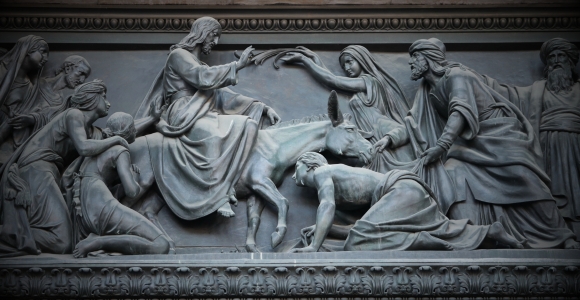
The Courage to Stand Up to Harm 

We want to take this moment to express our heartfelt gratitude to all of our supporters for your support of Renewed Heart Ministry’s work of love, justice, and compassion. At a time when ministries like ours are being asked to achieve more with fewer resources, your support is so deeply appreciated, and we want to simply say thank you. Whether in our larger society or within our local faith communities, Renewed Heart Ministries remains committed to advocating for change, working towards a world that is inclusive, just, and safe for everyone, and being a source of love. From all of us here at Renewed Heart Ministries, thank you for your generous support. We deeply appreciate you.

If you’d like to join them in supporting our work, please go to renewedheartministries.com and click on “Donate.”  


Image created by Canva

The Courage to Stand Up to Harm 

Herb Montgomery; March 14, 2025

If you’d like to listen to this week’s article in podcast version click on the image below:

Our reading this week is from the three temptations in the gospel of Luke:

At that time some Pharisees came to Jesus and said to him, “Leave this place and go somewhere else. Herod wants to kill you.”

He replied, “Go tell that fox, ‘I will keep on driving out demons and healing people today and tomorrow, and on the third day I will reach my goal.’ In any case, I must press on today and tomorrow and the next day—for surely no prophet can die outside Jerusalem! 

“Jerusalem, Jerusalem, you who kill the prophets and stone those sent to you, how often I have longed to gather your children together, as a hen gathers her chicks under her wings, and you were not willing. Look, your house is left to you desolate. I tell you, you will not see me again until you say, ‘Blessed is he who comes in the name of the Lord.’” (Luke 13:31-35)

Our reading this week starts with a threat on Jesus’ life. This gives me pause in my own understanding of what Jesus and his gospel was all about. People don’t get killed for preaching a gospel that God loves people.  People don’t get killed for passing out free tickets to heaven or assurance about the afterlife. These kinds of gospels rarely ever threaten the status quo or the powerful whom the status quo benefits.

In the Hebrew prophetic justice tradition, prophets were killed when they stood up to exploitative systems by speaking truth to power. John the Baptist was standing squarely in that tradition and was beheaded by Herod. Now, in this week’s reading, Herod’s sights are set on Jesus. And Jesus is boldly standing in the same prophetic justice tradition: a Galilean, Jewish prophet of the poor speaks truth to power once again. 

One element that keeps the Jesus of this story relevant for me today is the courage we see here. 

“Go tell that fox, ‘I will keep on driving out demons and healing people today and tomorrow, and on the third day I will reach my goal.’”

Jesus calls Herod a fox. It makes me think of a fox in the hen house. Herod was a client king of Rome who exploited the population to enrich himself and the elites and powerful who, in exchange for their allegiance, were also being enriched. Speaking of a fox in the hen house, Jesus uses this imagery further when he says he wants to protect the people of Jerusalem as a hen gathers her chicks under her wings when the fox circles. The Temple State centered in Jerusalem had become deeply complicit in the harm that Rome was committing against the economically powerless and vulnerable. Jesus states that although he is working in Herod’s region, his ultimate aim is to go to Jerusalem and stage his protest there.

We who know the rest of the story know that Jesus did just that. He shows up at the Temple, flips the money tables in the courtyard, calls out those in power wielding harm, and, before the week is ended, the powerful and elite hang Jesus on a Roman cross. 

Jesus also defines his activity in Herod’s region as “driving out demons and healing people.” If we sanitize or domesticate these activities, we will fail to understand why they would have provoked death threats from Herod and we will miss the meaning here entirely. 

In the gospels, casting out demons is a coded way to speak to driving out Roman possession and oppression of the region and its inhabitants. In Mark, the name of the “demon” Jesus faced was Legion, the same name as the occupying, possessing Roman military unit in the area. 

“Jesus asked him, ‘What is your name?’ ‘Legion,’ he replied.” (Luke 8:30)

Casting out demons meant exorcising Roman presence from Jewish societies.  

This alone would make Herod’s death threats make sense. Liberating individuals from personal demons wouldn’t have even gotten Herod’s attention. But if Jesus was speaking out against Rome, this would have threatened Herod and his role and position with the empire. It would make Herod’s death threats make a lot of sense. 

We must also see healing the people as more than physical. Jesus’ teaching was accompanied by healing for the people because his gospel of God’s just reign in the place of Rome’s was the undoing of the economic, political, social, and religious sickness Rome had brought to the masses in Galilee and Judea while enriching the elites at their expense. 

Despite Herod’s threats, Jesus sets his sights on Jerusalem. He must take his gospel for the poor (Luke 4:18) to the very center of the system that is causing the harm. This reminds me of the saying about pulling people out of the river. If someone is drowning then by all means pull them out, but at some point you have to wander up stream and find out who keeps throwing all these people in the river to begin with! We must be about harm mitigation, but harm mitigation is not enough. Charity is not enough. At some point we must challenge the system that creates such a deep need for charity. This is the difference between feeding the poor, which is important, and asking why we have a system that creates poverty to begin with. That would not be simple bandaid solutions, but genuine systemic healing indeed. 

Lastly, Jesus states that no prophet can die outside of Jerusalem. This statement alone gives us an idea of how far Jerusalem and her rulers had become enmeshed with Roman complicity in harm. Jerusalem had become known for silencing one way or another anyone who spoke out against the powerful: “Jerusalem, Jerusalem, you who kill the prophets and stone those sent to you” (Matt 23:37). As the powerful did to the prophets of old, so the powerful also silenced contemporary prophets of justice. Think of the beheading of John. Jesus was following closely behind in his trajectory. Again, it is helpful to think of Jerusalem politically, as the capital city of that region and not strictly religious. Yes, religion was involved, as it was in everything. But Jesus’ denouncement is not against Judaism as a religion but against the temple state’s participation with the harm Rome was committing against the populace, participation enriching powerful people in Jerusalem who would be faithful to Rome. 

All of this causes me to consider those today with the courage to speak out against harsh decisions and brutal acts being perpetrated in the name of government efficiency today. A chainsaw is quite metaphorically being taken to our system, all to grant benefits to wealthy elites who verbalize allegiance to our present administration in the U.S. At what cost? The dismantling of a system,  and undeserving people harmed in its wake. And those who speak out now are also being targeted for doing so. 

In our story, Jesus knew where his solidarity would lead. He knew that if he continued to speak out against the harm being perpetrated by the powerful, if he continued to stand in solidarity with the marginalized, the vulnerable, those most harmfully impacted by the decisions the powerful in his society were making, and if he called the entire populace back to fidelity to the God of the Torah with its economic justice (including the Torah’s periodic wealth redistribution and debt cancellation), he well knew that taking up the prophet’s role could garner him a prophet’s end. And this is why the Jesus story remains relevant for me in times like we are living through today. Jesus, knowing where his choices would lead, still had the courage to make those decisions and stand up for what was right for the people. 

Today, many Christians (not all) are directly responsible for the political, social, and economic horizon we are looking out on in this nation. How would the Jesus of our reading this week respond to Christians who carry his name today being the very agents who have let a fox in the hen house to wreak havoc, chaos, and long lasting harm to so many? May those of us endeavoring to follow Jesus in our present moment be encouraged by the prophet we find in this week’s reading. A Jesus who named Herod for what he was. A Jesus who boldly refused to stop speaking truth about what was right. A Jesus who, setting his face toward Jerusalem, determined to go to the heart of the system in his commitment to God’s just future and making our world a safe, compassionate, just home for all. In the face of so many who are being harmed now, and for those for whom the next few years will bring untold harm, may we, too, find the same courage the Jesus of this week’s story showed. 

Discussion Group Questions

1. Share something that spoke to you from this week’s podcast episode with your discussion group.

2. 2. What does saying “No” to injustice perpretrated by those in power look like for you? Share and discuss with your group.

3. What can you do this week, big or small, to continue setting in motion the work of shaping our world into a safe, compassionate, just home for everyone? 

Thanks for checking in with us, today.

I want to say a special thank you to all of our supporters out there. And if you would like to join them in supporting Renewed Heart Ministries’ work you can do so by going to renewedheartministries.com and clicking donate. 

My latest book Finding Jesus: A Fundamentalist Preacher Discovers the Socio-Political and Economic Teachings of the Gospels is available now on Amazon in paperback, Kindle and also on Audible in audio book format.

As always, you can find Renewed Heart Ministries each week on Bluesky, Facebook, Instagram and Meta’s Threads. If you haven’t done so already, please follow us on your chosen social media platforms for our daily posts. 

Thank you for listening to The Social Jesus Podcast. If you enjoyed this podcast please take a moment to like and subscribe and if the podcast platform you’re using offers this option, please leave us a positive review. This helps others find our podcast as well.

You can watch our YouTube show each week called “Just Talking”. Each week, Todd Leonard and I take a moment to talk about the gospel lectionary reading for the upcoming weekend. We’ll be talking about each reading in the context of love, inclusion, and social justice. Our hope is that our talking will be just talking (as in justice) and that during our brief conversations each week you’ll be inspired to also do more than just talking. If you teach from the lectionary each week, or if you’re just looking for some thoughts on the Jesus story from a more progressive perspective within the context of social justice, check it out, you might like it. You can find JustTalking each week on YouTube at youtube.com/@herbandtoddjusttalking.

Please Like, Subscribe, hit the Notification button, and leave us a comment.

And if you’d like to reach us here at Renewed Heart Ministries through email, you can reach us at info@renewedheartministries.com.

Right where you are, keep living in love, choosing compassion, taking action, and working toward justice.

I love each of you dearly,

I’ll see you next week.


New Episode of “Just Talking” Now Online!

Season 3, Episode 6: Luke 13.31-35. Lectionary C, Lent 2

Each week, we’ll be talking about the gospel lectionary reading for the upcoming weekend in the context of love, inclusion, and social justice. Our hope is that our talking will be “just” talking (as in justice) and that during our brief conversations each week we’ll be inspired to do more than just talking.

If you teach from the lectionary each week, or if you’re just looking for some thoughts on the Jesus story from a more progressive perspective within the context of social justice, check it out at:


New Episode of The Social Jesus Podcast

A podcast where we talk about the intersection of faith and social justice and what a first century, prophet of the poor from Galilee might have to offer us today in our work of love, compassion and justice. 

This week:

Season 2 Episode 11: The Courage to Stand Up to Harm

Luke 13:31-35

All of this causes me to consider those today with the courage to speak out against harsh decisions and brutal acts being perpetrated in the name of government efficiency today. A chainsaw is quite metaphorically being taken to our system, all to grant benefits to wealthy elites who verbalize allegiance to our present administration in the U.S. At what cost? The dismantling of a system,  and undeserving people harmed in its wake. And those who speak out now are also being targeted for doing so. In our story, Jesus knew where his solidarity would lead. He knew that if he continued to speak out against the harm being perpetrated by the powerful, if he continued to stand in solidarity with the marginalized, the vulnerable, those most harmfully impacted by the decisions the powerful in his society were making, and if he called the entire populace back to fidelity to the God of the Torah with its economic justice (including the Torah’s periodic wealth redistribution and debt cancellation), he well knew that taking up the prophet’s role could garner him a prophet’s end. And this is why the Jesus story remains relevant for me in times like we are living through today. Jesus, knowing where his choices would lead, still had the courage to make those decisions and stand up for what was right for the people. Today, many Christians (not all) are directly responsible for the political, social, and economic horizon we are looking out on in this nation. How would the Jesus of our reading this week respond to Christians who carry his name today being the very agents who have let a fox in the hen house to wreak havoc, chaos, and long lasting harm to so many? May those of us endeavoring to follow Jesus in our present moment be encouraged by the prophet we find in this week’s reading. A Jesus who named Herod for what he was. A Jesus who boldly refused to stop speaking truth about what was right. A Jesus who, setting his face toward Jerusalem, determined to go to the heart of the system in his commitment to God’s just future and making our world a safe, compassionate, just home for all. In the face of so many who are being harmed now, and for those for whom the next few years will bring untold harm, may we, too, find the same courage the Jesus of this week’s story showed. 

Available on all major podcast carriers and at:

https://the-social-jesus-podcast.simplecast.com/episodes/the-courage-to-stand-up-to-harm


Finding Jesus: A Fundamentalist Preacher Discovers the Socio-Political & Economic Teachings of the Gospels.


by Herb Montgomery

Available now on Amazon!

In Finding Jesus, author Herb Montgomery delves into the profound and often overlooked political dimensions of the gospels. Through meticulous analysis of biblical texts, historical context, and social discourse, this thought-provoking book unveils the gospels’ socio-political, economic teachings as rooted in a profound concern for justice, compassion, and the well-being of the marginalized. The book navigates the intersections between faith and societal justice, presenting a compelling argument for a more socially engaged and transformative Christianity.

Finding Jesus is not just a scholarly exploration; it is a call to action. It challenges readers to reevaluate their understanding of Christianity’s role in public life and to consider how the radical teachings of the gospels can inspire a renewed commitment to justice, equality, and compassion. This book is a must-read for those seeking a deeper understanding of the social implications of Christian faith and a blueprint for building a more just and inclusive society.


Are you getting all of RHM’s Free Resources?

Free Sign Up Here
The Temptations and the Rise of Authoritarianism in America

We want to take this moment to express our heartfelt gratitude to all of our supporters for your support of Renewed Heart Ministry’s work of love, justice, and compassion. At a time when ministries like ours are being asked to achieve more with fewer resources, your support is so deeply appreciated, and we want to simply say thank you. Whether in our larger society or within our local faith communities, Renewed Heart Ministries remains committed to advocating for change, working towards a world that is inclusive, just, and safe for everyone, and being a source of love. From all of us here at Renewed Heart Ministries, thank you for your generous support. We deeply appreciate you.

If you’d like to join them in supporting our work, please go to renewedheartministries.com and click on “Donate.”  


Image created by Canva

The Temptations and the Rise of Authoritarianism in America

Herb Montgomery; March 1, 2025

If you’d like to listen to this week’s article in podcast version click on the image below:

Our reading this week is from the three temptations in the gospel of Luke:

Jesus, full of the Holy Spirit, left the Jordan and was led by the Spirit into the wilderness, where for forty days he was tempted by the devil. He ate nothing during those days, and at the end of them he was hungry.

The devil said to him, “If you are the Son of God, tell this stone to become bread.”

Jesus answered, “It is written: ‘Man shall not live on bread alone.’”

The devil led him up to a high place and showed him in an instant all the kingdoms of the world. And he said to him, “I will give you all their authority and splendor; it has been given to me, and I can give it to anyone I want to. If you worship me, it will all be yours.”

Jesus answered, “It is written: ‘Worship the Lord your God and serve him only.’”

The devil led him to Jerusalem and had him stand on the highest point of the temple. “If you are the Son of God,” he said, “throw yourself down from here. For it is written:

  “ ‘He will command his angels concerning you 

to guard you carefully;

they will lift you up in their hands,

so that you will not strike your foot against a stone.’”

Jesus answered, “It is said: ‘Do not put the Lord your God to the test.’”

When the devil had finished all this tempting, he left him until an opportune time. 

(Luke 4:1-13)

The current political environment in the U.S. has given us a different lens to read Jesus’ temptations in the wilderness through as this text, once again, rolls by in the lectionary. For readers today who have a difficult time with this story’s language and characters (such as a devil), remember that this story was written for people in that culture, not ours. This year, I would like you to consider not the fantastic nature of the story but the idea that this story, written in that fantastic flavor, was a conspicuously veiled critique of the political, economic, social, and even religious system of the society that the audience of Luke’s gospel lived in. It was written for those who had the understanding to perceive it.

The very first words Luke’s “devil” speaks to Jesus was to question: “If you are the Son of God…” Remember, “son of God” was one of the titles attributed to Caesar. Over and over again, Luke contrasts Jesus and his “kingdom” with Caesar and the Roman Empire. They are alternative ways of doing life collectively together as human beings. So the very first question this story is asking is on what grounds does Jesus and his way of doing life replace Rome and its way of doing life. In other words, “If you, Jesus, are the son of God instead of Caesar, then . . .”

And that leads us to Jesus’ very first temptation—turning stones to bread. Bread was one of Rome’s central promises to its citizenry. By the time the gospels were written, Rome’s grain dole was well established. Each citizen was assured a measure of grain on a regular basis, and this was one of the ways Rome sought to ensure riots and rebellion did not break out throughout its territories (see Bread and circuses). Those who controlled the bread ultimately controlled the people, and one way to motivate clients of Rome to cooperate was that these regional rulers could turn their stony, arid, less than suitable agricultural lands (i.e. stones) into bread by being loyal to Rome and thus receiving Rome’s grain dole. Recognizing Caesar as the son of God allowed many client rulers to turn stones into bread on a regular schedule. 

This story is critiquing the way that the Temple State with its rulers and priesthood had become complicit with the Roman Empire. Jesus quotes Deuteronomy 8:3 to remind Luke’s listeners of the words of the Torah. in the tradition of Jewish renewal, he is calling them back to fidelity to the Torah’s teachings. Here is the passage referenced in the first temptation from Deuteronomy.

He humbled you, causing you to hunger and then feeding you with manna, which neither you nor your ancestors had known, to teach you that man does not live on bread alone but on every word that comes from the mouth of the LORD. (Deuteronomy 8:3)

The second temptation is a bit more obvious. What Rome promised each of its client rulers was authority and power over their region. They literally could have said to each of their clients, “I will give you authority and splendor; it has been given to me, and I can give it to anyone I want to. If you worship me, it will all be yours.” If rulers of the regions that Rome conquered embraced the Roman religion of Caesar worship and swore fidelity to the Roman Empire, then authority and splendor would be theirs. In response to the way the Temple State with its golden Roman Eagle and the priest and rulers had become complicit with Rome, Jesus in the story quotes Deuteronomy again, this time chapter 6:

Worship the LORD your God, serve him only and take your oaths in his name. Do not follow other gods, the gods of the peoples around you. (Deuteronomy 6:13-14)

In Luke’s third temptation (the second temptation in Matthew’s gospel), Jesus is taken up to the highest point of the Temple. Jerusalem and the Temple should not be interpreted here in merely religious terms. Think of Jerusalem as the capital of the region of Judea and the temple as the capital building. The temple was the standing symbol of the Jewish Temple state and the center out of which the Jewish Temple state operated.  What Rome promised the priest, scribes, Sanhedrin, and wealthy elites of Rome was protection “lest they dash their feet upon the stone” of Rome and lose their local power and wealth. This protection was conditional upon them using the Temple State to incorporate Roman allegiance into their systems of politics, economics, and religion. (The priesthood, remember, was taken over by Roman authority, and Caesar selected the priests.). It waste temple’s complicity with Rome that both Jesus and John the Baptist critiqued: it transformed the Temple and Temple State into a channel for local Roman oppression of the economically marginalized. 

In response, Jesus quotes this final time from Deuteronomy (chapter 6):

Worship the LORD your God, serve him only and take your oaths in his name. Do not follow other gods, the gods of the peoples around you; for the LORD your God, who is among you, is a jealous God and his anger will burn against you, and he will destroy you from the face of the land. Do not put the LORD your God to the test as you did at Massah. (Deuteronomy 6:13-16)

What is this testing at Massah that Luke’s gospel asked its listeners to remember? It’s found in Exodus 17:

The whole Israelite community set out from the Desert of Sin, traveling from place to place as the LORD commanded. They camped at Rephidim, but there was no water for the people to drink. So they quarreled with Moses and said, “Give us water to drink.” Moses replied, “Why do you quarrel with me? Why do you put the LORD to the test?”But the people were thirsty for water there, and they grumbled against Moses. They said, “Why did you bring us up out of Egypt to make us and our children and livestock die of thirst?”Then Moses cried out to the LORD, “What am I to do with these people? They are almost ready to stone me.” The LORD answered Moses, “Go out in front of the people. Take with you some of the elders of Israel and take in your hand the staff with which you struck the Nile, and go. I will stand there before you by the rock at Horeb. Strike the rock, and water will come out of it for the people to drink.” So Moses did this in the sight of the elders of Israel. And he called the place Massah and Meribah  because the Israelites quarreled and because they tested the LORD saying, “Is the LORD among us or not?” (Exodus 17:1-7)

Had those in control of society in Jesus’ time returned to Egypt (now a metaphor for the Roman Empire) and the security it promised rather than trusting in the faithfulness of the God of the Torah by practicing the economic justice toward the marginalized and vulnerable found in the Pentateuch?

Although the Christian religion has now evolved far away from those early roots, the Jesus movement began as a Jewish renewal movement calling its adherents away from complicity with Roman oppression and exploitation and back to fidelity to the economic justice teachings in the Torah. 

What does all of this mean for us today?

Today we are again witnessing the rise of authoritarianism, nationalism, and the weakening of and some feel the fall of democracy in our own society. It is time for Jesus followers of all types to return to the roots of saying no to a politics of exclusion, exploitation, and enrichment of the elites at the expense of the masses. What we have instead is how Egypt operated. It was also how Rome operated. It is not how Jesus envisioned God’s just future. 

God’s just future will require willingness for Christians who bear responsibility for the mess we find ourselves in to embrace deep repentance. I also pray we become reacquainted with the Jesus of the gospels as encouragement to Christians who wisely saw the direction our society was headed and did all they could within their spheres of influence to divert our society’s course. Regardless, of where you find yourself in your own journey of endeavoring to follow Jesus, may Luke’s story of Jesus’ temptations be a source of encouragement, conviction, and, to those for whom it applies, repentance as we enter this years Lenten season. 

Discussion Group Questions

1. Share something that spoke to you from this week’s podcast episode with your discussion group.

2. How are you being called to repent this lenten season and resist the tempations of Empire in your own life? Share and discuss with your group.

3. What can you do this week, big or small, to continue setting in motion the work of shaping our world into a safe, compassionate, just home for everyone? 

Thanks for checking in with us, today.

I want to say a special thank you to all of our supporters out there. And if you would like to join them in supporting Renewed Heart Ministries’ work you can do so by going to renewedheartministries.com and clicking donate. 

My latest book Finding Jesus: A Fundamentalist Preacher Discovers the Socio-Political and Economic Teachings of the Gospels is available now on Amazon in paperback, Kindle and also on Audible in audio book format.

As always, you can find Renewed Heart Ministries each week on Bluesky, Facebook, Instagram and Meta’s Threads. If you haven’t done so already, please follow us on your chosen social media platforms for our daily posts. 

Thank you for listening to The Social Jesus Podcast. If you enjoyed this podcast please take a moment to like and subscribe and if the podcast platform you’re using offers this option, please leave us a positive review. This helps others find our podcast as well.

You can watch our YouTube show each week called “Just Talking”. Each week, Todd Leonard and I take a moment to talk about the gospel lectionary reading for the upcoming weekend. We’ll be talking about each reading in the context of love, inclusion, and social justice. Our hope is that our talking will be just talking (as in justice) and that during our brief conversations each week you’ll be inspired to also do more than just talking. If you teach from the lectionary each week, or if you’re just looking for some thoughts on the Jesus story from a more progressive perspective within the context of social justice, check it out, you might like it. You can find JustTalking each week on YouTube at youtube.com/@herbandtoddjusttalking.

Please Like, Subscribe, hit the Notification button, and leave us a comment.

And if you’d like to reach us here at Renewed Heart Ministries through email, you can reach us at info@renewedheartministries.com.

Right where you are, keep living in love, choosing compassion, taking action, and working toward justice.

I love each of you dearly,

I’ll see you next week.


New Episode of “Just Talking” Now Online!

Season 3, Episode 5: Luke 4.1-13. Lectionary C, Lent 1

Each week, we’ll be talking about the gospel lectionary reading for the upcoming weekend in the context of love, inclusion, and social justice. Our hope is that our talking will be “just” talking (as in justice) and that during our brief conversations each week we’ll be inspired to do more than just talking.

If you teach from the lectionary each week, or if you’re just looking for some thoughts on the Jesus story from a more progressive perspective within the context of social justice, check it out at:


New Episode of The Social Jesus Podcast

A podcast where we talk about the intersection of faith and social justice and what a first century, prophet of the poor from Galilee might have to offer us today in our work of love, compassion and justice. 

This week:

Season 2 Episode 10: The Temptations and the Rise of Authoritarianism in America

Luke 4:1-13

The current political environment in the U.S. has given us a different lens to read Jesus’ temptations in the wilderness through as this text, once again, rolls by in the lectionary. Presently we are witnessing the rise of authoritarianism, nationalism, and the weakening of and some feel the fall of democracy in our own society. The politics of the gospel call us to say no to a politics of exclusion, exploitation, and enrichment of the elites at the expense of the masses. The temptations story calls for a willingness from Christians who bear responsibility for the mess we find ourselves in to embrace deep repentance and to become reacquainted with the Jesus of the gospels. These stories also serve as encouragement to Christians who wisely saw the direction our society was headed and did all they could within their spheres of influence to divert our society’s course. Regardless, of where we find ourselves presently, the stories of the temptations are a source of encouragement, conviction, and, to those for whom it applies, repentance as we enter this year’s Lenten season. 

Available on all major podcast carriers and at:

https://the-social-jesus-podcast.simplecast.com/episodes/the-temptations-and-the-rise-of-authoritarianism-in-america


Finding Jesus: A Fundamentalist Preacher Discovers the Socio-Political & Economic Teachings of the Gospels.


by Herb Montgomery

Available now on Amazon!

In Finding Jesus, author Herb Montgomery delves into the profound and often overlooked political dimensions of the gospels. Through meticulous analysis of biblical texts, historical context, and social discourse, this thought-provoking book unveils the gospels’ socio-political, economic teachings as rooted in a profound concern for justice, compassion, and the well-being of the marginalized. The book navigates the intersections between faith and societal justice, presenting a compelling argument for a more socially engaged and transformative Christianity.

Finding Jesus is not just a scholarly exploration; it is a call to action. It challenges readers to reevaluate their understanding of Christianity’s role in public life and to consider how the radical teachings of the gospels can inspire a renewed commitment to justice, equality, and compassion. This book is a must-read for those seeking a deeper understanding of the social implications of Christian faith and a blueprint for building a more just and inclusive society.


Are you getting all of RHM’s Free Resources?

Free Sign Up Here

Lessons of Justice from the Transfiguration

We want to take this moment to express our heartfelt gratitude to all of our supporters for your support of Renewed Heart Ministry’s work of love, justice, and compassion. At a time when ministries like ours are being asked to achieve more with fewer resources, your support is so deeply appreciated, and we want to simply say thank you. Whether in our larger society or within our local faith communities, Renewed Heart Ministries remains committed to advocating for change, working towards a world that is inclusive, just, and safe for everyone, and being a source of love. From all of us here at Renewed Heart Ministries, thank you for your generous support. We deeply appreciate you.

If you’d like to join them in supporting our work, please go to renewedheartministries.com and click on “Donate.”  


Image created by Canva

Lessons of Justice from the Transfiguration 

Herb Montgomery; March 1, 2025

If you’d like to listen to this week’s article in podcast version click on the image below:

Our reading this last week of the Epiphany season is the transfiguration passage from Luke’s gospel:

About eight days after Jesus said this, he took Peter, John and James with him and went up onto a mountain to pray. As he was praying, the appearance of his face changed, and his clothes became as bright as a flash of lightning. Two men, Moses and Elijah, appeared in glorious splendor, talking with Jesus. They spoke about his departure,  which he was about to bring to fulfillment at Jerusalem. Peter and his companions were very sleepy, but when they became fully awake, they saw his glory and the two men standing with him. As the men were leaving Jesus, Peter said to him, “Master, it is good for us to be here. Let us put up three shelters—one for you, one for Moses and one for Elijah.” (He did not know what he was saying.)

While he was speaking, a cloud appeared and covered them, and they were afraid as they entered the cloud. A voice came from the cloud, saying, “This is my Son, whom I have chosen; listen to him.” When the voice had spoken, they found that Jesus was alone. The disciples kept this to themselves and did not tell anyone at that time what they had seen. (Luke 9:28-36)

In this story, Moses and Elijah are symbols of liberation and justice. 

Moses symbolizes the giving of the Torah, its principles of economic justice, and the liberation of the Hebrew people from their slavery to Pharaoh. Hebrew scholars have long recognized that the primary concern of the first five books of the Hebrew Scriptures is social justice for the people. From the narratives all the way to the legal codes, justice for a people once enslaved is the theme. Just a few examples of that teaching:

“Do not mistreat or oppress a foreigner, for you were foreigners in Egypt.” (Exodus 22:21)

“Do not take advantage of the widow or the fatherless. If you do and they cry out to me, I will certainly hear their cry.” (Exodus 22:22-23)

“Do not deny justice to your poor people in their lawsuits. Have nothing to do with a false charge and do not put an innocent or honest person to death, for I will not acquit the guilty.” (Exodus 23:6-7)

Elijah lived during the time of King Ahab, the latest in a long line of kings to dismantle the Torah’s covenantal precepts of economic justice and transfer common wealth into the hands of a few wealthy elites. Ancestral lands had become the possessions of the king or his dignitaries. The rich got richer through taxes and tributes while the poor got poorer. Ahab’s father Omri had restructured the economics of Elijah’s society away from the Torah’s economic safeguards for the people and transformed it into an apparatus of deep systemic injustice. Elijah emerged in this system to call out this injustice and became a symbol in the Hebrew folklore of speaking truth to power even at great risk of personal harm. 

By connecting Jesus to these two figures in the transfiguration story, Luke’s gospel is telling us what Jesus was all about. Jesus doesn’t emerge only to hand out tickets to heaven and certificates of pardon for past personal sins. He is standing in the rich Hebrew tradition of working to make our present world a safe, compassionate, just home for the oppressed, marginalized, and subjugated. 

Jesus emerges in a time when his society has once again become complicit in economic injustice toward the poor and the powerful, for their own survival and gain, have become tools of Caesar’s exploitation and power. This exploitation later erupts into the poor people’s revolt of the late 60’s C.E,  but first Jesus comes preaching about returning to the way:

“Enter through the narrow gate. For wide is the gate and broad is the road that leads to destruction, and many enter through it. But small is the gate and narrow the way that leads to life, and only a few find it.” (Matthew 7:13-14)

This language resonated with the common people in his audience as they remembered this same language from their ancient prophets and psalms:

This is what the LORD says:

  “Stand at the crossroads and look;

ask for the ancient paths,

ask where the good way is, and walk in it,

and you will find rest for your souls. (Jeremiah 6:16)

I walk in the way of righteousness,

along the paths of justice. (Proverbs 8:20)

In his recent book In God We Do Not Trust, Walter Brueggemann elucidates the Torah connection between Jesus’ narrow “way” and the Torah’s “way” of justice: 

“In the horizon of Jesus, this path/way consisted of discipleship that required leaving all else to ‘follow.’ This characterization of the alternative community around Jesus as “followers of the way” (Acts 9:2, 24:14) indicates the requirements that we know as “love of God” and “love of neighbor.” This narrow, hard way is an alternative to the broad, easy way of the world marked by self-sufficiency and self-securing. Discipleship to Jesus is indeed an articulation of covenantal obedience to the alternative of Torah. The Torah provides guidance and illumination for how to live this alternative life in the world.” (In God We Do Not Trust, p. 59)

Returning to the social justice elements of the Hebrew tradition became so central to early Jesus followers in the 1st Century that they became known as people of this justice “way.”

Meanwhile, Saul was still breathing out murderous threats against the Lord’s disciples. He went to the high priest and asked him for letters to the synagogues in Damascus, so that if he found any there who belonged to the Way, whether men or women, he might take them as prisoners to Jerusalem. (Acts 9:1-2, emphasis added.)

And what was the concrete outcome of their following this Way? Acts 4 tells us. It wasn’t huge megachurches with record-breaking attendance. It wasn’t political power to enforce their dogma on unbelievers and liberals. The concrete result was “there were no needy persons among them” (Acts 4:34).

This reminds me of the proof Jesus gave to John’s disciples to validate his own ministry: “The good news is proclaimed to the poor” (Luke 7:22).

Lastly, we are living in a time when systemic protections for the vulnerable among us are being dismantled. Collective sustaining aid is being slashed or terminated every day. All of this channels more money away from the common wealth of the people into the pockets of privileged, propertied, and powerful wealthy billionaires.

What does it mean for us as we leave the Christian season of Epiphany, to remember Jesus standing not alongside Herod, Caiaphas, or Pilate but alongside Moses and Elijah, in solidarity with those whose society was being dismantled. Whose side Jesus is characterized as standing on in Luke is not the side of the powerful but of those who had been pushed to the edges. As Jesus followers today, where does this imply our solidarity should be? Considering the words of the Torah, how are we treating our migrant population? How are we treating our “fatherless and widows?” Is gutting such collective care programs (such as Medicare) in harmony with our edict to care for our elderly? How are we taking responsibility for ensuring the poor are not denied justice, the guilty are not acquitted, and innocent and guiltless people are not punished for standing up for what is right?  

I can’t help but feel like I’m reading the current news when I consider these passages from the Torah. Who are the Moseses of our day? Where are our Elijahs? Who are the ones standing alongside the Jesus of the oppressed (whether they would describe it in those terms or not) on our mountain top moment right now? In the liberation and justice wakes of Moses, Elijah, and Jesus, who are the ones working alongside those marginalized and made vulnerable in our day, and how can we align our stories, our energy, and our efforts with theirs?

I’ll close this week with the prophetic words of Ezekiel 34:

“Son of man, prophesy against the shepherds of Israel; prophesy and say to them: ‘This is what the Sovereign LORD says: Woe to you shepherds of Israel who only take care of yourselves! Should not shepherds take care of the flock? You eat the curds, clothe yourselves with the wool and slaughter the choice animals, but you do not take care of the flock. You have not strengthened the weak or healed the sick or bound up the injured. You have not brought back the strays or searched for the lost. You have ruled them harshly and brutally. So they were scattered because there was no shepherd, and when they were scattered they became food for all the wild animals. My sheep wandered over all the mountains and on every high hill. They were scattered over the whole earth, and no one searched or looked for them.” (Ezekiel 34:2-6)

Discussion Group Questions

1. Share something that spoke to you from this week’s podcast episode with your discussion group.

2. 2. Who are the present Moseses and Elijahs standing up to unjust power doing harm to our vulnerable? Who is it that needs our solidarity today? Share and discuss with your group.

3. What can you do this week, big or small, to continue setting in motion the work of shaping our world into a safe, compassionate, just home for everyone? 

Thanks for checking in with us, today.

I want to say a special thank you to all of our supporters out there. And if you would like to join them in supporting Renewed Heart Ministries’ work you can do so by going to renewedheartministries.com and clicking donate. 

My latest book Finding Jesus: A Fundamentalist Preacher Discovers the Socio-Political and Economic Teachings of the Gospels is available now on Amazon in paperback, Kindle and also on Audible in audio book format.

As always, you can find Renewed Heart Ministries each week on Bluesky, Facebook, Instagram and Meta’s Threads. If you haven’t done so already, please follow us on your chosen social media platforms for our daily posts. 

Thank you for listening to The Social Jesus Podcast. If you enjoyed this podcast please take a moment to like and subscribe and if the podcast platform you’re using offers this option, please leave us a positive review. This helps others find our podcast as well.

You can watch our YouTube show each week called “Just Talking”. Each week, Todd Leonard and I take a moment to talk about the gospel lectionary reading for the upcoming weekend. We’ll be talking about each reading in the context of love, inclusion, and social justice. Our hope is that our talking will be just talking (as in justice) and that during our brief conversations each week you’ll be inspired to also do more than just talking. If you teach from the lectionary each week, or if you’re just looking for some thoughts on the Jesus story from a more progressive perspective within the context of social justice, check it out, you might like it. You can find JustTalking each week on YouTube at youtube.com/@herbandtoddjusttalking.

Please Like, Subscribe, hit the Notification button, and leave us a comment.

And if you’d like to reach us here at Renewed Heart Ministries through email, you can reach us at info@renewedheartministries.com.

Right where you are, keep living in love, choosing compassion, taking action, and working toward justice.

I love each of you dearly,

I’ll see you next week.


New Episode of “Just Talking” Now Online!

Season 3, Episode 4: Luke 9.28-43a. Lectionary C, Transfiguration

Each week, we’ll be talking about the gospel lectionary reading for the upcoming weekend in the context of love, inclusion, and social justice. Our hope is that our talking will be “just” talking (as in justice) and that during our brief conversations each week we’ll be inspired to do more than just talking.

If you teach from the lectionary each week, or if you’re just looking for some thoughts on the Jesus story from a more progressive perspective within the context of social justice, check it out at:


New Episode of The Social Jesus Podcast

A podcast where we talk about the intersection of faith and social justice and what a first century, prophet of the poor from Galilee might have to offer us today in our work of love, compassion and justice. 

This week:

Season 2 Episode 9: Lessons of Justice from the Transfiguration

Luke 9:28-36

We are living in a time when systemic protections for the vulnerable among us are being dismantled. Collective sustaining aid is being slashed or terminated every day. All of this channels more money away from the common wealth of the people into the pockets of privileged, propertied, and powerful wealthy billionaires. What does it mean for us as we leave the Christian season of Epiphany, to remember Jesus standing not alongside Herod, Caiaphas, or Pilate but alongside Moses and Elijah, in solidarity with those whose society was being dismantled. Who are the Moseses of our day? Where are our Elijahs? Who are the ones standing alongside the Jesus of the oppressed (whether they would describe it in those terms or not) on our mountain top moment right now? In the liberation and justice wakes of Moses, Elijah, and Jesus, who are the ones working alongside those marginalized and made vulnerable in our day, and how can we align our stories, our energy, and our efforts with theirs?

Available on all major podcast carriers and at:

https://the-social-jesus-podcast.simplecast.com/episodes/lessons-of-justice-from-the-transfiguration


Finding Jesus: A Fundamentalist Preacher Discovers the Socio-Political & Economic Teachings of the Gospels.


by Herb Montgomery

Available now on Amazon!

In Finding Jesus, author Herb Montgomery delves into the profound and often overlooked political dimensions of the gospels. Through meticulous analysis of biblical texts, historical context, and social discourse, this thought-provoking book unveils the gospels’ socio-political, economic teachings as rooted in a profound concern for justice, compassion, and the well-being of the marginalized. The book navigates the intersections between faith and societal justice, presenting a compelling argument for a more socially engaged and transformative Christianity.

Finding Jesus is not just a scholarly exploration; it is a call to action. It challenges readers to reevaluate their understanding of Christianity’s role in public life and to consider how the radical teachings of the gospels can inspire a renewed commitment to justice, equality, and compassion. This book is a must-read for those seeking a deeper understanding of the social implications of Christian faith and a blueprint for building a more just and inclusive society.


Are you getting all of RHM’s Free Resources?

Free Sign Up Here