Not Just Saying Master, Master

by Herb Montgomery

Dictionary entry of the word ethics. “Why do you call me: Master, Master, and do not do what I say?” (Q 6:46)

Companion Texts:

Luke 6:46, 47: “Why do you call me, ‘Lord, Lord,’ and do not do what I say? As for everyone who comes to me and hears my words and puts them into practice, I will show you what they are like.”

Matthew 7:21-24: “Not everyone who says to me, ‘Lord, Lord,’ will enter the kingdom of heaven, but only the one who does the will of my Father who is in heaven. Many will say to me on that day, ‘Lord, Lord, did we not prophesy in your name and in your name drive out demons and in your name perform many miracles?’ Then I will tell them plainly, ‘I never knew you. Away from me, you evildoers!’ Therefore everyone who hears these words of mine and puts them into practice is like a wise man who built his house on the rock . . . ”

Where We Stand

A couple of years ago, a friend of mine came up to me with concern after one of my evening presentations. We were in the middle of a week-long series on the Sermon of the Mount in the gospel of Matthew. We’d progressed through Jesus’s rejection of violence and his teaching on sharing our surplus with the poor, and those two teachings alone were about enough for him. He said, “Herb, I feel like you are just giving us a really difficult way to get to heaven.”At that moment, I really didn’t understand all that his statement meant. But as I thought about it, some things began to become clear for me.

First, I didn’t write the Sermon on the Mount. And yes, there are things in it that are difficult to accept, especially for Americans today. Its statements on nonviolence (e.g. Matthew 5:39) and anti-capitalism (e.g. Matthew 19:23) are potently un-American. So yes, some things in Matthew’s gospel are difficult for us.

But before we chuck the entire message, let’s first ask what sector of society we’re encountering these teachings from, where we stand in society. Those of us who are privileged in the status quo always find the teachings of Jesus difficult, whereas those who are subjugated tend to resonate with his teachings as good news. (Both oppressor and oppressed are challenged with the practice of nonviolence, although it challenges them in very different ways.)

So if a saying of Jesus initially strikes you as difficult, first begin by locating yourself within the socio-economic pyramid, and why your place in society might make his teaching hard to accept.

Second, nowhere in the gospels does Jesus present us with a nice and easy program to follow so we can obtain post-mortem bliss (i.e. heaven.) You won’t find it. Jesus teachings were about the “empire” of God here on earth “in this generation,” through people learning how to take care of people. It is Paul’s gospel that addresses post-mortem bliss, not Jesus’s. Jesus placed before us a vision of things on earth being transformed to be “as they are in heaven.” He was not giving us a difficult way to get to heaven, but rather a risky and often deeply challenging way to heal this world. I believe Jesus was showing us a path, a “way,” to a safer, more just, more compassionate world for us all through mutual participation and mutual care.

Doing As Jesus Said

G.K. Chesterton is often quoted as saying that the history of Christianity does not prove that the teachings of Jesus have been “tried and found wanting,” but that those teachings have been “found difficult and left untried” (What’s Wrong with the World). But again, Jesus isn’t trying to make it hard for us to get to heaven; he is being honest about how hard it really is to make our world a safer, more just, more compassionate home for everyone. When we tell the truth about this, we don’t make following Jesus hard. We are simply honest about how hard it can be for those at the top of our socio-economic pyramids to follow him. It’s easy to worship Jesus. It’s easy to hold a cosmological notion about Jesus. It’s much more challenging to distill his ethical teachings from a first century Jewish context and apply them to the challenges we face in our society today. And it’s still more challenging to actually follow through with those actions.

But I believe the challenge is worth it. No medical student graduates from medical school and says, “What a bunch of legalistic professors! All they told me for four years was ‘Do this and do that! Do this and don’t do that!’” Instead, they go out into the world with a set of skills and perceptions that we all hope will enable them to alleviate suffering in our world.

It’s the same with Jesus. Jesus didn’t give us a list of doctrines to believe. He left us a set of teachings, wisdom teachings. As we endeavor to put them into practice, our experience grows, our practice becomes more skilled, our listening becomes more honed, and our actions become more intrinsically healing and liberating to those who are not privileged by the current status quo.

Matthew is clear: not everyone who calls Jesus “Lord” will enter the “empire” of God. (I’m beginning to prefer the term “empire” over “kingdom,” because I believe it is more historically consistent with the time in which Jesus taught, when that whole region lived under the oppression of the Roman empire.)

Luke is clear, too, that the sayings of Jesus must be “put into practice.” This set of teachings includes the “Way” of grace, nonviolence, peace-making, loving enemies, forgiveness, restorative justice, transformative justice, social justice, economic justice, working alongside those who are oppressed, marginalized, disinherited, excluded, a generous inclusivity, a radical sharing, and a community built on the principle that the empire of God is people taking care of people, rather than people competing with people.

If I had to choose between someone who believed in all the cosmological claims about Jesus but did not wish to put into practice the teachings of Jesus, and someone who doubted the cosmological claims but saw intrinsic value in Jesus’s teachings and sought to both understand and practice them in the here and now, I would have to choose the latter. The former has brought too much suffering on our world, whereas the latter endeavors to alleviate that suffering and sometimes succeeds!

A history worth reading is Philip Jenkins’ book Laying Down the Sword: Why We Can’t Ignore the Bible’s Violent Verses. This book will be one of our Annual Reading Course books either this year or next.

Calling Jesus “Master”

I want to address the word “Master” in this week’s saying.

As we progress through Sayings Gospel Q, we are going to see that Jesus taught what we would today call anarchy. Anarchy does not mean chaos; it means the rejecting of hierarchy. Anarchy rejects the way of domination and subjugation. 

I want to be clear here. While anarchy is commonly associated with freedom, Jesus didn’t teach “freedom” as we individualistically understand it today. He taught that although we are not to seek to dominate or subjugate one another, we are also not free from one another. We are connected! We are interdependent. No person is an island, and, as branches on the vine, we are all dependent on each other. Jesus taught the way of mutual aid, and he cast a vision of a world of people mutually serving each other. The hope for our world in Sayings Gospel Q is not in our devising more efficient ways of subjugating others, but in our discovering more effective ways at taking care of one another.

And yet we have this word “Master” in this week’s verse. I don’t believe the Jesus of Sayings Gospel Q actually wants to be anyone’s “Master” or even “Lord” in the sense of an emperor or feudal baron. I see no example of Jesus grasping that kind of power in any of Sayings Gospel Q. Like all wisdom teachers, Jesus desires to lead his listeners to a better way. And I don’t see him in any of the synoptic gospels wanting to dominate others. His desire was not to be served but to model what it means to serve.

Mark 10:41-45: “When the ten heard about this, they became indignant with James and John. Jesus called them together and said, ‘You know that those who are regarded as rulers of the Gentiles lord it over them, and their high officials exercise authority over them. Not so with you. Instead, whoever wants to become great among you must be your servant, and whoever wants to be first must be slave of all. For even the Son of Man did not come to be served, but to serve, and to give his life as a ransom for many.’”

Matthew 20:24-28: “When the ten heard about this, they were indignant with the two brothers. Jesus called them together and said, ‘You know that the rulers of the Gentiles lord it over them, and their high officials exercise authority over them. Not so with you. Instead, whoever wants to become great among you must be your servant, and whoever wants to be first must be your slave—just as the Son of Man did not come to be served, but to serve, and to give his life as a ransom for many.’”

Luke 22:24-27: “A dispute also arose among them as to which of them was considered to be greatest. Jesus said to them, ‘The kings of the Gentiles lord it over them; and those who exercise authority over them call themselves Benefactors. But you are not to be like that. Instead, the greatest among you should be like the youngest, and the one who rules like the one who serves. For who is greater, the one who is at the table or the one who serves? Is it not the one who is at the table? But I am among you as one who serves.’”

Even in John, which was written much later than the other canonical gospels and uses “Lordship” language the most, we find this narrative:

John 13:4-5: “So he got up from the meal, took off his outer clothing, and wrapped a towel around his waist. After that, he poured water into a basin and began to wash his disciples’ feet, drying them with the towel that was wrapped around him.”

John 13:12-15: “When he had finished washing their feet, he put on his clothes and returned to his place. ‘Do you understand what I have done for you?’ he asked them. ‘You call me “Teacher” and “Lord,” and rightly so, for that is what I am. Now that I, your Lord and Teacher, have washed your feet, you also should wash one another’s feet. I have set you an example that you should do as I have done for you.’”

These passages suggest to me that Jesus was much more interested in modeling and teaching a different way for us to live together as members of the human family. Even when he uses the phrase “empire of God,” he subverted the Domination Empire of his day and cast a vision for a world where people no longer dominated and subjugated each other as they did in the empires of that time.

Jesus did not emerge in Judaism only to become another in the long list of lords who practice domination. Instead, he showed us something very different.

This week’s saying is a significant challenge to today’s Christian culture. Today, we overwhelmingly emphasize verbally acknowledging Jesus as “Lord” so that a person can be assured of a post-mortem seat in the non-smoking section. Yet, in many sectors of the Christian religion, the sayings of Jesus on nonviolence, his preferential option for the poor, and his critique of domination systems are largely ignored by those who call him “Lord.” We read these sayings of Jesus in the gospels, but don’t hear them. The sayings pass right by us without substantially challenging the shape of our world. It is a very strange phenomena to me, one that I, too, used to experience.

I recently finished a book entitled Dorothy Day for Armchair Theologians by Elizabeth Hinson-Hasty. If you have not read it, I recommend it. Day is an example of a modern Christian who tried to take the sayings of Jesus seriously. Day wrote, “The Gospel takes away our right forever to discriminate between the deserving and the undeserving poor.” (The Catholic Worker, May 1940) The contrast between this paradigm and the paradigm I hear from some Christians today is stark.

And yet there is hope. There are many who have woken up and are waking up to this contrast. To each of you, this week’s saying serves as encouragement. You are working in the light given off by this question:

“Why do you call me: Master, Master, and do not do what I say?” (Q 6:46)

HeartGroup Application 

This week, pick either Matthew’s Sermon on the Mount or Luke’s Sermon on the Plain. Dedicate some time to reading either one. And then, after you have read through your selection:

  1. Pick a saying that you would like to lean more deeply into.
  2. Research that saying, including different perspectives and interpretations of this saying. Start with a simple Google search if you don’t know where else to begin. Remember what we covered last week. Consider what fruit varying interpretations have yielded or could produce.
  3. Experiment putting this saying into practice in this coming week. When you do, journal about the experience before you forget, and share your reflections with your HeartGroup when you come together.

Thank you so much for joining us this week. Let’s keep putting the sayings of Jesus into practice together, till the only world that remains is a world where only Love reigns.

I love each of you dearly.

I’ll see you next week.

The Tree Is Known by its Fruit

Grape VinesBY HERB MONTGOMERY

“No healthy tree bears rotten fruit, nor, on the other hand‚ does a decayed tree bear healthy fruit. For from the fruit the tree is known. Are figs picked from thorns, or grapes from thistles? The good person from one’s good treasure casts up good things, and the evil person‚ from the evil treasure casts up evil things. For from exuberance of heart one’s mouth speaks.” (Sayings Gospel Q 6:43-45)

Companion Texts:

Luke 6.43-45: “No good tree bears bad fruit, nor does a bad tree bear good fruit. Each tree is recognized by its own fruit. People do not pick figs from thorn bushes, or grapes from briers. A good man brings good things out of the good stored up in his heart, and an evil man brings evil things out of the evil stored up in his heart. For the mouth speaks what the heart is full of.”

Matthew 7.15-18: “Watch out for false prophets. They come to you in sheep’s clothing, but inwardly they are ferocious wolves. By their fruit you will recognize them. Do people pick grapes from thorn bushes, or figs from thistles? Likewise, every good tree bears good fruit, but a bad tree bears bad fruit. A good tree cannot bear bad fruit, and a bad tree cannot bear good fruit. Every tree that does not bear good fruit is cut down and thrown into the fire. Thus, by their fruit you will recognize them.”

Matthew 12.33-35: “Make a tree good and its fruit will be good, or make a tree bad and its fruit will be bad, for a tree is recognized by its fruit. You brood of vipers, how can you who are evil say anything good? For the mouth speaks what the heart is full of. A good man brings good things out of the good stored up in him, and an evil man brings evil things out of the evil stored up in him.”

Gospel of Thomas 45: “Jesus says: Grapes are not harvested from thorns, nor are figs picked from thistles, for they do not produce fruit. A good person brings forth good from his treasure. A bad person brings forth evil from the bad treasure that is in his heart, and in fact he speaks evil. For out of the abundance of the heart he brings forth evil.”

The saying we’re considering this week answers a question that typically arises when I invite people to be open to more theological perspectives and to listen to the marginalized. People want to know, “How do you know which person’s interpretation of the Bible is correct?”

The good thing about this question is that it comes from people who understand that we all interpret the Bible. All sacred texts need to be interpreted, but sometimes, we confuse our interpretations with the text itself and fear that if we come to understand the scriptures in a new way that means the scriptures themselves are being threatened. Over the years, I’ve often been accused of “throwing out the Bible” or “ignoring what the Bible teaches.” But that isn’t the case at all.

I may challenge a certain interpretation of a Bible passage because the interpretation is destructive or harmful and, when applied to the lives of real people, results in death rather than abundant life. But that is very different from throwing out the Bible.

I may embrace a different interpretation of a text than the ones I used to teach or that some of my readers (or accusers) take for granted. But that is very different from ignoring what the Bible teaches. In order to consider interpreting the Bible differently, I first have to take the Bible seriously.

Because I take the scriptures seriously, I believe it is important, as I shared last week, that we learn how people who experience life differently than us read, hear, and understand the scriptures we have in common.

The scriptures shape our lives, and so we don’t just need to know “which person’s interpretation of the text is correct.” We also need to ask “Whose interpretation is not correct? And how can we know?” Jesus teaches us how in the saying we’re looking at this week:

“No healthy tree bears rotten fruit, nor, on the other hand‚ does a decayed tree bear healthy fruit. For from the fruit the tree is known. Are figs picked from thorns, or grapes from thistles? The good person from one’s good treasure casts up good things, and the evil person‚ from the evil treasure casts up evil things. For from exuberance of heart one’s mouth speaks.” (Q 6:43-45)

Jesus invites us to look beyond what teachers say, to look at what is left in the wake of various textual interpretations. Are lives being enriched or destroyed?

European, colonial, and patriarchal theology, which is often privileged by being referred to simply as theology with no adjective, has been the source of much harm in our world. I came to learn this through sitting at a shared table where I could hear non-homogenous voices speaking on their respective experiences. As we learn to listen to those who differ from us, we can understand what consequences scriptural interpretations and policies we’ve built on them have had for different sectors of the human family.

From this posture of listening to the stories of one another, we can begin to discern which interpretations of sacred texts are “healthy trees” bearing “healthy fruit” in people’s lives, and which interpretations are “decayed trees” producing “rotten fruit.”

Jesus’s principle is true of all religions and all of the texts that each religion holds sacred. Again, sacred texts and the interpretations and explanations of those texts are not the same thing. Every religion contains various interpretations of its texts. As followers of Jesus, we must have our blind eyes opened through perceiving the fruit of these different interpretations and having the courage to choose interpretations that are truly life giving rather than “rotten“ for all people.

Wisdom Teachings

This week’s saying from Sayings Gospel Q is included in Matthew, Luke, and the Gospel Thomas. It is classified as part of Jesus’s “wisdom” teachings (as opposed to apocalyptic teachings). We’ll discuss the differences between Wisdom sayings, Apocalypticism, and Platonism in much more detail as we continue along in the teachings of Sayings Gospel Q. For now, though, what you need to know is that the early Jesus communities saw this saying as an ethical teaching that enabled them to find the “way” that leads to life rather than to self-destruction.

It is as true for us today as it was for them. There is no such thing as an “objective” interpretation of sacred texts, and theologies tell us far more about theologians than they can ever tell us about God. As James Cone states in God of the Oppressed, “The assumption that theological thinking is objective or universal is ridiculous” (p. 41).  A few pages before this statement he explains why, “Because Christian theology is human speech about God, it is always related to historical situations, and thus all of its assertions are culturally limited . . . Theology is not universal language; it is interested language and thus is always a reflection of the goals and aspirations of a particular people in a definite social setting.” James H. Cone; God of the Oppressed (p. 36).

When a non-homogenous community can analyze the fruit of various perspectives, when that community includes diversity of race, sex, gender, orientation, and identity, we can begin to create interpretations of sacred texts that are life giving for the whole human family, not just some sectors of it.

As individuals, we do not see things as they are but rather as we ourselves are, not initially, privately, or personally. Does this mean that subjective theologies are without value? No, all theologies have moral value: they either trend toward life, or lead toward death. We determine together the value of interpretations that our communities hold sacred.

Let me give three concrete examples.  There are various interpretations of the Bible texts that some people use to address same-sex relationships and people who identify as transgender and/or gender non-conforming.  Here are the facts.

  1. Suicide is the second leading cause of death among young people from ages 10 to 24. Suicide is the leading cause of death of LGB youth nationally. LGB youth who come from highly rejecting families are 8.4 times more likely to have attempted suicide than their peers who report zero to low family rejection. Many of these parents feel they must choose between their faith and their children. (Learn more here.)
  2. LGBT youth are twice as likely to end up homeless than heterosexual youth. 20% of homeless youth are LGBT, yet only 10% of the general youth population are LGBT. And on top of this, once they are thrown out by their families, 58.7% of LGBT homeless youth have been sexually victimized compared to 33.4% of heterosexual homeless youth. No wonder LGBT homeless youth commit suicide at higher rates (62%) than heterosexual homeless youth (29%). (Learn more here.)
  3. Last year, more than 22 transgender women were murdered in the U.S. alone. The number of these hate-crimes continues to grow each year at an alarming rate.  (Learn more here and here.)

When an interpretation of any sacred text in any religion produces this type of fruit, that interpretation must be deemed “destructive.”

We could also use other examples of destructive interpretations.  Interpretations have been used to justify racism, xenophobia, subjugation of women, and the economic creation of poverty.  And that is only a few.

With this in mind, we examine the sayings and teachings of Jesus in their own social setting. Jesus was a poor, Jewish man in a 1st Century Palestine that was under Roman political and economic control. His wisdom teachings helped his followers to create an intentional community that embraced their interconnectedness with and interdependence on each other as a means of survival. Stephen J. Patterson in his book The Lost Way: How Two Forgotten Gospels Are Rewriting the Story of Christian Origins puts it quite nicely.

“To seek the empire of God might just mean seeking out that way of life by which all have access to the means to life, even the poor and the hungry . . . Here is the beginning of a program of shared resources of the most basic sort: food and care. It’s an exchange. If some have food, all will eat; if any get sick, someone who eats will be there to care for them. The empire of God was a way to survive— which is to say, salvation. (p. 74-75)

Ponder that last phrase for a moment, “ A way to survive—which is to say, salvation.”

Liberation and survival are two separate things; thriving is not surviving. And while the ultimate goal is to thrive, the “in between” goal is to survive in the process of getting there.

So for all those working toward a safer, more just, more compassionate home for us all, and especially for those who are allowing the teachings of Jesus to matter in their lives and shape their perspectives and behavior, Sayings Gospel Q states:

“No healthy tree bears rotten fruit, nor, on the other hand‚ does a decayed tree bear healthy fruit. For from the fruit the tree is known. Are figs picked from thorns, or grapes from thistles? The good person from one’s good treasure casts up good things, and the evil person‚ from the evil treasure casts up evil things. For from exuberance of heart one’s mouth speaks.” (Q 6:43-45)

 HeartGroup Application

This week, contemplate what it means for you to begin evaluating Biblical interpretations and their effects not just on yourself but also on the most vulnerable communities in our society. One good way to do this is to continue what you started with last week’s HeartGroup application.

  1. Keep reading the book your group chose! Keep listening!
  2. Begin journaling the insights, questions, and feelings that you experience as you work through the material.
  3. Circle in your journal entries what you want to share with your group when you review together next month. Review week is now only three weeks away.

To you who are joining us on this journey through Sayings Gospel Q, thank you! I’m so glad you are tracking with us.

Keep contemplating the “fruits” of your interpretations. Keep listening. And keep living in love, till the only world that remains is a world where only Love reigns.

I love each of you, dearly.

I’ll see you next week.

The Speck and the Beam 

Black and white image of an eye.BY HERB MONTGOMERY

“And why do you see the speck in your brother’s eye, but the beam in your own eye you overlook? How can you say to your brother: Let me throw out the speck from your eye, and just look at the beam in your own eye? Hypocrite, first throw out from your own eye the beam, and then you will see clearly to throw out the speck in your brother’s eye.” (Q 6:41-42) 

Luke 6.41-42: “Why do you look at the speck of sawdust in your brother’s eye and pay no attention to the plank in your own eye? How can you say to your brother, ‘Brother, let me take the speck out of your eye,’ when you yourself fail to see the plank in your own eye? You hypocrite, first take the plank out of your eye, and then you will see clearly to remove the speck from your brother’s eye.”

Matthew 7.3-5: “Why do you look at the speck of sawdust in your brother’s eye and pay no attention to the plank in your own eye? How can you say to your brother, ‘Let me take the speck out of your eye,’ when all the time there is a plank in your own eye? You hypocrite, first take the plank out of your own eye, and then you will see clearly to remove the speck from your brother’s eye.”

Gospel of Thomas 26: “Jesus says: ‘You see the splinter that is in your brother’s eye, but you do not see the beam that is in your own eye. When you remove the beam from your own eye, then you will see clearly enough to remove the splinter from your brother’s eye.’”

This week, we are looking at a saying of Jesus that’s become quite well-known here in the U.S. thanks to the culture wars of the last century. The saying has various names, but the two most popular are The Mote and the Beam or Jesus’s Discourse on Judgmentalism. 

This saying is at the root of Tony Compolo’s popular retort, “Jesus did not teach ‘love the sinner, hate the sin.’ Jesus taught ‘love the sinner, hate your own sin.’” (Read Campolo’s article, Why Love the Sinner Hate the Sin Doesn’t Work.) Historically, Campolo is right: the phrase “hate the sin, love the sinner” doesn’t come from Jesus. It came from a phrase that St. Augustine used in one of his 5th Century letters: “Cum dilectione hominum et odio vitiorum” (Letter 211). The Latin can be translated “With love for mankind and hatred of sins.” But we have no record of Jesus ever using this phrase or any like it. It is a phrase that Christians have used, but one that is foreign to the teachings of Jesus. Mahatma Gandhi also gave a pointed response to it in his time as he reflected on the legacy of the Christian British colonialists in India:

“Man and his deed are two distinct things. Whereas a good deed should call forth approbation and a wicked deed disapprobation, the doer of the deed, whether good or wicked, always deserves respect or pity as the case may be. ‘Hate the sin and not the sinner’ is a precept which, though easy enough to understand, is rarely practiced, and that is why the poison of hatred spreads in the world . . . For we are all tarred with the same brush, and are children of one and the same Creator, and as such the divine powers within us are infinite. To slight a single human being is to slight those divine powers, and thus to harm not only that being, but with him the whole world.” [Gandhi, Mohandas K.; Desai, Mahadev (2008-08-27). An Autobiography: The Story of My Experiments With Truth (pp. 143-144). Emphasis added.]

For Jesus, if one wanted to be a source of healing and help in the wider world, the place to begin was with introspection. Ultimately this close attention does go beyond one’s self—“then you will see clearly to throw out the speck in your brother’s eye.”—but it does begin with one’s self “first.” What does this mean?

I can’t answer this question for you, but I can share with you what it has meant for me.

Introspection: My Experience

I’m a white, cisgender, heterosexual American man. I have to come to grips with what that means in this society before I can help to make the world a safer, more compassionate place. When it comes to privilege in America, with the exception of not having degrees from institutions of higher learning, I’m the poster child, and I have to explore my blind spots before I can deeply serve others who are different from me.

I’ve learned that I cannot do this alone. I could probably make some progress by sitting quietly, contemplating my place in the status quo. But I’m not sure that listening to the voices within my own head would produce that much change: it would only push me deeper into my own perceptions. What I need is the voices of others.

There are many ways one can encounter others’ voices. As I shared last week, I have chosen a non-defensive posture of listening to those whose experience is not like my own. I have also encountered others by reading as many books as I can digest from those whose perspectives are different from mine.

I’ll give you two examples.

Two winters ago, Drew Hart, author of Trouble I’ve Seen, Rod Thomas from The Resist Daily, and others hosted a Twitter chat with the hashtag #JamesConeWasRight. They were inspired by Cone’s writings, and looked at events in Ferguson, Missouri, and other areas of the U.S. through the lens of what Hart calls “Anablacktivism”—Anabaptist Black activism. (You can read this chat for yourself at https://storify.com/h00die_R/jamesconewasright-an-anablacktivist-chat)

I had just begun reading James Cone when this chat happened, so I decided to follow along and just listen.

During the comments, someone mentioned a point of Cone’s which was also taught by Dietrich Bonhoeffer. Someone else replied that they should not run from Cone to White, European, male theologians so quickly. I felt my internal defensiveness surge.

What?” I thought. Bonhoeffer stood up to oppression in solidarity with the Jewish citizens of Germany, but now we were just going to lump him in with all other White European theologians just because he was white and male? Where did that leave me?

This was the only time I was tempted to jump into the flow of the conversation rather than simply listen. But I heard a voice inside me say, “There it is! Sit on that. Just listen!”

As I kept listening I began to see how much the Church has privileged White theologians’ opinions and contributions, and I also saw the great need to center theological discussions and understandings in womanist, feminist, Black, Latin, and queer theologies as well. I realized that it was inappropriate to consider theology by White theologians “real theology” while downgrading theology done by other kinds of people to a lesser category. Other theological perspectives are just as valuable as White theology, and for me who grew into Christianity with only White theologians as my authorities and teachers they are even more 

valuable because I need to broaden my view of the Church. (A great read if you would like to explore this further is the book I quoted from last week, White Theology: Outing Supremacy in Modernity by James W. Perkinson.)

Sitting with the chat comments rather than defensively responding on behalf of a writer I still respect gave me a chance to see that bigger picture. It also challenged me not to get stuck in self-defense or even self-pity, and keep reaching out to others I needed to learn from.

The second way I’ve learned to listen is not just by recognizing which theologians aren’t privileged in the Christian community but by actually reading these theologians’ work.

Again, as a white, cis-hetero, male Christian, I must choose to listen to those who approach theology and who follow Jesus from a different perspective than my own. The theologians I wasn’t exposed to during my first few years in Christianity are no more infallible than anyone else. Like me, they also have “specks” in their eyes that need removing. Yet their experience, the experience they use as they approach theology, ethics, and morality gives them a unique advantage at showing me the “beam” in my own eye. A sample of the different theological voices I’ve sought out:

Feminist Theology:
Texts of Terror: Literary-Feminist Readings of Biblical Narratives (Overtures to Biblical Theology) by Phyllis Trible

Womanist Theology:
Sisters in the Wilderness: The Challenge of Womanist God-Talk by Delores S. Williams

Liberation Theology:
A Theology of Liberation: 15th Anniversary Edition by Gustavo Gutierrez

Black Liberation Theology:
A Black Theology of Liberation – Fortieth Anniversary Edition by James H. Cone

Queer Theology:
The Queer God by Marcella Althaus-Reid

All five of these lenses have been incredibly helpful as I’ve come to see the “beams” in my eye. Each of these authors has taught me to see how easy it once was for me to judge those who were unlike me, to morally evaluate them while cherishing a subtle or subconscious sense of moral superiority to them. I found it much easier to judge those not like me than to stop and listen.

I’m still on this listening journey, and I’m thankful for those who, out of love, have chosen to be in community with me and help me grow in compassion and understanding. I hope that they grow as well. The world that actually exists is a lot larger than I once believed, and I’m deeply grateful to those who have taken painstaking steps to show it to me.

Introspection for You

What does it mean for you this week to prioritize your own eye-beams rather than rush to others’ eye-specks? Both Luke’s and Matthew’s gospels describe our “logs” as compared to other people’s “splinters.” And this saying comes in both gospels’ summaries of Jesus’s teachings about judging of others. Sayings Gospel Q places it in the same context, whereas the Gospel of Thomas groups this saying with the teachings on taking care of one’s “brother” (see Gospel of Thomas 25-26)

Luke shares this saying with Jesus’s sermon on the plain, and Matthew includes it in Jesus’s sermon on the mount, both locations that represent the core of Jesus’s ethical and moral teachings. Each of the gospel writers felt this teaching about our logs and others’ splinters was central to their memory of Jesus. If Jesus taught that we should begin changing our world by starting with ourselves, what would this mean for you?

Could this challenge the knee jerk response to the movement for Black lives, “All lives matter”? Perhaps it might halt a defensive explanation that “not all Christians are like that” when someone who has been deeply wounded by a Christian shares some of their pain. When a friend laments how they’re treated in this society, Jesus’s teaching could stop me from replying, “Not all men!”

It can at least mean we all hold our initial reflex of defensiveness and take a posture of listening to others. Where it goes from there will be different for each person, but we have to come to grips with the fact that the greatest obstacles to a safer, more just, more compassionate world for us will not be the dust in another’s eyes but the beams that are in our own.

For all those who desire to lean more deeply into the teachings of Jesus, into making the world a safer, more just, more compassionate home for us all, all who want to become more keenly aware of your own blind spots:

“And why do you see the speck in your brother’s eye, but the beam in your own eye you overlook? How can you say to your brother: Let me throw out the speck from your eye, and just look at the beam in your own eye? Hypocrite, first throw out from your own eye the beam, and then you will see clearly to throw out the speck in your brother’s eye.” (Q 6:41-42) 

HeartGroup Application

  1. This week, pick a book from the list of five above that your HeartGroup will read over the next month.
  2. Set a date a month from now to share with each other your responses to what you have read. As you engage the book you’ve chosen, also engage your fellow HeartGroup participants in conversation about it to deepen your “beam” removal.
  3. At the end of your group’s discussion, choose a new action to embrace as a result of what you have read and discussed.

Thank you, once again, for journeying with us as we work through Sayings Gospel Q.

Till the only world the remains is a world where only love reigns.

I love each of you, dearly.

I’ll see you next week.

The Disciple and the Teacher 

by Herb Montgomery

Road leading to a cross

“A disciple is not superior to one’s teacher. It is enough for the disciple that he become‚ like his teacher.” (Q 6:40)

Luke 6:40: The student is not above the teacher, but everyone who is fully trained will be like their teacher.

Matthew 10:24-25: The student is not above the teacher, nor a servant above his master. It is enough for students to be like their teachers, and servants like their masters. If the head of the house has been called Beelzebul, how much more the members of his household!

This week’s saying is the age-old adage, “Like teacher, like student.” We take on the characteristics of our teachers. This is why choosing an appropriate mentor or instructor is an important step in becoming who you want to be: your teachers shape the kind of person you become.

An example is a few years ago I wanted to learn how to throw pottery.  I didn’t just go out an sit at the feet of any one who does pottery. I choose teachers who throw pottery well and whose style I also appreciate.  Find teachers who, themselves, resonate with what you want to become.

This translates into every area of life.  If I want to become something different than I already am, then I need to increase the diversity of those I allow to teach me. If I want to stay the same and never risk changing, then I need to choose teachers that are just like me. If I do the latter, though, it’s not likely that genuine, revolutionary learning can take place. It is likely that my old ways of thinking will only be reinforced and more deeply ingrained.

The saying of Jesus that we’re looking at this week appears in two different contexts in Matthew and Luke. A majority of scholars believe that Luke follows the Q text more closely, so we will begin with that.

Luke

Luke‘s version follows the passage we looked at last week where Jesus asks, “Can the blind lead the blind?” The passage invites us to choose teachers with developed senses of perception. If you choose teachers who are ignorant rather than aware,, you will share in their ignorance. As Jesus taught, fully trained students are like their teachers. So if you want keen perception for yourself, stop giving the seat of instruction in your life to those who cannot see. This could be one of the most revolutionary things some of us can do to change our lives: simply choose a different set of teachers.

This seems to me to be Luke’s emphasis as he shares Jesus’s saying. In this statement, Jesus is contrasting his teaching with the popular teachings of his time. Examples of contemporary teachings include the Pharisees’ drift away from Hillel to Shammai, and the idea that violent revolution was needed to overthrow Rome. For Luke, however the strongest teachings that Jesus competed with are the economic models of his day. Luke, much like Sayings Gospel Q, presented a world based on the economics of care. The Reign of God to Jesus is people taking care of people, a world where people come before profits, and where exploitation and subjugation give way to the predominant need, as opposed to being the means of an elite’s greed.

Matthew 

Matthew’s gospel has a different focus: Jesus encouraging his disciples. When the disciples are mistreated, Jesus says, they are simply receiving the same treatment Jesus was faced with. This teaching has been helpful to me personally.

Whenever I am being lied about, misrepresented, or slandered because I’m teaching something found in the sayings of Jesus, I go back and reread the entire chapter of Matthew 10. It doesn’t make the treatment any more comfortable, but it does encourage me that I’m not alone. I’m standing in a stream that stretches far back before me and will continue on long after me. It helps me to think of all who have been ill-treated for standing up for what is right. I remember the saying, “Worse things have happened to better people.” And most of all, I realize that I’m in the right story. What I’m experiencing is nothing new, and Jesus was here before me.

Being like Jesus

Recently my friend David Hayward at NakedPastor.com drew a sketch that sums up this teaching nicely!

http://i0.wp.com/nakedpastor.com/wp-content/uploads/2016/01/more-like-jesus.jpg

What does it mean to be like Jesus? Do we really understand all that it means to become like the teacher we read about in the gospels?

Being like Jesus involves learning how to love, how to embrace those at the bottom of our society’s various pyramids of domination, oppression, and subjugation. It also means learning how to work alongside those being marginalized and embracing accusation, rejection and possibly execution. There are many who have lived that kind of life. In history, that includes Mahatma Gandhi and Dr. Martin Luther King, Jr., but there are countless others who have also lost their lives for standing up to the status quo and working to make this world a safer home for all.

I’ve learned over the last few years that following Jesus doesn’t only mean trying to teach the same things he taught. It also means standing in solidarity with those Jesus stood in solidarity with and having the courage Jesus had to keep standing with them even when threats arise from those who benefit from the way things are and who feel threatened by change.

Lucretia Mott, a historical figure I look up to, was fond of quoting William Penn’s statement, “Men are to be judged by their likeness to Christ, rather than their notions of Christ.” [1]

I’ve noticed that many of my fellow U.S. Christians have developed very strong notions about Christ at the same time that others perceive them as unlike him. (A fantastic read to understand this dynamic deeper is unChristian: What a New Generation Really Thinks about Christianity…and Why It Matters.) We may think we’re being faithful by defending strong beliefs about Jesus and yet we miss that being faithful to him includes being faithful to the people he was faithful to. Faithfulness to Jesus means standing in solidarity with those in our day who are discriminated against and marginalized as the Jesus we see in the gospels stood in solidarity with his marginalized peers.

Will this faithfulness come with accusations? Will we, like Jesus, also be accused of doing the work of Beelzebul? Quite possibly.

I appreciate Edersheim’s comments on what Beelzebul meant.

“This charge, brought of course by the Pharisaic party of Jerusalem, had a double significance . . . We almost seem to hear the coarse Rabbinic witticism in its play on the word Beelzebul. For Zebhul (Hebrew) means in Rabbinic language, not any ordinary dwelling, but specifically the Temple, and Beel-Zebul would be the Master of the Temple. On the other hand, Zibbul (Hebrew) means sacrificing to idols; and hence Beel-zebul would, in that sense, be equivalent to lord or chief of idolatrous sacrificing – the worst and chiefest of demons, who presided over, and incited to, idolatry.” (Alfred Edersheim, The Life and Times of Jesus the Messiah)

Edersheim connects the name Beelzebul to Jesus’s activity at Jerusalem’s temple. Where I part ways with Edersheim is that I see Jesus’s temple protest as being much more economic and not just religious. Jesus was protesting an economically exploitative system of which the Temple had become the center.

Don’t miss that calling Jesus Beelzebul (the “chiefest of demons”) was a response to his standing up to the status quo religiously legitimizing the subjugation and marginalization of a certain sector of society. When your choices align with this type of action, people today might call you the chiefest of demons too.

Last week I mentioned a public hearing on a nondiscrimination ordinance in my town. At the hearing, I introduced myself as a husband, father, and director of a faith-based nonprofit in West Virginia. It was the “faith-based” part of my statement that some Christians in favor of discrimination latched on to. Those watching the hearing at home later told me that in one group’s live streaming video, the commentator referred to me as a traitor, a wolf in sheep’s clothing, and lastly “the devil.” Jesus’ words in Matthew are quite on point.

Losing much, but gaining much as well. 

Over the last two years, I have lost much. I have also gained much. I used to preach about the love of a God in a way that anesthetized consciences and made my audiences passive about those who were being hurt. I regret that.

My path changed as I began to listen. Choosing to listen was not an intellectual choice; it was an intuition based on empathy. Others shared their hurt with me, and I chose to hear them. When we encounter the pain of others, pain that a system that benefits us causes, we have choices to make. We can choose to make excuses or blame the victims. We can choose to justify the way things are, as if change is not possible. Or we can stop and choose instead to listen, to be humble, and to be honest.

My personal “disciples are like their teachers” journey, began for me two years ago with a post on Facebook about those who self-identify as LGBTQ. Today, after a lot more listening, I would say things differently, but this is where my most recent journey began.

I initially lost a lot of friends over that statement, and this ministry also lost a substantial amount of support from readers and donors. Two years on, we have almost recovered from those losses, and I have also gained new friends. These new friends are some of the most beautiful people that I had no idea shared this rock with me, and yet I still miss my old friends.

I haven’t and couldn’t “replace” my old friends, and wish that they would also choose a posture of listening. As my circle of friends has gotten larger, I often wish it still included some of the people who used to love me and my work. I’m learning that they may have liked what I said or how I made them feel, but they weren’t able to grow with me.

Where I stand today is where any student eventually stands: at the choice to focus on what I understand Jesus of Nazareth taught and to promote and apply those same things in my life. I’m not trying to simply make people feel good. Rather I’m now working with others to make our world a safer, more compassionate world for us all, to make our world a place where people take care of people and only Love reigns. 

Peter Maurin co-founded The Catholic Worker with Dorothy Day, and wrote in 1936: “I want a change, and a radical change. I want a change from an acquisitive society to a functional society, from a society of go-getters to a society of go-givers.”

And I’m grateful I’ve found a community of friends who are working toward the same goals. We don’t always answer some of the smaller questions the same way, but on the big ticket items, we are teammates. I’ve only gained this community by becoming more like “the Teacher.” It is exponentially more rewarding and satisfying.

It was sometimes very scary to watch old friends change their opinions about me, sometimes publicly. But much happened in addition to that too. Jesus said that unless the seed falls into the ground and dies, it can’t produce fruit. Death is necessary for resurrection. One of my favorite quotations from James Perkinson is from his book White Theology: “A theologian—speaking of resurrection, in a body not bearing the scars of their own ‘crucifixion’? Impossible!”

To be like our teacher, Jesus, in rising to life means embracing the things that our teacher taught and the ill treatment that comes from people pushing back against those teachings as well.

So for all who have suffered push-back from teaching or living the values and ethics you have learned from Jesus of Nazareth:

A disciple is not superior to one’s teacher. It is enough for the disciple that he [or she] become‚ like his [or her] teacher. (Q 6:40)

HeartGroup Application

  1. This week, as a group, make two lists. First list the positive ways you hope to become like the Jesus of the Jesus story. On the second list, write out some negative ways you might become like Jesus. These could be similarities you would not necessarily want but that would also come with the more positive parallels.
  2. Discuss as a group whether the items on the two lists can be separated and ways in which you don’t think they can. Your answers may vary.
  3. Choose one of the similarities from the first list to lean into this coming week, knowing that it may produce a similarity from the second list.

Above all, keep living in love, till the only world that remains is a world where only love reigns.

I love each of you dearly.

I’ll see you next week .


1. Faulkner, Carol. Lucretia Mott’s Heresy: Abolition and Women’s Rights in Nineteenth-Century America (p. 43)

The Blind Leading the Blind

by Herb Montgomery

The Blind Leading the Blind by Pieter Bruegel the Elder

The Blind Leading the Blind by Pieter Bruegel the Elder

Can a blind person show the way to a blind person? Will not both fall into a pit? (Q 6:39)

Luke 6:39: “He also told them this parable: ‘Can the blind lead the blind? Will they not both fall into a pit?’

Matthew 15:14: “Leave  them; they are blind guides. If the blind lead the blind, both will fall into a pit.”

Gospel of Thomas 34: Jesus says: “If a blind person leads a blind person, both will fall into a pit.”

The earliest record of a saying like the one we’re considering today is more than 200 years older than the time of Jesus:

Abiding in the midst of ignorance, thinking themselves wise and learned, fools go aimlessly hither and thither, like blind led by the blind. (Katha Upanishad; The Upanishads written between 800 BCE-200 BCE.) [1]

Two other early references to this metaphor appear in North India and Rome during the first century BCE. In North India, the Buddhist Pali Canon recorded an oral tradition story in 29 BCE:

Suppose there were a row of blind men, each holding on to the one in front of him: the first one doesn’t see, the middle one doesn’t see, the last one doesn’t see. In the same way, the statement of the Brahmans turns out to be a row of blind men, as it were: the first one doesn’t see, the middle one doesn’t see, the last one doesn’t see. (Canki Sutta) [2]

In Rome, a similar phrase is found in the writings of Quintus Horatius Flaccus (Horace), a leading Roman lyric poet during the time of Augustus, who lived from 65 BCE to 8 BCE:

Caecus caeco dux” [“the blind leader of the blind”]. Epistles 1.17.3-4

The Jewish community that treasured the sayings of Jesus in Sayings Gospel Q included this metaphor as one Jesus used. We’ll look at Luke’s and Matthew’s versions of this saying in just a moment.

First, Jesus wasn’t talking about physical vision.  He was talking about perception, ignorance, and an unwillingness to learn, and the danger this becomes when one is in a position of influence. I’ve experienced this personally this year. In my small town of Lewisburg and statewide here in West Virginia, I’ve witnessed ignorant leaders influencing the masses that follow them, inciting them to be afraid of those they are unwilling to genuinely “see” for who they are.

At the end of last year, our local city council began the process of updating the city’s nondiscrimination ordinance. Lewisburg’s nondiscrimination ordinance already included discrimination based on race, gender, sex, and religion. The city felt the need to also include gender identification and sexual orientation, to broaden the current nondiscrimination ordinance to include members of the LGBTQ community. This effort came when a coal miner with over a decade of employment was hazed, vehicle vandalized, and fired after getting married when the Supreme Court legalized same-sex marriage last summer. In West Virginia, a person can be evicted from their housing or fired from their job because of their orientation.

During the campaign to change this ordinance, one of the council members asked my wife and me, “Every person is somebody’s child. How would you like your child to be treated?” Regardless of what differences may exist among people, everyone should have a fair chance to qualify for work, to provide for themselves, and have a safe roof over their head at night. My family believes that, and not just for our own children.

Not long after that conversation, a local minister of the largest Baptist church in Lewisburg began to incite his congregation to fear. Choosing not to perceive members of the LGBTQ community for who they are, he began a campaign of dehumanization and mischaracterization. Out-of-town lobbyists we invited, rallies were held, signs were placed all over town. The message, like Seth Brundle’s in the 1986 horror film The Fly was, “Be afraid. Be very, very afraid.” Some of the most moral, ethically upstanding people I know belong to our local LGBTQ community, so the minister’s campaign was nothing short of slander. But the folks here in small town West Virginia don’t have the exposure or education to be able to “see” people unlike them for themselves. This was a classic example of the blind leading the blind.”

Despite that rampant misinformation, in February of this year, our city council unanimously voted to update our city’s nondiscrimination policy. I’m also happy to say that it has been over a month now in our sleepy little town and the world has not come to an end.

After this decision though, many of the people who were working locally to incite fear and misinformation moved their effort to thestate level to try to undo the local vote. Lobbyists got legislators to introduce a new bill that was a West Virginia version of the “religious freedom” bills that have been popping up all over the U.S. Over and over again, those responsible for this bill denied their bill was connected to the discrimination ordinance but was simply designed to “restore” religious freedom they claimed had been lost (yet they could not show where or how).

This new bill passed in the state House but was voted down in the Senate. What made the difference? The Senate amended the bill to state that its provisions could not be used to undermine nondiscrimination ordinances in the name of religious liberty. Legislators then dropped the bill, proving that it had nothing to do with religious liberty, but was rather designed to give people a legal loop hole for continuing discrimination against others in the name of their  “sincerely held religious belief.”

Yes, each person should be free in matters between themselves and their God, with at least one exception. When one’s sincerely held religious beliefs endanger another human being, one is never free to practice those beliefs. Once, child sacrifice was a sincerely held religious belief. For some people, racism is still a sincerely held religious belief. Subjugation of women is a sincerely held religious belief, and homophobia and heterosexism are also sincerely held religious beliefs.

Religion has done good. And religion has done great harm. We must encourage the good while we limit the harm. The freedom to practice what one believes is a value that must be held subject to the greater value of “do no harm to one’s neighbor.” Anyone our religious beliefs would endanger has the right to be protected from our sincerely held religious beliefs. While we possess freedom of religion, they also possess the right to live in freedom from our religion.

So what does this have to do with the blind leading the blind?

I took a day to go and visit my state capitol and speak directly with my local representatives in both the House and the Senate about our religious freedom bill. What I was overwhelmed with as I left that day, beside disillusionment of the system, was how “blind” two of my three local representatives had been to understanding what was really behind this bill. Only one of the three understood. The truth did eventually come out, but in the meantime, the depth of ignorance and lack of exposure of my local and state leaders left me speechless.

In both secular civil governance and religious faith and worship, the metaphor of the blind leading the blind is, at times, overwhelmingly appropriate.

Now, there are plenty of instances in first-century Palestine where Jesus could have applied this metaphor.

  • The faithful, radical Zealots who felt the only way to liberate Palestine from Roman domination was through violence.
  • The Jerusalem-centered aristocracy who, in order to preserve their own place in society, copted the Temple to add religious legitimacy to Rome’s imperialism.
  • The wealthy elite who failed to share their surplus with the poor and instead used their capital to exploit the poor and make greater wealth.
  • The group of Pharisees and Sanhedrin members who subscribed to the teachings of the school of Shammai, and who not only drew strict lines between Jew and Gentile but also drew lines between themselves and other Jewish people they perceived as not orthodox enough.

How do Matthew and Luke show Jesus using this parable?

Luke includes this as one of Jesus’s sayings in the body of teachings scholars call The Sermon on the Plain.

He also told them this parable: “Can the blind lead the blind? Will they not both fall into a pit? The student is not above the teacher, but everyone who is fully trained will be like their teacher. (Luke 6:39-40)

Matthew does something quite different, and his use of the saying begins with Mark’s underlying narrative.

In Mark 7, Jesus contrasts physical “defilement” with ritual “defilement.” The author of text mistakenly claims that “all the Jews” do not eat without first washing their hands. This is historically untrue, and the later Matthew and Luke, knowing this to be untrue, correct the error by leaving it out. (Compare Mark 7, Matthew 15, and Luke 11:37-41) In fact, among the Pharisees, only Pharisees of the school of Shammai would have washed their hands before eating, and only the priests (according to both Hillel and Shammai) were required to wash their hands before eat their food. That is, the rest of the people who were not priests were not legally required to wash their hands. But the stricter Pharisees chose to conduct themselves like the priests, believing that they also held a scholarly position in Jerusalem’s religious hierarchy. So it was not a requirement for all Jews during Jesus’s time.

By refusing to wash his hands in the presence of the Pharisees, Jesus was making a political statement. I believe he was aligning himself with the “common” people of his day as opposed to the religious “elite.” In all three gospels, Jesus turns the discussion from washing hands to the religiously-justified oppression of the poor by the wealthy, religious elite of his day. As we’ve discussed in previous weeks, the religious elite included the priests and some wealthy Pharisees.

This is where our saying from Matthew comes in this week:

Then the disciples came to him and asked, “Do you know that the Pharisees were offended when they heard this?” He replied, “Every plant that my heavenly Father has not planted will be pulled up by the roots. Leave them; they are blind guides. If the blind lead the blind, both will fall into a pit.” (Matthew 15.12-14)

The context of this saying in our most Jewish gospel is Jesus’s preferential option for the poor, the common people, and even those judged as unorthodox.

We can pair this week’s metaphor, “blindness,” to the one we discussed last week, “deafness.” The inability or unwillingness to listen to the stories of those whose experience is different than your own is what these metaphors are describing. Could it be that the cure for socio-political “blindness” is using our ears to listen to the stories of those unlike ourselves? By listening, our eyes can be opened and we can begin to “hear with our ears” “see with our eyes” and “understand with our hearts” and our blindness can be “healed.” (Compare Isaiah 6:10; Matthew 13:14-17; Mark 4:12; Luke 8:10; John 12:40.)

I believe that those who desire to follow the teachings of the 1st century Jewish Jesus of Nazareth must learn to listen to each other. Especially, we must learn to listen to those who, as in Jesus’s time, are presently being marginalized and subjugated by social structures of privilege.

We must learn to stop debating about people who are being oppressed by the status quo, and begin listening to them instead. Those interested in leaning into this exercise of listening, consider beginning with listening to the experience of people of color. There are other demographics that you could start with, but this would be an excellent first step. Three books that I can recommend to get you started on your journey of listening are:

The Cross and the Lynching Tree by James H. Cone

God of the Oppressed by James H. Cone

A Black Liberation Theology (Fortieth Anniversary Edition) by James H. Cone

As we use our ears, our eyes become opened. The cure for healing our eyes is in letting others have our ears and thereby access our hearts.

In the words of the Jesus of Sayings Gospel Q:

Can a blind person show the way to a blind person? Will not both fall into a pit? (Q 6:39)

HeartGroup Application

One of the purposes of HeartGroups is to facilitate a space where we can begin to learn how to listen to each other. Yet even this is not enough. Too often the groups we listen to are the ones we most identify with. In other words, we listen to people who are most like ourselves. This can create a ideological feedback loop that becomes precious little more than philosophical inbreeding. The type of listening that cures our blindness is when we listen to those who are unlike us, especially those harmed by the way things are.

This week, I invite your HeartGroups to:

  1. Together, watch the recently released film Enough Room at the Table. You can access the film here. It will only cost your group $0.99 to watch together. That’s unbelievably affordable.
  2. Discuss with your group, after watching the film, how your group could begin taking steps to become more diverse. List the steps you discuss.
  3. Pick one item on your list to practice.

Thank you for joining us this week. We’ll continue with Sayings Gospel Q next week.

Until then, keep living in love, till the only world that remains is a world where only love reigns.

I love each of you dearly.

I’ll see you next week.

  1. Juan Mascaró. The Upanishads (Penguin Classics, 1965) p. 58
  2. Canki Sutta (Majjhima Nikaya 95), translated by Thanissaro Bhikkhu

Not Judging

by Herb Montgomery

Multiracial Group of Friends with Hands in Stack, Teamwork

“Do not pass judgment, so you are not judged. For with what judgment you pass judgment, you will be judged. And with the measurement you use to measure out, it will be measured out to you.” (Q 6:37-38)

Luke 6:37: “Do not judge, and you will not be judged. Do not condemn, and you will not be condemned. Forgive, and you will be forgiven. Give, and it will be given to you. A good measure, pressed down, shaken together and running over, will be poured into your lap. For with the measure you use, it will be measured to you.”

Matthew 7:1: “Do not judge, or you too will be judged. For in the same way you judge others, you will be judged, and with the measure you use, it will be measured to you.”

The saying we are looking this week teaches against judging (krino).

The verb translated as “judge” in this saying has a rather broad meaning, so the only way we can only narrow it is by looking at its textual context. Over the past few weeks, we have seen the Jesus of the Sayings Gospel Q emphasizing the Golden Rule and our interconnectedness. In this context, then, we can define krino as “to separate” or “to make a distinction between.” (Mounce’s Greek Dictionary) It can be positive or negative. At its heart, though, is to separate another from one’s self. It means to discriminate.

Discrimination is perfectly acceptable when we have two things to choose from: we should strive to discern which choices are harmful and which are compassionate. But discrimination toward choices is not the same thing as discrimination toward people. It is judgment or discrimination toward people that is opposed in this week’s saying.

It’s also helpful to consider this week’s saying through the lens of our social dynamics. Too often I hear those at the top of social pyramids say, “Don’t judge me! Jesus said not to judge.” They are using this saying as a way to avoid accountability for their actions. At the same time, those at the bottom of certain pyramids are judged by those at the top continually.

As I said in the dialogue film Enough Room At The Table, we’re are not talking about creating communities where there is no mutual accountability among community members. Instead, we’re opposing the kind of judgment that would distinguish and separate us from one another. We are affirming communities where we see ourselves as interconnected with each other, and where we can be accountable to one another. Let me tell you a story that will help make this clear.

I’m in community with two friends that self-identify as belonging to the LGBTQ community. Both are people of color. One identifies as gender-nonconforming, and she prefers the pronouns she and they. The other as a cisgender man, though he is involved in activism for the rights of transgender people. Never have I encountered such accountability as I have from being in relationship with these two. They have continually called me to analyze my blind spots as a white, cisgender, straight male. Being in community with them has never meant that “anything goes” and they do not allow me to live unconsciously when it comes to my position in our society’s social pyramid. Each of us is deeply committed to an expression of strict ethics rooted in compassion, interconnectedness, and the golden rule. Each of us is dedicated to a Shared Table world view, and, just like them, I am called to come to that table in a posture of humility and learn about other people’s experiences in our world.

I wouldn’t for a moment ever say that these friends have ever judged me. Yes, they have called me on the carpet for my ignorance at times, and there have been times when these moments were even painful to my misplaced ego. But their feedback has always been in the spirit of connectedness. My friends make it clear that we are in this together.

The community that Jesus is teaching about in this week’s saying is not a community where we throw out all values, as some today wrongly imagine a judgment-free community would. The community Jesus points to, and the community I have experienced with my friends and others, is a community where I have allowed my own values to be informed by members of the community that my previous values had harmed. There’s a world of difference between throwing out all values, and holding strictly to a new set of values that come from embracing our interconnectedness with each other rather than judging and separating from each other. In this community, there is no us-versus-them. There is only us.

This kind of community centers the voices of oppressed and marginalized people. This is not a community that holds on to domination or subjugation in any form. Religious communities characterized by heterosexism, racism, or sexism sometimes claim to be simply trying to hold to account those who don’t align with their values, and disciplining those others “out of love.” So it is very difficult to get these communities to see that what they are really engaging in is not love, but discrimination. They claim to be, in love, pointing out the self-destructive “sin” of others. But they fail to see that by disconnecting (krino) themselves from those they claim to love, they risk developing a false feeling of moral superiority, and they also risk failing to listen. Listening is a way to allow our values to be shaped by other people, and is essential for people accustomed to harming other people.

By contrast, it is acceptable to for those receiving this type of unjust or prejudicial treatment to respond to would-be judges with Jesus’s teaching “Do not judge.” For those at the bottom of a social pyramid, even one claiming the authority of the Bible, asking for an end to discriminatory judgment is survival. They aren’t crying out for a community without boundaries; rather, they are desperately longing for a community characterized by a posture of listening and not one of judgment, a community that embraces the interconnectedness of humanity rather than sharply drawn lines between kinds of people.

Remember, like the sayings last week, this saying of Jesus was written during a time when the rabbinical school of Shammai was dominant. The school of Shammai drew sharp lines between Jew and Gentile, but didn’t stop there. It never does. Before long, lines were also drawn between what we might call today “fundamentalist” Jews and Jewish people who were more all-embracing.

In his book, Laying Down The Sword: Why We Can’t Ignore the Bible’s Violent Verses, Philip Jenkins shows how the conquest narratives of Canaan have fueled and justified Christianity’s violence through history. Jenkins then looks at today’s headlines in Palestine. I believe what we see happening today illustrates the trajectory Jesus challenged in his own social context.

Jenkins writes: “Jewish extremists do not confine their campaigns to attacking Arabs and Muslims. As Rabbi Lamm observed, in trying to show the moral and intellectual perils of the Amalek doctrine, the concept is infinitely expandable . . . Next would come the turn of religious Jews whose faith is not quite what the strictest Orthodox think it should be. Actually, in terms of their condemnations, rather than of actual violence, that is a fair description of how some extremists have escalated the biblical commands. As the ultra-Orthodox have grown, so they have become ever more strident in denouncing mainstream or secular Jews who, they believe, fall short of the theocratic standards that are demanded of the new Israel.”

The entire book is really worth your reading. It is an excellent critique of Bible-based segregation, what we would call “judging” others, and the violence that results from both. In Sayings Gospel Q, Jesus stands in the spirit of Hillel against this human tendency and teaches instead “do not judge.” Do not engage in the game of “us and them.” Ultimately, there is no “them.” There is no “other.” There is only “us.” And our future depends on seeing and embracing this reality.

For the same measures that we use for others will be used for us. We will reap the intrinsic results of what we sow. Jesus lays the choice before us: the way of discrimination, segregation, extirpation, and global annihilation, or the way of compassion, interrelation, integration, cooperation, restoration, and peace. The way of judgment will not stop at your own doorstep. The law of reciprocation will work either for or against all of us.

We have the power to set in motion the kind of world we would like to live in. Choosing to live in harmony with the type of world we desire is choosing to take the first step toward it.

As Jesus says: “Do not pass judgment, so you are not judged. For with what judgment you pass judgment, you will be judged. And with the measurement you use to measure out, it will be measured out to you.” (Q 6:37-38)

HeartGroup

This week,

  1. List the changes you would like to see in your world.
  1. List the values associated with those changes as well as discussing both of your lists (changes and values) with your HeartGroup to help you with any of your potential blindspots within both lists.
  1. Choose to put at least one of those values into practice this week.

Do not judge.

Do not look at others as separate from yourself.

Embrace our interconnectedness with each other, and keep living in love; till the only world that remains is a world where only love reigns.

I love each of you.

I’ll see you next week.

Being Full of Pity 

by Herb Montgomery

Rainbow in mountain valley during sunset. Beautiful natural landscape

“Be full of pity, just as your Father is full of pity.” (Q 6:36)

Luke 6:36: Be merciful, just as your Father is merciful.

Matthew 5:48: Be perfect, therefore, as your heavenly Father is perfect.

We can split this week’s saying into two parts. The first portion is obvious: the call to adopt God’s “pity” and apply it to the way we relate to each other. The second portion of the saying involves Jesus naming God our “Father.” Let’s begin with this second part first.

Many have described Jesus as progressive for his era in his estimation of and relation to women. Eliel Cruz’s piece 7 Reasons Why Jesus Would Have Been a Proud Feminist highlights some of the evidence for this. Yet Jesus still taught in the gender inequality of his culture.

In a presentation I gave in the summer of 2015, The Radically Inclusive Jesus, I argued that Jesus taught that women also bore the image of the Divine. In the Gospels, Jesus uses feminine images to represent God and God’s reign. (See Matthew 13:33; Luke 15:8; Luke 13:34; and Matthew 23:37.) Writers also argue that including feminine images for God as Jesus did was perfectly in harmony with the Hebrew scriptures (see “Biblical Proofs” for the Feminine Face of God in Scripture).

There is more to the affirmation of women in the Jesus story than egalitarianism however. Marcella Althaus Reid (Indecent Theology) is just one theologian who has pointed out the problems created for women because both Matthew’s and Luke’s birth narratives begin with a virgin birth. Matthew also centers male perspectives and voices in sections of his gospel, including the Sermon on the Mount. Delores Williams (Sisters in the Wilderness), Joanne Carlson Brown and Rebecca Parker (Christianity, Patriarchy and Abuse), and Rita Nakashima Brock (Journeys of the Heart) all critique traditional interpretations of Jesus’ death and how those interpretations have contributed to the abuse of women. This week’s saying presents another challenge to the treatment of women within Judaism and Christianity, and that challenge is Jesus’ gendered term for God, “Father.”

Karen Armstrong makes a helpful statement in her book The Great Transformation: The Beginning of Our Religious Traditions about the patriarchy of Axial Age cultures like Judaism:

“The Axial Age was not perfect. A major failing was its indifference to women. These spiritualities nearly all developed in an urban environment, dominated by military power and aggressive commercial activity, where women tended to lose the status they had enjoyed in a more rural economy. There are no female Axial sages, and even when women were allowed to take an active role in the new faith, they were usually sidelined. It was not that the Axial sages hated women; most of the time, they simply did not notice them. When they spoke about the “great” or “enlightened man,” they did not mean “men and women”—though most, if challenged, would probably have admitted that women were capable of this liberation too . . . It is not as though the Axial sages were out-and-out misogynists, like some of the fathers of the church, for example. They were men of their time, and so preoccupied with the aggressive behavior of their own sex that they rarely gave women a second thought. We cannot follow the Axial reformers slavishly; indeed, to do so would fundamentally violate the spirit of the Axial Age, which insisted that this kind of conformity trapped people in an inferior and immature version of themselves. What we can do is extend the Axial ideal of universal concern to everybody, including the female sex. When we try to re-create the Axial vision, we must bring the best insights of modernity to the table.” (p. xxii)

I agree with Karen here. In the New Testament we witness a push and pull in the stories of women for liberation from male-dominated oppression in the early churches. That these stories survived means that at least some women in the early church felt Jesus’ teachings set them on a trajectory of egalitarianism. One book that made a strong case for the beginnings of equality for women in the Jesus story is Discovering Biblical Equality: Complementarity Without Hierarchy by Ronald W. Pierce, Rebecca Merrill Groothuis, and Gordon D. Fee. (Unfortunately this book assumes firm gender binaries.) Elaine Pagels also acknowledges this struggle in her book The Gnostic Gospels. She writes that one of the differences between those who won and those who lost the power struggle for control in the church of the second and third centuries was their difference of opinion on whether women and men were equal.

So again, I agree with Karen’s statement above. The trajectory of the Jesus story can inspire us to bring to our reading of the gospels the “best insights of modernity.” As we’ve seen over the last few weeks, the Pharisees eventually embrace recognizing every person as bearing the image of God, regardless of whether they were Jew or Gentile. That same trajectory eventually allowed people to recognize the image of God in women as well as men, too. We see this trajectory acknowledged in the writings of the controversial New Testament Paul: “There is neither Jew nor Gentile, neither slave nor free, neither male nor female, for you are all one in Christ Jesus.” (Galatians 3:28) James V. Brownson (Bible, Gender and Sexuality) pointedly states that within the New Testament there are two streams.  One is egalitarianism and the other patriarchy.  The question we have to answer for ourselves is whether we perceive Jesus as pointing the way from the stream of egalitarianism toward patriarchy or from patriarchy toward egalitarianism.

So today, as we recognize the equality of “male” and “female,” it is just as appropriate to speak of God as a parent, to refer to God as both mother and father, or “Mother-Father” God. We could just as accurately say, “Be full of pity, just as your Mother-Father God is full of pity.” [1]

Pity Versus Compassion

The saying for this week follows Jesus’s reference to a God who causes the sun to “rise” and the rain to fall on all indiscriminately and Jesus calls us to imitate this.

The word for “pity” in Luke, which the International Q Project most believes reflects the Q document, is oiktirmones. Oiktirmones can be translated as compassion, pity, or mercy, and each of these translations has subtle differences, so let’s discuss each of them.

Compassion is sympathy for those who are suffering and a desire to alleviate their suffering and work toward their liberation. Pity can imply a feeling of superiority; whereas mercy is compassion shown toward someone who deserves punishment or harm.

Most can more easily embrace the ethic of compassion toward the suffering than they can muster the ethic of compassion on those who deserve punishment (mercy). And pity is even easier than both.

The teachings and example of Jesus do affirm compassion toward the suffering and oppressed. Yet the sayings of Jesus we’ve explored over the last few weeks also teach us how to relate to our enemies, those who persecute and oppress other people.

When we apply pity or compassion to our persecutors, enemies, or oppressors, the differences become clearer. Pity contains the temptation to believe that we are superior and disconnected from oppressors. But our goal is interconnectedness, not superiority. All humanity is connected, and Jesus sets the radical transformation of oppressors as the goal we should strive for.

As Howard Thurman relates in Jesus and the Disinherited, the slave participating in slave masters’ Christian worship services could easily reason, “I’m having hell now. When I die, I shall have my heaven. The master’s having his heaven now. When he dies, he will have his hell.” And the following day, speaking of the master, that slave could say “Everybody talkin’ ‘bout heaven, ain’t going there!” (p. 60)

But the deep human desire is not to merely survive this life’s oppression, but to thrive through liberation. Compassion will get us closer to liberation than superiority ever will. Perhaps, oppressors should be pitied for being captive to a system of injustice that is broader than them, but compassion in the form of mercy can lift us above mere pity to work toward the transformation of our oppressors.

Let’s also note that Matthew uses the term teleios, usually translated as “perfect.” Teleios is the Greek word from which we get our modern word telos. A telos is an ultimate goal or aim. In Matthew’s gospel, Jesus explains that he had come not to abolish the Torah but to bring it to completeness (pleroo). He is in agreement with Hillel in seeing the Torah as the beginning of a trajectory that is not complete until it ends in compassion. Whether someone is our peer and able to reciprocate, lower on the social pyramid and without the ability to reciprocate, or an enemy, higher on that pyramid, we follow Jesus by treating them with the compassion and mercy we would want to receive. For Jesus, the reign of God is people taking care of people. And that was the aim that the Torah always pointed to.

In this, we come back to our original points this week. The Jesus story is part of that Jewish trajectory that ends with egalitarianism not only between men and women, but among everyone. At the end of that trajectory, no one dominates or subjugates another. We have a world where we learn to serve one another rather than create more efficient means of depriving others. In that world, we choose the way of compassion for everyone, a compassion as indiscriminate as the shining sun and falling rain. In acknowledging that our world is a shared table, we wake up, nonviolently confront evil, and transform our world into a safer, more compassionate home for us all.

The way of compassion is rooted in being “full of pity, just as your Mother/Father is full of pity.” (Q 6:36)

HeartGroup Application 

1. This week, write out what compassion looks like, in your view, for the three groups we mentioned above.

a. Those presently suffering from whom you will not receive anything in return.

b. Those you consider your peers who have the ability to reciprocate when you give.

c. Those with whom you believe you have a negative relationship.

2. Discuss with your HeartGroup what each expression of compassion looks like and which of these three you feel would most transform your world.

3. Choose one of these three compassionate actions to practice this week.

Thank you for joining us this week.

Till the only world that remains is a world where only love reigns.

I love each of you dearly.

I’ll see you next week.



1. I did not get to choose the title of my first book, Finding the Father. The publishers chose that title.

Impartial Love 

by Herb Montgomery

Dominoes lined up and falling“If you love those loving you, what reward do you have? Do not even tax collectors do the same? And if you lend to those from whom you hope to receive, what reward do you have? Do not even the Gentiles‚ do the same?” —(Q 6:32, 34)

Luke 6:32: “If you love those who love you, what credit is that to you? Even sinners love those who love them.”

Luke 6:34: “And if you lend to those from whom you expect repayment, what credit is that to you? Even sinners lend to sinners, expecting to be repaid in full.”

Matthew 5:46-47: “If you love those who love you, what reward will you get? Are not even the tax collectors doing that? And if you greet only your own people, what are you doing more than others? Do not even pagans do that?”

Gospel of Thomas 95: “Jesus says, ‘If you have money, do not lend it out at interest. Rather, give it to the one from whom you will not get it back.’”

Our saying this week builds on the sayings we’ve discussed over the last three weeks: Loving Your Enemies, Renouncing One’s Rights, and The Golden Rule.

This week’s saying addresses those in Jesus’s audience who might have accepted his teaching on the Golden Rule, but only for those who would do the same for them.

These audience members would have reduced the Golden Rule to reciprocity: an exchange between equals for one’s own advancement and benefit. For them, the Golden Rule could have been co-opted to mean only “getting ahead” and not a way to make the world a safer, more compassionate world for us all.

James Robinson, in his book The Gospel of Jesus, describes what this limited interpretation could have looked like in the Roman patronage system and can look in our political systems today:

“In the Roman Empire, [self-interest] was called the patronage system and was even codified in the Latin expression Do ut des, “I give so that you give”; in the animal world, it is “I scratch your back so you scratch mine.” In modern politics, it is called euphemistically “special interests.” Lobbyists get elected officials to vote for the legislation that favors the firms whose “generous” campaign gifts made it possible for the officials to get elected in the first place. This is how elections are “bought”: our firm treated you well in your last election campaign, so you treat our firm well in the way you vote, and our firm will treat you equally well in your next election campaign. . . . Self-serving favoritism does not deserve the term “love,” for love shows itself to be real by being directed toward persons who have nothing they can do for us by way of return. So Jesus called for love to go far beyond one’s kinsfolk, neighbors, peer group, patron, and campaign contributors. As a result, his new love commandment is much less known, not to speak of being much less practiced.”

This quality of reciprocity is quite different from the ethic we are considering this week. The Sayings Gospel Q teaching is about loving those who cannot offer us anything in return. There is no quid pro quo here.

As we’ll see in the weeks to come, Jesus uses the Golden Rule to inspire a domino-effect in those who receive love to then turn and practice that love in their relations with others. The Golden Rule wasn’t designed to establish private relationships of mutual benefit between two individuals, but to produce a whole new world where everyone treats everyone as they’d like to be treated even when there’s nothing gained in return. Love was to be reciprocated, but more importantly, love was to be shared with other people.

This distinction is foundational to the rest of Jesus’s teachings in Sayings Gospel Q. The Golden Rule is not merely or exclusively between a loving person and a loved person. It’s between the loved person and another person in need of love, as well. The person who receives this kind of impartial love is called upon to reciprocate by indiscriminately loving a third person, and through their love, what Jesus calls “God’s reign” transforms the world and enlarges continuously from each person to the next.

In Sayings Gospel Q, the reign or kingdom of God begins with love even when we have nothing to gain.

Jewish Pride; Jewish Power

I need to say a word about the comparisons in this week’s texts and the text references to Gentiles, tax collectors, sinners, and pagans. As we covered last week, when these texts were written, the school of Shammai dominated both the Pharisees and the Sanhedrin. In an effort to strengthen Jewish identity and culture, the School of the Shammai drew a sharp line between Jews and Gentiles, and prohibited the people from crossing that line.

But it’s in the soil of human disconnectedness that the weeds of supremacy and superiority take root. It doesn’t matter whether a group is in the dominant position within a society, as the Romans were, or forced into a subordinate position, as the Jews were. Supremacist beliefs for those at the top of domination systems justify and protect their position of privilege, power and control, whereas supremacist beliefs for those at the bottom are, as Howard Thurman taught, a useful fiction that oppressed people use to survive domination. (For a discussion on techniques of survival used historically by oppressed peoples that end up being self-destructive in the long term, please see Thurman’s excellent volume Jesus and the Disinherited.)

In this 1st Century context, Hillel taught that every person bore the image of the Divine, and worshipping God was revealed in how one treated another regardless of whether they were Jew or Gentile. But Shammai sharply distinguished between Jew and Gentile—we could call it “Jewish pride” or “Jewish Power”—and his school framed it as a matter of Jewish survival while the Jewish self was being denied by Roman oppression.  In our time, James H. Cone in his book Black Theology and Black Power, within the context of his own experience, rightly rejects defining Black Power as an effort to “assert their right to dominance over others because of a belief in black superiority . . . Black Power is an affirmation of the humanity of blacks in spite of white racism.” (Black Theology and Black Power, p.14-16, emphasis added.) The same could be said regarding LGBTQ Pride as a necessary expression of affirming the humanity of those whose humanity has been denied by the dominant sector of society.  Protesting Jewish subjugation in the context of the Jesus story could very easily be seen as a Jewish Lives Matter movement within early first century Palestine.

Jesus does not condemn the School of Shammai’s survival technique in our saying this week. His Jewish listeners did not need to have their self further denied: their oppressors were already doing that. They needed their self affirmed and liberated from oppression. While supremacy anywhere in society opposes egalitarianism, feelings of supremacy in the hearts of oppressors are of a markedly different quality than claims of superiority oppressed people might make.

Jesus does push back on his audience’s claim to be superior while using the oppressor’s ethics. When they loved only those who loved them, Jesus said, their morality was no greater than their oppressors’ morality. For Jesus, failing to love people who might never give anything in return negated any claim to moral superiority.  If the “Jewish Pride” and “Jewish Power” movements of his day would enter into the new human society they were seeking to establish, it would not be through more disconnectedness, but through endeavoring to embrace humanity’s interconnectedness and interdependence.  In other words, in response to a “Jewish Lives Matter” statement, Jesus as a fellow Jew is not disregarding their daily struggle to survive by responding, “No, All Lives Matter.”  To the contrary, he is saying, “Yes, Jewish lives DO matter! And if our liberation is going to made a reality, we must live by set of ethical teachings greater than those presently adhered to by our oppressors!”  The teaching we are looking at this week asks us to live from the truth of interconnectedness by taking care of those from whom we will never receive anything in return.

As Howard Thurman also states in his book The Luminous Darkness, “[A] strange necessity has been laid upon me to devote my life to the central concern that transcends the walls that divide and would achieve in literal fact what is experienced as literal truth: human life is one and all [people] are members of one another.”

Remember: according to Jesus, the reign of God was shown in people taking care of people.

The Prozbul

We have spoken about Hillel’s prozbul enough over the last few weeks that I won’t detail it this week. Where Jesus mirrors the school of Hillel in their broader interpretation of Torah, Jesus pushes them even further on economics.

Jesus’s economics, in harmony with the Deuteronomic code (Deuteronomy 15:9), called the wealthy elite to lend even if the sabbatical year was approaching and to expect their loans not to be repaid.

To lend knowing that all debts would be cancelled in the Sabbatical year and your money would never repaid was a pathway toward wealth redistribution and a way to eliminate poverty among the Jewish people (see Deuteronomy 15:4). Today, some fear “socialism” or “communism” yet wealth redistribution from the wealthy to the poor was central to Jesus’s economic teachings in Sayings Gospel Q. He taught his followers to lend even if they would never get their capital back.

In Sayings Gospel Q, we are called to love indiscriminately and impartially. Jesus calls us to love in a way that mimics a God who “raises the sun on bad and good and rains on the just and unjust” (Sayings Gospel Q 6:27-28, 35c-d). Any partiality perpetuates the disconnectedness that pervades our planet.

The answer is to see that we are all interconnected and to love based on that, even if there is no immediate return on our relational investment. The goal is what Jesus called “the reign of God” where people, rather than dominating one another, learn to take care of and provide for one another.

So for all those in whom this week’s saying resonates as true:

“If you love those loving you, what reward do you have? Do not even tax collectors do the same? And if you lend to those from whom you hope to receive, what reward do you have? Do not even the Gentiles‚ do the same?” (Sayings Gospel Q 6:32, 34)

HeartGroup Application

This week I want you to spend some time contemplating the nature of impartial love.

  1. What does it look like for you to love impartially? What does it look like to help others in need when there is no hope of them ever returning the favor? What does it look like to love in moments when the cost of that love will never be repaid?  And just because the love is not reciprocally repaid does that mean that the world created by the act has no overall reciprocal value in return?
  2. If you were part of the wealthy elite of Jesus’s day, how would you have felt about loaning your wealth even if your loan would be cancelled and never repaid?
  3. Discuss with your HeartGroup relational and economic ways to apply impartial love toward others. Choose to practice one of those applications.

Again, I’m so thankful that you are joining us for this series.

Until next week, keep living in love, till the only world that remains is a world where only love reigns.

I love each of you dearly.

See you next week.

The Golden Rule 

by Herb Montgomery

Confucius, Hillel, and Jesus

Left to right: Confucius, Hillel, Jesus of Nazareth

“And the way you want people to treat you, that is how you treat them.” (Q 6:31)

Luke 6:31: “Do to others as you would have them do to you.”

Matthew 7:12: “So in everything, do to others what you would have them do to you, for this sums up the Law and the Prophets.”

Gospel of Thomas 6:3: “And do not do what you hate.”

This week, our focus in Sayings Gospel Q is almost universally referred to as the “the Golden Rule.” The Golden Rule has a broad and lengthy history, beginning, to our best understanding, in 5th Century BCE China.

Karen Armstrong writes in The Great Transformation: The Beginning of Our Religious Traditions that “Confucius was the first to promulgate the Golden Rule. For Confucius [the rule] had transcendent value” (p. 248). Armstrong explains, “Confucius saw the ‘ego principle’ as the source of human pettiness and cruelty. If people could lose their selfishness and submit to the altruistic demands of the li [courtly rites similar to medieval European etiquette and courtesy] at every moment of their lives, they would be transformed by the beauty of holiness. They would conform to the archetypal ideal of the junzi, the superior human being.” Unlike isolated monks who seek virtue by separating from all of society including family, Confucius also saw “family” differently:

“Instead of seeing family life as an impediment to enlightenment, like the renouncers of India, Confucius saw it as the theater of the religious quest, because it taught every family member to live for others. This altruism was essential to the self-cultivation of a junzi: ‘In order to establish oneself, one should try to establish others,’ Confucius explained. ‘In order to enlarge oneself, one should try to enlarge others.’ . . . Confucius saw each person as the center of a constantly growing series of concentric circles, to which he or she must relate . . .The lessons he had learned by caring for his parents, spouse, and siblings made his heart larger, so that he felt empathy with more and more people: first with his immediate community, then with the state in which he lived, and finally with the entire world (Armstrong, p. 207).

Mozi, in the fourth century BCE, extended the Golden Rule in China. Isocrates promoted the Golden Rule in Greece in the 3rd Century BCE, and it appeared in India and Persia as well.

These centuries are what Karl Jaspers and Karen Armstrong describe as the Axial Age, the beginning of an awakening among several human cultures when most of them (except for Greece) moved away from the violence and tribalism that had characterized them before. This somewhat simultaneous transition among these cultures is fascinating.

Due to the diaspora and the continual upheaval within Judea during this time (which was not in the least conducive to the quietness that, Armstrong argues, often yields spiritual awakenings, though some would disagree), the Golden Rule does not appear clearly in Judaism until the late first century BCE. The first clear record we have of it in Judaism is the teaching of the Pharisee rabbi Hillel in the 1st Century BCE. Last week we told the story of Hillel summarizing the Torah with the line: “What is hateful to yourself, do not to your fellow man. That is the whole of the Torah and the remainder is but commentary. Go and learn it.” [1] For Hillel, the Torah was best expressed not in the legal letter, but in the law’s spirit—the Golden Rule.

For the 1st Century Jewish Christians to include the Golden Rule among their record of Jesus’s teachings indicates that this early, original Jesus community believed Jesus’s teachings represented a more compassionate, inclusive interpretation of the Torah. Let’s look at the history around Hillel and that early community.

Hillel, in the later years of his life, served as president of the Jewish Sanhedrin. The Sanhedrin handled both the legislative and judicial functions of Jewish government. When Hillel died, Shammai, then vice-president, became president and passed eighteen ordinances that reflected his own ideas more than Hillel’s. The Talmud’s redactors describe this act “as grievous to Israel as the day when the calf was made” by Aaron at the base of Mt. Sinai (See Shabbat, 17a). Shammai’s ordinances, believed to have been intended to build up Jewish identity, included harsh, divisive, antisocial separation between Jews and Gentiles. As such, a folk story developed that mimicked the story of Hillel summarizing the law for a would-be convert. When someone promised to convert to Judaism if Shammai could teach him the entire Torah while standing on one foot, Shammai rebuked him and sent him away, believing this to be impossible. Hillel’s grandson Gamaliel became president of the Sanhedrin after Shammai (30 CE), but those who subscribed to Shammai’s interpretation of Torah remained the dominant Sanhedrin party until about 70 CE. Today, Rabbinical Judaism follows Hillel’s interpretations, believing that a “Voice from Heaven” made the rulings of the house of Shammai null and void.

It is in the context of this conflict between the compassionate school of Hillel and the strict school of Shammai that Jesus’s teachings were given.

By including the Golden Rule in the teachings of Jesus, the early Jewish community believed to have been the source of Sayings Gospel Q place Jesus alongside Hillel’s more inclusive, more compassionate interpretation of the Torah and in contrast to the school of Shammai. There are only two exceptions: the prozbul that we talked about last week and divorce.

We discussed last week how Jesus parted ways with Hillel on economics and the prozbul that carved out exceptions for lenders against the interests of the poor. And he parted ways with Hillel on the subject of divorce as well. The school of Hillel believed that a man could send his wife away for almost any displeasure. Jesus’s teachings on divorce in the gospel of Matthew and Luke are more in harmony with the more stringent school of Shammai who taught that one could only send one’s wife away for infidelity.

This is not the case in Mark’s gospel, where Jesus’ teachings on divorce are even more stringent than Shammai’s and give no justification for divorce. However, I would argue that whereas Shammai’s teaching on divorce was more stringent, Jesus’ teachings were more centered in concerns of social justice for subjugated women in a patriarchal society. They increased justice in that society, as did the Deuteronomy instruction about remarriage in its era. (See Deuteronomy 24.1-4)

But please notice the political effect of Jesus’s mixed alignment with the schools of his time. The members of the Sanhedrin and Pharisees who subscribed to the school of Shammai, would have seen Jesus as a glutton and a drunkard who violated the standards they believed would strengthen their culture. There would have also been members of the Sanhedrin and Pharisees of the school of Hillel who would have loved much of what Jesus taught, yet because of his teachings on the prozbul and divorce, would have simply been “on the fence” about him. They would not have been able to fully embrace the teachings of Jesus. They would have been able to embrace Jesus on some matters, but not for everything. With the school of Shammai in the influential majority during Jesus’s teaching ministry, this would’ve been a dangerous political position. Any allies he would have had on the Sanhedrin would have been in the minority.

I believe the gospels tell a historically incomplete picture of the Pharisees. Certainly Jesus would have run into problems with the Pharisees of the school of Shammai. But I think it’s important to note that Matthew uses the phrase “some Pharisees,” and not “[all] the Pharisees” (Matthew 19:1). This is a subtle but important difference. The School of Hillel won out, eventually, over the school of Shammai within Rabbinic Judaism.

Armstrong, in the same book, backs this up. She writes:

“But the most progressive Jews in Palestine were the Pharisees [of the school of Hillel], who developed some of the most inclusive and advanced spiritualities of the Jewish Axial Age. They believed that the whole of Israel was called to be a holy nation of priests and that God could be experienced in the humblest home as well as in the temple. He [sic] was present in the smallest details of daily life, and Jews could approach him [sic] without elaborate ritual. They could atone for their sins by acts of loving-kindness rather than animal sacrifice. Charity was the most important commandment of the law . . . The Pharisees [of the school of Hillel] wanted no part in the violence that was erupting destructively around them. At the time of the rebellion against Rome [65-70], their leader was Rabbi Johanan ben Zakkai, Hillel’s greatest student. He realized that the Jews could not possibly defeat the Roman empire, and argued against the war, because the preservation of religion was more important than national independence. When his advice was rejected, he had himself smuggled out of Jerusalem hidden in a coffin in order to get past the Jewish Zealots who were guarding the city gates. He then made his way to the Roman camp and asked Vespasian for permission to live with his scholars in Javne, on the coast of southern Palestine. After the destruction of the temple, Javne became the new capital of Jewish religion. In Rabbinic Judaism, the Jewish Axial Age came of age. The Golden Rule, compassion, and loving-kindness were central to this new Judaism; by the time the temple had been destroyed, some of the Pharisees already understood that they did not need a temple to worship God, as this Talmudic story makes clear:

It happened that R. Johanan ben Zakkai went out from Jerusalem, and R. Joshua followed him and saw the burnt ruins of the Temple and he said: ‘Woe is it that the place, where the sins of Israel find atonement, is laid waste.’ Then said R. Johanan, “Grieve not, we have an atonement equal to the Temple, the doing of loving deeds, as it is said, ‘I desire love and not sacrifice.’’ 

Kindness was the key to the future; Jews must turn away from the violence and divisiveness of the war years and create a united community with “one body and one soul.” When the community was integrated in love and mutual respect, God was with them, but when they quarreled with one another, he [sic] returned to heaven, where the angels chanted with “one voice and one melody.” When two or three Jews sat and studied harmoniously together, the divine presence sat in their midst. Rabbi Akiba, who was killed by the Romans in 132 CE, taught that the commandment “Thou shalt love thy neighbor as thyself” was “the great principle of the Torah.” To show disrespect to any human being who had been created in God’s image was seen by the rabbis as a denial of God himself and tantamount to atheism. Murder was a sacrilege: “Scripture instructs us that whatsoever sheds human blood is regarded as if he had diminished the divine image.” God had created only one man at the beginning of time to teach us that destroying only one human life was equivalent to annihilating the entire world, while to save a life redeemed the whole of humanity. To humiliate anybody—even a slave or a non-Jew—was equivalent to murder, a sacrilegious defacing of God’s image. To spread a scandalous, lying story about another person was to deny the existence of God. Religion was inseparable from the practice of habitual respect to all other human beings. You could not worship God unless you practiced the Golden Rule and honored your fellow humans, whoever they were.”

(Armstrong, Karen; The Great Transformation: The Beginning of Our Religious Traditions (Kindle Locations 7507-7540). Knopf Doubleday Publishing Group. Kindle Edition.)

What does all of this mean for the Jesus of Sayings Gospel Q? It means several things.

  1. It means that the early Jewish followers of Jesus perceived Jesus and his teachings to be a part of this compassionate stream of thought represented by Hillel. That stream eventually won out in Rabbinic Judaism.
  2. Jesus’s execution was more politico-economic than religious. It was not Jesus’s teachings on nonviolence, inclusivity, and the golden rule that got him crucified. The school of Hillel was already teaching these values and Jesus came alongside of that stream and taught them as well. What created the greatest difficulty for Jesus was his solidarity with the poor and his critique of the wealthy elite and their exploitative economic system that centered in Temple and its aristocracy. In our time, it wasn’t Dr. Martin Luther King’s teachings on racial integration and inclusion that inspired his assassination. King was assassinated when he began to threaten the military and economic system of America.
  3. The anti-Semitism created by Christianity and that produced the Holocaust is based on a deeply flawed interpretation of the history of Jesus and the Jewish people. Jesus was not a Christian. Jesus was a Jew. And to a large degree he was a Jew who subscribed in most things to the school of the greatest Jewish rabbi of all time, Rabbi Hillel.
  4. There is much about Rabbinic Judaism that flows from Hillel’s teachings and is in perfect harmony with the ethical teachings of Jesus in Sayings Gospel Q. And this harmony provides much common ground for a healthy and positive interfaith discussion that needs to continue.

To believe that Jesus taught the Golden Rule is to harmonize us with the transition away from violence, tribalism, and oppression toward peace, justice, inclusivity, and egalitarianism within all of the major faith traditions. There are exceptions, but Christianity is still moving toward this transition. Just as Hillel influenced Rabbinic Judaism, it is my prayer that the Jesus revealed in Sayings Gospel Q can also influence modern Christianity.

Whether we attribute the Golden Rule to Confucius, Hillel, or the sayings of Jesus, it’s a better way than the eye-for-an-eye principle of treating people the way they have treated you. With the Golden Rule, we have the power to not only be the change we want to see but to also set those changes in motion with the principle of reciprocity. For all those who are striving toward a safer, more compassionate world for us all, in the words of the Jesus in Sayings Gospel Q:

“The way you want people to treat you, that is how you treat them.” (Sayings Gospel Q 6:31)

HeartGroup Application

  1. This week, set aside ten minutes every day for quiet contemplation. I want you to contemplate only one thing for these ten minutes—the principle of the Golden Rule. Meditate on the interconnectedness of us all, and what it looks like to live this principle in your daily life.
  2. At the end of the ten minutes each day I want you to write down the key insights you gained from the experience.
  3. Share what you discovered this week with your HeartGroup for discussion and action.

Thanks, once again, for joining us this week. I’m so glad you did.

Till the only world that remains is a world where only love reigns.

I love each of you dearly.

I’ll see you next week.
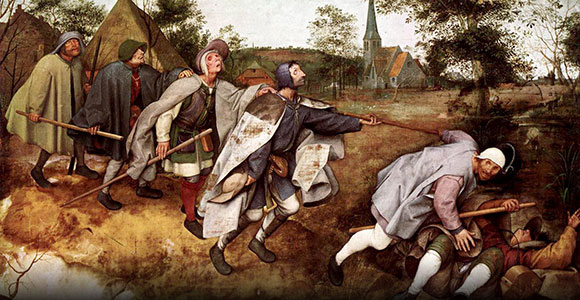


1. Shabbat 31a, in A. Cohen, ed., Everyman’s Talmud (New York, 1975), p. 65.

Renouncing One’s Rights

by Herb Montgomery

Picture of Jesus, Gandhi, Dr. King, and Dorothy Day

Left to right: Jesus of Nazareth, Mahatma Gandhi, Dr. Martin Luther King, jr., Dorothy Day

“The one who slaps you on the cheek, offer him the other as well; and to the person wanting to take you to court and get your shirt, turn over to him the coat as well. And the one who conscripts you for one mile, go with him a second. To the one who asks of you, give; and from the one who borrows, do not ask back what is yours.” (Q 6:29-30)

The International Q Project has titled this section of Sayings Gospel QRenouncing One’s Rights.” While I agree that rights are central to this passage, I want to emphasize that this teaching was not instruction to renounce those rights nor to become 1st Century door mats. Rather it was a tactical strategy for them to use in the midst of persecution (we discussed this two eSights ago), respond to their persecutors with love (see last week’s eSight), and actively furthering their work toward a safer, more compassionate world for all. That last item is what this week’s eSight is all about.

Let’s begin, as usual, by looking at our companion texts.

Luke 6.29-30: “If anyone strikes you on the cheek, offer the other also; and from anyone who takes away your coat do not withhold even your shirt. Give to everyone who begs from you; and if anyone takes away your goods, do not ask for them again.”

Matthew 5.39-42: “But I say to you, Do not [reciprocate evil toward]* an evildoer. But if anyone strikes you on the right cheek, turn the other also; and if anyone wants to sue you and take your coat, give your cloak as well; and if anyone forces you to go one mile, go also the second mile. Give to everyone who begs from you, and do not refuse anyone who wants to borrow from you.”

Thomas 95: “If you have money, do not lend it out at interest. Rather, give it to the one from whom you will not get it back.”

There is much to unpack in this week’s passage from Sayings Gospel Q. The list of peace activists from the last two centuries is long. This week’s saying has been influential, both directly and non-directly, in many of the nonviolent movements around the globe toward positive social change. Some of the most well known names in the last century were Gandhi in South Africa and India and Dr. Martin Luther King, Jr. here in America. There are lesser known names, as well, such as Dorothy Day and her nonviolent direct action on behalf of the poor in New York City. So let’s dive right in.

As we have shared repeatedly in the past, in this passage, Jesus is teaching a bold and disruptive expression of nonviolence. It’s a nonviolence that seeks to confront one’s opponent and offer an opportunity for transformation. With each of these three examples, the oppressed person is shown potential ways of taking control of the situation, confronting their subjugator, and stripping them of the power to dehumanize. Let me explain.

First, let me say how deeply indebted I am to Walter Wink’s research on the cultural backdrop of the saying of Jesus we are considering this week.  I’ll place a link to his work at the end of this section for further consideration. I consider his volume Jesus and Nonviolence: A Third Way to continue to be a revolutionary masterpiece.

Matthew’s version of this passage specifies that the cheek being struck is the “right” cheek. As most people are right-handed, the only natural way for a blow to land on the right cheek was if the striker used the back of their hand. This kind of blow in the culture of 1st Century Palestine was a show of insult from a superior to an inferior: one would not strike an equal in this humiliating way because doing so carried an fine of up to 100 times the normal amount. Four zuz was the fine for a blow to a social peer with a fist, but 400 zuz was the fine for backhanding one’s peer. To strike someone you viewed as socially inferior to yourself with a backhanded slap, was perfectly acceptable and no penalty was attached (see Mishnah Bava Kamma 8.6).

Try to picture the scene in your head. Since the left hand was only used for “unclean” tasks in that culture, people would not strike a person’s right cheek with that hand. At Qumran, even gesturing to another person while speaking using one’s left hand carried a penalty of exclusion from the community accompanied by ten days’ penance. (See The Dead Sea Scrolls, I QS 7, “Whoever has drawn out his left hand to gesticulate with it shall do penance for ten days.”) Any blows would have either been from a closed right fist with one’s right hand on someone’s left cheek, or a back-handed slap with one’s right hand on someone’s right cheek. A closed fisted blow from a person’s right hand on one’s left cheek acknowledged that the striker believed the one they were striking was their social equal.  Someone claiming superiority over another would not want to strike them in this way. They would want to use an open-handed slap with the back of their hand on the other person’s right cheek as an attempt at humiliating the one they were striking. It was the equivalent of saying, “Get back in your place.” Also, keep in mind that any retaliatory blows from the person being struck by a “superior” would have only caused the violence to escalate.

But Jesus is not admonishing the oppressed in this scene to become a doormat or simply do nothing. Turning their left cheek would not be retaliation but defiance, a sign that the one being struck is refusing to be humiliated. The oppressor would now only have two options presented to them: a right-handed punch acknowledging the one being struck was their equal or a left-handed slap with the unclean hand.  Both options would be unthinkable, and so they would lose their power in the situation.  Something I would like to add to Wink’s research is that this would not be an act of self-denial on the part of the person being struck.  The person being struck’s “self” is already being denied by their oppressor.  This is self-affirmation in the face of an attempt by another to dehumanize them.

The next example in the passage involves a serious social problem in 1st Century Palestine: indebtedness. A little background first. The Torah allowed a creditor to take the himation (or outer garment) or chiton (inner garment) as security for loans from the wealthy to impoverished laborers (see Exodus 22:25-27 and Deuteronomy 24:10-13, 17). In this era, poor people had few clothes, and wealthy creditors had to return it daily so the owners could have their cloak to sleep in.

In that culture, debt was not the result of economic incompetence, but of an unjust economic system where the wealthy elite took advantage of rural peasant farmers and poor Jewish craftsmen. In our scenario, a poor laborer has defaulted on their loan and has come under the penalty of losing their next-to-last article of clothing.

Jesus’s saying teaches this laborer to “turn over” not just their next-to-last article of clothing but also their last one as well. This would leave them stark naked in the town square. Wink explains that in that society the shame of nakedness fell not on those whose nakedness was exposed, but on those who looked upon or were the cause of their nakedness.  The honorable response would have been to respectfully help them (see Genesis 9.20-27). In a society where only the wealthy wore something similar to underwear, stripping off the undergarment along with the required outer garment would redirect the shame onto “the entire system by which the debtors are oppressed” as if to say, “Shame on you!” The teaching placed the poor laborer in control of the moment, exposing the system’s exploitation of Jesus’ fellow Jewish craftsmen and rural peasant farmers and shaming the powerful who take the last object of value from a sector of society which should be receiving their help. Here in Sayings Gospel Q, we have a 1st Century endorsement of public nudity as a valid form of radical, nonviolent protest, and the protest is designed by Jesus himself!

In our next example, Jesus teaches the oppressed to refuse to play by the rules of the game dictated by those controlling the society’s domination system.

Roman law allowed soldiers to command people in the occupied territories to carry their burdens for one mile—but only one mile. This limitation provided some protection for the people as one could otherwise find oneself having carried a soldier’s burden for an entire day only to end up now a day’s journey away from one’s home as the sun was going down.

Yet even this limitation was not good enough. We cannot be satisfied with merely accommodating the domination system; we must also refuse to cooperate with it. Remember King’s words from last week: “We cannot in all good conscience obey your unjust laws and abide by the unjust system, because non-cooperation with evil is as much a moral obligation as is cooperation with good.” So, Jesus says, when you reach the end of your first, forced mile and the soldier asks for their burden, don’t give it back! Place the soldier in the position of breaking their own system’s rules and perhaps being disciplined for it.

In each of these examples, the subjugated must make hard choices. They must decide whether they are willing to use possible further personal suffering to change society rather than resort to mere retaliation. Are they willing to accept the consequences for breaking unjust laws or policies? Are they willing to cease cooperating with the present order and its rules? And as we asked last week, do they hope for their oppressors’ transformation, or are they satisfied with the failing practice of tit-for-tat?

If you would like to further understand what may have been involved in this Saying, again, consider reading the late Walter Wink’s book Jesus and Nonviolence: A Third Way. In this volume, Wink shows how Jesus’s teaching offered the oppressed ways to:

  • Seize the moral initiative
  • Find a creative alternative to violence
  • Assert [their] own humanity and dignity as a person
  • Meet force with ridicule or humor
  • Break the cycle of humiliation
  • Refuse to submit or to accept the inferior position
  • Expose the injustice of the system
  • Take control of the power dynamic
  • Shame the oppressor into repentance
  • Stand [their] ground
  • Make the Powers make decisions for which they are not prepared
  • Recognize [their] own power
  • Force the oppressor to see [them] in a new light
  • Deprive the oppressor of a situation where a show of force is effective (pp. 186-187)

The last section of this week’s saying reminds us, once again, to trust that God will send people to take care of us when we are in need enough to let go of our self-concerned hoarding, and that we will be the people God may send today to someone else who is in need. People taking care of people, remember, is what Jesus referred to as “the reign of God” (Sayings Gospel Q) or “The Kingdom” (canonical gospels).

This call to trust had its own history with Jesus’s Jewish culture.

Hillel, one of the most important figures in Jewish history, lived somewhere between 110 BCE to 30CE. He was the first within Judaism to teach what today is referred to as the Golden Rule. Karen Armstrong in her excellent work The Great Transformation: The Beginning of Our Religious Traditions writes this about Hillel:

Perhaps the greatest of the Pharisees was Rabbi Hillel (c. 80 BCE–30 CE), who migrated to Palestine from Babylonia. In his view, the essence of the Torah was not the letter of the law but its spirit, which he summed up in the Golden Rule. In a famous Talmudic story, it was said that one day a pagan approached Hillel and promised to convert to Judaism if the rabbi could teach him the entire Torah while he stood on one leg. Hillel replied simply: “What is hateful to yourself, do not to your fellow man. That is the whole of the Torah and the remainder is but commentary. Go learn it.” (Kindle Locations 7509-7515)

The most famous of the enactments attributed to Hillel is the Prozbul.

The Torah included a rule of protection for the poor against ever-increasing debt. At the end of every seventh (Sabbatical) year, all debts among the Jewish people were to be cancelled. By the 1st Century, even though it was forbidden to withhold a loan before a Sabbatical year (see Deuteronomy 15.9-11), some members of the wealthy elite were unwilling to lend to poor craftsman and rural peasant farmers who needed loans to survive.

In this context, Hillel created a loophole in the Jewish law. A declaration could be made in court before a loan was executed to the effect that the law requiring the release of debts upon the entrance of the Sabbatical year would not apply to the loan to be transacted. This declaration was called the Prozbul, and it benefitted both the rich and the poor in that the poor could more easily obtain the loans they so desperately needed whenever they needed them, and the rich would more freely lend with the assurance that the capital loaned was exempted from the law’s Sabbatical debt relief. (For more, read the Jewish Encyclopedia’s entry: Prozbul.)

Where Jesus’s teaching on the Golden Rule placed him squarely in the teaching stream of Hillel, Jesus parts ways with Hillel on the Prozbul. (I’ll talk about Jesus’s relationship with the School of Hillel and the School of Shammai next week.)

Jesus taught that his followers should recklessly abandon their capital to aid those who need our help. We will study this in detail in upcoming weeks, but for now, know that to Jesus, a world under the reign of God looked like people trusting in God enough to believe that God would send others to take care of them tomorrow, so they could let go of what they were hoarding for future emergencies and take care of those whose emergencies were transpiring today.

Anxiety about the future can lead us down paths of accumulation, hoarding, greed, covetousness, jealousy, competition, and violence. It can cause us to look the other way and ignore those around us today who may be in need. But Jesus is calling us to let go of that anxiety about the future and all that it brings in its train. Let’s imagine, instead, a world where, rather than individualistically accumulating in order to take care of oneself in the future, everyone trusts that if we all begin taking care of one another today, we will have a future where others take care of us. In other words, if you will take care of someone else today, you will set in motion a world where, tomorrow, someone else will take care of you.

In the words of the sayings of Jesus held dear by those first-century Jewish followers:

“To the one who asks of you, give; and from the one who borrows, do not ask back what is yours” (Q 6:29-30).

HeartGroup Application

There are two parallel narratives we can chose to live by:

Scarcity                     Abundance
Anxiety                      Trust
Accumulation            Sharing
Greed                       Generosity
Monopoly                  Mutual Aid
Violence                    Peace

  1. Ponder the words in the parallel narratives above. Look up the definitions of each word. Consider how each concept leads to the next. We can live in a world where we subscribe to scarcity, believing there is not enough to go around for everyone so we’d better look out for ourselves, or we can live in a world where as Gandhi is thought to have said, there is “enough for every person’s need, but not every person’s greed.”
  2. Discuss with your HeartGroup how the worlds created by these different narratives look. How do they differ? What are their costs? What are their benefits? Which world would you rather be a part of?
  3. Make a choice. This week, make a choice to do something small or large in your life that moves you into the narrative you would rather live in.

Thanks for taking time to journey with us this week as we continue our consideration of Sayings Gospel Q. I’m so glad you are with us.

Till the only world that remains is a world where only love reigns.

I love each of you dearly.

I’ll see you next week.


* In these cases, Jesus’ instructions are NOT commands of passive nonresistance. The phrase “resist not an evildoer” could be problematic if Jesus did not then demonstrate in these stories exactly what He meant. The underlying Greek word here is anthistemi. It indicates resistance by returning violence for violence, overcoming evil with evil, rather than overcoming evil with good.