Humility, Inclusion, Power and Privilege

We want to take a moment to express our heartfelt gratitude to each and every one of you who supports the work of Renewed Heart Ministries. Your generosity makes it possible for us to continue our mission of love, justice, and compassion—even in a time when ministries like ours are being called to do more with less.

Your support means the world to us. Whether we’re speaking into the broader society or engaging within our faith communities, we remain committed to advocating for a world that is inclusive, just, and safe for all. Your partnership helps keep that vision alive.

From all of us at Renewed Heart Ministries, thank you. We are so deeply grateful for you—and we couldn’t do this work without you.

If you’d like to join them in supporting our work, please go to renewedheartministries.com and click on “Donate.”  


Image created by Canva

Humility, Inclusion, Power and Privilege

Herb Montgomery | August 28, 2025

If you’d like to listen to this week’s article in podcast version click on the image below:

Our reading this week is from the gospel of Luke:

On one occasion when Jesus was going to the house of a leader of the Pharisees to eat a meal on the sabbath, they were watching him closely… When he noticed how the guests chose the places of honor, he told them a parable. “When you are invited by someone to a wedding banquet, do not sit down at the place of honor, in case someone more distinguished than you has been invited by your host; and the host who invited both of you may come and say to you, ‘Give this person your place,’ and then in disgrace you would start to take the lowest place. But when you are invited, go and sit down at the lowest place, so that when your host comes, he may say to you, ‘Friend, move up higher’; then you will be honored in the presence of all who sit at the table with you. For all who exalt themselves will be humbled, and those who humble themselves will be exalted.” He said also to the one who had invited him, “When you give a luncheon or a dinner, do not invite your friends or your brothers or your relatives or rich neighbors, in case they may invite you in return, and you would be repaid. But when you give a banquet, invite the poor, the crippled, the lame, and the blind. And you will be blessed, because they cannot repay you, for you will be repaid at the resurrection of the righteous.” (Luke 14:1, 7-14)

In this week’s reading, social location matters. Our reading includes the subjects of humility, recognition, and pride. This reading is not directed toward those for whom pride means a healthy concept of one’s own worth. In that sense, pride means you are worth just as much as everyone else. Our reading this week is rather about pride defined as someone feeling they are better than those around them. Not equal, but above. It is about seeking recognition and the places of highest honor above others. 

In our story this week, Jesus is repeating principles well known in Jewish wisdom and the Hebrew scriptures. For example, in Proverbs 25:6-7 we read, “Do not put yourself forward in the king’s presence or stand in the place of the great; for it is better to be told, ‘Come up here,’ than to be put lower in the presence of a noble.” Similarly, we read in Proverbs 11:2: “When pride comes, then comes disgrace; but wisdom is with the humble.” And Psalm 18:27 states: “For you deliver a humble people, but the haughty eyes you bring down.”

Thematically, this teaching fits with Luke’s gospel. Luke’s version of the Jesus story began by reminding us that Luke’s Jesus would liberate those in marginalized social locations on the edges and undersides of his society. As Mary sings, “He has brought down the powerful from their thrones, and lifted up the lowly; he has filled the hungry with good things, and sent the rich away empty.” (Luke 1:52-53)

In our passage in Luke 14, Jesus advises his societally privileged listeners at a Sabbath meal at a Pharisee’s home to choose actions that reflect humility rather than hungering for recognition when recognition means they are elevated above those around them. Again, we shouldn’t confuse this with recognition that acknowledges someone’s validity, value, or job well done. There is a vast difference between the basic human need to be valued and estimated as being of equitable worth with others and the unhealthy desire to be esteemed by others as better than them or of a higher social status. 

Humility is often defined as that quiet strength that values truth over applause. It reflects confidence without the need for validation, allowing actions to speak louder than ego. In contrast, craving recognition stems from insecurity and a desire to be seen, often leading to superficiality and disappointment. It is the fruit of a rupture in someone’s ability to sense their value or purpose, or to create some kind of meaning. Humility can foster growth, connection, and authenticity, whereas the constant pursuit of acknowledgment can warp our motives and, in the end, create emptiness. 

Making a difference doesn’t require one to always be in the spotlight. Contribution can be deeply meaningfully regardless of who notices. To be clear, acknowledgement, recognition for one’s work, or having one’s work properly credited is a matter of justice, and not the same thing as seeking to be valued as of greater worth than others. Our reading this week is instead referring to the unhealthy craving to be recognized over and above others. In such cases, our deficiencies of value cause us to fail to ground our actions in purpose and authenticity.

Lastly, Jesus contrasts a delayed repayment or delayed gratification with immediate benefits. Rather than seeking the reward of social status now, he advises his audience to invest in a future reward  at the “resurrection of the righteous.” But it’s still a rewards-based moral economy. I wish the point of this week’s reading was to choose the right because of doing what’s right has intrinsic value over any reward, immediate or delayed. Some people don’t need the promise of reward to behave well. They’ll make good choices simply because it’s the right thing to do. They don’t need the promise of heaven or the threat of hell to live by strong morals. Their own conscience is enough to guide them. Yet, it is just as much true that not everyone works that way. 

For some people, fear of consequences is the only thing that keeps them from hurting others. Without those boundaries, they will take advantage of others. Without empathy, they can’t imagine doing good unless it benefits them, or refraining from harm unless it hurts them. They see kindness without gain as weakness. And since they can’t understand intrinsic morality, they can’t respect it—and they certainly don’t respond to it. In some settings, the fear of punishment is the only thing keeping some people from crossing dangerous lines. So, sometimes, to protect the larger community, intrinsically moral people have to act in ways others will understand. Punishment is a deterrent and reward is a motivator, even if intrinsically moral people wish that this way of motivating others unlike them wasn’t necessary. We may prefer a world where everyone did good out of genuine care, and certainly we can work toward that end. But until then, we can’t let the well-being of many be jeopardized because a few don’t share that inner compass. Sometimes, acting for the greater good means choosing the practical path, even when that path doesn’t feel like the most virtuous one. Dr. King once responded to someone who tried to chide him that changing laws doesn’t change people’s hearts and minds. At an address at Western Michigan University, December 18, 1963, King stated, “Now the other myth that gets around is the idea that legislation cannot really solve the problem and that it has no great role to play in this period of social change because you’ve got to change the heart and you can’t change the heart through legislation. You can’t legislate morals. The job must be done through education and religion. Well, there’s half-truth involved here. Certainly, if the problem is to be solved then in the final sense, hearts must be changed. Religion and education must play a great role in changing the heart. But we must go on to say that while it may be true that morality cannot be legislated, behavior can be regulated. It may be true that the law cannot change the heart but it can restrain the heartless. It may be true that the law cannot make a man love me but it can keep him from lynching me and I think that is pretty important, also. So there is a need for executive orders. There is a need for judicial decrees. There is a need for civil rights legislation on the local scale within states and on the national scale from the federal government.”

I, too, would prefer is to make choices based on the intrinsic value or potential for something to be life-giving and rooted in compassion and equity, rather than some present or future imposed reward. But again, that is not the world we live in.

What I do appreciate about our reading this week is Jesus’ admonishment to be inclusive about the “the poor, the crippled, the lame, and the blind.” These are the people who, in his social context, would have been excluded and marginalized. Jesus is here promoting equity and inclusion, principles we still need today. 

The war we are presently witnessing against equity and inclusion is often couched in appeals to tradition, meritocracy, or neutrality, but it nonetheless undermines efforts to create fair opportunities for all. Those opposing equity and inclusion resent those they would still like to consider themselves as better than, and that is what our reading is speaking to this week. Modern-day opponents of equity and inclusion claim that institutional equity and inclusion initiatives  end up dividing rather than uniting, but in truth, what is really triggering them is how equity and inclusion challenges long-standing imbalances of power and privilege. Resistance often stems from discomfort with change, fear of losing status, or misunderstanding the goals of inclusion. Equity doesn’t mean favoritism. It means acknowledging systemic barriers and correcting them. Inclusion ensures everyone belongs, not just the historically dominant. Attacking these principles weakens social progress, silences marginalized voices, and sustains inequality under the illusion of fairness. 

This week’s reading should not be aimed at those already being excluded to scold them for desiring equity and inclusion. Rather this reading is about those who oppose equity and inclusion to protect their own privilege. To these folks, our reading speaks: “Go and sit down at the lowest place, so that when your host comes, he may say to you, ‘Friend, move up higher.’”

Discussion Group Questions

1. Share something that spoke to you from this week’s podcast episode with your discussion group.

2. In what ways have you witnessed the weaponization of the ethic of humility and in what ways have you seen it used to bring equality? Share and discuss with your goup.

3. What can you do this week, big or small, to continue setting in motion the work of shaping our world into a safe, compassionate, just home for everyone? 

Thanks for checking in with us, today.

I want to say a special thank you to all of our supporters out there. And if you would like to join them in supporting Renewed Heart Ministries’ work you can do so by going to renewedheartministries.com and clicking donate. 

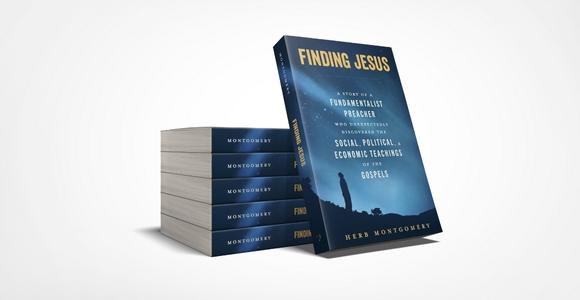
My latest book Finding Jesus: A Fundamentalist Preacher Discovers the Socio-Political and Economic Teachings of the Gospels is available now on Amazon in paperback, Kindle and also on Audible in audio book format.

As always, you can find Renewed Heart Ministries each week on Bluesky, Facebook, Instagram and Meta’s Threads. If you haven’t done so already, please follow us on your chosen social media platforms for our daily posts. 

Thank you for listening to The Social Jesus Podcast. If you enjoyed this podcast please take a moment to like and subscribe and if the podcast platform you’re using offers this option, please leave us a positive review. This helps others find our podcast as well.

You can watch our YouTube show each week called “Just Talking”. Each week, Todd Leonard and I take a moment to talk about the gospel lectionary reading for the upcoming weekend. We’ll be talking about each reading in the context of love, inclusion, and social justice. Our hope is that our talking will be just talking (as in justice) and that during our brief conversations each week you’ll be inspired to also do more than just talking. If you teach from the lectionary each week, or if you’re just looking for some thoughts on the Jesus story from a more progressive perspective within the context of social justice, check it out, you might like it. You can find JustTalking each week on YouTube at youtube.com/@herbandtoddjusttalking.

Please Like, Subscribe, hit the Notification button, and leave us a comment.

And if you’d like to reach us here at Renewed Heart Ministries through email, you can reach us at info@renewedheartministries.com.

Right where you are, keep living in love, choosing compassion, taking action, and working toward justice.

I love each of you dearly,

I’ll see you next week.


New Episode of The Social Jesus Podcast

A podcast where we talk about the intersection of faith and social justice and what a first century, prophet of the poor from Galilee might have to offer us today in our work of love, compassion and justice. 

This week:

Season 2 Episode 35: Humility, Inclusion, Power and Privilege 

Luke 14:1, 7-14

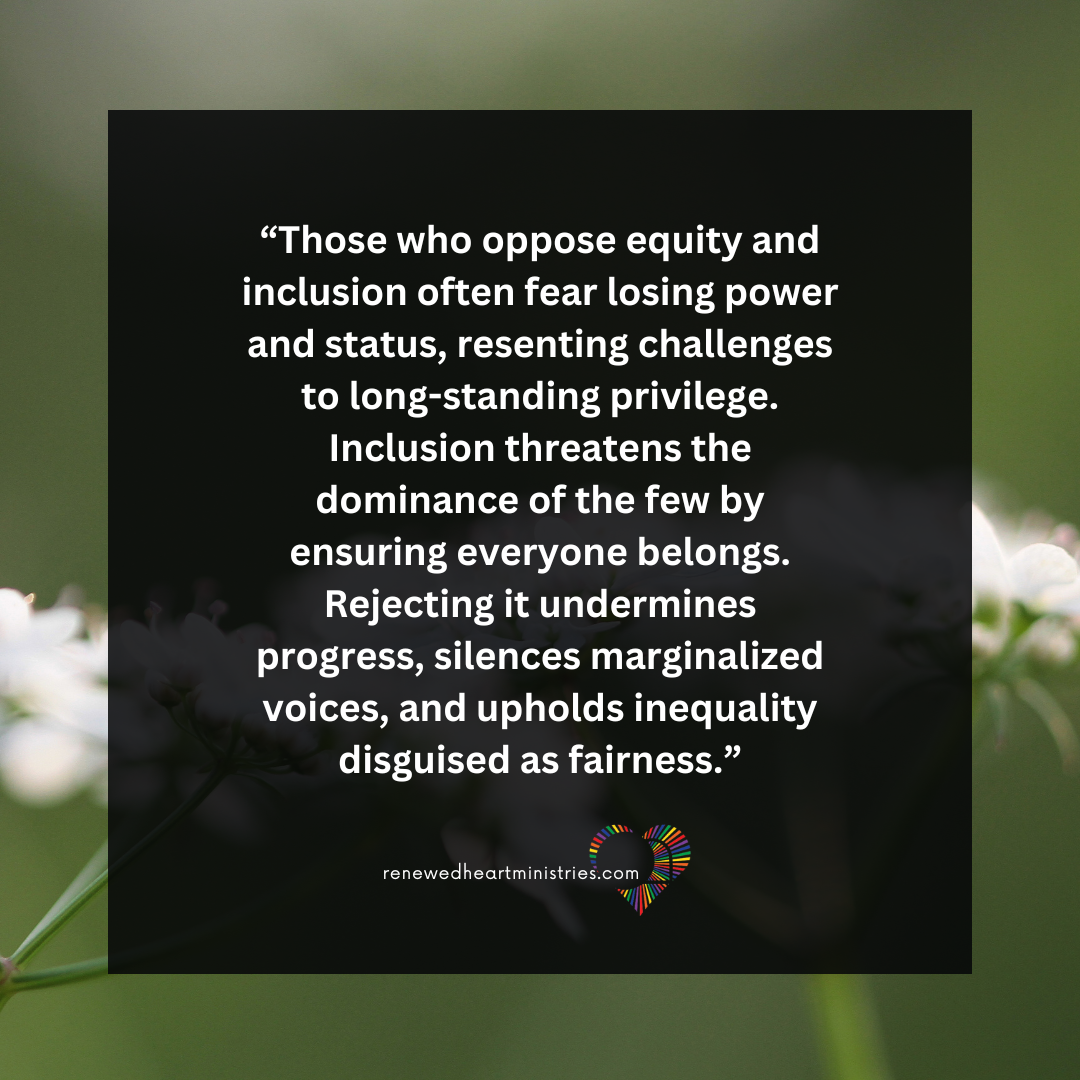
“What I do appreciate about our reading this week is Jesus’ admonishment to be inclusive. These are the people who, in his social context, would have been excluded and marginalized. Jesus is here promoting equity and inclusion, principles we still need today. The war we are presently witnessing against equity and inclusion is often couched in appeals to tradition, meritocracy, or neutrality, but it nonetheless undermines efforts to create fair opportunities for all. Those opposing equity and inclusion resent those they would still like to consider themselves as better than, and that is what our reading is speaking to this week. Modern-day opponents of equity and inclusion claim that institutional equity and inclusion initiatives  end up dividing rather than uniting, but in truth, what is really triggering them is how equity and inclusion challenges long-standing imbalances of power and privilege. Resistance often stems from discomfort with change, fear of losing status, or misunderstanding the goals of inclusion. Equity doesn’t mean favoritism. It means acknowledging systemic barriers and correcting them. Inclusion ensures everyone belongs, not just the historically dominant. Attacking these principles weakens social progress, silences marginalized voices, and sustains inequality under the illusion of fairness.”

Available on all major podcast carriers and at:

https://the-social-jesus-podcast.simplecast.com/episodes/humility-inclusion-power-and-privilege


Finding Jesus: A Fundamentalist Preacher Discovers the Socio-Political & Economic Teachings of the Gospels.

 

by Herb Montgomery

Available now on Amazon!

In Finding Jesus, author Herb Montgomery delves into the profound and often overlooked political dimensions of the gospels. Through meticulous analysis of biblical texts, historical context, and social discourse, this thought-provoking book unveils the gospels’ socio-political, economic teachings as rooted in a profound concern for justice, compassion, and the well-being of the marginalized. The book navigates the intersections between faith and societal justice, presenting a compelling argument for a more socially engaged and transformative Christianity.

Finding Jesus is not just a scholarly exploration; it is a call to action. It challenges readers to reevaluate their understanding of Christianity’s role in public life and to consider how the radical teachings of the gospels can inspire a renewed commitment to justice, equality, and compassion. This book is a must-read for those seeking a deeper understanding of the social implications of Christian faith and a blueprint for building a more just and inclusive society.


Are you getting all of RHM’s Free Resources?

Free Sign Up Here
When Justice Means Division 

We want to take a moment to express our heartfelt gratitude to each and every one of you who supports the work of Renewed Heart Ministries. Your generosity makes it possible for us to continue our mission of love, justice, and compassion—even in a time when ministries like ours are being called to do more with less.

Your support means the world to us. Whether we’re speaking into the broader society or engaging within our faith communities, we remain committed to advocating for a world that is inclusive, just, and safe for all. Your partnership helps keep that vision alive.

From all of us at Renewed Heart Ministries, thank you. We are so deeply grateful for you—and we couldn’t do this work without you.

If you’d like to join them in supporting our work, please go to renewedheartministries.com and click on “Donate.”  


Image created by Canva

When Justice Means Division 

Herb Montgomery | August 15, 2025

If you’d like to listen to this week’s article in podcast version click on the image below:

Our reading this week is from the gospel of Luke:

“I came to bring fire to the earth, and how I wish it were already kindled! I have a baptism with which to be baptized, and what stress I am under until it is completed! Do you think that I have come to bring peace to the earth? No, I tell you, but rather division! From now on five in one household will be divided, three against two and two against three; they will be divided:

father against son

and son against father,

mother against daughter

and daughter against mother,

mother-in-law against her daughter-in-law

and daughter-in-law against mother-in-law.”

He also said to the crowds, “When you see a cloud rising in the west, you immediately say, ‘It is going to rain’; and so it happens. And when you see the south wind blowing, you say, ‘There will be scorching heat’; and it happens. You hypocrites! You know how to interpret the appearance of earth and sky, but why do you not know how to interpret the present time? (Luke 12:49-56, NRSV)

This week’s reading describes Jesus in Luke’s gospel as the cause of division. This is, at best, problematic for Christian communities that prioritize unity above all else. Every community has a priority of values, a scale where some things matter more than others. This passage challenges those who place unity above justice, protecting the vulnerable, and standing up for those are being harmed. These communities pit unity against division as if division or conflict even over things that matter is the worst fate that could befall their community. These types of communities tend to be conflict-avoidant, using rhetoric such as “Don’t rock the boat.” 

Prioritizing unity above justice shapes communities to emphasize peace, harmony, and shared identity over the often disruptive process of confronting and correcting injustice. It appeals to the desire to maintain relationships and foster a sense of togetherness, especially within faith traditions. Proponents argue that disunity can fracture community, but don’t recognize that what fractures community is the injustice some are forced to be silent about. They caution that a relentless focus on justice, especially when perceived as adversarial, may alienate individuals, polarize communities, or create division as if harmony is what is most needed.

However, unity without justice is always a fragile and superficial peace—one built on silence, marginalization, and the status quo. When people prioritize unity to the point of avoiding uncomfortable truths, it often means asking the oppressed to carry the burden of cohesion while the structures that harm them remain intact. Such unity demands quietness from those whose voices most need to be heard. It risks becoming complicit, where harmony is preserved only for those in positions of comfort.

The challenge, then, is to understand that we cannot build real unity on the denial of justice. Authentic unity emerges not from avoiding conflict but from walking through it together. It is forged in the hard work of truth-telling, repentance, reparations and transformation. Unity and justice are not necessarily enemies; they can be companions. But the order matters. Justice creates the conditions for lasting unity, not the other way around. When we seek unity without first addressing what divides us, we merely delay deeper fractures. We only kick the problem down the road, hoping the matter simply goes away. Placing unity above justice may feel safe and noble, but ultimately, it undermines both unity and justice. A better path is to pursue a justice that repairs, restores, and reconciles, and a unity that is not afraid of truth. Only then can we have a peace that endures.

Often through the years when I have found myself experiencing pushback from those telling me to prioritize unity over speaking out for what is right and for those being harmed, I have found comfort in Dr. Martin Luther King’s Letter from a Birmingham Jail. It’s a letter I return to almost annually in my own justice work with faith communities today. King’s words in 1963 remain relevant and challenging in my life, encouraging me when I’m faced with my fear of speaking out and when I’m tempted to embrace what King names a “negative peace.”

I must make two honest confessions to you, my Christian and Jewish brothers. First, I must confess that over the past few years I have been gravely disappointed with the white moderate. I have almost reached the regrettable conclusion that the Negro’s great stumbling block in his stride toward freedom is not the White Citizen’s Counciler or the Ku Klux Klanner, but the white moderate, who is more devoted to “order” than to justice; who prefers a negative peace which is the absence of tension to a positive peace which is the presence of justice; who constantly says: “I agree with you in the goal you seek, but I cannot agree with your methods of direct action”; who paternalistically believes he can set the timetable for another man’s freedom; who lives by a mythical concept of time and who constantly advises the Negro to wait for a “more convenient season.” Shallow understanding from people of good will is more frustrating than absolute misunderstanding from people of ill will. Lukewarm acceptance is much more bewildering than outright rejection.

He later calls the agents seeking positive peace “nonviolent gadflies”:

“Just as Socrates felt that it was necessary to create a tension in the mind so that individuals could rise from the bondage of myths and half-truths to the unfettered realm of creative analysis and objective appraisal, so must we see the need for nonviolent gadflies to create the kind of tension in society that will help men rise from the dark depths of prejudice and racism to majestic heights of understanding and brotherhood.”
― Martin Luther King Jr., Letter from the Birmingham Jail

Being a nonviolent gadfly reminds me of Matthew 5:9: “Blessed are the peacemakers, for they will be called children of God.” Being a peacemaker is not the same as being a peacekeeper. Peacekeepers are primarily motivated to keep King’s “negative peace”, one where no one is rocking the boat and where injustice continues to be unaddressed. But as Frederick Douglass reminded us, “Power concedes nothing without a demand. It never did and it never will.” Demands from those experiencing injustice disrupt the peace while they seek to establish a positive peace rooted in justice. Zechariah 8:12 teaches that “there shall be a sowing of peace.” Peace is something sown. The seed of peace is distributive justice. Justice grows and produces the fruit of peace. Peace, then, shouldn’t be the primary goal. It’s the secondary result of establishing a just, compassionate, safe environment for all. And to plant that initial seed of justice, to push the analogy a little further, the ground for that seed must be broken up, tilled, turned over, and disrupted. 

The hard-packed ground of misogyny and patriarchy, the hard-packed ground of racism and White supremacy, the hard-packed ground of White Christian nationalism, the hard-packed ground of homophobia, biphobia, and transphobia must be broken up, and that process always involves disruption and conflict. But the ultimate goal is always a justice that produces peace. This is what it means to be a peacemaker! 

With our hands on the plow, peacemakers are preparing our social soil for the seed of justice. We know that when watered by others justice will produce a peace where everyone has enough not simply to survive but also to thrive. Peacemakers, even when disrupting the hard-packed social soil, are still working toward a world matching Micah 4:4’s description where every person will “sit under their own vines and under their own fig trees, and no one shall make them afraid.”

What does this kind of peacemaking look like? Representative John Lewis tweeted in June 2018, “Do not get lost in a sea of despair. Be hopeful, be optimistic. Our struggle is not the struggle of a day, a week, a month, or a year, it is the struggle of a lifetime. Never, ever be afraid to make some noise and get in good trouble, necessary trouble.”

Note those three words: good, necessary, trouble. It’s good, necessary trouble that Jesus himself was getting into in our reading this week. It was this kind of trouble that he modeled for his followers to get into too.

Lastly, Jesus confronts his listeners’ inability to discern what was happening around them at this moment. This also is fitting given our present context. In the face of growing authoritarianism and the dismantling of democratic norms in the U.S., silence is not an option for peacemakers. Voter suppression and reorganization, disinformation, attacks on laws that provide protection for the marginalized in our society, and political violence threaten the very foundation of a safe, compassionate, just home for everyone where everyone’s voice is heard. Standing up now means defending the safety of the vulnerable and marginalized, holding leaders accountable, and protecting the rights of all—especially the most vulnerable. It means rejecting fascist rhetoric and resisting efforts to centralize power through fear and retaliation. Democracy, justice, peace are not self-sustaining in any society; they depend on the courage and commitment of everyday people to speak out and take a stand, even when, as our reading this week reminds us, those choices initially cause division.

Discussion Group Questions

1. Share something that spoke to you from this week’s podcast episode with your discussion group.

2. How are you or your group engaging the work of peace and justice presently? Share and discuss with your group.

3. What can you do this week, big or small, to continue setting in motion the work of shaping our world into a safe, compassionate, just home for everyone? 

Thanks for checking in with us, today.

I want to say a special thank you to all of our supporters out there. And if you would like to join them in supporting Renewed Heart Ministries’ work you can do so by going to renewedheartministries.com and clicking donate. 

My latest book Finding Jesus: A Fundamentalist Preacher Discovers the Socio-Political and Economic Teachings of the Gospels is available now on Amazon in paperback, Kindle and also on Audible in audio book format.

As always, you can find Renewed Heart Ministries each week on Bluesky, Facebook, Instagram and Meta’s Threads. If you haven’t done so already, please follow us on your chosen social media platforms for our daily posts. 

Thank you for listening to The Social Jesus Podcast. If you enjoyed this podcast please take a moment to like and subscribe and if the podcast platform you’re using offers this option, please leave us a positive review. This helps others find our podcast as well.

You can watch our YouTube show each week called “Just Talking”. Each week, Todd Leonard and I take a moment to talk about the gospel lectionary reading for the upcoming weekend. We’ll be talking about each reading in the context of love, inclusion, and social justice. Our hope is that our talking will be just talking (as in justice) and that during our brief conversations each week you’ll be inspired to also do more than just talking. If you teach from the lectionary each week, or if you’re just looking for some thoughts on the Jesus story from a more progressive perspective within the context of social justice, check it out, you might like it. You can find JustTalking each week on YouTube at youtube.com/@herbandtoddjusttalking.

Please Like, Subscribe, hit the Notification button, and leave us a comment.

And if you’d like to reach us here at Renewed Heart Ministries through email, you can reach us at info@renewedheartministries.com.

Right where you are, keep living in love, choosing compassion, taking action, and working toward justice.

I love each of you dearly,

I’ll see you next week.


New Episode of “Just Talking” Now Online!

Lectionary Readings in the context of Love, Inclusion, & Social Justice

Season 3, Episode 24: Luke 12.49-56. Lectionary C, Proper 15

When Justice Means Division 

Each week, we’ll discuss the gospel lectionary reading for the upcoming weekend in the context of love, inclusion, and justice. We hope that our talking will be “just” talking (as in justice) and that we’ll be inspired to do more than “just talking” during our brief conversations each week. 

If you teach from the lectionary each week, or if you’re just looking for some thoughts on the Jesus story from a more progressive perspective within the context of social justice, check it out.


New Episode of The Social Jesus Podcast

A podcast where we talk about the intersection of faith and social justice and what a first century, prophet of the poor from Galilee might have to offer us today in our work of love, compassion and justice. 

This week:

Season 2 Episode 33: When Justice Means Division 

Luke 12:49-56

“The challenge, then, is to understand that we cannot build real unity on the denial of justice. Authentic unity emerges not from avoiding conflict but from walking through it together. It is forged in the hard work of truth-telling, repentance, reparations and transformation. Unity and justice are not necessarily enemies; they can be companions. But the order matters. Justice creates the conditions for lasting unity, not the other way around. When we seek unity without first addressing what divides us, we merely delay deeper fractures. We only kick the problem down the road, hoping the matter simply goes away. Placing unity above justice may feel safe and noble, but ultimately, it undermines both unity and justice. A better path is to pursue a justice that repairs, restores, and reconciles, and a unity that is not afraid of truth. Only then can we have a peace that endures . . . Peace is something sown. The seed of peace is distributive justice. Justice grows and produces the fruit of peace. Peace, then, shouldn’t be the primary goal. It’s the secondary result of establishing a just, compassionate, safe environment for all. And to plant that initial seed of justice, to push the analogy a little further, the ground for that seed must be broken up, tilled, turned over, and disrupted.”

Available on all major podcast carriers and at:

https://the-social-jesus-podcast.simplecast.com/episodes/when-justice-means-division


Finding Jesus: A Fundamentalist Preacher Discovers the Socio-Political & Economic Teachings of the Gospels.


by Herb Montgomery

Available now on Amazon!

In Finding Jesus, author Herb Montgomery delves into the profound and often overlooked political dimensions of the gospels. Through meticulous analysis of biblical texts, historical context, and social discourse, this thought-provoking book unveils the gospels’ socio-political, economic teachings as rooted in a profound concern for justice, compassion, and the well-being of the marginalized. The book navigates the intersections between faith and societal justice, presenting a compelling argument for a more socially engaged and transformative Christianity.

Finding Jesus is not just a scholarly exploration; it is a call to action. It challenges readers to reevaluate their understanding of Christianity’s role in public life and to consider how the radical teachings of the gospels can inspire a renewed commitment to justice, equality, and compassion. This book is a must-read for those seeking a deeper understanding of the social implications of Christian faith and a blueprint for building a more just and inclusive society.


Are you getting all of RHM’s Free Resources?

Free Sign Up Here

The Good News Is About Life and Love, Not Death and Dying

Now Available on Amazon!


Finding Jesus: A Fundamentalist Preacher Discovers the Socio-Political & Economic Teachings of the Gospels.

by Herb Montgomery

Available now on Amazon!

After two successful decades of preaching a gospel of love within the Christian faith tradition Herb felt like something was missing. He went back to the gospels and began reading them through the interpretive lenses of various marginalized communities and what he found radically changed his life forever. The teachings of the Jesus in the gospel stories express a profound concern for justice, compassion, and the well-being of those in marginalized communities. This book navigates the intersections between faith and societal justice, and presents a compelling argument for a more socially compassionate and just expression of Christianity. Herb’s findings in his latest book are shared in the hopes that it will dramatically impact how you practice your Christianity, too.


New Episode of JustTalking!


Season 2, Episode 5: John 20.1-18 and Mark 16.1-8. Lectionary B, Easter 1

Each week, we’ll be talking about the gospel lectionary reading for the upcoming weekend. We’ll be talking about each reading in the context of love, inclusion, and societal justice. Our hope is that our talking will be just talking (as in justice) and that during our brief conversations each week you’ll be inspired to also do more than just talking.

If you teach from the lectionary each week, or if you’re just looking for some thoughts on the Jesus story from a more progressive perspective within the context of social justice, check it out, you might like it.

You can find the latest show on YouTube at

https://youtu.be/Rpy-a_aB8TA?si=giEc-Sf7VH74n7Mv

 or (@herbandtoddjusttalking)

Please Like, Subscribe, hit the Notification button, and leave us a comment


The Good News Is About Life and Love, Not Death and Dying

Herb Montgomery, March 30, 2024

“Easter reminds us that our story isn’t about dying either. Our story is about how life can overcome death even when death is wielded as a weapon of injustice or used as an attempt to keep us down. The God of the resurrection story is on the side of the oppressed, marginalized, and downtrodden. And the power that can save our world is not one that appeals to more dying, but to a refusal to let go of life.”

To listen to this week’s eSight as a podcast episode click here.

This image has an empty alt attribute; its file name is Jesus-For-Everyone-150x150.png

This week, our readings are from the gospels of John and Mark:

Early on the first day of the week, while it was still dark, Mary Magdalene went to the tomb and saw that the stone had been removed from the entrance. So she came running to Simon Peter and the other disciple, the one Jesus loved, and said, “They have taken the Lord out of the tomb, and we don’t know where they have put him!”

So Peter and the other disciple started for the tomb. Both were running, but the other disciple outran Peter and reached the tomb first. He bent over and looked in at the strips of linen lying there but did not go in. Then Simon Peter came along behind him and went straight into the tomb. He saw the strips of linen lying there, as well as the cloth that had been wrapped around Jesus’ head. The cloth was still lying in its place, separate from the linen. Finally the other disciple, who had reached the tomb first, also went inside. He saw and believed. (They still did not understand from Scripture that Jesus had to rise from the dead.) Then the disciples went back to where they were staying.

Now Mary stood outside the tomb crying. As she wept, she bent over to look into the tomb and saw two angels in white, seated where Jesus’ body had been, one at the head and the other at the foot.

They asked her, “Woman, why are you crying?”

“They have taken my Lord away,” she said, “and I don’t know where they have put him.” At this, she turned around and saw Jesus standing there, but she did not realize that it was Jesus.

He asked her, “Woman, why are you crying? Who is it you are looking for?”

Thinking he was the gardener, she said, “Sir, if you have carried him away, tell me where you have put him, and I will get him.”

Jesus said to her, “Mary.”

She turned toward him and cried out in Aramaic, “Rabboni!” (which means “Teacher”).

Jesus said, “Do not hold on to me, for I have not yet ascended to the Father. Go instead to my brothers and tell them, ‘I am ascending to my Father and your Father, to my God and your God.’”

Mary Magdalene went to the disciples with the news: “I have seen the Lord!” And she told them that he had said these things to her. (John 20:1-18)

And Mark

When the Sabbath was over, Mary Magdalene, Mary the mother of James, and Salome bought spices so that they might go to anoint Jesus’ body. Very early on the first day of the week, just after sunrise, they were on their way to the tomb and they asked each other, “Who will roll the stone away from the entrance of the tomb?”

But when they looked up, they saw that the stone, which was very large, had been rolled away. As they entered the tomb, they saw a young man dressed in a white robe sitting on the right side, and they were alarmed.

“Don’t be alarmed,” he said. “You are looking for Jesus the Nazarene, who was crucified. He has risen! He is not here. See the place where they laid him. But go, tell his disciples and Peter, ‘He is going ahead of you into Galilee. There you will see him, just as he told you.’”

Trembling and bewildered, the women went out and fled from the tomb. They said nothing to anyone, because they were afraid. (Mark 16:1-8)

With these passages, the lectionary calls our attention to the earliest telling of the resurrection story in the gospels and the latest. What jumps out to me first is the evolution of women’s role in the stories. In Mark, women choose to be silent. But in John’s gospel, not only are women the first to announce the resurrection, but also, and in uncharacteristic fashion, the gospel names a specific woman (Mary) as the first among them to proclaim the good news of the resurrection. 

Many scholars date the writing of the book of Mark as the same time as the pseudo-epistles of Paul. While the author of Timothy was telling women to be silent (cf. 1Timothy 2:12), Mark’s gospel is showing us what would have happened in relation to the resurrection if they had been. As patriarchal forces in the early church were gaining power and influence and women began to be marginalized in the Jesus movement (cf. 1 Corinthians 14:34), Mark’s gospel warns us of such non-egalitarian trends. The implication is, “Thank God women were not silent!” Because if they had been, we might never have heard the good news of the resurrection. 

This leads me to what I believe was the original good news of the gospel for the early Jesus movement. The good news of the gospel was not that Jesus was crucified or had died for anyone, but that Jesus was alive! The cross had been reversed, overcome, and undone! And the news about that could not be contained!

Consider these passages that emphasize the preaching of the church in the books of Acts. Notice they aren’t merely preaching Jesus crucified. They are announcing Jesus has been resurrected!

With great power the apostles gave their testimony to the resurrection of the Lord Jesus, and great grace was upon them all. (Acts 4:33)

You crucified and killed by the hands of those outside the law. But God raised him up, having freed him from death, because it was impossible for him to be held in its power. (Acts 2:22-24)

This Jesus God raised up, and of that all of us are witnesses. (Acts 2:32-33)

You handed over and rejected in the presence of Pilate, though he had decided to release him. But you rejected the Holy and Righteous One and asked to have a murderer given to you, and you killed the Author of life, but God raised from the dead. (Acts 3:12-16)

. . . Jesus Christ of Nazareth, whom you crucified, but whom God raised from the dead. (Acts 4:10-11)

The God of our ancestors raised up Jesus, whom you had killed by hanging him on a tree. (Acts 5:30-32)

They put him to death by hanging him on a tree; but God raised him on the third day. (Acts 10:36-43)

Even though they found no cause for a sentence of death, they asked Pilate to have him killed. When they had carried out everything that was written about him, they took him down from the tree and laid him in a tomb. But God raised him from the dead . . . And we bring you the good news that what God promised to our ancestors he has fulfilled for us, their children, by raising Jesus. (Emphasis added) (Acts 13:35-38)

The good news for those in the book of Acts was not that Jesus had died, but that Jesus, whom the state had executed, had been brought back to life!

Whatever we make of these reports today, the lessons in these stories’ emphasis are not from Jesus’ dying but in the undoing of his death. The story is one about the ability of truth to overcome falsehood, of life to triumph over the death-dealing agents of our world, for love to conquer hate. Injustice doesn’t have to have the last word in our stories.

The good news, to use the words of Rev. Dr. Kelly Brown Douglas, was that the “crucifying powers of evil” have been defeated!

“The resurrection is God’s definitive victory over crucifying powers of evil . . . The impressive factor is how it [the cross] is defeated. It is defeated by a life-giving rather than a life-negating force. God’s power, unlike human power, is not a ‘master race’ kind of power. That is, it is not a power that diminishes the life of another so that others might live. God’s power respects the integrity of all human bodies and the sanctity of all life. This is a resurrecting power. Therefore, God’s power never expresses itself through the humiliation or denigration of another. It does not triumph over life. It conquers death by resurrecting life. The force of God is a death-negating, life-affirming force.” (Kelly Brown Douglas, Stand Your Ground: Black Bodies and the Justice of God, pp. 182-183).

And a few pages later:

“What the resurrection points to, however, is not the meaning of Jesus’ death, but of his life.” (Ibid. p. 188)

The powers of the status quo had attempted to silence Jesus’ life-giving, “saving,” redemptive work. Yet through the narrative element of the resurrection, this attempt to end Jesus’ work is turned into a mere interruption. Whereas the cross was the state’s attempt to stop Jesus’ salvific work, the resurrection causes that work to continue despite the cross, and to especially continue in the lives of Jesus’ followers as we seek to be conduits of life, healing, and liberation our own contexts today.

Christianity isn’t a death cult. I agree with womanist matriarch Dr. Delores Williams, who has been relentless through the years in pulling back the curtain and showing us the intrinsic harm of faith traditions that find meaning in Jesus’ death on a cross: “Jesus came for life and to show us something about life and living together and what life was all about” (in Dr. Kelly Brown Douglas’ What’s Faith Got to Do With It?, p. 90

Williams also wrote:

“Christians…cannot forget the cross, but neither can they glorify it. To do so is to glorify suffering and to render…exploitation sacred. To do so is to glorify the sin of defilement.” (Williams, Sisters in the Wilderness: The Challenge of Womanist God Talk, p.132)

So for me, the Jesus story isn’t about death. Easter reminds us that our story isn’t about dying either. Our story is about how life can overcome death even when death is wielded as a weapon of injustice or used as an attempt to keep us down. The God of the resurrection story is on the side of the oppressed, marginalized, and downtrodden. And the power that can save our world is not one that appeals to more dying, but to a refusal to let go of life. 

Hate doesn’t have the last word. The Jesus story doesn’t end on Friday evening. And we can choose love and life as the last word for our stories too.

Discussion Group Questions

1. Share something that spoke to you from this week’s eSight/Podcast episode with your discussion group.

2. How does focusing on the resurrection rather than the crucifixion as the redeeming element in the Jesus story shape your own experience as a Jesus follower? Share and discuss with your group.

3. What can you do this week, big or small, to continue setting in motion the work of shaping our world into a safe, compassionate, just home for everyone? 

Thanks for checking in with us, today.

I want to say a special thank you to all of our supporters out there. And if you would like to join them in supporting Renewed Heart Ministries’ work you can do so by going to renewedheartministries.com and clicking donate. 

I want to also say a special thank you this week to Quoir Publishing, Keith Giles who wrote the foreword to my latest book, all the special people on our launch team, and all of you who made this release a success. 

Finding Jesus: A Fundamentalist Preacher Discovers the Socio-Political and Economic Teachings of the Gospels is available now on Amazon in paperback, Kindle and soon also on Audible in audio book format.

As always, you can find Renewed Heart Ministries each week on X (or Twitter), Facebook, Instagram and Meta’s new Threads. If you haven’t done so already, please follow us on your chosen social media platforms for our daily posts. Also, if you enjoy listening to the Jesus for Everyone podcast, please like and subscribe to the JFE podcast through the podcast platform you use and consider taking some time to give us a review. This helps others find our podcast as well.

You can watch our new YouTube show called “Just Talking” each week. Todd Leonard and I take a moment to talk about the gospel lectionary reading for the upcoming weekend. We’ll be talking about each reading in the context of love, inclusion, and societal justice. Our hope is that our talking will be just talking (as in justice) and that during our brief conversations each week you’ll be inspired to also do more than just talking.

If you teach from the lectionary each week, or if you’re just looking for some thoughts on the Jesus story from a more progressive perspective within the context of social justice, check it out, you might like it. You can find JustTalking each week on YouTube at youtube.com/@herbandtoddjusttalking. Please Like, Subscribe, hit the Notification button, and leave us a comment.

And if you’d like to reach us here at Renewed Heart Ministries through email, you can reach us at info@renewedheartministries.com.

Right where you are, keep living in love, choosing compassion, taking action, and working toward justice.

I love each of you dearly,

I’ll see you next week.


Are you getting all of RHM’s Free Resources?

Free Sign Up Here

The Harmful Myth of Redemptive Death

Now Available on Amazon!


Finding Jesus: A Fundamentalist Preacher Discovers the Socio-Political & Economic Teachings of the Gospels.

by Herb Montgomery

Available now on Amazon!

After two successful decades of preaching a gospel of love within the Christian faith tradition Herb felt like something was missing. He went back to the gospels and began reading them through the interpretive lenses of various marginalized communities and what he found radically changed his life forever. The teachings of the Jesus in the gospel stories express a profound concern for justice, compassion, and the well-being of those in marginalized communities. This book navigates the intersections between faith and societal justice, and presents a compelling argument for a more socially compassionate and just expression of Christianity. Herb’s findings in his latest book are shared in the hopes that it will dramatically impact how you practice your Christianity, too.


New Episode of JustTalking!


Season 2, Episode 4: John 12.20-33. Lectionary B, Lent 5

Each week, we’ll be talking about the gospel lectionary reading for the upcoming weekend. We’ll be talking about each reading in the context of love, inclusion, and societal justice. Our hope is that our talking will be just talking (as in justice) and that during our brief conversations each week you’ll be inspired to also do more than just talking.

If you teach from the lectionary each week, or if you’re just looking for some thoughts on the Jesus story from a more progressive perspective within the context of social justice, check it out, you might like it.

You can find the latest show on YouTube at

Season 2, Episode 4: John 12.20-33. Lectionary B, Lent 5

 or (@herbandtoddjusttalking)

Please Like, Subscribe, hit the Notification button, and leave us a comment


The Harmful Myth of Redemptive Death

Herb Montgomery, March 15, 2024

“Truth can overcome falsehood, life can triumph over the death-dealing agents of our world, love can conquer hate, and, in the end, it may look differently than we expected, yet we can choose for justice, love and life to have the last word. No matter how hopeless the present moment, our story isn’t over yet.”

To listen to this week’s eSight as a podcast episode click here.

This image has an empty alt attribute; its file name is Jesus-For-Everyone-150x150.png

Our reading this week is from the gospel of John:

Jesus replied, “The hour has come for the Son of Man to be glorified. Very truly I tell you, unless a kernel of wheat falls to the ground and dies, it remains only a single seed. But if it dies, it produces many seeds. Anyone who loves their life will lose it, while anyone who hates their life in this world will keep it for eternal life. Whoever serves me must follow me; and where I am, my servant also will be. My Father will honor the one who serves me. 

Now there were some Greeks among those who went up to worship at the festival. They came to Philip, who was from Bethsaida in Galilee, with a request. “Sir,” they said, “we would like to see Jesus.” Philip went to tell Andrew; Andrew and Philip in turn told Jesus.

“Now my soul is troubled, and what shall I say? ‘Father, save me from this hour’? No, it was for this very reason I came to this hour. Father, glorify your name!”

Then a voice came from heaven, “I have glorified it, and will glorify it again.” The crowd that was there and heard it said it had thundered; others said an angel had spoken to him.

Jesus said, “This voice was for your benefit, not mine. Now is the time for judgment on this world; now the prince of this world will be driven out. And I, when I am lifted up from the earth, will draw all people to myself.” He said this to show the kind of death he was going to die. (John 12:20-33)

We continue in the gospel of John this week. Our passage, once again, has a problematic history of justifying death or abuse for those in disadvantaged or marginalized social locations or in predatory personal relationships. We must be careful and intentional not to perpetuate that harm (see God So Loved the World?). We’ll consider this further in a moment.

First, remember this is the last gospel to be written among those in our sacred canon. And it was written very late, almost a century removed from the events it writes about. This version of the Jesus story that was written by the Johannine community is radically different from the others as well. The few stories that it has in common with Mark, Matthew and Luke have different spins, different emphases, and different interpreted lessons (see Differences in John and Why They Matter).

In the other gospels, Jesus is executed by the state for speaking truth to power about the harm being done to the marginalized in his society. His protest culminates in his flipping the tables in the temple courtyard. In John’s gospel, this event has nothing to do with Jesus’ execution. Even the emphasis subtly changes. It’s no longer referred to with the overtones of a imperial execution for politically threatening the Pax Romana. Now its simply a “death” or “dying.” It’s referred to not as being crucified on a Roman cross, but, more opaquely, as being “lifted up.”  The emphasis, unlike the synoptics, is not so much on the redemptive resurrection of Jesus as it is undoing, overturning, and reversing everything accomplished through Jesus’ crucifixion.  The emphasis is on Jesus’ dying itself, and that death becomes redemptive.  

In Mark, the Markan community was trying to make sense out of Jesus’ execution. In their telling, Jesus must be crucified and resurrected. In fact, the only reason Jesus is allowed to be crucified is so that he can be resurrected. By the time we get to John’s telling, though, Jesus must simply die. Everything is accomplished through the dying. The resurrection is simply a mysterious afterward but all redemptive accomplishment is done through his dying.

These are not insignificant theological difference between the gospels. These theologies have produced very different results in the lives of Jesus communities that emphasize one or the other. 

I want to say one brief word about this shift in John. Even when Jesus’ death becomes redemptive in the Johaninne Jesus community, this death is never punitive or at the hands of God. Jesus doesn’t die as our substitute in John. Even though Jesus’ death is redemptive in that gospel, it doesn’t fit very easily within Western Christian penal substitutionary theology. It fits more easily in other atonement theories that have been held by Christians throughout history, especially the Christus Victor paradigm (“now the prince of this world will be driven out.”) and the Moral Influence paradigm (when I am lifted up from the earth, will draw all people to myself). But John’s gospel never says that Jesus’ death is to satisfy justice or a God that needs someone to stand in the gap and be punished for everyone else. That explanation doesn’t show up at all as an explanation to why Jesus (the seed in our reading) must die.

But this doesn’t completely solve the problems. Even if we embrace a different explanation of why Jesus died than penal substitutionary atonement, those other explanations have still produced harmful fruit for people who have subscribed to them.

Let’s talk about the fruit produced by the Christus Victor explanation first. Those who believe Jesus’ death was redemptive too often also interpret their own suffering with similar implications. To explain their own suffering they respond by simply and sometimes lethally being patient in the face of harm. They think something good will come of this rather than see it as an evil that must be stood up to. They then are persuaded to passively endure their suffering and come to believe that God is working through their suffering. Some go so far as to believe that even if they die as a result they are fulfilling some higher divine purpose.

Joanne Brown and Rebecca Parker correctly critique this model:

“Such a theology has devastating effects on human life. The reality is that victimization never leads to triumph. It can lead to extended pain if it is not refused or fought. It can lead to destruction of the human spirit through the death of a person’s sense of power, worth, dignity. or creativity. It can lead to actual death. By denying the reality of suffering and death, the Christus Victor theory of the atonement defames all those who suffer and trivializes tragedy.” (God So Loved the World? p. 5)

The moral influence explanation doesn’t fare much better; it’s just as harmful. Again, from the deep and insightful work of Brown and Parker:

“The moral influence theory is founded on the belief that an innocent, suffering victim and only an innocent, suffering victim for whose suffering we are in some way responsible has the power to confront us with our guilt and move us to a new decision. This belief has subtle and terrifying connections as to how victims of violence can be viewed.” (God So Loved the World? p. 9)

In our work of trying to effect social change in response to social racism, classism, sexism, cis-heterosexism, or other systems, the moral influence theory has too often been peddled as a method: we suffer for the purpose of changing the hearts and minds of our oppressors or abusers. In this paradigm, victimization is “lifted up” as an agent that, if patiently endured, will persuade those responsible for our harm to embrace justice instead. Our suffering, if patiently endured, can change them. This is very destructive. It prioritizes the oppressor’s or abuser’s need for redemption over and above the rights of those who are genuinely, concretely, being harmed, included in losing their most basic right: to simply exist and live. 

Viewing Jesus’ death as redemptive, no matter how you explain that redemption, has historically proven harmful for those who apply that theology to their own suffering, abuse, and injustice.  

This is my most serious concern with the gospel of John. It is very different from the other gospels, and these differences are not always benign. The shift away from a redemptive resurrection to the salvific agent being Jesus’ cross alone may sound good at an emotionally tugging altar call. But when we try to live this theology, we need something better. 

This is why I favor Mark, Matthew’s and Luke’s attempts to explain Jesus’ execution over the Johannine community’s explanation. The goal in John’s gospel is always Jesus getting to the cross. But in the synoptics, the goal of Jesus’ death is getting past the cross to the resurrection. This difference matters to me.  For me, it has serious life or death implications for those who are choosing how to relate to their own suffering or how to navigate the injustices they face. 

I’ll close this week with words I shared a couple weeks ago, of Dr. Katie Cannon in the foreword of the 20th anniversary edition of Dr. Delores Williams classic Sisters in the Wilderness:

“Theologians need to think seriously about the real-life consequences of redemptive suffering, God-talk that equates the acceptance of pain, misery, and abuse as the way for true believers to live as authentic Christian disciples. Those who spew such false teaching and warped preaching must cease and desist.”

For me, the Jesus story is not a story that glorifies death and suffering. It’s not about the cross. It’s a story that communicates how truth can overcome falsehood, life can triumph over the death-dealing agents of our world, love can conquer hate, and, in the end, justice, love and life will have the last word. No matter how hopeless the present moment, our story isn’t over yet.

Discussion Group Questions

1. Share something that spoke to you from this week’s eSight/Podcast episode with your discussion group.

2. How do the gospel stories call you resist suffering and injustice? Share and discuss with your group.

3. What can you do this week, big or small, to continue setting in motion the work of shaping our world into a safe, compassionate, just home for everyone? 

Thanks for checking in with us, today.

I want to say a special thank you to all of our supporters out there. And if you would like to join them in supporting Renewed Heart Ministries’ work you can do so by going to renewedheartministries.com and clicking donate. 

I want to also say a special thank you this week to Quoir Publishing, Keith Giles who wrote the foreword to my latest book, all the special people on our launch team, and all of you who made this release a success. 

Finding Jesus: A Fundamentalist Preacher Discovers the Socio-Political and Economic Teachings of the Gospels is available now on Amazon in paperback, Kindle and soon also on Audible in audio book format.

As always, you can find Renewed Heart Ministries each week on X (or Twitter), Facebook, Instagram and Meta’s new Threads. If you haven’t done so already, please follow us on your chosen social media platforms for our daily posts. Also, if you enjoy listening to the Jesus for Everyone podcast, please like and subscribe to the JFE podcast through the podcast platform you use and consider taking some time to give us a review. This helps others find our podcast as well.

You can watch our new YouTube show called “Just Talking” each week. Todd Leonard and I take a moment to talk about the gospel lectionary reading for the upcoming weekend. We’ll be talking about each reading in the context of love, inclusion, and societal justice. Our hope is that our talking will be just talking (as in justice) and that during our brief conversations each week you’ll be inspired to also do more than just talking.

If you teach from the lectionary each week, or if you’re just looking for some thoughts on the Jesus story from a more progressive perspective within the context of social justice, check it out, you might like it. You can find JustTalking each week on YouTube at youtube.com/@herbandtoddjusttalking. Please Like, Subscribe, hit the Notification button, and leave us a comment.

And if you’d like to reach us here at Renewed Heart Ministries through email, you can reach us at info@renewedheartministries.com.

Right where you are, keep living in love, choosing compassion, taking action, and working toward justice.

I love each of you dearly,

I’ll see you next week.


Are you getting all of RHM’s Free Resources?

Free Sign Up Here

Differences in John and Why They Matter

#1 New Release on Amazon!

Finding Jesus: A Fundamentalist Preacher Discovers the Socio-Political & Economic Teachings of the Gospels.

by Herb MontgomeryAvailable now on Amazon.

After two successful decades of preaching a gospel of love within the Christian faith tradition Herb felt like something was missing. He went back to the gospels and began reading them through the interpretive lenses of various marginalized communities and what he found radically changed his life forever. The teachings of the Jesus in the gospel stories express a profound concern for justice, compassion, and the well-being of those in marginalized communities. This book navigates the intersections between faith and societal justice, and presents a compelling argument for a more socially compassionate and just expression of Christianity. Herb’s findings in his latest book are shared in the hopes that it will dramatically impact how you practice your Christianity, too.


New Episode of JustTalking!

Season 2, Episode 2: John 2.13-22. Lectionary B, Lent 3.

Each week, we’ll be talking about the gospel lectionary reading for the upcoming weekend. We’ll be talking about each reading in the context of love, inclusion, and societal justice. Our hope is that our talking will be just talking (as in justice) and that during our brief conversations each week you’ll be inspired to also do more than just talking.

If you teach from the lectionary each week, or if you’re just looking for some thoughts on the Jesus story from a more progressive perspective within the context of social justice, check it out, you might like it.

You can find the latest show on YouTube at

Season 2, Episode 2: John 2.13-22. Lectionary B, Lent 3.

 or (@herbandtoddjusttalking)

Please Like, Subscribe, hit the Notification button, and leave us a comment


Differences in John and Why They Matter

Herb Montgomery | March 1, 2024

“Are we defining our humanity as broken and salvation as when we’re set free from our humanity? Or have we lost touch with our humanity ourselves or because others are attempting to dehumanize us? If so, salvation is our reclaiming our humanity!”

To listen to this week’s eSight as a podcast episode click here.

This image has an empty alt attribute; its file name is Jesus-For-Everyone-150x150.png

Our reading this week is from the gospel of John:

When it was almost time for the Jewish Passover, Jesus went up to Jerusalem. In the temple courts he found people selling cattle, sheep and doves, and others sitting at tables exchanging money. So he made a whip out of cords, and drove all from the temple courts, both sheep and cattle; he scattered the coins of the money changers and overturned their tables. To those who sold doves he said, “Get these out of here! Stop turning my Father’s house into a market!” His disciples remembered that it is written: “Zeal for your house will consume me.” 

The Jews then responded to him, “What sign can you show us to prove your authority to do all this?” Jesus answered them, “Destroy this temple, and I will raise it again in three days.”

They replied, “It has taken forty-six years to build this temple, and you are going to raise it in three days?” But the temple he had spoken of was his body. After he was raised from the dead, his disciples recalled what he had said. Then they believed the scripture and the words that Jesus had spoken. (John 2:13-22)

If you’re familiar with our Social Jesus Blog, Weekly eSights, Jesus for Everyone podcast, or weekly YouTube show Just Talking, you won’t be surprised by the stark differences between this version of the Jesus story, which emerged out of the Johannine community, and the earlier gospels in our sacred canon, the synoptics Mark, Matthew, and Luke. 

In the synoptic gospels, Jesus’ protest in the temple state’s courtyard comes at the end of the the story and is the reason the state executes Jesus on a Roman cross. John was written much later than any of the other canonical gospels, and by that time, Jesus’ death on the cross was far removed from his protest in the temple. The protest happens at the very beginning of the story and the crucifixion comes at the end. These events have nothing to do with each other in the Johannine community’s gospel.

It’s not only the narrative location of this story that is different between these gospels. Jesus’ motive is vastly different as well. In Mark, Matthew, and Luke, Jesus’ protest is rooted in zeal for the masses who are being marginalized and crushed by the Temple State’s complicity with the Roman empire. Consider Mark’s version of the story:

On reaching Jerusalem, Jesus entered the temple courts and began driving out those who were buying and selling there. He overturned the tables of the money changers and the benches of those selling doves, and would not allow anyone to carry merchandise through the temple courts. And as he taught them, he said, “Is it not written: ‘My house will be called a house of prayer for all nations’? But you have made it ‘a den of crooks.’” (Mark 11:15-17)

Jesus’ words in Mark’s story combine two passages from the Hebrew scriptures, the first from Isaiah and the later from Jeremiah.

“These I will bring to my holy mountain

and give them joy in my house of prayer.

Their burnt offerings and sacrifices

will be accepted on my altar;

for my house will be called 

a house of prayer for all nations.” (Isaiah 56:7)

“If you really change your ways and your actions and deal with each other justly, if you 

do not oppress the foreigner, the fatherless or the widow and do not shed innocent 

blood in this place, Has this house, which bears my Name, become a den of crooks to 

you? But I have been watching! declares the LORD.” (Jeremiah 7:5-11)

What we must pay attention to in Jeremiah is where the phrase “den of crooks” comes from. A den of thieves and robbers is not where theft is taking place but where the thieves retreat, thinking they are safe after their theft has been committed. The temple functioned in exactly this fashion for the elites and powerful in the temple state. They could oppress the “foreigner, the fatherless or the widow” while practicing their religious piety and claiming they were still in good standing with the God of the Torah because they were still practicing the ritual ceremonies of the temple:

“Will you steal and murder, commit adultery and perjury . . . and then come and stand before me in this house, which bears my Name, and say, ‘We are safe;—safe to do all these detestable things?” (Jeremiah 7:9-10)

“Do not trust in deceptive words and say, “This is the temple of the LORD, the temple of the LORD, the temple of the LORD!” (Jeremiah 7:4)

Consider how this theme appears in the book of Isaiah, another Hebrew prophet:

“The multitude of your sacrifices—

what are they to me?” says the LORD.

“I have more than enough of burnt offerings,

of rams and the fat of fattened animals;

I have no pleasure

in the blood of bulls and lambs and goats.

  When you come to appear before me,

who has asked this of you,

this trampling of my courts? 

  Stop bringing meaningless offerings!

Your incense is detestable to me.

New Moons, Sabbaths and convocations—

I cannot bear your worthless assemblies. 

Your New Moon feasts and your appointed festivals

I hate with all my being.

They have become a burden to me;

I am weary of bearing them. 

  When you spread out your hands in prayer,

I hide my eyes from you;

even when you offer many prayers,

I am not listening.

Your hands are full of blood!

  Wash and make yourselves clean.

Take your evil deeds out of my sight;

stop doing wrong.

  Learn to do right; seek justice.

Defend the oppressed. 

Take up the cause of the fatherless;

plead the case of the widow. (Isaiah 1:11-17)

For the prophets, God is much more concerned with social justice than with all the people’s religious ritual observances. It’s this Hebrew, prophetic justice tradition that Jesus is standing squarely in in the gospels of Mark, Matthew, and Luke.

But in John’s gospel, this tradition is wholly erased and Jesus’ motive is the exact opposite.

“Zeal for your house will consume me.” 

John’s Jesus is no longer zealous for the oppressed. Now, in this late gospel, Jesus is consumed by zeal for the purity of the temple and maintaining the purity of religious ritual observances there.

Another significant difference between the gospels is the overt antisemitism held in the Johannine community by the time John’s gospel was written. In the synoptics, rejection of Jesus is a matter of classism. The Jews loved Jesus and hung on his every word. Why wouldn’t they? Jesus’ message was a populist message that resonated deeply with the people who were suffering at the hands of those in power. It was the powerful, propertied, and privileged responsible for crushing the masses through complicity with Rome and who created enormous wealth for themselves who rejected Jesus’ calls for a return to the economic justice teaching of the Torah. 

Notice this difference in Luke:

“Every day he was teaching at the temple. But the chief priests, the teachers of the law and the leaders [these were political positions] among the people were trying to kill him. Yet they could not find any way to do it, because all the people hung on his words. (Luke 19:47-48)

In John’s gospel, however, there is no distinction between the rich and poor, the powerful and the marginalized, or the elites and the masses within Jesus’ Jewish society. In John, the opposition is all wrapped up in one simple, antisemitic designation: “the Jews.”

Lastly, the gospels switch from critiquing the injustice of the temple state, with its physical capital in the temple, to spiritualizing the temple as a symbol of Jesus’ body.

The presence of proto-Gnostic tendencies in the writings of the Johannine community is well-documented by scholars. Christian Gnosticism would come to teach a dualistic way of looking at our world through the lens of separating our bodies from our spirit. Later, Gnosticism would teach that the material world was evil and spiritual was good. It therefore defined salvation as the point at which our spirits are finally set free from imprisonment in our material bodies and material world. (This sounds a lot like many of the sectors of Christianity today, which is why I say that much of Christianity today is more gnostic like the Johannine community than the Jesus of the synoptic gospels.)

In the synoptics, Jesus prioritizes setting people free from material, concrete, very tangible suffering. but not from the material, concrete, and tangible itself. 

What are we to make of these differences? Both teachings are in our sacred texts. Both are biblical. And both are ways of viewing and defining Jesus. For those who want the Bible to make all of their decisions for them, it’s not that simple when the Bible offers two different options. We have to take some personal responsibility. We have to actually decide which way of practicing Christianity today in our context is more life-giving. 

We have to choose how we practice our own Christianity. Both options are biblical. And they each produce radically different fruit. Are we focused on postmortem destinations or saving people from what they are suffering in this life? Are we defining salvation as celestial, heavenly bliss in another life, or do we define salvation as the synoptics do, as being set free from death-dealing oppression, injustice, violence, and marginalization in this life? Are we defining our humanity as broken and salvation as when we’re set free from our humanity? Or have we lost touch with our humanity ourselves or because others are attempting to dehumanize us? If so, salvation is our reclaiming our humanity! (Jesus defines salvation in Luke’s story of Zacchaeus in this way.) 

I find it escapist and defeatist to separate Jesus’ gospel from this life and transform it into being solely about spiritual realities in preparation for a next life. For myself, I find the focus of the synoptic gospels in our present social context to be much more relevant and much more life-giving.

Group Discussion Questions

1. Share something that spoke to you from this week’s eSight/Podcast episode with your discussion group.

2. How do the differences in the different versions of the Jesus story in our New Testament impact your own social just work today as a Jesus follower? Share and discuss with your group.

3. What can you do this week, big or small, to continue setting in motion the work of shaping our world into a safe, compassionate, just home for everyone? 

Thanks for checking in with us, today.

I want to say a special thank you to all of our supporters out there. And if you would like to join them in supporting Renewed Heart Ministries’ work you can do so by going to renewedheartministries.com and clicking donate. 

I want to also say a special thank you this week to Quoir Publishing, Keith Giles who wrote the foreword to my latest book, all the special people on our launch team, and all of you who made this release a success. 

Finding Jesus: A Fundamentalist Preacher Discovers the Socio-Political and Economic Teachings of the Gospels is available now on Amazon in paperback, Kindle and soon also on Audible in audio book format.

As always, you can find Renewed Heart Ministries each week on X (or Twitter), Facebook, Instagram and Meta’s new Threads. If you haven’t done so already, please follow us on your chosen social media platforms for our daily posts. Also, if you enjoy listening to the Jesus for Everyone podcast, please like and subscribe to the JFE podcast through the podcast platform you use and consider taking some time to give us a review. This helps others find our podcast as well.

You can watch our new YouTube show called “Just Talking” each week. Todd Leonard and I take a moment to talk about the gospel lectionary reading for the upcoming weekend. We’ll be talking about each reading in the context of love, inclusion, and societal justice. Our hope is that our talking will be just talking (as in justice) and that during our brief conversations each week you’ll be inspired to also do more than just talking.

If you teach from the lectionary each week, or if you’re just looking for some thoughts on the Jesus story from a more progressive perspective within the context of social justice, check it out, you might like it. You can find JustTalking each week on YouTube at youtube.com/@herbandtoddjusttalking. Please Like, Subscribe, hit the Notification button, and leave us a comment.

And if you’d like to reach us here at Renewed Heart Ministries through email, you can reach us at info@renewedheartministries.com.

Right where you are, keep living in love, choosing compassion, taking action, and working toward justice.

I love each of you dearly,

I’ll see you next week.


Are you getting all of RHM’s Free Resources?

Free Sign Up Here

The Gospel Jesus Taught

Finding Jesus Second Edition!

I have some exciting news!

I have just signed an agreement with a new book publisher (Quoir), and we are putting together a launch team for the second edition of Finding Jesus, coming out next month!

If you have been blessed by the first edition, and you would like to see this book have greater exposure to reach an even larger audience, I want to invite you to be a part of the launch team.  This second edition will be available in paperback, Kindle and an audio book available on Audible. And great news for those who already have a copy of the first edition, the first 25 people to sign up to be part of our launch team will also receive a FREE Audible copy of the audiobook for Finding Jesus.

To join the Finding Jesus launch team, all you need to do is four things:

1) Go to Amazon and pre-order a copy of the second edition when pre-orders become available.

2) Read the pdf copy of the second edition of Finding Jesus that I will send you after your pre-order the book so that you’re ready on launch day.

3) On launch day go back to Amazon and write a review for Finding Jesus. (You’ll be able to do this on day one since you’ve already read the pdf copy.)

4) Share your review of Finding Jesus on your social media pages that day, also.

It’s pretty simple. That’s all. And if you already have copy of the first edition this is a great opportunity to get the audiobook version on Audible as soon as it is available.

If you would like to join our launch team, you can email me at info@renewedheartministries.com and just put in the subject of your email “Launch Team.”

Thank you in advance for being part of this special second edition publishing and ensuring this edition is a success. 


New Episode of JustTalking!

Season 1, Episode 47: Mark 1.14-20. Lectionary B, Epiphany 3

Each week, we’ll be talking about the gospel lectionary reading for the upcoming weekend. We’ll be talking about each reading in the context of love, inclusion, and societal justice. Our hope is that our talking will be just talking (as in justice) and that during our brief conversations each week you’ll be inspired to also do more than just talking.

If you teach from the lectionary each week, or if you’re just looking for some thoughts on the Jesus story from a more progressive perspective within the context of social justice, check it out, you might like it.

You can find the latest show on YouTube at

Season 1, Episode 47: Mark 1.14-20. Lectionary B, Epiphany 3

 or (@herbandtoddjusttalking)

Please Like, Subscribe, hit the Notification button, and leave us a comment

Thanks in advance for watching!


The Gospel Jesus Taught

Herb Montgomery, January 19, 2024

To listen to this week’s eSight as a podcast episode click here.

“It is much easier to preach a gospel about Jesus that says “God loves us,” than it is to venture to teach the gospel Jesus teaches in the stories calling on us to love each other.”

Our lectionary reading from the gospels for this coming weekend is from the gospel of Mark:

After John was put in prison, Jesus went into Galilee, proclaiming the good news of God. “The time has come,” he said. “The kingdom of God has come near. Repent and believe the good news!”

As Jesus walked beside the Sea of Galilee, he saw Simon and his brother Andrew casting a net into the lake, for they were fishermen. “Come, follow me,” Jesus said, “and I will send you out to fish for people.” At once they left their nets and followed him.

When he had gone a little farther, he saw James son of Zebedee and his brother John in a boat, preparing their nets. Without delay he called them, and they left their father Zebedee in the boat with the hired men and followed him. (Mark 1:14-20)

Every year around this time, I find myself writing on the themes in this passage. Take a look at two of my previous entries on Matthew’s and Luke’s versions of this passage, in 2022 and in 2023

Before we dive into the fishing metaphor, though, let’s explore how our reading begins. 

First, Herod has imprisoned John. Rome and Rome’s extensions are generally tolerant of things we consider today to be religious in nature. What Rome didn’t tolerate was anyone who became a social, political, or economic threat to Rome’s status quo and power structure. John didn’t get arrested because he was handing out tickets to heaven. He was arrested because he came to be seen as a threat the system. (In this December 2023 article, I mention Josephus’ description of how Herod viewed John the Baptist.)

After John is arrested, Jesus sets out preaching his gospel. Try and get inside the headspace of the gospel authors here. They aren’t describing a gospel about Jesus, like we would preach today. Instead they’re talking about the gospel Jesus himself taught. What was that gospel like?

The word “gospel” is not a Jewish term but a Roman one. When Rome would conquer a new territory, it would send out a messenger called an evangelist to go throughout the area announcing the gospel or “good news” that these people had just been conquered by their “savior” Caesar, “savior of the world,” and would now be subject of the Empire of Rome and the Pax Romana. Here are a few examples of how Rome used this term “gospel.”

“Even after the battle at Mantinea, which Thucydides has described, the one who first announced the victory had no other reward for his gospel [euangelion 

– singular] than a piece of meat sent by the magistrates from the public mess.” (Plutarch, Agesilaus, p. 33) 

“Accordingly, when [Aristodemus] had come near, he stretched out his hand and cried with a loud voice: ‘Hail, King Antigonus, we have conquered Ptolemy in a sea-fight, and now hold Cyprus, with 12,800 soldiers as prisoners of war.’ To this, Antigonus replied: ‘Hail to thee also, by Heaven! But for torturing us in this way, thou shalt undergo punishment; the reward for thy gospels [euangelion] thou shalt be some time in getting.’” (Plutarch, Demetrius, p. 17) 

“Why, as we are told, the Spartans merely sent meat from the public commons to the man who brought the gospel [euangelion] of the victory in Mantineia which Thucydides describes! And indeed the compilers of histories are, as it were, reporters of great exploits who are gifted with the faculty of felicitous speech, and achieve success in their writing through the beauty and force of their narration; and to them those who first encountered and recorded the events [euangelion] are indebted for a pleasing retelling of them” (Plutarch, Moralia [Glory of Athens], p. 347)

Unlike the gospel these messengers announced, Jesus’ gospel wasn’t about Rome but about what he referred to as “the kingdom.” In the kingdom or reign of God, there would be enough bread for everyone and all debts would be cancelled, all slaves set free, and land returned to its original owners (Matthew 6:11, Luke 4:18-19, and Matthew 5:45).

Jesus was also not merely announcing that God’s just future was coming. He was announcing that it had arrived, and the response he called for was for his listeners to “repent and believe the good news.” 

The phrase “repent and believe” is a difficult one for us Christians not to hear religiously as pertaining to the afterlife, but the Greek phrase is metanoesein kai pistos. Josephus uses this phrase when he tells us a story of visiting a Jewish brigand in prison for rebelling against Rome. Jospheus attempts to convince the rebel to leave that path and take up a more cooperative posture toward the empire. The phrase Josephus uses in his plea is for this brigand to “repent and believe/trust him” (metanoesein kai pistos emoi genesestha), and it’s the same language we read in Mark from Jesus’ gospel preaching (see Thackery’s The Life Of Flavius Josephus, p. 110).

So Jesus is preaching a gospel of the kingdom, not a gospel of Rome. He is not calling his listeners to repent of rebellion against Rome or to accept Rome’s governance, but rather for his listeners to repent (rethink their current path) of complicity with the status quo. He calls them to trust him and enter God’s just future now. 

It is in this context that we must understand Mark’s next narrative move of Jesus calling fishermen. We must set aside the Christian evangelism framing this passage has suffered since this story was told, and try to hear this passage as the original Jewish Jesus followers would have heard it.

First, this language of being fishers of people is not a metaphor for evangelism. Proselytizing was not widely practiced in most expressions of Judaism at this time. Though there were occasionally converts , most scholars today agree that Jews did not do much proselytizing in the 1st Century. 

Jesus was not calling to these Jewish fishermen to become proselytizers, then. Instead, the reference to fishing for people was a call to another kind of action in the justice tradition of the Hebrew prophets: joining Jesus in challenging harm being done to people in the here and now, not the hereafter.

In several Hebrew scriptures, fishing for people was about hooking or catching a certain kind of person, a powerful and unjust person, and removing them from the position of power where they were wielding harm.

Speaking of those who do harm within their positions of power, Jeremiah reads:

“But now I will send for many fishermen,” declares the LORD, “and they will catch them. After that I will send for many hunters, and they will hunt them down on every mountain and hill and from the crevices of the rocks. (Jeremiah 16:16)

Speaking of those who “oppress the poor and crush the needy,” Amos reads:

The Sovereign LORD has sworn by his holiness: “The time will surely come when you will be taken away with hooks, the last of you with fishhooks.” (Amos 4:2)

Speaking of the abusive Pharaoh, king of Egypt, Ezekiel reads:

In the tenth year, in the tenth month on the twelfth day, the word of the LORD came to me: “Son of man, set your face against Pharaoh king of Egypt and prophesy against him and against all Egypt. Speak to him and say: ‘This is what the Sovereign LORD says:

‘“I am against you, Pharaoh king of Egypt,

you great monster lying among your streams.

You say, “The Nile belongs to me;

I made it for myself.”

But I will put hooks in your jaws

and make the fish of your streams stick to your scales.

I will pull you out from among your streams,

with all the fish sticking to your scales.

I will leave you in the desert,

you and all the fish of your streams.

You will fall on the open field

and not be gathered or picked up.

I will give you as food

to the beasts of the earth and the birds of the sky.

Then all who live in Egypt will know that I am the LORD. (Ezekiel 29:1-6)

Ched Myers, in commentaries written on this week’s passage from Mark, writes:

“In the Hebrew Bible, the metaphor of ‘people like fish’ appears in prophetic censures of apostate Israel and of the rich and powerful: ‘I am now sending for many fishermen, says God, and they shall catch [the people of Israel]…’ (Jeremiah 16:16) ‘The time is surely coming upon you when they shall take you away with fishhooks…’ (Amos 4:2) ‘Thus says God: I am against you, Pharaoh king of Egypt…. I will put hooks in your jaws, and make the fish of your channels stick to your scales…’ (Ezekiel 29:3f) Jesus is, in other words, summoning working folk to join him in overturning the structures of power and privilege in the world!” (Ched Myers, Marie Dennis, Joseph Nangle, Cynthia Moe-Lobeda, Stuart Taylor; Say to This Mountain: Marks Story of Discipleship, p. 10)

“There is perhaps no expression more traditionally misunderstood than Jesus’ invitation to these workers to become ‘fishers of men.’ This metaphor, despite the grand old tradition of missionary interpretation, does not refer to the ‘saving of souls,’ as if Jesus were conferring on these men instant evangelist status. Rather the image is carefully chosen from Jeremiah 16:16, where it is used as a symbol of Yahweh’s censure of Israel. Elsewhere the ‘hooking of fish’ is a euphemism for judgment upon the rich (Amos 4:2) and powerful (Ezekiel 29:4). Taking this mandate for his own, Jesus is inviting common folk to join him in the struggle to overturn the existing order of power and privilege.” (Ched Myers, Binding the Strong Man: A Political Reading of Marks Story of Jesus, p. 132)

Jesus was calling these fishermen to join him hope, change, and participating in God’s just future. That just future begins with our challenging the existing order of power and privilege, specifically because of the harm that the status quo causes.

Love means caring for people and what they are suffering here and now. That’s why, as Cornel West often says, justice is what love looks like in public. While it is much easier to preach a gospel that says “God loves us,” it is a much more challenging venture to teach a gospel calling on people to love each other. Perhaps that’s why Jesus’ message in the gospels is rarely about God’s love toward us per se. (It is present at times, but is rarely emphasized and doesn’t even show up in the book of Acts, which is supposed to be about the gospel turning the world upside down.) 

Instead Jesus’ gospel repeats the call for us to love one another, neighbor, and even enemy. Love is not something we are to simply bask in, assured that we the objects of Divine affection. Love is the ethic that a God of love calls us to live by in our relations to each other. A gospel that is only about God’s unconditional love for us has historically served as guilt alleviation for those in positions of power and privilege. It helps those complicit in harm to rest at night. 

It doesn’t matter how much a gospel about Jesus talks about God’s love if it doesn’t include the call for us to love one another. I’m thinking specifically about distributive justice for others being harmed. Without that call, it may be a gospel about Jesus, but it’s not the same gospel that Jesus taught in the early stories. A gospel may include God’s universal and unconditional love, but if that gospel doesn’t result in adherents also loving their neighbors, then that gospel is “a resounding gong or a clanging cymbal” (1 Corinthians 13:1).

HeartGroup Application

1. Share something that spoke to you from this week’s eSight/Podcast episode with your HeartGroup.

2. What would a society shaped by love look like? Share and discuss with your group.

3. What can you do this week, big or small, to continue setting in motion the work of shaping our world into a safe, compassionate, just home for everyone? 

Thanks for checking in with us, today.

I want to say a special thank you to all of our supporters out there. And if you would like to join them in supporting Renewed Heart Ministries’ work you can do so by going to renewedheartministries.com and clicking donate. 

I have some exciting news! I have just signed an agreement with a new book publisher (Quoir), and we are putting together a launch team for the second edition of Finding Jesus, coming out next month!

If you have been blessed by the first edition, and you would like to see this book have greater exposure to reach an even larger audience, I want to invite you to be a part of the launch team.  This second edition will be available in paperback, Kindle and an audio book available on Audible. And great news for those who already have a copy of the first edition, the first 25 people to sign up to be part of our launch team will also receive a FREE Audible copy of the audiobook for Finding Jesus.

To join the Finding Jesus launch team, all you need to do is four things:

  1. Go to Amazon and pre-order a copy of the second edition when pre-orders become available.

2) Read the pdf copy of the second edition of Finding Jesus that I will send you after your pre-order the book so that you’re ready on launch day.

3) On launch day go back to Amazon and write a review for Finding Jesus. (You’ll be able to do this on day one since you’ve already read the pdf copy.)

4) Share your review of Finding Jesus on your social media pages that day, also.

It’s pretty simple. That’s all. And if you already have copy of the first edition this is a great opportunity to get the audiobook version on Audible as soon as it is available.

If you would like to join our launch team, you can email me at info@renewedheartministries.com and just put in the subject of your email “Launch Team.”

Thank you in advance for being part of this special second edition publishing and ensuring this edition is a success.

You can find Renewed Heart Ministries on X (or Twitter), Facebook, Instagram and Meta’s new Threads. If you haven’t done so already, please follow us on your chosen social media platforms for our daily posts. Also, if you enjoy listening to the Jesus for Everyone podcast, please like and subscribe to the JFE podcast through the podcast platform you use and consider taking some time to give us a review. This helps others find our podcast as well.

You can watch our new YouTube show called “Just Talking” each week. Todd Leonard and I take a moment to talk about the gospel lectionary reading for the upcoming weekend. We’ll be talking about each reading in the context of love, inclusion, and societal justice. Our hope is that our talking will be just talking (as in justice) and that during our brief conversations each week you’ll be inspired to also do more than just talking.

If you teach from the lectionary each week, or if you’re just looking for some thoughts on the Jesus story from a more progressive perspective within the context of social justice, check it out, you might like it. You can find JustTalking each week on YouTube at youtube.com/@herbandtoddjusttalking. Please Like, Subscribe, hit the Notification button, and leave us a comment.

And if you’d like to reach us here at Renewed Heart Ministries through email, you can reach us at info@renewedheartministries.com.

Right where you are, keep living in love, choosing compassion, taking action, and working toward justice.

I love each of you dearly,

I’ll see you next week.


Are you receiving all of RHM’s free resources each week?

Begin each day being inspired toward love, compassion, action, and justice. Free Sign-Up HERE

Epiphany, Baptism, Solidarity and Justice

Thank You to All of Our Supporters

Logo and Website


New Episode of JustTalking!

Season 1, Episode 45: Matthew 2.1-12 & Mark 1.4-11. Lectionary B, Epiphany 1

Each week, we’ll be talking about the gospel lectionary reading for the upcoming weekend. We’ll be talking about each reading in the context of love, inclusion, and societal justice. Our hope is that our talking will be just talking (as in justice) and that during our brief conversations each week you’ll be inspired to also do more than just talking.

If you teach from the lectionary each week, or if you’re just looking for some thoughts on the Jesus story from a more progressive perspective within the context of social justice, check it out, you might like it.

You can find the latest show on YouTube at

Season 1, Episode 45: Matthew 2.1-12 & Mark 1.4-11. Lectionary B, Epiphany 1

 or (@herbandtoddjusttalking)

Please Like, Subscribe, hit the Notification button, and leave us a comment

Thanks in advance for watching!


Epiphany, Baptism, Solidarity and Justice

Herb Montgomery | January 5, 2024

To listen to this week’s eSight as a podcast episode click here.


“Wherever we are working for justice in our world today, these stories remind us of the biblical witness that we are not alone. The God of the Exodus stories, the Hebrew prophets, and the Jesus of the gospels has always stood in unflinching solidarity with whichever communities and voices throughout the ages have cried out for liberation and justice. And we are with that God too, whenever we are standing in that same solidarity.”

This weekend our readings from the gospels are from Matthew and Mark. Let’s begin with Matthew’s story of the epiphany:

After Jesus was born in Bethlehem in Judea, during the time of King Herod, Magi from the east came to Jerusalem and asked, “Where is the one who has been born king of the Jews? We saw his star when it rose and have come to worship him.” 

When King Herod heard this he was disturbed, and all Jerusalem with him. When he had called together all the people’s chief priests and teachers of the law, he asked them where the Messiah was to be born. “In Bethlehem in Judea,” they replied, “for this is what the prophet has written: 

‘“But you, Bethlehem, in the land of Judah,

are by no means least among the rulers of Judah;

for out of you will come a ruler 

who will shepherd my people Israel.’”

Then Herod called the Magi secretly and found out from them the exact time the star had appeared. He sent them to Bethlehem and said, “Go and search carefully for the child. As soon as you find him, report to me, so that I too may go and worship him.” 

After they had heard the king, they went on their way, and the star they had seen when it rose went ahead of them until it stopped over the place where the child was. When they saw the star, they were overjoyed. On coming to the house, they saw the child with his mother Mary, and they bowed down and worshiped him. Then they opened their treasures and presented him with gifts of gold, frankincense and myrrh. And having been warned in a dream not to go back to Herod, they returned to their country by another route. (Matthew 2:1-12) 

The first thing to note is how the author of Matthew appropriates and incorporates a famous Roman mythic event into the narrative of the birth of Jesus to lay the foundation for contrasting Jesus and his kingdom with Caesar and the Pax Romana.

The event that Matthew’s author lifts from Roman storytelling is related to the Julian Star. In July of 44 BCE, a comet appeared in the night sky for seven days. The Romans interpreted it as a sign that the recently assassinated Julius Caesar was divine, and so it came to be known as the Julian Star or the Star of Julius Caesar. Caesar Augustus even put this star on the back of the Roman coins he made to bolster his claim that he was the “son of the Divine Caesar Julius.”

Publius Ovidius Naso wrote in Metamorphoses:

“Then Jupiter, the Father, spoke…”Take up Caesar’s spirit from his murdered corpse, and change it into a star, so that the deified Julius may always look down from his high temple on our Capitol and forum.” He had barely finished, when gentle Venus stood in the midst of the Senate, seen by no one, and took up the newly freed spirit of her Caesar from his body, and preventing it from vanishing into the air, carried it towards the glorious stars. As she carried it, she felt it glow and take fire, and loosed it from her breast: it climbed higher than the moon, and drawing behind it a fiery tail, shone as a star.” (Ovid, Metamorphoses, 15:745–842)

Here in Matthew’s birth narrative of Jesus, the author states that another star (comet) appears, not at a caesar’s death as a token of his divinity, but at Jesus’ birth as confirmation of the claim that this child will grow up to be special too.

But those who follow the star are not Romans. They are Rome’s closest enemies: Persians “from the east.” Would their presence be interpreted as Herod conspiring with Rome’s enemies? What did they mean when they said “king,” and how would such talk impact Herod’s standing with Rome if it escalated and was reported back? What is the narrative purpose of Jesus being recognized by Rome’s enemies? What is the narrative purpose of baby Jesus being the victim of attempted murder by Rome’s servant Herod, who was in charge of maintaining the Pax Roman in this region?

There is no stable in Bethlehem in this passage. The Magi find Mary and the baby Jesus at a house in Bethlehem. 

Who were these visitors? In The Liberation of Christmas: The Infancy Narratives in Social Context, Richard Horsley explains that the Magi were the royal advisers and priests to Eastern Kings (Medes and Persians) (p. 57). This is no story of the personal piety of individual “wise men.” When we understand this story in its historical context, we can see it was filled with political tension, and the Persian characters call our attention back to another ancient liberation figure in Jewish history: Cyrus. First, here are a few verses from Isaiah 44:24-45:25 regarding Cyrus as Jerusalem’s liberator:


“This is what the LORD says—

your Redeemer, who formed you in the womb:

I am the LORD, . . .

who carries out the words of his servants 

and fulfills the predictions of his messengers,

who says of Jerusalem, ‘It shall be inhabited,’

of the towns of Judah, ‘They shall be rebuilt,’

and of their ruins, ‘I will restore them,’

  who says to the watery deep, ‘Be dry,

and I will dry up your streams,’ 

  who says of Cyrus, ‘He is my shepherd 

and will accomplish all that I please;

he will say of Jerusalem, “Let it be rebuilt,”

and of the temple, “Let its foundations be laid.’”

“This is what the LORD says to his anointed,

to Cyrus, whose right hand I take hold of 

to subdue nations before him 

and to strip kings of their armor,

to open doors before him 

so that gates will not be shut: 

  I will go before you

and will level the mountains;

I will break down gates of bronze 

and cut through bars of iron.

  I will give you hidden treasures,

riches stored in secret places,

so that you may know that I am the LORD,

the God of Israel, who summons you by name.

  For the sake of Jacob my servant,

of Israel my chosen,

I summon you by name 

and bestow on you a title of honor, . . . 

I will raise up Cyrus in my righteousness:

I will make all his ways straight.

He will rebuild my city

and set my exiles free,

but not for a price or reward,

says the LORD Almighty . . .”

What is fascinating to me is that Cyrus has his own birth narrative, too. When Cyrus was born, the Median Magi, royal advisors to Cyrus’ grandfather King Astyages, interpreted the strange dreams Astyages was having to foretell that baby Cyrus would grow up to usurp Astyages’ throne and become a great king and conqueror himself. We know today that King Astyages was the last king of the Median Empire. But at the time, feeling threatened like Herod in our story, Astyages tries to have baby Cyrus killed. The Jerusalem audience for whom Matthew was written would have understood the Persian Cyrus as more than the usurper of the Median throne. He not only became king of the Persian Empire but also liberated the Jewish people and authorized their return from the diaspora to rebuild Jerusalem (see Isaiah 44 and 45 above.) 

Here in Matthew, then, as with baby Cyrus of old, Magi from the East show up to recognize Jesus and proclaiming that this baby boy will grow up to be “king” and liberator too.

All of these political details speak of the liberation hopes of the marginalized living under Roman oppression for whom the Gospel of Matthew was written. With the Matthean star, Jesus was to be placed on the same playing field as the Caesars. Through the presence of the Magi, Jesus was to be interpreted as a second Cyrus and a conduit of liberation for the oppressed. And just as Cyrus was a threat to Astyages long ago, Jesus now would be interpreted as a threat to the powerful, privileged, and propertied (including Herod and Herod’s household), a usurper of the status quo, with liberation effects rippling all the way back to Rome. 

The entire Epiphany narrative in Matthew speaks of liberation and justice for those pushed to the undersides and edges of their society. It calls us to work alongside those same communities today and to work for change, for justice, for a world that is a safe, compassionate, and inclusive home for all. 

Let’s now take a brief look at Mark’s story of Jesus baptism, since it also is part of the lectionary readings this coming weekend.

And so John the Baptist appeared in the wilderness, preaching a baptism of repentance for the forgiveness of sins. The whole Judean countryside and all the people of Jerusalem went out to him. Confessing their sins, they were baptized by him in the Jordan River. John wore clothing made of camel’s hair, with a leather belt around his waist, and he ate locusts and wild honey. And this was his message: “After me comes the one more powerful than I, the straps of whose sandals I am not worthy to stoop down and untie. I baptize you with water, but he will baptize you with the Holy Spirit.”

At that time Jesus came from Nazareth in Galilee and was baptized by John in the Jordan. Just as Jesus was coming up out of the water, he saw heaven being torn open and the Spirit descending on him like a dove. And a voice came from heaven: “You are my Son, whom I love; with you I am well pleased.” (Mark 1:4-11)

My favorite part of Mark’s version of Jesus’ baptism is the way Jesus’ baptism is tied to these words that Mark’s audience would recognized from Isaiah:

“Here is my servant, whom I uphold,

my chosen one in whom I delight;

I will put my Spirit on him,

and he will bring justice to the nations.

  He will not shout or cry out,

or raise his voice in the streets. 

  A bruised reed he will not break,

and a smoldering wick he will not snuff out.

In faithfulness he will bring forth justice;

  he will not falter or be discouraged 

till he establishes justice on earth.

In his teaching the islands will put their hope.” (Isaiah 42:1-4)

The purpose of this delight, this upholding, this chosen-ness, is that this servant in whom YHWH delights and upon whom the Spirit descends will “bring justice to the nations.” It’s all for the purpose of “establishing justice on the earth.”

As this new year begins, and we reflect on the liberation themes of Epiphany and the establishment of justice in the themes of Jesus’ Baptism, where are we working for justice today? So many areas come to my mind. 

Wherever we are working for justice in our world today, these stories remind us of the biblical witness that we are not alone. The God of the Exodus stories, the Hebrew prophets, and the Jesus of the gospels has always stood in unflinching solidarity with whichever communities and voices throughout the ages have cried out for liberation and justice. And we are with that God too, whenever we are standing in that same solidarity. 

HeartGroup Application

1. Share something that spoke to you from this week’s eSight/Podcast episode with your HeartGroup.

2. How does the Jesus story inform your own justice work today? Share and discuss with your group.

3. What can you do this week, big or small, to continue setting in motion the work of shaping our world into a safe, compassionate, just home for everyone? 

Thanks for checking in with us, today.

I want to say a special thank you to all of our supporters out there. And if you would like to join them in supporting Renewed Heart Ministries’ work you can do so by going to renewedheartministries.com and clicking donate. 

You can find Renewed Heart Ministries on X (or Twitter), Facebook, Instagram and Meta’s new Threads. If you haven’t done so already, please follow us on your chosen social media platforms for our daily posts. Also, if you enjoy listening to the Jesus for Everyone podcast, please like and subscribe to the JFE podcast through the podcast platform you use and consider taking some time to give us a review. This helps others find our podcast as well.

You can watch our new YouTube show called “Just Talking” each week. Todd Leonard and I take a moment to talk about the gospel lectionary reading for the upcoming weekend. We’ll be talking about each reading in the context of love, inclusion, and societal justice. Our hope is that our talking will be just talking (as in justice) and that during our brief conversations each week you’ll be inspired to also do more than just talking.

If you teach from the lectionary each week, or if you’re just looking for some thoughts on the Jesus story from a more progressive perspective within the context of social justice, check it out, you might like it. You can find JustTalking each week on YouTube at youtube.com/@herbandtoddjusttalking. Please Like, Subscribe, hit the Notification button, and leave us a comment.

And if you’d like to reach us here at Renewed Heart Ministries through email, you can reach us at info@renewedheartministries.com.

My latest book, Finding Jesus: A story of a fundamentalist preacher who unexpectedly discovered the social, political, and economic teachings of the Gospels is now also available at renewedheartministries.com

Right where you are, keep living in love, choosing compassion, taking action, and working toward justice.

I love each of you dearly,

I’ll see you next week.


Now Available at Renewed Heart Ministries!

Herb’s latest book Finding Jesus: A story of a fundamentalist preacher who unexpectedly discovered the social, political, and economic teachings of the Gospels, is available at renewedheartministries.com.

Get your copy today at renewedheartministries.com


Are you receiving all of RHM’s free resources each week?

Begin each day being inspired toward love, compassion, action, and justice. Free Sign-Up HERE

Subversive Narratives of Advent

All Year-End donations are going matched!

Please see the various thank you offers following this week’s article, below.

Logo and Website


New Episode of JustTalking!

Season 1, Episode 44: Luke 1.25-38. Lectionary B, Advent 4

Each week, we’ll be talking about the gospel lectionary reading for the upcoming weekend. We’ll be talking about each reading in the context of love, inclusion, and societal justice. Our hope is that our talking will be just talking (as in justice) and that during our brief conversations each week you’ll be inspired to also do more than just talking.

If you teach from the lectionary each week, or if you’re just looking for some thoughts on the Jesus story from a more progressive perspective within the context of social justice, check it out, you might like it.

You can find the latest show on YouTube at

Season 1, Episode 44: Luke 1.25-38. Lectionary B, Advent 4

 or (@herbandtoddjusttalking)

Please Like, Subscribe, hit the Notification button, and leave us a comment

Thanks in advance for watching!


Subversive Narratives of Advent

Herb Montgomery | December 22, 2023

To listen to this week’s eSight as a podcast episode click here.

” The virgin birth narrative was an economic and political critique of Rome’s predation and extraction. It presented Jesus’ alternative social vision, the gospel of the kingdom rooted in the Golden rule, enemy love, nonviolence, resource-sharing, wealth redistribution as restoration and reparations, and more. It was a social vision where people committed to taking care of one another as the objects of God’s love and making sure each person had what they needed to thrive.”

Our reading this last weekend of Advent is found in the gospel of Luke. It is the story of the angel’s visit to Mary:

In the sixth month of Elizabeth’s pregnancy, God sent the angel Gabriel to Nazareth, a town in Galilee, to a virgin pledged to be married to a man named Joseph, a descendant of David. The virgin’s name was Mary. The angel went to her and said, “Greetings, you who are highly favored! The Lord is with you.” 

Mary was greatly troubled at his words and wondered what kind of greeting this might be. But the angel said to her, “Do not be afraid, Mary; you have found favor with God. You will conceive and give birth to a son, and you are to call him Jesus. He will be great and will be called the Son of the Most High. The Lord God will give him the throne of his father David, and he will reign over Jacob’s descendants forever; his kingdom will never end.”

“How will this be,” Mary asked the angel, “since I am a virgin?” 

The angel answered, “The Holy Spirit will come on you, and the power of the Most High will overshadow you. So the holy one to be born will be called the Son of God. Even Elizabeth your relative is going to have a child in her old age, and she who was said to be unable to conceive is in her sixth month. For no word from God will ever fail.”

“I am the Lord’s servant,” Mary answered. “May your word to me be fulfilled.” Then the angel left her. (Luke 1:26-38)

This is the only version of the Jesus story in our sacred canon where Jesus’ mother Mary is explicitly characterized as a “virgin.” Some translations hint at this status in Matthew, but here in Luke it is explicit. To wrap our heads around this narrative element, we need to first back up and look at the social context in which this story was originally written, and consider the larger themes of the gospel Luke for that audience. In our treatment of Rome this week, I’m deeply indebted to the work of Walter Brueggemann, specifically his book Tenacious Solidarity. If you would like to learn more about Rome’s system than we have space for this week, let me heartily suggest chapter 2 of that work.

In Rome’s economic system, money was extracted from the commoners and funneled into the various strata of the wealthy elite. This created a society in Judea where there was no middle class. The people were reduced to peasants who kept getting squeezed to become poorer, while the rich, wealthy elite continued to become richer. As Walter Brueggemann explains, systems of economic extraction are unsustainable. You can’t continue to squeeze the poor indefinitely. At some point the system breaks and we know that this system broke violently in the late 60s C.E. in Judea.

What we are reading in Luke this week happens while that overtaxation and economic predation was still going strong. The ruling elites of Jesus’ society (Herod, the priesthood, the scribes, the elders—the Temple State) were becoming wealthier and wealthier the more they complied with Rome’s extraction system. Through taxes, loans, and rents, the people became debtors, and then as debtors they were reduced to peasants. They lost their land through their inability to repay debts they’d incurred just to survive, and they became dependent on a system that continued to take from them. It was a downward economic spiral in which many of the people were helpless.

This is the social, economic and political context in which the gospel of Luke was written. And this is why in Luke’s gospel we meet Zacchaeus, a tax collector. Tax collectors were an integral part of this exploitative system, and they become wealthy themselves as a result. Luke introduces a few tax collectors (e.g. Luke 3:12, 5:27–30, 7:29, 34, 15:1, 18:10–13), but the most infamous of them is Zacchaeus. When Zacchaeus encounters Jesus’ teachings, he chooses to reject the system that made him wealthy and embraces a path of restoration and reparations instead (see Luke 19:10).

In Luke’s gospel we learn what moved Zacchaeus to change. It was Jesus’ teaching of “the Kingdom” as contrasted with the Roman Empire. Though the language of Kingdom is complicated and challenges readers today, its original audience would have understood it as a contrast to Rome’s system of imperial predation.

After all, Jesus’ ministry in Luke begins with him calling for all debts to be cancelled in the year of Jubilee, the year of the Lord’s favor (see Luke 4:18-19). Jesus’ gospel of the kingdom called for debts to be cancelled and for the Torah practices of land being given back to its original owner, indentured slaves being set free, and debt cancellation. This debt was how the system kept the masses permanently dependent and the few elites as continual recipients of funneled wealth. Jesus’ solution was simply to cancel all the debts as the Torah had taught. His “kingdom” wasn’t about saying a special prayer so you could go to heaven when you died. It was a life-giving system in the here and now as an alternative to Rome’s system of economic extraction.

In Luke’s gospel, we also encounter what we call today Mary’s Magnificat:

He has brought down rulers from their thrones 

but has lifted up the humble.

  He has filled the hungry with good things

but has sent the rich away empty. (Luke 1:52-53)

The words of Simeon are similar:

“This child is destined to cause the falling (elite, rich rulers) and rising (poor and hungry) of many in Israel.” (Luke 2:34)

Repeatedly in Luke, Jesus calls his listeners to reject Rome’s predatory system and embrace the Kingdom instead (see Luke 12:13-31). Jesus says things to those benefitting from Rome’s system like, “Watch out! Be on your guard against all kinds of greed; life does not consist in an abundance of possessions.” (Luke 12:15) 

The word for greed here is pleonexia. Thayer defines this as the covetousness or the desire to have more specifically what others have. It is the insatiable desire for what belongs to another. This is exactly what was happening at that time. The wealthy elite were insatiable, extracting everything the masses had to enrich themselves. The Roman power brokers ran after such things too, but Jesus tells his listeners, “Seek first his kingdom, and all that you need will be given to you” (Luke 12:31). Today we here in the U.S. live in a debt economy with many experiencing only subsistence living. I wonder how Luke’s gospel would read if it was written for us?

Further in Luke’s gospel, Jesus critiques his society. In Luke 14, he gives the parable of the banquet illustrating a preferential option for those societally marginalized. In the parable of the manager who cooked the books when his unsustainable situation ran out, Jesus declares that you can’t serve both God and money (Luke 16:13). This saying makes perfect sense in its social context. Luke 16 also includes the parable of the rich man and Lazarus, which ends by calling the living to listen to the law’s debt forgiveness and the prophets’ critique of economic extraction. 

This is the context in which we also need to understand Luke’s virgin birth. Jesus’ alternative vision for human society competed with the Roman system. And as difficult as it may be for post-Enlightenment minds to grapple with, if Jesus’ kingdom was to compete in that world, Jesus had to be put on the same standing as Caesar. Every Caesar around the time of Jesus (Julius, Augustus, Tiberius) was considered to be a son of God, or even divine themselves. In true Hellenistic fashion, they were each born of human mothers who had a one-night stand with one of Rome’s gods. Judaism’s culture at the time that Luke was written was a kind of purity culture. What better way for Jewish Jesus followers living under Rome to place Jesus on the same level of the Caesars, than for Jesus’ mother Mary to be a virgin who gave birth afer conceived miraculously and sexlessly by the Holy Spirit?

In our culture today, it is easy for us to fixate scientifically on the virgin birth story. But the narrative in Luke’s gospel is not a science presentation. Luke’s world was one where the supernatural was taken for granted. In that context, the virgin birth narrative was an economic and political critique of Rome’s predation and extraction. It presented Jesus’ alternative social vision, the gospel of the kingdom rooted in the Golden rule, enemy love, nonviolence, resource-sharing, wealth redistribution as restoration and reparations, and more. It was a social vision where people committed to taking care of one another as the objects of God’s love and making sure each person had what they needed to thrive. 

This brings me to our context today. Today we live in an economic system with a wealth gap that’s growing exponentially. It’s a complex system where the little that people have is being extracted from them more and more and channeled into the pockets of those who already have more than they could ever possible use.

This Advent, what is Jesus’ gospel of the kingdom in Luke saying to each of us? How is it calling us to take up the work of making our world a safe, compassionate, just home for all? Each of us is part of one another. Each bears the image of the Divine. And each is the object of a Divine love that Jesus’ kingdom calls us to participate in for them, too.

HeartGroup Application

1. Share something that spoke to you from this week’s eSight/Podcast episode with your HeartGroup.

2. As Advent wraps us and we move into Christmas, what beautiful things in our world do you see arriving at the present time? What social changes are you thankful for? What social changes presently taking place inspire you to keep working for change? Discuss with your group.

3. What can you do this week, big or small, to continue setting in motion the work of shaping our world into a safe, compassionate, just home for everyone?

Thanks for checking in with us, today.

I want to say a special thank you to all of our supporters out there. And if you would like to join them in supporting Renewed Heart Ministries’ work you can do so by going to renewedheartministries.com and clicking donate. 

You can find Renewed Heart Ministries on X (or Twitter), Facebook, Instagram and Meta’s new Threads. If you haven’t done so already, please follow us on your chosen social media platforms for our daily posts. Also, if you enjoy listening to the Jesus for Everyone podcast, please like and subscribe to the JFE podcast through the podcast platform you use and consider taking some time to give us a review. This helps others find our podcast as well.

You can watch our new YouTube show called “Just Talking” each week. Todd Leonard and I take a moment to talk about the gospel lectionary reading for the upcoming weekend. We’ll be talking about each reading in the context of love, inclusion, and societal justice. Our hope is that our talking will be just talking (as in justice) and that during our brief conversations each week you’ll be inspired to also do more than just talking.

If you teach from the lectionary each week, or if you’re just looking for some thoughts on the Jesus story from a more progressive perspective within the context of social justice, check it out, you might like it. You can find JustTalking each week on YouTube at youtube.com/@herbandtoddjusttalking. Please Like, Subscribe, hit the Notification button, and leave us a comment.

And if you’d like to reach us here at Renewed Heart Ministries through email, you can reach us at info@renewedheartministries.com.

My new book, Finding Jesus: A story of a fundamentalist preacher who unexpectedly discovered the social, political, and economic teachings of the Gospels is now also available at renewedheartministries.com

Right where you are, keep living in love, choosing compassion, taking action, and working toward justice.

I love each of you dearly,

I’ll see you next week.


Matching Donations for the Rest of 2023!

As 2023 is coming to a close, we are deeply thankful for each of our supporters.

To express that gratitude we have a lot to share.

First, all donations during these last two months of the year will be matched, dollar for dollar, making your support of Renewed Heart Ministries go twice as far.

“Donate.”

Also, to everyone how makes a special one-time donation in any amount to support our work this holiday season we will be giving away a free copy of The Bible & LGBTQ Adventists.

When making your donation all you have to do indicate you would like to take advantage of this offer by writing Free Book” either in the comments section of your online donation or in the memo of your check if you are mailing your donation.

“Donate.”

Lastly, its time for our annual Shared Table event once again. For all those who choose to become one of our monthly sustaining partners for 2024 by clicking the “Check this box to make it a monthly recurring donation” online, we will be sending out one our a handmade Renewed Heart Ministries Shared-Table Pottery Bowl made by Crystal and Herb as a thank you gift for your support. Becoming a monthly sustaining parter enables RHM to set our ministry project goals and budget for the coming year.

To become a monthly sustaining partner, go to renewedheartministries.com/donate and sign up for an automated recurring monthly donation of any amount by clicking the “Check this box to make it a monthly recurring donation” option. Or if you are using Paypal, select “Make this a monthly donation.”

We will be starting out the new year by sending out these lovely bowls as our gift to you to thank you for your sustaining support. Look for them to arrive during the months of January and February.

Our prayer is that whether displayed or used these bowls will be reminder of Jesus’ gospel of love, caring and shared table fellowship. They also make a great gift or conversation starter, as well.

If you are already one of our sustaining partners for 2024, we want to honor your existing continued support of Renewed  Heart Ministries, too. You’ll also receive one of our Shared Table Pottery Bowls as a thank you.

No matter how you choose to donate to support Renewed Heart Ministries’ work this holiday season, thank you for partnering with us to further Jesus’ vision of a world filled with compassion, love, and people committed to taking care of one another. Together we are working toward a safer, more compassionate, and just world both for today and for eternity.

From each of us here at RHM, thank you!

We wish you so much joy, peace, and blessings as 2023 comes to a close. Your support sustains our ongoing work in the coming year.

You can donate online by going to renewedheartministries.com and clicking “Donate.”

Or you can make a donation by mail at:

Renewed Heart Ministries
PO Box 1211
Lewisburg, WV 24901

In this coming year, together, we will continue to be a light in our world sharing Jesus’ gospel of love, justice and compassion.


Now Available at Renewed Heart Ministries!

Herb’s new book Finding Jesus: A story of a fundamentalist preacher who unexpectedly discovered the social, political, and economic teachings of the Gospels, is available at renewedheartministries.com.

Get your copy today at renewedheartministries.com


Are you receiving all of RHM’s free resources each week?

Begin each day being inspired toward love, compassion, action, and justice. Free Sign-Up HERE

Advent and Change from the Margins

All Year-End donations made from now

till the end of the year will be matched!

Please see the various thank you offers following this week’s article, below.

Logo and Website


New Episode of JustTalking!

Season 1, Episode 42: Mark 1.1-8. Lectionary B, Advent 2

Each week, we’ll be talking about the gospel lectionary reading for the upcoming weekend. We’ll be talking about each reading in the context of love, inclusion, and societal justice. Our hope is that our talking will be just talking (as in justice) and that during our brief conversations each week you’ll be inspired to also do more than just talking.

If you teach from the lectionary each week, or if you’re just looking for some thoughts on the Jesus story from a more progressive perspective within the context of social justice, check it out, you might like it.

You can find the latest show on YouTube at

Season 1, Episode 42: Mark 1.1-8. Lectionary B, Advent 2

 or (@herbandtoddjusttalking)

Please Like, Subscribe, hit the Notification button, and leave us a comment

Thanks in advance for watching!


Advent and Change from the Margins

Herb Montgomery | December 10, 2023

To listen to this week’s eSight as a podcast episode click here.

“Very rarely has social change ever come from the center or top of a social structure. Social change has most often come from the margins, from the outside in, and from the grassroots, from the bottom up. In the beginning of Mark, this truth is being told again.”

Our reading this second weekend of Advent is from the first chapter of Mark:

The beginning of the good news about Jesus the Messiah, the Son of God, as it is written in Isaiah the prophet: 

  “I will send my messenger ahead of you,

who will prepare your way” — 

“a voice of one calling in the wilderness,

‘Prepare the way for the Lord,

make straight paths for him.’ ” 

And so John the Baptist appeared in the wilderness, preaching a baptism of repentance for the forgiveness of sins. The whole Judean countryside and all the people of Jerusalem went out to him. Confessing their sins, they were baptized by him in the Jordan River. John wore clothing made of camel’s hair, with a leather belt around his waist, and he ate locusts and wild honey. And this was his message: “After me comes the one more powerful than I, the straps of whose sandals I am not worthy to stoop down and untie. I baptize you with water, but he will baptize you with the Holy Spirit.” (Mark 1:1-8)

Mark’s gospel associates John the Baptist with two passages from the Hebrew passages that are conflated here.

The first is from Malachi: “I will send my messenger, who will prepare the way before me. Then suddenly the Lord you are seeking will come to his temple.” (Malachi 3:1)

The second is from Isaiah:

  “A voice of one calling:

‘In the wilderness prepare 

the way for the LORD;

make straight in the desert 

a highway for our God.’” (Isaiah 40:3)

Although the text only references Isaiah by name, Mark’s author is doing something interesting by juxtaposing these two passages. The passage combines Hebrew prophetic imagery of God coming to cleanse God’s temple (Malachi) with language that originally referred to liberation from foreign oppression, specifically Babylonian captivity, and a path being made in wilderness for the liberated exiles upon which to return (Isaiah).

To understand this kind of rhetoric we have to look at what was happening in John’s and Jesus’ society when Mark was written. The temple state leadership had become corrupted, little more than a wealthy, elite class that helped maintain Roman oppression in Judea and the surrounding regions. The poor were getting poorer and the wealthy were getting richer through their complicity and cooperation with Rome. Many of the common people were simply trying to scratch out an existence. 

Then John appears in the wilderness. This narrative element clues us in to the fact that John will be working outside the establishment. He will be calling for change (repentance) from the edges and undersides of his society, outside of the official channels. Social salvation is not coming from the established center, but from the margins.

Commenting on this imagery and its possible application to our lives today, Ched Myers writes:

“The experience of wilderness is common to the vast majority of people in the world. Their reality is at the margins of almost everything that is defined by the modern Western world as ‘the good life.’ This wilderness has not been created by accident. It is the result of a system stacked against many people and their communities, whose lives and resources are exploited to benefit a very small minority at the centers of power and privilege. It is created by lifestyles that deplete and pollute natural resources. It is created by the forced labor of impoverished farmers who strip steep mountain-sides in order to eke out an existence from infertile terrain while the most arable land produces profit for a few families. Wilderness is the residue of war and greed and injustice . . . One of the first steps of hope for people in such wilderness places is to understand that their situation reflects social and political forces, not the divine will . . . While the margin has a primarily negative political connotation as a place of disenfranchisement, Mark ascribes to it a primarily positive theological value. It is the place where the sovereignty of God is made manifest, where the story of liberation is renewed, where God’s intervention in history occurs.” (Ched Myers, Marie Dennis, Joseph Nangle, Cynthia Moe-Lobeda, & Stuart Taylor, Say to This Mountain: Mark’s Story of Discipleship, Orbis Books, p. 11-23)

Luke’s gospel makes this point about John the Baptist even more forcefully by showing that John’s father was part of the temple establishment (see Luke 1:9-10). Luke’s implication is that John the Baptist came from the center of society, and chose to reject that social location with all of its privileges to work for change from the outside.

Very rarely has social change ever come from the center or top of a social structure. Social change has most often come from the margins, from the outside in, and from the grassroots, from the bottom up. In the beginning of Mark, this truth is being told again. 

John’s preaching centered on a specific place in the wilderness, the River Jordan. The Jordan provided water that was moving: flowing, “living water” for what grew to be the central ritual associated with John’s preaching, baptism by immersion in “living water.” Historical Jesus scholars today understand John’s baptism to be economic and political as well as religious. All of three categories combined in John’s preaching and baptism, calling the people to return to fidelity to the God of the Torah, especially in regards to the Torah’s economic justice teachings. Again this point would be forcibly made in Luke’s gospel as well:

“‘What should we do then?’ the crowd asked. John answered, ‘Anyone who has two shirts should share with the one who has none, and anyone who has food should do the same.’ Even tax collectors came to be baptized. ‘Teacher,’ they asked, ‘what should we do?’ ‘Don’t collect any more than you are required to,’ he told them. Then some soldiers asked him, ‘And what should we do?’ He replied, ‘Don’t extort money and don’t accuse people falsely—be content with your pay.’” (Luke 3:10-14)

Many historical Jesus scholars believe that John’s baptism was a form of protest against the temple establishment that had become an extension of oppressive Roman rule. John’s calls for repentance and promise of forgiveness weren’t for personal or individual sins that violated one private piety. In Luke, John rails against economic and social sins, practices that impact a people’s lives together, as a society.

Josephus, who was much more closely located to the characters in these stories than we are, also writes about John, his popularity with people, and the threat the established elites, specifically Herod, came to feel they were:

“John was a good man who had admonished the Jews to practice virtue and to treat each other justly, with due respect to God, and to join in the practice of baptism. John’s view was that correct behavior was a necessary preliminary to baptism, if baptism was to be acceptable to God. Baptism wasn’t not to gain pardon for sins committed but for the purification of the body, which had already been consecrated by righteousness. Herod became alarmed at the crowds that gathered around John, who aroused them to fever pitch with his sermons. Eloquence that had such a powerful effect on people might lead to sedition, since it seemed that the people were prepared to do everything he recommended.” (Josephus, History of the Jews, 18:116-119)

The story of John the Baptist in our reading this week is a story of just change originating from the margins of a society in which both John and Jesus were both figureheads. This is a story that resonates with me today too.

This Advent season, what is God doing right now on the margins? I can’t help but think of movements for change that have formed around concerns for gender justice, racial justice, LGBTQ justice, Indigenous people’s justice, economic justice, and ecological justice. There are so many more areas where justice is needed; these are just the ones that come to my mind first. 

Advent announces that something has come: something we have long hoped for is here. Of the many things we hope for, one is a world characterized by distributive justice. A world, here and now, that is a safe, compassionate and just home for everyone, where no one is afraid and, in the words of the Hebrew prophets, “Everyone will sit under their own vine and under their own fig tree” (Micah 4:4).

This second week of Advent, we read about a time when that world came to us once before. That world would soon be beheaded with John and crucified with Jesus. But when it came in both John and Jesus’s ministries, it began on the margins. This calls to me to pay attention to what’s happening in our time on the edges, the grassroots, and the wildernesses of our own society. For each time that the world we hope for has arrived throughout history, it has most often started there. 

Where is that world showing up again for us today? And who can we come alongside to participate in making that world a reality for us all?

HeartGroup Application

1. Share something that spoke to you from this week’s eSight/Podcast episode with your HeartGroup.

2. How has your own living on the margins or listening to others who do informed how you read the Jesus story? Share and discuss with your group.

3. What can you do this week, big or small, to continue setting in motion the work of shaping our world into a safe, compassionate, just home for everyone?

Thanks for checking in with us, today.

I want to say a special thank you to all of our supporters out there. And if you would like to join them in supporting Renewed Heart Ministries’ work you can do so by going to renewedheartministries.com and clicking donate. 

You can find Renewed Heart Ministries on Twitter, Facebook, Instagram and Threads. If you haven’t done so already, please follow us on your chosen social media platforms for our daily posts. Also, if you enjoy listening to the Jesus for Everyone podcast, please like and subscribe to the JFE podcast through the podcast platform you use and consider taking some time to give us a review. This helps others find our podcast as well.

You can watch our new YouTube show called “Just Talking” each week. Todd Leonard and I take a moment to talk about the gospel lectionary reading for the upcoming weekend. We’ll be talking about each reading in the context of love, inclusion, and societal justice. Our hope is that our talking will be just talking (as in justice) and that during our brief conversations each week you’ll be inspired to also do more than just talking.

If you teach from the lectionary each week, or if you’re just looking for some thoughts on the Jesus story from a more progressive perspective within the context of social justice, check it out, you might like it. You can find JustTalking each week on YouTube at youtube.com/@herbandtoddjusttalking. Please Like, Subscribe, hit the Notification button, and leave us a comment.

And if you’d like to reach us here at Renewed Heart Ministries through email, you can reach us at info@renewedheartministries.com.

My new book, Finding Jesus: A story of a fundamentalist preacher who unexpectedly discovered the social, political, and economic teachings of the Gospels is now also available at renewedheartministries.com

Right where you are, keep living in love, choosing compassion, taking action, and working toward justice.

I love each of you dearly,

I’ll see you next week.


Matching Donations for the Rest of 2023!

As 2023 is coming to a close, we are deeply thankful for each of our supporters.

To express that gratitude we have a lot to share.

First, all donations during these last two months of the year will be matched, dollar for dollar, making your support of Renewed Heart Ministries go twice as far.

“Donate.”

Also, to everyone how makes a special one-time donation in any amount to support our work this holiday season we will be giving away a free copy of The Bible & LGBTQ Adventists.

When making your donation all you have to do indicate you would like to take advantage of this offer by writing Free Book” either in the comments section of your online donation or in the memo of your check if you are mailing your donation.

“Donate.”

Lastly, its time for our annual Shared Table event once again. For all those who choose to become one of our monthly sustaining partners for 2024 by clicking the “Check this box to make it a monthly recurring donation” online, we will be sending out one our a handmade Renewed Heart Ministries Shared-Table Pottery Bowl made by Crystal and Herb as a thank you gift for your support. Becoming a monthly sustaining parter enables RHM to set our ministry project goals and budget for the coming year.

To become a monthly sustaining partner, go to renewedheartministries.com/donate and sign up for an automated recurring monthly donation of any amount by clicking the “Check this box to make it a monthly recurring donation” option. Or if you are using Paypal, select “Make this a monthly donation.”

We will be starting out the new year by sending out these lovely bowls as our gift to you to thank you for your sustaining support. Look for them to arrive during the months of January and February.

Our prayer is that whether displayed or used these bowls will be reminder of Jesus’ gospel of love, caring and shared table fellowship. They also make a great gift or conversation starter, as well.

If you are already one of our sustaining partners for 2024, we want to honor your existing continued support of Renewed  Heart Ministries, too. You’ll also receive one of our Shared Table Pottery Bowls as a thank you.

No matter how you choose to donate to support Renewed Heart Ministries’ work this holiday season, thank you for partnering with us to further Jesus’ vision of a world filled with compassion, love, and people committed to taking care of one another. Together we are working toward a safer, more compassionate, and just world both for today and for eternity.

From each of us here at RHM, thank you!

We wish you so much joy, peace, and blessings as 2023 comes to a close. Your support sustains our ongoing work in the coming year.

You can donate online by going to renewedheartministries.com and clicking “Donate.”

Or you can make a donation by mail at:

Renewed Heart Ministries
PO Box 1211
Lewisburg, WV 24901

In this coming year, together, we will continue to be a light in our world sharing Jesus’ gospel of love, justice and compassion.


Now Available at Renewed Heart Ministries!

Herb’s new book Finding Jesus: A story of a fundamentalist preacher who unexpectedly discovered the social, political, and economic teachings of the Gospels, is available at renewedheartministries.com.

Get your copy today at renewedheartministries.com


Are you receiving all of RHM’s free resources each week?

Begin each day being inspired toward love, compassion, action, and justice. Free Sign-Up HERE

Advent and the Refusal to Lose Hope

We want to say a special thank you to all of our supporters.

Please see the various thank you offers following this week’s article, below.

Logo and Website


New Episode of JustTalking!

Season 1, Episode 41: Mark 13.24-37. Lectionary B, Advent 1

Each week, we’ll be talking about the gospel lectionary reading for the upcoming weekend. We’ll be talking about each reading in the context of love, inclusion, and societal justice. Our hope is that our talking will be just talking (as in justice) and that during our brief conversations each week you’ll be inspired to also do more than just talking.

If you teach from the lectionary each week, or if you’re just looking for some thoughts on the Jesus story from a more progressive perspective within the context of social justice, check it out, you might like it.

You can find the latest show on YouTube at

Season 1, Episode 41: Mark 13.24-37. Lectionary B, Advent 1

 or (@herbandtoddjusttalking)

Please Like, Subscribe, hit the Notification button, and leave us a comment

Thanks in advance for watching!


Herb Montgomery | December 1, 2023

To listen to this week’s eSight as a podcast episode click here.

When the words of our reading this week were written the world looked, like ours, pretty hopeless. This week’s reading is a reminder to me that, as Mariame Kaba often says, hope is and has always been, a discipline. The arc of our universe can still bend toward justice if we choose. Yes, there are other forces at work for sure. But this advent, I’m renewing my efforts to not give up.”

Our reading this week is from the gospel of Mark:

“But in those days, following that distress, 

  ‘the sun will be darkened,

and the moon will not give its light;

  the stars will fall from the sky,

and the heavenly bodies will be shaken.’ 

“At that time people will see the Son of Man coming in clouds with great power and glory. And he will send his angels and gather his elect from the four winds, from the ends of the earth to the ends of the heavens.

“Now learn this lesson from the fig tree: As soon as its twigs get tender and its leaves come out, you know that summer is near. Even so, when you see these things happening, you know that it is near, right at the door. Truly I tell you, this generation will certainly not pass away until all these things have happened. Heaven and earth will pass away, but my words will never pass away.

“But about that day or hour no one knows, not even the angels in heaven, nor the Son, but only the Father. Be on guard! Be alert! You do not know when that time will come. It’s like a man going away: He leaves his house and puts his servants in charge, each with their assigned task, and tells the one at the door to keep watch. 

“Therefore keep watch because you do not know when the owner of the house will come back—whether in the evening, or at midnight, or when the rooster crows, or at dawn. If he comes suddenly, do not let him find you sleeping. What I say to you, I say to everyone: ‘Watch!’” 

(Mark 13.24-37, Scriptures taken from the Holy Bible, New International Version®, NIV®. Copyright © 1973, 1978, 1984, 2011 by Biblica, Inc.™ Used by permission of Zondervan. All rights reserved worldwide. www.zondervan.com The “NIV” and “New International Version” are trademarks registered in the United States Patent and Trademark Office by Biblica, Inc.™)

Advent begins a new year in the lectionary. Advent is the first season of the Christian church’s calendar year and comes before Christmas. The word “advent” means arrival. Considering Christianity’s claims for what has already arrived alongside what Christians still look forward to arriving in the future is a life-giving way to shape our focus as Jesus followers and renew our commitments to that focus as another year begins. 


First let’s consider the imagery used in this week’s reading. Early Jewish Jesus followers would have been familiar with this language because it appeared repeatedly in the Jewish apocalyptic scriptures. 

“In my vision at night I looked, and there before me was one like a son of man, coming with the clouds of heaven. He approached the Ancient of Days and was led into his presence. He was given authority, glory and sovereign power; all nations and peoples of every language worshiped him. His dominion is an everlasting dominion that will not pass away, and his kingdom is one that will never be destroyed. (Daniel 7:13-14)

“The stars of heaven and their constellations will not show their light. The rising sun will be darkened and the moon will not give its light.” (Isaiah 13:10)

“I will cover the heavens and darken their stars; I will cover the sun with a cloud, and the moon will not give its light.” (Ezekiel 32:7)

“Before them the earth shakes, the heavens tremble, the sun and moon are darkened, and the stars no longer shine.” (Joel 2:10)

“The sun will be turned to darkness and the moon to blood before the coming of the great and dreadful day of the LORD.” (Joel 2:31)

Remember the community these scriptures written for was not only trying to make sense of the crucifixion of Jesus, but were also absorbing the destruction of Jerusalem and the Temple. Early Christians appropriated the imagery and repurposed it for their own time:

“I will show wonders in the heavens above and signs on the earth below, blood and fire and billows of smoke. The sun will be turned to darkness and the moon to blood before the coming of the great and glorious day of the Lord.” (Acts 2:19, cf. Revelation 6:12 and 8:12)

In none of these Christian passages does the text read, “As Jesus said,” or “As Jesus told us.” Each reference relies directly on the Hebrew scriptures just as much as the gospel authors did. 

Next in this week’s reading, we encounter the imagery of the fig tree to represent the changes that the Jesus community was witnessing and being impacted by. These changes were like the buds on a fig tree, signs that the political, economic, religious and social seasons were changing. The Jesus community had just witnessed the stressful events leading up to the destruction of Jerusalem and in the wake of the tragic events that followed it. Their whole world was either in the process of being turned upside down or just had been. 

It is in this context that Mark’s author encourages their fellow Jesus community to be on watch, alert and ready for what was to come next, and to hope that what would come next would be the return of their Jesus. Consider this passage from Paul:

“Now, brothers and sisters, about times and dates we do not need to write to you, for you know very well that the day of the Lord will come like a thief in the night. While people are saying, ‘Peace and safety,’ destruction will come on them suddenly, as labor pains on a pregnant woman, and they will not escape. But you, brothers and sisters, are not in darkness so that this day should surprise you like a thief. You are all children of the light and children of the day. We do not belong to the night or to the darkness. So then, let us not be like others, who are asleep, but let us be awake and sober. For those who sleep, sleep at night, and those who get drunk, get drunk at night. But since we belong to the day, let us be sober, putting on faith and love as a breastplate, and the hope of salvation as a helmet. For God did not appoint us to suffer wrath but to receive salvation through our Lord Jesus Christ. He died for us so that, whether we are awake or asleep, we may live together with him. Therefore encourage one another and build each other up, just as in fact you are doing.” (1 Thessalonians 5:1-11)

It is helpful to remember that our reading this week was possibly written as far as two decades after Paul’s letter to the Thessalonians. A lot had happened in this region of the world between the era of Jesus ministry and then, and the area looked very different during the late 60s and early 70s C.E. than it did during the late 20s and early 30s C.E. It was important to encourage Jesus followers to hang in there, not to lose hope, and keep following the teachings of Jesus as they looked for the advent God’s just future to arrive any time. 

There are also portions of Mark where Jesus announces God’s just future had already arrived as in the very first chapter of Mark:

“The time has come,” Jesus said. “The kingdom of God has come! Repent and believe the good news!” (Mark 1:15)

But again, that was in the late 20s or early 30s. If Mark was written around Jerusalem’s destruction in the 70s, it would’ve been a hard or even impossible sell to say God’s just future had come. The Jesus community of that era could much more easily attach their hopes on the future than to the tensions and tragedies before their very eyes. 

What implications might this forward look of hope offer us today? Just that. The future can contain hope if we choose for it to. Here in the U.S. many are struggling and feeling squeezed economically, even with our economy having narrowly escaped an impending recession three years ago. Things are still tough now. Political circuses continue to inflict stress to varying degrees on parts of our population. Globally we continually witness the violence of war and killing of innocent lives. And ecologically, some say we’ve reached the point of no return when it comes to global capitalist growth and extraction, which have rapidly taxed our planet’s resources to the breaking point, setting us on a course of making our planet uninhabitable. 

It’s no wonder we have a generation now that lives with concerning levels of anxiety and/or feelings of helplessness. And in the context of our reading this week, I’m sure the originally intended audience for our reading felt something very similar in response to the challenges of their time and place.

In those anxious moments, the author of the gospel of Mark admonished their listeners not to give up and not to let go. This gospel taught them to keep following the ethics, values and life-giving teachings of their Jesus stories. To keep choosing to love one’s neighbor, and set in motion the Golden Rule so it could change the world. To keep pursuing nonviolence as a means of changing. To keep choosing to stay committed to taking care of each other in community rather than falling into the lies of self-sufficiency and independent self-reliance. And this is what our reading is whispering to me this week, too. 

When the words of our reading this week were written the world looked, like ours, pretty hopeless. This week’s reading is a reminder to me that, as Mariame Kaba often says, hope is and has always been, a discipline. The arc of our universe can still bend toward justice if we choose. Yes, there are other forces at work for sure. But this advent, I’m renewing my efforts to not give up. This advent I’m renewing my belief that the advent of a just, safe, compassionate world for all of us is still possible. I choose to continue believing that the future is not fixed but open. And I’m choosing to keep believing that, though I don’t know all our future holds, I know that we can face those challenges together in more life-giving ways than we can on our own.

HeartGroup Application

1. Share something that spoke to you from this week’s eSight/Podcast episode with your HeartGroup.

2. In what ways are you choosing to keep holding on to hope this season? Share and discuss with your group.

3. What can you do this week, big or small, to continue setting in motion the work of shaping our world into a safe, compassionate, just home for everyone?

Thanks for checking in with us, today.

I want to say a special thank you to all of our supporters out there. And if you would like to join them in supporting Renewed Heart Ministries’ work you can do so by going to renewedheartministries.com and clicking donate. 

You can find Renewed Heart Ministries on Twitter, Facebook, Instagram and Threads. If you haven’t done so already, please follow us on your chosen social media platforms for our daily posts. Also, if you enjoy listening to the Jesus for Everyone podcast, please like and subscribe to the JFE podcast through the podcast platform you use and consider taking some time to give us a review. This helps others find our podcast as well.

You can watch our new YouTube show called “Just Talking” each week. Todd Leonard and I take a moment to talk about the gospel lectionary reading for the upcoming weekend. We’ll be talking about each reading in the context of love, inclusion, and societal justice. Our hope is that our talking will be just talking (as in justice) and that during our brief conversations each week you’ll be inspired to also do more than just talking.

If you teach from the lectionary each week, or if you’re just looking for some thoughts on the Jesus story from a more progressive perspective within the context of social justice, check it out, you might like it. You can find JustTalking each week on YouTube at youtube.com/@herbandtoddjusttalking. Please Like, Subscribe, hit the Notification button, and leave us a comment.

And if you’d like to reach us here at Renewed Heart Ministries through email, you can reach us at info@renewedheartministries.com.

My new book, Finding Jesus: A story of a fundamentalist preacher who unexpectedly discovered the social, political, and economic teachings of the Gospels is now also available at renewedheartministries.com

Right where you are, keep living in love, choosing compassion, taking action, and working toward justice.

I love each of you dearly,

I’ll see you next week.


Hope is a discipline


We want to say a special thank you to all of our supporters.

Please see the various thank you offers following this week’s article, below.

Logo and Website


New Episode of JustTalking!

Season 1, Episode 40: Matthew 25.31-46. Lectionary A, Proper 29

Each week, we’ll be talking about the gospel lectionary reading for the upcoming weekend. We’ll be talking about each reading in the context of love, inclusion, and societal justice. Our hope is that our talking will be just talking (as in justice) and that during our brief conversations each week you’ll be inspired to also do more than just talking.

If you teach from the lectionary each week, or if you’re just looking for some thoughts on the Jesus story from a more progressive perspective within the context of social justice, check it out, you might like it.

You can find the latest show on YouTube at

Season 1, Episode 40: Matthew 25.31-46. Lectionary A, Proper 29

 or (@herbandtoddjusttalking)

Please Like, Subscribe, hit the Notification button, and leave us a comment

Thanks in advance for watching!


Sheep and Goats

Sheep and Goats

Herb Montgomery | November 24, 2023

To listen to this week’s eSight as a podcast episode click here.

“Pay close attention when certain sectors of Christianity choose to cherry pick and prioritize the death dealing passages of their sacred text, rather than the humanizing and life-giving passages.”

Our reading this week is from the gospel of Matthew:

“When the Son of Man comes in his glory, and all the angels with him, he will sit on his glorious throne. All the nations will be gathered before him, and he will separate the people one from another as a shepherd separates the sheep from the goats. He will put the sheep on his right and the goats on his left.

Then the King will say to those on his right, ‘Come, you who are blessed by my Father; take your inheritance, the kingdom prepared for you since the creation of the world. For I was hungry and you gave me something to eat, I was thirsty and you gave me something to drink, I was a stranger and you invited me in, I needed clothes and you clothed me, I was sick and you looked after me, I was in prison and you came to visit me.’

Then the righteous will answer him, ‘Lord, when did we see you hungry and feed you, or thirsty and give you something to drink? When did we see you a stranger and invite you in, or needing clothes and clothe you? When did we see you sick or in prison and go to visit you?’

The King will reply, ‘Truly I tell you, whatever you did for one of the least of these brothers and sisters of mine, you did for me.’

Then he will say to those on his left, ‘Depart from me, you who are cursed, into the eternal fire prepared for the devil and his angels. For I was hungry and you gave me nothing to eat, I was thirsty and you gave me nothing to drink, I was a stranger and you did not invite me in, I needed clothes and you did not clothe me, I was sick and in prison and you did not look after me.’

They also will answer, ‘Lord, when did we see you hungry or thirsty or a stranger or needing clothes or sick or in prison, and did not help you?’

He will reply, ‘Truly I tell you, whatever you did not do for one of the least of these, you did not do for me.’

“Then they will go away to eternal punishment, but the righteous to eternal life.”

(Matthew 25:31-46*)

This week’s lectionary reading is one of my favorite passages in the gospel of Matthew. Some sectors of Christianity tend to read this passage individualistically, as if it’s a scene of individual people standing before an apocalyptic judgment seat. I encourage us not to fall into the individualism ditch this week. The passage in Matthew states that it is “the nations,” collective people groups, that are being gathered. This collective view aligns with the use of the phrase “son of man” and a judgment, from the Hebrew apocalyptic book of Daniel. Daniel 7 doesn’t address individuals or their personal, private deeds or misdeeds. It uses rich imagery to address empires, nations, and collective groups, not individuals. It is also telling that no one responds in this passage responds with the question “when did I see you”: they all ask “when did we see you.”

So this parable has a collective nature. It isn’t about how we live our lives as individuals or whether we practice personal charity. It’s about how we choose to structure our collective lives together and who we choose to care for. How do we systemically, as a nation, divide up resources, and how do we collectively distribute power? Do we privilege some above others? Or do we ensure everyone in our society is taken care of? More about this in a moment.

As well as painting a collective image, this passage also divides the nations into “sheep” and “goats.” My brother is a farmer here in Appalachia. He has both sheep and goats along with other livestock. Neither the sheep or the goats are expendable: both have value and worth. But you relate to both very differently. Sheep can be led, whereas goats are stubborn and must often be driven.

This parable is about how nations choose to relate to hunger and thirst, who gets food, shelter or clothing. We know it’s an economic parable because prisons in Jesus’ culture were not used for the crimes we use prisons for today. For example, if someone was guilty of murder, they would be executed, not imprisoned. Prisons were used for economic or political reasons. If someone was in prison, they were most likely in a kind of debtors prison working off a debt after suffering economic hardship. That’s why we need to read this parable in terms of distributive justice.

The parable then states that nations enter into either eternal life or eternal punishment or turmoil. What might this mean? Nations who practice a compassionate system of distributive justice will last a long time. You could say they enter a kind of eternal life. Other nations practice an economic system rooted in extraction, exploitation, privilege (where some are worth more than others), and power (where some have more power than others). These nations intrinsically experience turmoil, conflict, striving, and punishments that are always ongoing, or eternal. Nations learn the hard way that hunger, thirst, nakedness, abuse to foreigners, denying clothing including housing, debtors’ prisons, and other things of this nature are unsustainable. They set in motion endless striving and if not corrected have brought down the most powerful empires in history from the inside out.

As an example, some contemporary Christians cite portions of Leviticus to support their own bigotry against LGBTQ folks but ignore passages like Leviticus 19:33 when it comes to immigration policies or how we treat the “stranger”:

“When a foreigner resides among you in your land, do not mistreat them. The foreigner residing among you must be treated as your native-born. Love them as yourself, for you were foreigners in Egypt. I am the LORD your God.” (italics added)

How we choose to shape our nation’s immigration policy matters. Pay close attention when certain sectors of Christianity choose to cherry pick and prioritize the death dealing passages of their sacred text, rather than the humanizing and life-giving passages.

Lastly, I want to briefly address this language of eternal life or eternal punishment. You can read a more in-depth treatment in the appendix of my new book Finding Jesus: A Story of A Fundamentalist Preacher Who Unexpectedly Discovered the Economic, Social, and Political Teachings of the Gospels.

First, the idea of an apocalyptic eternal punishment was taught by the Pharisees in Jesus society:

“They [the Pharisees] say that all souls are imperishable, but that the souls of good men only pass into other bodies while the souls of evil men are subject to eternal punishment*. (Josephus, The Wars of the Jews, Vol. II, Chapter 8, Paragraph 14)

It’s important to understand the Greek words used to describe this “eternal punishment” as taught by the Pharisees. Aidios (eternal) was “pertaining to an unlimited duration of time” (Louw and Nidas Greek–English Lexicon of the New Testament Based on Semantic Domains). Timoria (punishment) meant “to punish, with the implication of causing people to suffer what they deserve” (Louw and Nida’s Greek–English Lexicon of the New Testament Based on Semantic Domains). And penal refers to “the satisfaction of him who inflicts” (Thayers Greek-English Lexicon of the New Testament).

Why is this important? Because there were other words that one could choose to use if you were talking about eternal punishment as we understand that today. Philo, for instance, mentions eternal punishment but uses a different term than aidios timoria:

“It is better not to promise than not to give prompt assistance, for no blame follows in the former case, but in the latter there is dissatisfaction from the weaker class, and a deep hatred and eternal chastisement [aionion kolasis] from such as are more powerful.” (Philo, Fragments)

Philo uses the words aionion kolasis. Aionion is “indeterminate as to duration” (Mounces Concise Greek English Dictionary of the New Testament). In Thayer’s Greek-English Lexicon of the New Testament, the word “gives prominence to the immeasurableness of eternity.”

It’s not that aionion lasts forever, but that linear time is not a constriction. It doesn’t matter if it takes forever for whatever this adjective is describing to accomplish its purpose.

And as it relates to the definition of kolasis, Thayer’s explains, “kolasis is disciplinary and has reference to him who suffers, [while] timoria is penal and has reference to the satisfaction of him who inflicts.” (Thayers Greek-English Lexicon of the New Testament)

Plato uses kolasis in terms of discipline:

“If you will think, Socrates, of the nature of punishment, you will see at once that in the opinion of mankind virtue may be acquired; no one punishes [kolasis] the evil-doer under the notion, or for the reason, that he has done wrong—only the unreasonable fury of a beast acts in that manner. But he who desires to inflict rational punishment [kolasis] does not retaliate for a past wrong which cannot be undone; he has regard to the future, and is desirous that the man who is punished [kolasis], and he who sees him punished, may be deterred from doing wrong again. He punishes for the sake of prevention, thereby clearly implying that virtue is capable of being taught.” (Plato, “Protagoras”)

Whereas timora was punishment that satisfied a need in the punisher to see someone suffer for what they had done, kolasis was discipline or punishment to address the need in the one being punished so that they might learn to make different choices. It was redemptive punishment: restorative justice, not retributive justice.

The words the author of Matthew’s gospel choose to use for the goats in our story this week is not aidious timoria (retribution) but aionion kolasis (restoration). And this makes sense. Goats are of such a nature that they will only learn the hard way. Some nations will have to learn the hard way, too.

But whether a nation is a stubborn goat or a sheep that can be gently led, both goats and sheep only survive when they learn the lessons of distributive justice. I love the words of Rev. Dr. Jacqui Lewis speaking of social salvation within the context of our collective lives together:

“I know this to be true: The world doesn’t get great unless we all get better. If there is such a thing as salvation, then we are not saved until everyone is saved; our dignity and liberation are bound together.” (in Fierce Love, p. 14)

And that seems to be what our reading this week is hinting at. A nation’s greatness is not measured by its wealth but by its wealth disparity; not by its GDP but how much poverty it creates to produce that GDP; and not by how powerful its elite members are but by how it chooses to collectively take care of those the system deems to be “the least of these.”

HeartGroup Application

1. Share something that spoke to you from this week’s eSight/Podcast episode with your HeartGroup.

2. In what ways do you wish both our small faith communities and larger society and nation practiced more life-giving policies? How could our nation do a better job at taking care of the hungry, those in need of shelter, migrants and whom we choose to imprison? Share and discuss with your group.

3. What can you do this week, big or small, to continue setting in motion the work of shaping our world into a safe, compassionate, just home for everyone?

Thanks for checking in with us, today.

I want to say a special thank you to all of our supporters out there. And if you would like to join them in supporting Renewed Heart Ministries’ work you can do so by going to renewedheartministries.com and clicking donate.

You can find Renewed Heart Ministries on Twitter, Facebook, Instagram and Threads. If you haven’t done so already, please follow us on your chosen social media platforms for our daily posts. Also, if you enjoy listening to the Jesus for Everyone podcast, please like and subscribe to the JFE podcast through the podcast platform you use and consider taking some time to give us a review. This helps others find our podcast as well.

You can watch our new YouTube show called “Just Talking” each week. Todd Leonard and I take a moment to talk about the gospel lectionary reading for the upcoming weekend. We’ll be talking about each reading in the context of love, inclusion, and societal justice. Our hope is that our talking will be just talking (as in justice) and that during our brief conversations each week you’ll be inspired to also do more than just talking.

If you teach from the lectionary each week, or if you’re just looking for some thoughts on the Jesus story from a more progressive perspective within the context of social justice, check it out, you might like it. You can find JustTalking each week on YouTube at youtube.com/@herbandtoddjusttalking. Please Like, Subscribe, hit the Notification button, and leave us a comment.

And if you’d like to reach us here at Renewed Heart Ministries through email, you can reach us at info@renewedheartministries.com.

My new book, Finding Jesus: A story of a fundamentalist preacher who unexpectedly discovered the social, political, and economic teachings of the Gospels is now also available at renewedheartministries.com

Right where you are, keep living in love, choosing compassion, taking action, and working toward justice.

I love each of you dearly,

I’ll see you next week.

(*Scriptures taken from the Holy Bible, New International Version®, NIV®. Copyright © 1973, 1978, 1984, 2011 by Biblica, Inc.™ Used by permission of Zondervan. All rights reserved worldwide. www.zondervan.com The “NIV” and “New International Version” are trademarks registered in the United States Patent and Trademark Office by Biblica, Inc.™)


Matching Donations for the Rest of 2023!

As 2023 is coming to a close, we are deeply thankful for each of our supporters.

To express that gratitude we have a lot to share.

First, all donations during these last two months of the year will be matched, dollar for dollar, making your support of Renewed Heart Ministries go twice as far.

“Donate.”

Also, to everyone how makes a special one-time donation in any amount to support our work this holiday season we will be giving away a free copy of The Bible & LGBTQ Adventists.

When making your donation all you have to do indicate you would like to take advantage of this offer by writing Free Book” either in the comments section of your online donation or in the memo of your check if you are mailing your donation.

“Donate.”

Lastly, its time for our annual Shared Table event once again. For all those who choose to become one of our monthly sustaining partners for 2024 by clicking the “Check this box to make it a monthly recurring donation” online, we will be sending out one our a handmade Renewed Heart Ministries Shared-Table Pottery Bowl made by Crystal and Herb as a thank you gift for your support. Becoming a monthly sustaining parter enables RHM to set our ministry project goals and budget for the coming year.

To become a monthly sustaining partner, go to renewedheartministries.com/donate and sign up for an automated recurring monthly donation of any amount by clicking the “Check this box to make it a monthly recurring donation” option. Or if you are using Paypal, select “Make this a monthly donation.”

We will be starting out the new year by sending out these lovely bowls as our gift to you to thank you for your sustaining support. Look for them to arrive during the months of January and February.

Our prayer is that whether displayed or used these bowls will be reminder of Jesus’ gospel of love, caring and shared table fellowship. They also make a great gift or conversation starter, as well.

If you are already one of our sustaining partners for 2024, we want to honor your existing continued support of Renewed  Heart Ministries, too. You’ll also receive one of our Shared Table Pottery Bowls as a thank you.

No matter how you choose to donate to support Renewed Heart Ministries’ work this holiday season, thank you for partnering with us to further Jesus’ vision of a world filled with compassion, love, and people committed to taking care of one another. Together we are working toward a safer, more compassionate, and just world both for today and for eternity.

From each of us here at RHM, thank you!

We wish you so much joy, peace, and blessings as 2023 comes to a close. Your support sustains our ongoing work in the coming year.

You can donate online by going to renewedheartministries.com and clicking “Donate.”

Or you can make a donation by mail at:

Renewed Heart Ministries
PO Box 1211
Lewisburg, WV 24901

In this coming year, together, we will continue to be a light in our world sharing Jesus’ gospel of love, justice and compassion.


Now Available at Renewed Heart Ministries!

Herb’s new book Finding Jesus: A story of a fundamentalist preacher who unexpectedly discovered the social, political, and economic teachings of the Gospels, is available at renewedheartministries.com.

Get your copy today at renewedheartministries.com


Are you receiving all of RHM’s free resources each week?

Begin each day being inspired toward love, compassion, action, and justice. Free Sign-Up HERE