Apocalyptic Passivity

We want to say a special thank you to all of our supporters.

Please see the various thank you offers following this week’s article, below.

Logo and Website


New Episode of JustTalking!

Season 1, Episode 38: Matthew 25.1-13. Lectionary A, Proper 27

Each week, we’ll be talking about the gospel lectionary reading for the upcoming weekend. We’ll be talking about each reading in the context of love, inclusion, and societal justice. Our hope is that our talking will be just talking (as in justice) and that during our brief conversations each week you’ll be inspired to also do more than just talking.

If you teach from the lectionary each week, or if you’re just looking for some thoughts on the Jesus story from a more progressive perspective within the context of social justice, check it out, you might like it.

You can find the latest show on YouTube at

Season 1, Episode 38: Matthew 25.1-13. Lectionary A, Proper 27

 or (@herbandtoddjusttalking)

Please Like, Subscribe, hit the Notification button, and leave us a comment

Thanks in advance for watching!


Apocalyptic Passivity

Herb Montgomery | November 10, 2023

To listen to this week’s eSight as a podcast episode click here.

“To be clear, in the gospels, both a here- and-now, the “kingdom has arrived and is among you” Jesus and an apocalyptic, the “kingdom is coming” Jesus are portrayed because both matched an era of the early Jesus community. But a Jesus who taught us that God’s kingdom is already here for our participation seems to me to offer more life-giving options right now. A Jesus who only taught that hope was coming in the near future and that we must patiently, personally prepare for it doesn’t offer much hope for those who are suffering today and simply cannot wait.”

Our reading this week is from the gospel of Matthew:

“At that time the kingdom of heaven will be like ten maidens who took their lamps and went out to meet the bridegroom. Five of them were foolish and five were wise. The foolish ones took their lamps but did not take any oil with them. The wise ones, however, took oil in jars along with their lamps. The bridegroom was a long time in coming, and they all became drowsy and fell asleep.

“At midnight the cry rang out: ‘Here’s the bridegroom! Come out to meet him!’ Then all the maidens woke up and trimmed their lamps. The foolish ones said to the wise, ‘Give us some of your oil; our lamps are going out.’ ‘No,’ they replied, ‘there may not be enough for both us and you. Instead, go to those who sell oil and buy some for yourselves.’

“But while they were on their way to buy the oil, the bridegroom arrived. The maidens who were ready went in with him to the wedding banquet. And the door was shut. Later the others also came. ‘Lord, Lord,’ they said, ‘open the door for us!’ But he replied, ‘Truly I tell you, I don’t know you.’

“Therefore keep watch, because you do not know the day or the hour.” (Matthew 25:1-13)

Our reading this week offers me an opportunity to share something that has been on my heart for some time now.

The parable in our reading this week is unique compared to other parables in Matthew’s gospel in both subject and the language it uses. Absent from this parable is Jesus’ usual humor and hyperbole. The parable doesn’t critique those in power in the prophetic way most of his other parables do. There is no plot twist or surprise ending to leave listeners scratching their heads. The lesson is pretty straightforward and obvious: Be prepared. Those who are prepared go in. Those who aren’t prepared are left out. 

This lesson repeats common universal wisdom, and it’s also quite apocalyptic. It sounds a lot more like it’s addressing issues existing in the Jesus community when the gospel of Matthew was written down than when the events in the story were taking place. In Mark, for example, when Jesus is approaching his trial and death, he tells his followers he will leave them and calls them to participate with him in the speaking out that will eventually get him killed. In Matthew, these closing parables beginning in chapter 24 are about being ready when Jesus returns after his departure, and it closes with the same words found at the end of the parable in Matthew 24:42:

“Therefore keep watch, because you do not know on what day your Lord will come.” (Matthew 24:42)

This apocalyptic theme  reflects more the concerns of the Jesus community after Jesus’ death than it does the teachings of Jesus before his unjust execution. In the rest of the gospels, the writers announce the good news or gospel that the time has come, the “kingdom” is here, and all are invited to join in Jesus’ vision for a just, inclusive, compassionate community. This invitation was deeply attractive to the marginalized and those pushed to the edges and undersides of Jesus’ society, but the calls to justice in Jesus’ typical “kingdom” teachings and parables were not as attractive to those benefiting from the unjust status quo. To these people, Jesus was seen as a threat that must be silenced. 

Here at the end of Matthew it’s as if we’ve witnessed a subject change. We are no longer talking about the good news of a concrete salvation that has arrived in the here and now. Now we are discussing being prepared for its arrival at some point in the future. The community is wrestling with how to follow Jesus after Jesus’ death. On top of that, the Jewish members of this community are also wrestling what life looks like after the fall of Jerusalem and the Temple: the temple is no more and Jerusalem has been leveled to the ground. Everything has changed, and in the shadow of such deep trauma and loss, it makes a lot less sense to say God’s just future has arrived than to look to the future and focus on being prepared for when God’s just future will arrive. 

This is the context of our parable in this week. It is a lot more apocalyptic or future-looking than the typical here-and-now focus that Matthew’s Jesus has used in preceding portions of this gospel. These two different versions of Jesus in certain parts of the gospels are at the foundation of the debate among Jesus scholars as to whether Jesus was an apocalyptic preacher of a soon-to-come new world or teaching that God’s kingdom was already here and inviting folks to be participate in it here and now. (For detail, see Robert Miller’s The Apocalyptic Jesus: A Debate.) 

I have my own leanings and opinions on this subject. First, I think you can be a genuine Jesus follower regardless of which camp you subscribe to. I also think it’s more difficult and requires more intention and care if you choose to view Jesus as an apocalyptic preacher. You have to be careful not to view his economic teachings (such as selling one’s possessions and wealth redistribution to the poor) as coming from Jesus’ thinking that the world was about to end and there was no need to prepare for the future. You must be careful to see that these teachings are rooted in economic justice and reflect a Jesus who thought the best way to prepare for the future was not in hoarding resources but in investing in community and a commitment to care for one another. We can face whatever the future brings, together, knowing we have each other’s back. 

An apocalyptic Jesus offers an excuse to ignore many of Jesus’ teaching on the basis that Jesus supposedly thought the world was about to end. His teaching are not sustainable, in this reasoning, on a long-term ongoing basis. I disagree with that idea. I believe Jesus’ teachings are sustainable and place before us all a path for a safer tomorrow. 

Another area of care one has to be intentional about is when someone feels the world is about to end or their hope is rooted in the world ending. These folks are not the best ones to come up with sustainable solutions that prevent the end of our world. In other words, people whose hope rests in the world burning make the worst environmentalists! Their worldview doesn’t enable and prepare them to see long-term solutions to the problems threatening humanity’s survival today. 

Simply put, Jesus followers today who believe Jesus’ taught the kingdom has arrived have fewer theological hurdles in their way to making our world a safer, just, more compassionate home for everyone here and now. I wish I had a nickel for every time a Christian has accused me of only arranging deck chairs on the Titanic whenever I speak on social justice or environmental justice issues. Just this past week, a friend of mine was lamenting online how everything in our world seems to be crumbling and coming apart. A Christian friend of theirs who was first to respond, commented, “As in the days of Noah.”

How does that help? Rather than a call to roll up one’s sleeves and go to work relieving the harm and suffering that the most vulnerable in our communities are going through (which would look a lot like the Jesus we encounter in the majority of the gospel stories), there is a sad resignation that world will just keep getting worse and worse and there’s nothing we can really do about it until Jesus shows up.

Really? There’s really nothing we can do? It sounds more like we want the world to get worse and worse when some among us believe Jesus can’t come back until it gets a lot worse. Are we listening to ourselves when we say things like this? 

Suffering should move Jesus’ followers to action, like it moved our Jesus. It shouldn’t lead us to a passive, powerless resignation that this has all been foretold and there’s nothing we can do but wait and be prepared ourselves. In the stories, Jesus’ desire for his followers is that they join him in his work of making our world a better place here and now. He said it’s here. “The kingdom of God is in your midst.” (Luke 17:11)

Again, I understand how the Jesus movement became apocalyptic after Jesus’ death. I can see how Paul was apocalyptic. I can even see that John the Baptist was apocalyptic: he was looking for one “to come,” while Paul was looking for Jesus “to return.” But Jesus was announcing God’s just future had arrived! And if we lean into that version of Jesus in the Jesus story, it changes everything. It has for me. It has changed my focus from the future to the here and now. After all, didn’t Jesus say not to worry and be preoccupied about tomorrow, that “tomorrow will worry about itself” (Matthew 6:34)? He called his listeners to focus on today and the good they could do now. He called his followers to do whatever we can, big or small, to make our world a safe, compassionate, just home for everyone, here and now.

When I go back and look at our parable in this light, I understand we must be prepared for the future, whatever it may hold. And the best way Jesus taught us to be prepared is to be about investing in each other, caring about each other, and doing what we can to promote the common good, today, here, now. People matter. The world is on fire. Will we pick up a pail of water to help put it out or will we stand back and simply view it all as unavoidable apocalypse? 

To be clear, in the gospels, both a here- and-now, the “kingdom has arrived and is among you” Jesus and an apocalyptic, the “kingdom is coming” Jesus are portrayed because both matched an era of the early Jesus community. But a Jesus who taught us that God’s kingdom is already here for our participation seems to me to offer more life-giving options right now. A Jesus who only taught that hope was coming in the near future and that we must patiently, personally prepare for it doesn’t offer much hope for those who are suffering today and simply cannot wait. And for those who can choose a both/and approach, we must still be careful that our both/and approach doesn’t produce the fruit of apocalyptic passivity that ensures we have our own oil but doesn’t do much to make sure everyone else has the oil they need too.

HeartGroup Application

1. Share something that spoke to you from this week’s eSight/Podcast episode with your HeartGroup.

2. How does seeing Jesus’ teachings applying to the here and now affect your own Jesus following. Share and discuss with your group.

3. What can you do this week, big or small, to continue setting in motion the work of shaping our world into a safe, compassionate, just home for everyone?

Thanks for checking in with us, today.

I want to say a special thank you to all of our supporters out there. And if you would like to join them in supporting Renewed Heart Ministries’ work you can do so by going to renewedheartministries.com and clicking donate. 

You can find Renewed Heart Ministries on Twitter, Facebook, Instagram and Threads. If you haven’t done so already, please follow us on your chosen social media platforms for our daily posts. Also, if you enjoy listening to the Jesus for Everyone podcast, please like and subscribe to the JFE podcast through the podcast platform you use and consider taking some time to give us a review. This helps others find our podcast as well.

You can watch our new YouTube show called “Just Talking” each week. Todd Leonard and I take a moment to talk about the gospel lectionary reading for the upcoming weekend. We’ll be talking about each reading in the context of love, inclusion, and societal justice. Our hope is that our talking will be just talking (as in justice) and that during our brief conversations each week you’ll be inspired to also do more than just talking.

If you teach from the lectionary each week, or if you’re just looking for some thoughts on the Jesus story from a more progressive perspective within the context of social justice, check it out, you might like it. You can find JustTalking each week on YouTube at youtube.com/@herbandtoddjusttalking. Please Like, Subscribe, hit the Notification button, and leave us a comment.

And if you’d like to reach us here at Renewed Heart Ministries through email, you can reach us at info@renewedheartministries.com.

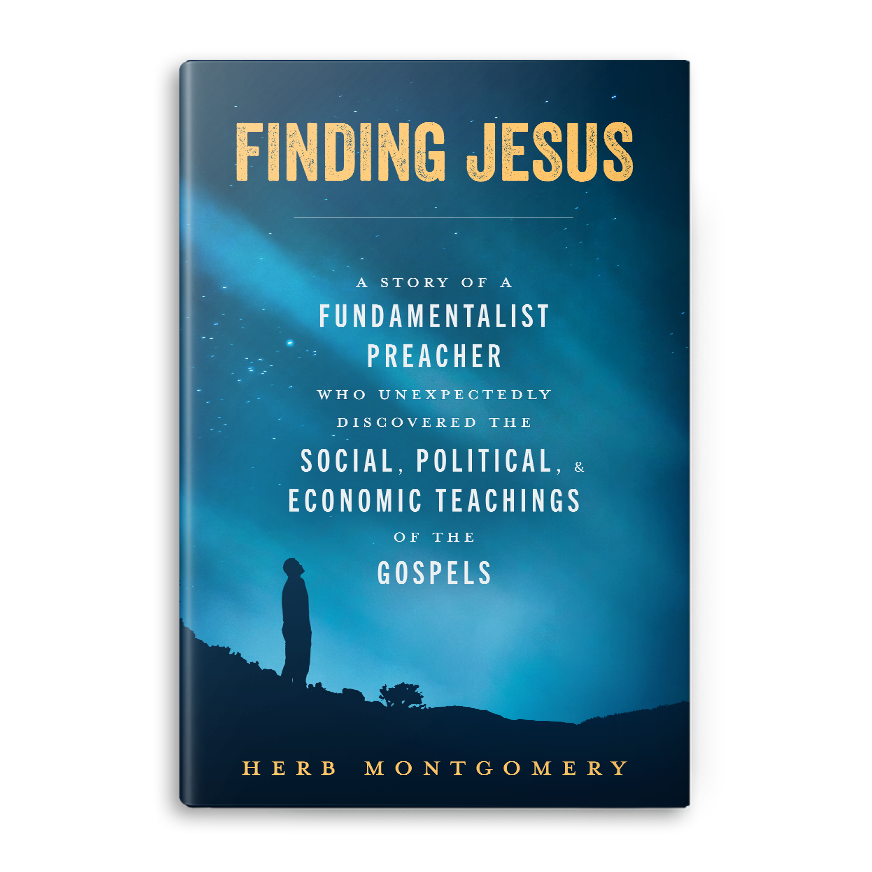
My new book, Finding Jesus: A story of a fundamentalist preacher who unexpectedly discovered the social, political, and economic teachings of the Gospels is now also available at renewedheartministries.com

Right where you are, keep living in love, choosing compassion, taking action, and working toward justice.

I love each of you dearly,

I’ll see you next week.


Matching Donations for the Rest of 2023!

As 2023 is coming to a close, we are deeply thankful for each of our supporters.

To express that gratitude we have a lot to share.

First, all donations during these last two months of the year will be matched, dollar for dollar, making your support of Renewed Heart Ministries go twice as far.

“Donate.”

Also, to everyone how makes a special one-time donation in any amount to support our work this holiday season we will be giving away a free copy of The Bible & LGBTQ Adventists.

When making your donation all you have to do indicate you would like to take advantage of this offer by writing Free Book” either in the comments section of your online donation or in the memo of your check if you are mailing your donation.
“Donate.”

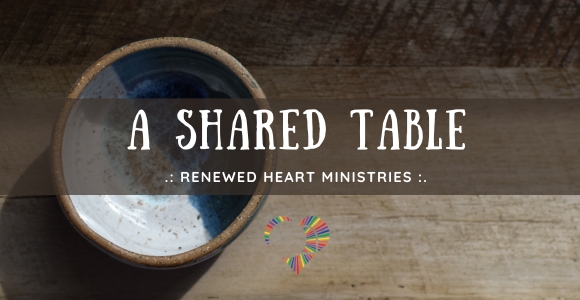
Lastly, its time for our annual Shared Table event once again. For all those who choose to become one of our monthly sustaining partners for 2024 by clicking the “Check this box to make it a monthly recurring donation” online, we will be sending out one our a handmade Renewed Heart Ministries Shared-Table Pottery Bowl made by Crystal and Herb as a thank you gift for your support. Becoming a monthly sustaining parter enables RHM to set our ministry project goals and budget for the coming year.

To become a monthly sustaining partner, go to renewedheartministries.com/donate and sign up for an automated recurring monthly donation of any amount by clicking the “Check this box to make it a monthly recurring donation” option. Or if you are using Paypal, select “Make this a monthly donation.”

We will be starting out the new year by sending out these lovely bowls as our gift to you to thank you for your sustaining support. Look for them to arrive during the months of January and February.

Our prayer is that whether displayed or used these bowls will be reminder of Jesus’ gospel of love, caring and shared table fellowship. They also make a great gift or conversation starter, as well.

If you are already one of our sustaining partners for 2024, we want to honor your existing continued support of Renewed  Heart Ministries, too. You’ll also receive one of our Shared Table Pottery Bowls as a thank you.

No matter how you choose to donate to support Renewed Heart Ministries’ work this holiday season, thank you for partnering with us to further Jesus’ vision of a world filled with compassion, love, and people committed to taking care of one another. Together we are working toward a safer, more compassionate, and just world both for today and for eternity.

From each of us here at RHM, thank you!

We wish you so much joy, peace, and blessings as 2023 comes to a close. Your support sustains our ongoing work in the coming year.

You can donate online by going to renewedheartministries.com and clicking “Donate.”

Or you can make a donation by mail at:

Renewed Heart Ministries
PO Box 1211
Lewisburg, WV 24901

In this coming year, together, we will continue to be a light in our world sharing Jesus’ gospel of love, justice and compassion.

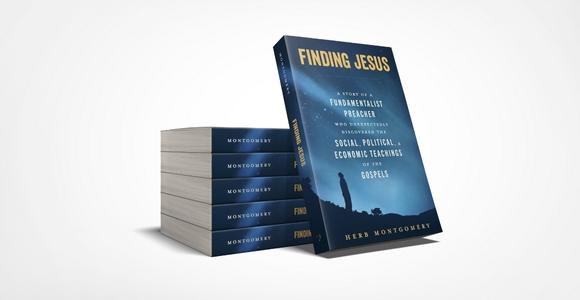

Now Available at Renewed Heart Ministries!

Herb’s new book Finding Jesus: A story of a fundamentalist preacher who unexpectedly discovered the social, political, and economic teachings of the Gospels, is available at renewedheartministries.com.

Get your copy today at renewedheartministries.com


Are you receiving all of RHM’s free resources each week?

Begin each day being inspired toward love, compassion, action, and justice. Free Sign-Up HERE

Render to Caesar the Things that Are Caesar’s

Thank you

We want to say a special thank you to all of our supporters.

If you would like to join them in supporting Renewed Heart Ministries’ work, you can do so by clicking “donate” above.


Just Talking

New Episode of JustTalking!

Season 1, Episode 35: Matthew 22:15-22. Lectionary A, Proper 24

Each week, we’ll be talking about the gospel lectionary reading for the upcoming weekend. We’ll be talking about each reading in the context of love, inclusion, and societal justice. Our hope is that our talking will be just talking (as in justice) and that during our brief conversations each week you’ll be inspired to also do more than just talking.

If you teach from the lectionary each week, or if you’re just looking for some thoughts on the Jesus story from a more progressive perspective within the context of social justice, check it out, you might like it.

You can find the latest show on YouTube at

Season 1, Episode 35: Matthew 22:15-22. Lectionary A, Proper 24

 or (@herbandtoddjusttalking)

Please Like, Subscribe, hit the Notification button, and leave us a comment

Thanks in advance for watching!


Render to Caesar the Things that Are Caesar’s

Herb Montgomery | October 20, 2023

To listen to this week’s eSight as a podcast episode click here.

___________________________________________

There are times when those teachings call me to lean more deeply into my civic duties because of the demands of love of neighbor and the belief that every person is the object of Divine love. As Dr. Emilie Townes so poignantly says, “If you begin with the idea that God loves everyone, justice isn’t very far behind.” And there are times when the state demands of me actions that opposes my commitment to justice. In moments like these, this story’s wisdom is helpful in navigating a life-giving pathway forward.

__________________________________________

Our reading this week is from the Gospel of Matthew:

Then the Pharisees went out and laid plans to trap him in his words. They sent their disciples to him along with the Herodians. “Teacher,” they said, “we know that you are a man of integrity and that you teach the way of God in accordance with the truth. You aren’t swayed by others, because you pay no attention to who they are. Tell us then, what is your opinion? Is it right to pay the imperial tax to Caesar or not?” 

But Jesus, knowing their evil intent, said, “You hypocrites, why are you trying to trap me? Show me the coin used for paying the tax.” They brought him a denarius, and he asked them, “Whose image is this? And whose inscription?”

“Caesar’s,” they replied. 

Then he said to them, “So give back to Caesar what is Caesar’s, and to God what is God’s.”

When they heard this, they were amazed. So they left him and went away. (Matthew 22:15-22)

Jesus’ saying in our reading this week appears in all three synoptic gospels and in the gospel of Thomas. It’s one of the sayings of Jesus that’s most misunderstood today, especially by the Christian Right.

If we are going to arrive at a life-giving interpretation of this story, we’re going to have to back up some and consider some historical context.

Archeologists tell us that the most circulated coin in Jesus’ day was a small coin with Tiberius Caesar’s image on one side and a seated woman holding an olive branch and a scepter. On the side with Ceasar’s image were the words, “TI CAESAR DIVI AVG F AUGUSTUS”: Tiberius is both Caesar Augustus (emperor), and the son of the Divine Augustus. 

Augustus, Tiberius’ father, had been declared divine by the Roman Senate in 14 C.E. upon his death. During his life, Augustus had circulated coins that referred to him as the son of God. After Julius Caesar’s death, a star (really a comet), had appeared at the summer games dedicated to his honor. Many Romans interpreted this as a symbol of Julius Caesar’s soul ascending to the heavens to dwell with the gods. A year and half later, the Roman Senate declared Julius divine and the star that appeared in the summer began being referred to as the “Julian star.” (I find it fascinating that when Jesus is born, Matthew’s gospel describes a new star appearing in the heavens.)

Because of this tradition, Augustus had coins minted and circulated that had his image with the words “Augustus Ceasar” on one side and, on the back, the Julian Star with the words “Divine Julius,” indicating that Augustus was the Son of God. Each succeeding Caesar after Julius and Augustus also described himself as the Divine Son of God (“God” being the previous Caesar), all the way to Tiberius in Jesus’ time.

As we’ve said, on the back of the coin most likely held up in our story this week was the image of a woman holding both a scepter and an olive branch to symbolize of both the rule and the peace of Rome (or Pax Romana). The woman is most often identified as Tiberius’ mother Livia, the mother.

This gives our story this week a bit more context. When Jesus held up the coin and asked whose “image” was on the coin, there were two images, one of Tiberius Caesar claiming he was the Divine Son of God and the image of his mother Livia, the mother of the Son of God. Keep this imagery and its claims in mind for a moment. 

In our reading, Jesus doesn’t tell his followers to pay the Roman tax, nor does Jesus tell them not to pay the tax. What Jesus does tell them, holding this coin with its imagery and claims, is to know the difference between their obligations to Caesar and their obligations to the God of the Torah.

Now, consider those coin images and their claims again. Jesus’ Jewish listeners that day would have heard his reply and remembered the words of the Torah itself:

“I am the LORD your God, who brought you out of Egypt, out of the land of slavery. You shall have no other gods before me. You shall not make for yourself an image in the form of anything in heaven above or on the earth beneath or in the waters below. You shall not bow down to them or worship them.” (Exodus 20:2-5)

On the surface, the words “give to Caesar Caesar’s due” would have sounded like an affirmation of paying taxes to Rome and thus kept Jesus out of trouble with the Romans. But to his Jewish listeners who knew the words of the Torah the following words “given to God what is God’s” would have held a much deeper, subversive message. 

According to the Torah, someone could not both honor Caesar’s divine claims and honor the God of the Torah. These two claims were diametrically opposed to each other such that one could not honor one without violating the other. You could not serve both the God of the Torah and Caesar as God. The question that had been given to Jesus was an effort to entrap him before the Romans, yet his response had turned the trap around, indicting the elites and powerful who the poor viewed as serving Rome through their positions in the Temple State. 

Honestly, I love how slick this story is in the end. The people questioning Jesus sought to render him guilty of violating the Pax Romana before Rome, and instead, they end up being rendered guilty of infidelity to the God of the Torah in the eyes of the people. 

How might we apply the lessons of our story in our context today? 

I live in the United States. There are times when the claims of my citizenship here are in perfect harmony with the teachings I believe are in the Jesus story. There are times when those teachings call me to lean more deeply into my civic duties because of the demands of love of neighbor and the belief that every person is the object of Divine love. As Dr. Emilie Townes so poignantly says, “If you begin with the idea that God loves everyone, justice isn’t very far behind.”

And there are times when the state demands of me actions that oppose the teaching I perceive in the Jesus story. I think of times when I’m asked to pledge allegiance to and support the American military-industrial complex. I think of the times when I’m asked to pledge allegiance to the economic exploitative and poverty-creating elements of a global capitalism. I think of when I’m called to pledge allegiance to American policies that still systemically hurt those made vulnerable. I think of the systemic racism and misogyny still baked into how we do things. 

Being a Jesus follower who is also an American is complicated. Sometimes I’m proud of this nation and happy to participate in its society and fulfill civic duties. At other times I’m ashamed of our national actions and I participate in our society by speaking out and by obstruction. As someone who both loves the Jesus of the Jesus story and many of America’s democratic aspirations, even when I speak out, it’s because of love. Love of neighbor is my highest call. But I also love this nation, or rather, I love the ideals this nation claims to aspire to. If a human society actually could live up to these high ideals, they would not contradict the ethics and values I read in the Jesus story. What I read in the Jesus story would lead me to lean into those high ideals and my civic duties if those ideals could be realized. And that’s the big “if.”

The values of the Jesus story call me to continually choose to work toward making our world a safe, compassionate, home for everyone. Wherever people are working to make American society a safe, compassionate home for everyone, I can come alongside them and participate in the work. Where they are working to make American society unsafe, lacking in compassion, and unjust, I can come alongside those working to oppose them. My allegiance is to love and justice and compassion first and foremost. My allegiance to America is contingent upon its fidelity to these values. I don’t give my country a blank check when it comes to my allegiance. When I oppose spaces that contradict the values I am most deeply committed to, I oppose them out of love for what we as a society could be if we leaned more deeply into the just demands of love of neighbor. 

This is what the gospel teaching render to Caesar those things that are Caesar’s and to God those things that are God’s means for me in my context today. It means to know the difference between the obligations of my civic duties as an American and to understand my higher commitments to love, justice and compassion. It means to hold the former wholly dependent on my fidelity to the latter. 

HeartGroup Application

1. Share something that spoke to you from this week’s eSight/Podcast episode with your HeartGroup.

2. How are your own civic responsibilities contingent on your commitments to love, compassion, and justice? Share and discuss with your group.

3. What can you do this week, big or small, to continue setting in motion the work of shaping our world into a safe, compassionate, just home for everyone?

Thanks for checking in with us, today.

I want to say a special thank you to all of our supporters out there. And if you would like to join them in supporting Renewed Heart Ministries’ work you can do so by going to renewedheartministries.com and clicking donate. 

You can find Renewed Heart Ministries on Twitter, Facebook, Instagram and Threads. If you haven’t done so already, please follow us on your chosen social media platforms for our daily posts. Also, if you enjoy listening to the Jesus for Everyone podcast, please like and subscribe to the JFE podcast through the podcast platform you use and consider taking some time to give us a review. This helps others find our podcast as well.

You can watch our new YouTube show called “Just Talking” each week. Todd Leonard and I take a moment to talk about the gospel lectionary reading for the upcoming weekend. We’ll be talking about each reading in the context of love, inclusion, and societal justice. Our hope is that our talking will be just talking (as in justice) and that during our brief conversations each week you’ll be inspired to also do more than just talking.

If you teach from the lectionary each week, or if you’re just looking for some thoughts on the Jesus story from a more progressive perspective within the context of social justice, check it out, you might like it. You can find JustTalking each week on YouTube at youtube.com/@herbandtoddjusttalking. Please Like, Subscribe, hit the Notification button, and leave us a comment.

And if you’d like to reach us here at Renewed Heart Ministries through email, you can reach us at info@renewedheartministries.com.

My new book, Finding Jesus: A story of a fundamentalist preacher who unexpectedly discovered the social, political, and economic teachings of the Gospels is now also available at renewedheartministries.com

Right where you are, keep living in love, choosing compassion, taking action, and working toward justice.

I love each of you dearly,

I’ll see you next week.


Now Available at Renewed Heart Ministries!

Herb’s new book Finding Jesus: A story of a fundamentalist preacher who unexpectedly discovered the social, political, and economic teachings of the Gospels, is available at renewedheartministries.com.

Get your copy today at renewedheartministries.com


Are you receiving all of RHM’s free resources each week?

Begin each day being inspired toward love, compassion, action, and justice. Free Sign-Up HERE

What Gives You The Right to Call for Change?

Thank you to all of our supporters.

If you would like to join them in supporting Renewed Heart Ministries’ work you can do so by clicking “donate” above.


New Episode of JustTalking!d

Season 1, Episode 32: Matthew 21.23-32. Lectionary A, Proper 21

Each week, we’ll be talking about the gospel lectionary reading for the upcoming weekend. We’ll be talking about each reading in the context of love, inclusion, and societal justice. Our hope is that our talking will be just talking (as in justice) and that during our brief conversations each week you’ll be inspired to also do more than just talking.

If you teach from the lectionary each week, or if you’re just looking for some thoughts on the Jesus story from a more progressive perspective within the context of social justice, check it out, you might like it.

You can find the latest show on YouTube at https://youtu.be/0Usj6s3tUyk?si=QIMehXJWRl1nZYSt

 or (@herbandtoddjusttalking)

Please Like, Subscribe, hit the Notification button, and leave us a comment

Thanks in advance for watching!


What Gives You The Right to Call for Change?

Herb Montgomery | September 29, 2023

To listen to this week’s eSight as a podcast episode click here.

“Our story this week models a possible response we could use when our authority is challenged and as we stand up to injustice and harmful abuses. As Christians, some of us are looking for equal access to a seat at a table we should be flipping because of whom those systems are harming.” 

Our reading this week is from the gospel of Matthew:

Jesus entered the temple courts, and, while he was teaching, the chief priests and the elders of the people came to him. “By what authority are you doing these things?” they asked. “And who gave you this authority?” 

Jesus replied, “I will also ask you one question. If you answer me, I will tell you by what authority I am doing these things. John’s baptism—where did it come from? Was it from heaven, or of human origin?” 

They discussed it among themselves and said, “If we say, ‘From heaven,’ he will ask, ‘Then why didn’t you believe him?’ But if we say, ‘Of human origin’—we are afraid of the people, for they all hold that John was a prophet.” So they answered Jesus, “We don’t know.” 

Then he said, “Neither will I tell you by what authority I am doing these things.

“What do you think? There was a man who had two sons. He went to the first and said, ‘Son, go and work today in the vineyard.’ ‘I will not,’ he answered, but later he changed his mind and went. “Then the father went to the other son and said the same thing. He answered, ‘I will, sir,’ but he did not go.

“Which of the two did what his father wanted?” 

“The first,” they answered. 

Jesus said to them, “Truly I tell you, the tax collectors and the prostitutes are entering the kingdom of God ahead of you. For John came to you to show you the way of righteousness, and you did not believe him, but the tax collectors and the prostitutes did. And even after you saw this, you did not repent and believe him.” (Matthew 21:23-32)

If we are going to arrive at life-giving interpretations that do not devolve into anti-Semitic tropes, we’ll need to understand the context of this passage. First, this passage represents a debate within Judaism. Christianity does not exist yet. So the passage doesn’t point to a choice between Christianity and Judaism, or some embracing “Christianity” ahead of others. Jesus was a Jewish man. The tax collectors and prostitutes in this passage are all Jewish folk, as were the chief priests and all the elders. 

This is instead a debate among people in different social locations within Judaism, the elite and powerful of a society and those who were shunned or pushed to the edges of their society, about what faithfulness to the God of the Torah looked like and how to follow the Torah’s economic teachings. 

Jesus had just overturned the money changers tables in the Temple, a political symbol and not solely a religious one. The Temple was the “Capital building” of the Temple state of Jerusalem over which Rome exercised imperial control. The chief priests and elders were not only religious leaders but also held political positions of power, property, and privilege. 

By flipping over these Temple tables, Jesus staged a political protest over the exploitation of the poor, and his authority for teaching and acting was challenged by those in positions of authority within the Temple state. 

Again, all of this happening economically, politically, socially, and religiously, and within Jewish culture and society. 

This story gives those of us who are not Jewish a window into a society from which we can glean wisdom as we stand in solidarity with the oppressed and marginalized, those in underprivileged social locations in our own society.

Jesus also mentions tax collectors and prostitutes in our reading. These people were labelled transgressors of national interests (tax collectors) and of religious morality (prostitutes), but they also embraced Jesus’ vision for human community (the kingdom) and its economic teachings of sharing resources, mutual aid, wealth redistribution, taking care of the vulnerable, and including the marginalized and excluded. Zacchaeus was an example of those who breached the national interest, and it’s interesting that, in true patriarchal form, we have no names of prostitutes passed down. Instead, we have the later fabrication that labels Mary Magdalene as a prostitute. This fabrication was a patriarchal (or patristic) attempt to lessen her influence and marginalize those who recognized her apostleship. (Thus the term patristic fathers.) 

Our story this week models a possible response we could use when our authority is challenged and as we stand up to injustice and harmful abuses. As Christians, some of us are looking for equal access to a seat at a table we should be flipping because of whom those systems are harming. There is a vast difference between working for the equal opportunity to compete in a system that rewards some and harms others and working toward an entirely different social order that doesn’t produce winners and losers. This “entirely different social order” means a way of living together with enough for everyone, where we only take what we need and share the rest, and where we make sure everyone cared for. 

In this light, taking up the cross becomes a mandate to flip oppressive tables even if you are threatened with a cross for doing so. We can read a lot more from this story that may help us in our justice work today. 

If the powerful and privileged elites in Jesus’s society couldn’t recognize that John the Baptist was standing in the authority of the Hebrew prophetic justice tradition, they would not recognize him doing the same. Note that Jesus doesn’t attempt to convince them. He doesn’t waste time defending his right to speak out or his right to exist. He’s got work to do. He dismisses their challenges to his authority to speak out and gets back to his work of shaping our world into a just, compassionate, safe home for everyone, specifically those presently marginalized. 

There is a lesson in this for us. Don’t get side tracked or distracted by the naysayers or those who want to pivot away from the injustice we are challenging to ourselves and what gives us permission to speak out again the injustice. We don’t have to have anyone’s permission to speak out. The presence of injustice is permission enough. Care for our fellow human beings gives us the right to speak out. Being a member of the human family gives us intrinsic authority when we see fellow humans being harmed. This applies ecologically and environmentally also. Humans are harmed by ruining our shared home on this planet in order to profit a few in the short term. 

Lastly, our reading this week includes the parable of the two sons of which scholars have spent much ink debating on the variations of this story that we have today (there are three different versions). Thee author of this story is placing much more emphasis on a person’s actions than their words. It’s not enough say yes to Jesus kingdom if the actions that follow that yes don’t align with the ethics and values of Jesus’ kingdom. In other words, accepting a ticket to a heaven later in other words is meaningless if we aren’t attempting to follow Jesus today in making our present home safe and just for everyone. In the end, the professions of the two sons didn’t matter’ . It was their actions that mattered. This is why I value whether someone is part of the solution to today’s injustice or whether they are part of the cause far more than whether that person claims or embraces Christianity or even Jesus. Professions matter little. The question is not what you believe or don’t believe. The question is whether you are choosing to be a life-giving human to those around you. In the end, and in the words of our story, Christian or not, those making the world a safer place for everyone are the ones doing what the “father wanted.”

I’ll close this week with the words of the late Oscar Romero:

“Even when they call us mad, when they call us subversives and communists and all the epithets they put on us, we know we only preach the subversive witness of the Beatitudes, which have turned everything upside down.” (Quoted by Leonardo Vilchis, We Cry Justice, p. 93)

HeartGroup Application

1. Share something that spoke to you from this week’s eSight/Podcast episode with your HeartGroup.

2. How does the parable of the two sons inspire you to work for justice? Share and discuss with your group.

3. What can you do this week, big or small, to continue setting in motion the work of shaping our world into a safe, compassionate, just home for everyone?

Thanks for checking in with us, today.

I want to say a special thank you to all of our supporters out there. And if you would like to join them in supporting Renewed Heart Ministries’ work you can do so by going to renewedheartministries.com and clicking donate. 

You can find Renewed Heart Ministries on Twitter, Facebook and Instagram. If you haven’t done so already, please follow us on your chosen social media platforms for our daily posts. Also, if you enjoy listening to the Jesus for Everyone podcast, please like and subscribe to the JFE podcast through the podcast platform you use and consider taking some time to give us a review. This helps others find our podcast as well.

Also I want to share that we are partnering in a new weekly YouTube show called “Just Talking.” Each week, Todd Leonard and I will be talking about the gospel lectionary reading for the upcoming weekend. We’ll be talking about each reading in the context of love, inclusion, and societal justice. Our hope is that our talking will be just talking (as in justice) and that during our brief conversations each week you’ll be inspired to also do more than just talking.

If you teach from the lectionary each week, or if you’re just looking for some thoughts on the Jesus story from a more progressive perspective within the context of social justice, check it out, you might like it. You can find JustTalking each week on YouTube at youtube.com/@herbandtoddjusttalking. Please Like, Subscribe, hit the Notification button, and leave us a comment.

And if you’d like to reach us here at Renewed Heart Ministries through email, you can reach us at info@renewedheartministries.com.

My new book, Finding Jesus: A story of a fundamentalist preacher who unexpectedly discovered the social, political, and economic teachings of the Gospels is now also available at renewedheartministries.com

Right where you are, keep living in love, choosing compassion, taking action, and working toward justice.

I love each of you dearly,

I’ll see you next week.


Now Available at Renewed Heart Ministries!

Herb’s new book Finding Jesus: A story of a fundamentalist preacher who unexpectedly discovered the social, political, and economic teachings of the Gospels, is available at renewedheartministries.com.

Get your copy today at renewedheartministries.com


Are you receiving all of RHM’s free resources each week?

Begin each day being inspired toward love, compassion, action, and justice. Free Sign-Up HERE

Kingdom Parables for Social Change

We want to say a special thank you to all of our supporters out there. If you would like to join them in supporting Renewed Heart Ministries’ work you can do so by going to renewedheartministries.com and clicking donate.


New Episode of JustTalking!

Season 1, Episode 23: Matthew 13:31-33, 44-52. Lectionary A, Proper 12

Each week, we’ll be talking about the gospel lectionary reading for the upcoming weekend. We’ll be talking about each reading in the context of love, inclusion, and societal justice. Our hope is that our talking will be just talking (as in justice) and that during our brief conversations each week you’ll be inspired to also do more than just talking.

If you teach from the lectionary each week, or if you’re just looking for some thoughts on the Jesus story from a more progressive perspective within the context of social justice, check it out, you might like it.

You can find the latest show on YouTube at https://youtu.be/oG16JTOGXQ8

 or (@herbandtoddjusttalking)

Please Like, Subscribe, hit the Notification button, and leave us a comment

Thanks in advance for watching!


“Kingdom” Parables for Social Change

Herb Montgomery | July 28, 2023

To listen to this week’s eSight as a podcast episode click here.

“When we discover we have been wrong, that’s okay. That’s a good thing. We can make old, death-dealing interpretations give way to new, life-giving interpretations. We can hold on to old, life-giving interpretations too, and adopt new interpretations that we think are more life-giving as new information is discovered. When what we thought was life-giving turns out not to be, we can hold on to the good old, letting go of the bad old, and replace it with the new. The object is not to protect everything that is old, but to ask whether what we are believing and practicing is truly life giving for all.”

Our reading this week is from the gospel of Matthew:

He told them another parable: “The kingdom of heaven is like a mustard seed, which a man took and planted in his field. Though it is the smallest of all seeds, yet when it grows, it is the largest of garden plants and becomes a tree, so that the birds come and perch in its branches.”

He told them still another parable: “The kingdom of heaven is like yeast that a woman took and mixed into about sixty pounds of flour until it worked all through the dough.”

“The kingdom of heaven is like treasure hidden in a field. When a man found it, he hid it again, and then in his joy went and sold all he had and bought that field.

“Again, the kingdom of heaven is like a merchant looking for fine pearls. When he found one of great value, he went away and sold everything he had and bought it.

“Once again, the kingdom of heaven is like a net that was let down into the lake and caught all kinds of fish. When it was full, the fishermen pulled it up on the shore. Then they sat down and collected the good fish in baskets, but threw the bad away. This is how it will be at the end of the age. The angels will come and separate the wicked from the righteous and throw them into the blazing furnace, where there will be weeping and gnashing of teeth.

“Have you understood all these things?” Jesus asked. “Yes,” they replied. 

He said to them, “Therefore every teacher of the law who has become a disciple in the kingdom of heaven is like the owner of a house who brings out of his storeroom new treasures as well as old.” (Matthew 13:31-33, 44-52)

There are so many beautiful themes in this week’s reading for us to dive into. First let’s consider the language here that refers to Jesus’ vision for human community as a “kingdom.”

Remember, Jesus’ gospel in these stories was not instructions for nor good news about a pathway to a post mortem heaven. Jesus’ gospel was good news that announced and called people to a new vision for human community in the here and now. A human community where those presently being marginalized and pushed to the undersides of society find a world that is safe, just, and compassionate for all. 

Kingdom

The term “kingdom” combined the imperial culture of the Roman empire with the restoration hopes of the indigenous Jewish people of Judea, Samaria, and Galilee living under Roman imperial colonization. It is the language of that time and place. Today we rightly recognize the kingdom language as hierarchical and patriarchal. It is my studied opinion that we would harmonize more with Jesus’ vision of community cast in the gospels if we referred to this community in more democratic terms, in ways reflected in the democratic principles practiced in the book of Acts by early Jesus communities. 

I also argue that the cosmic, post resurrection Jesus became the King of the early Jesus communities. Kingdom imagery was intended to help the church replace any earthly “king,” and make way for a more egalitarian community. Consider the following:

“And do not call anyone on earth ‘father,’ for you have one Father, and he is in heaven. Nor are you to be called instructors, for you have one Instructor, the Messiah.” (Matthew 23.9-10) 

This same principle could be applied: Don’t have kings among yourself, you have one King, Jesus. All of you are to relate to each other non hierarchically as equals:

“But you are not to be called ‘Rabbi,’ for you have one Teacher, and you are all brothers. (Matthew 23:8, emphasis added.)

Again, this language attempts to communicate egalitarian siblinghood and yet even this version only mentions “brothers.” Today, we might say “brothers and sisters,” or more simply “siblings.” We can push this language to be more inclusive of women and nonbinary, gender nonconforming, and other people, and still be in perfect harmony with the trajectory of the intention of the original egalitarian and non-hierarchical passage. 

Mustard (See also Mark 4:30-32; Luke 13:18-19; Gospel of Thomas 20)

The parable of the mustard seed is a political parable, not a botanical one. Botanically, mustard don’t grow into trees at all. They grow into shrubs of average size. This story is meant to be understood in the context of the political hopes of Jesus’ Jewish community. Consider the promise made to this people in Ezekiel:

“This is what the Sovereign God says, ‘I myself will take a shoot from the very top of a cedar and plant it; I will break off a tender sprig from its topmost shoots and plant it on a high and lofty mountain. On the mountain heights of Israel I will plant it; it will produce branches and bear fruit and become a splendid cedar. Birds of every kind will nest in it; they will find shelter in the shade of its branches.’” (Ezekiel 17:22-23)

A tree being used as a metaphor for a kingdom or empire was common in the scriptures. Consider how Babylon itself was described with the same language. 

“Its leaves were beautiful, its fruit abundant, and on it was food for all. Under it the wild animals found shelter, and the birds lived in its branches; from it every creature was fed . . . The tree you saw, which grew large and strong, with its top touching the sky, visible to the whole earth, with beautiful leaves and abundant fruit, providing food for all, giving shelter to the wild animals, and having nesting places in its branches for the birds—Your Majesty, you are that tree! You have become great and strong; your greatness has grown until it reaches the sky, and your dominion extends to distant parts of the earth.” (Daniel 4:12, 20-22)

In saying that Jesus’ vision for human community would ultimately grow from tiny beginnings to the fulfillment of Jewish hopes of restoration and independence, the gospel authors were appealing to the Jewish people’s hopes in the midst of their imperial colonization by Rome. 

This can be challenging for contemporary Christians to wrap their minds and hearts around, but the hard work of reading the Jesus story from the perspectives of marginalized and excluded communities is work worth doing. 

Calling Jesus’ vision of human community a mustard seed was about more than its small beginnings. Most of the agricultural world at that time deemed the mustard plant a weed. So Jesus’ kingdom vision for human community was being likened in this parable to a weed. This called out how Jesus’ vision for what human community could be was deemed by the elite, powerful, propertied and privileged: a weed that must be speedily eliminated before it took over the imaginations of the masses. 

Yeast (Luke 13:20-21; Thomas 96)

In the Passover traditions, leaven was a corrupting influence, and unleavened bread symbolized purity. So in this week’s reading, Jesus’ kingdom vision for human community is being likened to something that corrupted. Again, the elite, powerful, propertied and privileged considered this vision for human community that Jesus was casting a corrupting influence among the masses. If something wasn’t done about it quickly, it would permeate the entire society that the elites were profiting off of.

Historically, democracy was seen as a corrupting influence in societies that practiced monarchy or other forms of hierarchy. Today, even non-authoritarian, more democratic forms of socialism and communism are deemed as a corrupting influence by global capitalists who profit off the masses. (Consider the history of U.S. policy in relation to Vietnam and Cuba.) 

Jesus’ love for the poor and his vision of a human community that practiced wealth redistribution, debt cancellation, resource sharing, and mutual aid inspired the poor and marginalized in his society, and benefitted those being exploited. It threatened the elites. Truly Jesus’ preaching was corrupting leaven and a noxious weed to them.

Priority of hidden treasure or a pearl of great price

The next parable characterizes Jesus’ kingdom not as a weed or a corrupting influence but as treasure: a pearl worth a person selling everything they have to obtain it. This language aims squarely at Jesus’ wealthy listeners who had much to lose by embracing Jesus’ vision for human community. Yes, the changes would cost their bottom line, but what they would get in return would be worth so much more. It would result in a world that would be safer, more compassionate, and more just for everyone including themselves. Notice how this language is repeatedly focused toward the wealthy in the Jesus story:

Jesus looked at him and loved him. “One thing you lack,” he said. “Go, sell everything you have and give to the poor, and you will have treasure in heaven. Then come, follow me.” (Mark 10:21)

Jesus answered, “If you want to be perfect, go, sell your possessions and give to the poor, and you will have treasure in heaven. Then come, follow me.” (Matthew 19:21)

Sell your possessions and give to the poor. Provide purses for yourselves that will not wear out, a treasure in heaven that will never fail, where no thief comes near and no moth destroys. (Luke 12:33)

When Jesus heard this, he said to him, “You still lack one thing. Sell everything you have and give to the poor, and you will have treasure in heaven. Then come, follow me.” (Luke 18:22)

In the parables of the treasure located in the field and the pearl of great price, those who discovered it sold everything they had to obtain it. And in the book of Acts, wealthy Jesus followers did the same to create the kind of community Jesus’ teachings inspired them toward:

They sold property and possessions to give to anyone who had need. (Acts 2:45)

That there were no needy persons among them. For from time to time those who owned land or houses sold them, brought the money from the sales and put it at the apostles’ feet, and it was distributed to anyone who had need. (Acts 4:34-35)

A Net

Also in this week’s reading, we bump into a theme repeated in Matthew’s gospel. A wide net gathers all. Some people are labeled as good and some as wicked, and a sorting takes place at the end of the age. That “end” includes a purging or burning metaphor for the wicked. Given how long this week’s discussion is, I want to re-share last week’s critique of that way of viewing the world.

Things Old and New

In Jesus’ time, teachers of the Torah who embraced Jesus‘ kingdom paradigm would rightly be expected to bring out both old, universal truths and new ones. This reminds me today that it’s okay for Jesus followers, even within traditional expressions of Christianity, to present interpretations and teachings that mix old and new. 

When we discover we have been wrong, that’s okay. That’s a good thing. We can make old, death-dealing interpretations give way to new, life-giving interpretations. We can hold on to old, life-giving interpretations too, and adopt new interpretations that we think are more life-giving as new information is discovered. When what we thought was life-giving turns out not to be, we can hold on to the good old, letting go of the bad old, and replace it with the new. The object is not to protect everything that is old, but to ask whether what we are believing and practicing is truly life giving for all. If we hold to this standard, it will produce a Jesus follower that isn’t afraid of the new. 

Our goal is to be a source of healing and life and change for the better for everyone. And in this way, Jesus followers can, as our reading states, brings out of our storerooms new treasures as well as old.

HeartGroup Application

1. Share something that spoke to you from this week’s eSight/Podcast episode with your HeartGroup.

2. How do these parables inform your own justice work? Share that with your group.

3. What can you do this week, big or small, to continue setting in motion the work of shaping our world into a safe, compassionate, just home for everyone?

Thanks for checking in with us, today.

I want to say a special thank you to all of our supporters out there. And if you would like to join them in supporting Renewed Heart Ministries’ work you can do so by going to renewedheartministries.com and clicking donate. 

You can find Renewed Heart Ministries on Twitter, Facebook and Instagram. If you haven’t done so already, please follow us on your chosen social media platforms for our daily posts. Also, if you enjoy listening to the Jesus for Everyone podcast, please like and subscribe to the JFE podcast through the podcast platform you use and consider taking some time to give us a review. This helps others find our podcast as well.

Also I want to share that we are partnering in a new weekly YouTube show called “Just Talking.” Each week, Todd Leonard and I will be talking about the gospel lectionary reading for the upcoming weekend. We’ll be talking about each reading in the context of love, inclusion, and societal justice. Our hope is that our talking will be just talking (as in justice) and that during our brief conversations each week you’ll be inspired to also do more than just talking.

If you teach from the lectionary each week, or if you’re just looking for some thoughts on the Jesus story from a more progressive perspective within the context of social justice, check it out, you might like it. You can find JustTalking each week on YouTube at youtube.com/@herbandtoddjusttalking. Please Like, Subscribe, hit the Notification button, and leave us a comment.

And if you’d like to reach us here at Renewed Heart Ministries through email, you can reach us at info@renewedheartministries.com.

My new book, Finding Jesus: A story of a fundamentalist preacher who unexpectedly discovered the social, political, and economic teachings of the Gospels is now also available at renewedheartministries.com

Right where you are, keep living in love, choosing compassion, taking action, and working toward justice.

I love each of you dearly,

I’ll see you next week.


Now Available at Renewed Heart Ministries!

Herb’s new book Finding Jesus: A story of a fundamentalist preacher who unexpectedly discovered the social, political, and economic teachings of the Gospels, is available at renewedheartministries.com.

Get your copy today at renewedheartministries.com


Are you receiving all of RHM’s free resources each week?

Begin each day being inspired toward love, compassion, action, and justice. Free Sign-Up HERE

Refusing to Be Silent About Injustice

We want to say a special thank you to all of our supporters out there. If you would like to join them in supporting Renewed Heart Ministries’ work you can do so by going to renewedheartministries.com and clicking donate.


We’ll Be Back Next Week!

Each week, we’ll be talking about the gospel lectionary reading for the upcoming weekend. We’ll be talking about each reading in the context of love, inclusion, and societal justice. Our hope is that our talking will be just talking (as in justice) and that during our brief conversations each week you’ll be inspired to also do more than just talking.

If you teach from the lectionary each week, or if you’re just looking for some thoughts on the Jesus story from a more progressive perspective within the context of social justice, check it out, you might like it.

You can find the latest show on YouTube at https://youtu.be/MAYBXFTYygY

 or (@herbandtoddjusttalking)

Please Like, Subscribe, hit the Notification button, and leave us a comment

Thanks in advance for watching!


Herb Montgomery | June 23, 2023

To listen to this week’s eSight as a podcast episode click here.

“What does this passage have to say about how unsustainable our predatory and exploitative capitalist system today is, both environmentally and economically? What might our Gehenna look like today? Climate change scientists tell us that our Gehenna is coming too. Economic and environmental exploitation in the wake of the industrial revolution is unsustainable, period.”

This week’s reading is from the gospel of Matthew:

“The student is not above the teacher, nor a servant above his master. It is enough for students to be like their teachers, and servants like their masters. If the head of the house has been called Beelzebul, how much more the members of his household! 

“So do not be afraid of them, for there is nothing concealed that will not be disclosed, or hidden that will not be made known. What I tell you in the dark, speak in the daylight; what is whispered in your ear, proclaim from the roofs. Do not be afraid of those who kill the body but cannot kill the soul. Rather, be afraid of the One who can destroy both soul and body in Gehenna. Are not two sparrows sold for a penny? Yet not one of them will fall to the ground outside your Father’s care. And even the very hairs of your head are all numbered. So don’t be afraid; you are worth more than many sparrows.

“Whoever acknowledges me before others, I will also acknowledge before my Father in heaven. But whoever disowns me before others, I will disown before my Father in heaven.

“Do not suppose that I have come to bring peace to the earth. I did not come to bring peace, but a sword. For I have come to turn 

  ‘a man against his father,

a daughter against her mother,

a daughter-in-law against her mother-in-law—

  a man’s enemies will be the members of his own household.’ 

“Anyone who loves their father or mother more than me is not worthy of me; anyone who loves their son or daughter more than me is not worthy of me. Whoever does not take up their cross and follow me is not worthy of me. Whoever finds their life will lose it, and whoever loses their life for my sake will find it.” (Matthew 10:24-39)

This week’s reading reflects the struggles of the early Jesus community. When Matthew was written, Jesus followers were experiencing pushback and slander similar to what Jesus had experienced from those benefiting from the status quo. In our reading this week, the early Matthean community of Galilee hears Jesus encouraging them to expect being treated the same way he was treated as result of refusing to be silent about the thing Jesus also spoke out about (cf. Luke 4:18-19).

In this reading, they are encouraged to not fear those who can kill their bodies the same way they killed Jesus’ body. This community believed Jesus’ state murder and everything accomplished through his death had been overcome, undone, and reversed by God in the resurrection of Jesus. That’s why Jesus uses the language of killing the body but not killing the soul. What Jesus warns the listeners about next is being thrown whole into Gehenna. There would be no coming back from that. 

Let’s try to hear this language about Gehenna in its original Jewish context rather than in a modern Christian one. In the justice tradition of the Hebrew prophets, Gehenna had a rich history. Gehenna, the valley of the son of Hinnom, was a place where child sacrifice was practiced. Later it became a place where Gentile empires would raze Jerusalem and massacre the Jewish people. The reference in the gospels makes perfect sense: Matthew was written in the wake of Jerusalem being razed again, this time by Rome. Jerusalem’s total destruction  was what some Jews, including Jesus-followers, were trying to make sense of. Without the temple and without Jerusalem, it was as if the Jewish community had been thrown completely into Gehenna. 

Consider how Gehenna evolved in the scriptures:

“And [Ahaz, King of Judah] made offerings in THE VALLEY OF THE SON OF HINNOM, and made his sons pass through fire, according to the abominable practices of the nations whom the LORD drove out before the people of Israel.” (2 Chronicles 28:3)

“He made his son pass through fire in THE VALLEY OF THE SON OF HINNOM, practiced soothsaying and augury and sorcery, and dealt with mediums and with wizards. He did much evil in the sight of the LORD, provoking him to anger.” (2 Chronicles 33:6)

“And they go on building the high place of Topheth, which is in THE VALLEY OF THE SON OF HINNOM, to burn their sons and their daughters in the fire—which I did not command, nor did it come into my mind. Therefore, the days are surely coming, says the LORD, when it will no more be called Topheth, or THE VALLEY OF THE SON OF HINNOM, but THE VALLEY OF SLAUGHTER: for they will bury in Topheth until there is no more room.” (Jeremiah 7:31–32)

“The word that came to Jeremiah from the LORD: Stand in the gate of the LORD’S house, and proclaim there this word, and say, Hear the word of the LORD, all you people of Judah, you that enter these gates to worship the LORD. Thus says the LORD of hosts, the God of Israel: Amend your ways and your doings, and let me dwell with you in this place. Do not trust in these deceptive words: ‘This is the temple of the LORD, the temple of the LORD, the temple of the LORD.’ For if you truly amend your ways and your doings, if you truly act justly one with another, if you do not oppress the alien, the orphan, and the widow, or shed innocent blood in this place, and if you do not go after other gods to your own hurt, then I will dwell with you in this place, in the land that I gave of old to your ancestors forever and ever. Here you are, trusting in deceptive words to no avail. Will you steal, murder, commit adultery, swear falsely, make offerings to Baal, and go after other gods that you have not known, and then come and stand before me in this house, which is called by my name, and say, ‘We are safe!’—only to go on doing all these abominations? Has this house, which is called by my name, become a den of robbers in your sight? You know, I too am watching, says the LORD.” (Jeremiah 7:1–11, emphasis added.)

It’s telling that the gospel authors put Jeremiah’s words in Jesus’s mouth during his temple protest against exploitation of the poor. Jesus flips over the money changers’ tables, saying “You have made this house a den of robbers.” 

One last passage from Jeremiah:

“And go out to the VALLEY OF THE SON OF HINNOM (Gehenna) at the entry of the Potsherd Gate, and proclaim there the words that I tell you. You shall say: Hear the word of the LORD, O kings of Judah and inhabitants of Jerusalem. Thus says the LORD of hosts, the God of Israel: I am going to bring such disaster upon this place that the ears of everyone who hears of it will tingle. Because the people have forsaken me, and have profaned this place by making offerings in it to other gods whom neither they nor their ancestors nor the kings of Judah have known; and because they have filled this place with the blood of the innocent, and gone on building the high places of Baal to burn their children in the fire as burnt offerings to Baal, which I did not command or decree, nor did it enter my mind. Therefore the days are surely coming, says the LORD, when this place shall no more be called Topheth, OR THE VALLEY OF THE SON OF HINNOM, but THE VALLEY OF SLAUGHTER.” (Jeremiah 19:2–6)

I want to be clear. Jerusalem was not destroyed by Rome in 70 C.E . because God was punishing Jews for rejecting Jesus. This trope by Christians has had a long harmful history for Jewish people. The destruction of Jerusalem was instead brought about in the wake of the Jewish-Roman war of 66-69 C.E. This war resulted from the rich exploiting the poor and poor people revolting, taking over the temple, burning the records of their debt, and ultimately making Jerusalem their center of operations as they struck Rome itself. Their revolt provoked  the full weight of the Roman Empire coming down on their heads. 

In this week’s reading, then, the original audience would have heard Jesus encouraging them not to fear being killed for following him as he spoke out against the exploitation of the poor. They would have heard him advising them to fear remaining silent, to not go along with  exploitation that would plunge all of Jerusalem into a “Gehenna” at the hands of Rome. Again, it’s important to remember this was all written after the fact, with the community’s hindsight helping them to map social, political and economic causes for what they had just gone through.

What does this passage have to say about how unsustainable our predatory and exploitative capitalist system today is, both environmentally and economically? What might our Gehenna look like today? Climate change scientists tell us that our Gehenna is coming too. Economic and environmental exploitation in the wake of the industrial revolution is unsustainable, period.

Matthew’s community would have heard Jesus say that speaking out against injustice is divisive: it divides like a sword. And in that world, family ties were more than just relationships, they were also the means of economic survival. But for Jesus, preserving family ties was not a higher priority than speaking out against injustice or the harm being done to those their society had made vulnerable. 

Lastly, Jesus encourages his followers to take up their own crosses. I want to be very careful here. Too often Christians have told victims of abuse and injustice that they must simply bear their cross. This is effectively saying the opposite of our reading this week: it would mean to keep silent and passively bearing injustice. 

But in the context of our reading, remember that Jesus followers are threatened with the cross for speaking out against injustice. Bearing a cross is not inherent to following Jesus. A cross is only invoked when those with power and privilege become threatened by egalitarian change and threaten those calling for change if they don’t shut up. 

To people in that situation, Jesus is saying, don’t be silent. Speak out, resist, keep calling for change, even if they threaten you with a cross for doing so. It is better to take up one’s cross, to speak out against injustice and harm, than to lose your soul, your very being, who you are and your commitment to justice, by choosing to be silent in the face of injustice.

What does it mean to follow Jesus in the context of what we are facing today?

HeartGroup Application

1. Share something that spoke to you from this week’s eSight/Podcast episode with your HeartGroup.

2. In what ways to you choose to not be silent in the face of injustice today? Discuss with your group.

3. What can you do this week, big or small, to continue setting in motion the work of shaping our world into a safe, compassionate, just home for everyone?

Thanks for checking in with us, today.

I want to say a special thank you to all of our supporters out there. And if you would like to join them in supporting Renewed Heart Ministries’ work you can do so by going to renewedheartministries.com and clicking donate. 

You can find Renewed Heart Ministries on Twitter, Facebook and Instagram. If you haven’t done so already, please follow us on your chosen social media platforms for our daily posts. Also, if you enjoy listening to the Jesus for Everyone podcast, please like and subscribe to the JFE podcast through the podcast platform you use and consider taking some time to give us a review. This helps others find our podcast as well.

Also I want to share that we are partnering in a new weekly YouTube show called “Just Talking.” Each week, Todd Leonard and I will be talking about the gospel lectionary reading for the upcoming weekend. We’ll be talking about each reading in the context of love, inclusion, and societal justice. Our hope is that our talking will be just talking (as in justice) and that during our brief conversations each week you’ll be inspired to also do more than just talking.

If you teach from the lectionary each week, or if you’re just looking for some thoughts on the Jesus story from a more progressive perspective within the context of social justice, check it out, you might like it. You can find JustTalking each week on YouTube at youtube.com/@herbandtoddjusttalking. Please Like, Subscribe, hit the Notification button, and leave us a comment.

And if you’d like to reach us here at Renewed Heart Ministries through email, you can reach us at info@renewedheartministries.com.

My new book, Finding Jesus: A story of a fundamentalist preacher who unexpectedly discovered the social, political, and economic teachings of the Gospels is now also available at renewedheartministries.com

Right where you are, keep living in love, choosing compassion, taking action, and working toward justice.

I love each of you dearly,

I’ll see you next week.


Now Available at Renewed Heart Ministries!

Herb’s new book Finding Jesus: A story of a fundamentalist preacher who unexpectedly discovered the social, political, and economic teachings of the Gospels, is available at renewedheartministries.com.

Get your copy today at renewedheartministries.com


Are you receiving all of RHM’s free resources each week?

Begin each day being inspired toward love, compassion, action, and justice. Free Sign-Up HERE

A Unity That’s Big Enough

This Week’s Episode of Just Talking Available on YouTube

New Episode of “Just Talking” Now Online!

Season 1, Episode 14: John 17.1-11. Lectionary A, Easter 7

Each week, we’ll be talking about the gospel lectionary reading for the upcoming weekend. We’ll be talking about each reading in the context of love, inclusion, and societal justice. Our hope is that our talking will be just talking (as in justice) and that during our brief conversations each week you’ll be inspired to also do more than just talking.

If you teach from the lectionary each week, or if you’re just looking for some thoughts on the Jesus story from a more progressive perspective within the context of social justice, check it out, you might like it.

You can find the latest show on YouTube at https://youtu.be/NFukfGUUlEQ

 or (@herbandtoddjusttalking)

Please Like, Subscribe, hit the Notification button, and leave us a comment

Thanks in advance for watching!


Unity

Herb Montgomery | May 19, 2023

To listen to this week’s eSight as a podcast episode click here.


What we want is a unity that is safe for everyone. A unity that is compassionate. A unity that walks arm and arm with justice. A unity that’s big enough to wrap its arms around all our varied differences and call them “good.” A unity that at its heart holds the well-being of every member as its highest priority of value.


Our reading this week is from the gospel of John:

After Jesus said this, he looked toward heaven and prayed:

“Father, the hour has come. Glorify your Son, that your Son may glorify you.

For you granted him authority over all people that he might give eternal life to all those you have given him.

Now this is eternal life: that they know you, the only true God, and Jesus Christ, whom you have sent.

I have brought you glory on earth by finishing the work you gave me to do.

And now, Father, glorify me in your presence with the glory I had with you before the world began.

I have revealed you to those whom you gave me out of the world. They were yours; you gave them to me and they have obeyed your word.

Now they know that everything you have given me comes from you.

For I gave them the words you gave me and they accepted them. They knew with certainty that I came from you, and they believed that you sent me.

I pray for them. I am not praying for the world, but for those you have given me, for they are yours.

All I have is yours, and all you have is mine. And glory has come to me through them.

I will remain in the world no longer, but they are still in the world, and I am coming to you. Holy Father, protect them by the power of your name, the name you gave me, so that they may be one as we are one.” (John 17:1-11)

Our reading this week is John’s version of Jesus’ farewell prayer. This passage deeply influenced Christians during the fourth and fifth centuries C.E., and it became the basis of the discussions and conclusions that became the orthodox doctrinal understanding of Jesus’ relation to God.

When Jesus’ followers are referenced in this prayer, it’s difficult to discern whether the prayer is talking about Jesus’ first disciples before his crucifixion or the whole Johannine community in the century afterwards.

The prayer is unique to John’s gospel. Some consider this prayer to be the Johannine community’s equivalent of the “Lord’s Prayer” in the synoptic gospels. The key words, phrases, and expressions in this prayer are all uniquely Johannine.

Firstly, this community defined eternal life or salvation as a special knowledge. Consider the following passages from this week’s reading:

Now this is eternal life: that they know you… (John 17:3)

Now they know that everything you have given me comes from you. (John 17:7)

They knew with certainty… (John 17:8)

As an exercise, look up every time “knowing” is the important element emphasized in the book of John. When we acknowledge how central “knowing” was to the Johannine community’s version of the Jesus story, we discover the entire gospel is about gaining this knowing (gnosis) from Jesus. In fact, giving us this gnosis, the gospel of John tells us, is the entire reason Jesus came.

This is a very different emphasis from the one we read in Mark, Matthew and Luke.

Secondly, the early Johannine community didn’t treat a bodily resurrection as all that necessary for Jesus. In John 17, it is through the cross (death being the separating of the gnostic soul from the material body) that Jesus would be reunited with the Father. Looking to the cross and speaking to his Father, Jesus says, “I will remain in the world no longer . . . I am coming to you.”

This is one of the many reasons why a gnostic Jesus doesn’t quite fit the versions of Jesus we encounter in Mark, Matthew, and Luke. There would come to be deep divides and differences between later gnostic Christianity and what would become orthodox Christianity, and these divides were what led many Church Fathers to deem gnostic forms of Christianity as heretical.

The gospel of John later seeks to correct the implication of this prayer in Jesus’ statement to Mary at the tomb:

“Jesus said, “Do not hold on to me, for I have not yet ascended to the Father.” (John 20:17)

As I’ve shared as we’ve re-read the gospel of John, I prefer the more material Jesus we encounter Mark, Matthew, and Luke. There are still gems to mine from the gospel of John (the supremacy of Love is one), but I resonate much more with the synoptic Jesus, who is striving to make our concrete world, here and now, a safer, more compassionate, just home for everyone. I prefer that Jesus over the Johannine Jesus, who is primarily concerned with imparting a special knowledge that is the path or “way” and that ultimately liberates our spirits from our flesh.

I also find the synoptics speak more relevantly into our justice work today. If changing our present world is the goal, I’ll take Mark, Matthew and Luke. But if getting to heaven is the goal, then John’s gospel provides the most warm and fuzzy path to that end and it depends simply on knowing the Father the way Jesus came to reveal Him.

A third theme repeated in our reading this week is the theme of unity. Unity can be both life-giving and death-dealing. Like peace, unity based on silencing opposition or accommodating harm is death-dealing. And, like peace, unity that comes through justice, through ensuring everyone is being taken care of, is life-giving. As Ched Myers rightly states in his classic commentary on Mark, Binding the Strong Man, “We may rightly be suspicious of theologies of reconciliation that promote Christian unity at the price of political silence.”

I don’t believe that unity has to mean the homogeneous conformity of everyone involved. We can have unity alongside a beautiful, heterogeneous diversity where our differences are celebrated as the rich variations that we have as a human family, and where none are excluded or made to feel “less than” because they are different from those the present system prioritizes and privileges.

If we want unity, we should be working for justice. We don’t want a unity that comes at any cost, a unity that results from people who are being hurt being told to sit down and keep silent.

For many of us, unity now will have to come through reconciliation. And that reconciliation will have to come through restitution for past injustices and the transformation of our present system that corrects harms being committed. Unity depends on change, then. It has to follow present harms being remedied and made right. Until then, unity can’t be life-giving if it calls us to ignore or passively accept the concrete harms that have been and are being done to people made vulnerable in our society.

If we are praying for a unity that is the fruit of justice being restored and rooted in care that ensures everyone has what they need to thrive, then I’m all for it. But death-dealing unity that is mere silence in the midst of harm is not what I interpret our reading this week to promote.

What we want is a unity that is safe for everyone. A unity that is compassionate. A unity that walks arm and arm with justice. A unity that’s big enough to wrap its arms around all our varied differences and call them “good.” A unity that at its heart holds the well-being of every member as its highest priority of value.

If we, alongside the Jesus in this week’s reading, are praying for this kind of unity, then and only then can we say, “Amen.”

HeartGroup Application

1. Share something that spoke to you from this week’s eSight/Podcast episode with your HeartGroup.

2. What does unity mean for you? Share with your group.

3. What can you do this week, big or small, to continue setting in motion the work of shaping our world into a safe, compassionate, just home for everyone?

Thanks for checking in with us, today.

You can find Renewed Heart Ministries on Twitter, Facebook and Instagram. If you haven’t done so already, please follow us on your chosen social media platforms for our daily posts. Also, if you enjoy listening to the Jesus for Everyone podcast, please like and subscribe to the JFE podcast through the podcast platform you use and consider taking some time to give us a review. This helps others find our podcast as well.

Also I want to share that we are partnering in a new weekly YouTube show called “Just Talking.” Each week, Todd Leonard and I will be talking about the gospel lectionary reading for the upcoming weekend. We’ll be talking about each reading in the context of love, inclusion, and societal justice. Our hope is that our talking will be just talking (as in justice) and that during our brief conversations each week you’ll be inspired to also do more than just talking.

If you teach from the lectionary each week, or if you’re just looking for some thoughts on the Jesus story from a more progressive perspective within the context of social justice, check it out, you might like it. You can find JustTalking each week on YouTube at youtube.com/@herbandtoddjusttalking. Please Like, Subscribe, hit the Notification button, and leave us a comment.

And if you’d like to reach us here at Renewed Heart Ministries through email, you can reach us at info@renewedheartministries.com.

My new book, Finding Jesus: A story of a fundamentalist preacher who unexpectedly discovered the social, political, and economic teachings of the Gospels is now also available at renewedheartministries.com

Right where you are, keep living in love, choosing compassion, taking action, and working toward justice.

I love each of you dearly,

I’ll see you next week.


Now Available at Renewed Heart Ministries!

Herb’s new book Finding Jesus: A story of a fundamentalist preacher who unexpectedly discovered the social, political, and economic teachings of the Gospels, is available at renewedheartministries.com.

Get your copy today at renewedheartministries.com


Are you receiving all of RHM’s free resources each week?

Begin each day being inspired toward love, compassion, action, and justice. Free Sign-Up HERE

Safe-for-Everyone Interpretations and Practices

Safe-for-Everyone Interpretations and Practices

Herb Montgomery | February 3, 2023

To listen to this week’s eSight as a podcast episode click here.


“What does this mean for us? It means that we can do with the Jesus story today what those in the 1st Century were doing with the Torah. We can learn to interpret the Jesus story in life-giving ways, listening to the world around us and the harm previous interpretations have caused. We can think carefully, not just theologically but socially, politically, and economically . . . we can grapple with the ethics of the Jesus story in our cultural context today and find more life-giving ways of defining what it means to follow Jesus.”


Our reading this week is from the gospel of Matthew and continues the passage from last week.

You are the salt of the earth. But if the salt loses its saltiness, how can it be made salty again? It is no longer good for anything, except to be thrown out and trampled underfoot. You are the light of the world. A town built on a hill cannot be hidden. Neither do people light a lamp and put it under a bowl. Instead they put it on its stand, and it gives light to everyone in the house. In the same way, let your light shine before others, that they may see your good deeds and glorify your Father in heaven. Do not think that I have come to abolish the Law or the Prophets; I have not come to abolish them but to fulfill them. For truly I tell you, until heaven and earth disappear, not the smallest letter, not the least stroke of a pen, will by any means disappear from the Law until everything is accomplished. Therefore anyone who sets aside one of the least of these commands and teaches others accordingly will be called least in the kingdom of heaven, but whoever practices and teaches these commands will be called great in the kingdom of heaven. For I tell you that unless your righteousness surpasses that of the Pharisees and the teachers of the law, you will certainly not enter the kingdom of heaven. (Matthew 5:13-20)

This week’s reading is this gospel’s collection of sayings and teachings that reflects the concerns and experiences of many Galilean members of the Jewish Jesus community at the time of this gospel’s writing.

To understand the phrase “if the salt loses its saltiness,” understand how salt was harvested in the region at that time. When harvested, salt was mixed with impurities or other whitish rocks. These rocks were then ground up into pebbles and placed in a seasoning bag that could be stirred into pots as they were cooking. Once all the salt dissolved, one was left with pebbles that would not dissolve and that weren’t salt. This “gravel” was worth nothing but to be thrown out. When this passage was written, the Christian community must have been experiencing a waning that would have helped them resonate with this metaphor. Their salt was losing its potency.

The language of a light on a stand and a city on a hill is interesting. I side with those who date Matthew’s gospel to after Rome’s violent destruction of Jerusalem and its temple. The intended audience for this gospel, Jewish Jesus followers in a Hellenized region, would have had both Jewish and Christian concerns, anxieties, and struggles as they pieced together their purpose in life now that Jerusalem and the temple were no more. The temple state was gone.

So it’s interesting to me that Matthew’s author applies language that would have been associated with the old Jerusalem—“a city on a hill”—to Jesus followers. For the author, these Jewish followers of Jesus were to carry on the hopes and promises that had once centered Jerusalem and the temple there.

Consider these passages from the Hebrew prophets to understand what these believers could have been wrestling with now that Jerusalem and their temple were gone:

“I will restore your leaders as in days of old,

your rulers as at the beginning.

Afterward you will be called

the City of Righteousness,

the Faithful City.” (Isaiah 1:26)

“In that day this song will be sung in the land of Judah:

  We have a strong city;

God makes salvation

its walls and ramparts.” (Isaiah 26:1)

“Look on Zion, the city of our festivals;

your eyes will see Jerusalem,

a peaceful abode, a tent that will not be moved;

its stakes will never be pulled up,

nor any of its ropes broken.” (Isaiah 33:20)

“The children of your oppressors will come bowing before you;

all who despise you will bow down at your feet

and will call you the City of the LORD,

Zion of the Holy One of Israel.” (Isaiah 60:14)

“They will be called the Holy People,

the Redeemed of the LORD;

and you will be called Sought After,

the City No Longer Deserted.” (Isaiah 62:12)

“In the last days

  the mountain of the LORDS temple will be established

as the highest of the mountains;

it will be exalted above the hills,

and all nations will stream to it.”

“Many peoples will come and say,

  ‘Come, let us go up to the mountain of the LORD,

to the temple of the God of Jacob.

He will teach us his ways,

so that we may walk in his paths.”

The law will go out from Zion,

the word of the LORD from Jerusalem.” (Isaiah 2:2-3)

“These I will bring to my holy mountain

and give them joy in my house of prayer.

Their burnt offerings and sacrifices

will be accepted on my altar;

for my house will be called

a house of prayer for all nations.” (Isaiah 56:7)

It’s important to note that Matthew’s gospel refers to the community of Jewish Jesus followers as a city on hill because this encouragement to them to let their light shine could be the very beginning roots of the supersessionism or replacement theology we now live with today. Supersessionism is the teaching that the Christian Church has replaced the Jewish people as God’s chosen, covenantpeople.

Two things about this teaching should give us pause. First, Christian supersessionism has a long history of harming the Jewish community, and its replacement seeds can be traced all the way to the atrocities of the 20th Century Holocaust in Europe. Supersessionism is still dangerous and harmful today.

Second, it is exceptionalist to imagine replacing someone else as God’s chosen. This Christian belief sits at the heart of America’s history as well. America has referred to itself as a “city on a hill.” This rhetoric from our Christian theology that has its roots in our passage this week.

By all means, we should let the light of love and justice shine, but not at the expense of someone else. We don’t have to demonize others to let our own light shine. We are all God’s children, each of us. In all our beautiful diversity, we bear the image of the sacred Divine. Rather than dividing a world where some are “chosen” and others are not, history has shown us that it is much more life-giving to see us each as deeply connected members of the same human family. Our salvation, liberation, and thriving is deeply connected to and dependent on others’ salvation, liberation, and thriving. If there is such a thing as salvation, none of us are saved till all of us are saved.

I don’t believe the author of Matthew intended their words in this week’s passage to set in motion any harm. I can see in my mind’s eye their intention being to simply encourage a community whose temple and city lay in ruins. But making the Christian church the new “city on a hill” has nonetheless done immense harm through the centuries. Today, given that history, we can do better.

Toward the end of this passage, Jesus speaks of not doing away with the law and the prophets. Jesus’ focus on love and justice as the fulfillment of the law, like Hillel’s, would have been deeply meaningful to Matthew’s original audience. The tensions around debates over the perpetuity of the Torah for Jewish Jesus followers had arisen by the time this gospel was written. This offers us something meaningful today. The Jesus of the gospels led a Jewish renewal movement, not a replacement movement, and that Jewish renewal was built on the foundation of interpreting the Torah through the lens of the Jewish ethics of enemy love, inclusion and embrace of the outsider, economic justice for the poor, and more. This way of interpreting Torah was not antithetical to the Torah.

Consider the following passages from the Hebrew scriptures:

“If you come across your enemys ox or donkey wandering off, be sure to return it. If you see the donkey of someone who hates you fallen down under its load, do not leave it there; be sure you help them with it. (Exodus 23:4-5)

“If your enemy is hungry, give him food to eat;

if he is thirsty, give him water to drink.” (Proverbs 25:21)

“Do not gloat when your enemy falls;

when they stumble, do not let your heart rejoice.” (Proverbs 24:17)

Jesus’ way of interpreting the Torah was one among many. Jesus’ way contrasted with other interpretations that were more formal or that emphasized strict ritual observances to practice Torah faithfulness. But it was these interpretations that Jesus’ teachings contrasted with according to Matthew, not the Torah itself. Jesus’ way of defining faithfulness to the Torah would have also provided his followers with a meaningful alternative to the Temple rituals now they could no longer be practiced.

But, again, Jesus’ teachings were not the only teachings offering alternatives. Karen Armstrong gives another example:

In Rabbinic Judaism, the Jewish Axial Age came of age. The Golden Rule, compassion, and loving-kindness were central to this new Judaism; by the time the temple had been destroyed, some of the Pharisees already understood that they did not need a temple to worship God, as this Talmudic story makes clear:

It happened that R. Johanan ben Zakkai went out from Jerusalem, and R. Joshua followed him and saw the burnt ruins of the Temple and he said: ‘Woe is it that the place, where the sins of Israel find atonement, is laid waste.’ Then said R. Johanan, “Grieve not, we have an atonement equal to the Temple, the doing of loving deeds, as it is said, ‘I desire love and not sacrifice.” (Karen Armstrong, The Great Transformation: The Beginning of Our Religious Traditions, Kindle Locations 7507-7540)

What does this mean for us? It means that we can do with the Jesus story today what those in the 1st Century were doing with the Torah. We can learn to interpret the Jesus story in life-giving ways, listening to the world around us and the harm previous interpretations have caused. We can think carefully, not just theologically but socially, politically, and economically too.

Like those grappling with the Torah in the 1st Century, we can grapple with the ethics of the Jesus story in our cultural context today and find more life-giving ways of defining what it means to follow Jesus.

I’ll close this week with the inspiring words of the rest of above passage from Armstrong:

“Kindness was the key to the future; Jews must turn away from the violence and divisiveness of the war years and create a united community with ‘one body and one soul.’ When the community was integrated in love and mutual respect, God was with them, but when they quarreled with one another, he [sic] returned to heaven, where the angels chanted with ‘one voice and one melody.’ When two or three Jews sat and studied harmoniously together, the divine presence sat in their midst. Rabbi Akiba, who was killed by the Romans in 132 CE, taught that the commandment ‘Thou shalt love thy neighbor as thyself’ was ‘the great principle of the Torah.’ To show disrespect to any human being who had been created in Gods image was seen by the rabbis as a denial of God himself and tantamount to atheism. Murder was a sacrilege: ‘Scripture instructs us that whatsoever sheds human blood is regarded as if he had diminished the divine image.’ God had created only one man at the beginning of time to teach us that destroying only one human life was equivalent to annihilating the entire world, while to save a life redeemed the whole of humanity. To humiliate anybody—even a slave or a non-Jew—was equivalent to murder, a sacrilegious defacing of Gods image. To spread a scandalous, lying story about another person was to deny the existence of God. Religion was inseparable from the practice of habitual respect to all other human beings. You could not worship God unless you practiced the Golden Rule and honored your fellow humans, whoever they were.” (Karen Armstrong, The Great Transformation: The Beginning of Our Religious Traditions, Kindle Locations 7507-7540)

We could learn a lot from these Jewish traditions. In our own era today, Christians desperately need to transition to more loving, compassionate, and safe-for-everyone ways of practicing our own faith tradition.

It won’t be easy work. But in the end, I believe it will be worth it.

HeartGroup Application

1. Share something that spoke to you from this week’s eSight/Podcast episode with your HeartGroup.

2. What are some of your experiences with safe-for-everyone changes in interpretations for what it means to follow Jesus today? Share with your group.

3. What can you do this week, big or small, to continue setting in motion the work of shaping our world into a safe, compassionate, just home for everyone?

Thanks for checking in with us, today.

You can find Renewed Heart Ministries on Twitter, Facebook and Instagram. If you haven’t done so already, please follow us on your chosen social media platforms for our daily posts. Also, if you enjoy listening to the Jesus for Everyone podcast, please like and subscribe to the JFE podcast through the podcast platform you use and consider taking some time to give us a review. This helps others find our podcast as well.

And if you’d like to reach out to us through email, you can reach us at info@renewedheartministries.com.

My new book, Finding Jesus: A story of a fundamentalist preacher who unexpectedly discovered the social, political, and economic teachings of the Gospels is now available at renewedheartministries.com

Right where you are, keep living in love, choosing compassion, taking action, and working toward justice.

I love each of you dearly,

I’ll see you next week.


Now Available at Renewed Heart Ministries!

It’s here!  Herb’s new book Finding Jesus: A story of a fundamentalist preacher who unexpectedly discovered the social, political, and economic teachings of the Gospels, is available at renewedheartministries.com, just in time for the holidays!

Here is just a taste of what people are saying:

“Herb has spent the last decade reading scripture closely. He also reads the world around us, thinks carefully with theologians and sociologists, and wonders how the most meaningful stories of his faith can inspire us to live with more heart, attention, and care for others in our time. For those who’ve ever felt alone in the process of applying the wisdom of Jesus to the world in which we live, Herb offers signposts for the journey and the reminder that this is not a journey we take alone. Read Finding Jesus with others, and be transformed together.” Dr. Keisha Mckenzie, Auburn Theological Seminary

“In Finding Jesus, Herb Montgomery unleashes the revolutionary Jesus and his kin-dom manifesto from the shackles of the domesticated religion of empire.  Within these pages we discover that rather than being a fire insurance policy to keep good boys and girls out of hell, Jesus often becomes the fiery enemy of good boys and girls who refuse to bring economic justice to the poor, quality healthcare to the underserved, and equal employment to people of color or same-sex orientation.  Because what the biblical narratives of Jesus reveal is that any future human society—heavenly or otherwise—will only be as  good as the one that we’re making right here and now. There is no future tranquil city with streets of gold when there is suffering on the asphalt right outside our front door today.  Finding Jesus invites us to pray ‘thy kingdom come, thy will be done on earth as it is in heaven’ on our feet as we follow our this liberator into the magnificent struggle of bringing the love and justice of God to all—right here, right now.”—Todd Leonard, pastor of Glendale City Church, Glendale CA.

“Herb Montgomery’s teachings have been deeply influential to me. This book shares the story of how he came to view the teachings of Jesus through the lens of nonviolence, liberation for all, and a call to a shared table. It’s an important read, especially for those of us who come from backgrounds where the myth of redemptive violence and individual (rather than collective) salvation was the focus.” – Daneen Akers, author of Holy Troublemakers & Unconventional Saints and co-director/producer of Seventh-Gay Adventists: A Film about Faith, Identity & Belonging

“So often Christians think about Jesus through the lens of Paul’s theology and don’t focus on the actual person and teachings of Jesus. This book is different. Here you find a challenging present-day application of Jesus’ teachings about the Kingdom of God and the Gospel. Rediscover why this Rabbi incited fear in the hearts of religious and political leaders two millennia ago. Herb’s book calls forth a moral vision based on the principles of Jesus’ vision of liberation. Finding Jesus helps us see that these teachings are just as disruptive today as they were when Jesus first articulated them.” Alicia Johnston, author of The Bible & LGBTQ Adventists.

“Herb Montgomery is a pastor for pastors, a teacher for teachers and a scholar for scholars. Part memoir and part theological reflection, Finding Jesus is a helpful and hope-filled guide to a deeper understanding of who Jesus is and who he can be. Herb’s tone is accessible and welcoming, while also challenging and fresh. This book is helpful for anyone who wants a new and fresh perspective on following Jesus.”— Traci Smith, author of Faithful Families

Get your copy today at renewedheartministries.com


Are you receiving all of RHM’s free resources each week?

Begin each day being inspired toward love, compassion, action, and justice. Free Sign-Up HERE.

Persistence Toward Justice

persistence

Herb Montgomery | October 14, 2022

To listen to this week’s eSight as a podcast episode click here.


No effort invested in working toward a safe, compassionate, just world that is home for everyone is in vain. We never know what new concession from those who wield power is just around the next corner.


Our reading this week continues from the gospel of Luke:

Then Jesus told his disciples a parable to show them that they should always pray and not give up. He said: In a certain town there was a judge who neither feared God nor cared what people thought. And there was a widow in that town who kept coming to him with the plea, Grant me justice against my adversary.

For some time he refused. But finally he said to himself, Even though I dont fear God or care what people think, yet because this widow keeps bothering me, I will see that she gets justice, so that she wont eventually come and attack me!’”

And the Lord said, Listen to what the unjust judge says. And will not God bring about justice for his chosen ones, who cry out to him day and night? Will he keep putting them off? I tell you, he will see that they get justice, and quickly. However, when the Son of Man comes, will he find faith on the earth?” (Luke 18:1-8)

Historical Jesus scholars attribute this week’s parable to the Jewish Jesus although they also allow for the possibility that the author of Luke created the story given the overall focus of the gospel of Luke. The story only appears here in Luke’s version of the Jesus story. And the message encourages persistence.

The widow in the story demands justice. In the patriarchal culture of Jesus’ society, a widow had a fragile economic status, and the justice tradition of Judaism had ways of addressing that.

“A father to the fatherless, a defender of widows, is God in God’s holy dwelling.” (Psalm 68:5)

“The Most High watches over the foreigner and sustains the fatherless and the widow, but the Most High frustrates the ways of the wicked.” (Psalms 146:9)

“The Most High tears down the house of the proud, but the Most High sets the widows boundary stones in place.” (Proverbs 15:25)

“Learn to do right; seek justice. Defend the oppressed. Take up the cause of the fatherless; plead the case of the widow.” (Isaiah 1:17)

“Your rulers are rebels, partners with thieves; they all love bribes and chase after gifts. They do not defend the cause of the fatherless; the widows case does not come before them.” (Isaiah 1:23)

“…To deprive the poor of their rights and withhold justice from the oppressed of my people, making widows their prey and robbing the fatherless.” (Isaiah 10:2)

“…If you do not oppress the foreigner, the fatherless or the widow and do not shed innocent blood in this place, and if you do not follow other gods to your own harm . . .” (Jeremiah 7:6)

“This is what the Most High says: Do what is just and right. Rescue from the hand of the oppressor the one who has been robbed. Do no wrong or violence to the foreigner, the fatherless or the widow, and do not shed innocent blood in this place.” (Jeremiah 22:3)

“In you they have treated father and mother with contempt; in you they have oppressed the foreigner and mistreated the fatherless and the widow.” (Ezekiel 22:7)

“Do not oppress the widow or the fatherless, the foreigner or the poor. Do not plot evil against each other.” (Zechariah 7:10)

“‘So I will come to put you on trial. I will be quick to testify against sorcerers, adulterers and perjurers, against those who defraud laborers of their wages, who oppress the widows and the fatherless, and deprive the foreigners among you of justice, but do not fear me,’ says the Most High, the Almighty.” (Malachi 3:5)

I share this lengthy collection of passages so that we can begin to get the cultural context for our parable: what we would today describe as Jesus’ concern for social justice. Working for social justice is at the heart of what it means to follow the Jesus of synoptic gospels. It is a central theme of the Hebrew prophets’ justice tradition, and it is to this tradition that Luke’s version of the Jesus story adds its voice.

It strikes me as very odd today when I hear Jesus followers making fun of or speaking derisively of those who work for  social, political and economic justice in our time. The Jesus of our stories was speaking throughout Galilee’s villages to communities whose entire social fabric was being impacted by Roman imperialism. This impact enriched the elite at the expense of the masses. In Jesus’ audience, then, there would have been widows who knew this story by experience. Jesus wasn’t giving them a spiritual focus on post mortem bliss to pacify them while they continued to suffer. Jesus’s story would have inspired them to continue, to persist, to keep on going in their striving for concrete, temporal justice. They would also have prayed for God to match their persistent efforts by making a way for them. This parable is about prayer for sure, but it’s not only about prayer. The phrase we read in the introduction is to “always pray and not give up.”

If you are working toward justice and you find yourself feeling as if  you are swimming upstream against our society’s strong currents, don’t give up!

Also noteworthy is the unjust judge’s motive in this story.

His motive is not fidelity to God or concern for what people may think of him. The judge in the story is concerned that this widow may “eventually come and attack me.” The language for attack here would have been used to describe slapping someone in the face or giving them a black eye. So the judge acquiesces to the widow’s demand for justice for fear of her demands might turn violent. This reminds me of the political motives that lead to partial victories of the civil rights movement during the Johnson presidency. Faced with the demands of the King’s nonviolent movement versus the potential violence of other movements if changes weren’t made, the government partially heeded demands for change. Nearly 60 years later, we still have a long way to go to repair the harm born from our national sin of racism.

The author of Luke ends this section with a reference to the “Son of Man” and a question about where faith can be found. Again, this language is not concerned with post-mortem bliss but with present world realities. The title “Son of Man” comes from Jewish apocalyptic literature, specifically Daniel 7. In Daniel 7, world empires are depicted as monstrous beasts that will one day stand trial before the throne of justice to face judgment for their atrocities. In the end, the son of Man comes and gives liberation to the people.

“But the court will sit, and his power will be taken away and completely destroyed forever. Then the sovereignty, power and greatness of all the kingdoms under heaven will be handed over to the holy people of the Most High.” (Daniel 7:26-27)

So, from start to finish, the entire context of our story is  of establishing justice on Earth, ending violence, and restoring what oppression has stolen.

Lastly the question is asked, when the son of Man comes, will there be faith on the earth?

My challenge this week is not to switch tracks at the end and hear faith in terms of religious or metaphysical claims. Contextually, given the focus of our story, faith is synonymous with persistence in praying for and working toward justice here on our earth. It’s about concrete change in our present systems. It’s about persistence in our reordering this present world.

This week’s story moves me to do two things. In matters where I, like the judge in this week’s story, have the power to change things and make our world a safer, just place, this week’s story moves me to do so. In matters where, like the widow, I don’t have the power to change things myself, this week’s story moves me to make those with the power continually uncomfortable until they do.

I don’t know about you, but there are seasons when I get tired swimming against the various currents of injustice and voices that perpetuate them in our society, both inside of and outside of Christianity. I do believe it’s okay to rest sometimes, and we can accomplish more in the long run if we take time to rest today.

There is also a time to persist rather than to quit. My mother used to remind me when I felt like giving up, “It’s always darkest just before the dawn.” This week’s reading encourages Jesus followers not to give up. No effort invested in working toward a safe, compassionate, just world that is home for everyone is in vain. We never know what new concession from those who wield power is just around the next corner. Keep going!

HeartGroup Application

1. Share something that spoke to you from this week’s eSight/Podcast episode with your HeartGroup.

2. What are some ways that you balance rest and persistence in your own justice work? Share some of these with your group.

3. What can you do this week, big or small, to continue setting in motion the work of shaping our world into a safe, compassionate, just home for everyone?

Thanks for checking in with us, today.

You can find Renewed Heart Ministries on Twitter, Facebook and Instagram. If you haven’t done so already, please follow us on your chosen social media platforms for our daily posts. Also, if you enjoy listening to the Jesus for Everyone podcast, please like and subscribe to the JFE podcast through the podcast platform you use and consider taking some time to give us a review. This helps others find our podcast as well.

And if you’d like to reach out to us through email, you can reach us at info@renewedheartministries.com.

Right where you are, keep living in love, choosing compassion, taking action, and working toward justice.

I love each of you dearly,

I’ll see you next week


Begin each day being inspired toward love, compassion, action, and justice.

Go to renewedheartministries.com and click “sign up.”

Free Sign-Up at:

https://renewedheartministries.org/Contact-forms?form=EmailSignUp

or Follow us on Facebook, Twitter and Instagram.

Faith and Political Harm

Herb Montgomery | September 30, 2022

To listen to this week’s eSight as a podcast episode click here.


“The Jesus of the gospels cared about the concrete harm being done to the marginalized and exploited. And our faith in this kind of Jesus should move us to do the same. Is our faith making us complicit with the mountains of harm done to those our present system makes vulnerable? Is our faith inspiring us to work today toward moving our mountains into the sea?”


Our reading this week is from the gospel of Luke:

The apostles said to the Lord, Increase our faith!”

He replied, If you have faith as small as a mustard seed, you can say to this mulberry tree, Be uprooted and planted in the sea,’ and it will obey you.”

“Suppose one of you has a slave plowing or looking after the sheep. Will he say to the slave when he comes in from the field, Come along now and sit down to eat? Wont he rather say, Prepare my supper, get yourself ready and wait on me while I eat and drink; after that you may eat and drink? Will he thank the slave because he did what he was told to do? So you also, when you have done everything you were told to do, should say, We are unworthy slaves; we have only done our duty.’” (Luke 17:5-10)

There is a lot to unpack in this week’s reading.

Let’s begin with the language of throwing trees into the sea. Luke’s version of the Jesus story substitutes the mulberry tree for what other gospels call a mountain:

Truly I tell you, if anyone says to this mountain, Go, throw yourself into the sea,’ and does not doubt in their heart but believes that what they say will happen, it will be done for them. (Mark 11:23; see also Matthew 17:20; 21:21)

Jesus said, “If two make peace with each other in a single house, they will say to the mountain, ‘Move from here!’ and it will move.” (Gospel of Thomas 48)

When you say, ‘Mountain, move from here!’ it will move.” (Gospel of Thomas 106:2)

The language of throwing trees and/or mountains into the sea had a rich political history in the Hebrew scriptures. As Isaiah wrote, “every mountain and hill” would be “made low” (Isaiah 40:4)

I agree with Richard Horsley, who explains, “To hear this parable, however, we must again remove some of the Christian theological wax from our ears” (Richard A. Horsley, Jesus and Empire: The Kingdom of God and the New World Disorder, Kindle Location 1203). We first must understand the political and economic context in which this language was used in the Jesus story.

Jesus used this language in the justice tradition of the Hebrew prophets. His community, the Jewish community, was subjugated by Rome. In Roman fashion, the empire had installed its own client ruler, Herod, to have direct control of the region, and Herod had in turn appointed the High Priests of the temple (known as Herod’s Temple) from elite families from Jerusalem and surrounding regions.

All of this meant the people were heavily economically oppressed. Not only did Rome tax the people through Herod and the Temple High Priest, but Herod also heavily taxed the people for expensive building projects to honor Caesar and to fund his reign of terror, which kept the populace in line and prevented rebellions. On top of this, the Temple itself demanded tithes and offerings. Instead of being a kind of wealth redistribution to the poor, these tithes and offerings tended only to make the wealthy elite richer.

It is in this context that we must understand the image of throwing a mountain into the sea. In the prophetic tradition, mountains represented political and social orders. In the gospels, the mountain being thrown into the sea was associated with the Temple State, which had become a proxy for Rome when, after Herod’s death, Rome began directly determining who the priests and the High Priest would be. Talking about throwing a mountain into the sea in that era would have been associated with the oppressive social, economic, and political system represented by the temple mount rulers in the hilly city of Jerusalem.

To quote Horsley again:

“The high priests are hardly ‘Jewish leaders.’ [Editor’s note: Horsley is not implying that the leaders were not Jewish ethnically. He’s suggesting that they represented the interest of Rome, not of Jewish liberation or independence from Rome.] . . . Neither in this episode nor in Mark as a whole is there any suggestion of the replacement of ‘Judaism’ by ‘Christianity.’ . . . Here, as throughout Mark’s story, the fundamental conflict lies between rulers and ruled, not ‘Judaism’ and ‘Christianity.’” (Richard A. Horsley, Jesus and Empire: The Kingdom of God and the New World Disorder, Kindle Locations 1203-1207)

In his insightful commentaries, Ched Myers agrees that the metaphor of throwing mountains into seas referred to Roman oppression, directly or indirectly through the Temple state acting as a Roman client.

“As impossible as it may seem, Mark insists that the overwhelming power and legitimacy of both the Roman ‘legion’ and the Jewish ‘mountain’ will meet their end—if the disciples truly believe in the possibility of a new order.” (Ched Myers, Binding the Strong Man, p. 305)

“Faith is here defined as the political imagination that insists on the possibility of a society freed from the powers, whether Roman militarism or the Judean aristocracy.” (Ched Myers, Say to This Mountain”: Mark’s Story of Discipleship, p. 149)

In the same way that peasants could not imagine a world without feudalism, we today find it difficult to imagine a world without capitalism, and Jesus’ followers could not imagine a world without Roman imperial rule.

Some in Jesus’ audience that day didn’t want a world without Roman imperial rule, much as capitalists today who benefit from capitalism therefore defend the way things are. The wealthy elite in Jesus’ audience were benefitting from Roman rule, and it’s to them that Jesus’ next words are aimed.

We can read the “slave” language in this week’s reading differently: I don’t accept that Jesus is calling his disciples to perceive themselves as unworthy slaves who have only done their duty. This way of perceiving oneself is damaging, not life-giving.

But repeatedly in Luke 17, Jesus’ audience keeps changing. These changes are not only frequent, they also happen rapidly with no warning. If we interpret this language as aimed at the ruling elite in Jesus’ society rather than to the disciples, another meaning becomes possible.

The last phrase gives us a clue: “We have only done our duty.” The original language of the text suggests that this concept of duty could involve the obligations of indebtedness.

Creditors don’t thank debtors for paying back their loans. They demand it. The wealthy elite at this time had become wealthy through the misfortune of others. Heavy taxation had pushed many landowners to their limits: if they had one bad year or crop failure, they’d have to take loans. Being already on the edge, any other misfortune, which was common, would push these landowners into default. Many of the wealthy landowners in Jesus’ society were creditors who had gained even more land because the original landowners had defaulted on their debts and lost their land to their creditors. The original owers had become debt-slaves, working on land that used to belong to them. In this context, those who were wealthy esteemed themselves through the typical lens of classism as being superior to those who had lost out.

Jesus turns this estimate of others as inferior back onto the elite, and accuses them of holding a similar status in relation to Rome. They were acting, he says, not as the liberated and independent worshippers of YHWH, but as the servants/slaves of the Roman Empire.

This rhetoric becomes a painful challenge, then. Is Rome going to thank them for their service and client slavery? No. Rome looks at them as inferior, conquered, and subjugated. They have traded faithfulness to God for faithfulness to Rome. Rather than being favored children of Abraham, elites have chosen the status of an unworthy slave only fulfilling the obligations of their debt to the Roman Empire.

Reading through this lens, we could paraphrase this passage this way: “So you wealthy elite, when you have done everything you were told to do by your Roman overseers, should say, We are unworthy slaves; we have only done our duty.’”

Jesus is seeking to wake the elites up to the reality of what they are doing to others by humiliating them with their classist estimation of others and the world around them.

There are other places in the gospels that refer to disciples as slaves. I interpret our reading this week as naming the elites as slaves of Roman imperialism. I’m also thankful that even the language of referring to disciples as slaves was ultimately replaced in the Jesus story. By the time of the last canonical gospel to be written the author of the gospel of John abandons the reference to disciples as slaves:

“I no longer call you slaves, because a slave does not know his masters business. Instead, I have called you friends, for everything that I learned from my Father I have made known to you.” (John 15:15)

Nonetheless, I find this week’s slave language to be much more life-giving when applied not to disciples, but to the client rulers or “slaves” of the Roman Empire in Galilee, Samaria, Judea and the surrounding regions. It calls me to question my own investment in the way things are today and what capitalism causes me to trade or give up so I can survive in this system.

Jesus calls his listeners to be careful about how they esteem and treat others, because how they were treating others was how Rome was treating them.

What all of this says to me is that the Jesus of the gospels did not separate his politics from his religion. He allowed his faith and his perception of God to inform his politics in relation how others were being exploited and harmed. Remember: all theology is political, because all politics should ask who is benefiting and who is being harmed. The Jesus of the gospels cared about the concrete harm being done to the marginalized and exploited. And our faith in this kind of Jesus should move us to do the same.

Is our faith making us complicit with the mountains of harm done to those our present system makes vulnerable?

Is our faith inspiring us to work today toward moving our mountains into the sea?

HeartGroup Application

1. Share something that spoke to you from this week’s eSight/Podcast episode with your HeartGroup.

2. What concrete harm being done to the marginalized and exploited in our societal context is on your heart this week? Share with your group.

3.  What can you do this week, big or small, to continue setting in motion the work of shaping our world into a safe, compassionate, just home for everyone?

Thanks for checking in with us, today.

You can find Renewed Heart Ministries on Twitter, Facebook and Instagram. If you haven’t done so already, please follow us on your chosen social media platforms for our daily posts.  Also, if you enjoy listening to the Jesus for Everyone podcast, please like and subscribe to the JFE podcast through the podcast platform you use and consider taking some time to give us a review. This helps others find our podcast as well.

And if you’d like to reach out to us through email, you can reach us at info@renewedheartministries.com.

Right where you are, keep living in love, choosing compassion, taking action, and working toward justice.

I love each of you dearly,

I’ll see you next week


Begin each day being inspired toward love, compassion, action, and justice.

Go to renewedheartministries.com and click “sign up.”

Free Sign-Up at:

https://renewedheartministries.org/Contact-forms?form=EmailSignUp

or Follow us on Facebook, Twitter and Instagram.

Stories that Shape Us

Herb Montgomery | September 23, 2022

To listen to this week’s eSight as a podcast episode click here.


“This story might have spoken to those in Luke’s culture, but it would not work to threaten people in our culture with a burning afterlife. It’s much more realistic to focus on the gains and losses we experience in this life when we practice this kind of indifferent exclusion.”


Our reading this week is from the gospel of Luke:

There was a rich man who was dressed in purple and fine linen and who feasted sumptuously every day. And at his gate lay a poor man named Lazarus, covered with sores, who longed to satisfy his hunger with what fell from the rich mans table; even the dogs would come and lick his sores. The poor man died and was carried away by the angels to be with Abraham. The rich man also died and was buried. In Hades, where he was being tormented, he looked up and saw Abraham far away with Lazarus by his side. He called out, Father Abraham, have mercy on me, and send Lazarus to dip the tip of his finger in water and cool my tongue; for I am in agony in these flames.’ But Abraham said, Child, remember that during your lifetime you received your good things, and Lazarus in like manner evil things; but now he is comforted here, and you are in agony. Besides all this, between you and us a great chasm has been fixed, so that those who might want to pass from here to you cannot do so, and no one can cross from there to us.’ He said, Then, father, I beg you to send him to my fathers house—for I have five brothers—that he may warn them, so that they will not also come into this place of torment.’ Abraham replied, They have Moses and the prophets; they should listen to them.’ He said, No, father Abraham; but if someone goes to them from the dead, they will repent.’ He said to him, If they do not listen to Moses and the prophets, neither will they be convinced even if someone rises from the dead.’” (Luke 16:19-31)

Folk tales about reversing circumstances in the next life were a staple in Jesus’ world, in Hellenistic, Roman, and Jewish culture. The author of Luke choosing to contrast the lived realities of the rich and the poor is consistent with the theme of economic justice in this version of the Jesus story.

I love the cultural diversity and richness in this week’s story. The influence of Hellenism comes through in an eternally burning Hades, yet this folk tale is also thoroughly Jewish with the poor person being whisked away, not to a Christian heaven, but to the bosom of father Abraham.

J. Jeremias reminds us,

In order to understand the parable in detail and as a whole, it is essential to recognize the first part derives from a well-known folk material . . . This is the Egyptian folk-tale of the journey of Osiris, the son of Setme Chamois to the under-world . . . Alexandrian Jews brought this story to Palestine, where it became very popular as the story of the poor scholar and the rich publican Bar MaJan.” (Parables, p. 183)

In Luke’s gospel, the author drops the focus on tension between a scholar and a tax collector and replaces it with the tension between the rich and the poor.

I also want to say something about the Hellenistic idea of flaming torment in the afterlife in this story due to its abuse by Christians throughout history.

This week’s story is a folk tale, but the 1st Century historian Josephus does tell us that some Pharisees taught of an eternal punishment after death:

“They [the Pharisees] say that all souls are imperishable, but that the souls of good men only pass into other bodies while the souls of evil men are subject to eternal [aidious] punishment [timoria]. (Josephus, The Wars of the Jews, Vol. II, Chapter 8, Paragraph 14; words in brackets added.)

The Pharisaical schools weren’t monolithic: they had a rich diversity of ideas about afterlife and resurrection. Josephus’ report could not have been true of all Pharisees, then, but there must have been enough for Josephus to describe their beliefs this way.

The words Josephus used to communicate what these Pharisees were teaching are also interesting. The Greek word he used for eternal is aidious and the Greek word he used for punishment is timoria. According to Louw and Nida’s Greek–English Lexicon of the New Testament Based on Semantic Domains, aidious meant Pertaining to an unlimited duration of time.” Timoria, on the other hand, meant to punish, with the implication of causing people to suffer what they deserve.” Thayers Greek-English Lexicon of the New Testament explains that the nature of this word ispenal and has reference to the satisfaction of him who inflicts.” Timoria, then is a retributive punishment to satisfy something in the person inflicting the suffering, who feels the offender must experience punishment.

But every time the gospel authors write about Jesus speaking of some type of punishment or reversal of fates either in this life or the next, they use the Greek phrase aionion kolasis for eternal punishment (see Matthew 25:46).

Aionion kolasis was a known phrase among Hellenistic Jews, many of whom populated the region of Galilee where Jesus travelled and taught. Philo, a Hellenistic Jewish philosopher who was a contemporary of Jesus, wrote, It is better not to promise than not to give prompt assistance, for no blame follows in the former case, but in the latter there is dissatisfaction from the weaker class, and a deep hatred and eternal [aionion] chastisement [kolasis] from such as are more powerful.” (Philo, Fragments)

Mounce’s Concise Greek English Dictionary of the New Testament tells us that aionion is an indeterminate adjective, indeterminate as to duration.” Thayers Greek-English Lexicon of the New Testament tells us anionion gives prominence to the immeasurableness of eternity.” In other words, it’s not that it lasts forever, but that it takes forever for whatever this adjective is describing to accomplish its purpose. We have as much time as it takes, no matter how long that is.

The meanings of the word kolasis are why this topic pricks my interest. Thayers Greek-English Lexicon of the New Testament confirms what we learned earlier about timoria and compares this with the difference of kolasis, The noted definition of Aristotle, which distinguishes kolasis from timoria is that kolasis is disciplinary and has reference to him who suffers, while the latter timoria is penal and has reference to the satisfaction of him who inflicts.”

In Protagoras, Plato writes, If you will think, Socrates, of the nature of punishment, you will see at once that in the opinion of mankind virtue may be acquired; no one punishes [kolasis] the evil-doer under the notion, or for the reason, that he has done wrong—only the unreasonable fury of a beast acts in that manner. But he who desires to inflict rational punishment [kolasis] does not retaliate for a past wrong which cannot be undone; he has regard to the future, and is desirous that the man who is punished [kolosis], and he who sees him punished, may be deterred from doing wrong again. He punishes for the sake of prevention, thereby clearly implying that virtue is capable of being taught.”

The purpose of kolasis, then, is to deter others and to discipline or transform the one who experiences it. This implies that the gospel authors using this term want us to imagine a Jesus who taught a restorative punishment rather than a retributive one. If this discipline is to take place in the afterlife, then the people receiving it have all the time that it will take. This kind of punishment is intended to be something that someone passes through and is changed by, not an inescapable fate people are abandoned to.

Even though we’ve been considering Hellenistic sources so far, the idea of using fire to symbolize removing something considered harmful, like fire removes dross from gold, is also a Jewish idea and part of the Hebrew scriptures:

“The sinners in Zion are terrified; trembling grips the godless: ‘Who of us can dwell with the CONSUMING fire? Who of us can dwell with THE EVERLASTING BURNING?’ Those who walk righteously and speak what is right, who reject gain from extortion and keep their hands from accepting bribes, who stop their ears against plots of murder and shut their eyes against contemplating evil.” (Isaiah 33:14, emphasis added.)

In this passage, those who dwell with “the everlasting burning” are the righteous. From this we might understand that the righteous are those those who go through this kind of experience and are transformed.

Back to our reading. This story might have spoken to those in Luke’s culture, but it would not work to threaten people in our culture with a burning afterlife. It’s much more realistic to focus on the gains and losses we experience in this life when we practice indifferent exclusion in the ways of the unnamed rich person in this story.

Gustavo Guitierrez writes,

“The poor are a by-product of the system in which we live and for which we are responsible. They are marginalized by our social and cultural world. They are the oppressed, exploited proletariat, robbed of the fruit of their labor and despoiled of their humanity. Hence the poverty of the poor is not a call to generous relief action, but a demand that we go and build a different social order.” (The Power of the Poor in History, p. 44)

How this week are you being called to prioritize those our present system marginalizes or disenfranchises, politically, socially, economically, or in all three ways?

HeartGroup Application

1. Share something that spoke to you from this week’s eSight/Podcast episode with your HeartGroup.

2. What stories have shaped you in your journey? Share one with your group.

3.  What can you do this week, big or small, to continue setting in motion the work of shaping our world into a safe, compassionate, just home for everyone?

Thanks for checking in with us, today.

You can find Renewed Heart Ministries on Twitter, Facebook and Instagram. If you haven’t done so already, please follow us on your chosen social media platforms for our daily posts.  Also, if you enjoy listening to the Jesus for Everyone podcast, please like and subscribe to the JFE podcast through the podcast platform you use and consider taking some time to give us a review. This helps others find our podcast as well.

And if you’d like to reach out to us through email, you can reach us at info@renewedheartministries.com.

Right where you are, keep living in love, choosing compassion, taking action, and working toward justice.

I love each of you dearly,

I’ll see you next week


Begin each day being inspired toward love, compassion, action, and justice.

Go to renewedheartministries.com and click “sign up.”

Free Sign-Up at:

https://renewedheartministries.org/Contact-forms?form=EmailSignUp

or Follow us on Facebook, Twitter and Instagram.