Confronting the Discomfort of Our History and Our Present

We want to take this moment to express our heartfelt gratitude to all of our supporters for your support of Renewed Heart Ministry’s work of love, justice, and compassion. At a time when ministries like ours are being asked to achieve more with fewer resources, your support is so deeply appreciated, and we want to simply say thank you. Whether in our larger society or within our local faith communities, Renewed Heart Ministries remains committed to advocating for change, working towards a world that is inclusive, just, and safe for everyone, and being a source of love. From all of us here at Renewed Heart Ministries, thank you for your generous support. We deeply appreciate you.

If you’d like to join them in supporting our work, please go to renewedheartministries.com and click on “Donate.”  


Image created by Canva

Confronting the Discomfort of Our History and Our Present

Herb Montgomery, January 31, 2025

If you’d like to listen to this week’s article in podcast version click on the image below:
Our reading this week is from the gospel of Luke, and it encourages us to address parts of our own history two that are uncomfortable. 

He began by saying to them, “Today this scripture is fulfilled in your hearing.”

All spoke well of him and were amazed at the gracious words that came from his lips. “Isn’t this Joseph’s son?” they asked.

Jesus said to them, “Surely you will quote this proverb to me: ‘Physician, heal yourself!’ And you will tell me, ‘Do here in your hometown what we have heard that you did in Capernaum.’ ”

“Truly I tell you,” he continued, “no prophet is accepted in his hometown. I assure you that there were many widows in Israel in Elijah’s time, when the sky was shut for three and a half years and there was a severe famine throughout the land. Yet Elijah was not sent to any of them, but to a widow in Zarephath in the region of Sidon. And there were many in Israel with leprosy in the time of Elisha the prophet, yet not one of them was cleansed—only Naaman the Syrian.”

All the people in the synagogue were furious when they heard this. They got up, drove him out of the town, and took him to the brow of the hill on which the town was built, in order to throw him off the cliff. But he walked right through the crowd and went on his way. (Luke 4:22-30)

How quickly the story changes in our reading this week!

Many interpreters see this story as part of a theme of expansion in Luke’s gospel. At the time of Luke, the early Jesus movement was predominantly a Jewish community, and it began including uncircumcised Gentiles. You can read about this expanding inclusion as well as the pushback to it in Acts chapters 10, 11, and 15.

Some other interpreters see this as a story about enemy love. Both Sidon and Syrian had been part of the historical Seleucid empire, which had oppressed Jesus’ people.

Still other interpreters, including those I resonate with, see this as Jesus confronting his own community with uncomfortable parts of their history. These two references to the stories of Elijah and Naaman refer to times when God had passed over Jesus’ people because of the injustices they committed against the vulnerable in their society. Instead, in these stories, God showed favor to people outside of that culture.  

Consider the following examples:

In the last days

  the mountain of the LORD’S temple will be established 

as the highest of the mountains;

it will be exalted above the hills,

and all nations will stream to it. (Isaiah 2:2, emphasis added)

These I will bring to my holy mountain

and give them joy in my house of prayer.

Their burnt offerings and sacrifices

will be accepted on my altar;

for my house will be called 

a house of prayer for all nations.” (Isaiah 56:7, emphasis added)

When Jesus had finished saying all this to the people who were listening, he entered Capernaum. There a centurion’s servant, whom his master valued highly, was sick and about to die. The centurion heard of Jesus and sent some elders of the Jews to him, asking him to come and heal his servant. When they came to Jesus, they pleaded earnestly with him, “This man deserves to have you do this, because he loves our nation and has built our synagogue.” (Luke 7:1-5)

I have a difficult time believing that the people in this week’s story got upset simply because these were stories of God including Gentiles in miraculous blessings. Many of the Jewish people at this time of this story were very open to Gentile conversions.  I find it much more plausible that the people became incensed to the degree that they would attempt to throw Jesus off a cliff because he was calling them to confront uncomfortable parts of their history. 

Let me offer a modern example.

White people turned critical race theory into a hot political talking point over the past few years. Critical race theory is an academic field that analyzes the relationships between race and ethnicity and our system of laws, social rules, politics, and the way race is discussed in the media. It is focuses largely on analyzing systemic racism in our society, not the racism of individuals. Critical race theory encourages   better and more honest ways of telling our nation’s history in relationship to race. It calls us to confront and allow ourselves to be confronted by truth-telling about the racism that is baked into our social and political systems. 

So when we read Luke 4 through the lens of how some White people in the U.S. today respond to any discussion of race, racism, racial history, or way racism shapes our present system, it makes the rage Jesus’ listeners feel in our story, to the degree that they want to throw him off a cliff, much more believable. 

I also think of the reaction to the movement to remove Confederate monuments from many public spaces in the South and here in Appalachia. These monuments represent a commitment to telling American history in a way that supports the supremacy of White people. Under the false concern for preserving history, protecting these monuments is actually a concern for preserving the ways we tell our history. In the context of critical race theory, some White people would prefer we don’t talk about our history in relationship to race. But in the context of Confederate monuments, for these people, our history in relation to race becomes something that must be protected and preserved. 

In Resurrection Hope: A Future Where Black Lives Matter, Rev. Dr. Kelly Brown Douglas quotes New Orleans Mayor Mitch Landrieu:

“So when people say to me that the monuments in question are history, well,…it immediately begs the question why there are no slave ship monuments? No prominent markers on public land to remember the lynchings or the slave blocks? Nothing to remember this long chapter of our lives of pain, of sacrifice, of shame…? So for those self-appointed defenders of history and the monuments, they are eerily silent on what amounts to historical malfeasance, a lie by omission.” (p. 82)

These concerns about our history are really about telling our history in a certain way that preserves White privilege and power in our society, and does not honestly confront the harm White supremacy and supremacists have done and continue to do both to non-White people and to White people as well. 

In our story this week, Jesus is touching on parts of his community’s history to which his audience responds with immediate, vitriolic, and even murderous rage. 

However we explain that rage, it foreshadows the Roman cross that Jesus will end up on later in the story. Both instances Jesus mentions were stories of Divine punishment on a society for practicing systemic injustice while God favors those outside of their community. Is their rage because these stories challenge a “chosen-people,” exceptionalist, supremacist worldview? 

Our story this week reminds me of choices I have to continue to make in my own life. Those of us who benefit from the racism in our nation’s history and in our present economic, political, and legal systems must allow ourselves to be confronted by the discomforting parts of both our history and our present.

Not everyone responded to Jesus with this anger and rage, however. Those on the margins to whom Jesus would extend inclusion and a path toward justice saw Jesus’ teachings as good news, as gospel!  

Today we need to pay close attention to responses that answer justice and reparations movements with rage and responses that define these movements as good news. Consider recent passion around the work to remove programs for diversity, equity, and inclusion (DEI), beyond diversity, equity and inclusion in relationship to race. I think of cisgender rage against defining gender in nonbinary ways. I think of the response of some men to gender equity. I think of responses to calls for LGBTQ justice. I think of the rage against social safety nets for elderly people and children: there is more passion to “put prayer in schools” (anyone can already pray in school. Public schools simply cannont privilege one religion over another) than free lunches. I think of the rage certain sectors of our society feel toward calls for economic justice for the poor. 

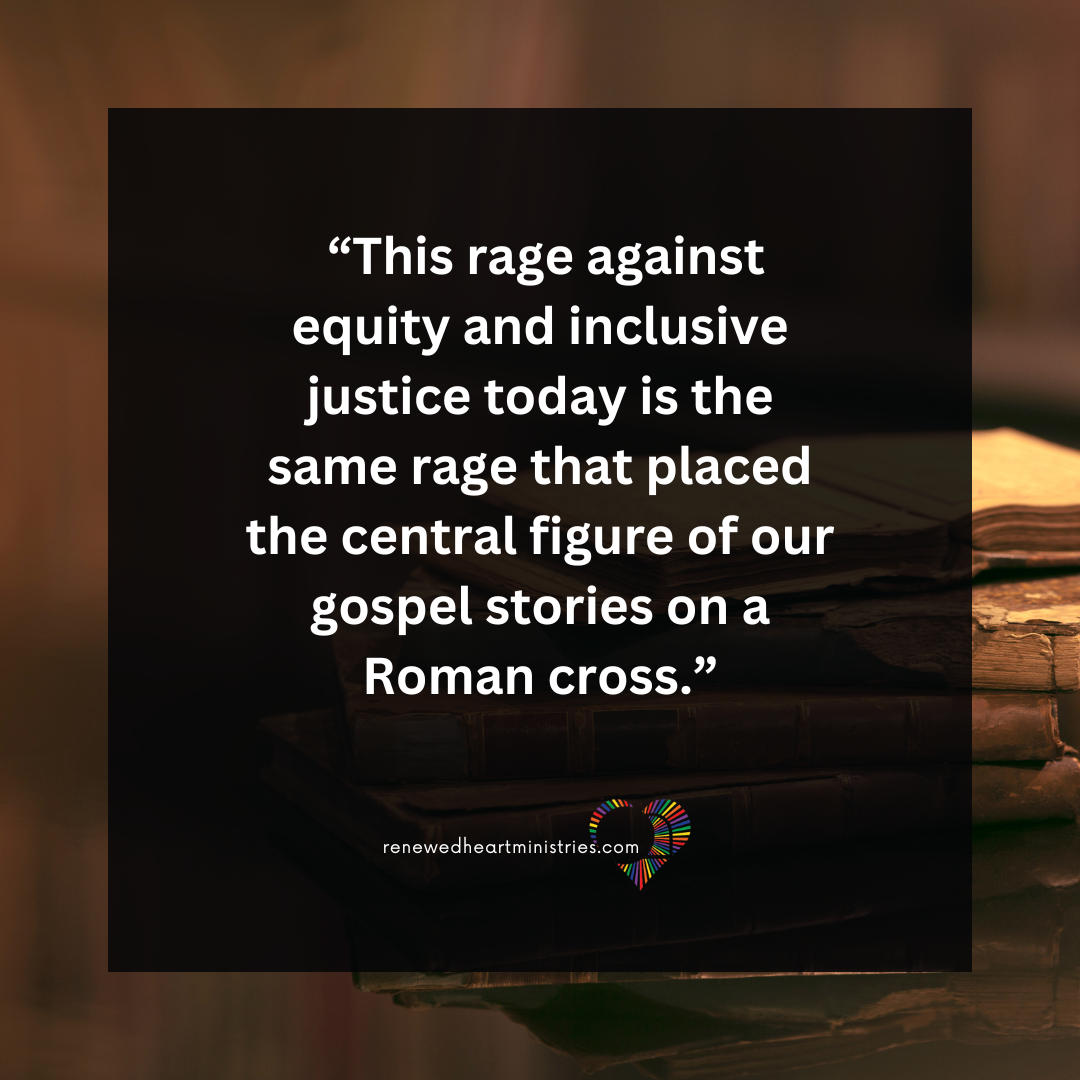
This week’s story reminds me that if at times I feel like throwing the Jesus of the synoptic gospels off a cliff, I’m in the right story! I’m being confronted with the discomforting truth of why we too often respond to calls for justice in our time with the same resistance and rage. What our story whispers to us is that this rage against justice today is the same rage that placed our Jesus in our gospel stories on that Roman cross. And it calls us to reject that rage and instead embrace a future where we live in a world that is a safe, compassionate, just home for everyone. 

Discussion Group Questions

2. What do you think produced the abrupt rage in this week’s story? What lesson does our story hold, today? Share and discuss with your group.

2. Do you consider economic justice as foundational to other areas of social justice? How so? Share and discuss with your group.

3. What can you do this week, big or small, to continue setting in motion the work of shaping our world into a safe, compassionate, just home for everyone? 

Thanks for checking in with us, today.

I want to say a special thank you to all of our supporters out there. And if you would like to join them in supporting Renewed Heart Ministries’ work you can do so by going to renewedheartministries.com and clicking donate. 

My latest book Finding Jesus: A Fundamentalist Preacher Discovers the Socio-Political and Economic Teachings of the Gospels is available now on Amazon in paperback, Kindle and also on Audible in audio book format.

As always, you can find Renewed Heart Ministries each week on Bluesky, Facebook, Instagram and Meta’s Threads. If you haven’t done so already, please follow us on your chosen social media platforms for our daily posts. 

Thank you for listening to The Social Jesus Podcast. If you enjoyed this podcast please take a moment to like and subscribe and if the podcast platform you’re using offers this option, please leave us a positive review. This helps others find our podcast as well.

You can watch our YouTube show each week called “Just Talking”. Each week, Todd Leonard and I take a moment to talk about the gospel lectionary reading for the upcoming weekend. We’ll be talking about each reading in the context of love, inclusion, and social justice. Our hope is that our talking will be just talking (as in justice) and that during our brief conversations each week you’ll be inspired to also do more than just talking. If you teach from the lectionary each week, or if you’re just looking for some thoughts on the Jesus story from a more progressive perspective within the context of social justice, check it out, you might like it. You can find JustTalking each week on YouTube at youtube.com/@herbandtoddjusttalking.

Please Like, Subscribe, hit the Notification button, and leave us a comment.

And if you’d like to reach us here at Renewed Heart Ministries through email, you can reach us at info@renewedheartministries.com.

Right where you are, keep living in love, choosing compassion, taking action, and working toward justice.

I love each of you dearly,

I’ll see you next week.


New Episode of “Just Talking” Now Online!

Season 2, Episode 45: Luke 4.21-30. Lectionary C, Epiphany 4

Each week, we’ll be talking about the gospel lectionary reading for the upcoming weekend in the context of love, inclusion, and social justice. Our hope is that our talking will be “just” talking (as in justice) and that during our brief conversations each week we’ll be inspired to do more than just talking.

If you teach from the lectionary each week, or if you’re just looking for some thoughts on the Jesus story from a more progressive perspective within the context of social justice, check it out at:


New Episode of The Social Jesus Podcast

A podcast where we talk about the intersection of faith and social justice and what a first century, prophet of the poor from Galilee might have to offer us today in our work of love, compassion and justice. 

This week:

Season 2 Episode 5: Confronting the Discomfort of Our History and Our Present

Luke 4:22-30

“Today we need to pay close attention to responses that answer justice and reparations movements with rage and responses that define these movements as good news. This week’s story reminds me that if at times I feel like throwing the Jesus of the synoptic gospels off a cliff, I’m in the right story! I’m being confronted with the discomforting truth of why we too often respond to calls for justice in our time with the same resistance and rage. What our story whispers to us is that this rage against justice today is the same rage that placed our Jesus in our gospel stories on a Roman cross. And it calls us to reject that rage and instead embrace a future where we live in a world that is a safe, compassionate, just home for everyone.”

Available on all major podcast carriers and at:
https://the-social-jesus-podcast.simplecast.com/episodes/confronting-the-discomfort-of-our-history-and-our-present


Finding Jesus: A Fundamentalist Preacher Discovers the Socio-Political & Economic Teachings of the Gospels.

 

by Herb Montgomery

Available now on Amazon!

In Finding Jesus, author Herb Montgomery delves into the profound and often overlooked political dimensions of the gospels. Through meticulous analysis of biblical texts, historical context, and social discourse, this thought-provoking book unveils the gospels’ socio-political, economic teachings as rooted in a profound concern for justice, compassion, and the well-being of the marginalized. The book navigates the intersections between faith and societal justice, presenting a compelling argument for a more socially engaged and transformative Christianity.

Finding Jesus is not just a scholarly exploration; it is a call to action. It challenges readers to reevaluate their understanding of Christianity’s role in public life and to consider how the radical teachings of the gospels can inspire a renewed commitment to justice, equality, and compassion. This book is a must-read for those seeking a deeper understanding of the social implications of Christian faith and a blueprint for building a more just and inclusive society.


Are you getting all of RHM’s Free Resources?

Free Sign Up Here
Water, Wine and Human Beings Fully Alive

We want to take this moment to express our heartfelt gratitude to all of our supporters for your support of Renewed Heart Ministry’s work of love, justice, and compassion. At a time when ministries like ours are being asked to achieve more with fewer resources, your support is so deeply appreciated, and we want to simply say thank you. Whether in our larger society or within our local faith communities, Renewed Heart Ministries remains committed to advocating for change, working towards a world that is inclusive, just, and safe for everyone, and being a source of love. From all of us here at Renewed Heart Ministries, thank you for your generous support. We deeply appreciate you.

If you’d like to join them in supporting our work, please go to renewedheartministries.com and click on “Donate.”  


Image created by Canva

Water, Wine and Human Beings Fully Alive

Herb Montgomery, January17, 2025

If you’d like to listen to this week’s article in podcast version click on the image below:

Our reading this weekend is from the gospel of John.

On the third day a wedding took place at Cana in Galilee. Jesus’ mother was there, and Jesus and his disciples had also been invited to the wedding. When the wine was gone, Jesus’ mother said to him, “They have no more wine.”

“Woman, why do you involve me?” Jesus replied. “My hour has not yet come.”

His mother said to the servants, “Do whatever he tells you.”

Nearby stood six stone water jars, the kind used by the Jews for ceremonial washing, each holding from twenty to thirty gallons.

Jesus said to the servants, “Fill the jars with water”; so they filled them to the brim.

Then he told them, “Now draw some out and take it to the master of the banquet.”

They did so, and the master of the banquet tasted the water that had been turned into wine. He did not realize where it had come from, though the servants who had drawn the water knew. Then he called the bridegroom aside and said, “Everyone brings out the choice wine first and then the cheaper wine after the guests have had too much to drink; but you have saved the best till now.”

What Jesus did here in Cana of Galilee was the first of the signs through which he revealed his glory; and his disciples believed in him. (John 2:1-11)

When it comes to interpreting this week’s reading from the gospel of John, we have options.

Our story this week could have represented how the Johannine community understood Jesus-following in comparison to the Judaism their community evolved from. The water that Jesus would turn into wine was being held in water jars “used by the Jews for ceremonial washing.” The gospel of John is filled with antisemitic comparisons like these. The Johannine community viewed the changed wine, which symbolized Jesus, as far superior to any previous wine and different than the Jewish ceremonial washing water it had been made out of. 

This story could also have been a commentary on previous versions of the Jesus story. It doesn’t take a scholar to see stark differences between John’s version of Jesus and the Jesus story in the synoptic gospels (Mark, Matthew and Luke). John’s gospel and many of its themes are quite unique. That includes this week’s story of the wedding wine at Cana. 

Taking the Johannine community’s version of the Jesus story as a whole, it is preoccupied with contrasting our concrete reality with an alternative spirit realm. We can interpret it as presenting the spirit as superior to our bodies. Consider Jesus’ words to Nicodemus in John:

“Very truly I tell you, no one can enter the kingdom of God unless they are born of water and the Spirit. Flesh gives birth to flesh, but the Spirit gives birth to spirit. You should not be surprised at my saying, ‘You must be born again.’ The wind blows wherever it pleases. You hear its sound, but you cannot tell where it comes from or where it is going. So it is with everyone born of the Spirit.” (John 3:5-7)

In keeping with Jesus’ theme in that passage, this week’s story could also affirm the hope of one day escaping our concrete reality for a far better place rather than establishing justice here. This story could contrast what is now with what is to come. This would be like the best-is-yet-to-come or saving-the-best-for-last mantras like Paul’s comment in his letter to the Romans that what is happening now can’t even be compared to what is to come.

“I consider that our present sufferings are not worth comparing with the glory that will be revealed in us.” (Romans 8:18)

Regardless of what the Johannine community originally meant with the story of the wedding wine, this story affirms the supremacy of their version of Jesus and the Jesus story. It teaches that the wine they were serving was better than anything that had been served up to that point. Can we redeem from this story for our justice work today?

I like the image of turning water into wine. It reminds me of the saying in the womanist tradition of making a way out of no way. Th story asks us to focus on the present, to do all we can in the moments we have before us. Who knows: our efforts could produce something far greater than anything before, and not because what preceded us was inferior but because we are building on the efforts of those have gone before us. 

The phrase that I keep returning to in our reading this week is “You have saved the best till now.” What had transpired in the story was a crisis: running out of wine at a wedding feast. And what ended up happening was better: wine being drank better than any that had been drunk previously. We are about to face crises of our own this coming year, crises of injustice rooted in marginalization and bigotry bearing the fruit of violence and oppression. In the midst of crisis, we too can be about turning water into wine. We won’t know exactly how till we are in the moment, but each moment will provide opportunities for us to make choices and build on them. The wine may be about to run out, and all we may have at our disposal is water. But don’t give up. Look for the water pots.

I’m deeply concerned about the immigration crisis being threatened now. I’m concerned for my LGBTQ friends and family. I’m concerned for the bodily autonomy rights of my wife and daughters living in our state here in Appalachia. Given our family’s history with two stillborn children, as traumatic as that experience was, we are both thankful it happened over twenty years ago under Roe and not today. I’m navigating anxiety for BIPOC communities and other marginalized communities here in Appalachia. I recently found out that my county here in WV is one of the top two in my state that Immigration and Customs Enforcement will be focusing on in 2025. Churches in my area are organizing to become places of sanctuary for immigrants.

This didn’t have to be, and yet, here is where we are. We don’t have any other time available for us than right now. We have no other circumstances to turn to than the ones we presently find ourselves in. Jesus asked his mother why she was bothering him because his time had not yet come, but our time has. It’s now. And how we will choose to show up in our world this year and the following years will matter for decades to come.

Our reading ends with the declaration, “What Jesus did here in Cana of Galilee was the first of the signs through which he revealed his glory” (emphasis added).

This reminds me of the words of St. Irenaeus, the early church Father, who was a strong advocate of justice for the poor. In his infamous work Against Heresies, he wrote, “The glory of God is a human being fully alive.” (Book 4, section 20, verse 7)

What does it look like for us this coming year to dedicate our energy and efforts to ensuring our neighbors have enough of what they need to able to live fully, to be fully alive? This is what it means to work for the glory of God. Whether our neighbor is of a different race or culture, of a different gender, gender identity, or gender expression, of a different socioeconomic location, are differently able, differently educated, of a different orientation, or just different from us, period, these differences will be used to drive wedges between us and make us afraid of one another. The Jesus of John’s gospel tells us, above all else, to love one another instead. To love our neighbor means we take responsibility to do what we can to help them have all that they need not simply to survive but to also thrive. Some of us can do more, some of us can do very little, but whatever is within our ability as Jesus followers, the glory of God is human beings not marginalized, oppressed, or subjugated, but able to be fully alive.

Discussion Group Questions

1. Share something that spoke to you from this week’s Podcast episode with your discussion group.

2. What does turning water into wine mean for you in your own justice work today? Share and discuss with your group.

3. What can you do this week, big or small, to continue setting in motion the work of shaping our world into a safe, compassionate, just home for everyone? 

Thanks for checking in with us, today.

I want to say a special thank you to all of our supporters out there. And if you would like to join them in supporting Renewed Heart Ministries’ work you can do so by going to renewedheartministries.com and clicking donate. 

My latest book Finding Jesus: A Fundamentalist Preacher Discovers the Socio-Political and Economic Teachings of the Gospels is available now on Amazon in paperback, Kindle and also on Audible in audio book format.

As always, you can find Renewed Heart Ministries each week on Bluesky, Facebook, Instagram and Meta’s Threads. If you haven’t done so already, please follow us on your chosen social media platforms for our daily posts. 

Thank you for listening to The Social Jesus Podcast. If you enjoyed this podcast please take a moment to like and subscribe and if the podcast platform you’re using offers this option, please leave us a positive review. This helps others find our podcast as well.

You can watch our YouTube show each week called “Just Talking”. Each week, Todd Leonard and I take a moment to talk about the gospel lectionary reading for the upcoming weekend. We’ll be talking about each reading in the context of love, inclusion, and social justice. Our hope is that our talking will be just talking (as in justice) and that during our brief conversations each week you’ll be inspired to also do more than just talking. If you teach from the lectionary each week, or if you’re just looking for some thoughts on the Jesus story from a more progressive perspective within the context of social justice, check it out, you might like it. You can find JustTalking each week on YouTube at youtube.com/@herbandtoddjusttalking. Please Like, Subscribe, hit the Notification button, and leave us a comment.

And if you’d like to reach us here at Renewed Heart Ministries through email, you can reach us at info@renewedheartministries.com.

Right where you are, keep living in love, choosing compassion, taking action, and working toward justice.

I love each of you dearly,

I’ll see you next week.


New Episode of “Just Talking” Now Online!

Season 2, Episode 43: John 2.1-11. Lectionary C, Epiphany 2

Each week, we’ll be talking about the gospel lectionary reading for the upcoming weekend in the context of love, inclusion, and social justice. Our hope is that our talking will be “just” talking (as in justice) and that during our brief conversations each week we’ll be inspired to do more than just talking.

If you teach from the lectionary each week, or if you’re just looking for some thoughts on the Jesus story from a more progressive perspective within the context of social justice, check it out at:


New Episode of The Social Jesus Podcast

A podcast where we talk about the intersection of faith and social justice and what a first century, prophet of the poor from Galilee might have to offer us today in our work of love, compassion and justice. 

This week:

Season 2 Episode 3: Water, Wine and Human Beings Fully Alive

John 2:1-11

“I like the image of turning water into wine. It reminds me of the saying in the womanist tradition of making a way out of no way. The story asks us to focus on the present, to do all we can in the moments we have before us. What had transpired in the story was a crisis: running out of wine at a wedding feast. And what ended up happening was better: wine being drank better than any that had been drunk previously. We are about to face crises of our own this coming year, crises of injustice rooted in marginalization and bigotry bearing the fruit of violence and oppression. In the midst of crisis, we too can be about turning water into wine. We won’t know exactly how till we are in the moment, but each moment will provide opportunities for us to make choices and build on them. The wine may be about to run out, and all we may have at our disposal is water. But don’t give up. Look for the water pots.”

Available on all major podcast carriers and at:

https://the-social-jesus-podcast.simplecast.com/episodes/water-wine-and-human-beings-fully-alive


Finding Jesus: A Fundamentalist Preacher Discovers the Socio-Political & Economic Teachings of the Gospels.


by Herb Montgomery

Available now on Amazon!

In Finding Jesus, author Herb Montgomery delves into the profound and often overlooked political dimensions of the gospels. Through meticulous analysis of biblical texts, historical context, and social discourse, this thought-provoking book unveils the gospels’ socio-political, economic teachings as rooted in a profound concern for justice, compassion, and the well-being of the marginalized. The book navigates the intersections between faith and societal justice, presenting a compelling argument for a more socially engaged and transformative Christianity.

Finding Jesus is not just a scholarly exploration; it is a call to action. It challenges readers to reevaluate their understanding of Christianity’s role in public life and to consider how the radical teachings of the gospels can inspire a renewed commitment to justice, equality, and compassion. This book is a must-read for those seeking a deeper understanding of the social implications of Christian faith and a blueprint for building a more just and inclusive society.


Are you getting all of RHM’s Free Resources?

Free Sign Up Here

Spirit, Love, Justice and Truth

We want to take this moment to express our heartfelt gratitude to all of our supporters for your support of Renewed Heart Ministry’s work of love, justice, and compassion. At a time when ministries like ours are being asked to achieve more with fewer resources, your support is so deeply appreciated, and we want to simply say thank you. Whether in our larger society or within our local faith communities, Renewed Heart Ministries remains committed to advocating for change, working towards a world that is inclusive, just, and safe for everyone, and being a source of love. From all of us here at Renewed Heart Ministries, thank you for your generous support. We deeply appreciate you.

If you’d like to join them in supporting our work, please go to renewedheartministries.com and click on “Donate.”  


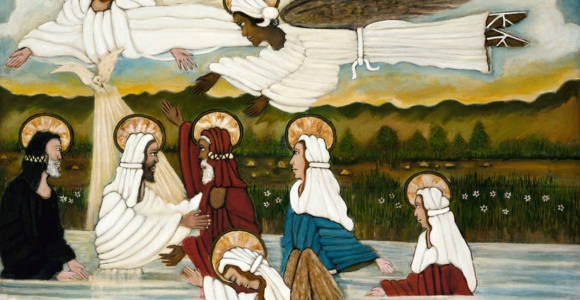
Photo credit: Scott, Lorenzo. Baptism of Jesus, from Art in the Christian Tradition

Spirit, Love, Justice and Truth

Herb Montgomery, January 10, 2025

If you’d like to listen to this week’s article in podcast version click on the image below:

Happy New Year!

Our reading this first weekend after Epiphany is from the gospel of Luke:

The people were waiting expectantly and were all wondering in their hearts if John might possibly be the Messiah. John answered them all, “I baptize you with water. But one who is more powerful than I will come, the straps of whose sandals I am not worthy to untie. He will baptize you with the Holy Spirit and fire. His winnowing fork is in his hand to clear his threshing floor and to gather the wheat into his barn, but he will burn up the chaff with unquenchable fire . . . When all the people were being baptized, Jesus was baptized too. And as he was praying, heaven was opened and the Holy Spirit descended on him in bodily form like a dove. And a voice came from heaven: “You are my Son, whom I love; with you I am well pleased.” (Luke 3:15-17, 21-22, NIV)

We covered the first part of this reading during this most recent Advent season. I think the last part of it has a special insight for us as we consider what lies ahead in 2025.

The language in this last portion is rooted in two passages from the Hebrew scriptures, one in the book of Psalms and the other in Isaiah.

  I will proclaim the LORD’S decree:

  He said to me, “You are my son;

today I have become your father. (Psalms 2:7, NIV)

The rest of Psalms 2 is abysmally violent and nationalistic. But as the author connects Jesus to this psalm, they don’t only challenge the Roman claim that Caesar was the son of God, they also tie Jesus to David and the people’s contemporary hopes for their own liberation and restoration.

In Isaiah we read:

 “Here is my servant, whom I uphold,

my chosen one in whom I delight;

I will put my Spirit on him,

and he will bring justice to the nations . . . 

A bruised reed he will not break,

and a smoldering wick he will not snuff out.

In faithfulness he will bring forth justice;

he will not falter or be discouraged 

till he establishes justice on earth.” (Isaiah 42:1, 3-4, NIV)

As we begin a new year, it’s good to remind ourselves what following Jesus, that Galilean prophet of the poor ministering on the edges of his own society, should be all about. At the core of his message, the heart of Christianity, is the call to love our neighbor. And loving one’s neighbor is what we call today social justice: making sure we and all of our neighbors have what they need to thrive, not just barely survive. Dedication and commitment to the ethic of loving our neighbor will, if consistently applied, ultimately bring “justice on earth.” It would take participation from everyone, but that is the ultimate goal: establishing justice here.

Social justice is rooted in love, specifically love of one’s neighbor. It calls us to engage our civic responsibility toward one another. It calls us to take inventory of how we are sharing space with others we live alongside with on our planet.  

In Isaiah, “my chosen one in whom I delight” will establish justice on Earth as the fruit of the Spirit. In our reading, that Spirit descends in the bodily form of a dove, which many today take as the symbol of peace arrived at because universal distributive justice has been established. There is an interesting passage from the apocryphal book of the Wisdom of Solomon describing the Spirit/Wisdom and its result:

“She renews all things;

in every generation she passes into holy souls

and makes them friends of God, and prophets;”

(Wisdom of Solomon 7:27, NRSV, italics added.)

Wisdom makes those on whom her Spirit rests both friends of God and prophets. So many prophetic voices throughout the centuries have called for justice. Let’s consider a sample from the Hebrew prophetic justice tradition. Look at how many times justice toward one another is the theme:

Justice and the Prophets

Isaiah 1:17 Learn to do right; seek justice.

Defend the oppressed. 

Take up the cause of the fatherless;

plead the case of the widow.

Isaiah 9:7 Of the greatness of his government and peace

there will be no end.

He will reign on David’s throne 

and over his kingdom,

establishing and upholding it 

with justice and righteousness

from that time on and forever.

The zeal of the LORD Almighty 

will accomplish this.

Isaiah 11:4 But with righteousness he will judge the needy,

with justice he will give decisions for the poor of the earth.

He will strike the earth with the rod of his mouth;

with the breath of his lips he will slay the wicked.

Isaiah 16:5 In love a throne will be established;

in faithfulness a man will sit on it—

one from the house of David—

one who in judging seeks justice

and speeds the cause of righteousness.

Isaiah 28:6 He will be a spirit of justice

to the one who sits in judgment,

a source of strength 

to those who turn back the battle at the gate.

Isaiah 28:17 I will make justice the measuring line 

and righteousness the plumb line;

hail will sweep away your refuge, the lie,

and water will overflow your hiding place.

Isaiah 30:18 Yet the LORD longs to be gracious to you;

therefore he will rise up to show you compassion.

For the LORD is a God of justice.

Isaiah 32:1    See, a king will reign in righteousness 

and rulers will rule with justice.

Isaiah 51:4,5 “Listen to me, my people;

hear me, my nation:

Instruction will go out from me;

my justice will become a light to the nations.

  My righteousness draws near speedily,

my salvation is on the way,

and my arm will bring justice to the nations.

Jeremiah 9:24 But let the one who boasts boast about this:

that they have the understanding to know me,

that I am the LORD, who exercises kindness,

justice and righteousness on earth,

for in these I delight,”

declares the LORD.

Jeremiah 21:12 This is what the LORD says to you, house of David:

  “‘Administer justice every morning;

rescue from the hand of the oppressor

the one who has been robbed,

or my wrath will break out and burn like fire

because of the evil you have done—

burn with no one to quench it.

Note that the end of this passage from Jeremiah sounds a lot like John the Baptist from the first portion of this week’s reading.]

Ezekiel 34:16 I will search for the lost and bring back the strays. I will bind up the injured and strengthen the weak, but the sleek and the strong I will destroy. I will shepherd the flock with justice.

Hosea 2:19 I will betroth you to me forever;

I will betroth you in righteousness and justice,

in love and compassion.

Amos 5:15 Hate evil, love good;

maintain justice in the courts.

Perhaps the LORD God Almighty will have mercy

on the remnant of Joseph.

Amos 5:24 But let justice roll on like a river,

righteousness like a never-failing stream!

Micah 3:1   Then I said,

  “Listen, you leaders of Jacob,

you rulers of Israel.

Should you not embrace justice,

Micah 3:8 But as for me, I am filled with power,

with the Spirit of the LORD,

and with justice and might,

Zechariah 7:9 “This is what the LORD Almighty said: ‘Administer true justice; show mercy and compassion to one another.

Malachi 3:5    “So I will come to put you on trial. I will be quick to testify . . . against those who defraud laborers of their wages, who oppress the widows and the fatherless, and deprive the foreigners among you of justice, but do not fear me,” says the LORD Almighty.

This is the tradition in which both John and Jesus ministered, applying the themes to the situational injustices of their day. We are called to work for justice in our contexts in the same way. 

The Justice of the Prophets in Our Context Today

Our sacred texts sometimes spell out how to apply love of neighbor in practice:

It means practicing justice toward migrants:

“When a foreigner resides among you in your land, do not mistreat them. The foreigner residing among you must be treated as your native-born. Love them as yourself, for you were foreigners in Egypt. I am the LORD your God. (Leviticus 19:33-34)

Loving our neighbor as ourself means loving even the “foreigner” as a “native-born,” and loving them, too, as ourselves.

It means practicing justice toward the poor:

Proverbs 14:31 Whoever oppresses the poor shows contempt for their Maker,

but whoever is kind to the needy honors God.

It means practicing justice toward the young;

Matthew 19:14    Jesus said, “Let the little children come to me, and do not hinder them, for the kingdom of heaven belongs to such as these.” 

When he had placed his hands on them, he went on from there.

It means practicing justice toward the elderly:

Psalms 68:5 A father to the fatherless, a defender of widows,

is God in his holy dwelling.

It means practicing justice toward those who live with disabilities.

Leviticus 19:14    “‘Do not curse the deaf or put a stumbling block in front of the blind, but fear your God. I am the LORD.

It means practicing labor justice:

James 5:4 Look! The wages you failed to pay the workers who mowed your fields are crying out against you. The cries of the harvesters have reached the ears of the Lord Almighty.

In our context today we could expand to include new areas of justice work: environmental justice, gender equity and justice, racial equity and justice, LGBTQ equity and justice, and more!

Justice is also deeply tied to truth-telling. It is difficult to practice justice as a society when we don’t share the same reality, and when some have been misinformed and convinced through appeals to their own bigotries and fears that the reality is different from what is genuinely happening. One passage that gave me chills this week as I wrote this article is from Isaiah 59:

Isaiah 59:14,15: So justice is driven back,

and righteousness stands at a distance;

truth has stumbled in the streets,

honesty cannot enter.

  Truth is nowhere to be found,

and whoever shuns evil becomes a prey.

The LORD looked and was displeased 

that there was no justice.

This year in 2025, however we choose to be a Jesus follower, may we express truth-telling, love and justice for our neighbor, both foreign and domestic. May we renew our commitments to each other and our dedication to taking responsibility to ensure that not just us but also everyone around us has what they need to thrive. This year, more than any other in recent history, it is vital to keep our hand to the plow, continuing the work despite new obstacles of shaping our world into a safe, compassionate, just home for everyone. 

Discussion Group Questions

1. Share something that spoke to you from this week’s Podcast episode with your discussion group.

2. In what ways are you renewing your committment to the work of establishing justice on the earth in 2025? Share and discuss with your group.

3. What can you do this week, big or small, to continue setting in motion the work of shaping our world into a safe, compassionate, just home for everyone? 

Thanks for checking in with us, today.

I want to say a special thank you to all of our supporters out there. And if you would like to join them in supporting Renewed Heart Ministries’ work you can do so by going to renewedheartministries.com and clicking donate. 

My latest book Finding Jesus: A Fundamentalist Preacher Discovers the Socio-Political and Economic Teachings of the Gospels is available now on Amazon in paperback, Kindle and also on Audible in audio book format.

As always, you can find Renewed Heart Ministries each week on X (or Twitter), Facebook, Instagram and Meta’s Threads. If you haven’t done so already, please follow us on your chosen social media platforms for our daily posts. 

Thank you for listening to The Social Jesus Podcast. If you enjoyed this podcast please take a moment to like and subscribe and if the podcast platform you’re using offers this option, please leave us a positive review. This helps others find our podcast as well.

You can watch our YouTube show each week called “Just Talking”. Each week, Todd Leonard and I take a moment to talk about the gospel lectionary reading for the upcoming weekend. We’ll be talking about each reading in the context of love, inclusion, and social justice. Our hope is that our talking will be just talking (as in justice) and that during our brief conversations each week you’ll be inspired to also do more than just talking. If you teach from the lectionary each week, or if you’re just looking for some thoughts on the Jesus story from a more progressive perspective within the context of social justice, check it out, you might like it. You can find JustTalking each week on YouTube at youtube.com/@herbandtoddjusttalking. Please Like, Subscribe, hit the Notification button, and leave us a comment.

And if you’d like to reach us here at Renewed Heart Ministries through email, you can reach us at info@renewedheartministries.com.

Right where you are, keep living in love, choosing compassion, taking action, and working toward justice.

I love each of you dearly,

I’ll see you next week.


New Episode of “Just Talking” Now Online!

Season 2, Episode 42: Luke 3.15-17, 21-22. Lectionary C, Epiphany 1

Each week, we’ll be talking about the gospel lectionary reading for the upcoming weekend in the context of love, inclusion, and social justice. Our hope is that our talking will be “just” talking (as in justice) and that during our brief conversations each week we’ll be inspired to do more than just talking.

If you teach from the lectionary each week, or if you’re just looking for some thoughts on the Jesus story from a more progressive perspective within the context of social justice, check it out at:


New Episode of The Social Jesus Podcast

A podcast where we talk about the intersection of faith and social justice and what a first century, prophet of the poor from Galilee might have to offer us today in our work of love, compassion and justice. 

This week:

Season 2 Episode 2: Spirit, Love, Justice and Truth

Luke 3:15-17, 21-22

“Establishing justice on Earth is the result of the Spirit. In our reading, that Spirit descends in the bodily form of a dove, which many today take as the symbol of peace arrived at because universal distributive justice has been established. At the core of Jesus’ message, the heart of Christianity, is the call to love our neighbor. And loving one’s neighbor is what we call today social justice: making sure we and all of our neighbors have what they need to thrive, not just barely survive. Social justice is rooted in love, specifically love of one’s neighbor. It calls us to engage our civic responsibility toward one another. It calls us to take inventory of how we are sharing space with others we live alongside with on our planet. Justice is also deeply tied to truth-telling. It is difficult to practice justice as a society when we don’t share the same reality, and when some have been misinformed and convinced through appeals to their own bigotries and fears that the reality is different from what is genuinely happening.”

Available on all major podcast carriers and at:

https://the-social-jesus-podcast.simplecast.com/episodes/spirit-love-justice-and-truth


Finding Jesus: A Fundamentalist Preacher Discovers the Socio-Political & Economic Teachings of the Gospels.


by Herb Montgomery

Available now on Amazon!

In Finding Jesus, author Herb Montgomery delves into the profound and often overlooked political dimensions of the gospels. Through meticulous analysis of biblical texts, historical context, and social discourse, this thought-provoking book unveils the gospels’ socio-political, economic teachings as rooted in a profound concern for justice, compassion, and the well-being of the marginalized. The book navigates the intersections between faith and societal justice, presenting a compelling argument for a more socially engaged and transformative Christianity.

Finding Jesus is not just a scholarly exploration; it is a call to action. It challenges readers to reevaluate their understanding of Christianity’s role in public life and to consider how the radical teachings of the gospels can inspire a renewed commitment to justice, equality, and compassion. This book is a must-read for those seeking a deeper understanding of the social implications of Christian faith and a blueprint for building a more just and inclusive society.


Are you getting all of RHM’s Free Resources?

Free Sign Up Here
Wisdom and Understanding Give Birth to Social Justice

We want to take this moment to express our heartfelt gratitude to all of our supporters for your support of Renewed Heart Ministry’s work of love, justice, and compassion. At a time when ministries like ours are being asked to achieve more with fewer resources, your support is so deeply appreciated, and we want to simply say thank you. Whether in our larger society or within our local faith communities, Renewed Heart Ministries remains committed to advocating for change, working towards a world that is inclusive, just, and safe for everyone, and being a source of love. From all of us here at Renewed Heart Ministries, thank you for your generous support. We deeply appreciate you.

If you’d like to join them in supporting our work, please go to renewedheartministries.com and click on “Donate.”  


Jesus among the teachers
JESUS MAFA

Wisdom and Understanding Give Birth to Social Justice

Herb Montgomery; January 3, 2025

If you’d like to listen to this week’s article in podcast version click on the image below:

Our reading this past weekend was from the gospel of Luke:

Every year Jesus’ parents went to Jerusalem for the Festival of the Passover. When he was twelve years old, they went up to the festival, according to the custom. After the festival was over, while his parents were returning home, the boy Jesus stayed behind in Jerusalem, but they were unaware of it. Thinking he was in their company, they traveled on for a day. Then they began looking for him among their relatives and friends. When they did not find him, they went back to Jerusalem to look for him. After three days they found him in the temple courts, sitting among the teachers, listening to them and asking them questions. Everyone who heard him was amazed at his understanding and his answers. When his parents saw him, they were astonished. His mother said to him, “Son, why have you treated us like this? Your father and I have been anxiously searching for you.”

“Why were you searching for me?” he asked. “Didn’t you know I had to be in my Father’s house?” But they did not understand what he was saying to them.

Then he went down to Nazareth with them and was obedient to them. But his mother treasured all these things in her heart. And Jesus grew in wisdom and stature, and in favor with God and man. (Luke 2:41-52)

Lukes’ gospel is the only version of the Jesus story to contain a narrative about the  childhood of Jesus.

By the time Luke’s gospel was written, the Jesus community had become more diverse than the Jewish movement it began as. It had evolved into a richly cosmopolitan community where many members valued the hellenistic culture and stories they had been socialized by. By including a narrative about Jesus’ childhood, Luke’s gospel is taking a cue from traditional Greek biographies that told a story of the hero’s childhood that foreshadowed what kind of leader the hero would be. 

This story of Jesus in the Temple forecasts that Jesus will become a wise teacher with exceptional wisdom and understanding that amazed the Temple teachers. The story concludes with Jesus returning to Nazareth and growing into even greater wisdom and understanding there .

By the time Jesus becomes an adult in Luke’s gospel, his wisdom and understanding of the Torah had grown into teachings that brought him a following. These teachings manifested in “good news to the poor . . . freedom for the prisoners . . . sight for the blind,” and teachings that “set the oppressed free” and proclaimed “the year of the Lord’s favor” (Luke 4:18-19).

The childhood story invests Jesus with the wisdom and understanding that produces fruit in him as an adult teacher. That fruit is what we would call social justice today. 

Jesus called for the kind of social justice, born out of love of neighbor, that stood squarely in solidarity with the oppressed of his own time and place. James Cone states in one of his last books, The Cross and the Lynching Tree:  

“I find nothing redemptive about suffering in itself. The gospel of Jesus is not a rational concept to be explained in a theory of salvation, but a story about God’s presence in Jesus’ solidarity with the oppressed, which led to his death on the cross. What is redemptive is the faith that God snatches victory out of defeat, life out of death, and hope out of despair, as revealed in the biblical and black proclamation of Jesus’ resurrection.” (The Cross and the Lynching Tree, p. 201)

Social justice was the Hebrew prophets’ righteous endeavor: 

“Learn to do right; seek justice.

Defend the oppressed. 

Take up the cause of the fatherless;

plead the case of the widow.” (Isaiah 1:17)

It was this prophetic tradition that both John the Baptist and Jesus stand in and expand to those pushed to the edges or margins of their society as well. To pursue social justice in whatever context we find ourselves is therefore a righteous act exemplified by Jesus himself.

Social justice is rooted in love of neighbor which, though not always practiced, is the central tenet of any religion about Jesus:

“Love your neighbor as yourself.” There is no commandment greater. (Mark 12:31)

To love your neighbor as yourself is more important than all burnt offerings and sacrifices. (Mark 12:33)

The commandments, “You shall not commit adultery,” “You shall not murder,” “You shall not steal,” “You shall not covet,” and whatever other command there may be, are summed up in this one command: “Love your neighbor as yourself.” Love does no harm to a neighbor. Therefore love [of neighbor] is the fulfillment of the law.” (Romans 13:9-10)

For the entire law is fulfilled in keeping this one command: “Love your neighbor as yourself.” 

(Galatians 5:14)

If you really keep the royal law found in Scripture, “Love your neighbor as yourself,”  you are doing right. (James 2:8)

Loving your neighbor and social justice are two phrases referring to the same thing. As Stephen Mattson writes, “To dismiss social justice is to dismiss the worth and humanity of your neighbor” (On Love and Mercy: A Social Justice Devotional, p. 16).

Any Christian teaching, action, or movement that disparages, discourages or prevents adherents from caring about social justice rejects Jesus’ central wisdom and teachings on loving one’s neighbors. Any form of Christianity that inhibits your pursuit and practice of social justice denies the central tenet of the gospel that the Jesus of the stories taught, for the work of social justice is merely the act of applying the ethic of loving one’s neighbor. 

And yet, even within some more progressive forms of Christianity today, pursuing social justice within and outside of one’s faith community too often comes at a high cost. After all, the Jesus of our story did end up on a Roman cross. (Though his story doesn’t end there.)

Pursuing social justice will cost you. If it doesn’t, then your story is the exception, not the rule, and your experience would be very unique. Too often, when someone seeks to pursue social justice as an expression of their faith in Jesus and his call to love our neighbor, the result is loss of reputation, friends, family, and income. And there are even those who have also lost their lives. You may find yourself feeling abandoned, but you are not. You are standing in a rich tradition and you are not alone. You and many others are in the same story we read of Jesus in the gospels. You’re in the right story. Even when we may find the path of loving our neighbor discouraging, keep learning, keep listening, keep doing. You are engaged in a holy act of love alongside a holy community of love. As it is written: 

“If anyone has material possessions and sees a brother or sister in need but has no pity on them, how can the love of God be in that person? Dear children, let us not love with words or speech but with actions and in truth.” (1 John 3:17-18, emphasis added.)

Love, compassion, and social justice are all connected here. However much we profess to love, that love will manifest itself in caring for the material needs of our neighbors.

It will lead us to seek to be more connected to the world around us. It won’t lead us to want to escape to some far distant cloud or private, inward place, but will lead us to be more effectively engaged with our world in solidarity with our neighbors. We won’t simply care about the wellbeing of our neighbors’ souls (whatever that may be), but we’ll care about their concrete, material existence and want them to receive social justice along with us.  

Social justice is the practical fruit of loving one’s neighbor. Therefore, to say that Christianity is rooted in love of neighbor is to also state that Christianity bears the fruit of rooted in social justice out of love for our neighbor. Whatever form of Christianity we subscribe to, our faith should not disconnect us from our world, from our community, from our society. It should propel us to lean into and be more deeply connected to our world, community and larger society. 

This coming year, let’s lean more deeply into Jesus’ wisdom and teachings on loving our neighbor and embrace whatever adventure to which that leads.

Discussion Group Questions

1. Share something that spoke to you from this week’s Podcast episode with your discussion group.

2. How do you want to lean into loving your neighbor this new year? Share and discuss with your group.

3. What can you do this week, big or small, to continue setting in motion the work of shaping our world into a safe, compassionate, just home for everyone? 

Thanks for checking in with us, today.

I want to say a special thank you to all of our supporters out there. And if you would like to join them in supporting Renewed Heart Ministries’ work you can do so by going to renewedheartministries.com and clicking donate. 

My latest book Finding Jesus: A Fundamentalist Preacher Discovers the Socio-Political and Economic Teachings of the Gospels is available now on Amazon in paperback, Kindle and also on Audible in audio book format.

As always, you can find Renewed Heart Ministries each week on Bluesky, Instagram, Facebook and Meta’s Threads. If you haven’t done so already, please follow us on your chosen social media platforms for our daily posts. 

The Social Jesus Podcast is available on all major podcast carriers.

You can watch our YouTube show each week called “Just Talking” where Todd Leonard and I take a moment to talk about the gospel lectionary reading for the upcoming weekend. We’ll be talking about each reading in the context of love, inclusion, and social justice. Our hope is that our talking will be just talking (as in justice) and that during our brief conversations each week you’ll be inspired to also do more than just talking. If you teach from the lectionary each week, or if you’re just looking for some thoughts on the Jesus story from a more progressive perspective within the context of social justice, check it out, you might like it. You can find JustTalking each week on YouTube at youtube.com/@herbandtoddjusttalking. Please Like, Subscribe, hit the Notification button, and leave us a comment.

And if you’d like to reach us here at Renewed Heart Ministries through email, you can reach us at info@renewedheartministries.com.

Right where you are, keep living in love, choosing compassion, taking action, and working toward justice.

I love each of you dearly,

I’ll see you next week.


New Episode of The Social Jesus Podcast

A podcast where we talk about the intersection of faith and social justice and what a first century, prophet of the poor from Galilee might have to offer us today in our work of love, compassion and justice. 

This week:

Season 2 Episode 1: Wisdom and Understanding Give Birth to Social Justice

Luke 2:41-52

“Any Christian teaching, action, or movement that disparages, discourages or prevents adherents from caring about social justice rejects Jesus’ central wisdom and teachings on loving one’s neighbors. Any form of Christianity that inhibits your pursuit and practice of social justice denies the central tenet of the gospel that the Jesus of the stories taught, for the work of social justice is merely the act of applying the ethic of loving one’s neighbor. Social justice is the practical fruit of loving one’s neighbor. Therefore, to say that Christianity is rooted in love of neighbor is to also state that genuine Christianity bears the fruit of social justice out of love for our neighbor. Whatever form of Christianity we subscribe to, our faith should not disconnect us from our world, from our community, from our society. It should propel us to lean into and be more deeply connected to our world, community and larger society.”

Available on all major podcast carriers and at:

https://the-social-jesus-podcast.simplecast.com/episodes/wisdom-and-understanding-give-birth-to-social-justice


Finding Jesus: A Fundamentalist Preacher Discovers the Socio-Political & Economic Teachings of the Gospels.


by Herb Montgomery

Available now on Amazon!

In Finding Jesus, author Herb Montgomery delves into the profound and often overlooked political dimensions of the gospels. Through meticulous analysis of biblical texts, historical context, and social discourse, this thought-provoking book unveils the gospels’ socio-political, economic teachings as rooted in a profound concern for justice, compassion, and the well-being of the marginalized. The book navigates the intersections between faith and societal justice, presenting a compelling argument for a more socially engaged and transformative Christianity.

Finding Jesus is not just a scholarly exploration; it is a call to action. It challenges readers to reevaluate their understanding of Christianity’s role in public life and to consider how the radical teachings of the gospels can inspire a renewed commitment to justice, equality, and compassion. This book is a must-read for those seeking a deeper understanding of the social implications of Christian faith and a blueprint for building a more just and inclusive society.


Are you getting all of RHM’s Free Resources?

Free Sign Up Here
Salvation from the Margins

Marching Donations Till End of Year

As we are seeking to reach our ministry goals here at the end of 2024, we are excited to share that all donations to Renewed Heart Ministries for the remainder of year will be matched! Every dollar you give will have twice the impact, helping us further expand the work of Renewed Heart Ministries in 2025. Join us in making a difference—together, we can maximize our collective impact!

We want to take this moment to express our heartfelt gratitude to all of our supporters for your invaluable role in the Renewed Heart Ministry community and for your dedication to our mission of fostering love, justice, compassion, and healing. Your support is the bedrock of our work. Your support empowers us to do what we do. At a time when ministries like ours are being asked to achieve more with fewer resources, your support is incredibly important, and we want to simply say thank you. Whether in our larger society or within our local faith communities, Renewed Heart Ministries remains committed to advocating for change, working towards a world that is inclusive, just, and safe for everyone, and being a source of love in our world. From all of us here at Renewed Heart Ministries, thank you for your generous support. We deeply appreciate each and every one of our supporters.

If you’d like to join them in supporting our work, please go to renewedheartministries.com and click on “Donate.”  


Salvation from the Margins

Herb Montgomery, December 6, 2024

If you’d like to listen to this week’s article in podcast version click on the image below:

Our reading for the second weekend of Advent is from the gospel of Luke:

In the fifteenth year of the reign of Tiberius Caesar—when Pontius Pilate was governor of Judea, Herod tetrarch of Galilee, his brother Philip tetrarch of Iturea and Traconitis, and Lysanias tetrarch of Abilene—during the high-priesthood of Annas and Caiaphas, the word of God came to John son of Zechariah in the wilderness. He went into all the country around the Jordan, preaching a baptism of repentance for the forgiveness of sins.

As it is written in the book of the words of Isaiah the prophet:

  “A voice of one calling in the wilderness,

‘Prepare the way for the Lord,

make straight paths for him.

  Every valley shall be filled in,

every mountain and hill made low.

The crooked roads shall become straight,

the rough ways smooth.

  And all people will see God’s salvation.’ ” (Luke 3:1-6)

One of the things I appreciate about the gospel of Luke is its emphasis on distributive justice. The author of Luke models their gospel on the Hebrew justice tradition. Certain prophets began their writings in the same way:

The words of Jeremiah son of Hilkiah, one of the priests at Anathoth in the territory of Benjamin. The word of the LORD came to him in the thirteenth year of the reign of Josiah son of Amon king of Judah, and through the reign of Jehoiakim son of Josiah king of Judah, down to the fifth month of the eleventh year of Zedekiah son of Josiah king of Judah, when the people of Jerusalem went into exile. (Jeremiah 1:1-3)

The author of Luke’s gospel begins similarly, by listing those in power: The list of Roman rulers and their clients begins with Tiberius and Pilate, and ends with the regional conduits of Roman rule, Herod, Annas, and Caiaphas. This emphasizes again what we have said so often recently: the high-priesthood in Jerusalem (Annas and Caiaphas) extended the Roman government in Judea, as did Herod in Galilee. They were more than merely religious figures in the rituals of the Temple, they were also political rulers in the Temple State established and overseen by Rome. This explains why Jesus’ Temple protest at the end of this account wasn’t about maintaining the purity of religion as much as it was about Rome  economically exploiting the people through the priesthood. This is why Jesus’ protest landed him on a Roman cross as an enemy of Rome itself. 

Next, Luke’s gospel introduces to us John the Baptist as an adult. We have already been introduced to John through the story of his birth and childhood in Luke chapters 1 and 2. John was the son of a priest. He belonged to the priesthood. Yet when John became an adult, he turned his back on being part of the system and the priesthood his genealogy entitled him to be a part of. Rather than taking up the vocation of priest, John chose something different. He chose to embrace not the priestly tradition but the parallel Hebrew justice vocation of prophet. The vocations of priest (the establishment) and prophet (those who spoke truth to power when the establishment practiced injustice) were often in tension with one another. Luke’s gospel characterizes John as seeking to bring change not from the inside, from the seats of power, but from the outside speaking in. His is a voice in the “wilderness.” And this detail cannot be lost on us because it offers a bit of wisdom for many of us who feel we are in the wilderness now looking at our own political landscape.

A Voice in the Wilderness

John’s was a “voice from the wilderness.” The wilderness was more than a simple geographical location or story detail. It was also a political and economic social location as well as a religious one. In this narrative, God brings change not from within the system but from the outside in, from the margins, and from the grassroots up.

In his book Say to the Mountain, Ched Myers comments on the political, social, economic and religious implications of John’s work being located in the wilderness:

“While the margin has a primarily negative political connotation as a place of disenfranchisement, Mark ascribes to it a primarily positive theological value. It is the place where the sovereignty of God is made manifest, where the story of liberation is renewed, where God’s intervention in history occurs.” (Ched Myers, Say to This Mountain: Mark’s Story of Discipleship, p. 12)

In Luke’s gospel, John the Baptist’s and Jesus’ work is located not within the system in centered locations such as the Temple, a synagogues, or Jerusalem, but on the peripheries in places like the wilderness of Judea (John) and the rural villages of Galilee (Jesus).

These marginal social locations were charged with political meaning, meaning still relevant to us today. I want to be clear about this: In this story, God is already present and at work on the margins of this society. Often those living in centered positions of privilege mistake the work of justice as opening access so those less privileged can sit at the tables of privilege. But opening up potential to compete with others in an unjust system doesn’t change the actual system itself. Some tables shouldn’t be shared. They should be flipped (cf. Luke 19:45-46). 

Our story this week isn’t one where salvation is defined by including those on the margins at the tables of the privileged. God is already at present and at work on the margins. God and the gospel are already at work on the edges in the wilderness. God is there and those of us who live in more privileged social locations are with God when we work alongside and in solidarity with the work already in motion where God already is—on the margins.

This is the theological and political point of the “wilderness” in our narrative this week. Change, liberation, and social salvation has historically come from voices on the outside of unjust systems. It’s comes from the grassroots, the outside in and bottom up. Outside is where John shows up in our story. It’s where Jesus shows up in our story (cf. John 1:46).

The wisdom for us as we rededicate our efforts to resistance and harm mitigation in the years to come is to look to the margins. Listen to the voices of those on the edges. Look for the good that is already happening in justice efforts on the margins and get with that! Throw your energy and solidarity alongside that!

What work was taking place on the edges in this week’s story? Even in the face of deep harm and the social and economic devastation of vulnerable communities, a path for change was being prepared in the wilderness. The way was being smoothed out for justice’s arrival. In that first season of Advent, even when things looked most bleak, a way was being made out of no way on the margins. 

Preparing the Way

Our reading this week intimates what was actually happening on the margins, in the wilderness:

‘Prepare the way for the Lord,

make straight paths for him.

  Every valley shall be filled in,

every mountain and hill made low.

The crooked roads shall become straight,

the rough ways smooth.

  And all people will see God’s salvation.’” (Luke 3:1-6)

Justice doesn’t just happen in our world. It is the result of years of organizing, planning, and action. Here in my state, we still have so far to go toward economic, racial, gender and LGBTQ justice. And even though the way is uphill most of the time, there are those who are still preparing the way, straightening out crooked paths, leveling the ground, making the rough ways smoother, and working to remove the obstacles of justice. 

One such example is Fairness West Virginia, which is working in local municipalities to expand each town’s nondiscrimination ordinances to include LGBTQ nondiscrimination.  This work has been going on for over a decade now in the hope that one day we’ll have enough local municipalities with expanded ordinances that the step to make LGBTQ nondiscrimination statewide will be easy and seamless. There are many who still oppose this effort. Nonetheless, just last week another small town joined the work and expanded their nondiscrimination ordinances. 

There are others at work, too, in many other issues and areas where justice is desperately needed here in Appalachia. But this is my point: 

Even in the face of deep chaos and the many attempts to harm people, communities of justice are still present and at work. Communities of resistance formed last time we were here are still present and still at work. Yes, those at the helm of the mechanisms of injustice are more prepared this time and planning to hit the ground running the day after the inauguration. But we are still here and better prepared, too. 

Look to the margins. Look to the wilderness. Look to the voices on the edges, and to the grassroots work being done in your local communities. When you become aware of an opportunity, don’t just sit back. Add your voice. Add your energy and whatever resources you can spare. Because the promise in our reading this week is even when we are faced with the most daunting of extraordinary challenges, we can choose for justice to have the last word. The crooked roads shall become straight, the rough ways will be be made smooth. And all the people will see God’s salvation.

Discussion Group Questions

1. Share something that spoke to you from this week’s Podcast episode with your discussion group.

2. Have you ever felt like you were in the wilderness? In what ways have you experienced healing change from the margins? Share and discuss with your group.

3. What can you do this week, big or small, to continue setting in motion the work of shaping our world into a safe, compassionate, just home for everyone? 

Thanks for checking in with us, today.

I want to say a special thank you to all of our supporters out there. And if you would like to join them in supporting Renewed Heart Ministries’ work you can do so by going to renewedheartministries.com and clicking donate. 

My latest book Finding Jesus: A Fundamentalist Preacher Discovers the Socio-Political and Economic Teachings of the Gospels is available now on Amazon in paperback, Kindle and also on Audible in audio book format.

As always, you can find Renewed Heart Ministries each week on X (or Twitter), Facebook, Instagram and Meta’s Threads. If you haven’t done so already, please follow us on your chosen social media platforms for our daily posts. 

Thank you for listening to The Social Jesus Podcast. If you enjoyed this podcast please take a moment to like and subscribe and if the podcast platform you’re using offers this option, please leave us a positive review. This helps others find our podcast as well.

You can watch our YouTube show each week called “Just Talking”. Each week, Todd Leonard and I take a moment to talk about the gospel lectionary reading for the upcoming weekend. We’ll be talking about each reading in the context of love, inclusion, and social justice. Our hope is that our talking will be just talking (as in justice) and that during our brief conversations each week you’ll be inspired to also do more than just talking. If you teach from the lectionary each week, or if you’re just looking for some thoughts on the Jesus story from a more progressive perspective within the context of social justice, check it out, you might like it. You can find JustTalking each week on YouTube at youtube.com/@herbandtoddjusttalking. Please Like, Subscribe, hit the Notification button, and leave us a comment.

And if you’d like to reach us here at Renewed Heart Ministries through email, you can reach us at info@renewedheartministries.com.

Right where you are, keep living in love, choosing compassion, taking action, and working toward justice.

I love each of you dearly,

I’ll see you next week.


New Episode of “Just Talking” Now Online!

Season 2, Episode 39: Luke 3.1-6. Lectionary C, Advent 2

Each week, we’ll be talking about the gospel lectionary reading for the upcoming weekend in the context of love, inclusion, and social justice. Our hope is that our talking will be “just” talking (as in justice) and that during our brief conversations each week we’ll be inspired to do more than just talking.

If you teach from the lectionary each week, or if you’re just looking for some thoughts on the Jesus story from a more progressive perspective within the context of social justice, check it out at:


New Episode of The Social Jesus Podcast

A podcast where we talk about the intersection of faith and social justice and what a first century, prophet of the poor from Galilee might have to offer us today in our work of love, compassion and justice. 

This week:

Season 1 Episode 34: Salvation from the Margins

Luke 3:1-6

“This is the theological and political point of the “wilderness” in our narrative this week. Change, liberation, and social salvation has historically come from voices on the outside of unjust systems. It’s comes from the grassroots, the outside in and bottom up. Outside is where John shows up in our story. It’s where Jesus shows up in our story (cf. John 1:46). The wisdom for us as we rededicate our efforts to resistance and harm mitigation in the years to come is to look to the margins. Listen to the voices of those on the edges. Look for the good that is already happening in justice efforts on the margins and get with that! Throw your energy and solidarity alongside that! What work was taking place on the edges in this week’s story? Even in the face of deep harm and the social and economic devastation of vulnerable communities, a path for change was being prepared in the wilderness. The way was being smoothed out for justice’s arrival. In that first season of Advent, even when things looked most bleak, a way was being made out of no way on the margins. “

Available on all major podcast carriers and at:

https://the-social-jesus-podcast.simplecast.com/episodes/salvation-from-the-margins


Now Available on Audible!


Finding Jesus: A Fundamentalist Preacher Discovers the Socio-Political & Economic Teachings of the Gospels.

by Herb Montgomery, Narrated by Jeff Moon

Available now on Audible!

After two successful decades of preaching a gospel of love within the Christian faith tradition Herb felt like something was missing. He went back to the gospels and began reading them through the interpretive lenses of various marginalized communities and what he found radically changed his life forever. The teachings of the Jesus in the gospel stories express a profound concern for justice, compassion, and the well-being of those in marginalized communities. This book navigates the intersections between faith and societal justice, and presents a compelling argument for a more socially compassionate and just expression of Christianity. Herb’s findings in his latest book are shared in the hopes that it will dramatically impact how you practice your Christianity, too.


Are you getting all of RHM’s Free Resources?

Free Sign Up Here
Give Us Barabbas

Marching Donations Till End of Year

As we are seeking to reach our ministry goals here at the end of 2024, we are excited to share that all donations to Renewed Heart Ministries for the remainder of year will be matched! Every dollar you give will have twice the impact, helping us further expand the work of Renewed Heart Ministries in 2025. Join us in making a difference—together, we can maximize our collective impact!

We want to take this moment to express our heartfelt gratitude to all of our supporters for your invaluable role in the Renewed Heart Ministry community and for your dedication to our mission of fostering love, justice, compassion, and healing. Your support is the bedrock of our work. Your support empowers us to do what we do. At a time when ministries like ours are being asked to achieve more with fewer resources, your support is incredibly important, and we want to simply say thank you. Whether in our larger society or within our local faith communities, Renewed Heart Ministries remains committed to advocating for change, working towards a world that is inclusive, just, and safe for everyone, and being a source of love in our world. From all of us here at Renewed Heart Ministries, thank you for your generous support. We deeply appreciate each and every one of our supporters.

If you’d like to join them in supporting our work, please go to renewedheartministries.com and click on “Donate.”  


Give Us Barabbas

Herb Montgomery, November 22, 2024

If you’d like to listen to this week’s article in podcast version click on the image below:

Our reading this week is from the gospel of John:

Pilate then went back inside the palace, summoned Jesus and asked him, “Are you the king of the Jews?”

“Is that your own idea,” Jesus asked, “or did others talk to you about me?”

“Am I a Jew?” Pilate replied. “Your own people and chief priests handed you over to me. What is it you have done?” Jesus said, “My kingdom is not of this world. If it were, my servants would fight to prevent my arrest by the Jewish leaders. But now my kingdom is from another place.”

“You are a king, then!” said Pilate.

Jesus answered, “You say that I am a king. In fact, the reason I was born and came into the world is to testify to the truth. Everyone on the side of truth listens to me.” (John 18:33-37)

In the World But Not of the World

Let’s unpack the language John’s author uses, of Jesus’ Kingdom being from another place and not this world. Christians have long understood this language in such a way as to discourage them from civic engagement and activity. It is why certain Christians are so heavenly-minded that they are no earthly good. Let’s consider what the Johannine community thought about “the world” and determine whether we can redeem this language at all. 

First, the Johannine Jesus-following community viewed our concrete, material world, including our flesh/bodies, as a negative and something our “spirits” needed to be liberated from. This is how salvation was defined by this community. In 1 John 2:16, we find this community equating the world and things they considered bad:

“For everything in the world—the lust of the flesh, the lust of the eyes, and the pride of life—comes not from the Father but from the world.” (1 John 2:16)

John’s gospel uses this dualistic language when Jesus meets Pilate:

“If you belonged to the world, it would love you as its own. As it is, you do not belong to the world, but I have chosen you out of the world.” (John 15:18-19)

“They [Jesus’ disciples] are not of the world any more than I am of the world. My prayer is not that you take them out of the world but that you protect them from the evil one. They are not of the world, even as I am not of it.” (John 17:14-16)

“As you sent me into the world, I have sent them into the world. For them I sanctify myself, that they too may be truly sanctified.” (John 17:18-19)

Again, this kind of language has led to some deeply problematic interpretations. Some Christians completely disregard the injustice, oppression, violence, and therefore concrete suffering people are experiencing now and focus solely on saving their “souls” for postmortem heaven later. Honestly, I’m struggling a bit this week. In the wake of the recent election, I sincerely wish Christians were less involved here and now. If Christians’ civic participation is going to result in harm for women, my LGBTQ and immigrant friends, and so many others, I would rather they do just focus on heaven. Please stay out of the affairs of our world! If Christians do engage this world, we must ensure our actions make our world a safe, more just, more compassionate place for everyone or we end up doing more harm than good. 

In John, responding to Jesus’ statement about being on the side of truth, Pilate asks, “What is Truth?” Let’s explore that a bit next.

What is Truth?

At the end our reading, Jesus states, “The reason I was born and came into the world is to testify to the truth. Everyone on the side of truth listens to me.”

“What is truth?” retorted Pilate. With this he went out again to the Jews gathered there and said, “I find no basis for a charge against him. But it is your custom for me to release to you one prisoner at the time of the Passover. Do you want me to release ‘the king of the Jews’?” (John 18:38-39)

I don’t believe Pilate was living in a post-enlightenment world where all truth was labelled as relative. But I do believe he understood that life is complicated, and what appears one way to one person can appear totally different to another. What benefits some can harm certain others. I read this statement as a moment of transparency for Pilate, one that reveals his own cynicism and complicity.

But I also am living in a culture where truth has been sacrificed on the altar of political power. Today we are living in a world of “alternative facts.” I’m exhausted from hearing the phrase “fake news” aimed at anything thing the Right deems disagreeable. It’s one thing to have differing political and economic views about what we as a society should do based on a shared set of facts. But how can democracy function or even survive when people have no shared reality? Democracy seems impossible without a shared reality. Disinformation has created a state where half the country lives in one reality while the other half is genuinely trying to survive in another. We are sorely missing the ability to critically think and assess what is taking place right before our eyes. In Orwellian fashion, we are being told by certain ones not to trust what our eyes are seeing in real time.

Next, Pilate addresses the crowd. Their response strikes too close to home for me and my country’s present state.

Give Us Barabbas

They shouted back, “No, not him! Give us Barabbas!” Now Barabbas had taken part in an uprising. (John 18:40)

In this story, the popular vote cried out:

Not Jesus. 

Not the sermon on the mount.

Not enemy love.

Not nonviolence.

Not economic justice for the poor. 

Not inclusivity and care for the marginalized.  

Not compassion and safety for the vulnerable.

No. 

“Give us Barabbas!” 

Give us the convicted criminal. 

Give us the insurrectionist.

Give us the indicted rapist.

Give us the twice impeached.

Give us the racist, white supremacist.

Give us the authoritarian strong man. 

Give us the misogynist grabber.

Give us the remover of protections for women’s bodily autonomy.

Give us the totalitarian dictator.

Give us the fascist. 

Give us the autocratic nationalist. 

Give us the anti-immigrant, xenophobe.

Give us the scapegoater.

Give us the plutocrat.

Give us the corporativist. 

Give us the earth-destroying, extractive industrialist.

Give us the bankrupt business man. 

Give us the compulsive liar. 

Give us delusion. 

Give us fairy tale identity.  

Give us deeper injustice as long as I come first.

Give us cheaper eggs and cheaper gas.

Give. Us. Barabbas.

In our context today, these words indict the kind of Christianity that leads adherents to work arm-in-arm to elect another Barabbas. Barabbas promised those in his society storybook liberation from whatever they felt was wrong in their society and the empire. He also claimed to be a savior of the people. 

But in the Jesus story, the people chose the wrong savior. 

So much is here in this story for us to painfully unpack and explore. So many lessons for our present movement, and I’m not rushing to positivity and hope. My work to shape our world into a safe, compassionate, just world for everyone just got a lot harder, and I’m choosing not to rush to put a positive spin on present events. Reasons to be hopeful probably do exist, but I agree with others that looking for them right now in the immediate wake of recent events may not be the healthiest choice.

Chaplain Quinn Elleen Gormley recently posted on social media, “Lament and despair are human emotions. They are necessary, and they must be metabolized, which can only be done by feeling them. Ritual, humor, screaming, crying, moving your body, these are all healthy ways to feel the emotions. Let yourself have a few bad days, it will make the hope more secure when it comes. Hope has to be allowed to blossom, it won’t stick if it’s forced.”

Today I’m choosing to sit somewhere between hope and hopelessness: simply in honesty. 

For right now we need to let the reality confront us that the majority of our society including far too many, many Christians and others of faith, either actively or passively just chose Barabbas. 

Justice and love demands we still roll up our sleeves and continue the work.  I still believe in a multicultural democracy.

Discussion Group Questions

1. Share something that spoke to you from this week’s Podcast episode with your discussion group.

2. Simply share how you are feeling at the present moment with your group. Encourage one another and build each other up.

3. What can you do this week, big or small, to continue setting in motion the work of shaping our world into a safe, compassionate, just home for everyone? 

Thanks for checking in with us, today.

I want to say a special thank you to all of our supporters out there. And if you would like to join them in supporting Renewed Heart Ministries’ work you can do so by going to renewedheartministries.com and clicking donate. 

My latest book Finding Jesus: A Fundamentalist Preacher Discovers the Socio-Political and Economic Teachings of the Gospels is available now on Amazon in paperback, Kindle and also on Audible in audio book format.

As always, you can find Renewed Heart Ministries each week on X (or Twitter), Facebook, Instagram and Meta’s Threads. If you haven’t done so already, please follow us on your chosen social media platforms for our daily posts. 

Thank you for listening to The Social Jesus Podcast. If you enjoyed this podcast please take a moment to like and subscribe and if the podcast platform you’re using offers this option, please leave us a positive review. This helps others find our podcast as well.

You can watch our YouTube show each week called “Just Talking”. Each week, Todd Leonard and I take a moment to talk about the gospel lectionary reading for the upcoming weekend. We’ll be talking about each reading in the context of love, inclusion, and social justice. Our hope is that our talking will be just talking (as in justice) and that during our brief conversations each week you’ll be inspired to also do more than just talking. If you teach from the lectionary each week, or if you’re just looking for some thoughts on the Jesus story from a more progressive perspective within the context of social justice, check it out, you might like it. You can find JustTalking each week on YouTube at youtube.com/@herbandtoddjusttalking. Please Like, Subscribe, hit the Notification button, and leave us a comment.

And if you’d like to reach us here at Renewed Heart Ministries through email, you can reach us at info@renewedheartministries.com.

Right where you are, keep living in love, choosing compassion, taking action, and working toward justice.

I love each of you dearly,

I’ll see you next week.


New Episode of “Just Talking” Now Online!

Season 2, Episode 36: Mark 13.1-8. Lectionary B, Proper 28

Each week, we’ll be talking about the gospel lectionary reading for the upcoming weekend in the context of love, inclusion, and social justice. Our hope is that our talking will be “just” talking (as in justice) and that during our brief conversations each week we’ll be inspired to do more than just talking.

If you teach from the lectionary each week, or if you’re just looking for some thoughts on the Jesus story from a more progressive perspective within the context of social justice, check it out at:


New Episode of The Social Jesus Podcast

A podcast where we talk about the intersection of faith and social justice and what a first century, prophet of the poor from Galilee might have to offer us today in our work of love, compassion and justice. 

This week:

Season 1 Episode 32: Give Us Barabbas

John 18:33-37

“Again, this kind of language has led to some deeply problematic interpretations. Some Christians completely disregard the injustice, oppression, violence, and therefore concrete suffering people are experiencing now and focus solely on saving their “souls” for postmortem heaven later. Honestly, I’m struggling a bit this week. In the wake of the recent election, I sincerely wish Christians were less involved here and now. If Christians’ civic participation is going to result in harm for women, my LGBTQ and immigrant friends, and so many others, I would rather they do just focus on heaven. Please stay out of the affairs of our world! If Christians do engage this world, we must ensure our actions make our world a safe, more just, more compassionate place for everyone or we end up doing more harm than good. So much is here in this story for us to painfully unpack and explore. So many lessons for our present movement, and I’m not rushing to positivity and hope. Our work to shape our world into a safe, compassionate, just world for everyone just got a lot harder.”

Available on all major podcast carriers and at:

https://the-social-jesus-podcast.simplecast.com/episodes/give-us-barabbas


Now Available on Audible!


Finding Jesus: A Fundamentalist Preacher Discovers the Socio-Political & Economic Teachings of the Gospels.

by Herb Montgomery, Narrated by Jeff Moon

Available now on Audible!

After two successful decades of preaching a gospel of love within the Christian faith tradition Herb felt like something was missing. He went back to the gospels and began reading them through the interpretive lenses of various marginalized communities and what he found radically changed his life forever. The teachings of the Jesus in the gospel stories express a profound concern for justice, compassion, and the well-being of those in marginalized communities. This book navigates the intersections between faith and societal justice, and presents a compelling argument for a more socially compassionate and just expression of Christianity. Herb’s findings in his latest book are shared in the hopes that it will dramatically impact how you practice your Christianity, too.


Are you getting all of RHM’s Free Resources?

Free Sign Up Here
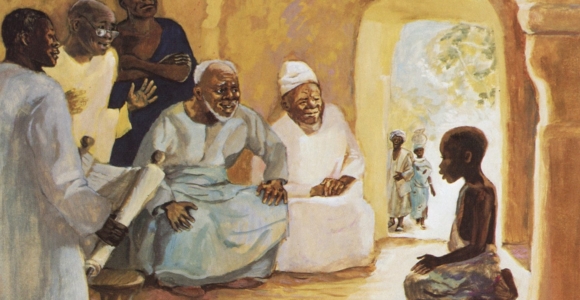
The Beginning of Birth Pains

We want to take this moment to express our heartfelt gratitude to all of our supporters for your invaluable role in the Renewed Heart Ministry community and for your dedication to our mission of fostering love, justice, compassion, and healing. Your support is the bedrock of our work. Your support empowers us to do what we do. At a time when ministries like ours are being asked to achieve more with fewer resources, your support is incredibly important, and we want to simply say thank you. Whether in our larger society or within our local faith communities, Renewed Heart Ministries remains committed to advocating for change, working towards a world that is inclusive, just, and safe for everyone, and being a source of love in our world. From all of us here at Renewed Heart Ministries, thank you for your generous support. We deeply appreciate each and every one of our supporters.

If you’d like to join them in supporting our work, please go to renewedheartministries.com and click on “Donate.”  

Marching Donations Till End of Year

As we are seeking to reach our ministry goals here at the end of 2024, we are excited to share that all donations to Renewed Heart Ministries for the remainder of year will be matched! Every dollar you give will have twice the impact, helping us further expand the work of Renewed Heart Ministries in 2025. Join us in making a difference—together, we can maximize our collective impact!


The Beginning of Birth Pains

Herb Montgomery, November 15, 2024

If you’d like to listen to this week’s article in podcast version click on the image below:

Our reading this week is from the gospel of Mark:

As Jesus was leaving the temple, one of his disciples said to him, “Look, Teacher! What massive stones! What magnificent buildings!” “Do you see all these great buildings?” replied Jesus. “Not one stone here will be left on another; every one will be thrown down.”

As Jesus was sitting on the Mount of Olives opposite the temple, Peter, James, John and Andrew asked him privately, “Tell us, when will these things happen? And what will be the sign that they are all about to be fulfilled?”

Jesus said to them: “Watch out that no one deceives you. Many will come in my name, claiming, ‘I am he,’ and will deceive many. When you hear of wars and rumors of wars, do not be alarmed. Such things must happen, but the end is still to come. Nation will rise against nation, and kingdom against kingdom. There will be earthquakes in various places, and famines. These are the beginning of birth pains.” (Mark 13:1-8)

Jesus as More Than a Religious Figure

When we characterize Jesus purely as a religious figure, we back ourselves into a corner where our interpretations can do harm. Let me explain. 

The gospels repeatedly represent Jesus in the narratives as being against the Temple. As Richard Horsley writes, “The Gospels and the materials they incorporate portray Jesus as adamantly opposed to the high priests and the Temple and portray the high priests and scribal-Pharisaic representatives of the temple-state as eager to destroy Jesus” (In Jesus and the Politics of Roman Palestine, p. 48).

A few examples from the gospels are:

“Then the chief priests, the teachers of the law and the elders looked for a way to arrest him because they knew he had spoken the parable against them.” (Mark 12:12)

“We heard him say, ‘I will destroy this temple made with human hands and in three days will build another, not made with hands.’” (Mark 14:58)

They crucified two rebels with him, one on his right and one on his left. Those who passed by hurled insults at him, shaking their heads and saying, “So! You who are going to destroy the temple and build it in three days, come down from the cross and save yourself!” (Mark 15:27-30)

Jesus answered them, “Destroy this temple, and I will raise it again in three days.” (John 2:19)

Even in the Gospel of Thomas (71) we read a similar saying: “Jesus said, ‘I shall destroy this house, and no one will be able to build it.’

Interpreting Jesus only as religious sets us up to interpret these passages as if he were somehow against the religion of the temple, and that has led many Christians through history to separate Jesus from his Jewishness and create a Christianity-versus-Judaism tension that has done untold harm to Jewish people. 

But Jesus was not against his own religious tradition as much as he was against his people’s economic and political exploitation by the high priests and others tied to the Roman-installed Temple State. The Temple State was an extension of Rome during Jesus’ time. Through the Temple State and its complicity with Rome, Jesus’ community experienced injustice, exploitation, and social disintegration. 

So instead of reading Jesus’ critical statements about the temple, high priest, Pharisees, scribes, synagogue leaders, and teachers of the law as Jesus being against Judaism, we should understand that he critiqued the power brokers, apologists, and propagandists of a political and economic unjust system within his own society that was doing deep harm by it’s complicity with the Roman Empire. 

In the stories, these leaders spin Jesus’ critical statements about the Temple State as against the Torah and Moses. But this was their attempt to discredit Jesus and his calls for economic justice, which would have ended their power and profit at the expense of the masses. We see this interpretation in the book of Acts:

“They produced false witnesses, who testified, ‘This fellow never stops speaking against this holy place and against the law. For we have heard him say that this Jesus of Nazareth will destroy this place and change the customs Moses handed down to us.’” (Acts 6:13-14)

Remember, Jesus was a Jew. He was never a Christian. His followers started Christianity, for sure, but Jesus himself was leading a Jewish renewal movement in the tradition of the Hebrew prophets and he called the village communities of Galilee and Judea back to the Torah’s social justice teachings in opposition to the exploitation and harm being perpetrated at the Temple.

Navigating Trauma in Mark 13

Today, scholars argue over whether Mark’s gospel was written after the Jewish-Roman War or  immediately before it. I’m of the opinion that that Mark was written after the fact as an explanation for world-upheaving events. Either way, Mark’s gospel aims to provide answers for a Jewish Jesus-following community that is either having their world turned upside down or have just had it overturned. 

Our reading this week aligns with Josephus’ descriptions of the events leading up to the Jewish Roman War in 66-69 C.E. (see Josephus’ The Jewish War). He describes famine, false prophets, and  events leading up to the razing of the Temple itself. 

In his account, Mark uses the hyperbolic language of apocalyptic writings of the time and the kind of language the prophets of old used to describe destruction brought on their nation by conquering foreign empires:

“The floodgates of the heavens are opened, the foundations of the earth shake. The earth is broken up, the earth is split asunder, the earth is violently shaken. The earth reels like a drunkard, it sways like a hut in the wind; so heavy upon it is the guilt of its rebellion that it falls—never to rise again.” (Isaiah 24:18-20)

We must not underestimate the trauma that the Jewish community at large and the Jesus-following Jewish community specifically was enduring at this time. 

Looking for answers, it was only natural for the Jesus community to look back to Jesus’ calls for economic justice and his critical statements toward the Temple State to explain the devastation Rome had just wrought on Jerusalem and the surrounding regions.

Economic exploitation had reached a pivotal moment in the mid 60’s C.E., and the poor people revolted. The officials of the Temple State were driven out of Jerusalem. Revolutionaries and liberationists burned the Temple State’s debt records. This revolt then quickly evolved into an all-out assault on Rome itself as poor people tried to free themselves not just from local leaders but also from Roman occupation itself.  This led to the Jewish Roman War of 66-69 C.E. and the Roman destruction of the Temple itself in 70 C.E. This pattern repeated in the second century when Rome banished the Jews from Jerusalem and Palestine and destroyed the entire city of Jerusalem in 135 C.E.  

Mark’s gospel’s hyperbolic language in our reading this week is best understood against the back drop of this tremendous societal trauma.

The Hope that Injustice is Unsustainable

And this leads us to our application today. Injustice, whether political, economic, social, ecological or whatever, is unsustainable. It cannot endure. Injustice always eventually reaches a breaking point. And when it does, the transition is always destructive, and most destructive to those most vulnerable. Voluntarily abandoning unjust systems ahead of time is always difficult, but much less difficult and less harmful than waiting for change to be forced.

I think of the economic stress so many are under presently. I think, too, of the political divisions that continue to grow here in the U.S. I think of the acknowledged and unacknowledged radical and misogynistic biases so many of us still have inside ourselves in the country. I think of the ecological damage we cannot continue to perpetuate.“Rising inequality and global warming are the most pressing issues of our time,” says Thomas Piketty, author of Capital and Ideology. Add to all of this the recent gut punch of the recent election results and what those results reveal about who we are here in the U.S. and how far we still need to go toward a multicultural democracy. 

It’s the last phrase in the reading that gets me. Rather than a pessimistic outlook as if the world is about to end, our reading characterizes all of this pain as the “beginning of birth pains.”

This is not the end. If we choose it, all of our present challenges now could be the beginning of us giving birth to something new. We don’t have to give up hope. We can look at the world around us and still imagine a world that is a safe, compassionate, just home for everyone.  The current loss and anxiety, our energy and concerns, can be channeled into a renewed commitment to resistance giving birth to the kind of world we want to live in, a world where there is room enough for all of us thrive. Things will be different this time. But we are different this time, too. We are more organized, and we are ready. We are not alone. Our community of resistance is still here.

To be clear, our present challenges will be significant. I don’t want to gloss over those or only consider them through rose-colored glasses. But we have an opportunity to meet significant challenges with extraordinary resistance. Are we creative enough to envision a world that is just, safe, and compassionate for all? The Jesus of our gospels asked us to. And again, if we choose, the pain many of us are presently experiencing could be a foreboding of life rather than death. These don’t have to be death-pains. It’s still painful. Yet through our continued commitment to resistance and justice, we can transform our pain into the beginning of birth-pains instead: the beginning of something, that in the end, may be beautiful. 

We are not alone. We still have each other. And our work, once again, is laid out for us.

Discussion Group Questions

1. Share something that spoke to you from this week’s Podcast episode with your discussion group.

2. What are you feeling in the wake of last week’s election choices by the majority of our fellow citizens? Share and discuss with your group.

3. What can you do this week, big or small, to continue setting in motion the work of shaping our world into a safe, compassionate, just home for everyone? 

Thanks for checking in with us, today.

I want to say a special thank you to all of our supporters out there. And if you would like to join them in supporting Renewed Heart Ministries’ work you can do so by going to renewedheartministries.com and clicking donate. 

My latest book Finding Jesus: A Fundamentalist Preacher Discovers the Socio-Political and Economic Teachings of the Gospels is available now on Amazon in paperback, Kindle and also on Audible in audio book format.

As always, you can find Renewed Heart Ministries each week on X (or Twitter), Facebook, Instagram and Meta’s Threads. If you haven’t done so already, please follow us on your chosen social media platforms for our daily posts. 

Thank you for listening to The Social Jesus Podcast. If you enjoyed this podcast please take a moment to like and subscribe and if the podcast platform you’re using offers this option, please leave us a positive review. This helps others find our podcast as well.

You can watch our YouTube show each week called “Just Talking”. Each week, Todd Leonard and I take a moment to talk about the gospel lectionary reading for the upcoming weekend. We’ll be talking about each reading in the context of love, inclusion, and social justice. Our hope is that our talking will be just talking (as in justice) and that during our brief conversations each week you’ll be inspired to also do more than just talking. If you teach from the lectionary each week, or if you’re just looking for some thoughts on the Jesus story from a more progressive perspective within the context of social justice, check it out, you might like it. You can find JustTalking each week on YouTube at youtube.com/@herbandtoddjusttalking. Please Like, Subscribe, hit the Notification button, and leave us a comment.

And if you’d like to reach us here at Renewed Heart Ministries through email, you can reach us at info@renewedheartministries.com.

Right where you are, keep living in love, choosing compassion, taking action, and working toward justice.

I love each of you dearly,

I’ll see you next week.


New Episode of “Just Talking” Now Online!

Season 2, Episode 36: Mark 13.1-8. Lectionary B, Proper 28

Each week, we’ll be talking about the gospel lectionary reading for the upcoming weekend in the context of love, inclusion, and social justice. Our hope is that our talking will be “just” talking (as in justice) and that during our brief conversations each week we’ll be inspired to do more than just talking.

If you teach from the lectionary each week, or if you’re just looking for some thoughts on the Jesus story from a more progressive perspective within the context of social justice, check it out at:


New Episode of The Social Jesus Podcast

A podcast where we talk about the intersection of faith and social justice and what a first century, prophet of the poor from Galilee might have to offer us today in our work of love, compassion and justice. 

This week:

Season 1 Episode 31: The Beginning of Birth Pains

Mark 13:1-8

“I think of the economic stress so many are under presently. I think, too, of the political divisions that continue to grow here in the U.S. I think of the acknowledged and unacknowledged radical and misogynistic biases so many of us still have inside ourselves in the country. I think of the ecological damage we cannot continue to perpetuate. Add to all of this the recent gut punch of the recent election results and what those results reveal about who we are here in the U.S. and how far we still need to go toward a multicultural democracy. This is not the end. If we choose it, all of our present challenges now could be the beginning of us giving birth to something new. We don’t have to give up hope. We can look at the world around us and still imagine a world that is a safe, compassionate, just home for everyone.  The current loss and anxiety, our energy and concerns, can be channeled into a renewed commitment to resistance giving birth to the kind of world we want to live in, a world where there is room enough for all of us thrive. Things will be different this time. But we are different this time, too. We are more organized, and we are ready. We are not alone. Our community of resistance is still here.”

Available on all major podcast carriers and at:

https://the-social-jesus-podcast.simplecast.com/episodes/the-beginning-of-birth-pains


Now Available on Audible!


Finding Jesus: A Fundamentalist Preacher Discovers the Socio-Political & Economic Teachings of the Gospels.

by Herb Montgomery, Narrated by Jeff Moon

Available now on Audible!

After two successful decades of preaching a gospel of love within the Christian faith tradition Herb felt like something was missing. He went back to the gospels and began reading them through the interpretive lenses of various marginalized communities and what he found radically changed his life forever. The teachings of the Jesus in the gospel stories express a profound concern for justice, compassion, and the well-being of those in marginalized communities. This book navigates the intersections between faith and societal justice, and presents a compelling argument for a more socially compassionate and just expression of Christianity. Herb’s findings in his latest book are shared in the hopes that it will dramatically impact how you practice your Christianity, too.


Are you getting all of RHM’s Free Resources?

Free Sign Up Here
When Faith Does Societal Harm

We want to take this moment to express our heartfelt gratitude to all of our supporters for your invaluable role in the Renewed Heart Ministry community and for your dedication to our mission of fostering love, justice, compassion, and healing. Your support is the bedrock of our work. Your support empowers us to do what we do. At a time when ministries like ours are being asked to achieve more with fewer resources, your support is incredibly important, and we want to simply say thank you. Whether in our larger society or within our local faith communities, Renewed Heart Ministries remains committed to advocating for change, working towards a world that is inclusive, just, and safe for everyone, and being a source of love in our world. From all of us here at Renewed Heart Ministries, thank you for your generous support. We deeply appreciate each and every one of our supporters.

If you’d like to join them in supporting our work, please go to renewedheartministries.com and click on “Donate.”  

Marching Donations Till End of Year

As we are seeking to reach our ministry goals here at the end of 2024, we are excited to share that all donations to Renewed Heart Ministries for the remainder of year will be matched! Every dollar you give will have twice the impact, helping us further expand the work of Renewed Heart Ministries in 2025. Join us in making a difference—together, we can maximize our collective impact!


When Faith Does Societal Harm

Herb Montgomery, November 1, 2024

If you’d like to listen to this week’s article in podcast version click on the image below:

Herb Montgomery, November 9, 2024

Our reading this week is from the gospel of Mark: 

As he taught, Jesus said, “Watch out for the teachers of the law. They like to walk around in flowing robes and be greeted with respect in the marketplaces, and have the most important seats in the synagogues and the places of honor at banquets. They devour widows’ houses and for a show make lengthy prayers. These men will be punished most severely.”

Jesus sat down opposite the place where the offerings were put and watched the crowd putting their money into the temple treasury. Many rich people threw in large amounts. But a poor widow came and put in two very small copper coins, worth only a few cents.

Calling his disciples to him, Jesus said, “Truly I tell you, this poor widow has put more into the treasury than all the others. They all gave out of their wealth; but she, out of her poverty, put in everything—all she had to live on.” (Mark 12:38-44)

Our reading this week contains one of the most misunderstood stories in Mark’s gospel. There’s quite a bit to unpack here, so let’s jump right in with the political context of Jesus’ critique of the “teachers of the law.”

Political Context of Mark 12

Interpreting Jesus’ critique of the teachers of the law without its context too often leads to thinking that Jesus was against the law (Torah) itself. Jesus was not engaging in a Protestant, post-Reformation contrast of the law versus grace. That way of reading our story is anachronistic and misses Jesus’ point entirely. 

Jesus was leading a Jewish renewal movement that hoped to liberate and restore the rural village communities disintegrating because of the Roman occupation. Jesus was calling his listeners back to fidelity to the Torah’s justice in opposition to the ruling class of his day, which was colluding with Roman oppression for its own gain. 

The tension in the gospels is not between Jesus and the law, but between Jesus and Roman oppression, including the Romans’ client regional ruler Herod and high priests of the Temple State. Roman exploitation and oppression through those Rome had placed in positions of power in the Temple State was wreaking economic and social havoc on the vast majority of people living in villages of Galilee, Samaria, and Judea. According to Richard Horsley, those named in the gospels such as the scribes, the Pharisees and the “teachers of the law” served in the Judean temple-state as “intellectual-legal retainers.” (Richard A. Horsley, Jesus and the Politics of Roman Palestine, p. xi)

This leads to some interesting political and social insights into who these “teachers of the law” were.

Teachers of the Law in Mark 12

The teachers of the law in our reading this week advised the Judean rulers of the Temple State and enjoyed political and economic favor as a result. They were those whose interpretations of the Torah provided religious justification for the unjust status quo of the Roman-appointed high priestly rulers. 

Jesus offers two critiques of these teachers in our reading: they desired status and privilege rather than the life-giving pedagogy of the Torah and they were “devouring widows’ houses,” which indicates their complicity in the economic exploitation through over-taxation taking place in the Temple-state.

The first critique, desiring the most important seats and places of honor, should be read with the backdrop of the lessons Mark’s gospel just taught in Mark 10. James and John also desired the most important seats and places of honor, and asked to sit at Jesus’ left and right hands in the kingdom. Mark 10 contrasts this request with the request of Bartimaeus, who rightly perceives Jesus’ movement and joins it. (For more, we discussed this at length in Bartimaeus and Christians of Privilege.)

Next, Jesus zeros in on the intrinsic harm the teachings of these teachers was actually doing. Their teaching made the rich powerbrokers in the Temple state richer at the expense of the most vulnerable in Jesus’ society.

Mark’s gospel critiqued this group’s teachings on the basis of the economic injustice they were causing in Mark 7:

And he continued, “You have a fine way of setting aside the commands of God in order to observe your own traditions! For Moses said, ‘Honor your father and mother,’ and, ‘Anyone who curses their father or mother is to be put to death.’ But you say that if anyone declares that what might have been used to help their father or mother is Corban (that is, devoted to God)—then you no longer let them do anything for their father or mother. Thus you nullify the word of God by your tradition that you have handed down. And you do many things like that.” (Mark 7:9-13)

“Devoted to God” meant devoted to the Temple-State, and it didn’t trickle down to the poor, but rather into the pockets of those in positions of power who already possessed so much. It gave them even more at the expense and harm of those from whom these resources were being taken, all while they piously said lengthy prayers in public to add religious influence to their economic exploitation. Standing in the Hebrew prophetic tradition, Jesus like the prophets of old who spoke truth to power, declared that these teachers of the law would be “punished most severely.”

Our reading gives a clear example of this exploitation in one of the most misunderstood economic teachings in the gospel Mark: the story of the widow’s mites. 

The Widow’s Mites of Mark 12

Whenever I heard the story of the widow’s mites growing up in church, it was always held up as an example of the piety and fidelity we should follow. She gave so much with the little she had and we should sacrificially do the same. But nothing could be further from the point of why Mark’s gospel is actually telling this story. The widow’s mites story is not a story to applaud the widow’s dedication to giving but a story that critiques how the widow was being exploited. The widow is not an example for the poor to follow but the system that exploits her is an example for the wealthy and powerful not to follow.

“The story does not provide a pious contrast to the conduct of the scribes in the preceding section (as is the customary view); rather it provides a further illustration of the ills of official devotion. Jesus’ saying is not a penetrating insight on the measuring of gifts; it is a lament…. Jesus condemns the value system that motivates her action, and he condemns the people who conditioned her to do it.” (A. Wright, 1982, ​“The Widow’s Mite: Praise or Lament? A Matter of Context.” CBQ, 44, pp. 256ff, quoted by Ched Myers, Binding the Strong Man: A Political Reading of Mark’s Story of Jesus, p. 321). 

The teachings of the Temple-State have robbed this woman of her means of livelihood. Those who were to protect the vulnerable are no longer protecting widows but exploiting them and others in their social and economic position. Jesus, in disgust, departs from the temple for the final time. 

What does this mean for us today?

Do our religious teachings today cause political and social harm and death or bring healing, life, renewal, restoration, and liberation? Is our religious teaching politically and socially death-dealing or life-giving? I can’t help but think of the way certain Christians are pro-birth but oppose state programs that ensure that same child, once born, is fed, housed, educated, and raised in a home where their parents can afford to live. I can’t help but think of the life-saving healthcare for women who have either died or almost died since the loss of Roe here in the U.S., a loss that some Christians are so proud of. I can’t help but think of how our trans community and immigrants are being scapegoated right now in our political debates.  I’m not saying that Christians are the only ones engaging in such harmful misrepresentations, or that all Christians are. What I am saying is that I’m shocked that anyone, even one person, who claims to be following Jesus and his teachings is. History will not be kind to the way Evangelicalism has embraced the politics of harm. With Jesus’ critique of the teachers of the law as our backdrop, what critique might this same Jesus make of American Christians today?

Discussion Group Questions

1. Share something that spoke to you from this week’s Podcast episode with your discussion group.

2. What societal healing do you believe your faith can be channelled toward? Share and discuss with your group.

3. What can you do this week, big or small, to continue setting in motion the work of shaping our world into a safe, compassionate, just home for everyone? 

Thanks for checking in with us, today.

I want to say a special thank you to all of our supporters out there. And if you would like to join them in supporting Renewed Heart Ministries’ work you can do so by going to renewedheartministries.com and clicking donate. 

My latest book Finding Jesus: A Fundamentalist Preacher Discovers the Socio-Political and Economic Teachings of the Gospels is available now on Amazon in paperback, Kindle and also on Audible in audio book format.

As always, you can find Renewed Heart Ministries each week on X (or Twitter), Facebook, Instagram and Meta’s Threads. If you haven’t done so already, please follow us on your chosen social media platforms for our daily posts. 

Thank you for listening to The Social Jesus Podcast. If you enjoyed this podcast please take a moment to like and subscribe and if the podcast platform you’re using offers this option, please leave us a positive review. This helps others find our podcast as well.

You can watch our YouTube show each week called “Just Talking”. Each week, Todd Leonard and I take a moment to talk about the gospel lectionary reading for the upcoming weekend. We’ll be talking about each reading in the context of love, inclusion, and social justice. Our hope is that our talking will be just talking (as in justice) and that during our brief conversations each week you’ll be inspired to also do more than just talking. If you teach from the lectionary each week, or if you’re just looking for some thoughts on the Jesus story from a more progressive perspective within the context of social justice, check it out, you might like it. You can find JustTalking each week on YouTube at youtube.com/@herbandtoddjusttalking. Please Like, Subscribe, hit the Notification button, and leave us a comment.

And if you’d like to reach us here at Renewed Heart Ministries through email, you can reach us at info@renewedheartministries.com.

Right where you are, keep living in love, choosing compassion, taking action, and working toward justice.

I love each of you dearly,

I’ll see you next week.


New Episode of “Just Talking” Now Online!

Season 2, Episode 35: Mark 12.38-44. Lectionary B, Proper 27

Each week, we’ll be talking about the gospel lectionary reading for the upcoming weekend in the context of love, inclusion, and social justice. Our hope is that our talking will be “just” talking (as in justice) and that during our brief conversations each week we’ll be inspired to do more than just talking.

If you teach from the lectionary each week, or if you’re just looking for some thoughts on the Jesus story from a more progressive perspective within the context of social justice, check it out at:


New Episode of The Social Jesus Podcast

A podcast where we talk about the intersection of faith and social justice and what a first century, prophet of the poor from Galilee might have to offer us today in our work of love, compassion and justice. 

This week:

Season 1 Episode 30: When Faith Does Societal Harm

“Whenever I heard the story of the widow’s mites growing up in church, it was always held up as an example of the piety and fidelity we should follow. She gave so much with the little she had and we should sacrificially do the same. But nothing could be further from the point of why Mark’s gospel is actually telling this story. The widow’s mites story is not a story to applaud the widow’s dedication to giving but a story that critiques how the widow was being exploited. The widow is not an example for the poor to follow but the system that exploits her is an example for the wealthy and powerful not to follow. ‘Devoted to God’ meant devoted to the Temple-State, and it didn’t trickle down to the poor, but rather into the pockets of those in positions of power who already possessed so much. It gave them even more at the expense and harm of those from whom these resources were being taken, all while they piously said lengthy prayers in public to add religious influence to their economic exploitation. Standing in the Hebrew prophetic tradition, Jesus like the prophets of old who spoke truth to power, declared that these teachers of the law would be “punished most severely.”

Available on all major podcast carriers and at:

https://the-social-jesus-podcast.simplecast.com/episodes/when-faith-does-societal-harm


Now Available on Audible!


Finding Jesus: A Fundamentalist Preacher Discovers the Socio-Political & Economic Teachings of the Gospels.

by Herb Montgomery, Narrated by Jeff Moon

Available now on Audible!

After two successful decades of preaching a gospel of love within the Christian faith tradition Herb felt like something was missing. He went back to the gospels and began reading them through the interpretive lenses of various marginalized communities and what he found radically changed his life forever. The teachings of the Jesus in the gospel stories express a profound concern for justice, compassion, and the well-being of those in marginalized communities. This book navigates the intersections between faith and societal justice, and presents a compelling argument for a more socially compassionate and just expression of Christianity. Herb’s findings in his latest book are shared in the hopes that it will dramatically impact how you practice your Christianity, too.


Are you getting all of RHM’s Free Resources?

Free Sign Up Here

Two Greatest Commandments

We want to take this moment to express our heartfelt gratitude to all of our supporters for your invaluable role in the Renewed Heart Ministry community and for your dedication to our mission of fostering love, justice, compassion, and healing. Your support is the bedrock of our work. Your support empowers us to do what we do. At a time when ministries like ours are being asked to achieve more with fewer resources, your support is incredibly important, and we want to simply say thank you. Whether in our larger society or within our local faith communities, Renewed Heart Ministries remains committed to advocating for change, working towards a world that is inclusive, just, and safe for everyone, and being a source of love in our world. From all of us here at Renewed Heart Ministries, thank you for your generous support. We deeply appreciate each and every one of our supporters.

If you’d like to join them in supporting our work, please go to renewedheartministries.com and click on “Donate.”  


Two Greatest Commandments

Herb Montgomery, November 1, 2024

If you’d like to listen to this week’s article in podcast version click on the image below:

Love and Social Justice

Our reading this week is from the gospel of Mark:

One of the teachers of the law came and heard them debating. Noticing that Jesus had given them a good answer, he asked him, “Of all the commandments, which is the most important?”

“The most important one,” answered Jesus, “is this: ‘Hear, O Israel: The Lord our God, the Lord is one. Love the Lord your God with all your heart and with all your soul and with all your mind and with all your strength.’ The second is this: ‘Love your neighbor as yourself.’  There is no commandment greater than these.”

“Well said, teacher,” the man replied. “You are right in saying that God is one and there is no other but him. To love him with all your heart, with all your understanding and with all your strength, and to love your neighbor as yourself is more important than all burnt offerings and sacrifices.”

When Jesus saw that he had answered wisely, he said to him, “You are not far from the kingdom of God.” And from then on no one dared ask him any more questions. (Mark 12:28-34)

Our reading this week is the story of an exchange that takes place after a series of exchanges in Mark’s gospel that we covered in the past few weeks. This is a positive conversation between Jesus and one of the Temple State’s teachers of the law.

It’s important for us to understand Jesus’s answer to the question “Which is the most important commandment” was not unique. Any faithful follower of Hillel would have given that answer. Hillel was a generation or two previous to Jesus, and this was one of the central areas of agreement between the two teachers. Jesus differed from Hillel in his teachings on debt cancellation, but in regards to summing up the Torah in terms of love, Jesus shares Hillel’s interpretive lens. The summary is simple: There is no love of God without love of neighbor.

The second half of Jesus’ response quotes Leviticus:

“Do not seek revenge or bear a grudge against anyone among your people, but love your neighbor as yourself.” (Leviticus 19:18)

We must note that the context of this passage in Leviticus defines love of neighbor as what we would call today social justice:

“When you reap the harvest of your land, do not reap to the very edges of your field or gather the gleanings of your harvest. Do not go over your vineyard a second time or pick up the grapes that have fallen. Leave them for the poor and the foreigner. I am the LORD your God.Do not steal. Do not lie. Do not deceive one another. Do not swear falsely by my name and so profane the name of your God. I am the LORD. Do not defraud or rob your neighbor. Do not hold back the wages of a hired worker overnight. Do not curse the deaf or put a stumbling block in front of the blind, but fear your God. I am the LORD. Do not pervert justice; do not show partiality to the poor or favoritism to the great, but judge your neighbor fairly. Do not go about spreading slander among your people. Do not do anything that endangers your neighbor’s life. I am the LORD.” (Leviticus 19:9-16)

In Mujerista Theology: A Theology for the Twenty-First Century, Ada Maria Isasi-Diaz quotes Jose Porfirio Miranda, who said: “One of the most disastrous errors in the history of Christianity is to have tried — under the influence of Greek definitions — to differentiate between love and justice.” (In Mujerista Theology: A Theology for the Twenty-First Century, p. 122)

As is often said, justice is what love looks like in public.

So closely is love connected to justice that even in the texts of the Johannine community, it is impossible to claim you even have love if you disregard social justice for one’s neighbor:

“If anyone has material possessions and sees a brother or sister in need but has no pity on them, how can the love of God be in that person?” (1 John 3:17)

Loving God is Loving One’s Neighbor

In 1 John, love of neighbor is synonymous with loving God. 

“Whoever claims to love God yet hates a brother or sister is a liar. For whoever does not love their brother and sister, whom they have seen, cannot love God, whom they have not seen.” (1 John 4:20)

A popular ewish wisdom proverb says that before each person there walks an angel proclaiming, “Behold the image of God.” Every member of our human family bears the image of God. Think about that for just one moment. In this life, the closest encounter we will ever have with anything God-like is with our fellow members of the human family, or neighbor. This teaching prioritizes community over individualistic or isolated personal piety. It’s not about how holy one may be all alone but about how we all engage the world around us. How do we relate socially, economically, and politically to those we share a home with on our planet?  

The Archbishop of Constantinople Saint John Chrysostom was born in Antioch around 347 C.E.,was one one of four great doctors of the Eastern Church. On this subject he stated: 

”This is the rule of most perfect Christianity, its most exact definition, its highest point, namely, the seeking of the commonwealth; for nothing can so make a person an imitator of Christ as caring for neighbors.”

This idea was so central to the Jesus movement when the gospels were written that they equated loving one’s neighbor to loving Jesus himself. 

“The King will reply, ‘Truly I tell you, whatever you did for one of the least of these brothers and sisters of mine, you did for me . . . He will reply, ‘Truly I tell you, whatever you did not do for one of the least of these, you did not do for me.’” (Matthew 25:40, 45)

Loving One’s Neighbor and Voting

This week is election week here in the U.S. This week, many of us will be taking our civic (love of neighbor) responsibilities very seriously. You can’t say you love your neighbor and vote to put someone in office that will harm those you claim to love. So I’m thinking of my LGBTQ neighbors. I’m thinking all the women neighbors in my life and their rights to bodily autonomy and health care. I’m thinking of neighbors of a different race or culture than my own. I’m thinking of neighbors who have migrated here to survive and gain a better life for themselves. I can’t tell you how to vote. That’s not my place. But I can plead with you to engage your public life, your civic life, and not simply your private religious piety. 

In the end, love of neighbor is what matters. To the degree that we love our neighbor, every other claim of piety is proven true or a lie (1 John 4:20). Love of neighbor is the single greatest practical demonstration of our faith that keeps following Jesus relevant in the 21st century. This year, if you can vote, vote in solidarity with your neighbors who are most vulnerable and disenfranchised. 

And then, the day after Election Day, keep choosing to live in solidarity with your neighbors and seek our collective, common good. As our reading states this week, “The second [greatest commandment] is this: ‘Love your neighbor as yourself.’ There is no commandment greater than these.” 

The Jesus we see in the gospels was leading a movement of renewal in the face of the disintegration he saw happening to his communities because of Roman oppression. He called his followers not to isolation or individualism but to community, to caring about how we collectively share our resources to ensure everyone is taken care of and has what they need, not simply to survive, but also to thrive. 

A few weeks ago I shared a statement in James Robinson’s classic book The Gospel of Jesus: In Search of the Original Good News where he defines Jesus’ teachings in the synoptic gospels. I want to end this week with that statement for us to ponder again in the light of this Tuesday’s election.

“The human dilemma is, in large part, that we are each other’s fate.” (James M. Robinson, The Gospel of Jesus: In Search of the Original Good News, Kindle Edition Loc. 58) 

This Tuesday, love your neighbor by getting out there and voting for love and justice. And no matter what the results turn out, that next morning when you wake, keep at it. Keep living love, keep taking action, keep choosing compassion as, together, we continue to follow Jesus in shaping our world into a safe, compassionate, just home for everyone. 

Discussion Group Questions

1. Share something that spoke to you from this week’s Podcast episode with your discussion group.

2. What does loving your neighbor look like for you? Share and discuss with your group.

3. What can you do this week, big or small, to continue setting in motion the work of shaping our world into a safe, compassionate, just home for everyone? 

Thanks for checking in with us, today.

I want to say a special thank you to all of our supporters out there. And if you would like to join them in supporting Renewed Heart Ministries’ work you can do so by going to renewedheartministries.com and clicking donate. 

My latest book Finding Jesus: A Fundamentalist Preacher Discovers the Socio-Political and Economic Teachings of the Gospels is available now on Amazon in paperback, Kindle and also on Audible in audio book format.

As always, you can find Renewed Heart Ministries each week on X (or Twitter), Facebook, Instagram and Meta’s Threads. If you haven’t done so already, please follow us on your chosen social media platforms for our daily posts. 

Thank you for listening to The Social Jesus Podcast. If you enjoyed this podcast please take a moment to like and subscribe and if the podcast platform you’re using offers this option, please leave us a positive review. This helps others find our podcast as well.

You can watch our YouTube show each week called “Just Talking”. Each week, Todd Leonard and I take a moment to talk about the gospel lectionary reading for the upcoming weekend. We’ll be talking about each reading in the context of love, inclusion, and social justice. Our hope is that our talking will be just talking (as in justice) and that during our brief conversations each week you’ll be inspired to also do more than just talking. If you teach from the lectionary each week, or if you’re just looking for some thoughts on the Jesus story from a more progressive perspective within the context of social justice, check it out, you might like it. You can find JustTalking each week on YouTube at youtube.com/@herbandtoddjusttalking. Please Like, Subscribe, hit the Notification button, and leave us a comment.

And if you’d like to reach us here at Renewed Heart Ministries through email, you can reach us at info@renewedheartministries.com.

Right where you are, keep living in love, choosing compassion, taking action, and working toward justice.

I love each of you dearly,

I’ll see you next week.


New Episode of “Just Talking” Now Online!

Season 2, Episode 34: Mark 12.28-34. Lectionary B, Proper 26

Each week, we’ll be talking about the gospel lectionary reading for the upcoming weekend in the context of love, inclusion, and social justice. Our hope is that our talking will be “just” talking (as in justice) and that during our brief conversations each week we’ll be inspired to do more than just talking.

If you teach from the lectionary each week, or if you’re just looking for some thoughts on the Jesus story from a more progressive perspective within the context of social justice, check it out at:


New Episode of The Social Jesus Podcast

A podcast where we talk about the intersection of faith and social justice and what a first century, prophet of the poor from Galilee might have to offer us today in our work of love, compassion and justice. 

This week:

Season 1 Episode 29: Two Greatest Commandments and Social Justice

Mark 12:28-34

“Next week is election week here in the U.S. Next week, many of us will be taking our civic (love of neighbor) responsibilities very seriously. You can’t say you love your neighbor and vote to put someone in office that will harm those you claim to love. So I’m thinking of my LGBTQ neighbors. I’m thinking all the women neighbors in my life and their rights to bodily autonomy and health care. I’m thinking of neighbors of a different race or culture than my own. I’m thinking of neighbors who have migrated here to survive and gain a better life for themselves. I can’t tell you how to vote. That’s not my place. But I can plead with you to engage your public life, your civic life, and not simply your private religious piety. This Tuesday, love your neighbor by getting out there and voting for love and justice. And no matter what the results turn out, that next morning when you wake, keep at it. Keep living love, keep taking action, keep choosing compassion as, together, we continue to follow Jesus in shaping our world into a safe, compassionate, just home for everyone.”

Available on all major podcast carriers and at:

https://the-social-jesus-podcast.simplecast.com/episodes/two-greatest-commandments-and-social-justice


Now Available on Audible!


Finding Jesus: A Fundamentalist Preacher Discovers the Socio-Political & Economic Teachings of the Gospels.

by Herb Montgomery, Narrated by Jeff Moon

Available now on Audible!

After two successful decades of preaching a gospel of love within the Christian faith tradition Herb felt like something was missing. He went back to the gospels and began reading them through the interpretive lenses of various marginalized communities and what he found radically changed his life forever. The teachings of the Jesus in the gospel stories express a profound concern for justice, compassion, and the well-being of those in marginalized communities. This book navigates the intersections between faith and societal justice, and presents a compelling argument for a more socially compassionate and just expression of Christianity. Herb’s findings in his latest book are shared in the hopes that it will dramatically impact how you practice your Christianity, too.


Are you getting all of RHM’s Free Resources?

Free Sign Up Here

Bartimaeus and Christians of Privilege

We want to take this moment to express our heartfelt gratitude to all of our supporters for your invaluable role in the Renewed Heart Ministry community and for your dedication to our mission of fostering love, justice, compassion, and healing. Your support is the bedrock of our work. Your support empowers us to do what we do. At a time when ministries like ours are being asked to achieve more with fewer resources, your support is incredibly important, and we want to simply say thank you. Whether in our larger society or within our local faith communities, Renewed Heart Ministries remains committed to advocating for change, working towards a world that is inclusive, just, and safe for everyone, and being a source of love in our world. From all of us here at Renewed Heart Ministries, thank you for your generous support. We deeply appreciate each and every one of our supporters.

If you’d like to join them in supporting our work, please go to renewedheartministries.com and click on “Donate.”  


Bartimaeus and Christians of Privilege

Herb Montgomery, October 25, 2024

If you’d like to listen to this week’s article in podcast version click on the image below:

Our reading this week is from the gospel of Mark: 

Then they came to Jericho. As Jesus and his disciples, together with a large crowd, were leaving the city, a blind man, Bartimaeus (which means “son of Timaeus”), was sitting by the roadside begging. When he heard that it was Jesus of Nazareth, he began to shout, “Jesus, Son of David, have mercy on me!”

Many rebuked him and told him to be quiet, but he shouted all the more, “Son of David, have mercy on me!”

Jesus stopped and said, “Call him.”

So they called to the blind man, “Cheer up! On your feet! He’s calling you.” Throwing his cloak aside, he jumped to his feet and came to Jesus.

“What do you want me to do for you?” Jesus asked him.

The blind man said, “Rabbi, I want to see.”

“Go,” said Jesus, “your faith has healed you.” Immediately he received his sight and followed Jesus along the road. (Mark 10:46-52)

Let’s jump right in. 

Bartimaeus is a beggar whom Mark places on the road pilgrims took to Jerusalem. Meeting beggars on this road would contrasts a person’s personal piety with any possible commitment to resource-sharing. Today, it would be like passing by someone asking for help on the sidewalk because you were hurrying to get to church.  

This story also has social, political, and economic dimensions that are rarely touched on in some sectors of Christianity. Mark’s gospel juxtaposes the story of the rich man in Mark 10 with the story of this beggar. This gospel has presented contrasting stories before. Consider the stories of the woman with the issue of blood and the synagogue leader in Mark 5. Their stories contrast two classes or social locations. And, in the same way that the woman in Mark 5 was “unclean,” the name Bartimaeus also means son of the “unclean.” Mark contrasts class and social location over and over.

There are political meanings as well: Bartimaeus is the first to name Jesus as the Son of David in the gospel of Mark. This title had political meanings tied to liberation and restoration in the time of Jesus.

Bartimaeus contrasts with the rich man in the earlier story, too. Bartimaeus heeds Jesus’ call to “throw his cloak aside.” He would have used this cloak for warmth against the elements, and it is also the cloak he would have spread out to collect alms from passers-by as he sat on the roadside. While the rich man walks away sad because he’s unwilling to give up his many possessions, Bartimaeus throws aside what little he has so he can reach Jesus. 

The context around this scene is interesting. Jesus is on his way to Jerusalem to stand up to injustices being perpetrated by those in power in the Temple State. Whereas the rich young man walks away from Jesus, Bartimaeus joins and follows him, casting his lot for Jesus’ kingdom. Ched Myers comments on what this might mean: “The poor join in the final assault on the dominant idealogical order, and the rich have walked downcast away. The first have become last and the last have become first” (Ched Myers, Binding the Strong Man, p. 282).

As in the story of the woman with the issue of blood in Mark 5, the crowd in this story is in the way again. Bartimaeus must overcome all obstructions in persistently gaining Jesus’ attention. Then, once he gains Jesus’ attention, Mark’s gospel contrasts Bartimaeus with Jesus own disciples. 

In Mark 10:36, Jesus asked James and John, “What do you want me to do for you?” They want to sit at Jesus’ left and the right hand in the kingdom: positions of status and privilege. That’s not what Jesus is about, however, and so it’s not surprising that this is the same question that he asks Bartimaeus later in the chapter. 

In Mark 10:51, Jesus ask Bartimaeus, “What do you want me to do for you?” Bartimaeus’ answer is very different than the disciples’. He doesn’t ask for status or privilege, he simply wants to see, and Jesus responds, “Your faith has healed you.”

I’m not a fan of when the gospels use disabilities  as metaphors for something negative. No matter how we try to explain it, using blindness as a pejorative will always define those who live with physical blindness as “less than.” The gospels are a product of their time. And today, when it comes to ableist narratives we may find in the gospels, we can and must do better. 

As I consider the disciples’ request for positions of power, privilege, and status, I can’t help but think of many on the Christian nationalists today who are reaching for the same. I can’t help but see the contrast today the goals of White Christian nationalism and Bartimaeus saying that he just wanted to see. 

Do we want status, celebrity, fame, or do we want to see? Do we want power to enforce our dogmas or do we want wisdom? Discernment, perception, and understanding rather than imposing our definitions of morality on others will enable us to work for others’ liberation and achieve a world that is safe, compassionate, and a just home for everyone. 

How do we gain this kind of shift in our perception and understanding? For me in my experience, this shift came through a forced shift in proximity. Jim Wallis, in his recent book The False White Gospel: Rejecting Christian Nationalism, Reclaiming True Faith, and Refounding Democracy, writes that proximity enables us to expand our understanding and empathy:

“I’ve learned it is proximity that changes us, that teaches us white people the work that we must do in our own communities” (Jim Wallis, The False White Gospel, p. 8).

Proximity doesn’t guarantee change. But it does provide the opportunity for change. Crossing lines that we have created and defined by our differences is the doorway to relationship. Our relationships have the potential, if we allow them, to help us understand more of the experiences of others who are different from us. As these relationships grow, we learn how others live in our society and have experiences different from our own. If we choose to respond to this awareness with empathy, we begin to discern, perceive, and understand broader realities. We begin to look at our world differently.

We create so many lines based on social differences that we must learn to step across.

Whether these lines are gender, social class, education, race or culture, or sexuality, when we choose to enter into relationship with those who are different from us, we experience that proximity which has the power to change the way we perceive and act.

For me, as a theologian, my journey began through exploring theological perspectives from communities that experience life differently than I do: from Christian feminist theologians to womanist perspectives, to Black liberation, Latin liberation, Mujerista liberation, and Indigenous liberation perspectives. LGBTQ justice, queer liberation, and disability justice perspectives changed how I look at the world forever. 

Today, the work of learning to listen continues. 

Evolving our society into a richly diverse and genuinely multi-racial democracy is prophetic work, and it’s work we are all invited to join. As Jesus followers today, we all have choices to make, especially those of us who live in more privileged social locations. Will we, because our privilege and status, walk away sad like the rich man, because we, too, have great possessions? Or will we, like Bartimaeus, simply say, “we just want to see”?

Discussion Group Questions

1. Share something that spoke to you from this week’s Podcast episode with your discussion group.

2. If you were asked, “What do you want me to do for you?”, how would you answer? Share and discuss with your group.

3. What can you do this week, big or small, to continue setting in motion the work of shaping our world into a safe, compassionate, just home for everyone? 

Thanks for checking in with us, today.

I want to say a special thank you to all of our supporters out there. And if you would like to join them in supporting Renewed Heart Ministries’ work you can do so by going to renewedheartministries.com and clicking donate. 

My latest book Finding Jesus: A Fundamentalist Preacher Discovers the Socio-Political and Economic Teachings of the Gospels is available now on Amazon in paperback, Kindle and also on Audible in audio book format.

As always, you can find Renewed Heart Ministries each week on X (or Twitter), Facebook, Instagram and Meta’s Threads. If you haven’t done so already, please follow us on your chosen social media platforms for our daily posts. 

Thank you for listening to The Social Jesus Podcast. If you enjoyed this podcast please take a moment to like and subscribe and if the podcast platform you’re using offers this option, please leave us a positive review. This helps others find our podcast as well.

You can watch our YouTube show each week called “Just Talking”. Each week, Todd Leonard and I take a moment to talk about the gospel lectionary reading for the upcoming weekend. We’ll be talking about each reading in the context of love, inclusion, and social justice. Our hope is that our talking will be just talking (as in justice) and that during our brief conversations each week you’ll be inspired to also do more than just talking. If you teach from the lectionary each week, or if you’re just looking for some thoughts on the Jesus story from a more progressive perspective within the context of social justice, check it out, you might like it. You can find JustTalking each week on YouTube at youtube.com/@herbandtoddjusttalking. Please Like, Subscribe, hit the Notification button, and leave us a comment.

And if you’d like to reach us here at Renewed Heart Ministries through email, you can reach us at info@renewedheartministries.com.

Right where you are, keep living in love, choosing compassion, taking action, and working toward justice.

I love each of you dearly,

I’ll see you next week.


New Episode of “Just Talking” Now Online!

Season 2, Episode 33: Mark 10.46-52. Lectionary B, Proper 25

Each week, we’ll be talking about the gospel lectionary reading for the upcoming weekend in the context of love, inclusion, and social justice. Our hope is that our talking will be “just” talking (as in justice) and that during our brief conversations each week we’ll be inspired to do more than just talking.

If you teach from the lectionary each week, or if you’re just looking for some thoughts on the Jesus story from a more progressive perspective within the context of social justice, check it out at:


New Episode of The Social Jesus Podcast

A podcast where we talk about the intersection of faith and social justice and what a first century, prophet of the poor from Galilee might have to offer us today in our work of love, compassion and justice. 

This week:

Season 1 Episode 28: Bartimaeus and Christians of Privilege

Mark 10:46-52

“We create so many lines based on social differences that we must learn to step across.

Whether these lines are gender, social class, education, race or culture, or sexuality, when we choose to enter into relationship with those who are different from us, we experience that proximity which has the power to change the way we perceive and act. Proximity doesn’t guarantee change. But it does provide the opportunity for change. Crossing lines that we have created and defined by our differences is the doorway to relationship. Our relationships have the potential, if we allow them, to help us understand more of the experiences of others who are different from us. As these relationships grow, we learn how others live in our society and have experiences different from our own. If we choose to respond to this awareness with empathy, we begin to discern, perceive, and understand broader realities. We begin to look at our world differently.”

Available on all major podcast carriers and at:

https://the-social-jesus-podcast.simplecast.com/episodes/bartimaeus-and-christians-of-privilege


Now Available on Audible!


Finding Jesus: A Fundamentalist Preacher Discovers the Socio-Political & Economic Teachings of the Gospels.

by Herb Montgomery, Narrated by Jeff Moon

Available now on Audible!

After two successful decades of preaching a gospel of love within the Christian faith tradition Herb felt like something was missing. He went back to the gospels and began reading them through the interpretive lenses of various marginalized communities and what he found radically changed his life forever. The teachings of the Jesus in the gospel stories express a profound concern for justice, compassion, and the well-being of those in marginalized communities. This book navigates the intersections between faith and societal justice, and presents a compelling argument for a more socially compassionate and just expression of Christianity. Herb’s findings in his latest book are shared in the hopes that it will dramatically impact how you practice your Christianity, too.


Are you getting all of RHM’s Free Resources?

Free Sign Up Here