What does the Advent mean if not Liberation? By Herb Montgomery

advent1

He has brought down the powerful from their thrones, and lifted up the lowly; he has filled the hungry with good things, and sent the rich away empty. He has helped his servant Israel, in remembrance of his mercy, according to the promise he made to our ancestors, to Abraham and to his descendants forever. – Mary; Luke 1.52–55

As the season of Advent has begun, I find myself, this year, not so much needing the story to be “true” as much as needing what the Jesus narrative promises to be possible. By this, I do not mean that I need heaven to be real. I do not mean that I need an afterlife to be possible to assure me that this is not all there is. I do not mean that I need even our origins to be explained. What I mean is that I need to know that a world where there is no oppression, injustice, and violence against an oppressed people by those who are advantaged and privileged is possible, here . . . now.

The Jesus narrative, with all its challenges to us today, is proclaiming that this new world has actually begun. I’m also well aware that when the Roman Empire coopted the Jesus movement in the fourth century, in what many scholars call “the Constantinian shift,” what the Jesus narrative says to those who are oppressed became eclipsed and largely lost as the church (those by whom the Jesus narrative was taught) would eventually become the Empire itself and almost irredeemably attach the name of Jesus to one of the most oppressive structures in the history of the Western world. Even with the protestant reformation, “Christianity” today continues to be one of the most oppressive voices in the West regarding issues of race, gender, sexuality, and economics. How has that which claimed the Jesus of the Jesus narrative to be its central object of reverence veered so far from what that Jesus taught in regards to liberation?

From all the pictures of God within the Jewish scriptures that this Jesus could have chosen to characterize his movement, he chose an advocate God who liberates the oppressed.

“The Spirit of the Lord is upon me, because he has anointed me to bring good news to the poor. He has sent me to proclaim release to the captives and recovery of sight to the blind, to let the oppressed go free, to proclaim the year of the Lord’s favor.” (Luke 4.1819, emphasis added.)

When John’s disciples came asking Jesus if he was really the one they had been looking for, this Jesus offers his work of liberation for those socially oppressed as the conclusive evidence.

He answered them, “Go and tell John what you have seen and heard: the blind receive their sight, the lame walk, the lepers are cleansed, the deaf hear, the dead are raised, the poor have good news brought to them” (Luke 7.22).

Remember, those who were blind, lame, and deaf were not considered objects of compassion, but “sinners” being punished by God and thus oppressed as well by those who were seeking this God’s favor. (We do this socially as well. One of the ways we become “friends” with someone is to show ourselves to be against those who they are against as well.) Jesus came, instead, announcing God’s favor for those who were being oppressed and calling for oppressors to embrace this radically new way of seeing God and to begin standing in solidarity with the oppressed as well.

Notwithstanding all of the challenges that the narrative of Jesus’ birth produces for us today, we can trace this picture of an advocate God of liberation all the way back to the words of Jesus’ mother Mary.

“He has brought down the powerful from their thrones, and lifted up the lowly; he has filled the hungry with good things, and sent the rich away empty. He has helped his servant Israel, in remembrance of his mercy, according to the promise he made to our ancestors, to Abraham and to his descendants forever” (Luke 1.5254).

Let’s unpack this.

He has brought down the powerful from their thrones, and lifted up the lowly

Mary first portrays the work of her son to be subversive to monarchy. Her son’s work would decenter a world that functions hierarchically where humans “reign” over other humans. We can see this in Jesus’ words to his disciples in Luke 22. “He said to them, “The kings of the Gentiles lord it over them; and those in authority over them are called benefactors. But not so with you; rather the greatest among you must become like the youngest, and the leader like one who serves. For who is greater, the one who is at the table or the one who serves? Is it not the one at the table? But I am among you as one who serves.” Jesus came announcing the possibility of a world that does not depend upon hierarchical structures for it to function. Hierarchy rules coercively; love inspires compellingly. Jesus came with the message that we can live together without being “ruled.” Jesus cast a vision of a world inspired by the beauty of egalitarian love (Matthew 23.8) where each person treats every other simply the way one would like to be treated (John 13.35; Matthew 7.12).

It might be said that today, at least here in America, we no longer practice monarchy but democracy. Nevertheless, even within democracy, hierarchy is still practiced. Privilege and advantage cause those of a different race, gender, orientation, or economic status to be “ruled over” by laws and policies written by white, wealthy, straight, cisgender males like myself. What does it mean, within a democracy, for the “powerful” to be pulled down “from their thrones?” Those who wear the name of this Jesus should not be supporting the status quo, but subverting it, pioneering a new way of “doing life,” calling those at “the top” of a nation founded on privilege to follow this “dethroning” Jesus as well. It is my belief that there is no better place for this to begin than within Ecclesiastical structures themselves. Until religious hierarchy ceases to be practiced and protected by those who say they are following Jesus, the church is betraying itself. Until those who claim the name of Jesus begin themselves to follow this “dethroning” Jesus, we cannot even begin to dream of (much less pioneer) a world that is truly different. New hierarchical structures will simply replace old ones. The names of the streets will be changed, yet the same old ways of mapping those streets will remain the same.

He has filled the hungry with good things, and sent the rich away empty.

It would be well to remember the words of Jesus in Luke’s version of the Jesus narrative in Luke 6.2026:

“Then he looked up at his disciples and said: ‘Blessed are you who are poor, for yours is the kingdom of God. Blessed are you who are hungry now, for you will be filled. Blessed are you who weep now, for you will laugh . . . But woe to you who are rich, for you have received your consolation. Woe to you who are full now, for you will be hungry. Woe to you who are laughing now, for you will mourn and weep.’”

Not as an outsider, but as one of us, Jesus had come to bring about a great reversal, a rearrangement, a redistribution of resources, here and now. Those who were presently poor, hungry, and weeping as a result of how the present society was arranged would be particularly blessed by the new world Jesus had come to found. Those who had been privileged, those who were rich, those who were well fed, those who rejoiced in the present structuring of resources would go hungry, would mourn, and weep.

Yes, Jesus came announcing good news to the disadvantaged, but it was not perceived to be good news by all. There were the few at the top of the political, economic, and ecclesiastical structures who viewed Jesus’ “good news” as a threat to be swiftly dealt with (see Mark 11.18 cf. John 11.4750).

As Peter Gomes in his book The Scandalous Gospel of Jesus writes, “Good news to some will almost inevitably be bad news to others. In order that the gospel in the New Testament might be made as palatable as possible to as many people as possible, its rough edges have been shorn off and the radical edge of Jesus’ preaching has been replaced by a respectable middle, of which ‘niceness’ is now God. When Jesus came preaching, it was to proclaim the end of things as they are and the breaking in of things that are to be: the status quo is not to be criticized; it is to be destroyed.”

And again,

“When the gospel says, ‘The last will be first, and the first will be last,’ despite the fact that it is counterintuitive to our cultural presuppositions, it is invariably good news to those who are last, and at least problematic news to those who see themselves as first” (Ibid.).

Today wealth and prosperity is taken as evidence of God’s blessing. Jesus did not teach this. Jesus taught that wealth and prosperity reveal an inequality in foundational structures that left some hungry while others were well fed. This new world pioneered by this Jesus was a world where “the hungry would be filled with good things,” and the stockpile reserves of the “rich would be sent away empty.”

He has helped his servant Israel, in remembrance of his mercy, according to the promise he made to our ancestors, to Abraham and to his descendants forever.

The great hope of the Hebrew people was not to die and go to heaven, but that some day, on earth, all oppression, violence, and injustice would be put right. This hope was held to be precious by a people whose history was one of being the sweatshop workers of Egypt, then the conquered natives of the Babylonian Empire, and presently the victims of Roman colonization.

What Mary is announcing is that her son would be the liberator of her people from the oppressive presence of the then present Superpower of the known world. What Mary as well as many of the others within the Jesus narrative do not perceive is that this Jesus, whenever followed, would be the liberator of all who are oppressed in every generation. One needs only think of Gandhi and Dr. Martin Luther King, Jr. for the evidence of this being true. What I find most ironic is that Gandhi, in being inspired to follow the teachings of Jesus in the “sermon on the mount,” found liberation from British Christians. And King, by doing the same, found liberation from white Christians in positions of privilege here in America.

What does this mean to us this Advent season?

For me, it means that as someone raised as Christian, I need to allow the Jesus narrative to confront me first and foremost, seeing that Christians have been, historically, oppressive first and foremost. As someone who is mostly white, I need to allow the Jesus narrative to confront me in matters of racism. As someone who is mostly male, I need to allow the Jesus narrative to confront me in matters of male privilege. As someone who is mostly straight, I need to allow the Jesus narrative to confront me in matters of LGBQ rights. As someone who is mostly cisgender, I need to allow the Jesus narrative to confront me in regards to the threatening reality that my transgender friends live within every day. As someone who is mostly wealthy by global standards, I need to allow the Jesus story to confront me in matters of economics, especially in regards to justice for the poor. As someone who is mostly privileged, I need to allow the Jesus narrative to wake me up to the degree to which I am participating in oppression, even unknowingly, and to allow the beauty of this Jesus to inspire me to compassion instead of fear, and love instead of self-protection, and a letting go, instead of the death-grip grasp on my life as it presently is.

Change doesn’t have to be scary. For those at the top, following Jesus will change everything. But the beauty of the world promised by the Jesus narrative, I choose to believe, is possible. And it’s the beauty of this new world that wins me, at a heart level, to allow my present world to be “turned upside down” (see Acts 17.6).

Will it be costly? Of course it will be. But it’s worth it.

“The kingdom of heaven [this new world] is like treasure hidden in a field, which someone found and hid; then in his joy he goes and sells all that he has and buys that field” (Matthew 13.44).

HeartGroup Application

1. As we begin this Advent season, let’s spend some time sitting with the living Jesus allowing him to open our eyes. As Rabbi Tarfon so eloquently stated, “Do not be daunted by the enormity of the world’s grief. Do justly, now. Love mercy, now. Walk humbly, now. You are not obligated to complete the work, but neither are you free to abandon it.”

2. As you contemplate the injustice of the present world as contrasted with the justice of the new world promised by the Jesus narrative (see Matthew 6.33), journal what Jesus inspires you with.

3. Share with your upcoming HeartGroup in what areas of the world around us that Jesus has inspired you to want to make a difference.

Until the only world that remains, is a world where love reigns, may this Advent season mark a furthering and deepening of the world that babe in Bethlehem came to found.

Together we can ensure a better world is yet to come.

I love each of you, and remember the advocating, liberating God we see in Jesus does too.

Happy Holidays and Tikkun Olam.

See you next week.

No More Sacrifice by Herb Montgomery

goat

“‘Abraham is our father,’ they answered. ‘If you were Abraham’s children,’ said Jesus, ‘then you would do what Abraham did. As it is, you are looking for a way to kill me . . . Abraham did not do such things. You are doing the works of your own father’”—Jesus, John 8.39–41.

This week, by request, I’d like to take a look at what I call Jesus’ “anti-sacrifice” portrayal of God. I’ll explain what I mean by this later on, but in order to get there, we are going to have to go as far back as we can and look at “sacrifice” not religiously, but sociologically.

Anthropologists have recognized a repeating pattern throughout human civilizations. Whenever we believe we are competing with one another for a limited amount of resources (as opposed to cooperating with one another where we believe there is enough for all), eventually the unity and cohesiveness of that society begins to pull apart. Competition and rivalry begin to threaten the health and longevity of that society.

What anthropologists have also noticed—and this they cannot explain—is that almost mysteriously, but very predictably, that society will then, instinctively, begin turning on its most vulnerable members and blaming them for the tension and trouble the society is beginning to encounter. This can either be a group or an individual person. Then something almost magical happens.

The unity of the society is instantly restored as everyone now coalesces around a common enemy. The tensions and trouble that were just previously threatening the cohesiveness of their society evaporate into thin air as this society discovers a new-found comradery and previous enemies become friends, as they all unite together around this group or person as their common enemy.

Typically this group or person is expelled from the community (either by being sent away or by being “lynched” via the angry mob) and life for the community goes on as usual. But before long, the tensions that once plagued the group through their rivalry with one another resurface and a new sacrifice is required. This unity that comes through sacrificing a common enemy is temporary and must be continually rekindled.

This is where many anthropologists believe religion was born. Rather than finding another victim to scapegoat, elders within a society sought to recreate and relive the original lynching through “ritual” rather than repeating the social mechanism of finding a common enemy in real life. Either another person was used (human sacrifice) to reenact the historical event or an animal was used. In either case, the story of the original lynching was reenacted and the community found unity here in coming together to celebrate together their sacred victory over the group or person they believed was their enemy. It would be well to remember that in reality the original victim was never truly guilty, but innocent, and was only perceived as being guilty by the hysterical or angry mob.

Thus, sacrifice in human history was born. Religious or ritual sacrifice, whether human or animal, was an attempt by the community to recreate the original unifying event. Whether a society sacrifices an animal or a human is not relevant. Those societies that sacrifice animals will soon sacrifice humans and eventually need to relive the event in real life through finding another enemy for the society to rally together against.

This is the way of sacrifice. Ritual animal leads to ritual human, which leads to actual human. It is the reversal of this trajectory that the God of the Hebrew and Christian scriptures has always sought to accomplish, though few have noticed this.

From the innocence of Abel, the nomadic herdsman, who was slain by his brother Cain, the tiller of the soil, all the way down to Zechariah the prophet, God has been seeking to cure humanity’s need for “sacrificing” others.

Now let’s take a look at Jesus.

Twice in the Gospel of Matthew Jesus uses this phrase.

“Go and learn what this means, ‘I desire mercy, not sacrifice’ (Matthew 9.13); But if you had known what this means, ‘I desire mercy and not sacrifice,’ you would not have condemned the innocent” (Matthew 12.7).

A point that we must take the time to note is that Jesus in Matthew 12 goes further than Matthew 9 saying that if we had understood that sacrifice is not of Divine origin but human, we would not have condemned the “innocent.”

Once sacrifice became ritualized, in other words, once it became religious, it was believed that God or the gods actually demanded or required this sacrifice to be done. This is the picture of God Jesus tirelessly seeks to refute. Remember, ritual animals lead to ritual humans leads to actual humans. This is the trajectory the God we see in Jesus is seeking to heal.

Jesus actually saw this in his unique reading of the Old Testament narratives. Jesus came to the conclusion that sacrifice is not of Divine origin, but human. Jesus teaches that God had never actually required sacrifice but had always been seeking to lead humanity away from it. Notice the following passages. We’ll start with the one Jesus actually quotes.

Hosea 6.6—“For I desire mercy, not sacrifice, and acknowledgment of God, rather than burnt offerings.”

Isaiah 1.11–12—“‘What to me is the multitude of your sacrifices?’ says the LORD; ‘I have had enough of burnt offerings of rams and the fat of fed beasts; I do not delight in the blood of bulls, or of lambs, or of goats. When you come to appear before me, who asked this from your hand?’”

Note this last question. God is actually implying that the origins of this practice are not to be found in Divine requirement. “Who asked you to even do this?” God says.

Psalms 40.6—“Sacrifice and offering you did not desire—my ears you have opened—burnt offerings and sin offerings you did not require.”

Jeremiah 7.22—“For in the day that I brought your ancestors out of the land of Egypt, I did not speak to them or command them concerning burnt offerings and sacrifices.”

This passage from Jeremiah is the most puzzling for many because it contradicts the entire book of Leviticus. Obviously God did command them concerning burnt offerings and sacrifices. How can Jeremiah’s God say He did not? The answer, I believe, can possibly be found in Leviticus 17.7:

Leviticus 17.7—So that they may no longer offer their sacrifices for goat-demons, to whom they prostitute themselves.

Just as with patriarchy, misogyny, slavery, racism and violence, the Hebrews were already practicing sacrifice when they came out of Egypt. The Egyptian sanctuaries even had a dual apartment structure of holy and most holy places. God is meeting the Hebrews where they are, and subversively, from within their own sacrificial practices seeking to lead them away from sacrifice. Remember, the sociological trajectory is ritual animal leads to ritual human, which leads to actual human. Within Leviticus, yes, God is giving instruction regarding sacrifices, but we have to ask ourselves, is this because there is a desire for sacrifices in the heart of God or is God making a concession and risking using sacrifice to try and reverse the trajectory away from actual human, away from ritual human, to ritual animal, and eventually no sacrifice at all?

Notice the author of Hebrews’ words about Christ:

Hebrews 10.5—“Therefore, when Christ came into the world, he said: ‘Sacrifice and offering you did not desire . . . with burnt offerings and sin offerings you were not pleased.’”

Some will ask, “What about Genesis? Didn’t God originate Sacrifice in Genesis?” You will be hard pressed to find one single verse where God originates and commands sacrifice. It’s just not there. It is true that Cain and Abel were making sacrifices, but this only proves that enough time had transpired for humans to have begun practicing sacrifice. Remember, when Cain departs after killing Abel, the earth is well populated (see Genesis 4.14, 16–17).

Some will say, “But didn’t God make clothing for Adam and Eve out of animal skins?” But the types of animals one uses to produce clothing from their skins are not the animals typically used in ritual sacrifices. You would not sacrifice a lamb to get clothing. You would simply shave its wool. In other words, there is no intrinsic connection between ritual sacrifice and the production of clothing. One does not imply the other.

Others will ask, “What about God’s acceptance of Abel’s sacrifice and God’s rejection of Cain’s?” Much is lost when we read stories from our context rather than the context of the original audience. This story was originally told within the context of Mesopotamian land owners (tillers of the ground) and nomadic herdsmen. Those in positions of privilege in this society were the “tillers of the ground.” They, for agricultural reasons, looked at land very differently than the nomadic herdsmen. The herdsmen believed the land belonged to everyone and was not to be privately owned. The herdsmen, being nomadic, were also the weaker of the two. The tillers of the ground were more permanent, thus more fortified and stronger. They were the more stable and they oppressed the migrant nomadic herdsmen as intruders on their property.

In the Cain and Abel story we find God taking the side of the oppressed, once again. We see God cursing the ground for Cain’s sake, turning Cain from a tiller of the ground, to a nomadic wanderer so that he too can learn to view life through the lens of being marginalized and oppressed.

Those who claim that Abel’s sacrifice was accepted because it contained blood and Cain’s didn’t must remember that Cain’s sacrifice would have been completely acceptable under the Levitical rules for grain, wine, and food offerings where there was no blood involved either. This was not a matter of “blood” being present or not, required by a God who required sacrifice. This is a story about the way of mercy rather than sacrifice. This is a story concerning liberation from oppression, about sacrifice, both ritual and sociological, and about societies being founded on the way of mercy rather than mutual hatred of a common enemy (tillers of the soil united against nomadic herdsmen).

This leads us to our featured passage this week.

John 8.39–41—“‘Abraham is our father,’ they answered. ‘If you were Abraham’s children,’ said Jesus, ‘Then you would do what Abraham did. As it is, you are looking for a way to kill me . . . Abraham did not do such things. You are doing the works of your own father.’”

Here Jesus is pulling back the veil, and showing the two trajectories side by side.

The human trajectory is this:

A) Actual lynching/sacrifice of common societal enemy

B) Ritual sacrifice of animal or human as an attempt to recreate the unity produced by original lynching.

C) Eventual need to find a common enemy again

This is the course of the escalating need for the ritual animal that becomes the need for a ritual human that eventually becomes the need for another actual human enemy for society to unify against.

The Abraham Trajectory is the exact opposite:

From ritual human sacrifice back to ritual animal sacrifice.

Jesus came to conclude this trajectory by leading the Hebrew people now away from even ritual animal sacrifice to no sacrifice whatsoever either ritually or sociologically. It is an anti-sacrifice understanding of God and each other, entirely.

If those to whom Jesus was speaking in John 8 would truly have been children of Abraham, they would have been on the trajectory away from ritual human, to ritual animal, with the aim of no sacrifice at all. But being children of the accuser, they then were moving in the opposite direction of Abraham. They were moving from ritual animal all the way down the trajectory to human sacrifice/lynching, i.e. the murder of Jesus.

It would also be well to note that there were those in a unique position of privilege that had everything to lose if Jerusalem embraced this revolutionary anti-sacrifice picture of God. Who were they? The priests, and especially the chief priest—Caiaphas. These were the ones who economically, socially, and politically benefitted from ritual sacrifices.

“The CHIEF PRIESTS and the teachers of the law heard this and began looking for a way to kill him, for they feared him, because the whole crowd was amazed at his teaching” (Mark 11.18, emphasis added).

So the CHIEF PRIESTS and the Pharisees called a meeting of the council. “If we let him go on like this, everyone will believe in him, and the Romans will come and destroy both our holy place and our nation.” [The favor of God and thus God’s protection of Jerusalem against Rome, they believed, was dependent on the sacrifice continually burning on the altar; see Josephus, War of the Jews, on the ceasing of the daily sacrifices.) But one of them, Caiaphas, who was high priest that year, said to them, “You know nothing at all! You do not understand that it is better for you to have one man die for the people than to have the whole nation destroyed” (John 11.47–50, emphasis added).

Here it is again. Here we see the human sacrificial trajectory of ritual animal, leading to ritual human, culminating in an actual human enemy that must be expelled. In this case it was Jesus who must now be killed.

Thus Luke tells us that it was “the officers of the TEMPLE POLICEwho came to arrest Jesus (Luke 22.52). Jesus’ interruption of the continual daily sacrifices in the temple would not be tolerated. It would also be well to remember, Jesus was not “cleansing the temple” so that sacrifices could continue in a purer from. No, Jesus was overturning tables and driving out the ritual sacrificial animals because “God desired mercy, not sacrifice.” This anti-sacrifice element to Jesus’ ministry was therefore anti-temple [where the sacrifices were made] as well as anti-priest [the ones who performed the sacrifices in the temple].

This would not be tolerated. This threat would be extinguished.

Just as a side note in recognizing the hints the Jesus story gives us so we will notice what is happening sociologically, we must not miss these two passages.

Luke 23.12—That day Herod and Pilate became friends—before this they had been enemies. (Emphasis added.)

This is the way of sacrifice, sociologically. Jesus has become not the ritual sacrifice, but the actual sociological one, the enemy around which even rival enemies within this society are now experiencing newfound unity and friendship.

Mark 15.15—“Wanting to satisfy the crowd, Pilate released Barabbas to them. He had Jesus flogged, and handed him over to be crucified” (emphasis added).

That which drives sociological sacrifice or lynching is always the angry mob, which gets swept up in the scapegoating mechanism.

Yet the story does not end in yet another lynching by yet another human society. Yes, on the evening of the “preparation day,” it looks as if the world will never change. But there is more to come. On the first day of the new week, God would stand in solidarity with Jesus as the lynched victim and inaugurate not just a new week, but a new world. God, in the Resurrection, would undo and reverse all that was accomplished through the crucifixion.

Paul would later say it like this:

“We tell you the Gospel: What God promised our ancestors [a world where all injustice, oppression, and violence is put right], he has fulfilled for us, their children, by raising up Jesus” (Acts 13.32–33).

In the resurrection, a new world had begun.

A world not founded on the way of sacrifice, but on the way of mercy. This was a new way of arranging human life, a way that Jesus had been modeling for the previous three years.

There is one final point that I’d like to point out this week before we close.

“At that moment the curtain of the temple was torn in two, from top to bottom” (Matthew 27.51).

I can’t end this week without drawing your attention to the contrast here.

The Priests claimed God dwelt at the heart of their temple, at the heart of their way of sacrifice. But when Jesus died at the hands of this system, the entire way of sacrifice was unmasked as being not of Divine origin, but actually being capable of sacrificing/lynching God too if God were to be viewed as an intrusive threat as well to society.

The resurrection placed alongside the torn curtain speaks to humanity that God is not at the heart of that system at all. We have mistaken where God actually is. When the temple veil was torn in two, there was no ark of the covenant (that had been long lost), there was no Shekinah Presence (that had long since departed). What was seen was the stark absence of God. Where was God? The resurrection reveals that God was, at that moment of sacrifice, in the One being sacrificed. The event marks the end of sacrificial systems that demand the death of those who are innocent, whether political relying on violence [Pilate], religious based on fear [Caiaphas], or economic driven by greed [Herod]. The Jesus story puts on display that the Presence of God is not found within the most exclusive holy places belonging to sacrificial systems. The true dwelling place of the Presence is found in the One shamefully suspended and sacrificed on a cursed tree at the orders of those sacrificial systems. In other words, God is standing, and always has stood, in solidarity with those our societies sacrifice.

HeartGroup Application

In the Book of Revelation, John looks and sees: “I saw no temple [the place of sacrifice] in the city . . .” (Revelation 21.22). When Heaven and Earth become reunited again, there will be no more sacrifice, whether ritual or actual, political, economic, or religious. The Resurrection is the start of this whole new world where, just like Jesus, we need not fear the consequences of our engagement against the sacrificial systems of our present societies. We stand in the victory of the Christ over all sacrifice, a victory that has already been won.

1. This week, spend some time contemplating with Jesus where you may be still participating in sociological sacrifice. Hardly anyone in the West still practices ritual sacrifice. Yet we practice sociological sacrifice every day. Ask Jesus to show you where you may be doing this as well.

2. Ask Jesus to give you the courage to no longer participate in the injustice, violence, and oppression of the way of sacrifice and follow the way of mercy instead. (Jesus’ clearest demonstrations on what this way of mercy actually looks like is found in the entire body of the Jesus stories of Matthew, Mark, Luke, and John. It is my belief that these stories are centered on Jesus’ radical teachings in Matthew 5–7.)

3. Share what Jesus shows you this week with your HeartGroup this upcoming week.

Till the only world that remains is a world where Christ’s love, and no more sacrifice, reigns, keep living in Love. A new world has begun. Let’s go enlarge its radically inclusive borders, through humble, servant, nonviolent, co-suffering, injustice-resisting, liberating love, one heart at a time.

I love each of you, and remember, the God we see in Jesus does too.

See you next week.

Herb

A God Who Takes Sides by Herb Montgomery

resurrection

“‘These last worked only one hour, and you have made them equal to us who have borne the burden of the day and the scorching heat.’ But he replied to one of them, ‘Friend, I am doing you no wrong; did you not agree with me for the usual daily wage? Take what belongs to you and go; I choose to give to this last the same as I give to you. Am I not allowed to do what I choose with what belongs to me? Or are you envious because I am generous?’ So the last will be first, and the first will be last.” — Jesus (Matthew 20.12-16, emphasis added.)

This week I want to share with you a thought that I initially was very resistant to; once embraced, however, it truly and radically changes everything. This way of seeing God dramatically affects how we view ourselves as well as everyone around us.

What I want to share with you is the image of a God who takes sides.

We don’t like this way of picturing God. We want a God who is on everyone’s side. First, let me share with you what this doesn’t mean.

In Mark’s gospel, we have the story of Jesus’ interaction with a rich man. It says that Jesus “loved him” (Mark 10.21). To say that God takes sides is not to diminish in the least the fact that God infinitely loves those on both sides of oppression and marginalization. God loves both the oppressors and the oppressed. It is precisely God’s love for both sides of systemic injustice that is the basis of God’s desire to save both the oppressor and the oppressed from their enslavement to systemic oppression. And how does God do it? By standing in solidarity with the oppressed and calling the oppressor to do so too. In Mark 10, we are coming face to face with economic oppression. And Jesus, because he loves the rich man, takes the side of the poor and calls the rich man to a radical redistribution. Jesus is standing in solidarity with the poor and calls for the rich man to abandon his position of economic privilege (which would have most likely been land ownership) and to join Jesus, to follow Jesus, in stepping into solidarity with the poor as well. “Sell what you own, and give the money to the poor.”

We see in Jesus the revelation of a God who takes sides—this can also be seen in Luke 6.20-26 too!

The poor will be blessed by this new world I’ve come to inaugurate. The rich are going to struggle. The rich will find my radical redistribution difficult to embrace.

This will be true of the “Hungry” versus the “Well Fed,” those who “Weep” versus those who “Laugh.” Those who are “Hated” versus those who are “Spoken Well Of.”

Make no doubt about it. Jesus loves everyone on both sides. Yet He is seeking to save both sides as well. Jesus is seeking to establish a new world for both sides where oppression, violence, and injustice are put right. And this can only be done by His standing with the oppressed and calling to the oppressors to rethink everything and to follow Him in taking their place among the oppressed.

Remember, the father of the prodigal son deeply loves the older brother. He wants to save the older brother. And the father endeavors to do so through maintaining his solidarity with the younger brother and pleading with the older brother to embrace the younger one as well. In other words, the father is not going to change who he is to accommodate the older brother’s prejudice toward his younger sibling. The older brother is going to have to change and stand alongside his father, embracing his younger brother, if he is to come in from the outer darkness this night.

To see this God who takes the side of the oppressed is vital if we are to follow Jesus into His radical new world.

Remember that Rome claimed the gods were on their side. Herod claimed God had chosen him as the messiah and rightful king of Israel. Caiaphas and the chief priest claimed God was on their side, dwelling at the center of their temple worship, dwelling in their temple’s most holy place.

Yet the Presence was not found in any of these. The Resurrection proves that God’s Presence was actually revealed to be with and within the One shamefully suspended between heaven and earth at the hands of the unjust oppressive Powers.

The Resurrection proclaims that God did take a side that day. It proclaims a God who stood in solidarity with the One who was on the cross at the hands of those unjust systems. As Jesus stood in solidarity with the oppressed, marginalized, and disadvantaged, God, in the Resurrection, simply said, “I’m with Him.”

Whether it’s the Manifest Destiny of the 18th century, the White Christian Slave Owners of the 19th century, or the White-Male-Hierarchy, Binary-Gender-Hierarchy, or Hetero-Hierarchy of today, we live in a world where the oppressors always say that God is on their side. The typical response of many who are well meaning is to say that God doesn’t take sides. But, in the face of oppression, this doesn’t go far enough. It doesn’t go anywhere near as far as Jesus went. Jesus teaches repeatedly that God most definitely does take sides. God seeks to liberate ALL parties from systemic oppression, in every instance, through standing in solidarity with the oppressed. And if the God of Jesus takes sides, then those living with privilege must pick a side as well.

If Christianity does not offer a better god than the one who has always stood in solidarity with oppression, the best remaining option is atheism.

Jesus said it best: “The last shall be first and the first shall be last.” God’s justice, the justice that so many are socially, religiously, economically, politically, and ecologically hungering and thirsting for, is not retributive. It’s not punitive. No, no. God’s justice, as it is revealed through Jesus, is redistributive, transformative, and restorative. And Jesus has promised that in His radical new world, those who hunger for this justice will be filled. The Good News, the Gospel, is that with Jesus’ Resurrection, this new world has begun!

“Never forget, that Justice is what Love looks like in public.” — Cornell West

“Seek first the Kingdom and its justice.” — Jesus

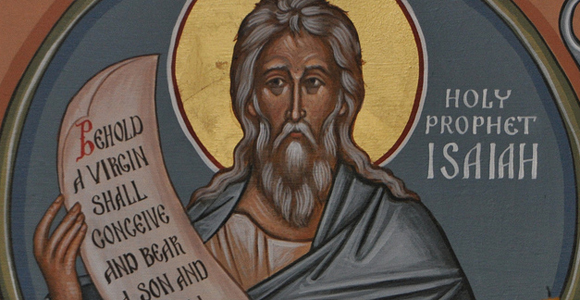
“The spirit of the Lord GOD is upon me, because the LORD has anointed me; he has sent me to bring good news to the oppressed, to bind up the brokenhearted, to proclaim liberty to the captives, and release to the prisoners.” — Isaiah

“Today this scripture is fulfilled in your hearing.” — Jesus

Psalms 76.8-9: 

From the heavens you uttered judgment; the earth feared and was still when God rose up to establish justice, to save all the oppressed of the earth. Selah (Emphasis added.)

HeartGroup Application

1. Too often the Sermon on the Mount has been used by those in Power to keep others under oppression. This is done by sanctifying or “making holy” the position of being oppressed. The logic usually goes, “Why do you want to be rich? Jesus said, ‘blessed are the poor.’” But Jesus wasn’t saying that those who are oppressed by the present arrangement of this world are blessed under that arrangement. Jesus was speaking hope, saying that in this new world that He had come to inaugurate, those who are oppressed by the present arrangement are going to blessed by the changes His new world was about to make.

Again, we are all simultaneously both oppressed and privileged, depending on which aspect of our lives we are looking at. This week I want you to consider in which areas Jesus would say that his radical new world is going to be a blessing to you and in which areas Jesus would look at your privilege and feel “woe” for you. (Luke 6.20-26)

2. Make two lists, one entitled “Blessed” and the other entitled “Woe,” and write out in what areas of your life you are disadvantaged and in what areas you experience privilege.

Pray during this exercise that Jesus wakes you up to the areas of your life where you are still participating in oppression, injustice, and violence. Ask Jesus to give you the courage to stand in solidarity with the oppressed in each of these areas instead.

3. Share what Jesus shows you with your HeartGroup this week.

Till the only world that remains is a world where there is no more injustice, no more oppression, and no more violence, and only love reigns. Keep living in love. Keep seeking first Christ’s radical new world in the here and the now.

I love each of you, and remember: God does too!

See you next week.

Rejected Rejection by Herb Montgomery

pharisees

Jesus said to them, “Have you never read in the scriptures: ‘The stone that the builders rejected has become the cornerstone; this was the Lord’s doing, and it is amazing in our eyes’?” (Matthew 21.42)

First, I want to say a big thank you to all who have been praying for my recovery over the last three weeks. I’m back on my feet now after a pretty tough bout of pneumonia. Thanks for your love, support, prayers, and patience. I really appreciate your concern.

This week, I want to talk about Jesus, social rejection, and the divine rejection of the social rejection that we see in God, revealed through Jesus. This last type of rejection will make more sense as we continue.

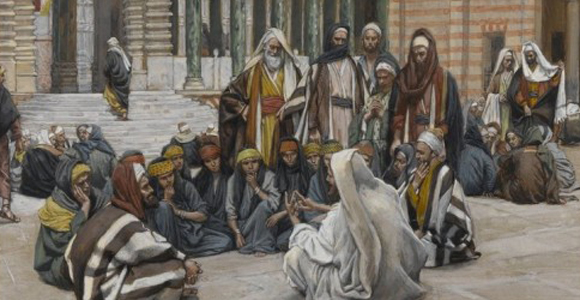
Matthew 21 presents a series of parables that Jesus was sharing with the chief priests and Pharisees on the subject of their religious rejection of others to whom they felt morally superior.

“What do you think? A man had two sons; he went to the first and said, ‘Son, go and work in the vineyard today.’ He answered, ‘I will not’; but later he changed his mind and went. The father went to the second and said the same; and he answered, ‘I will go, sir’; but he did not go. Which of the two did the will of his father?” They said, “The first.” Jesus said to them, “Truly I tell you, the tax collectors and the prostitutes are going into the kingdom of God ahead of you. For John came to you in the way of justice and you did not believe him, but the tax collectors and the prostitutes believed him; and even after you saw it, you did not change your minds and believe him. (Matthew 21.28–32, emphasis added)

There are three points to keep in mind as we read these parables that will enable us to step into their context and receive their full impact.

  1. Jesus stood in solidarity with, and defended those whom the chief priests and Pharisees had judged as morally inferior and had socially rejected.
  1. Jesus’ choice to stand in solidarity with those the chief priests and Pharisees had discarded as “sinners” (Jews living in disobedience to the Torah) also caused the chief priests and Pharisees to reject Jesus as one of them.
  1. God was rejecting the rejection of the chief priests and Pharisees, not only of Jesus, but also of the people who were responding to Jesus, whom He was defending. According to Jesus, God was embracing Jesus and all of these religious rejects and founding a new world beginning with them. In other words, Jesus’ Kingdom was being founded on religious “rejects.”

Follow closely. Jesus said next:

“Listen to another parable. There was a landowner who planted a vineyard, put a fence around it, dug a wine press in it, and built a watchtower. Then he leased it to tenants and went to another country. When the harvest time had come, he sent his slaves to the tenants to collect his produce. But the tenants seized his slaves and beat one, killed another, and stoned another. Again he sent other slaves, more than the first; and they treated them in the same way. Finally he sent his son to them, saying, ‘They will respect my son.’ But when the tenants saw the son, they said to themselves, ‘This is the heir; come, let us kill him and get his inheritance.’ So they seized him, threw him out of the vineyard, and killed him. Now when the owner of the vineyard comes, what will he do to those tenants?”

They said to him, “He will put those wretches to a miserable death, and lease the vineyard to other tenants who will give him the produce at the harvest time.” Jesus said to them, “Have you never read in the scriptures: ‘The stone that the builders rejected has become the cornerstone; this was the Lord’s doing, and it is amazing in our eyes’? Therefore I tell you, the kingdom of God will be taken away from you and given to a people that produces the fruits of the kingdom. The one who stumbles over this stone will be broken to pieces; and it will crush anyone on whom it falls.” (Matthew 21.33–46, emphasis added)

I want to draw your attention to the phrase, “The stone that the builders rejected has become the cornerstone.” This is nothing unique, and certainly nothing new. From the founding of human society, societies have always been built on the rejection of, or scapegoating of, a single victim. Human societies find unity and cohesiveness in joining together against a common “enemy.” This enemy is accused of being responsible for societies stresses and conflicts. It’s the age old, “Us versus Them!” The rejection of a “stone” has always been the “cornerstone” of forming societies. Yet in a very real sense, there is something different about this time. In all the stories of history, legends, and myths, deities are always on the side of those who are doing the rejecting—the rejectors. In fact, the gods are the ones demanding that the victim be sacrificed/rejected! Yet in the Jesus story, the scapegoating mechanism is turned on its head. God, for the first time in all the stories, is in the One being rejected, showing the victims to innocent, over and against those who are endeavoring to found (or in this case preserve) a society on sacrificing, rejecting, a victim. (See Caiaphas’ statement in John 11.50)

In short, according to Jesus, the rejectors were about to be rejected. And this is a first! God, in Jesus, for the first time, is revealed as rejecting their rejection of the rejectors. Those who had been rejected were being taken up by God, shown to be being victimized and objectified, and then used by this same God to pioneer a new way of living life on planet Earth. This new way of doing life will be rooted in equality, justice, restoration, reconciliation, mercy and love. Jesus referred to this new way of orchestrating the world as the Kingdom. For those who were offended by this divine rejection of their rejection, those who endeavored to go against this “amazing,” unique, and original “doing of God,” would find themselves “broken to pieces and crushed.” As some have said, the grain of the universe is love and those who go against this grain receive within themselves the splinters of such a course.

The vineyard was in the process of being taken away from those who had abused and oppressed others through it—those who had chosen to go against the grain of love. Ironically, as those who had been abused and oppressed were actually responding to Jesus and aligning themselves “with the grain” (in a way unrecognizable to the chief priests and Pharisees), the vineyard was now being given to them because they could be entrusted with producing the right kind of fruit.

What does this mean for us today?

Maybe you have also been rejected for a number of reasons. Perhaps you don’t have the proper education. Maybe you don’t have the “privileged” skin color. Possibly you don’t belong to the right “income bracket.” Perhaps you’re not “from here.” Maybe you don’t have the “correct” gender or don’t even find yourself easily fitting within the accepted binary gender categories that society has constructed. Or maybe you have been rejected for possessing what has been labeled as a “non-normative” orientation.

The good news is that it doesn’t matter to God why you have been rejected. You are precious to the God we see in Jesus. To this God, the rejection you have experienced has been divinely discarded itself. It doesn’t matter whether your rejection has been social, political, economic, or religious. You’re the last people on the planet to turn others away because you know how it feels to be abandoned. If you would like to follow Jesus into this new world, remember, He was the original “reject!” This rejected Jesus, “scapegoated” by the religious of His own day, has founded a new world, one that operates very differently, yes, but also founded with “rejects.”

You—come to Him, a living stone, though REJECTED by mortals yet CHOSEN and PRECIOUS in God’s sight, and like living stones [also rejected by others but chosen by God and precious in His sight], let yourselves be built into a spiritual house, be a holy priesthood, and offer spiritual sacrifices acceptable to God through Jesus Christ. (1 Peter 2.4–5)

“The stone that the builders rejected has become the cornerstone.”—Jesus

“The kingdom of God will be taken away from you [the rejectors] and given to the people [the rejected] who produce the fruits of the kingdom.”—Jesus

If you have been rejected, in Jesus, God has rejected your rejection. You are precious to the God we find in Jesus and by this God, you are chosen.

To all the rejects, myself included, Jesus is saying the same thing that we find Him saying over and over again in the four gospels—“Follow Me.”


HeartGroup Application

Matthew ends this series of parables with the statement:

When the chief priests and the Pharisees heard his parables, they realized that he was speaking about them. They wanted to arrest him, but they feared the crowds, because they regarded him as a prophet. (Matthew 21.45–46)

This was the ultimate rejection of Jesus that would lead to His unjust crucifixion by them.

  1. This week, I want you to spend some time sitting with Jesus, contemplating the ways you have been rejected in your life. Write them down. Then I want you to imagine God taking each of one of these “rejections” and personally rejecting each one of them.
  1. Next, I want you to spend time sitting with Jesus, contemplating the ways you have rejected others at certain times in your life. Write them down. Then I want you to imagine God taking each of one of these “rejections” and personally rejecting each one of them as well.
  1. Then this coming week, share with your HeartGroup what Jesus showed you through this exercise.

I receive so many emails with such sad stories of how precious people, made in the image of God, have been rejected, especially by their religious communities. There are many ways in which individuals can be disregarded, not just religiously, but these seem to be the ones I hear from the most. To each of you, remember, Jesus was the original reject. You’re in good company. As a matter of fact, if you have ever felt unwanted by others for whatever reason, you are part of a precious group that Jesus called His tribe.

Wherever this message finds you this week, remember, I love you and God does, too. Keep living in love and loving like Jesus, till the only world that remains is the one where Christ’s love reigns. Now go and enlarge the Kingdom.

I’ll see you next week,
Herb

A Woman, a Ruler and Two Centers

threefish

Then Jesus told them a parable about their need to pray always and to not get discouraged. (Luke 18.1)

This week we are looking at the parable referred to by many as the parable of the unjust ruler and the importunate woman. I want to make it clear from the beginning that we will not look at this parable through a domesticated or conventional “Empire Approved” lens. There are key phrases and clues that cannot be missed, and these phrases tell us explicitly that this is not a parable concerning prayer by those in places of privilege; rather, it is a parable for those who are not merely passively disadvantaged, but who are being actively oppressed in their state of being disadvantaged.

First, here are those phrases and clues:

“A judge who neither feared God nor had respect for people.” – Luke 18.2 (The word for “judge” here does not mean someone who tries a case, but rather a magistrate or “ruler” who presides over the affairs of government.)

“A widow” – Luke 18.3 (Widows in this first century, patriarchal culture were among those who were oppressed by those at the top of the economic privilege-pyramid.)

“I will grant her justice” – Luke 18.5 (What this widow was pleading for was equity and what today would be called social justice.)

“Will not God grant justice to his chosen ones who cry to him day and night?” – Luke 18.7 (This phrase, cry to him day and night, would have harkened Jesus’ listeners back to Israel’s slavery in Egypt, when they also “groaned under their slavery, and cried out. Out of the slavery their cry for help rose up to God” (Exodus 2.23, emphasis added). Within the narrative of Exodus, God is portrayed as saying to Moses, “I have observed the misery of my people who are in Egypt; I have heard their cry on account of their taskmasters” (Exodus 3.7, emphasis added).

This is not a parable about praying over “first world problems.” These are not prayers by rulers or judges or those who receive their preference. This is not a prayer to get a promotion in an already high-paying job, or an “A” at an ivy league school, or that your favorite sitcom won’t get canceled this season. These are prayers from those who cry out to the “Advocate God” of the oppressed and disadvantaged that we see in the Jesus of Matthew, Mark, Luke and John. These are prayers for God to end oppression, violence and injustice against those who are marginalized, mistreated, stereotyped, mischaracterized, and whose plight is ignored. Jesus is saying to these people, keep crying out to God! Don’t give up! This is not a “pray only” parable either. This is a parable where the widow not only prays—she stands up to injustice with her continued prayers. Jesus is saying to the oppressed, “Keep pushing for justice, yes vertically, but also horizontally. And change will come! God is with you. Remember, God is an ‘Advocate God.’ And this God stands in solidarity with you.” Injustice, oppression and violence is a violation of everything that the God we see in Jesus is about. In Jesus we see this Advocate God engaged in a formidable struggle against all oppression, injustice, and violence. As I’ve said so many times before, yes, God loves even the perpetrators of oppression. Yet the God we see in Jesus seeks to overthrow injustice by winning over the perpetrators of injustice, by being the first to stand in solidarity with the oppressed. Yes, this God loves all, yet this God is also seeking to heal all, both oppressed and oppressor. This God is at work to heal the oppressors by setting them free from the systemic evil they themselves are victims of. And this God is seeking to heal those who are being oppressed by putting to right the very injustice that is crushing them.

The greatest proof I can give that the God we see in Jesus is an Advocate God for the oppressed, is the resurrection. Yes, I know that the historical reality of the resurrection is under fire from our scientifically naturalist worldview today. But stop for a moment, and catch the storied truth of the resurrection.

The good news that the early apostles proclaimed was not that someone had been crucified. That happened all the time to anyone who stood up to Roman oppression. Nor was it that someone who had died had come back to life. That, although strange to us today, would not have shocked anyone in the first century. They had all kinds of stories, both Jewish and Hellenistic, of people who had come back post-mortem. What shocked the Jewish and Roman world was that this Jesus, who was deemed a threat to the political, economic and religious privilege-pyramids, whom these systems had joined together in crushing/crucifying, had been chosen by God to stand in solidarity with him, and who had resurrected this same Jesus, and established this Jesus (along with his radical teachings about justice, equity, love, and mercy rather than sacrifice) as Lord. What had been prophesied by the prophets, that God would one day put to right all injustice, oppression, and violence, had now begun in the resurrection of Jesus the “Christ.”

It wasn’t about getting to heaven after one died. It was about turning the world “upside-down” (see Acts 17.6) and placing it right-side up once again.

The resurrection proves that God is not standing in solidarity with political super-powers (“manifest destiny”), nor is God standing within the most exclusive, most holy, central places of religious systems of sacrifice. Rather, the resurrection proves that God was standing with and revealed in the very one who had been crucified by these religious, economic, and political systems.

Yes, there is good in the world worth fighting for and worth saving (see John 3.17). And when we encounter sickness in this world, whether social, political, economic, or religious, the only remedy is to hear the gospel (good news) being proclaimed by the resurrection of this same Jesus who was crucified by these sicknesses.

In John’s gospel, Jesus tells Nicodemus, “Indeed, God did not send the Son into the world to condemn the world, but in order that the world might be [healed] through him” (John 3.17).

The Two Centers

The cross is the center of appeasement-based theology in the hands of those at the top of privilege-pyramids to take the gospel of the oppressed out at the knees. There is a reason why the resurrection of Jesus was the center of the apostle’s gospel in the book of Acts. The resurrection undoes and reverses the unjust act of the cross by systems of oppression. It is this reason, understood by the apostles, that places the resurrection at the center of all rightly-understood systems of liberation theology. Make no mistake, making the cross the center of one’s theological understanding speaks volumes about the character of the God at the heart of that theology. Yet placing the resurrection as God’s response to the crucifixion of Jesus by human hands also speaks volumes about the character of God at the heart of that theology. And both “centers” place their adherents on a trajectory concerning how they treat the marginalized.

It offers much to ponder for this week, for sure.

It’s time to revisit the Jesus story of Matthew, Mark, Luke, and John, as well as the preachings of those in the book of Acts, and abandon conventional, domesticated, “Empire-Approved” systems of interpretation.

The cross is the center of “how to get to heaven” gospels. The resurrection is the center of “how to bring heaven to earth once again” gospels.

May God guide us to hear what the story is really telling us, for the sake of our fellow humanity “crying out to God, day and night, for justice.”

HeartGroup Application

  1. This week I’d like you to go back and reread Matthew 5.1-11 and Luke 6.20-26. Contemplate which end of the privilege-pyramid (top or bottom) Jesus is saying the arrival of his Kingdom “blesses,” reversing their present state, and which end Jesus’ Kingdom will challenge. See if you can outline some of the changes Jesus is outlining for those at the top of our social constructs as well as those at the bottom.
  1. After you have made this outline, spend some time, sitting with Jesus, prayerfully contemplating these differences, and Journal what Jesus shares with you.
  1. Share what you discover with your HeartGroup this upcoming week.

Till the only world that remains is a world where Christ’s love reigns, keep living in love, loving like Jesus.

I love each and every one of you, and remember, God does too.

See you next week,

Herb

The Footsteps of the Prophets by Herb Montgomery

isaiahicon

“Blessed are you when people revile you and persecute you and utter all kinds of evil against you falsely on my account.”—Jesus (Matthew 5.11)

Luke’s version is even more pointed:

“Blessed are you when people hate you, and when they exclude you, revile you, and defame you on account of the Son of Man. Rejoice in that day and leap for joy, for surely your reward is great in heaven; for that is what their ancestors did to the prophets” (Luke 6.22–23; emphasis added).

The first question I’d like to ask is why were the prophets also treated this way?

The Prophets

Take a moment and look at what the prophets actually said and the reasons they were reviled becomes disturbingly clear.

In his judgment of Israel, Amos said:

Thus says the LORD:
For three transgressions of Israel,
and for four, I will not revoke the punishment;
because they sell the righteous for silver,
and the needy for a pair of sandals
they who trample the head of the poor into the dust of the earth,
and push the afflicted out of the way . . .
in the house of their God [the temple] they drink
wine bought with fines they imposed (Amos 2.6–8; emphasis added).


Isaiah spoke these words about Judah and Jerusalem:

Hear the word of the LORD, you rulers of Sodom!
Listen to the teaching of our God, you people of Gomorrah!
What to me is the multitude of your sacrifices? says the LORD;
I have had enough of burnt offerings of rams and the fat of fed beasts;
I do not delight in the blood of bulls, or of lambs, or of goats.
When you come to appear before me, who asked this from your hand?
Trample my courts no more; bringing offerings is futile; incense is an abomination to me.
New moon and sabbath and calling of convocation—I cannot endure solemn assemblies with iniquity.
Your new moons and your appointed festivals my soul hates;
they have become a burden to me, I am weary of bearing them. . . .
your hands are full of blood.
Wash yourselves; make yourselves clean. . . .
learn to do good;
seek justice,
rescue the oppressed,
defend the orphan,
plead for the widow (Isaiah 1.10–17; emphasis added).
And Jeremiah spoke thus against evil kings:

Thus says the LORD: Act with justice and righteousness, and deliver from the hand of the oppressor anyone who has been robbed. And do no wrong or violence to the alien, the orphan, and the widow, or shed innocent blood in this place. . . . But your eyes and heart are only on your dishonest gain, for shedding innocent blood, and for practicing oppression and violence (Jeremiah 22.3, 17; emphasis added).


For Jerusalem, Ezekiel and Micah had these words:

As I live, says the Lord GOD, your sister Sodom and her daughters have not done as you and your daughters have done. This was the guilt of your sister Sodom: she and her daughters had pride, excess of food, and prosperous ease, but did not aid the poor and needy (Ezekiel 16.48–49; emphasis added).


He has told you, O mortal, what is good;
and what does the LORD require of you
but to do justice,
and to love mercy [rather than sacrifice],
and to walk humbly with your God? (Micah 6.8)
What were the prophets known for?

Defending those who were oppressed from those who were in a position of privilege.

The prophets spoke against New Moon festivals, Sabbaths, the Temple, and sacrifice, and they spoke up for those who were oppressed by the religiously pious. This vocal opposition would be enough to get anyone in trouble.

In short, the prophets abandoned their own positions of privilege within Israel and Judah and made room for the voices of the oppressed to be heard. The prophets called those who practiced “holy” or “sacred” oppression, injustice, and violence to listen to the stories of those who were trodden upon. In His sermon on the mount, Jesus calls his followers to do the same.

The question we have to ask next is who was it, do you think, who reviled, persecuted, uttered all kinds of evil against, hated, excluded, and defamed the prophets?


The Privileged Who Feel Threatened

The answer is the same in every era. When men and women speak up for those who are oppressed, those in positions of privilege, practicing their “sacred” oppression, will treat these prophets who give a voice to the oppressed this same way.

The cross and resurrection prove throughout eternity that God stands not in solidarity with those religious systems that crucify others religiously, politically, or economically, but rather with those who are suspended shamefully upon crosses.

This is God. This is the God revealed through Jesus.

Persecution

And as Paul so eloquently wrote, “all who want to live a godly [god-like] life in Christ Jesus will be persecuted” (2 Timothy 3.12).

Make no mistake. If others persecute you, it does not always mean you are doing the right thing. You may just be obnoxious. Persecution does not equal being on the right path. But being on the right path does equal persecution.

The world we live in is comprised of those on the top and those on the bottom, the underdogs. And when you choose to stand in solidarity with the underdogs, you will be targeted by those on top. Again, experiencing persecution doesn’t mean you are doing everything right, but if you are not persecuted, you may need to ask yourself why. Are you fitting in too neatly with those at the top of this world’s pyramids of oppression?

Do not think that you are to go and seek out or try and produce persecution. No, no. But we should abandon our own positions of privilege and call out for the voices and stories of those who are oppressed to be heard. This act alone will ensure that persecution ensues.

This week, when you witness someone being oppressed, whether it’s someone who is poor, or someone who happens not to have the right color of skin, or someone who does not have the “correct” anatomical appendage, or someone whom society has deemed as possessing a non-normative orientation, stand up for them. Call for their stories to be heard, and then get out of the way and let those stories be told.

What will be the result? Ultimately, the result will be a world changed by Jesus. But along the way, you will be, according to Jesus, reviled, persecuted, hated, excluded, and defamed and have all kinds of evil spoken about you by those who have not yet abandoned their own positions of privilege, those who have not yet heard for themselves the stories of those who have been so grossly mischaracterized and wrongly depicted.

It will be scary at first, but have courage. You will quickly find you are not alone. You stand in a long line of those who have gone before—a line filled with martyrs, apostles, and prophets, at the beginning of which stands Jesus of Nazareth.


Peter Gomes

The following paragraph is from Peter Gomes, an American preacher and theologian, about whom it was said that he was, “one of the great preachers of our generation, and a living symbol of courage and conviction.” (Harvard Gazette. 1 March 2011) Peter understood what it meant to walk in the shoes of those who are oppressed for he belonged to at least two communities that experience oppression in our societies—one because of his race, the other because he was gay. Pay close attention to his profound recapturing of Jesus’ Kingdom.

“Good news to some will almost inevitably be bad news to others. In order that the gospel in the New Testament might be made as palatable as possible to as many people as possible, its rough edges have been shorn off and the radical edge of Jesus’ preaching has been replaced by a respectable middle, of which “niceness” is now God. When Jesus came preaching, it was to proclaim the ends of things as they are and the breaking in of things that are to be: the status quo is not to be criticized; it is to be destroyed.” (The Scandalous Gospel of Jesus)


Enemy Love 

Lastly, I would be amiss if I did not close with this reminder.

Right after Jesus pronounces a blessing on those who will create many enemies because they follow Him, Jesus says:

But I say to you that listen, Love your enemies, do good to those who hate you, bless those who curse you, pray for those who abuse you. If anyone strikes you on the cheek, offer the other also; and from anyone who takes away your coat, do not withhold even your shirt. Give to everyone who begs from you; and if anyone takes away your goods, do not ask for them again. Do to others as you would have them do to you. If you love those who love you, what credit is that to you? For even sinners love those who love them. If you do good to those who do good to you, what credit is that to you? For even sinners do the same. If you lend to those from whom you hope to receive, what credit is that to you? Even sinners lend to sinners, to receive as much again. But love your enemies, do good, and lend, expecting nothing in return. Your reward will be great, and you will be children of the Most High; for he is kind to the ungrateful and the wicked. Be merciful, just as your Father is merciful (Luke 6.23–36, #mercyratherthansacrifice).

Remember, we are not called to defeat those who benefit at the expense of others. We are called not to defeat them, but to win them. We are called to put on display the beauty of a world changed by Jesus. We are called to recognize where Jesus’ Kingdom is already at work, whether in principle or by name as well, and honor it. We are also called to inspire those who have not yet encountered and embraced Jesus’ revolution of justice, mercy, and love to rethink everything. We are to call for a reevaluation of the scripts we have been given and by which we currently play the game of life. And, lastly, we are called to challenge oppressive, unjust, and violent ways of seeing God, ourselves, and everyone else around us.

It’s what Dr. Martin Luther King, Jr. called winning the “double victory”:

“I’ve seen too much hate to want to hate, myself, and every time I see it, I say to myself, hate is too great a burden to bear. Somehow we must be able to stand up against our most bitter opponents and say: We shall match your capacity to inflict suffering by our capacity to endure suffering. We will meet your physical force with soul force. Do to us what you will and we will still love you. . . . But be assured that we’ll wear you down by our capacity to suffer, and one day we will win our freedom. We will not only win freedom for ourselves; we will appeal to your heart and conscience that we will win you in the process, and our victory will be a double victory (Martin Luther King Jr., A Christmas Sermon for Peace on Dec 24, 1967).

THIS is what it means to follow in the footsteps of apostles, prophets, and Jesus himself, according to Jesus’ Sermon on the Mount. Certainly there is more at the heart of following Jesus, but there is most definitely not less than standing up for the oppressed.

The time is now. Don’t wait for there to be an easier time, for that time will only come when you are no longer needed. Won’t you take a stand, too?

“If you’re neutral in situations of injustice you have chosen the side of the oppressor.” Desmond Tutu


HeartGroup Application

  1. Spend some time this week contemplating the following words of Jesus:

“The Son of Man must undergo great suffering, and be rejected by the elders, chief priests, and scribes, and be killed, and on the third day be raised.” Then he said to them all, “If any want to become my followers, let them deny themselves and take up their cross daily and follow me. For those who want to save their life will lose it, and those who lose their life for my sake will save it. What does it profit them if they gain the whole world, but lose or forfeit themselves?” (Luke 9.22–25)

  1. As you sit with Jesus this week with this passage, write down what insights, thoughts, questions, challenges, fears, or hopes Jesus may share with you.
  1. Share what you discover this week with your HeartGroup.

Wherever this finds you this week, may you—and may we all—stop striving to ascend to our own positions of privilege and begin, rather, speaking up for those for whose stories have yet to be heard. Till the only world that remains is a world where Christ’s love reigns.

I love each and every one of you. And, remember, God does, too.

See you next week.


God of the Oppressors Vs. God of the Oppressed and the Sermon on the Mount by Herb Montgomery

colonialism

When Jesus saw the crowds, he went up the mountain; and after he sat down, his disciples came to him. Then he began to speak, and taught them, saying: “Blessed are the poor in spirit, for theirs is the kingdom of heaven. Blessed are those who mourn, for they will be comforted. Blessed are the meek, for they will inherit the earth. Blessed are those who hunger and thirst for righteousness, for they will be filled. Blessed are the merciful, for they will receive mercy. Blessed are the pure in heart, for they will see God. Blessed are the peacemakers, for they will be called children of God. Blessed are those who are persecuted for righteousness’ sake, for theirs is the kingdom of heaven. Blessed are you when people revile you and persecute you and utter all kinds of evil against you falsely on my account. Rejoice and be glad, for your reward is great in heaven, for in the same way they persecuted the prophets who were before you. (Matthew 5.1-11)

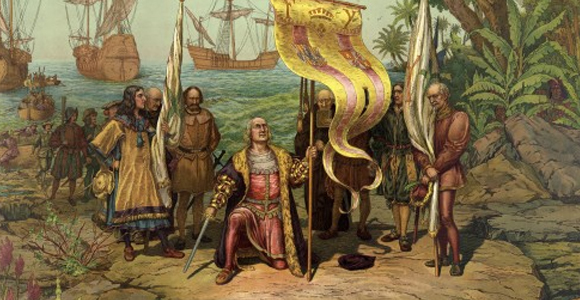
After ten days in Kapolei and two weekends with the HeartGroup there, I’m sitting on a plane, flying back home—unable, once again, to escape my introspections. This time I’m reflecting on the Hawaiians of the Hawaiian Islands, a beautiful culture with rich narratives that I have just been privileged to taste a small part of. I’m also contemplating the Maoris of New Zealand that I had the privileged of briefly learning about this summer while I was in Christchurch. Almost a decade ago now, I remember discovering the warrior people known as the Caribs and the peace-loving Arawaks during the time I spent giving a series of presentations in Trinidad and Tobago. I’m thinking today about American and British colonialism as well as European and American capitalism. My mind then jumps to the Jewish people of the first century under Rome and then further back to the exiled Jews, taken captive and ruled over by the superpowers of their day, such as Babylon and Greece. What about the Hebrews, who served as the sweatshop workers of their day under the Egyptians? Lastly, I think of Abel under the raised fist of Cain.

There has always, for as long as anyone can remember, been a top. There has always been a bottom. There has always been a conqueror and a conquered; always an oppressor, always an oppressed. The schools I attended taught me the historical narratives of those who had “won.” But I can’t help thinking that those who are on the bottom, those who have “lost,” have their narratives too. And if the narratives of the Abels, the Josephs, the Jobs, the Hebrews are whispering anything to us, they are calling us softly to listen to the stories of those who have been conquered, those on the bottom, those not in positions of privilege.

The resurrection, as God’s response over against the unjust crucifixion of Jesus on a Roman cross, testifies that—although Jesus’ God loved both oppressor and oppressed and was seeking to restore them both—this God seeks to accomplish this “restoration of all things” through standing in solidarity with the oppressed over against the oppression carried out by those in positions of privilege.

Yes, the Egyptians had their gods, and so did the Babylonians. And the Greeks had their gods, who would become much more violent versions with different names under Rome. But these were the gods of the conquerors. These were the gods of the people on top. Let me try to make this clear. With the exception of when Israel rebelled by wanting to have a king, the God of the Hebrew narrative is a God not of the superpowers but of the oppressed, the wanderers, the nomads. Historically the European conquerors, too, had their god, just as America has hers. But here is the catch, and I don’t know if you even caught the switch.

A slight of hand has occurred.

In the fourth century, something mysterious took place. But there was nothing truly magical about it. It was a charlatan move, much like the actions of those who stand on stages, waving trick wands and pulling rabbits out of hats. Christianity was subverted by a Roman emperor and wedded to the empire. And I’m not sure we realize what really happened with this. Overnight, the God of the oppressed became the god of the oppressor. The Hebrew narrative of the God who stands in solidarity with those who suffer at the hands of others was subverted. This narrative was now replaced, eclipsed rather, by a god with the same name but of a very different disposition. Now God stood on the side of Rome and conquered, oppressed, and violated through Rome. Think about how those who are oppressed today by the American Empire see America as a “Christian” nation.

The lens you use when discussing “God” makes a difference. Are you contemplating God as the one who is standing in solidarity with the oppressors or the oppressed? When you enter into ontological debates about God, are you asking questions about the existence of the god of the conquerors or the God of those being conquered?

We don’t want our God to be the God of the conquered. We want a strong God, one who is never defeated! But here is where we often miss the point. The God we find in the Jesus story is a God who stands in solidarity with the losers of the “war games” we humans play.

This is a point that many (not all, thank you, Ryan Bell!) of my atheist friends miss. What I’ve encountered, without exception, in every one of my atheist friends is that their atheism is really rooted in a deep concern about matters of justice. Their atheism is simply the expression of a much deeper revolt within themselves against injustice (and the “god” of those who perpetuate injustice). And this must be recognized, acknowledged, and honored! As a Jesus follower myself, I find this hunger and thirst for justice by my atheist friends to actually be in perfect harmony with the ethics I have found taught by the Jesus of the Jesus story (see Matthew 5.6). Yet what many of my atheist friends miss is that most of their arguments against “God” are built on a foundational assumption that the God of the Jesus story is the god of those on top. Dr. Martin Luther King’s “God” and Gandhi’s “God” looked very different from the European-American “Christian” god many of us wrongly believe is really out there. Let me make this clear. I think the atheists are right. The European-American god who stands in solidarity with the superpowers of this planet does not exist. That god is not out there. Saying that doesn’t make me an atheist. I simply agree that the god my friends say isn’t there, really isn’t. It is no wonder that the fruit of the god of the West, the god of the European conquerors, the god of America, given enough time, leaves people hungering and thirsting for justice and wanting nothing to do with god.

The God that we find in the Jesus of the Jesus story is a Divine Parent of us all, oppressed as well as the oppressor. This God is a radically inclusive God who loves all and is seeking to restore all, yet a God who does this through standing in solidarity with those on the bottom of our systems of oppression, seeking to awaken the hearts of the oppressors and to inspire them to escape their systemic injustice and stand in solidarity with the oppressed as well. (This is the story of Saul of Tarsus.)

Let me also say a word about monotheism while I’m here.

Monotheism—within the context of Jews, Christians, and Muslims who are endeavoring to conquer others—looks very different when it champions the supreme and only god of the oppressors than when it portrays the one and only God who stands in solidarity with those being oppressed or conquered. Monotheism (and I also have many friends who are not monotheists) can be one of the most destructive “isms” in the hands of those on top. But for monotheism to be properly evaluated as intrinsically harmful or not, we must ask whether we are talking about a monotheism in the hands of the conquerors who say no other god exists but theirs or a monotheism in the hands in those being oppressed, which gives hope to those being oppressed whispering that what the oppressors call their god is really no god at all. This not about theistic debates; it’s about the god/gods the oppressors are claiming is on their side over against the God those who are being oppressed believe is the only true God, who is actually standing with them even in their position of being oppressed. Today it is pointless to argue about the superiority of your religion or “god” over another person’s if both these religions worship the god or gods of the oppressors.

This leads me to the inescapable conclusion that the “Christian” god of the conquering West is not the God we find in the Jesus story. The “Christian” god that many of us have worshipped all our lives really doesn’t exist.

Again, believing this does not make me an atheist. I simply see a radical difference in the god of the oppressors and the God the Jesus story claimed was really out there and who was actually standing in solidarity with the Abels, the Hebrews, the Jews, the first-century Christians persecuted by both Judaism and Rome, the Anabaptists of the sixteenth century, Hawaiians, Caribs, Arawaks, Maoris (even against the colonial missionaries who carried crosses), native Americans, African Americans, women, the poor, and anyone considered non-normative today.

I also want to add one last thing that I think many people miss. Whatever your theistic beliefs are, I as a Jesus follower have to remind myself continually in our work against injustice that I am not striving for a world where room is made at the top of a pyramid of oppression for more people—people who were once oppressed themselves. No, the God of the Jesus story is not asking those at the top to make room for others at the top. This God is calling those at the top to abandon their positions at the top in order to stand in solidarity with and give a voice to those at the bottom. This God is calling for the entire pyramid of oppression to be disassembled one human heart at a time. This God is asking for the entire edifice to come crumbling down as human beings begin to see that there is no “us” and “them”—only us, sitting side by side around a shared table, brothers and sisters once again.

For those who are interested, I’ve included a few of my thoughts on Jesus’ Sermon on the Mount this week too. This is the sermon that changed my life. It’s the sermon that I believe has the power to heal the world.

At the end of these brief comments I want to try to lay out a project I’m working on. I know that at this stage it is oversimplified and very incomplete. I’m opening a window into my headspace for those who have the courage to take a look inside there. It’s not just our ideas about God that are affected when we see God through the resurrection, standing in solidarity with the oppressed. The gospel, too, is radically impacted. The gospel preached by the oppressors—the powerful, the privileged in European-American colonialism and capitalism—is significantly different from the gospel we find the Jesus of the Jesus story teaching. I’ve included a few blank spaces for you to make your own comparisons. This is a work in progress. In other words, this is not a completed product. It’s not finished. It’s ongoing, and this is a very rough draft. If you have some comparisons that you feel should be added, shoot me an email. I would be most interested in hearing those and possibly adding them to my list.

For those who have already been reading long enough, I’ll sign off.

Keep living in love and loving like Jesus till the only world that remains is a world where Jesus’ love reigns.

I love each of you, and remember that God does too.

My Musings on the Sermon on the Mount

When Jesus saw the crowds, he went up the mountain; and after he sat down, his disciples came to him. Then he began to speak, and taught them, saying: “Blessed are the poor in spirit, for theirs is the kingdom of heaven. (Matthew 5.3)

The poor in Jesus’ day were one of the groups who were considered to be living contrary to the Torah and who were therefore being punished by God. The poor were oppressed and marginalized by the rich. Rather then feeling compassion for the poor, those who were better off simply felt morally superior. Why else would God be blessing them economically while withholding blessing from others? To be poor in spirit simply meant to stand in solidarity, in spirit, with the poor, those who were economically oppressed. This kingdom Jesus had come to establish would readjust how life operates on planet Earth in a way that would be especially good news to the “poor” in the present arrangement. (Jesus’ kingdom of redistribution of resources would be impossibly difficult for the wealthy to accept, but it was good news to the poor.)

Blessed are those who mourn, for they will be comforted. Blessed are the meek, for they will inherit the earth. Blessed are those who hunger and thirst for justice, for they will be filled. Blessed are the merciful, for they will receive mercy. (Matthew 5.4–7)

This kingdom Jesus had come to establish would bless those who were mourning because  of the present distribution. The meek were those who had been trampled on by the powerful and privileged in the present distribution. Those who were hungering and thirsting for justice are those who were being oppressed by the powerful and privileged class.

Blessed are the pure in heart, for they will see God. Blessed are the peacemakers, for they will be called children of God. (Matthew 5.8,9) 

The pure in heart are those who do not allow what they’re suffering at the hands of the powerful and privileged to cause them to resort to impure methods of redistribution. The peacemakers are those who participate in Jesus’ nonviolent way of establishing justice once again on earth.

Blessed are those who are persecuted for righteousness’ sake, for theirs is the kingdom of heaven. Blessed are you when people revile you and persecute you and utter all kinds of evil against you falsely on my account. (Matthew 5.10–11)

Those who stand in solidarity with the oppressed—whether in matters of economics, gender, age (both young and old), race, or orientation—will be persecuted, hated, reviled, and spoken against as evil by the powerful who feel their position of privilege being threatened by Jesus’ kingdom.

Rejoice and be glad, for your reward is great in heaven, for in the same way they persecuted the prophets who were before you. (Matthew 5.12)

The prophets have always called for injustice, oppression, and violence on earth to be made right.

“Is not this the fast that I choose: to loose the bonds of injustice, to undo the thongs of the yoke, to let the oppressed go free, and to break every yoke?” (Isaiah 58.6)

“But let justice roll down like waters, and righteousness like an eternal flowing stream.” (Amos 5.24)

 God of the Oppressors                                 God of the Oppressed

The gospel is first and foremost that “God loves Me” (Me meaning those in a position of privilege). The gospel is the entire Jesus story, which climaxes in the revelation that “this Jesus, whom the oppressors crucified, God has raised back to life, and this Jesus is Lord.”
The gospel is about post-mortem assurance about things like getting to heaven or escaping hell, keeping those who suffer oppression passive looking forward to “bliss” in the afterlife. The gospel is about Jesus’ egalitarian kingdom being restored on earth here and now, healing the world, puting all injustice, oppression, and violence to right (Matthew 6.10).
Focuses on proving the historicity of story details within the Jesus story. Focuses on demonstrating the intrinsic value of the ethical teachings of Jesus.
A private, personal relationship with God that is inwardly focused An ever deepening encounter with God that focuses one outside oneself toward the present restoration
Hierarchical authority structures Mutual egalitarian community
Justice is punitive and was satisfied by Jesus on the cross. Justice is restorative and was initiated, begun, started, commenced, instituted, launched, set in motion, established, founded, brought in, ushered in, introduced once again, and inaugurated on earth by Jesus through the power of his death and resurrection over against the powers of injustice, violence, and oppression.
Has an aversion to justice and focuses on mercy, grace, and forgiveness instead Deeply focused on justice, the restoration of which is promised for the oppressed
Justice is seen as standing in opposition to mercy and love. Justice is the natural expression of mercy and love.
Mercy, grace, and forgiveness are things that we receive from God and that give us post-mortem assurance. Mercy, grace, and forgiveness come from God but are what we are called to show our fellow humans who are oppressing us.
Eschatological focus on the destruction of the world and being a part of an elite, special, privileged group that escapes. Eschatologically focused on a renewed and restored heaven reunited with a renewed and restored earth.
“Fire” is punitive and retributive “Fire” is restorative.
Evangelism focuses on the threat of hell, the reward of heaven, and the love of God in saving humanity from God’s imposed punishment. Evangelism focuses on putting on display the beauty of what the world changed by Jesus and his teachings actually looks like, recognizing and honoring this beauty already at work in some, while endeavoring to inspire those in whom this beauty is not present to join the revolution.
Focused on enemies getting their due (vengence) Focused on enemies being won and restored along with the restoration of justice to the oppressed.
Violence is an acceptable means of maintaining and preserving a position of privilege. Nonviolent direct action rooted in enemy love is the means of saving even our oppressors from systemic injustice.
Salvation means being allowed into heaven by ontological certitude (being certain of what exists and is true and what doesn’t and is not). Salvation is seen as the healing and restoration of this world, which all are invited to participate in.
Human suffering is a huge philosophical problem for a God who is in control. Human suffering is a tangible and formidable enemy that God is at work bringing to an end.
A God who desires sacrifice rooted in sociological scapegoating A God who never desired or required sacrifice but desires us to follow the way of mercy instead (Mathew 9.13; 12.7)
God is love (means something very different for the oppressors) God is love (means something very different for the oppressed)

HeartGroup Application 

1. Spend some time this week sitting with Jesus and contemplating the above chart.

2. Journal what Jesus brings to your mind—other passages, questions, stories, thoughts, and insights.

3. Share with your HeartGroup what Jesus shows you this upcoming week.


The Non-normative Jesus

eunuchicon

His disciples said to him, “If such is the case of a man with his wife, it is better not to marry.” But he said to them, “Not everyone can accept this teaching, but only those to whom it is given. For there are eunuchs who have been so from birth, and there are eunuchs who have been made eunuchs by others, and there are eunuchs who have made themselves eunuchs for the sake of the kingdom of heaven. Let anyone accept this who can.” (Matthew 19:10-12)

This week I want to consider Jesus’ words to his disciples in Matthew 19. But to understand why these words are relevant, we have to go all the way back to a seemingly bizarre statement Moses makes in the book of Deuteronomy. When you see the connection between Deuteronomy 23 and Matthew 19, you will be blown away, just as I was.

“No one whose testicles are crushed or whose penis is cut off shall be admitted to the assembly of the LORD.” (Deuteronomy 23:1)

I’ll bet you didn’t think we would be looking at this verse in this week’s eSight! But this verse is not random, and it’s not marginal. When we explore this verse together with Jesus’ words in Matthew 19, a new and beautiful understanding of Jesus begins to emerge.

The “assembly of the Lord” refers to when Israel assembled for religious ceremonies. Eunuchs (men who had been castrated or were otherwise unable to reproduce) were considered non-normative within this society. Among the Hebrews, the carrying on of a man’s name through his male offspring was the only way to ensure that his name and nation would endure forever. Passing that name down through generations was the ancient Hebrews’ idea of eternal life.

What about the women? When it came to reproduction, ancient Hebrew culture considered the woman little more than an incubation chamber for the baby that was being passed down from the male. I know, I know, extremely patriarchal! At this stage they didn’t have the faintest idea about the zygote being the combination of the female ovum and the male sperm. For the Hebrew, the male seed contained everything needed for a human to be produced. All that was required was the fertile soil (the woman) for the seed to planted in and to grow. It’s no wonder that many women in this culture were treated like dirt!

Being a eunuch within Hebrew society, by birth or otherwise, placed a man in the “non-normative” category. “Normative” simply refers to that which has been established by the majority in a society as normal, or standard. The opposite of “normative,” academically speaking, is the word queer. Today, “queer” too often is used in an offensive and negative sense, typically as a slur toward someone who is non-normative in matters of sexuality or gender. But in an academic sense, the term “queer” carries no negative connotation. It simply refers to something that is non-normative or non-majoritive. For example, in a world designed for right-handed people, left-handedness (a trait my eldest daughter possesses) is non-normative. In matters of dexterity, left-handed people might labeled as dexterously queer. All of this is to say that eunuchs in Hebrew society during the time of Moses were considered non-normative, and therefore were not admitted to the assembly of the Lord. (Maybe my left-handed daughter would have been excluded from the assembly as well!)

Notice what Moses has to say about normativity in this passage from Leviticus.

The LORD spoke to Moses, saying: Speak to Aaron and say: No one of your offspring throughout their generations who has a blemish may approach to offer the food of his God. For no one who has a blemish shall draw near, one who is blind or lame, or one who has a mutilated face or a limb too long, or one who has a broken foot or a broken hand, or a hunchback, or a dwarf, or a man with a blemish in his eyes or an itching disease or scabs or crushed testicles […] that he may not profane my sanctuaries; for I am the LORD; I sanctify them. Thus Moses spoke to Aaron and to his sons and to all the people of Israel. (Leviticus 21:16-24)

What’s fascinating is to observe in the book of Isaiah how God begins to change everything, moving Israel further along a trajectory from where they have been toward what we are about to discover in Jesus.

Do not let the foreigner joined to the LORD say, “The LORD will surely separate me from his people”; and do not let the eunuch say, “I am just a dry tree.” For thus says the LORD: To the eunuchs who keep my sabbaths, who choose the things that please me and hold fast my covenant, I will give, in my house and within my walls, a monument and a name better than sons and daughters; I will give them an everlasting name that shall not be cut off. And the foreigners who join themselves to the LORD, to minister to him, to love the name of the LORD, and to be his servants, all who keep the sabbath, and do not profane it, and hold fast my covenant—these I will bring to my holy mountain, and make them joyful in my house of prayer; their burnt offerings and their sacrifices will be accepted on my altar; for my house shall be called a house of prayer for all peoples. Thus says the Lord GOD, who gathers the outcasts of Israel, I will gather others to them besides those already gathered. (Isaiah 56:3-8)

Here is the question I want you consider. How is God going to give the eunuchs an everlasting name when that, within a Hebrew context, can only be accomplished by producing a long line of male children?

Let’s listen in on a private conversation Jesus had with his disciples and see if we can find the answer.

His disciples said to him, “If such is the case of a man with his wife, it is better not to marry.” But he said to them, “Not everyone can accept this teaching, but only those to whom it is given. For there are eunuchs who have been so from birth, and there are eunuchs who have been made eunuchs by others, and there are eunuchs who have made themselves eunuchs for the sake of the kingdom of heaven. Let anyone accept this who can.” (Matthew 19:10-12)

Who is Jesus referring to when he says, “There are eunuchs who have made themselves eunuchs for the sake of the Kingdom of heaven”? In this context, voluntarily becoming a eunuch did not refer to self-mutilation. Jesus is referring to young Hebrew males who chose to abandon the patriarchal expectations of their society — taking a wife, having children, and propagating the nation of Israel through male offspring — to embrace a life of celibacy instead. Who had done this? Who is Jesus referring to? He was standing right in front of them! Jesus is referring to HIMSELF! He included himself in the eunuchs’ “tribe,” saying, in effect, “I’m choosing to stand in solidarity with you, voluntarily becoming one of you!” The eunuchs would now have an everlasting name, a name that would never be cut off. Moses had excluded them, but now they were being made holy by Jesus’ solidarity with them.

Celibacy is still considered “non-normative” in many of today’s hetero-normative cultures. The cultural pressure for a single person to marry and have children is often immense. But according to Jesus, whether a person is a eunuch by birth, is made so by others, or has simply chosen to live a life of celibacy for the Kingdom’s sake, they have been made not merely acceptable, but holy, special, unique. They have been given a place at Jesus’ table alongside everyone else by virtue of Jesus’ embrace of them…by Jesus’ becoming one of them.

As a side note for those who are non-celibate, you’re included, too. No one is left out.  Jesus is quick to say that choosing a life of celibacy, while still non-normative, no longer holds negative connotations; after all, Jesus was celibate, too. Celibacy is to be strictly voluntary, according to Jesus. Further, only those who have been given the spiritual gift of celibacy are called to be celibate. For those who have not been given this gift, Paul would say, “if they are not practicing self-control, they should marry. For it is better to marry than to be aflame with passion.” (1 Corinthians 7:9)

But let’s get back to this non-normative eunuch, Jesus, who, standing in the prophetic lineage of Isaiah, calls for the radical inclusion of those once excluded under Moses.

Radical inclusion is a trend in Jesus’ ministry. Speaking to Israel, Jesus announces that the favor of God is now available for the Greeks as well. (Luke 4:25-29) Addressing the Jews, Jesus calls for the inclusion of the Romans. (Matthew 5:43-48) With the Pharisees, Jesus calls for the inclusion of Jews not living according to the Torah (i.e., “sinners,” Luke 19:7-9). Addressing the rich and healthy (wealth and health being socially constructed indications of “God’s favor” in Jesus’ day), Jesus calls for the inclusion of the poor, the blind, and the lame. (Luke 14:13-14; cf. Luke 6:20, 24) Addressing men within a patriarchal society (and women with a Stockholm-syndrome like support of partriarchy), Jesus calls for the inclusion of women. (Luke 10:39-41) Jesus calls to all who are benefiting from society’s arrangements to make room for those who are being oppressed. It was this radically inclusive nature of Jesus’ kingdom that led his early followers who were circumcised to begin including the uncircumcised among them as well. (Acts 10:47)

What I want you to ponder this week is what it must have meant for those non-normative eunuchs of Jesus’ day to be embraced by Jesus, to be called His new “tribe.” Just imagine it:  after years of being excluded from the “assembly of God,” they were not merely accepted by their long-awaited Messiah; he had actually chosen to live as one of them. This is the non-normative Jesus, choosing the life of a eunuch as a Hebrew male and Rabbi who refused to marry and have children. This non-normative Jesus chose to stand in solidarity with a group considered non-normative in his day. What did it mean to them that Jesus, through his identification with them, could give them a name that would now last forever?

It is no accident that the first individual conversion story Luke records in the Book of Acts is that of an Ethiopian eunuch. Luke purposely chooses to tell the conversion story of a person who, under Mosaic law, would have been excluded from the Hebrews’ religious assemblies. Luke knows exactly what he is communicating when he begins the many individual conversion narratives of Jesus’ Kingdom with Philip’s baptism of a eunuch.

He commanded the chariot to stop, and both of them, Philip and the eunuch, went down into the water, and Philip baptized him. (Acts 8:38)

Societies today, ours included, can still be divided into the normative/majoritive and the non-normative/non-majoritive. There will always be a majority and a minority. (Again, think of my left-handed daughter.) But when those considered “normative” fail to recognize those considered “non-normative” as their brothers and sisters in Christ, every bit as deserving of a place at Jesus’ table, something monstrously un-Jesus-like is being perpetuated — something that looks very different from the example we are given in the non-normative Jesus. When normativity is wedded to exclusivity it produces hierarchical privilege for the normative and, by definition, an oppressed minority composed of anyone non-normative. When the preservation of normativity is the Moral concern, rather than the deeper non-objectification, non-dehumanization, and anti-degradation of those who are considered non-normative as the Ethical concern, in the name of “standing up for what is right,” the non-normative minority will always be objectified, dehumanized and degraded, becoming themselves the recipients of attempts at being purged from society by the normative majority. This is exactly the opposite of what we see the non-normative Jesus doing with the eunuchs of his day.

HeartGroup Application

1. The early followers of Jesus embraced the radically inclusive nature of Jesus’ kingdom.  I’d like you to spend time this week with Jesus, contemplating Paul’s words in Acts 17:24-31.

“The God who made the world and everything in it, this God who is sovereign of heaven and earth, does not live in shrines made by human hands, nor is this God served by human hands, as though God needed anything, since this God gives to all mortals life and breath and all things. From one ancestor God made all nations to inhabit the whole earth, and God allotted the times of their existence and the boundaries of the places where they would live, so that they would search for this God and perhaps grope for this God and find this God—though indeed this God is not far from every one of us. For ‘In God we [all] live and move and have our being’; as even some of your own poets have said, ‘For we too are God’s offspring.’ Since we [all] are God’s offspring, we ought not to think that the deity is like gold, or silver, or stone, an image formed by the art and imagination of mortals.  While God has overlooked the times of human ignorance, now God commands all people everywhere to [rethink everything we have assumed about God, ourselves and the world around us], because this God has fixed a day on which [the injustice, oppression and violence of this world will be put to right] in justice by a man whom this God has appointed, and of this God has given assurance to all by raising him from the dead.”

2. As you contemplate this passage, journal what Jesus reveals to you through these words.

3. Share with your HeartGroup what Jesus shows you this upcoming week.

Till the only world that remains is a world where Jesus’ love reigns. Keep loving like the sun shines and the rain falls, restoring one human heart at a time.

I love each and every one of you. And remember, whether in today’s world you are considered normative or considered non-normative, God loves you, too.

I’ll see you next week.

The Demoniac, the Crowd and the way of Mercy rather than Sacrifice.

angrymob

Then Jesus asked him, “What is your name?” “My name is Legion,” he replied, “for we are many.” (Mark 5:9)

I must confess that this is one of the most bizarre and difficult sections of the four Jesus narratives. In our naturalistic worldview, most of us struggle to entertain this story long enough to perceive and understand its point. The demonology framework prompts kneejerk reactions in those whose outlook is more scientific. But don’t chuck the story yet. Demonology certainly is present in this story. It points to this story having a very early origin in the Jesus revolution of the first century. When we understand the point of the story and its early dating, we gain a window into what the early Jesus community was really about. It calls us to rediscover this point again for ourselves today. Let’s jump in. This story is found in both Mark 5:1–20 and Luke 8:26–29. We’ll look at Mark’s version.

They went across the lake to the region of the Gerasenes. When Jesus got out of the boat, a man with an evil spirit came from the tombs to meet him. This man lived in the tombs, and no one could bind him anymore, not even with a chain. For he had often been chained hand and foot, but he tore the chains apart and broke the irons on his feet. No one was strong enough to subdue him. Night and day among the tombs and in the hills, he would cry out and cut himself with stones. When he saw Jesus from a distance, he ran and fell on his knees in front of Him. He shouted at the top of his voice, “What do you want with me, Jesus, Son of the Most High God? In God’s name, don’t torture me!” For Jesus had said to him, “Come out of this man, you evil spirit!” Then Jesus asked him, “What is your name?” “My name is Legion,” he replied, “for we are many.”

We cannot miss three details if we are to understand what has taken hold of this man.

1. No one was strong enough to subdue him.
2. He cut himself with stones.
3. Its name was Legion.

Let’s start by putting the puzzle pieces on the table and turn to point number 2 first. This man cut himself with stones. Scholars have seen this as what they call auto-lapidation. Lapidating is the act of pelting or killing someone with stones. What cannot be missed is that the gospels always attribute this activity to a crowd stoning a victim (Matthew 21:35, 23:37; Luke 20:6; John 8:7, 59, 10:31–33, 1:8) What this man does to himself is auto-lapidation or self-lapidation. Self-stoning. Why would this man do this to himself? The answer is found in point number three. Whatever has taken over this man, its name is “Legion, for we are many.” This story fits perfectly with the pattern running through the gospels that it is always the many—always the majority, always the crowd—that engages in this form of capital punishment, in which a group throws stones at a person until the victim dies. This man embodies the crowd’s collective violence. The crowd, the many, is embodied in one person. And this story in front of us is how Jesus delivered this man from legion.

Before we can move on, we must understand point number 1, too. Legion, the crowd, the many within this man, cannot be subdued. It might help to realize that what is true of the crowd many times in the gospels is also true of this man right now. This man embodies the crowd or legion, so in order to understand what’s going on inside him, we have to pause and ask how crowds or the many actually work.

The Mechanics of the Crowd/Many/Legion 

Throughout history, societies have faced moments that threaten their coherence and unity. Scholars have observed that, to keep society from coming apart at the seams in the times of conflict, a strange phenomenon often takes place. A society will regain its unity and solidarity by finding a common enemy around which to unite in blaming for its struggles. The many historically have managed their societal rivalries, competition, and disunity, not by turning their violent tendencies on one another, but by coming together and transforming what would be their violence toward one another into collective violence against an Other. In short, a society finds unity in finding a common enemy.

Collective Violence

Violence in a society becomes collective when it chooses someone all its members can come together against. They find unity in agreeing on who they are against. If violence is not channeled together and directed toward a common enemy (which is the way of sacrifice), the violence will turn on the society itself and will destroy it. More on this in a moment.

The Demoniac 

This man is the embodiment of the crowd (i.e., legion/we are many). And whatever it is inside of this man cannot be subdued. It cannot be bound or chained. Yet again, this man simply contains “the crowd” within one individual. The violence of the crowd cannot be overcome. A crowd can never collectively free itself from its own violence. It can manage, or direct that violence, but it needs someone outside of that community to set it free.  A society, in all actuality, only has three options: a) The society can allow the violence to escalate until it tears apart the society; b) The society can unconsciously but collectively direct its violence against a minority whose absence would least diminish the overall whole, thus restoring unity in action against this minority; or c) Someone from the outside the society (in this story, Jesus) can intervene and remove the violence from the society one person at a time.  This makes perfect sense when laid along side of what we just said about number 2. While the crowd can collectively redirect its violence against an Other,this man is alone, there is no Other, so the crowd inside of him turns the violence on itself. (This is why we see this man cutting himself in auto-lapidation. We’ll see this more clearly in a moment when we get to the pigs.)

To illustrate how we, in following Jesus, become free of this mechanism within our society is exactly why we have this story. What many miss is that what is going on inside this man happens on a larger scale between this man and the society in this region. (Think of the medieval icons of angry mobs carrying pitch forks and flaming torches against a monster.) This region manages its societal rivalries, competition, and disunity (a) not by turning its violence on one another but by coming together and transforming its violence into collective violence against this man (b). Jesus came to create a new humanity (a new crowd, so to speak) that united around mercy (c) instead of sacrifice, mercy and love toward enemies (or Others) instead of common hatred. Jesus came to end humanity’s paradigm of us vs. them. And He began His work of saving this society, turning this region away from the way of sacrifice to the way of mercy, by first rehumanizing (I know that’s not a word; I just made it up) the one the crowd had sacrificed or purged. In this case, the demoniac. Jesus’s actions cause them to fundamentally reassess their entire way of life.

Let’s proceed through the rest of the story and see if we are on the right track.

And he begged Jesus again and again not to send them out of the area. A large herd of pigs was feeding on the nearby hillside. The demons begged Jesus, “Send us among the pigs; allow us to go into them.” He gave them permission, and the evil spirits came out and went into the pigs. The herd, about two thousand in number, rushed down the steep bank into the lake and was drowned. Those tending the pigs ran off and reported this in the town and countryside, and the people went out to see what had happened. When they came to Jesus, they saw the man who had been possessed by the legion of demons, sitting there, dressed and in his right mind; and they were afraid. Those who had seen it told the people what had happened to the demon-possessed man—and told about the pigs as well. Then the people began to plead with Jesus to leave their region.

In this mostly Greek region (Gentile with very few Jews), pigs were a farming commodity. But why do we have this bizarre detail about the pigs running off a cliff? The pigs (animals) become infected with the legion/crowd and the violence that had just been in this man, and with no one against whom to turn that violence (they are just pigs), the herd runs and hurls itself off a cliff. It is self-destruction. It is the crowd/legion that comes out of this man, and goes into these pigs, and throws itself off the cliff. The point? If people are not freed from that which lies at the heart of this demon, the crowd which temporarily finds peace and unity by purging a victim from its homogenous society eventually runs itself off a cliff, just like these pigs. The same demon that causes the crowd to throw stones at others stones/destroys itself if it does not find a victim for the crowd to come together against instead. If not remedied, that which drives the crowd to collective violence against a minority destroys that society in the long run.

Now let’s finish the story.

How did Jesus begin to turn things around in this story?  Jesus began with restoring the one within this narrative the crowd had been collectively against. When Jesus restores this man they had been sacrificing and reintegrates him into society, He threatens the unity and peace the society had found by coming together against this man. He, in effect, turns their way of life, their stability, their worldview, their “sacrifice” on its head. They are forced to see the one they had collectively been sacrificing as a fellow human being, like themselves. Jesus un-objectifies the man. Jesus de-dehumanizes him. Jesus de-degrades him. Jesus lifts this man up and returns him to a place of belonging within the very society that had found unity and coherence by purging him. Jesus challenges the entire arrangement of this society, calling its members to no longer find unity in the practice of societal sacrifice but in coming together in the way of mercy (cf. Matthew 9:13, 12:7; Hosea 6:6).

Do they follow this Jesus? Do they follow this radical social revolutionary?

Sadly, no. Now, they simply find a new sacrifice. They need a new person to purge. They need a new victim through which to find unity by being against. Whom do they choose? You guessed it. Jesus Himself. The way of sacrifice is so ingrained in them that they unconsciously, without missing a beat, simply switch victims, putting Jesus in the place of the man, and go on as if nothing ever changed. They purge Jesus now, instead.

As Jesus was getting into the boat, the man who had been demon-possessed begged to go with him. Jesus did not let him, but said, “Go home to your own people and tell them how much the Lord has done for you, and how he has had mercy [as opposed to sacrifice] on you.” So the man went away and began to tell in the Decapolis how much Jesus had done for him. And all the people were amazed.

The man is sent back to teach this society about the way of mercy, rather than sacrifice. Set free from legion himself, perhaps he can help his society get free of the same demon.  It could be said that the only thing that was wrong with this man was that he had become infected with the crowd.  He had allowed how the crowd defined him to become the way he defined himself as well.  And when he, inside of himself, got free from what was also inside the crowd, he could now go back, “rehumanized,” to lead the community in a better way, the way of mercy.

When people get free of collective violence toward a non-normative minority, (whether in themselves toward others, or within themselves toward themselves) they are not becoming possessed by demons but, in a very real sense, they are being freed from them. THIS is the point of the story.  Embracing someone (or a group) that is accused by the crowd of being demon possessed isn’t to become possessed oneself. It’s called “following Jesus.”  And it is becoming free from the demon (the demon of scapegoating) that is actually possessing the crowd (legion) which was seeking to purge or sacrifice the minority to begin with.

This is my story. I am both the demoniac and the crowd, all in one. As the crowd, I have seen the humanity of the ones I once sacrificed, and it has turned my world upside down. As the demoniac, I have been set free from the legion, or rather, the crowd—the collective violence at the heart of the crowd’s unity—in order to follow the way of mercy instead. I wish I could claim some credit for this transformation, but I did not go looking for it. It was done to me, and for me, by others. Now, I, humbly and repentantly, simply want to bring others with me. The way of mercy truly is the better way. In fact, it’s the way of God.

What would happen if we saw the ones placed on society’s altars as our brothers and sisters? Maybe this is where Jesus starts with all societies that find unity in collective violence against minorities. If this is true, then Jesus’ work today is no different than it was in the gospels. Jesus today calls us to once again see those whom we have labeled indecent, different, other, non-normative, deserving of being purged from within our circles as . . . human. He calls us to embrace the reality that they are our brothers and sisters and have a place beside us at the table, too (cf. Luke 19:9).

“[In the story of the demoniac,] we’re witnessing the birth of an individual capable of escaping the fatal destiny of collective violence.” — Rene Girard, When These Things Begin, Conversations with Michel Treguer

“If you had known what these words mean, ‘I desire mercy, not sacrifice,’ you would not have condemned the innocent.” — Jesus, Matthew 12:7

HeartGroup Application 

1. Where are you still participating with the crowd in sacrificing others? Spend some time this week with Jesus in contemplation of this question, and ask Him to show you if you are sacrificing or scapegoating someone. My 11 yr old daughter recently confessed to my wife Crystal, that she caught herself speaking poorly of a third person to become friends with another. “I think I might have been ‘scapegoating’ mom, and I don’t want to do that.”

Who might it be for us? Maybe it’s another family member we must join in and be against in order to fit in with the rest of the family. Maybe it’s someone at the office whom everyone hates, and we feel we must join in the collective disdain and ridicule. Maybe it’s at church where, in order to fit in, we feel pressured to label someone as less than a child of God, less than our fellow brother or sister. Or maybe it’s someone within society who we feel deserves retribution, not redemption. People we feel deserve punitive justice instead of justice that restores to them a humanity of which, in our hearts, they have been deprived. Whoever it is, ask Jesus to show you, and He will.

2. Ask Jesus to show you how He thinks and feels toward those being sacrificed. Invite Him to help you see them the same way He does, and then ask Him to give you the courage to follow the way of mercy, rather than sacrifice.

3. Share with your HeartGroup what you experience this week.

Till the only world that remains is a world where love reigns, where love is shed as indiscriminately as the sunshine and the rainfall. The new creation has come. Let us enlarge its radically inclusive and restorative perimeter one human heart at a time.

I love each and every one of you, and God does, too.

See you next week.

Part 3 of 3 – Jesus and the Living Water

womanatwell

Jesus and the Living Water

Part 3 of 3

Jesus said to her, “Go, call your husband, and come back.” (John 4:16)

Stop, and consider.

A woman comes for water every day in the middle of the day, instead of the early morning when she would be with the rest of the women in her town.

Why?

In a society where women found their place beneath men, some women found themselves lower still. This woman was held in lower esteem than even her female peers. Why? This woman had a story.

She had been married five times. Try to consider this not from the perspective our gender-egalitarian culture today but from the patriarchal social constructs of her time. Remember that marriage then was in some regards similar to marriage today, but within first-century Judaism, the social construction of marriage was significantly different. Women belonged to their husbands as little more than property. This was most apparent in divorce. Women could not divorce a man, but men, in this male-dominated hierarchical construction of marriage, could divorce a woman, under the Torah for any reason they so choose. Granted, a woman could not be passed back and forth between husbands, but her present husband could pass her to another if for any reason he deemed her no longer desirable (for faults as simple as burning the food or being less desirable than younger options).

This woman whom we find this day at the well had been sent away by five men. She had been told five times, “You are not desirable. You are not wanted.” We are not told what her present arrangement was, but suffice it to say, she was with a man now simply so that she could have some type of existence in that culture that required her to be connected to a man.

Jesus does not hold her responsible for any of this. There is no “go and sin no more” talk between then. There is no “love the sinner hate the sin” mantra that Christians today are so famous for touting. There is simply the understanding that this woman has been the victim of a marriage institution gone completely wrong. Yes, it was monogamous, but it was no more than serial monogamy. The kind of marriage this woman had experienced only served to objectify, dehumanized, and degrade women to a status lower than men.

Next, we encounter Jesus’ offer to her of “living water.”

What Jesus offers this woman would answer her heart’s desperate cry to love and be loved: a water that would so satisfy her basic, inmost needs that it would not only fill the deep void insider her but overflow into a beautiful force toward others, flowing from her as a source of healing for others.

However, there was a catch. When she responds favorably and asks Jesus for this water, He cannot simply give it to her. No, the water Jesus offers this woman can be only experienced within the context of complete honesty and authenticity. She must come to a place where she is herself, regardless of what the other Torah–observing women might say. If she is going to truly experience what Jesus extends to her, she must be given a safe space with Him to be who and what she is, no longer hiding, even if that means facing her past of begin repeatedly told, time after time, there was something wrong with her.

Jesus draws her into this safe space.

“Go get your husband.”

The woman scrambles. ‘My husband?’ she thinks. ‘There’s something different about this man in front of me, yes, but the last thing I want this strange Jewish man to know is how many times I have been rejected, labeled as unwanted, sent away by one man after another. I know what I’ll say.’

“I have no husband,” she says.

Jesus, with a look that subtly tells her that she can trust Him, says, “I know. I know you’ve been married five times, and the man you’re with now is just keeping you around.”

There is something different that she sees in this man’s eyes.

She changes the subject, though. Jesus will bring it back around.

What is Jesus saying to this woman?

The same thing He is saying right now to you, too.

“My love is not blind. I know everything about you there is to know. My love is not diminished by this knowledge. I love you AND I already know everything there is to know about you. Honestly, I knew you before you even did—even the things you are still in denial about. I know everything there is to know about you, and My offer to you is still on the table.”

We do not need water that will leave us thirsty (conditional love). We need the living water for which we were made. We must not settle for less. We must have the water that satisfies the deepest human thirst. We need Jesus’ living water of unconditional love, a love in which we are simultaneously fully known and fully embraced, loved and accepted. A love that knows all there is to know about us and loves us all the more still.

Who are you reading this right now? What are you hiding? What are you not being honest about, not with others but with yourself and possibly with God? Would you like this living water, too? Then it is time to enter the dangerous honesty of this radically inclusive Kingdom Jesus came to bring. Whatever you are hiding, He won’t turn away from it, and He won’t turn you away, either. You might feel like you have to come to the well at midday to protect yourself from others’ opinions, but you don’t have to with Jesus. As a matter of fact, He is already at the well right now, waiting for you to arrive.

In the past two decades, I have met many people who have come to a place where they can be honest with God about who they are. Some I find to be still hiding. Others are very much on this journey of deep introspection. All these stages are okay. What Jesus would have us all know, first and foremost is that, regardless of who we are, we don’t have to hide from Him. His love is unconditional. He already knows, even before you do, and His offer is still on the table. His hand still extends to you a cup. Are you thirsty for this water? Come. Drink. You will never be the same again.

The lady at the well did not fit in well with the religiously valued, normative social constructs of her day, either. Look at how Jesus relates to her. If you hear nothing else, hear Jesus’ words to you right now:

“My dear daughter, my dear son, I already know everything about you there is to know. And I’m still here. I won’t abandon you. I love you. I’ve come to extend to you, too, the invitation to a world where worship on ‘this mountain’ or ‘that mountain’ is irrelevant. I’m offering you a way into a radically different world, with a river of living, wet, soul-thirst-satisfying, radically inclusive love, not just for you but also, through you, to all those around you who were made for this kind of water, too.”

Do you have the courage to be honest with Jesus?

The first step is to believe that Jesus really does give us space to be honest without the fear of losing Him. The next step is to believe what Jesus said to Philip: “If you have seen Me, you’ve also seen God” (cf. John 14:7–10).

HeartGroup Application

1. This week, I want you to spend some time in contemplation with Jesus. What might you be hiding? Consider if there remains in you a door to that most private room of your heart that you have kept locked.

2. Invite Jesus into this, whatever it is. Watch what He does next. Journal what He shows you.

3. In the context of Jesus’ encounter with the woman at Jacob’s well, share what Jesus shows you with your HeartGroup this upcoming week.

Keep living in this love. Allow it to also flow out to others around you until the only world that remains is a world where Christ’s love reigns.

I love you guys.

See you next week.