Baltimore, Black Lives Matter, and Jesus

BY HERB MONTGOMERY

images-3Do not suppose that I have come to bring peace to the earth. I did not come to bring peace, but a sword.Matthew 10:34

Before you imagine that Jesus is endorsing taking up a sword here, understand that he’s describing a sword raised against himself and his followers for calling for a change in the status quo. Those benefitting from the current social order would raise their swords against the changes Jesus came to make. If we simply keep reading, Jesus implores his followers not to take up a sword in response to others, but to instead embrace the cross:

“For I have come to turn ‘a man against his father, a daughter against her mother, a daughter-in-law against her mother-in-law—a man’s enemies will be the members of his own household.’ Anyone who loves their father or mother more than me is not worthy of me; anyone who loves their son or daughter more than me is not worthy of me. Whoever does not take up their cross and follow me is not worthy of me. Whoever finds their life will lose it, and whoever loses their life for my sake will find it.” (Matthew 10:35-39, emphasis added.)

The nonviolence Jesus taught here would create disruption. As Dr. Martin Luther King, Jr. wrote, peace is not the absence of conflict but the presence of justice. Jesus’ teachings on nonviolence not only included passive noncooperation; they also included nonviolent direct action. Nonviolent direct action disrupts the status quo, the domination system. It confronts oppression, yet at the same time seeks to win oppressors away from their systems of oppression.

“Nonviolent direct action seeks to create such a crisis and foster such a tension that a community which has constantly refused to negotiate is forced to confront the issue. It seeks so to dramatize the issue that it can no longer be ignored.” —Nonviolent direct action, Letter from a Birmingham Jail

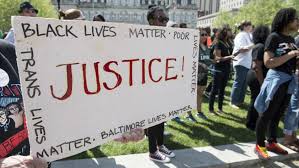
IMG_0339This past weekend I had the privilege of traveling to Baltimore with my daughter Emarya to participate with many others in a rally against Police Brutality. Some stand in solidarity with #blacklivesmatter and others stand in solidarity with #policeofficersmatter, yet most should be able to agree that police brutality is dehumanizing and damaging both to officers and to community members.

Emarya and I left home at 5 a.m. on Saturday morning to embark on a four-and-a-half hour journey to the lawn outside of Baltimore City Hall. We arrived just before lunch, and, after a quick bite to eat, we grabbed a parking place and Emarya’s poster, and began our four-block hike to the rally.

My experience at the #blacklivesmatter rally in Baltimore took me right back to the Jesus story. Allow me to recount that narrative for a few minutes.

Jesus shut it down.

The Temple stood as a domination system of oppression toward the poor. The system sacrificed those who were innocent for the benefit of those in power. The Presence had long departed this system that demanded the sacrifice of innocents. Yet the cursing of the fig tree in Matthew and Mark, which marks the end of the Temple, is more than the end of Jerusalem as the city of the “elect” and more than the end of animal sacrifice in religious worship.

Through this story, Matthew and Mark are whispering to us about the end of a way of life founded on sacrifice.  This end began with Jesus’ exposure of the sacrificial system in the Temple, and his uncovering of a larger reality where we see that it is the marginalized, disinherited and subjugated who are the actual innocent victims of the slaughter. The Temple in Jesus’ day not only promoted the way of sacrifice, but placed it at the very heart of Jerusalem’s religion and worship. (When we add Divine affirmation to any system of oppression, the abuse becomes decisively compounded.) Jesus had come to bring an end to domination systems’ way of life here on Earth, and he initiated the commencement of an entirely new, radically different way of life. Jesus announced a radically new social order that he referred to as “the kingdom.” Though it looked nothing like any kingdom that had ever existed throughout history, it was not imperial. Jesus’ new social order took the form and shape of a shared, heterogeneous table.

The rest of the Jesus story flows from cause to effect. Jesus’ nonviolent direct action in the Temple leads to his ultimate arrest by the Temple Police. Jesus is then subjected to multiple trials from the Powers that benefit from the way of life that his kingdom threatens to take away. These three sacrificial systems, which we will cover in a moment, unite to crucify Jesus in a supreme act of injustice. But then the injustice of the Domination Systems is overturned and conquered by the resurrection of Jesus, the glorifying of him as the founder of a new healed world.

The resurrection marks the end of all domination systems that demand the sacrifice of innocent victims for the benefit of the masses. It doesn’t matter whether the domination system is political, represented by Pilate. A political domination system depends on violence against political enemies and a “religion of war” in which the present generation is sacrificed, like lambs to the slaughter, to sustain the belief that citizens are worthy of the sacrifices of past wars. It doesn’t matter whether the domination system is religious, represented by Caiaphas. A religious domination system is rooted in fear of divine repercussions. Adherents are threatened if those deemed as “sinners” are not shunned, marginalized, scapegoated, and ultimately sacrificed to maintain the favor of God or the gods. And it doesn’t matter whether the domination system is economic, represented by Herod. An economic domination system, driven by greed, sacrifices the poor at the bottom of society’s pyramid structures to maintain the lifestyle of the few positioned at the top (see Luke 6:20, 24).

The story of the Resurrected One shows that the presence of God is not found in the most exclusive “holy places” belonging to those “dirty rotten systems” as Dorothy Day called them (see Matthew 27:51; Mark 15:38; Luke 23:45). The Jesus story teaches us that the Presence truly dwells in the ones shamefully lynched on the orders of the united, threatened Powers-that-be. And the story of the Resurrected One proclaims the beginning of a whole new world in which we need not fear the consequences of our nonviolent engagement against those political, religious, and economic systems and powers, engagement rooted in transformative love for both the oppressed and the oppressors. We stand in the victory of Christ over each of these domination systems, a victory that has already been won. We are people standing in the light streaming from the empty tomb, and we are following the Resurrected One.

Seen in their own context, the stories of Jesus’ nonviolent direct action, arrest, trial, execution by crucifixion, and victory through resurrection converge to produce a worldview paradigm-shift. This shift was too significant and too exposing for political, religious, and economic systems based on violence, fear, and greed to tolerate.

The story of the Resurrected One offers the same challenge for us today. The resurrection invites each of us to align our own stories with the story of Jesus, to cleanse Temples, and, if need be, to embrace our crosses to expose and disarm the dominations systems of our day.

Yes, Jerusalem was teetering on the precipice of destruction in her relations to Rome. But Jesus wasn’t arranging deck chairs on the Titanic. He was offering Jerusalem the chance to participate in a whole new way of life and a different future from the events of A.D. 70. When we follow Jesus in our world today, we’re not arranging deck chairs on the Titanic either. God did not send the Son into the world to condemn the world, but that the world through him might be healed. And this is true of us as well.

If we would simply be open to learning how to recognize and then speak the truth about the systemic evils of oppression, violence, fear, and greed, a new awareness of, and an honesty about, could lead to a decided action toward change.

Mahatma Gandhi, Dr. Martin Luther King, Jr., and many more, far from seeing Jesus’ actions in the Temple as contradicting nonviolence, saw in his actions the first step of nonviolent direct action. Jesus shut it down. Nonviolent direct action is, at minimum, is a three-step process. First, the systemic oppression must be confronted. Second, wait for the violent response that the domination system metes out when it feels threatened. Third, bear that violent response with enemy-transforming love to awaken those who perpetuate the system and who, by perpetuating the injustice, tie their own victimhood to systemic evil.

Gandhi, King, and others saw in Jesus’ nonviolent direct Temple action hints for how we can and should engage the domination systems of our own day. Each follower of Jesus is called to engage as well. Whether we drive out livestock and overturn money-changers’ tables (Jesus), tear up a passport in South Africa or lead a salt march in India (Gandhi), or join sit-ins, freedom rides, and marches in the white, evangelical, “Christian” South (King), the Jesus story calls us to align our stories with the story of Jesus: to embrace and even to subvert our “temples,” to face, if need be, a cross, and if so, also a resurrection. The Jesus story calls us to act redemptively and transformatively toward those who benefit from the current structure and systems even when they mock, threaten, insult, accuse, and hate us for engaging them. We are to respond transformatively as we name or expose the injustice of the present systems and display the radical whole new world rooted in and centered around Jesus’ teachings. His story whispers to us that a new world is here, if only we have eyes to see it.

The Resurrection of Jesus is God’s endorsement of Jesus, his teachings, his critique, and his way. When we participate in nonviolent direct action as a method of transforming our world, again, we are simply aligning our stories with the Jesus in the Temple, putting on display, come what may, the truth that a new world has arrived. Again, we stand in the Victory of Christ over each of these domination systems—a Victory that has already been won. We are people standing in the light streaming from the empty tomb, following the Resurrected One.

Last weekend, we followed him to Baltimore City Hall

While at City Hall, I quickly saw there a broad spectrum of people who were also taking part in the events of the day. Folks came from the Black Panthers and the Nation of Islam to those who self identified as disciples of Dr. Martin Luther King, Jr., and everyone in between.

I want to say, upfront and unequivocally, that I was blessed by everyone I met at this rally. And it was a paradigm-shifting experience for me. What struck me most was not that I was a white life in the midst of many black lives, but that mine was a lower-middle-class life immersed in a world where so many precious lives were fettered to inner city poverty.

Racism and economics go hand in hand in America. We live in the shadow of a capitalist system that has been fueled by racism and enforced by militarism. Today, it is different, but not wholly corrected. Think of it in terms of Hasbro’s game Monopoly. 

During the Reconstruction era in America, Jim Crow laws significantly limited how much and how easily black people could compete in the game of capitalism. Not only has black life still not fully recovered from those limitations, but, from what I witnessed in Baltimore, the limitations themselves have also not been fully corrected. Today, for many black lives to escape inner city poverty, they have to possess a higher than average level of talent in areas such as sports, music, entertainment, general academics, or medicine. There are artificial limitations still placed on their ability to play the game, imitations that I simply never have to face. Those who live daily in the desperation of trying to survive while trapped in inner city poverty will live in ways that those in middle and upper classes simply cannot understand.

Before last weekend, I knew the intersection of race and economics in theory. And then Saturday submerged me in a community where I witnessed people still experiencing the reality of an economic system where race is a significant factor.

It was through watching these people that Jesus’ liberation work for the poor clicked for me.

Jesus’ work for the poor is the ideal point for us to start applying Jesus’ gospel to the lives of all those who are disinherited by our domination system today. Whether it be in matters of race, gender, or orientation, Jesus’ systemic change, his good news to the poor, is where we must begin.  As James Cone wrote, “Accordingly any understanding of the Kingdom in Jesus’ teachings that fails to make the poor and their liberation its point of departure is a contradiction of Jesus’ presence.” (God of the Oppressed.)

In other words, if our gospel is not first and foremost systemic good news for the poor—fatally undermining all other forms of discrimination—then we have to at least wonder whether our Jesus is the same Jesus in the story. It’s not enough to enable black lives, women’s lives, and LGBTQ lives to advance in a “dirty rotten system.” It is not enough to enable all with the same opportunity to thrive in the status quo of haves and have-nots. Jesus was not preaching equality in regards to equal “opportunity” for all. Jesus’ new social order is one where there are no more haves and have-nots, where the last are the same as the first, and where those who gather much share with those who gathered little. The system is not to be cleansed. It is to be dismantled. The status quo is not to be simply critiqued. It’s to be deconstructed. Jesus didn’t cleanse the temple and its way of sacrifice, he ended it. 

On my way home from the march, I picked up a copy of Howard Thurman’s Jesus and the Disinherited. This was the book that MLK took with him when he travelled and read from before each march.

What I began to see as I stood in the midst of America’s disinherited last Saturday was that Jesus was not someone from the upper or middle class who chose to help the poor. There is a world of difference in picturing Jesus as the helper OF the poor and a Jesus who WAS poor. He WAS the disinherited. He emerged out of the very people I was standing in the midst of. These were his roots.

The significance of seeing Jesus as one of the disinherited can’t be overestimated. This shift breathes new life into his teachings and their practical implications for how we can follow Jesus nonviolently, confronting and transforming domination systems in our day. Jesus was not lecturing the upper and middle class on how they should help the people beneath them. Jesus spoke to his disinherited peers and equipped them with the means to subvert the entire system.

Yes, this was good news to those the present system left poor, hungry, and weeping. Jesus’ message was also deeply troubling to those benefiting from the present system, who didn’t want things to change.

Broderick Greer tweeted this statement this week: “If your ‘gospel’ isn’t good news to people mourning state-sanctioned police violence and the loss of black life, then it’s not the gospel.”

And I could not agree more.

The Spirit of the Lord is on me, because he has anointed me to proclaim good news to the poor. He has sent me to proclaim liberation for the slaves, and recovery of sight to the blind in order to set the oppressed free. — Jesus (Luke 4.18)

HeartGroup Application

1. This week I want you to take time each day contemplate the following statement:

“Righteous wealth can only exist where no one is in need.”

2. Journal any thoughts, questions, agreements and disagreements, or insights you have as you reflect each day.

3. Share your notes with your HeartGroup and discuss them this upcoming week.

Till the only world that remains, is a world where Love reins.

I love each of you.

I’ll see you next week.

rtx1b9xz

The Last Shall Be the Same as the First and the First the Same as the Last

BY HERB MONTGOMERY

But he answered one of them, I am not being unfair to you, friend. Didnt you agree to work for a denarius? Take your pay and go. I want to give the one who was hired last the same as I gave you. Dont I have the right to do what I want with my own money? Or are you envious because I am generous? So the last will be first, and the first will be last.”  (Matthew 20:13-16)   

12345It’s good to be back!  At the end of last month, I found myself needing to take a break for a little self-care.  I had just completed giving 27 presentations to three separate audiences within nine days.  I appreciate the patience of each of you.  I’ve missed you!  Let’s dive in this week.

I want to begin by asking you to experiment with me.  Let’s, for the sake of experimentation, just for a bit, NOT spiritualize everything Jesus said about money and economics.  Not spiritualizing Jesus’ teachings on money enable us to gain deep insights into Jesus’ new alternate society that we are simply prevented from seeing when we spiritualize it all.

I also want to define the word denounce.  To denounce means to “publicly declare to be wrong or evil” (New Oxford American Dictionary); its synonyms include condemn, criticize, attack, censure, decry, revile, vilify, discredit, damn, reject, proscribe, malign, rail against, lay into, formally castigate, expose, betray, inform on, incriminate, implicate, cite, name, and accuse (Oxford American Writer’s Thesaurus). A denouncement can also be a public accusation or reporting (Wikipedia).

In Matthew 11:20, this version of the Jesus story tells us that “Jesus began to denounce the towns in which most of his miracles had been performed.”  What did this look like?  What form did Jesus’ denouncements take?  They come to us in the same form as the denouncements of the Old Testament prophets.  They come in the pronouncement of a “woe.” In the very next verse (Matthew 11:21) we find “Woe to you, Chorazin! Woe to you, Bethsaida!” Eerdmans Dictionary states that “In the New Testament ‘Woe’ functions as prophetic denunciation.”  Jesus is standing in his prophetic lineage in his use of language here.

Yet what I want us to contemplate this week is another denouncement Jesus made.  This denouncement is made in Luke’s Jesus story, chapter 6:

“But woe to you who are rich, for you have already received your comfort.  Woe to you who are well fed now, for you will go hungry.  Woe to you who laugh now [as opposed to mourn over the present social order], for you will mourn and weep.  Woe to you when everyone speaks well of you, for that is how their ancestors treated the false prophets.” (Luke 6:24–26)

Let’s back up and look at the big picture.  Jesus had just pronounced a blessing (the opposite of a denouncement) on the opposite group.  Remember, Jesus is not saying that there is something “righteous” about being poor.  He is saying that for those whom the present social order has left poor, hungry and morning, the changes Jesus had come to make were especially favorable.  The alternate human society Jesus was inviting all to join would be a blessing for those who were poor under the present system and, at a bare minimum, be problematic for those benefiting from the present system.  But we will talk about that in a moment. Let’s look at the two groups first.

“Looking at his disciples, he said: ‘Blessed are you who are poor, for yours is the kingdom of God.  Blessed are you who hunger now [as a result of the present system], for you will be satisfied.  Blessed are you who weep now, for you will laugh.’” (Luke 6:20–22)

“But woe to you who are rich, for you have already received your comfort.  Woe to you who are well fed now, for you will go hungry.  Woe to you who laugh now, for you will mourn and weep.” (Luke 6:24–25)

Jesus is doing two things.  First, yes, he is proclaiming that the new social order he is teaching is good news for those who are presently in the position of being “last” and at least problematic for those who were presently “first,” benefitting from the present system.  Second, he is indicting the rich.  There is no way around it.  To understand the logic of this, this planet and its resources are not infinite.  It provides enough for every person’s needs, Gandhi once said, but not every person’s greed.  I understand the “opulence” for everyone argument, but the resources of this earth simply do not work that way.  If someone is hoarding more than he or she needs, someone else is going without what he or she needs. (Think of the truth of the Hebrew manna story; everyone had what he or she needed because those who “gathered much” shared with those who “gathered little.”)  To say that Jesus was putting forth an alternate society seeking the equal distribution of earth’s resources so that each person could have what he or she needed was good news to the poor.

“The Spirit of the Lord is on me, because he has anointed me to proclaim good news to the poor.” (Luke 4:18)

What does this mean? At minimum, it means that if our Jesus is not first and foremost systemic good news for the poor, we have to at least wonder if our Jesus is the same Jesus as the one in the story.

Jesus’ new economic teachings also have something to say about debts that had been incurred under the present system.  All debts are to be cancelled!  This, too, is good news to the debtors and problematic for creditors.  But remember, Jesus’ goal is equality, not just in opportunity, but in result.  What Jesus is announcing is the never-practiced Hebrew tradition of “Jubilee,” during which all debts were to be forgiven.

“And forgive us our debts, as we also have forgiven our debtors.” (Matthew 6:12)

This was hard news for those economically benefiting from the present system.

“Indeed, it is easier for a camel to go through the eye of a needle than for someone who is rich to enter the kingdom of God.” (Luke 18:25)

The idea that there was a gate called a “needle” that camels had to get down on their knees to enter and was difficult to enter but not impossible has long been debunked by scholars.  That’s a made-up story.  What Jesus is saying is that it’s impossible for the rich to enter Jesus’ new alternative society here on earth because fundamental to this new society’s core is a sharing of one’s superfluous riches with those who have less.  At its core, Jesus’ new alternate society is a divestment of and a redistribution of the riches of the dominant class with the aim of equality.

Notice how this played out in the Corinthian church:

“Our desire is not that others might be relieved while you are hard pressed, but that there might be equality. At the present time your plenty will supply what they need, so that in turn their plenty will supply what you need. The goal is EQUALITY.” (2 Corinthians 8:13–14)

The reason the rich cannot enter is not an imposed reason but an intrinsic one.  The first step for the rich in following Jesus is a divestment of their riches.  It’s making the rich un-rich.  It’s alleviating the poverty of the poor through sharing those riches, not, as some claim, making all people poor but equal.  Jesus taught the rich, “Go, sell your possessions and give to the poor, and you will have treasure in heaven. Then come, follow me.” (Matthew 19:21)

This was not an isolated occurrence only privately applied to this specific person.  This was a staple of Jesus’ words to all who were rich:

“But seek his kingdom, and these things will be given to you as well. Do not be afraid, little flock (Jesus’ alternate society), for your Father has been pleased to give you the kingdom.  Sell your possessions and give to the poor.  Provide purses for yourselves that will not wear out, a treasure in heaven that will never fail, where no thief comes near and no moth destroys. For where your treasure is, there your heart will be also.” (Luke 12:31–34)

This is exactly why the very first expression of following Jesus in the book of Acts was manifested in Jesus-followers’ selling their properties and giving to anyone who was in need.

“Those who accepted his message were baptized, and about three thousand were added to their number that day.  They devoted themselves to the apostles’ teaching and to fellowship, to the breaking of bread and to prayer.  Everyone was filled with awe at the many wonders and signs performed by the apostles.  All the believers were together and had everything in common.  They sold property and possessions to give to anyone who had need.” (Acts 2:41–45)

When the wealthy young man heard this, it was too much.  “He went away sad, because he had great wealth.  Then Jesus said to his disciples, ‘Truly I tell you, it is hard for someone who is rich to enter the kingdom of heaven [new alternative society, here, now].’” (Matthew 19:22–23)

I want to juxtapose this statement from Jesus, that it is “hard” for those with wealth to enter into Jesus’ beautiful alternative community, with the statement of Matthew’s Jesus just eight chapters earlier:

“Come to me, all you who are weary and burdened, and I will give you rest.  Take my yoke upon you and learn from me, for I am gentle and humble in heart, and you will find rest for your souls.  For my yoke is easy and my burden is light.” (Matthew 11:28–30)

What can’t be missed is that Jesus is saying if the present system has caused you to not be at ease and not be surrounded by riches but to be “weary,” “heavy laden,” and in need of “rest,” you will find entering Jesus’ alternate society “easy.” It is a blessing!  But if you are one presently benefiting from the current system, Jesus unmistakably states that you’re going to have a harder time embracing Jesus’ teaching on economics.  Entering into this alternate society centered in the teachings of Jesus is impossible on your own and only possible with God (see Matthew 19:26).

Again, why is it so “hard?” It is hard because Jesus is not selling the American definition of “equality.”  Jesus is not simply offering equality as a matter of “opportunity.”  Jesus is calling for a system which creates equality in results as well.

This is the point in the story at which Jesus tells of the workers who arrived at the end of the day but were paid the same as those who had been there all day:

“But he answered one of them, ‘I am not being unfair to you, friend.  Didn’t you agree to work for a denarius?  Take your pay and go.  I want to give the one who was hired last the same as I gave you.  Don’t I have the right to do what I want with my own money?  Or are you envious because I am generous?’  So the last will be first, and the first will be last.’” (Matthew 20:13–16)

This, again, was good news to the last.  It was at least problematic for those who were first.

Gandhi is one of the many in history who have experimented with Jesus’ teachings on equal pay.  There are two books that Gandhi states had a bigger effect on his life and thinking than any other books he read.  The first was Leo Tolstoy’s The Kingdom of God Is Within You.  The second was John Ruskin’s Unto The Last.  Gandhi, in his autobiography, states that this second book crystalized for him three truths.  In the words of Gandhi himself:

1. The good of the individual is contained in the good of all.

2. A lawyer’s work has the same value as the barber’s, inasmuch as all have the same right to earn their livelihoods from their work.

3. The life of labor, e.g., the life of the tiller of the soil and the handicraftsman, is the life worth living.

Gandhi embarked, from Ruskin’s book (the title of which was taken from our featured text this week: “I desire to give unto the last the same as I give to the first”), on an experiment called the Phoenix Project, in which everyone was paid the same amount regardless of the job they did.  The sense of community and mission this produced is breathtaking if one takes the time to read about it.  Everyone worked for the mission; they looked at each other as equals.

We all know how Hasbro’s Monopoly game ends.  Gehenna, in the Old Testament prophet’s sense, may be unavoidable. Jesus is offering a way to life—an alternate, beautiful community.

There are two narratives we can live by:

Narrative 1: Scarcity – Anxiety – Competitive Accumulation – Stockpiling/Hoarding – Violence

Narrative 2: Abundance – Confidence – Cooperative Sharing – Generosity – Peace

Narrative 1 involves believing that there is not enough for everyone’s needs and allowing the anxiety that belief produces to drive you to a life of accumulating stockpiles that you must protect with violence.  The other narrative involves believing that there actually is enough for everyone’s needs to be met if we share and cooperate.  We can subscribe to a narrative of confidence rather than anxiety, of generosity rather than hoarding.  And rather than producing stockpiles one needs to protect with violence, a shared mutuality that produces peace arises.

The least we can do is begin to be honest about our narratives.

I’ll close this week with the words of Leo Tolstoy.

“I do not say that if you are a landowner you are bound to give up your lands immediately to the poor; if a capitalist or manufacturer, your money to your workpeople; or that if you are Tzar, minister, official, judge, or general, you are bound to renounce immediately the advantages of your position; or if a soldier, on whom all the system of violence is based, to refuse immediately to obey in spite of all the dangers of insubordination.

If you do so, you will be doing the best thing possible.  But it may happen, and it is most likely, that you will not have the strength to do so.  You have relations, a family, subordinates and superiors; you are under an influence so powerful that you cannot shake it off; but you can always recognize the truth and refuse to tell a lie about it.  You need not declare that you are remaining a landowner, manufacturer, merchant, artist, or writer because it is useful to mankind; that you are governor, prosecutor, or Tzar, not because it is agreeable to you, because you are used to it, but for the public good; that you continue to be a soldier, not from fear of punishment, but because you consider the army necessary to society.  You can always avoid lying in this way to yourself and to others, and you ought to do so; because the one aim of your life ought to be to purify yourself from falsehood and to confess the truth.  And you need only do that and your situation will change directly of itself.

There is one thing, and only one thing, in which it is granted to you to be free in life, all else being beyond your power: that is to recognize and profess the truth.”

The Kingdom of God Is Within You

HeartGroup Application

This week for our HeartGroup Application, I want to recommend to you the book The Kingdom of God Is Within You by Leo Tolstoy.  You can download a copy free of charge at amazon.com.

1.  Dedicate some time each day to reading and contemplating what you are reading.

2.  Journal your thoughts, feelings, questions, and insights.

3.  Spend some time in your HeartGroup this upcoming week discussing what you are reading.  In other words, process some of what you’re reading out loud with others.  Jesus’ teachings were never meant to be understood or applied in isolation but with “one another.”

Together we can make a difference.  Together we can learn to recognize and participate in Jesus’ alternate society, the beloved and beautiful community, centered around a shared table.  It is a beautiful community.

Keep living in love until the only world that remains is a world where Love reigns.

I love each of you, and I’ll see you next week

IMG_0332


The Seven Last Sayings of Jesus; Part 9 of 9

Part 9 of 9

by Herb Montgomery


The Gospel of an Unstoppable Liberation

Wooden Rosary

“We tell you the good news: What God promised our ancestors he has fulfilled for us, their children, by raising up Jesus.” (Acts 13:32-33)

I want to end this series on the seven last sayings of Jesus, not on Jesus’ execution by the domination systems of his day, but with the reversal and undoing of that execution by the resurrection. This is what the early church proclaimed as the gospel.

Notice that the early church did not preach that Jesus had died to pay a divinely demanded penalty so that you can go to heaven instead of hell when you die. It was not that Jesus had died, but that Jesus had been executed and that his execution had been reversed. Remember that the great Hebrew hope was not of one day becoming some disembodied soul in some far distant heaven. No. The hope of the Hebrew people, that which had been promised to their ancestors, is that the Messiah would come and put right all oppression, violence and injustice.

Salvation, to the early church, was liberation from oppression. And this had been accomplished by God’s resurrection of the one who had been executed by their oppressors.

Notice the following passages.

“And we bring you the good news that what God promised to our ancestors he has fulfilled for us, their children, by raising Jesus…. Let it be known to you therefore, my brothers, that through this man forgiveness of sins is proclaimed to you.” [Liberation and a New Social Order] (Acts 13:23-38)

You that are Israelites, listen to what I have to say: Jesus of Nazareth, a man attested to you by God with deeds of power, wonders, and signs that God did through him among you, as you yourselves know—this man, given to you according to the definite plan and foreknowledge of God, you crucified and killed by the hands of those outside the law. But God raised him up, having freed him from death, because it was impossible for him to be held in its power…. This Jesus God raised up, and of that all of us are witnesses…. Therefore let the entire house of Israel know with certainty that God has made him both Lord and Messiah, this Jesus whom you crucified.” (Acts 2:22-36)

The God of Abraham, the God of Isaac, and the God of Jacob, the God of our ancestors has glorified his servant Jesus, whom you handed over and rejected in the presence of Pilate, though he had decided to release him. But you rejected the Holy and Righteous One and asked to have a murderer given to you, and you killed the author of life, but God raised him from the dead. To this we are witnesses.” (Acts 3:12-16)

Let it be known to all of you, and to all the people of Israel, that this man is standing before you in good health by the name of Jesus Christ of Nazareth, whom you crucified, but whom God raised from the dead. This Jesus is ‘the stone that was rejected by you, the builders; it has become the cornerstone.’” (Acts 4:10-11)

“The God of our ancestors raised up Jesus, whom you had killed by hanging him on a tree. God exalted him at his right hand as Founder and Healer that he might give repentance to Israel and forgiveness of sins.” (Acts 5:30-32)

“We are witnesses to all that he did both in Judea and in Jerusalem. They put him to death by hanging him on a tree; but God raised him on the third day…. He is the one ordained by God as LIBERATOR of the living and the dead. All the prophets testify about him that everyone who believes in him receives forgiveness of sins through his name.” (Acts 10:36-43)

The good news was not that Rome had executed someone or that someone had died. That happened all the time. The good news was that this Jesus, whose teachings offered such radical hope for a transformed world, and who had been executed by the systems his teachings threatened, had been brought back to life. This Jesus had triumphed over the religious, political and economic systems of their day, for his execution had been reversed!

In this great reversal, a new world had begun. Those systems, even the religious one that had claimed to house “God” at its heart, had been exposed, shamed and shown to be what they truly were.

The Presence was not found to be with them, but with the One they had shamefully suspended on a Roman cross.

What I want you to notice is that what liberates us, what “saves” us, for the early church, was not Jesus’ execution, but his resurrection, the undoing and reversal of Jesus’ execution by the powers, but the solidarity of The Sacred (i.e. “God”), The Divine, not simply with Jesus, but will all that had been, or would be the recipients of Oppression.

“And having disarmed the powers and authorities [i.e. religious, social, economic, and political oppression], a public spectacle of them was made, triumphing over them by him.” (Colossians 2:15)

The Sacred Dream of the Divine is of a different world, here and now, where everybody has enough, not as a product of charity, but as a result of the way the world is put together. The present way of assembling the world has been exposed and shamed by the way it executed Jesus. And it has been rendered impotent. The power by which the present systems subordinate others–using “the fear of death” and the threat of being executed at the hands of the present domination systems, what I call the “do what we say, or else” system–has been triumphed over and made of no more consequence. Through Jesus’ execution by the powers and then being resurrected by The Divine, Jesus has liberated “those who all their lives were held in slavery by their fear of death.” (Hebrews 2:14-15)

Why Do I Love Easter?

It’s not because of its co-opted pagan roots of celebrating fertility and the rebirth of spring, though I genuinely appreciate both. It’s because this is the one time Christianity remembers, though I think many have forgotten what it means, why Christianity, as a revolution (as opposed to a religion) came into being.

The story of Matthew, Mark, Luke and John is of an itinerant teacher from prophetic lineage (just like the prophets of old), who travelled the countryside giving a passionate indictment of the religious, political, economic and social systems of his day and putting on display the beauty of a world assembled in the form of a shared nonhomogenous table where every voice is valued and every story heard. A world where we all, from the varied experiences of life that we each represent, learn together how to integrate our differences into a coherent and meaningful whole.

The old order of things was to be deconstructed. Both the voiceless minorities that had been marginalized to the fringes of their society and the voiceless masses that had been oppressed were to find space at this new shared table. Transformed oppressors and the liberated oppressed  were going to have to learn how to sit beside (neither above nor below) one another, recognizing each other as the image of God, both children of the same Divine Parents, welcomed to the same family table.

This was good news to the outsiders, the disadvantaged and the dispossessed. THIS was the gospel! But to insiders, and those in top positions of privilege in the current domination system (the Pharisees, the Priests and the Scribes), this was seen as anything but “good news.”

Jesus’ nonviolent confrontation and disruption of the system in the Temple (Jesus shut it down) was the last straw. Who did he think he was? They had had enough. The priestly aristocracy and the Pharisees combined efforts to manipulate the economic systems of Herod and the political system of Pilate to create a cooperative act of lynching this radical named Jesus.

The torn veil in the temple [1] revealed the Sacred was not dwelling in the most holy places of those institutions, as they claimed. No, the Divine, as was mentioned previously, was dwelling in the One shamefully suspended on a Roman cross at the hands of those combined domination forces. [2]

THIS is the good news: Liberation has come. And it is a liberation that is unstoppable. Yes, for those placed in the position of “last” by the present system this is good news, as they learn how they are to be treated as those who had arrived “first.” And for those who had arrived “first,” well, it is at least problematic as they discover they will now be treated equally with those who had arrived “last.” The point is that each person will be “paid the same,” as the parable teaches, or treated simply as equal. [3]

This liberation could not be stopped. And I dare say, it cannot be stopped today.

They tried to kill it. But even that didn’t work.

I want to close this week with Mark’s telling of the resurrection. Very early versions of Mark’s manuscript ended at Mark 16:8. I want to highlight the value of those manuscripts. Notice the open-ended way that these Jesus stories would have concluded.

“When the Sabbath was over, Mary Magdalene, Mary the mother of James, and Salome bought spices so that they might go to anoint Jesus’ body. Very early on the first day of the week, just after sunrise, they were on their way to the tomb and they asked each other, ‘Who will roll the stone away from the entrance of the tomb?’ But when they looked up, they saw that the stone, which was very large, had been rolled away. As they entered the tomb, they saw a young man dressed in a white robe sitting on the right side, and they were alarmed. ‘Don’t be alarmed,’ he said. ‘You are looking for Jesus the Nazarene, who was crucified. He has risen! He is not here.’” (Mark 16.2-6)

Then Mark’s gospel ends with:

“Trembling and bewildered, the women went out and fled from the tomb. They said nothing to anyone, because they were afraid.” (Mark 16:8)

What is the unspoken point Mark is endeavoring to make? What is the impression he is trying to leave?

Just as Luke’s gospel would later do, Mark is whispering, “Why do you look for the living among the dead? He is not here; he has risen! Yes, those in charge killed him—but they couldn’t stop him. They crucified him and buried him in a rich man’s tomb. But imperial lynching and a tomb couldn’t hold him. He’s still loose in the world. He’s still out there, still here, still recruiting people to share, to participate in his mustard seed subversively planted in the garden, his leaven placed within the dough, his pearl of great price revolution toward a radically new social order that he called ‘the Kingdom of God’—a transformed world here and now.”

What Mark is whispering to us is the good news that yes, they killed our Jesus, but… it’s… not… over. This liberation is unstoppable, for it possesses the solidarity of The Divine.

“You killed the author of this way of life, but God raised him from the dead.” — Peter; (Acts 3:15)

HeartGroup Application

  1. This week as Easter is approaching for the West, take a moment and contemplate what the resurrection actually means for us. Lots of people have been killed for standing up against the status quo. Lots of people have suffered for attempting to dismantle the status quo. But Jesus was one with whom the Divine stood in solidarity and brought back to life.
  2. I want you, as you are contemplating the resurrection and its meaning, to also ponder what it means to follow this resurrected One. What is the most important thing you could be doing right now to further the work of healing, restoration, transformation, liberation and redemption that this Jesus began here on earth?
  3. Share what you discover with your HeartGroup.

I want to thank each one of you who has checked in each week for this nine-part series. It is my prayer that you have been inspired and encouraged to put on display, as a community, the beauty of what a world changed by that radical Jesus looks like. And who knows? It may do just that. It may change the world.

I love each of you dearly. And for those of you who will be celebrating Easter this coming weekend, The Lord Is Risen! He Is Risen Indeed!

Keep living in love, loving like Jesus, ’til the only world that remains is a world where Love reigns.

I’ll see you next week.


1. “The curtain of the temple was torn in two from top to bottom.” (Mark 15:38)

2. “God was in Christ, reconciling the world…” (2 Corinthians 5:19)

3. “For the kingdom of heaven is like a landowner who went out early in the morning to hire workers for his vineyard. He agreed to pay them a denarius for the day and sent them into his vineyard. About nine in the morning he went out and saw others standing in the marketplace doing nothing. He told them, ‘You also go and work in my vineyard, and I will pay you whatever is right.’ So they went. He went out again about noon and about three in the afternoon and did the same thing. About five in the afternoon he went out and found still others standing around. He asked them, ‘Why have you been standing here all day long doing nothing?’ ‘Because no one has hired us,’ they answered. He said to them, ‘You also go and work in my vineyard.’ When evening came, the owner of the vineyard said to his foreman, ‘Call the workers and pay them their wages, beginning with the last ones hired and going on to the first.’ The workers who were hired about five in the afternoon came and each received a denarius. So when those came who were hired first, they expected to receive more. But each one of them also received a denarius. When they received it, they began to grumble against the landowner. ‘These who were hired last worked only one hour,’ they said, ‘and you have made them equal to us who have borne the burden of the work and the heat of the day.’ But he answered one of them, ‘I am not being unfair to you, friend. Didn’t you agree to work for a denarius? Take your pay and go. I want to give the one who was hired last the same as I gave you. Don’t I have the right to do what I want with my own money? Or are you envious because I am generous?’ So the last will be first, and the first will be last.” (Matthew 20:1-15)


The  Seven Last Sayings of Jesus; Part 8 of 9

Part 8 of 9

by Herb Montgomery


Wooden RosaryIt Is Finished

“When Jesus had drank the sour wine, he said, ‘It is finished.’ Then he bowed his head and gave up his spirit.” (John 19:30)

The parallels between John’s telling of the Jesus story and the Hebrew creation narrative of the first few chapters of Genesis are unmistakable. As I shared last week, John is reframing the Jewish creation story, using Jesus, now, as the Christian’s origin story of a brand new world.[1]

When all of the parallels between Genesis 1 and John’s Jesus story are lined up, Jesus’ dying words, “It is finished,” become revolutionarily radical. What John is whispering to us is, “new creation.” In Jesus’ teachings, a new world has begun! (See last week’s eSight here.)

As we have often said in this series, Jesus’ death is the result of his nonviolent confrontation with the current domination system of his day, and his announcement that a new social order had arrived. This is a new world where those who are poor as a result of the way the present world is arraigned will be the first to be blessed. Where those who mourn as a result of the present order will laugh, those who are hungry will be fed. Yet, if we stop to pay attention to John, economic changes are not the entirety of the liberating work of Jesus’ teachings. In other words, certainly liberation for the economically oppressed of this world’s present social order is where the Jesus narratives begin. Jesus’ story is about no less than economic liberation. What John is telling us next, though, in his resurrection narrative, is that economic liberation is simply the starting point. Jesus liberation for the poor [2] is the launching pad. Following Jesus is about no less than “good news to the poor,” and it is so much more about liberating all who are oppressed, whether in matters of gender, race, and even today, orientation. Follow John’s logic.

John moves next to the desire of the religious aristocracy for Jesus’ body to be taken down from the tree. Then two very wealthy men, who would have belonged to this aristocracy, abandon their place to privilege to come out in solidarity, now even more so after his execution, with this Jesus.  It is Joseph of Arimathea and Nicodemus who are caring for Jesus’ corpse. Do not miss the importance of these details. This is John’s demonstration of social movement among two of the economically rich away from their wealth to embracing Jesus’ new world, which begins with a bias for the poor. Then John immediately moves from economic liberation to gender liberation.

In John’s telling, Mary Magdalene comes to the tomb early on the first day of the week. Where the first story of the old Hebrew creation narrative is a story where women become blamed for the entrance of “sin” into this world, forever labelling women as the first to be deceived, John begins the new world with the woman being the first to be enlightened, the first to believe, the first to proclaim the message of a risen Jesus. The first work of John’s resurrection narrative is to liberate women from subservience to men. It is not by accident that women play the superior role in John’s resurrection story. The women believe and are bold, while the men are scared and doubtful. (If any of us men are offended by this, welcome to what women have endured from the telling of the Genesis story for two millennia now.)

This means becoming the first to see Jesus, the first to embrace the reality of his resurrection, is now given a duty by Jesus himself. Jesus sends her forth as an Apostle (“one who is sent”) to the other apostles, “Go to my brothers and say to them, ‘I am ascending to my Father and your Father, to my God and your God.’” (John 20:17)

Have you ever wondered why the resurrection story features women as those who “get it,” while the men are deeply struggling? It’s not by accident and John knows exactly what he is doing.

It would not be long before those of the Jesus movement would have to wrestle also with matters of race, ethnicity, and nationality, at least within their own social context.

“God has shown me that I should not call anyone profane or unclean.” – Peter (Acts 10:28, emphasis added.)

“In that renewal there is no longer Greek and Jew, circumcised and uncircumcised, barbarian, Scythian, slave and free; but Christ is all and in all!” – Paul (Colossians 3:11)

“Can anyone withhold the water for baptizing these people who have received the Holy Spirit just as we have?” – Peter (Acts 10:47)

“There is no longer Jew or Greek, there is no longer slave or free, there is no longer male and female; for all of you are one in Christ Jesus.” – Paul (Galatians 3:28)

What we see, therefore, is that although the Jesus story is not about less than economic liberation for the poor, it is certainly about more than that also. It’s about liberation from all that oppresses. Remember, the great Hebrew hope was not of one day becoming some disembodied soul in some far-distant heaven. It was of a time when Messiah would come and set right all injustice, oppression, and violence here on this earth. It was of a time when the Hebrews’ “Eden” would be restored. And just as the Hebrew “Eden” began with Elohim announcing, “It is finished,”[3] John’s new world, rooted in and centered around the teachings of Jesus, begins with Jesus crying out, “It is finished” as well.

The Jesus narratives dismantle a world arranged by pyramids of privilege where some are subordinated for the opulence of others. The Jesus narrative breaks down circles of exclusion where hard lines divide “them” from “us,” marginalizing those we deem as “other” and even in certain cases going beyond marginalization to extirpation. It’s a new world, not characterized by pyramids and circles, but by a shared table, where, regardless of economic status, gender, race, or sexual orientation, all are welcome to share their stories as we all, in our endeavors to follow this Jesus of the early Jesus community, learn to integrate all the varied forms of the Divine’s creation, as well as diverse experience of life into a meaningful and coherent whole. (Maybe I should do a future eSight series titled Pyramids, Circles and a Shared Table.)

Where does this leave us now though?

This new world does not come without a price.

Peter Gomes in his book, The Scandalous Gospel of Jesus, states, “When the gospel says, ‘The last will be first, and the first will be last,’ despite the fact it is counterintuitive to our cultural presuppositions, it is invariably good news to those who are last, and at least problematic news to those who see themselves as first . . . Good news to some will almost inevitably be bad news to others. In order that the gospel in the New Testament might be made as palatable as possible to as many people as possible, its rough edges have been shorn off and the radical edge of Jesus’ preaching has been replaced by a respectable middle, of which ‘niceness’ is now God. When Jesus came preaching, it was to proclaim the ends of things as they are and the breaking in of things that are to be: the status quo is not to be criticized; it is to be destroyed.”

This is why Jesus emphasized loving one’s enemies, seeking to win one’s enemies rather than simply overcoming them. Those benefited by the present social order (think people like me, white, male, cisgender, straight) will find the embrace of Jesus’ new world problematic at best.

Jesus is careful to add to the list of changes he is going to make, a blessing on the “hated.” “Blessed are you when people hate you, and when they exclude you, revile you, and defame you on account of the Son of Man. Rejoice in that day and leap for joy, for surely your reward is great in heaven; for that is what their ancestors did to the prophets” (Luke 6: 22–23). Who is it that would hate those promoting this new social order? Those who have everything to lose by its arrival. It must be remembered, when one is hated for turning the present world upside down [4], we are standing in the lineage of prophets who did not call these changes charity, they called it justice.[5]

Jesus would pay the price of losing his life for confronting the present social order of things. And the servant is not greater than the master. Jesus virtually said, “If you belonged to the present social order, then they would love you as their own. But because you do not belong to the present arraignment, but I have chosen you out of it for a new social arraignment—therefore the present social order hates you. Remember the word that I said to you, ‘Servants are not greater than their master.’ If they persecuted me, they will persecute you.”[6]

And this is where the purpose of this series comes in.

Yes, Jesus was lynched for the changes he had come to make. This new world was his pearl of great price for which he would give up everything. He was the seed that must go into the earth and die in order to produce much fruit. His life, teachings, death, and resurrection would be the mustard seed planted in the soil that would subversively replace the present order of things. This was his passion, that the “earth” would be like “heaven.”[7] His teachings were the leaven that would permeate the entire dough. And although he would lose his life for these teachings, the resurrection would vindicate his life and teachings, showing for all time that the Divine stands in solidarity, not only with Jesus, but with all who have been the oppressed by the injustice and violence of the “present age.” The resurrection is the first morning of the new world. It is the undoing and reversing of the execution of Jesus by the domination systems of the present order. It is the vindication of the world whose arrival Jesus had come to announce. And we need not fear the consequences of our embracing this new world too. At the center of our lives is a narrative, not of old creation, but of a new. We are not people of a Hebraic “fall” in the old stories of Genesis. We are children of the resurrection, which is not Jesus’ alone, but ours as well.

But we will get to all of that next week as we conclude this series.

For now, let’s remember,

Acts 13:32–33 – “We bring you the good news that what God promised to our ancestors, he has fulfilled for us, their children, by raising Jesus.”

Acts 17:18 – “He was telling the good news about Jesus and the resurrection.”

1 Corinthians 15:14 – “If Christ has not been raised, then our proclamation has been in vain.”

2 Corinthians 5:17 – “Therefore, if anyone is in Christ, the new creation has come: The old has gone, the new is here!”

HeartGroup Application

This isn’t theory. It’s not spiritualizing the lessons. It’s intensely practical.

This week I want you to take the progression of Liberation (from the poor, to gender, to race) of the early Jesus community and go further in our day. Each generation is called to follow Jesus, further up and further in. There are two passage I want you to contemplate this week:

“God has shown me that I should not call anyone profane or unclean.” – Peter (Acts 10:28, emphasis added.)

“Can anyone withhold the water for baptizing these people who have received the Holy Spirit just as we have?” – Peter (Acts 10:47)

  1. I want you to hold these two passages in your heart and sit down sometime this week and watch the documentary Seventh Gay Adventist. This is a documentary produced by some dear friends of mine. What I can attest to personally in my own experience over the last two years, is that I too, like Peter of old, have witnessed the Holy Spirit being received by dear Christians who also self-identify as belonging to the LGBTQ community. Just sit down and watch the documentary, for me. My friends have offered you, as a follower of RHM, something special. You can download a FREE Deluxe HD Digital version (the one that is normally $9.99) using the coupon code: watchfreeRHM. You can access it here, select Deluxe Version, $9.99 and enter the code. You can also read all about the film and what others are saying about it here.

2. After you have finished watching it, journal any insights, questions, thoughts, or feelings you may have. Then go back and reread this eSight with these glasses on and see what new insights Jesus gives you in regard to carry forward his work of liberation into Jesus’ new world in our lives today.

3. Share what you experience this week with your HeartGroup.

Easter is coming up for Western Christianity. (For Eastern Christianity, it is a week later.) What marks the greatest contradiction within Christianity today, for me, is celebrating the Divine act of resurrection, vindicating the liberating work of Jesus for this world, while we still leave a marginalized and oppressed group still outside in the cold. Regardless of how one interprets the teachings of the Torah, Jesus’ new world, as we see in Matthew, Mark, Luke, and John, trumped Torah in matters of economics, gender, and race, too. A new world is coming, characterized by a shared table where we all discover what it means to sit together and share side by side. And in fact, for those who have eyes to see it, this new world has already, subversively, begun.

I’m still praying for your hearts. Praying that as we lead up to the narrative element of Jesus’ resurrection, we all may be able, together, to move through the portals of the tomb to Jesus’ restored, transformed, healed, and liberated new world.

Keep living in Love, till the only world that remains is a world where Love reigns.

I love each of you.

Next week we finally arrive at what all of the Jesus narratives (Matthew, Mark, Luke, and John) speak of as Jesus’ resurrection and the good news it announces.

I’ll see you next week.


1.  Genesis 1 begins with the phrase, “in the beginning . . .” So does John: “In the beginning . . .” (John 1:1). In Genesis 1 there are seven days of creation. In John’s version Jesus’ life is divided up and told with seven “signs.” Genesis 1’s narrative of the physical creation of the world climaxes with Elohim, meaning “It is finished.” So John’s telling of the Jesus story climaxes as Jesus cries out over his restored (new) creation with the words, “It is finished.” As Genesis 1 has Elohim resting on the Sabbath day, so Jesus rests from his work of restoration in the tomb on the seventh day. As the narrative of Genesis then moves quickly into a garden with a woman being the first to be deceived, John’s gospel moves quickly into another garden with a woman being the first to be enlightened, becoming an apostle to the apostles.

2.  Luke 4:18 – “The Spirit of the Lord is upon me, because he has anointed me to bring good news to the poor.

3.  Genesis 2:1–3 – “Thus the heavens and the earth were finished, and all their multitude. And on the seventh day God finished the work that he had done, and he rested on the seventh day from all the work that he had done. So God blessed the seventh day and hallowed it, because on it God rested from all the work that he had done in creation.”

 4.  Acts 17:6–7 – “When they could not find them, they dragged Jason and some believers before the city authorities, shouting, ‘These people who have been turning the world upside down have come here also, and Jason has entertained them as guests. They are all acting contrary to the decrees of the emperor, saying that there is another king named Jesus.’”

5.  Amos 5:24 – “But let justice roll down like waters, and righteousness like an everflowing stream.” Matthew 5:6  – “Blessed are those who hunger and thirst for righteousness, for they will be filled.” Matthew 6:33 – “But strive first for the kingdom of God and his justice, and all these things will be given to you as well.” Matthew 5:10 – “Blessed are those who are persecuted for justice’s sake, for theirs is the kingdom of heaven.” (Justice in these passages, remember, is restorative and transformative justice, not punitive or retributive.)

6.  John 15:19–20 – “If you belonged to the world, the world would love you as its own. Because you do not belong to the world, but I have chosen you out of the world—therefore the world hates you. Remember the word that I said to you, ‘Servants are not greater than their master.’ If they persecuted me, they will persecute you; if they kept my word, they will keep yours also.”

7.  Mathew 6:10 – “Your kingdom come. Your will be done, on earth as it is in heaven.”


The Seven Last Sayings of Jesus; Part 7 of 9

 Part 7 of 9

by Herb Montgomery

I Am Thirsty

Wooden Rosary

Later, knowing that everything had now been finished, and so that Scripture would be fulfilled, Jesus said, “I am thirsty.” (John 19.28)

As we continue in John’s telling of the Jesus story, I want to remind you that what makes his telling unique is that he is writing in conversation with early Gnostics.  A dialectic relationship exists between John’s gospel and the dualism of Gnosticism.  An oversimplified explanation of the Gnostics’ dualism is that they first believed that all matter was evil.  Secondly, they believed that humans possessed an immortal soul which was good.  Thus humanity had a dualistic nature of being simultaneously good and evil.  It is this element of “matter being evil” that John is meeting head on.

Because the Gnostics believed all matter was evil, they taught that the Divine could never become entangled with embodiment (having a body, i.e. “matter”).  Divinity was not dualistic in the fashion that humanity is.  (Their dualism ran deep, dividing humanity and Divinity as well, as contrasted with humanity being fashioned in the image of Divinity and being the very offspring of Divinity.  But we’ll have to save that conversation for later.)  The Gnostics would have taken issue with John’s “incarnation” that the Logos (the Divine) was “made flesh” (matter).  The Divine could not be identified with the flesh. [1]  Gnosticism, as some scholars have pointed out, would have taught that “Jesus walked on the beach but left no footprints.”  The Gnostics’ version of the Jesus story taught that Jesus’ Spirit (the holy part) departed from him prior to him being crucified, because the Divine could not participate with the material human flesh on that level of physical suffering.  This is why John’s Jesus, on the Cross, is not a human victim, but Divinity embodied, as the revelation of the Divine suffering in solidarity with all who have ever been oppressed, or who have suffered injustice at the hands of dominant systems in every age.  John’s telling of the crucifixion is his way of saying “no” to early Gnosticism.  Jesus in John’s Gospel is fully Divine while fully embodied; he is fully human and his physical suffering at the hands of the injustice of his day is not to be dismissed or devalued.

Yet the question that we must ask is why is John pushing back so hard against Gnosticism?

Simply put, because the belief in the dualistic nature of humanity, specifically that all matter was evil, was causing a shift among the early Christians.  Toward the close of the first century, they were focusing more on liberating their souls from their physical bodies in some far distant “heaven.”  They were abandoning the core principle of what John felt it meant to follow Jesus—which was the “healing of the world” here and now.  John’s Jesus states unequivocally that “God did not send the Son into the world to condemn the world [matter is evil] but that the world through Him might be healed*.” (John 3.17, emphasis added.  *Sozo can be translated as heal as well as save.  Jesus was the great healer.)  The goal of the ancient Hebrews was not to one day become some disembodied soul on some far distant cloud, but to see a time when the Messiah would come and end all the injustice, oppression, and violence here on earth.  A Hebrew telling of the Jesus story did not have at the end, as its goal, “getting to heaven”; on the contrary, the goal of Jesus’ coming would have been “the healing of the world” (“tikkun olam”).

I cannot pass up this opportunity to point out that most Christians today (although certainly not all) are more concerned with escaping this world, for which they believe there is no hope, and making it to heaven, than in healing this world and bringing an end to the present order of domination, oppression, injustice, and violence.  Jesus’ “Kingdom” was a new social order here and now!  It was the subversive “mustard seed” planted in the “soil” of this world that was to grow (like leaven in dough) until the old order was choked out and Jesus’ new social order of restorative justice, transformative mercy, and redeeming LOVE was all that remained.

Gnosticism, at the turn of the first century, was transforming Jesus’ followers into “escapists” rather than the subversive force for dismantling privileged pyramids and exclusive circles in the here and now.  Today it matters not whether those pyramids and circles are economic, religious, political, or social.  Wherever we find domination (pyramids) and exclusion (circles), whether in matters of race, gender, wealth or orientation, as a Jesus follower, we are to be more concerned with bringing a healing revolution than reaching some far distant “heaven.”

This may come as a shock to some, but Christianity today is more Gnostic than Christian, if we allow the historical Jesus to be that which defines Christianity.

John foresaw this result in the beginning of what he was witnessing around him in his day.  John’s entire telling of the Jesus story is a retelling of Genesis chapter 1, which was the Hebrews’ origin story.  Genesis chapter one (as contrasted with Genesis 2 [2]) reminded the Hebrews that this earth is good, very good.  That we are all (male, female and any combination of those two book ends that nature may produce) made in the image of God and that none are to be the subject of domination or exclusion by another.  We are all children of the same Divine Parents.  And we are all going to have to learn to sit around the same family table once again.  I’m not saying that the Hebrew people always rightly perceived these insights within the narrative of their origin story in Genesis 1.  What I’m putting forth is that this was Jesus’ subversive interpretation and application of the Hebrew origin story of Genesis 1.  I hope to write on this more at length in a future eSight.

John takes Genesis chapter 1 and frames the entire Jesus story, using Jesus as the Christian origin story.  Genesis 1 begins with the phrase, “in the beginning . . .”  So does John: “In the beginning . . .” (John 1.1)  In Genesis 1 there are seven days of creation.  In John’s version Jesus’ life is divided up and told with seven “signs.”  Genesis 1’s narrative of the physical creation of the world climaxes with Elohim saying, “It is Finished.”  So John’s telling of the Jesus story climaxes as Jesus cries out over his restored (new) creation with the words, “It is Finished.” (We’ll cover this at more depth next week.)  As Genesis 1 has Elohim resting on the Sabbath day, so Jesus rests from his work of restoration in the tomb on the seventh day.[3]  As the narrative of Genesis then moves quickly into a garden with a woman being the first to be deceived, John’s gospel moves quickly into another garden [4] with a woman being the first to be enlightened, becoming an apostle to the apostles.  (I’ll say more about this next week as well.)

In John’s telling of the Jesus story, it is no accident that John focuses our attention on three things:

1.  The very human, physical relationship between Jesus and his mother. (Last week’s eSight.)

2.  The very human, physical sensation of having “thirst.” (This week’s eSight.)

3.  The deep connection between the Hebrews’ human origin story and Elohim’s creation of the physical world by Jesus’ dying cry of restoration, “It is Finished!” (Next week’s eSight.)

What is John saying by all of this focus on the humanity and physicality of Jesus?

John is saying to Jesus’ followers of his day (as well as Jesus’ followers today), “STOP FOCUSSING ON ESCAPING THIS WORLD AND GETTING TO HEAVEN!  GET BACK TO WORK RESTORING, HEALING, TRANSFORMING, AND REDEEMING THE WORLD AROUND YOU!”

The Jesus of John is not an itinerant teacher traveling the countryside offering people an easy way to get to heaven!  John’s Jesus is proclaiming a frequently dangerous, and difficult at times, of healing the world!

The Jesus in John’s gospel isn’t trying to get people to heaven.  He is bringing heaven to the people who live here today!

Current statistics show that 70% of all theists (including Christians), when confronted with injustice, will do nothing.  If this offends you, then this merely shows that you happen to belong to the 30% who actually do something about it.  But that is still a horrible percentage.  Don’t you agree?

As a Jesus follower, I must confess that I have wasted too many years trying to sell a post-mortem insurance policy and arguing with other Christians over what the premium should be.

I’m done.  If John were alive today, I’d tell him, “I hear you!”  I want to follow Jesus.  I, too, want to be a conduit for dismantling systems of dominance and exclusivity.  I, too, want to turn pyramids of privilege upside down. [5]  I, too, want to be an agent of healing change, tearing down walls of marginalization that confine fellow humans to being “others” or “outsiders.”

I know I will do poorly.  I’m not claiming that I ever have, or ever will follow Jesus well.  Yet my heart is captivated by the values of the Jesus story, the ethics of that itinerant Rabbi, the non-homogenous, shared table where all (regardless of race, gender, wealth, or orientation) are invited to take a seat, alongside each other, and share their stories.  This is a table where we are all welcome, and where we, by virtue of valuing each other as fellow Divine image bearers, learn to integrate the many and diverse experiences of life into a meaningful and coherent whole.

I’m done being a Christian Houdini.  I’m done being a feel-good escape artist.  I’m choosing to be a mustard seed, a WEED, nurtured in the soil of this good earth, subversively growing, little by little, toward a safe and compassionate world for all.  I’m choosing a life of restorative justice, transformative mercy, here and now, till the only world that remains is a world where Love reigns.

And I’d absolutely love it if you will go on this journey with me.

HeartGroup Application

The time is fast approaching when many in Western Christianity will celebrate the resurrection.  Next week we will be addressing the seventh of the last sayings of Jesus in the gospels.  After that we will look at the vindication of Jesus and his teachings through the resurrection.

But before we get into all of that, this week I’m asking you to do the following three things in preparation for this series end.


1.  Spend some time in contemplation (“sitting with Jesus” is what I call it), reading through John’s gospel with the goal of noticing where John is focusing on Jesus’ body, Jesus’ humanity, Jesus’ physicality, and Jesus’ message of healing this world rather than abandoning it.  Start in John 1 and just read.  I’ll give a few examples to start with.  The first example you’ll encounter is where logos (a gnostic term) becomes “flesh.”  In John 2 you’ll find Jesus making water into wine!  A scandal for those who believed we should deny any pleasure to our physical bodies as a means of liberating our sacred, immortal souls.  And then you’ll encounter Jesus speaking of the temple, the dwelling place of the Divine Presence, but referring specifically to his body.  In John 3, you’ll read of how Jesus tells Nicodemus that the Son’s purpose is not to condemn this world but rather to save or heal it.

That should get you started.

2.  Journal what you discover.  Don’t get distracted.  There are many rabbit holes in John you could go down.  Step back and keep your focus on the forest, not the individual trees.  Remember, you are looking for where John gave us subtle hints that matter is not evil, but the good creation of the Divine, worthy of our efforts in shaping it to be a safer, more compassionate home. [6]

3.  Share with your upcoming HeartGroup what you discover.

As I shared last week, our narrative is one of hope.  A new day has dawned.  A light is shining from an “empty tomb.”  If any are in Christ, “New Creation has come!” [7]

Remember, this week you’re a mustard seed!

Therefore, keep living in love, loving like Jesus, till the only world that remains is a world where Love reigns.

One shared table, many voices, one new world.

I’m still praying for your heart.  I’m praying for it to be enlarged and liberated as you move more deeply into the contemplation of the great healer and liberator, Jesus of Nazareth.

I love each of you deeply.

I’ll see you next week.


1. 1 John 4.2—This is how you can recognize the Spirit of God: Every spirit that acknowledges that Jesus Christ has come in the flesh is from God.
2 John 7—Many deceivers, who do not acknowledge Jesus Christ as coming in the flesh, have gone out into the world. Any such person is the deceiver and the antichrist.

2. Jesus contrasts the ethics of Genesis 1 with the ethics of Genesis 2 in Matthew 19.4 and Mark 10.6. I plan to say more on this in an upcoming eSight.

3. This is actually in Genesis 2 but the chapter division is misplaced. The first three verses of Genesis 2 actually belong to the narrative of Genesis 1.

4. John 20.15—Thinking he was the gardener, she said, “Sir, if you have carried him away, tell me where you have put him, and I will get him.”

5. See the Sermon on the Mount in Matthew 5 and the Sermon on the Plain in Luke 6.

6. Remember the form of the New Testament we have today ends with our home being here, a new heaven and new earth, reunited. The Greek word for new, used by the New Testament when referencing the New Earth, is not neos, meaning a second earth, but kainos, meaning a restored, healed, and redeemed first.

7. 2 Corinthians 5.17 (NIV)—Therefore, if anyone is in Christ, the new creation has come: The old has gone, the new is here!


The Seven Last Sayings of Jesus; Part 6 of 9

Part 6 of 9

Woman, Here Is Your Son

BY HERB MONTGOMERY

Wooden RosaryMeanwhile, standing near the cross of Jesus were his mother, and his mother’s sister, Mary the wife of Clopas, and Mary Magdalene. When Jesus saw his mother and the disciple whom he loved standing beside her, he said to his mother, “Woman, here is your son.” Then he said to the disciple, “Here is your mother.” And from that hour the disciple took her into his own home. (John 19:25-27)

This week we begin to move into John’s telling of the Jesus story.

John’s telling is unique among the four canonical gospels. John’s is the latest written, and his Jesus story shows high Christology (Jesus as fully Divine). Unlike other writers in the New Testament whose Christology is more ethically centered (Jesus is defined by what he did and taught), John’s Christology seeks to define who Jesus was ontologically and cosmologically. It it in John’s gospel that the idea of a divine Jesus is most fully developed among the four gospels.

Ever since I read Irenaeus’s Against Heresies, the parallels between Irenaeus and John’s gospel have lead me to believe John was seeking to tell the Jesus story in such a way as to intersect and inform what he felt was the threat of early first-century Gnosticism.

Many aspects of John’s gospel make more sense when we place them in this cultural context. Many regard Gnosticism as the first great Christian heresy. It took the focus of Jesus’ followers off of a renewed and restored earth to an escapist goal of attaining heaven instead. Scholars today see Gnosticism’s dualism between the body and the soul (body or nature is evil/soul is good; body or nature is mortal/soul is immortal) and Gnosticism’s abandonment of the body and the good world around us as evil to have caused a significant shift in the focus of historic Christianity. This shift, coupled with other influences, is why, to a large degree, some Christians today focus on post-mortem bliss rather than the liberation of the oppressed and healing of injustices in our present world. An example of this is how White Christians in the 30’s, 40’s and 50’s were committed to “getting to heaven” while ignoring and even perpetrating a very “present hell” here on earth. Ida B. Wells once wrote, “Our American Christians are too busy saving the souls of white Christians from burning in hellfire to save the lives of black ones from present burning in fires kindled by white Christians.” [1]

John’s method then needs to be understood. His intent was to show Jesus to be fully Divine (Holy, from above) and then show how integrated he was in humanity, his body, the earth, and the dirt. He also portrayed Jesus as genuinely human.

This is the controversy John refers to in 1 John 4:2, “By this you know the Spirit of God: every spirit that confesses that Jesus Christ has come in the flesh is from God.” (Emphasis added.)

The Gnostics taught that for Jesus to have truly been Divine or Holy, he could not have genuinely possessed a physical body but only the appearance or “impression” of a body. Therefore to show Jesus as also fully human would have taken the focus of those affected by gnosticism off of their post-mortem bliss, and back onto the work of restoration and healing that we see so markedly evidenced in Jesus’ own life and work.

Reread John’s gospel and see how much John emphasizes Jesus’ body and Jesus’ genuine bodily functions. (We’ll look at this more next week when we look at John’s words of Jesus on the cross, “I thirst.”)

What John wants us to encounter first about Jesus’ experience on cross, unlike any other gospel author, is Jesus’ very human relationship with and concern for his mother. This is the humanity of Jesus that Gnostics would be confronted by and need to address.

Womanism and The Jesus Story

I also want to draw attention to a womanist reading of this passage in John this week.

In James Cone’s phenomenal book The Cross and the Lynching Tree, Cone recounts the experiences of what it was like for African Americans during America’s post slavery era in relation to the lynching being carried out by White Christians.

Cone writes, “The fear of lynching was so deep and widespread that most blacks were too scared even to talk publicly about it. When they heard of a person being lynched in their vicinity, they often ran home, pulled down shades, and turned out lights—hoping the terror moment would pass without taking the lives of their relatives and friends.” [2]

Cone retells the story of Martin Luther King, Jr.’s father, who witnessed a lynching at a very young age. Daddy King states, “All I could do was to run on home, keep silent, never mentioning what I’d seen to anyone, until many, many years later, when I understood it better.” [3]

The parallels between the lynching of African Americans in America and the lynching of Jesus in the first century are astounding. [4] The horror of crucifixion by Rome and the nightmarish atrocity of lynching in America by White Christians served very similar purposes within their perspective cultures. Both were forms of terrorism used by the dominant system of the day.

The fact that John tells us there were those who didn’t “run home” when Jesus was lynched is a testament to the Jewish women John lists, a testament we come to understand and appreciate more deeply when seen through the lens of what Black women experienced in America’s lynching history. These women did not run home, as did most of the followers of Jesus, but stood by, not abandoning Jesus when the dominant system “strung him up.”

Black women should not be made invisible in America’s lynching history. They were not exempt to White Christian mob violence in America. Not only were Black women lynched as well, but those who were not, “not only suffered the loss of their sons, husbands, brothers, uncles, nephews, and cousins but also endured public insults and economic hardship as they tried to carry on, to take care of their fatherless children in a patriarchal and racist society in which whites could lynch them or their children with impunity, at the slightest whim or smallest infraction of the southern racial etiquette.” [5]

Jewish women belonged to a similarly patriarchal society. For Mary, the mother of Jesus, to lose Jesus, the specific male she was economically dependent on, to mob violence in her day also meant economic hardship and poverty as she would be left to try and carry on.

Yet John’s Jesus is no victim. John’s Jesus will leave behind no orphans [6], and as we also see here, no widows.

John’s Jesus looks down from the cross and, much to the dismay of the Gnostics of John’s time, the first thing Jesus attends to is the human, intimately familial relationship between himself and his mother.

Again, we get a window into the reality of the necessity of Jesus’ connecting his mother to a new son through womanist perspectives today.

What we also receive from looking at this narrative detail of the interchange between Jesus and Mary through the lens of womanist theology is the knowledge that we do not have to interpret

Jesus’ death as some sort of righteous surrogacy or surrogate suffering. Remember, the cross is not the salvific act, according to the book of Acts, as much as the resurrection is [7], for it is the resurrection that undoes and reverses everything accomplished by the lynching of Jesus by the dominant system. The death of Jesus was the temporary victory of the oppression and injustice that Jesus was confronting and resisting. Far from understanding Jesus’ death as the glorification and justification of innocent suffering, the death of Jesus was a travesty of justice. It was the unjust response of evil and oppression to the threat of Jesus as he sought to heal and liberate.

Jesus in John’s gospel is not a victim. Nor is he passive. Jesus is an activist whose advocacy for the marginalized and outcast resulted in suffering. Jesus’ death was the natural result of Jesus’ confrontation of the dominant system. And as followers of Jesus we, too, are to actively oppose evil rather than passively submit to it. Yes, Jesus taught nonviolence, but we are not to interpret this as Jesus’ teaching passivity. Jesus taught a nonviolent, direct confrontation of injustice, oppression, and violence as the means of changing the world around us.

Jacquelyn Grant in her book White Women’s Christ and Black Women’s Jesus: Feminist Christology and Womanist Response rightly states, “The significance of Christ is not found in his maleness, but in his humanity,” [8] and the history of Black women today, “the oppressed of the oppressed,” can inform and educate our understanding of Jesus’ death and resurrection in life- transforming, world-transforming, ways.

What we see in John’s interchange between Jesus and Jesus’ mother is Jesus’ humanity first and foremost. We see the cultural need for making sure his mother was provided for in a patriarchal society oppressive to women. We begin to understand Jesus’ death for what it is, not an act by which justice was satisfied but an act of inhumane injustice that was the result of Jesus’ confrontation with injustice. And last, we see Jesus’ death as that which the Divine Being of the Jesus story would reverse and undo. The dominant system does not have the last world in this narrative. The story does not end with a lynching but with a Divine Being standing in solidarity not simply with Jesus but with all who have been lynched (directly or indirectly) throughout history, whispering that this is not where our stories have to end. The climax of the Jesus story is that over and against those at whose hands Jesus was lynched, stands a Voice, calling the world, both oppressed and the oppressors, to a better way.

Southern trees bear strange fruit/Blood on the leaves and blood at the root/Black body swinging in the Southern breeze/Strange fruit hanging from the poplar tree.
—“Strange Fruit,” Abel Meeropol (a.k.a. Lewis Allen)

“They put him to death by hanging him on a tree.” (Acts 10:39)

Perhaps nothing about the history of mob violence in the United States is more surprising than how quickly an understanding of the full horror of lynching has receded from the nation’s collective historical memory.—W. Fitzhugh Brundage

HeartGroup Application

We are getting closer to when the western Christian world celebrates Easter with each passing week.

This week I want you to dedicate some time to contemplating what a difference it makes to see Jesus’ death not as the appeasement of an angry God so that those who have sinned can escape this world and be let into heaven, with the resurrection being a neat little affirmation of post- mortem bliss, but as the lynching that it was, a result of Jesus’ standing up to the injustice, oppression, and violence of the dominant system of his day. Try to see Jesus’ resurrection not as a tidy ending but as a Divine Being’s solidarity with all those who have been oppressed, violated, and affected by injustice throughout time, whispering to us that in this Jesus and the values he espoused and taught, a new world is coming. In fact, as a result of the resurrection, it has already arrived.

1. As an aid in helping you shift in your contemplation of Jesus’ death this week, I recommend you watch Billie Holiday’s performance of Strange Fruit. One free way to do this would be to simply go to YouTube here. Allow Billie to inform your understanding of the Jesus narrative as you overlay Jesus’ lynching on one of the most effective teaching moments in America’s recent history. Allow Billie’s performance to help you step back into and understand anew the death—and resurrection—of Jesus.

2. Journal what you discover.

3. Share what you discover with your HeartGroup this upcoming week.

As Jesus followers, we subscribe to a narrative that does not end in the defeat of Jesus by the lynching mob. The narrative ends with Jesus’ God standing in solidarity with him in his confrontation of injustice, even to the undoing and reversing of their murderous actions. Jesus’ death is not his nonviolent protest to injustice. It was the fatal result of this nonviolent protest. The resurrection is Jesus’ God’s having the last word over the lynching mob. This should give us pause to reflect.

Our narrative is one of hope. Hope that injustice does not have the last word, ever. A new day has dawned. A light is shining from an empty tomb.

Keep living in love, loving like Jesus, until the only world that remains is a world where love reigns.

One shared table, many voices, one new world.

I’m praying for your hearts to be enlarged and liberated as you move more deeply into the contemplation of Jesus’ death and resurrection and their implications for us today.

I love each of you deeply. I’ll see you next week.


1. Wells, Ida B. Crusade for Justice, pp. 154-55

2. Cone, James H. (2011-09-01). The Cross and the Lynching Tree (p. 15). Orbis Books. Kindle Edition.

3. Daddy King, p. 30.

4. Acts 5:30—The God of our ancestors raised up Jesus, whom you had killed by hanging him on a tree; Acts 10:39—They put him to death by hanging him on a tree. (Emphasis added.)

5. Cone, James H. (2011-09-01). The Cross and the Lynching Tree (pp. 122–123). Orbis Books. Kindle Edition.

6. John 14:18—“I will not leave you orphaned; I am coming to you.”
7. Acts 13:32-33—And we bring you the gospel that what God promised to our ancestors God has fulfilled for us, their children, by raising Jesus.

8. Jacquelyn Grant, White Women’s Christ and Black Women’s Jesus: Feminist Christology and Womanist Response

The Seven Last Sayings of Jesus; Part 5 of 9

Part 5 of 9

Into Your Hands I Commit My Spirit

by Herb Montgomery

Wooden Rosary

Then Jesus, crying with a loud voice, said, “Father, into your hands I commit my spirit.” Having said this, he breathed his last (Luke 23.46).

Out of all the last sayings of Jesus in the four versions of the Jesus story, this one, this week, has come to be my favorite.

When Constantine elevated Christianity from disadvantaged to privileged in the fourth century, the apparent failure of Jesus’ revolution on the cross became a source of embarrassment.  Then, coupled with the guilt-ridden consciences of the crusaders in the 11th century, the cross took on a wholly different meaning than it had for early Jesus followers.  It is no coincidence that just as Christian soldiers of the crusades returned from the violence of war with bloodstained hands, Christianity, for the first time, began to interpret the cross as God’s doing, God’s violent punishment of humanity’s sins in Jesus, and as Jesus paying for those sins, freeing humans from their deep sense of guilt.  An interpretation of Jesus death that today is labelled as a “Penal Substitutionary Atonement” arises for the first time in Christian history just when Christian military soldiers need some way of dealing with the post-traumatic stress of the merciless slaughter of Jews, Muslims, and heretics.  These soldiers, just like all soldiers exposed to the ugliness of war, were wrestling with the weight of what they had done.  Therefore, the message that Jesus had mercifully paid for their sins came as a great relief.

This interpretation of Jesus’ death, in addition to doing untold damage to Christian theists’ understanding of the character of their God, simply did not exist in the early church.

To the early followers of Jesus, the cross was the failure of Jesus’ revolution.  It was seen as the triumph of the dominating system, both political and religious, of Rome and the Temple aristocracy, over the prophetic ministry of Jesus. [1]

The victory of Jesus was not on the cross, but in his resurrection, which triumphed over and undid his unjust execution.

We will look at this more historically, and more deeply, in the ninth and final installment of this series, but for now, we must hold in mind that the good news to the early followers of Jesus was not that Jesus died, nor was it that someone had come back to life, but that this specific Jesus, who was executed by the dominating system, had been resurrected by God and that this resurrection marked the beginning of a new age when God was not in solidarity with those on the top of the pyramid’s social structures, but in solidarity with those subordinated, marginalized, and oppressed by those social structures.

In order to see and appreciate the resurrection of Jesus as a triumph, we must first see the execution of Jesus for the temporary failure that it was.  We must understand that Jesus’ death is not the victory of God, but the victory of those who opposed Jesus and his radical revolution.

This is why Jesus’ final saying in Luke holds such meaning for me.

When someone chooses to align their story with the Jesus story, when one chooses to stand up for the marginalized, those on the social fringes, and to embrace those whose society has rejected them, a “cross” of some sort will always loom in their near future.

Whether their community is political, economic, social, or religious, when one chooses to stand in solidarity with those whose community has labeled as “sinners,” the threatening nature of that solidarity to the community itself cannot be ignored.

If I could be transparent for a moment, I know something of what I’m writing about here.

This past year (2014), I chose to make some significant shifts in who I was going to stand in solidarity with.  Believing that the Jesus of Luke’s Jesus story was seeking to change the world by, one “table” after another, modeling a “shared meal” (with all its cultural implications in the first century) with those his religious, political, economic, and social community had defined as “other,” as “outsider, as the “marginalized,” I chose to position myself in a way that was intentionally standing in solidarity those whom, today, I perceive my communities treats, at times, as “other.” As a white Jesus follower, I chose to position myself in such a way that was standing in solidarity with those of us who are non-white. As a male Jesus follower, I chose to position myself in such a way that was standing in solidarity with those of us who are non-male. As someone who identifies as cisgender, I made decisions that intentionally positioned me into a space of solidarity with those of us who identify as non-cisgender.  As someone who identifies as straight, I made decisions that intentionally positioned me into a space of solidarity with those of us who identify as non-straight.  There is a Jewish blessing that states that before every person there marches an angel proclaiming, “behold the image of God.”  A Jewish blessing that a friend of mine is very fond of and recently shared with me is, “Blessed are You, Lord, our God, King of the Universe, Who varies Your creation.”

I have chosen to embrace every person I meet as the “image of God” [2] and thus deserving of compassion.

This has had consequences for me.

To make a very long story short, as the director of a nonprofit ministry, the words Jesus spoke in the Sermon on the Mount have become intensely meaningful to me, now more than ever:

Therefore I tell you, do not worry about your life, what you will eat or what you will drink, or about your body, what you will wear.  Is not life more than food, and the body more than clothing? … if God so clothes the grass of the field, which is alive today and tomorrow is thrown into the oven, will he not much more clothe you—you of little faith?  Therefore do not worry, saying, ‘What will we eat?’ or ‘What will we drink?’ or ‘What will we wear?’ … your heavenly Father knows that you need all these things.  But strive first for the kingdom of God [Jesus’ new way of arranging the world; Jesus’ new social order] and his justice, and all these things will be given to you as well. (Matthew 6:25–32, emphasis added)

I have begun to see how it was that Jesus’ ministry, by its nonviolent yet confrontational nature, ended on a Roman cross.  This was a death reserved for the enemies of the dominating system of his day.  This was how Rome, which maintained control of Judaism through its Temple, treated those whom they viewed as a threat.  Jesus’ revolution was a threat to both the Temple as well as the Empire’s control:

If we let him go on like this, everyone will believe in him, and the Romans will come and destroy both our holy place and our nation. (John 11:48)

You do not understand that it is better for you to have one man die for the people than to have the whole nation destroyed. (John 11:50)

In Luke’s version of the gospel, as a result of Jesus’ teachings and demonstration (overturning the tables) in the Temple, Jesus’ ministry had finally reached a climax and had to be addressed: “The chief priests, the scribes, and the leaders of the people kept looking for a way to kill him” (Luke 19:47).

They found their way.

Very quickly, before the next Sabbath even, Jesus was suspended on a Roman cross by their doing.

To all appearances, they had triumphed over this Jesus.  He was getting what every person receives when they color outside of their community’s defined lines.

And yet, Jesus was not dying at their hands without hope.  Jesus was incredibly courageous in the very moment when I am tempted to despair.  This week, Fr. Shay Kerns sent this quotation from Richelle E. Goodrich out via email:

Courage to me is doing something daring, no matter how afraid, insecure, intimidated, alone, unworthy, incapable, ridiculed or whatever other paralyzing emotion you might feel.  Courage is taking action … no matter what.  So you’re afraid?  Be afraid.  Be scared silly to the point you’re trembling and nauseous, but do it anyway.

Although Jesus stood alone, he had a courageous confidence that he had done the right thing.  The cross did not rob Jesus of his assurance that his life and teachings had not been in vain.  He died believing that even his death would be ultimately triumphed over.  In his most “defeated” moment, he committed to his Father the bringing of his revolution to triumphant fruition.  Jesus’ last words in Luke were, “Father, into your hands, I commit my spirit.”

There are multiple things that could be said about this dying statement. One is that it shows the confidence that Jesus had that his cause was on the side of what is right. Next, we should discuss  the title Jesus chose to use: “Father.” We are not to derive from this that the God of the Jesus story has male genitalia.  No no!  Calling God “Father” was deeply political within first century Judaism.  “Father” is not a title for the Hebrew God in the Old Testament that could be used by just anyone.  This is directly from Psalms 89.  Calling God “Father” was a right reserved only for Israel’s King [3]:

The enemy shall not outwit him, the wicked shall not humble him.   I will crush his foes before him and strike down those who hate him.  My faithfulness and steadfast love shall be with him; and in my name his horn shall be exalted.  I will set his hand on the sea and his right hand on the rivers.  He shall cry to me, “You are my Father, my God, and the Rock of my salvation! I will make him the firstborn, the highest of the kings of the earth. (verses 22–27, emphasis added)

This psalm harkens back to Psalm 2 where David retells the decree of this same God:

I will tell of the decree of the LORD: He said to me, “You are my son; today I have begotten you.  Ask of me, and I will make the nations your heritage, and the ends of the earth your possession. (Psalms 2.7–8, emphasis added)

Of King David’s royal offspring, the Hebrew God had declared, “I will be a father to him, and he shall be a son to me” (2 Samuel 7.13–14).

Lastly, to a Hebrew, death was the moment when the body returned to the earth from which it came and one’s spirit returned to God. [4]  For those Hebrews who believed in a resurrection at the end of the age, one’s spirit rests in God’s safe keeping, awaiting the resurrection when it will be reunited with a restored body.

Jesus had stated earlier to his disciples in Luke, “The Son of Man [5] must undergo great suffering, and be rejected by the elders, chief priests, and scribes, and be killed, and on the third day be raised (Luke 9.22, emphasis added).  What Jesus is saying to his disciples here in Luke is that the way to the new world he was inaugurating would be through rejection, crucifixion, and resurrection. This was Jesus’ confidence:  resurrection! Yet resurrection required crucifixion, and crucifixion required rejection.

Do you feel rejected, at times, by your community because you have chosen to follow Jesus in confronting the dominating system of your day?

Jesus, in his final moment, still believed in the intrinsic value of what he had taught and demonstrated throughout his life.  “Seek first God’s new social order and its justice and all these things (and more) will be given back to you.” [6]  This is Jesus, dying in full confidence that, although it looked like the dominating system was winning, this was not going to be the end of the story.  His revolution would not end this way.

What does this mean for us today?

In Luke chapter 9, just after Jesus tells his disciples that he must go to Jerusalem, be rejected by the Temple aristocracy, be executed on a Roman cross, and then be resurrected, he turns to his disciples and says, “‘If any want to become my followers, let them deny themselves and take up their cross daily and follow me’” (Luke 9:23, emphasis added).

Christianity is the only major religion whose central figure was executed by society’s dominant power structure.  And yet our Jesus died in full confidence, committing the keeping of his mission, in his dying moment, to the promise of his Father: “I will make him the firstborn, the highest of the kings of the earth.” (Psalms 89.27) [7]

The cross would not be the end for Jesus, and a cross will not be the end for us as well.

When we, too, embrace the way of the cross, we are at our bleakest moment; when we, too, are rejected as a result of practicing Jesus’ radical inclusivity of those our community deems as “other”; when our sky is “brass over our head and iron under our feet,” we can have that same assurance, knowing that, although this moment looks dark, the heart of the dominating system is being “torn in two” [8] and it is not the end.  We too can, in full assurance of faith, whisper: Father God, Mother God [9], into your safe keeping, “I commit my spirit.”

We need not fear our confrontation of the dominating systems of our day for we stand in the victory of Jesus over all injustice, oppression, violence, subordination, “other-ing,” privileging some while excluding and marginalizing others who are also made in “the image of God” to the fringes of our societies.  This is a victory that has already been won.  Though Jesus’ shared table and Temple confrontation lead him to being put on a cross, that was not the end of the story.

“You won’t find Jesus in the land of the dead.  He is still with us.  

The powers killed him—but they couldn’t stop him.  They crucified him and buried him in a rich man’s tomb.   But imperial execution and a tomb couldn’t hold him. 

He’s still loose in the world.  He’s still out there, still here, still recruiting people to share his passion for the Kingdom of God—a transformed world here and now.  It’s not over.”

—Marcus Borg

HeartGroup Application

  1. What is it that holds you back from standing in solidarity with those who are being excluded from a “shared table” in our world today?  This week, I would ask that you simply spend some time in contemplation, allowing this last statement by Jesus, “into your hands I commit my spirit,” to challenge whatever fears you may be entertaining.
  2. Journal what you discover.  Write down your fears, your concerns, and any breakthroughs you experience through this contemplation.
  3. Share what you experience through this exercise with your HeartGroup this upcoming week.

Whenever I became discouraged as a child, my mother, when she was alive, would always remind me, “You can gauge the size of the victory by the size of the battle.  It is always darkest just before the dawn.”

A new world is coming.  In fact, for those who have eyes to see it, it is already here, growing subversively like a mustard seed in a garden.

Keep living in love till the only world that remains is a world where love alone reigns.

Many voices, one new world.

I love each of you, and I’ll see you next week.


1. See Part 1 on the prophetic lineage of Jesus.

2.  Whoever sheds the blood of a human, by a human shall that person’s blood be shed; for in God’s own image God made humankind. (Genesis 9.6)

3.  “He [David’s offspring] shall build a house for my name, and I will establish the throne of his kingdom forever. I will be a father to him, and he shall be a son to me. When he commits iniquity, I will punish him with a rod such as mortals use, with blows inflicted by human beings” (2 Samuel 7.13-14).

4.  “And the dust returns to the earth as it was, and the breath returns to God who gave
it” (Ecclesiastes 12.7; NRSV). “Many of those who sleep in the dust of the earth shall awake, some to everlasting life, and some to shame and everlasting contempt” (Daniel 12.2; NRSV).

5.  “As I watched in the night visions, I saw one like the Son of Man coming with the clouds of heaven. And he came to the Ancient One and was presented before him. To him was given dominion and glory and kingship, that all peoples, nations, and languages should serve him. His dominion is an everlasting dominion that shall not pass away, and his kingship is one that shall never be destroyed” (Daniel 7.13-14, emphasis added). What Jesus is saying to his disciples in Luke is that the way in which this promise in Daniel would come to fruition would be through rejection, crucifixion, and resurrection.

6.  But strive first for the kingdom of God and his justice, and all these things will be given to you as well. (Matthew 6.33)

7. Remember that Jesus would redefine Kingdom away from hierarchical authority structures to egalitarian mutuality ones in their place. “But he said to them, “The kings of the Gentiles lord it over them; and those in authority over them are called benefactors. But not so with you; rather the greatest among you must become like the youngest, and the leader like one who serves. For who is greater, the one who is at the table or the one who serves? Is it not the one at the table? But I am among you as one who serves.” (Luke 22.25-27)

8.  “It was now about noon, and darkness came over the whole land until three in the afternoon, while the sun’s light failed; and the curtain of the temple was torn in two” (Luke 23:44–45).

9.  “So God created humankind in God’s image, in the image of God, God created them; male and female God created them” (Genesis 1:27, emphasis added).

The  Seven Last Sayings of Jesus; Part 4 of 9

Part 4 of 9

You Will Be with Me in Paradise

Wooden Rosaryby Herb Montgomery


He replied, “Truly I tell you today you will be with me in Paradise.” Luke 23:43

Today, much is lost when one reads these words in Luke’s gospel. Partly because we read them from our context, or in the way a Greek would have read them, rather than the way a first century, Second Temple, Jew would have heard this statement.

Paradise, within the cultural context of Luke’s Gospel, did not mean some far-distant “heaven” (Christians today). It did not refer to a place of post-mortem bliss (Greek-Hellenists of the first century). To a first century Jew, living in the wake of the Maccabees, and longing for a deliverance from Roman oppression, Paradise was a restored earth, where injustice, oppression, and violence were no more. Remember, the great hope of the Hebrew people was in a Messiah who would come and set the world right.

The Greek word used in Luke’s gospel for “Paradise” is paradeisos. A brief look at the way paradiesos was used in the Septuagint will pull back the veil for us. Paradeisos was the world used to refer to Eden, both past and future.

You were in Eden, the paradise [paradeisos] of God. (Ezekiel 28:13, LXX) And God planted a garden [paradeisos] eastward in Eden. (Genesis 2:8)

Paradeisos, in the Septuagint, referred not only to the Eden of the past, but it also came to be associated, in Jewish thinking, with the restoration of Israel in the future.

For the LORD will comfort Zion; he will comfort all her waste places, and will make her wilderness like Eden, her desert like the garden [paradeisos] of the LORD; joy and gladness will be found in her, thanksgiving and the voice of song. (Isaiah 51:3)

The Orthodox Jewish Bible translates Luke 23:43 as “I say to you, hayom (today) with me you will be in Gan Eden.”

However, the Hebrew prophets must also be held in tension with Jesus. The prophets are filled with depictions of God as a warrior who would liberate Israel through slaughtering Israel’s enemies, unlike Jesus’ nonviolent direct action, which would seek to win over one’s enemies. [1] The prophets speak of a restoration of the monarchy (albeit a monarchy built on justice). Jesus sought to redefine the Kingdom (the Monarchy) away from hierarchical authority to a social order built upon mutual love, mutual submission, and mutual respect. [2] The prophets also contain, at times, national exceptionalism, which is the dangerous idea that one group of people or one nation was or is more favored by a Divine being than others. Jesus would challenge this idea, too, putting forth that his liberation was not only for Israel but for the whole world, including those whom Israel hated. [3] What the prophets got right was that there was coming a time when injustice, oppression, and violence would be made right. Jesus simply enlarged this vision to include all types of oppression, injustice, and violence, not simply that which affected the privileged class within Israel.

The evidence shows that the early Jesus community did not interpret paradeisos as post- mortem bliss either. They, in following Jesus, enlarged this word to refer to the liberation and restoration of all things here, now! Growing out of their own cultural context, discovering over time how Jesus’ liberation impacted their own social constructs of oppression, we are to do the same today. The early Jesus community believed that the work of liberating the world from injustice had been initiated by their Jesus in his life, death, and resurrection. They were discovering how this liberation would eventually permeate all forms of oppression, privilege, and marginalization. That process is not finished. It was not completed in the days of the Apostles. Nor in the generation that followed them. The history of Christianity reveals that Christianity as a whole (although there have been and are exceptions) has taken a long detour away from this work of restoring paradise. The work of justice and liberation from all oppression has gone on, for many, outside of and in many cases, in spite of, what is today referred to as Christianity. But as many have shown throughout history, the ethical teachings of the Jesus of the very early Jesus community still possess value today in approaching paradise. [4]

What makes Jesus’ statement in Luke’s gospel even more astounding is the realization of to whom it is addressed. This was one of the kakourgos [criminals] crucified with him. Remember, this is not a kleptes [thief] but a kakourgos. A kakourgos in Roman times was an enemy of the state. Crucifixion was not a capital punishment for just any crime. This was a punishment reserved for those Rome deemed a threat to the “national interests” of the Roman Empire. This was a Jewish zealot who had sought to overthrow Rome’s presence in Jerusalem through violent, terrorist-like methods. What this political criminal is discovering is that Jesus’ way is the better way. His own violent way had failed. Many times an oppressed group simply does not have the force of arms or numbers to overthrow their oppressors through violent means. This option is simply not at their disposal. Jesus was offering the long, and difficult path of defeating injustice through the nonviolent, direct action of enemy-confrontation and love. [5] And this zealot was discovering, much like many in India did through Gandhi and others here in the U.S. did through Dr. Martin Luther King, Jr., that there was hope to be found in the methods of this Jesus who was being lynched beside him. For this political criminal, this was the end of his endeavors. For Jesus, this was only the beginning! This was the beginning of a whole new world. What this criminal is verbalizing is an admission that his way had not worked. He is stating a newly realized discovery that Jesus’ way did offer hope. He is admitting that Jesus’ way would work in the end, and he simply wanted Jesus, when Jesus’ “Kingdom” was eventually established, in some far-distant future, he wanted Jesus to simply remember him. Jesus turns and whispers to this last-minute, new disciple “Today, you will be with me in the liberated and restored world. Today, you will be with me in the paradeisos.”

This is what many scholars refer to when they use the phrase “already, but not yet.” As followers of Jesus, the disciples were to go forth proclaiming that Jesus’ new social order had arrived. It was already here! [6] And although its presence was obstructed, it would continue to subversively grow, like the mustard seed, until it had permeated the entire “garden.” What Jesus is whispering to this one beside him is that Paradise has arrived, here, now! And that he was privileged to see it beginning. With the overthrow and undoing of the crucifixion of Jesus (at the hands of the domination system of his day) through the resurrection the new world had begun!

There is debate over whether Jesus was “telling” the political criminal beside him “today” or whether Jesus was saying they would be together in Paradise “today.” [7] In Acts 20:26, Luke does place in the mouth of Paul these words, “Therefore I declare to you this day that I am not responsible for the blood of any of you.” Yet, I favor Luke’s theme of Jesus’ continuous use of the present tense of “Today” such as in Luke 4:18–21:

“The Spirit of the Lord is upon me, because he has anointed me to bring good news to the poor. He has sent me to proclaim release to the captives and recovery of sight to the blind, to let the oppressed go free, to proclaim the year of the Lord’s favor.” And he rolled up the scroll, gave it back to the attendant, and sat down. The eyes of all in the synagogue were fixed on him. Then he began to say to them, “Today this scripture has been fulfilled in your hearing.”

Where does this leave us right now?

Jesus’ words were not telling the one beside him that he and Jesus would spend the afternoon in some far-distant, post-mortem bliss. This was one last and final announcement by Luke’s Jesus that in Jesus’ Kingdom, the hope of the Hebrew people, the long-awaited “paradeisos” had come. The Jewish hope of a restored world, a restored Paradise, where all injustice, oppression, and violence are made right, had come. And what that fellow, also crucified, would look back on at some point in the future and see is that he was given the privilege of being at Jesus’ side to witness its beginning.

HeartGroup Application

  • Very rarely do I recommend books to HeartGroups. This week I want to recommend Saving Paradise by Rita Nakashima Brock and Rev. Dr. Rebecca Parker. James H. Cone said of this volume, “Every Christian theologian and preacher should read this book and be profoundly challenged.” Even if you can’t afford to purchase it, you can read the prologue and the first chapter here and here. This week, I simply would like you to read the prologue and Chapter 1.
  • Journal your thoughts as you contemplatively read.
  • Share what you discover with your upcoming HeartGroup.

In the beginning period of Christian history, Paradise was the dominant image of early Christian art. Christian art was saturated with a living Jesus, as a living presence in a vibrant world pictured as a restored “paradise.” Christianity over time has turned from the teachings of this Jesus of the early Jesus community to such things as escapism, redemptive violence, conquest, and colonization, holy war, support of oppressive Empires and their national interests, and support of countless other socially oppressive ideologies. Yes there are exceptions, but to a large degree, Christianity made a departure from the early Jesus-movements’ definitions of and ethics of Jesus’ “paradise.” It’s time for a return to the way of the Jesus of Matthew, Mark, Luke, and John. It’s time to pick back up the work of liberation he began, and to flesh it out even further in our day.

Again, the early church was a group of people endeavoring to follow the teachings of Jesus into this new world, this new social order. The old order of things [8] was passing away. They were embarking on a journey of following Jesus and discovering what social constructs of their present world were old order things that must give way to new order things, and which parts were not. (One such example is the transition from the national exceptionalism of Judaism to including the uncircumcised Gentiles. This was the earliest, and most difficult transition for Jesus followers coming out of Judaism.) The Apostles and early Jesus followers did not finish this journey. They didn’t always get it right. They went as far as they could, given their own context. It’s up to us, standing in their lineage, to continue the work of liberation that Jesus began. [9] It’s up to us to continue the work of liberation from domination systems in our day. Whether it’s systemic racial superiority, national superiority, religious superiority, gender superiority, cisgender superiority, superiority of a particular sexual orientation, educational superiority, or economic superiority, as a Jesus follower, we are called to carry forward the work that Jesus began. Every time our stories align with the Jesus story, it can be said, “today,” we are with Jesus . . . “in paradise.”

Jesus is still out there recruiting.

Some know him by name, others only by spirit.

I close this week with my own modern adaptation of the words of third Isaiah:

Do you think that is the way I want you to fast?
Is it only a time for people to make themselves suffer?
Is it only for people to bow their heads like tall grass bent by the wind?
Is it only for people to lie down in ashes and clothes of mourning? Is that what you call a fast?
Do you think I can accept that?
Here is the way I want you to fast.
Set free those who are held by chains of injustice. Untie the ropes that hold people in subordination. Set free those who are oppressed.
Break every evil chain.
Give away your privilege to the disadvantaged.
Provide the marginalized with a world that is safe.
When you see someone denied what is right, give what you have to them, that there may be equality.
Do not turn away from others who are in all actuality “your own flesh” for they too are “the image of God.”
Then light will break forth like the dawn, and YOUR healing will spring up quickly.

(Adapted from Isaiah 58 by Herb Montgomery)

Till the only world that remains is a world where Love reigns. Many voices, one new world. I love each of you; I’ll see you next week.


1 Luke 6:27–36—But I say to you that listen, Love your enemies, do good to those who hate you, bless those who curse you, pray for those who abuse you. If anyone strikes you on the cheek, offer the other also; and from anyone who takes away your coat do not withhold even your shirt. Give to everyone who begs from you; and if anyone takes away your goods, do not ask for them again. Do to others as you would have them do to you. If you love those who love you, what credit is that to you? For even sinners love those who love them. If you do good to those who do good to you, what credit is that to you? For even sinners do the same. If you lend to those from whom you hope to receive, what credit is that to you? Even sinners lend to sinners, to receive as much again. But love your enemies, do good, and lend, expecting nothing in return. Your reward will be great, and you will be children of the Most High; for he is kind to the ungrateful and the wicked. Be merciful, just as your Father is merciful.

2 Luke 22:24–27—But he said to them, “The kings of the Gentiles lord it over them; and those in authority over them are called benefactors. But not so with you; rather the greatest among you must become like the youngest, and the leader like one who serves. For who is greater, the one who is at the table or the one who serves? Is it not the one at the table? But I am among you as one who serves.”

3 Luke 4.25–29—“But the truth is, there were many widows in Israel in the time of Elijah, when the heaven was shut up three years and six months, and there was a severe famine over all the land; yet Elijah was sent to none of them except to a widow at Zarephath in Sidon. There were also many lepers in Israel in the time of the prophet Elisha, and none of them was cleansed except Naaman the Syrian.” When they heard this, all in the synagogue were filled with rage. They got up, drove him out of the town, and led him to the brow of the hill on which their town was built, so that they might hurl him off the cliff.

4 For an excellent, and more detailed discussion on this topic, please see Saving Paradise by Rita Nakashima Brock & Rev. Dr. Rebecca Parker.

5 See last week’s eSight here.

6 Luke 10:9—Cure the sick who are there, and say to them, “The kingdom of God has come near to you.” Luke 10:11—Even the dust of your town that clings to our feet, we wipe off in

protest against you. Yet know this: the kingdom of God has come near. Luke 11:20—But if it is by the finger of God that I cast out the demons, then the kingdom of God has come to you.

7 The Curetonian Gospels read “Today I tell you that you will be with me in paradise.” By

contrast, the Sinaitic Palimpsest reads “I tell you, today you will be with me in paradise.”

8 Revelation 21:4—“He will wipe every tear from their eyes. Death will be no more; mourning and crying and pain will be no more, for the old order of things has passed away.” And the one who was seated on the throne said, “See, I am making all things new.”

9 Luke 4.18–21—“The Spirit of the Lord is upon me, because he has anointed me to bring good news to the poor. He has sent me to proclaim release to the captives and recovery of sight to the blind, to let the oppressed go free, to proclaim the year of the Lord’s favor.” And he rolled up the scroll, gave it back to the attendant, and sat down. The eyes of all in the synagogue were fixed on him. Then he began to say to them, “Today this scripture has been fulfilled in your hearing.”

The Seven Last Sayings of Jesus; Part 3 of 9

Part 3 of 9

Forgive Them; For They Do Not Know What They Are Doing

BY HERB MONTGOMERY

Wooden Rosary

Then Jesus said, “Father, forgive them; for they do not know what they are doing.” Luke 32:34

Last week we looked at what many consider to be the most problematic statement of Jesus on the cross within the gospels for readers of the Jesus story today. This week we are looking at a statement that was the most problematic for early Jesus followers.

Why?

Simply put, as early as the late first century, anti-Jewish sentiments were present among Christians. Not one of the early Christians (or even the later Church Fathers) interpreted this passage as being toward the Romans who crucified Jesus but rather as toward the Jews instead. This produced two problems for early Christians. First, this was a prayer for the forgiveness of unrepentant Jews on the basis of actions being done in ignorance. This was contradictory to anti-Jewish sentiments, which were growing at this time. And second, Jesus’ prayer seemed to have been in vain, to have failed, because Jerusalem had been destroyed in 70 C.E. What we begin to see then as early as the late second century and the early third century are copies of Luke in which Jesus’ prayer for his enemies is missing and some in which Jesus’ prayer is present. Two theories exist today. One is that it was removed by early copyists because of the above problems, or that it was simply added in later manuscripts and therefore did not originally belong to Luke. Thus in some more recent translations you will find Jesus’ prayer placed in brackets in Luke 23:34.

If you enjoy textual criticism, I want to recommend the following article to you. I want to give you a brief overview of its content and then share why, although far from conclusive, I, and even non-Christian textual critics too, feel the evidence leans toward this statement actually being original to Luke and not some later addition. Then lastly, if this is original to the early Jesus narratives, we must ask what it means for us today, who like the early Jesus followers, long for a radically new social order.

The following is from an article published in The Journal of Biblical Literature, 129 in 2010 entitled “A Disconcerting Prayer: On the Originality of Luke 23:34a” by Nathan Eubank; Duke University, Durham, NC 27708. (I’ll put a link to the article in the endnotes.)[1]

The article puts forth that “external evidence” for the inclusion or exclusion of Jesus’ prayer for his enemies “is far from conclusive.” Evidence for both early versions of Luke (with Jesus’ prayer and without) “are found in every text type, including important Alexandrian witnesses.” An “important late second or early third century papyrus” gives us a version of Luke without this statement, “but a good number of second and third century church fathers” use of Luke reveal this statement actually does belong to early versions of Luke’s gospel. The research goes on to say that “intrinsic probability suggests that the prayer belongs in the text of Luke: the prayer matches Luke’s preferred way of addressing God; its structure resembles that of the Lukan Lord’s Prayer; it resembles Stephen’s prayer for his killers without having a single word in common; and the link between ignorance and mitigated culpability matches a motif running throughout Luke–Acts.”

As far as the likelihood of copyists actually adding this statement or removing it, the evidence leans in the direction of the probability that early copyists removed the statement from some early copies of Luke rather than later copyists adding it to older copies. What is conclusive, however, is that this statement by Jesus in Luke was deeply problematic for early Christians.

This research shows that conclusions that suggest that the prayer was omitted for anti-Jewish reasons are “on the right track,” yet adding that the “early Christian consternation with Luke 23:34a stemmed not from anti-Judaism alone but also from the fact that Jesus’ prayer seemed to have gone unanswered, and from a sense that the Jews had been punished unjustly” (i.e., Jerusalem was destroyed in 70 C.E.). The early Christians “discomfort with the prayer explains why the external evidence for both readings is early and widespread; in all likelihood, Luke 23:34a was omitted fairly early, possibly by multiple scribes, while other scribes corrupted the text.” Lastly, this research shows that the “confidence” that some feel that if this statement were original to Luke “that no scribe would have omitted something as sublime” as Jesus’ prayer for the forgiveness of his enemies, instead reflects contemporary interpretations of the passage in question rather than in the context of “actual early Christian interpretations” of the passage in question. The theory that suggests “that early Christians inserted this prayer into Luke” as toward the Romans to “increase the guilt of the Jews by exonerating the Romans” rightly perceives the anti-Judaism during the time of the copying of these manuscripts, but it ignores a whole class of evidence that suggests that no early Christians understood the prayer to be on behalf of the soldiers, but rather as being for the Jews themselves. “If the goal of transcriptional probability is to determine what a scribe is most likely to have written, it would seem prudent to examine what the scribe’s near contemporaries wrote about the passage in question.”

The entire article is well worth your read. And as the research indicates, evidence is far from conclusive regarding one way or the other, yet given the contemporary interpretation of the passage during the era under question, the probability leans toward the validity of Jesus’ prayer actually belonging to Luke’s gospel. I want to be quick to add that the above article is not alone in this. Bart Ehrman, who is a self-professed agnostic atheist and textual critic, who has nothing to lose or to gain in either direction with this, also leans in the direction of concluding that early copyists would more likely have removed Jesus’ prayer from Luke for anti-Jewish motives rather than, as some have put forth, that later copyists added the passage to excuse the Roman soldiers but increase the guilt of the Jews.

For those who are visually oriented, here are both views side by side.

Early Removal

Later Addition

1. Prayer believed to be for Jews

1. Prayer assumed to be for Roman Soldiers

2. Prayer matches theme of ignorance and mitigated culpability found throughout Luke and Acts

2. Addition would have increased the guilt of the Jews and fed anti-Jewish sentiments

3. Resemblance to Stephen’s Prayer in Acts

3. Always isolated as problematic in early harmonies of the last sayings of Jesus

4. Similarity to Luke’s “Lord’s Prayer”

5. Matches Luke’s favored way of addressing “God”

6. Contradictory to Early Anti-Jewish Sentiment

7. Problematic as Jerusalem was eventually destroyed

As I said at the beginning, last week we looked at the most intellectually problematic statement of Jesus on the cross within the gospels for readers of the story today. This week we are looking at a passage that was the most problematic for Jesus’ followers at the close of the first century.

I would suggest that, on an ethical level, this statement is actually no less problematic for us today.

This is the case whether it’s in the context of racial privilege between whites and non-whites, whether it’s in the context of the extirpation of non-normative sexualities by those who are labeled as “straight,” or whether it’s in the context of wealthy (by global standards) capitalists in the West discussing what to do about groups such as ISIS; any time “enemy love” is brought into the discussion it becomes problematic for those who would seek to solve societies’ struggles through “eye-for-an-eye,” justifiably retributive means, rather than transforming the world through methods of transformation, restoration, and rehabilitation.

I want to be clear. Do I believe Jesus taught us to forgive our enemies? Absolutely. Forgiving one’s enemies, though, is not a “do-nothing” approach. Forgiving one’s enemies does not mean we ignore what our enemies are doing. Forgiving one’s enemies doesn’t mean we don’t try and stop what they are doing. Forgiveness means we rise above what our enemies are doing to us; we see them not as evil, not as beyond redemption themselves, but as captives too, just like us, and as we strive to dismantle the system that is hurting us and others we see even those, at whose hands we suffer, as needing to be saved from the system too. In other words, we see our “enemies” as being captives, too, of a much larger, overarching problem from which both we and they need redemption.

Whether we have “enemies” within the context of race, gender, economics, or sexuality, Jesus offered nonviolent ways of confronting, discomforting (even shaming at times), and de-centering oppressors where even those at the helm of such systems of injustice are offered a better way. “Jesus did not advocate non-violence merely as a technique for outwitting the enemy, but as a just means of opposing the enemy in such a way as to hold open the possibility of the enemy’s becoming just as well.”[2] It’s a means of liberating the world from oppression by liberating both the oppressed as well as oppressors from both of their enslavements to a much larger system of domination.

The following is from a more recent champion of social change rooted in confrontative, enemy love.

“I’ve seen too much hate to want to hate, myself, and I’ve seen hate on the faces of too many sheriffs, too many white citizens’ councilors, and too many Klansmen of the South to want to hate, myself; and every time I see it, I say to myself, hate is too great a burden to bear. Somehow we must be able to stand up before our most bitter opponents and say: ‘We shall match your capacity to inflict suffering by our capacity to endure suffering. We will meet your physical force with soul force. Do to us what you will and we will still love you. We cannot in all good conscience obey your unjust laws and abide by the unjust system, because non- cooperation with evil is as much a moral obligation as is cooperation with good, and so throw us in jail and we will still love you. Bomb our homes and threaten our children, and, as difficult as it is, we will still love you. Send your hooded perpetrators of violence into our communities at the midnight hour and drag us out on some wayside road and leave us half-dead as you beat us, and we will still love you. Send your propaganda agents around the country, and make it appear that we are not fit, culturally and otherwise, for integration, and we’ll still love you. But be assured that we’ll wear you down by our capacity to suffer, and one day we will win our freedom. We will not only win freedom for ourselves; we will so appeal to your heart and conscience that we will win you in the process, and our victory will be a double victory.’”[3]

Where does it begin? It’s rooted in the beginning and difficult task of first forgiving those who have hurt us and learning to see them differently. It doesn’t mean what they did was okay. It doesn’t mean you are simply going to ignore what they have done or are presently doing. It simply means that we begin seeing that they need to be saved from what they are doing just as much as we do.

Is this approach problematic? Of course it is. Enemy love is always problematic for both sides. But I contend that enemy love as it was taught by Jesus, and Gandhi, and Dr. Martin Luther King, Jr. as well as others, is the only way to lasting change and a healed, restored world where only justice dwells.[4]

A new world is coming . . . a world of mutual love, mutual care, mutual inter-dependence, mutual honor, mutual submission, mutual dwelling where all our differences are valued and every person is recognized as “the image of God.” The first step for many toward that new world is enemy love.

HeartGroup Application

1. Stephen’s dying prayer in the book of Acts[5] is also a Lukan illustration of the kind of enemy love we are discussing this week. Step one in the wrong direction is to dehumanize our enemies as being beyond redemption. Step two is then to make us afraid of them as if they are monsters. Jesus’ prayer, as well as Stephen’s, counteracts these steps and helps us begin moving back in the direction of restoration, transformation, and hope. Evil, yes, should be confronted. And that confrontation must come in a form that holds out the hope of transformation for the evildoers themselves if we are not to simply become like them. There are two ways to fight monsters. One transforms them into our likeness. The other transforms us into theirs. This week I want you to take someone in your life that has hurt you. I do not want you to ignore what they have done. What I want you to do for the next seven days is to pray for their restoration, transformation, and rehabilitation. Don’t pray for some divine being to get them. This is not a prayer for retribution. Some people can forgive because they believe that one day a divine being in the sky will strike their enemies for them.[6] That is not what this is. This is a prayer, like the one we find in Luke’s gospel on the lips of Jesus, for the healing of those who have hurt us.7 Not vengeance, but rehabilitation.

2. Journal your thoughts and feelings as you do this exercise.
3. Share something you experience while doing this with your HeartGroup this upcoming week.

Till the only world that remains is a world where Love reigns. Many voices, one new world. I love each of you dearly, and I’ll see you next week.


1 You can read the article in its entirety at http://www.nathaneubank.com/wp-content/uploads/2013/02/A-Disconcerting-Prayer.pdf

2 Walter Wink.
3 Dr. Martin Luther King Jr.; Ebenezer Baptist Church; Christmas Eve, 1967.

4 2 Peter 3:13—But, in accordance with his promise, we wait for new heavens and a new earth, where only justice dwells.

5 Acts 7:60—Then he knelt down and cried out in a loud voice, “Lord, do not hold this sin against them.”

6 I would submit that this type of “forgiveness” is not genuine forgiveness at all but only reserved vengeance being administered by a much more severe third party.

7 The word translated “forgive” is much more than simply being let off the hook. It’s aphiemi. It

intimates “healing” as well. Luke 4:39—Then he stood over her and rebuked the fever, and it left [apheimi] her. Immediately she got up and began to serve them.

The Seven Last Sayings of Jesus; Part 2 of 9


Part 2 of 9

My God, My God, Why Have You Forsaken Me?

BY HERB MONTGOMERY

Wooden Rosary


And at three in the afternoon Jesus cried out in a loud voice, “Eloi, Eloi, lema sabachthani?” (which means “My God, my God, why have you forsaken me?”). —Mark 15.34

About three in the afternoon Jesus cried out in a loud voice, “Eli, Eli, lema
sabachthani?” (which means “My God, my God, why have you forsaken me?”). —Matthew 27.46

No saying of Jesus in any of the Gospels has produced more controversy than this one.

Rather than debating whether Jesus truly felt forsaken or not, I believe we need to ask ourselves why Mark (and Matthew) would include this while later gospels would not.

Mark wants us to embrace Jesus as the Messiah, the son of David, the son of man of the Jewish restorative hope [1]. Remember that in Mark’s gospel, the title “son of God” did not mean “second member of the Godhead.” Rather, this was the return of a king to Israel. King David was Israel’s original “son of God.” To call Jesus by this title was to make the connection between Jesus and kingship! This is the one that would liberate Israel from her oppressors and put all injustice, oppression, and violence to right. (Rome also referred to some of the Caesars as the “son of God.” Some of the early followers of Jesus in Acts would subversively call Jesus the “son of God” in this context as an act of noncooperation with Rome, but this would come later.)

Early in the telling of the Jesus story, one of the chief objections to the claim that Jesus was the king, the son of God, the Messiah, was that Jesus was actually crucified by the oppressors, the Romans.

Within Judaism in the first century, for would-be messiahs to end up on Roman crosses meant that their claims to messiahship were false. They had failed! We see from the early letters attributed to Paul that being put on a Roman cross in first-century Judaism was also equated with Deuteronomy’s mention of being “put on a tree.” [2] (However, this would have been a contemporary application, as Deuteronomy was referring to a very different practice than crucifixion.) This would have been the argument: Jesus could not have been the Messiah. He could not have been another “David,” another “son of God,” [3] a new “king.” Rome had defeated him, executing him in the fashion in which Rome executed all political threats, and Jesus had died in a fashion that, according to the Hebrew scriptures, clearly reveals this would-be messiah to also be “cursed of God.” Jesus was a false messiah and his crucifixion proves this in these two accounts.

Mark addresses this objection head-on (and Matthew follows him in doing so).

How does Mark do this? He reaches back to an experience in which David, the King of Israel himself, also appeared to be forsaken, but discovered this was very much not the case.

The use of Jesus’ crucifixion as proof that Jesus could not have been the Messiah, the return of Israel’s king, must have been a very common objection. The psalm in which David expressed his own wrestling with what seemed to be his apparent forsaking by God was used over and over by first-century followers of Jesus. In Matthew’s Gospel, chapter 27, verses 39 & 43, he clearly alludes to David’s God-forsaken psalm:

Matthew 27.39—Those who passed by derided him, shaking their heads

Matthew 27.43—[“]He trusts in God; let God deliver him now, if he wants to; for he said, ‘I am God’s Son.’”

Psalms 22.7-8—All who see me mock at me; they hurl insults at me, they shake their heads; “Commit your cause to the LORD; let him deliver—let him rescue the one in whom he delights!”

John too, in chapter 19, verse 24 of his Gospel, quotes directly from David’s God-forsaken Psalm:

John 19.24—So they said to one another, “Let us not tear it, but cast lots for it to see who will get it.” This was to fulfill what the scripture says, “They divided my clothes among themselves, and for my clothing they cast lots.”

Psalms 22.18—They divide my clothes among themselves, and for my clothing they cast lots.

Matthew, Mark, and Luke quote from this section of David’s God-forsaken psalm, in part:

Matthew 27.35—And when they had crucified him, they divided his clothes among themselves by casting lots;

Mark 15.24—And they crucified him, and divided his clothes among them, casting lots to decide what each should take.

Luke 23.34—And they cast lots to divide his clothing.

Even the author of Hebrews quotes directly from David’s God-forsaken psalm, placing David’s words in the mouth of Jesus:

Hebrews 2.11-12—For this reason Jesus is not ashamed to call them brothers and sisters, saying, “I will proclaim your name to my brothers and sisters, in the midst of the congregation I will praise you.”

Psalms 22.22—I will tell of your name to my brothers and sisters; in the midst of the congregation I will praise you.

Lastly, in his Gospel, John correlates David’s God-forsaken psalm with Jesus’ dying words:

John 19.30—When Jesus had received the wine, he said, “It is accomplished.” Then he bowed his head and gave up his spirit.

Psalms 22.31—And proclaim his deliverance to a people yet unborn, saying that he has accomplished it.

All of this shows that it was very common among the early followers of Jesus to use David’s God-forsaken psalm (Psalm 22) to defend the claim that, like David, Jesus was the “son of God,” [4] Israel’s King, the long-awaited Messiah, the return of the anointed one5, the Christ.

Therefore, it should come as no surprise that Mark would make use of this psalm, too, in his Gospel. It’s rather ingenious, actually. At first, David appears to be forsaken, but by the end of the psalm he discovers that this was a false conclusion and that it only appeared to be so. David sang that God had not forsaken him, that God had not abandoned him:

Psalms 22.1—My God, my God, why have you forsaken me? Why are you so far from saving me, so far from the words of my groaning?

Psalms 22.22-24—I will declare your name to my people; in the assembly I will praise you . . . For he has not despised or scorned the suffering of the afflicted one; he has NOT hidden his face from him but has listened to his cry for help. (Emphasis added.)

If David, King of Israel, could have gone through an occurrence in which, to all appearances, it looked as if he was forsaken and yet in reality he was not, then also Jesus, King of Israel, could go through an occurrence in which, to all appearances, others might judge that he had been God-forsaken, and yet he not be.

Notice in Mark’s Gospel the way Mark aligns King David’s experience with King Jesus’ experience:

They brought Jesus to the place called Golgotha (which means “the place of the skull”). Then they offered him wine mixed with myrrh, but he did not take it. And they crucified him. Dividing up his clothes, they cast lots to see what each would get.

Mark 15.22-24 (Emphasis added.)

Dogs surround me, a pack of villains encircles me; they pierce my hands and my feet. All my bones are on display; people stare and gloat over me. They divide my clothes among them and cast lots for my garment.

Psalms 22.16-18 (Emphasis added.)

It was nine in the morning when they crucified him. The written notice of the charge against him read: THE KING OF THE JEWS. They crucified two insurgents with him, one on his right and one on his left. Those who passed by hurled insults at him, shaking their heads and saying, “So! You who are going to destroy the temple and build it in three days, come down from the cross and save yourself!” In the same way the chief priests and the teachers of the law mocked him among themselves. “He saved others,” they said, “but he can’t save himself! Let this Messiah, this king of Israel, come down now from the cross, that we may see and believe.” Those crucified with him also hurled insults on him.

Mark 15.25-32 (Emphasis added.)

All who see me mock me; they hurl insults, shaking their heads.He trusts in the LORD,” they say, “let the LORD rescue him. Let him deliver him, since he delights in him.”

Psalms 22.7 (Emphasis added.)

At noon, darkness came over the whole land until three in the afternoon. And at three in the afternoon Jesus cried out in a loud voice, “Eloi, Eloi, lema sabachthani?” (which means “My God, my God, why have you forsaken me?”).

Mark 15.33-34 (Emphasis added.)

My God, my God, why have you forsaken me? Psalms 22.1 (Emphasis added.)

Remember that the point is to link Jesus’ experience to David’s. If David could go through an experience in which he appeared to be forsaken by God but wasn’t, and could still be Israel’s king, then Jesus too could go through an experience in which he appeared to be forsaken by God but really wasn’t, and could still be Israel’s king!

This is why I believe that Psalm 22 was relied upon so heavily by the early Jesus-following community. It was their way of addressing the objection, produced by Jesus’ crucifixion, to their claim that he was the long-awaited Messiah, the return of their king. This is how they could proclaim that although Jesus had been crucified, he was still Lord.

Today, historical and textual critiques argue about whether these words were actually said by Jesus or were supplied apologetically by Mark. Either way, it matters little. Let’s say, for the sake of argument, that these words are actually original to the historical Jesus. If Jesus had quoted from Psalm 22 on the cross, we must assume that he too would have known the entire psalm, and either used it as a source of comfort, reassuring himself that it only looked as if he was God-forsaken but that he genuinely was not, or he could have been quoting this psalm to answer the derision of those who mocked him, saying that his crucifixion did not disprove his claim to be their King, as David had gone through a similar experience of appearing to be forsaken but not being so. What seems obvious to me is that Jesus could not have genuinely felt forsaken by God while quoting this psalm, because he would have known how it ends:

Psalm 22:24—For he has not despised or scorned the suffering of the afflicted one; he has not hidden his face from him but has listened to his cry for help.

Mark ends his crucifixion narrative with the proclamation of a Roman centurion:

Mark 15:37-39—With a loud cry, Jesus breathed his last. The curtain of the temple was torn in two from top to bottom. And when the centurion, who stood there in front of Jesus, saw how he died, he said, “Surely this man was the Son of God!” (Emphasis added.)

Mark, who from the beginning of his Gospel had centered the Jesus movement in Galilee as opposed to Jerusalem, described the religious leaders in Jerusalem mocking the claim that Jesus was their “king” while this Roman centurion, a gentile, “gets it.” Remember, to a first- century Jew (and also to a Roman, for that matter), the title “son of God” was not a religious title, but a political one. It meant that this one was the king.

Did Jesus actually say these words? There is no way to prove it conclusively.

Did Jesus actually feel forsaken? Whether these words were original to Jesus or were Mark’s narrative device, it is very unlikely either way, given the entirety of Psalm 22, that Jesus said these words as an expression of truly feeling that he was forsaken.

Did the God of the Jesus narrative actually forsake Jesus in this story while Jesus was on the cross? Absolutely not! The narrative element of the resurrection will show that the God of the Jesus story was standing in solidarity with Jesus every step along the way, over and against those who were executing Jesus (we’ll address this in Part 9).

What does this mean for us?

As a theist, have you ever felt forsaken by your God when the established authority stood against you, claiming God was on their side? Don’t trust appearances. Just as the early followers of Jesus were not to trust the way things appeared on the night Jesus was executed, we are not to trust the way things may look for us when we stand up against the religious, economic, or political domination systems of our day. It may appear that you are presently on a cross, presently forsaken by your God, but your God has not abandoned you. Don’t lose the hope and assurance imparted by the resurrection.

HeartGroup Application

  1. Go back and contemplate the times in your life when you felt as if your God had forsaken you. Allow the Jesus story to rewrite that narrative in your heart. Allow yourself to see yourself as not forsaken, but only appearing to be so. Don’t trust in how things appeared at the time. Choose to believe your God had not abandoned you, but was with you all along the way.
  2. Journal the paradigm shifts you experience as you go through this exercise.
  3. Share with your upcoming HeartGroup what you wrote down.

We need not fear standing up to injustice, oppression, and violence in our time. We need not fear standing up against the religious, economic, political, or social domination systems of our day. As Jesus’ followers, we stand in the light streaming from the tomb! That light tells us that the domination system of Jesus’ day could not stop him, even on the cross. Jesus is still out there, still recruiting, still calling those who will stand up and follow his lead as he shows us a way to a new world, whispering . . . “follow me.”

Until the only world that remains is a world where Love reigns. Many voices, one new world.
I love each of you.
I’ll see you next week.
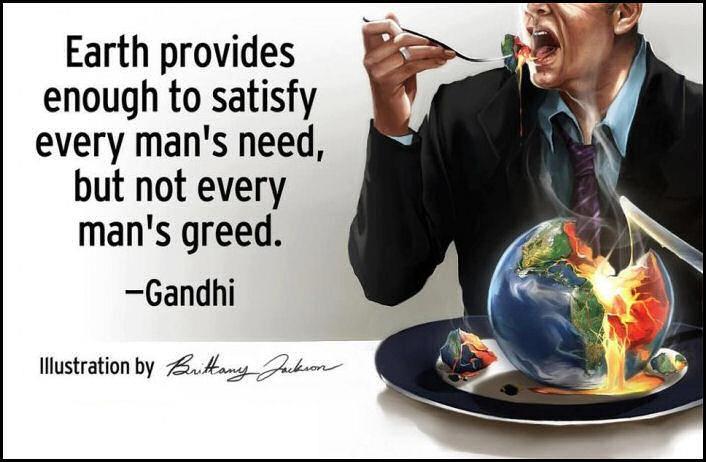


1. Daniel 7.13-14—In my vision at night I looked, and there before me was one like a son of man, coming with the clouds of heaven. He approached the Ancient of Days and was led into his presence. He was given authority, glory and sovereign power; all nations and peoples of every language worshiped him. His dominion is an everlasting dominion that will not pass away, and his kingdom is one that will never be destroyed.

2. Galatians 3.13—Christ redeemed us from the curse of the law by becoming a curse for us, for it is written: “Cursed is everyone who is hung on a pole.” Deuteronomy 21.22-23—If anyone guilty of a capital offense is put to death and their body is exposed on a pole, you must not leave the body hanging on the pole overnight. Be sure to bury it that same day, because anyone who is hung on a pole is under God’s curse. You must not desecrate the land the LORD your God is giving you as an inheritance. John 19.31—Now it was the day of Preparation, and the next day was to be a special Sabbath. Because the Jewish leaders did not want the bodies left on the crosses during the Sabbath, they asked Pilate to have the legs broken and the bodies taken down.

3. Psalms 2.7—I [David] will proclaim the LORD’s decree: He said to me, “You are my son; today I have become your father.

4. Psalms 2.7—I [David] will proclaim the LORD’s decree: He said to me, “You are my son; today I have become your father.

5. Psalms 2.2—The kings of the earth rise up and the rulers band together against the LORD and against his anointed [David], saying; Psalms 18.50—He gives his king great victories; he shows unfailing love to his anointed, to David and to his descendants forever; Psalms 20.6— Now this I know: The LORD gives victory to his anointed. He answers him from his heavenly sanctuary with the victorious power of his right hand; Psalms 23.5—You prepare a table before me in the presence of my enemies. You anoint my head with oil; my cup overflows; Psalms 28.8—The LORD is the strength of his people, a fortress of salvation for his anointed one; Psalms 45.2—You are the most excellent of men and your lips have been anointed with grace, since God has blessed you forever; Psalms 45.7—You love righteousness and hate wickedness; therefore God, your God, has set you above your companions by anointing you with the oil of joy; Psalms 84.9—Look on our shield, O God; look with favor on your anointed one; Psalms 89.20—I have found David my servant; with my sacred oil I have anointed him; Psalms 89.38—But you have rejected, you have spurned, you have been very angry with your anointed one; Psalms 89.51—the taunts with which your enemies, LORD, have mocked, with which they have mocked every step of your anointed one; Psalms 105.15—“Do not touch my anointed ones; do my prophets no harm.”; Psalms 132.10—For the sake of your servant David, do not reject your anointed one; Psalms 132.17—“Here I will make a horn grow for David and set up a lamp for my anointed one.