A Case for a Politically Compassionate, Distributive Justice Minded Christianity

Thank you

We want to say a special thank you to all of our supporters.

If you would like to join them in supporting Renewed Heart Ministries’ work, you can do so by clicking “donate” above.


New Episode of JustTalking!

Season 1, Episode 36: Matthew 22.34-46. Lectionary A, Proper 25

Each week, we’ll be talking about the gospel lectionary reading for the upcoming weekend. We’ll be talking about each reading in the context of love, inclusion, and societal justice. Our hope is that our talking will be just talking (as in justice) and that during our brief conversations each week you’ll be inspired to also do more than just talking.

If you teach from the lectionary each week, or if you’re just looking for some thoughts on the Jesus story from a more progressive perspective within the context of social justice, check it out, you might like it.

You can find the latest show on YouTube at

Season 1, Episode 36: Matthew 22.34-46. Lectionary A, Proper 25

 or (@herbandtoddjusttalking)

Please Like, Subscribe, hit the Notification button, and leave us a comment

Thanks in advance for watching!


A Case for a Politically Compassionate, Distributive Justice Minded Christianity

Herb Montgomery | October 27, 2023

To listen to this week’s eSight as a podcast episode click here.

_________________________________________________________

“In the end, for me, it’s no longer enough to say that God is love. If our ideas of God’s love don’t also address love of neighbor in very real, concrete, material ways, then we are still missing the mark.”

_________________________________________________________ 

Our reading this week is from the gospel of Matthew:

Hearing that Jesus had silenced the Sadducees, the Pharisees got together. One of them, an expert in the law, tested him with this question: “Teacher, which is the greatest commandment in the Law?” 

Jesus replied: “‘Love the Lord your God with all your heart and with all your soul and with all your mind.’ This is the first and greatest commandment. And the second is like it: ‘Love your neighbor as yourself.’ All the Law and the Prophets hang on these two commandments.”

While the Pharisees were gathered together, Jesus asked them, “What do you think about the Messiah? Whose son is he?” “The son of David,” they replied. He said to them, “How is it then that David, speaking by the Spirit, calls him ‘Lord’? For he says,

‘The Lord said to my Lord:

“Sit at my right hand 

until I put your enemies 

under your feet.’ 

If then David calls him ‘Lord,’ how can he be his son?”

No one could say a word in reply, and from that day on no one dared to ask him any more questions. (Matthew 22:34-46)

A version of our reading this week is found in each of the synoptic gospels (Mark 12:28-34, Luke 10:25-29). Each quotes two passages from the Hebrew scriptures: Deuteronomy 6:4-5 and Leviticus 19:18:

“Hear, O Israel: The LORD our God, the LORD is one. Love the LORD your God with all your heart and with all your soul and with all your strength.” (Deuteronomy 6:4-5)

“Do not seek revenge or bear a grudge against anyone among your people, but love your neighbor as yourself. I am the LORD.” (Leviticus 19:18)

The gospels attest that the early Jesus movement and the historical Jesus both favored this interpretive move of defining fidelity to God as love of neighbor and using this lens to interpret the Torah. Fidelity to the God of the Torah impacted how one concretely and materially related to others. Love to God was expressed through the love of the neighbor believed to be made in the image of God. And that “love of neighbor” meant something specific. Social justice circles today often say that social justice is what love looks like in public. This is similar to how the early Jewish Jesus movement interpreted Torah fidelity as well. 

This interpretive lens has lots of history in Jewish wisdom. It is most often attributed to the progressive Pharisee Hillel. The story is that Hillel was approached by a proselyte one day who  asked if Hillel could teach the questioner the entire Torah while the student stood on one foot. Hillel responded, “What you find hateful do not do to another. This is the whole of the Law. Everything else is commentary. Go and learn that!” (see Hillel)

For most of the Jesus story, Jesus sides with Hillel’s more progressive interpretive lens of love. There are only two cases where Jesus departs from Hillel. The Pharisaical school of Hillel was not the only school of interpretation in Jesus’ time. Another popular sect of Pharisees was the school of Shammai. Shammai was deeply concerned with protecting Jewish culture, identity, and distinctiveness, and one of the subjects where Jesus departs from Hillel and agrees with Shammai is the subject of divorce. 

The school of Hillel taught that a husband could divorce his wife for any reason at all. In a patriarchal society, this led to systemic economic injustice toward wives sent away by their husbands. On this issue, however, Jesus sided with Shammai. In one gospel he states that divorce was simply not allowed. In another, he says that it was allowed but only in the context of infidelity. Again, I believe that this teaching was concerned with the economic hardships that unconditional divorce placed on women who found themselves on the receiving end of this practice in the patriarchal cultures of the 1st Century, trying to survive. 

The second area where Jesus disagreed with Hillel was also economic. Hillel was the originator the prozbul exception. A rich creditor could declare a loan “prozbul” and therefore immune to cancelation in years such as the year of Jubilee. Remember that there was no middle class in Jesus’ society. Many people depended on loans to survive. So if a year when debts were to be cancelled was approaching, many rich creditors would simply not make loans they believed they would lose on. This left many others without a means of survival. Out of concern, then, Hillel made an exception available: loans made close to the year of cancellation could be declared “prozbul” and be exempt from being cancelled. Jesus departs from Hillel incalling for a return to the year of the Lord’s favor (Luke 4:19) where all debts would be cancelled and all slaves set free. 

Other than these two cases, Jesus interpreted the Torah like a Hillelian Pharisee. The conflicts between Jesus and the Pharisees in the gospels are the same conflicts the Hillelian Pharisees had with the Shammai Pharisees. In those years, the Shammai Pharisees were still in positions of power and influence. But ultimately the more progressive Hillelian Pharisees won the interpretive debates in Judaism: out of Hillelian Pharisaism, Rabbinic Judaism eventually emerged and grew. (See Karen Armstrong’s The Great Transformation: The Beginning of Our Religious Traditions, Kindle Locations 7507-7540)

Gamaliel, in the book of Acts, was also most likely a Pharisee from the more progressive school of Hillel. 

“But a Pharisee named Gamaliel, a teacher of the law, who was honored by all the people, stood up in the Sanhedrin and ordered that the men be put outside for a little while.” (Acts 5:34)

Acts associates the Apostle Paul with Gamaliel, too:

“I am a Jew, born in Tarsus of Cilicia, but brought up in this city. I studied under Gamaliel and was thoroughly trained in the law of our ancestors. I was just as zealous for God as any of you are today.” (Acts 22:3)

Paul also expresses a very Hillelian way of interpreting the Torah in the book of Galatians:

“For the entire law is fulfilled in keeping this one command: ‘Love your neighbor as yourself.’” (Galatians 5:14)

All of this taken together makes a strong case for a more progressive form of Christianity that uses love as its interpretive lens. In this form of Christianity, we ensure that our interpretations of love don’t become sentimental or meaningless, and we manifest love through concern for a distributive justice for others. As Dr. Emile Townes so rightly states when you begin with the idea that God loves everyone, justice isn’t very far behind. 

This speaks volumes in the context of debates still raging between more fundamentalist and/or conservative sectors of Christianity and more progressive and/or liberal sectors. The early Jesus movement evolved during similar tensions, and the gospels characterize Jesus as siding with the more compassionate Pharisees of his time. 

As we shared earlier, there are exceptions to this. The two times Jesus departs from the Hillel Pharisees to side with the Shammai Pharisees was over economic justice issues. This says to me that the highest value was compassion. The highest value is distributive justice, treating one’s neighbor as yourself, as an extension of yourself, as you yourself would like to be treated if you were in the same situation. If we are to follow the Jesus of the gospels, we will find ourselves siding with those calling for a politics of compassion and distributive justice. We will find ourselves doing so because our chief concern is love of neighbor and justice for our neighbor as we would want for ourselves. 

Political parties don’t always get justice right because they also are endeavoring to balance the desire to stay in power. One party might most often get it right, but where they fail, we must still choose to stand on the side of distributive justice, remembering the goal is love of neighbor. Following Jesus, we may find ourselves most often in more harmony with political positions of compassion, but there will be times when we may be achieving compassion in one area but will have to be honest when we are still missing the mark in another. There are discussions like this between feminists and womanists. I also think of wealthy LGBTQ people who support systemic harm toward those in their community who are poor; Christians who are concerned for the poor but still deeply patriarchal, homophobic, biphobic, and transphobic  And there are movements for economic justice, including within White Christianity, that are still deeply racist. 

In the end, for me, it’s no longer enough to say that God is love. If our ideas of God’s love doesn’t also address love of neighbor in very real, concrete, material ways, then we are still missing the mark. In the spirit of the interpretive lens of Hillel and Jesus, as Paul said: “The entire law is fulfilled in keeping this one command: ‘Love your neighbor as yourself.’”

HeartGroup Application

1. Share something that spoke to you from this week’s eSight/Podcast episode with your HeartGroup.

2. What do politics of compassion look like for you? Share and discuss with your group.

3. What can you do this week, big or small, to continue setting in motion the work of shaping our world into a safe, compassionate, just home for everyone?

Thanks for checking in with us, today.

I want to say a special thank you to all of our supporters out there. And if you would like to join them in supporting Renewed Heart Ministries’ work you can do so by going to renewedheartministries.com and clicking donate. 

You can find Renewed Heart Ministries on Twitter, Facebook, Instagram and Threads. If you haven’t done so already, please follow us on your chosen social media platforms for our daily posts. Also, if you enjoy listening to the Jesus for Everyone podcast, please like and subscribe to the JFE podcast through the podcast platform you use and consider taking some time to give us a review. This helps others find our podcast as well.

You can watch our new YouTube show called “Just Talking” each week. Todd Leonard and I take a moment to talk about the gospel lectionary reading for the upcoming weekend. We’ll be talking about each reading in the context of love, inclusion, and societal justice. Our hope is that our talking will be just talking (as in justice) and that during our brief conversations each week you’ll be inspired to also do more than just talking.

If you teach from the lectionary each week, or if you’re just looking for some thoughts on the Jesus story from a more progressive perspective within the context of social justice, check it out, you might like it. You can find JustTalking each week on YouTube at youtube.com/@herbandtoddjusttalking. Please Like, Subscribe, hit the Notification button, and leave us a comment.

And if you’d like to reach us here at Renewed Heart Ministries through email, you can reach us at info@renewedheartministries.com.

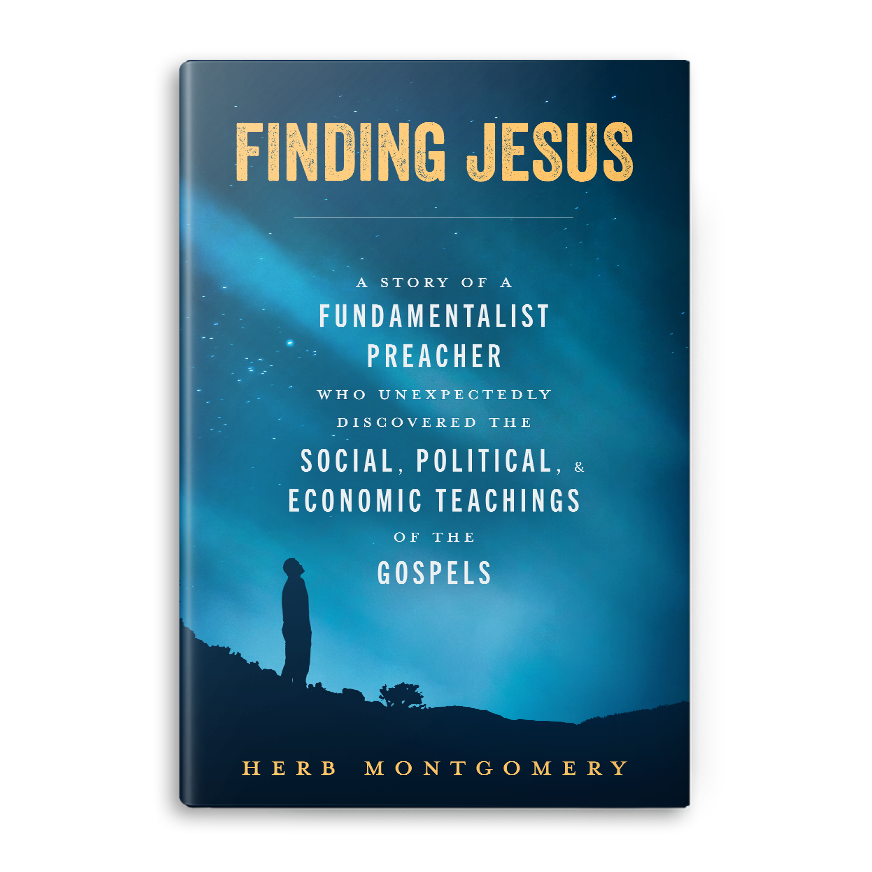
My new book, Finding Jesus: A story of a fundamentalist preacher who unexpectedly discovered the social, political, and economic teachings of the Gospels is now also available at renewedheartministries.com

Right where you are, keep living in love, choosing compassion, taking action, and working toward justice.

I love each of you dearly,

I’ll see you next week.



Now Available at Renewed Heart Ministries!

Herb’s new book Finding Jesus: A story of a fundamentalist preacher who unexpectedly discovered the social, political, and economic teachings of the Gospels, is available at renewedheartministries.com.

Get your copy today at renewedheartministries.com


Are you receiving all of RHM’s free resources each week?

Begin each day being inspired toward love, compassion, action, and justice. Free Sign-Up HERE

Unheeded Calls for Justice in the Parable of the Vineyard

Thank you

We want to say a special thank you to all of our supporters.

If you would like to join them in supporting Renewed Heart Ministries’ work, you can do so by clicking “donate” above.


Just Talking

New Episode of JustTalking!d

Season 1, Episode 33: Matthew 21.33-46. Lectionary A, Proper 22

Each week, we’ll be talking about the gospel lectionary reading for the upcoming weekend. We’ll be talking about each reading in the context of love, inclusion, and societal justice. Our hope is that our talking will be just talking (as in justice) and that during our brief conversations each week you’ll be inspired to also do more than just talking.

If you teach from the lectionary each week, or if you’re just looking for some thoughts on the Jesus story from a more progressive perspective within the context of social justice, check it out, you might like it.

You can find the latest show on YouTube at

Season 1, Episode 33: Matthew 21.33-46. Lectionary A, Proper 22

 or (@herbandtoddjusttalking)

Please Like, Subscribe, hit the Notification button, and leave us a comment

Thanks in advance for watching!


Unheeded Calls for Justice in the Parable of the Vineyard

Unheeded Calls for Justice in the Parable of the Vineyard

Herb Montgomery | October 6, 2023

To listen to this week’s eSight as a podcast episode click here.

“The crowds of people found hope and resonance in these the teachings of reversal: the elite and powerful would have the reins of society taken away from them and given to the marginalized and excluded. And if this parable did teach that power and resources would be taken away from the powerful, propertied and privileged, and given to the masses, then it makes sense that when those in power heard this, they sought to kill Jesus. It also makes sense that they had to be ever so careful because they knew the people heard something in this parable in the long line of justice prophets that made them love Jesus all the more.”

Our reading this week is from the gospel of Matthew:

“Listen to another parable: There was a landowner who planted a vineyard. He put a wall around it, dug a winepress in it and built a watchtower. Then he rented the vineyard to some farmers and moved to another place. When the harvest time approached, he sent his servants to the tenants to collect his fruit. 

The tenants seized his servants; they beat one, killed another, and stoned a third. Then he sent other servants to them, more than the first time, and the tenants treated them the same way. Last of all, he sent his son to them. ‘They will respect my son,’ he said. 

But when the tenants saw the son, they said to each other, ‘This is the heir. Come, let’s kill him and take his inheritance.’ So they took him and threw him out of the vineyard and killed him. 

Therefore, when the owner of the vineyard comes, what will he do to those tenants?”

“He will bring those wretches to a wretched end,” they replied, “and he will rent the vineyard to other tenants, who will give him his share of the crop at harvest time.” 

Jesus said to them, “Have you never read in the Scriptures: 

  ‘The stone the builders rejected 

has become the cornerstone;

the Lord has done this,

and it is marvelous in our eyes’?

“Therefore I tell you that the kingdom of God will be taken away from you and given to a people who will produce its fruit. Anyone who falls on this stone will be broken to pieces; anyone on whom it falls will be crushed.” When the chief priests and the Pharisees heard Jesus’ parables, they knew he was talking about them. They looked for a way to arrest him, but they were afraid of the crowd because the people held that he was a prophet.” (Matthew 21:33-46*)

The last sentence in this week’s reading from Matthew is the most important sentence. It holds a tension with the rest of the reading that can potentially keep us from harmful interpretations about ourselves and others. 

The crowds, the masses, the people, consider Jesus to be “a prophet.” This is because out of all the forms Jesus could have emerged in within his own Jewish society, he is squarely in the Hebrew prophetic justice tradition. He’s spearheading a Jewish renewal movement and calling his community back to the justice of the Torah and the Hebrew prophets. His teachings emphasized the portions of the law and the prophets that were about social and economic justice, making our communities a safe, compassionate home for everyone. 

The parable in this week’s reading is about a landowner who rented out his vineyard to other farmers. The crowds around Jesus would have heard this parable differently than the elites and powerful. Jesus’ society had no middle class. There were only the rich and those struggling to scratch out an existence in one difficult way or another. There were only the haves and the have nots. Only the upper class and the lower class, and only a few belonging to the upper class aristocracy were connected to the temple state in Jerusalem. 

The elites would have seen themselves in the parables as the farmers renting the vineyard from the landowner who was away. The people would have viewed themselves as the indentured workers who daily witnessed the elites enriching themselves with worker exploitation. And with the elites becoming so attached to their enrichment at the expense of the masses, the crowd would have perceived the beaten, killed, and stoned vineyard servants in the parable as symbols of the Hebrew prophets. There is precedent for this imagery. Consider Isaiah 5:1-7: 

“I will sing for the one I love a song about his vineyard: My loved one had a vineyard on a fertile hillside. He dug it up and cleared it of stones and planted it with the choicest vines. He built a watchtower in it and cut out a winepress as well. Then he looked for a crop of good grapes, but it yielded only bad fruit. Now you dwellers in Jerusalem and people of Judah, judge between me and my vineyard. What more could have been done for my vineyard than I have done for it? When I looked for good grapes, why did it yield only bad? Now I will tell you what I am going to do to my vineyard: I will take away its hedge, and it will be destroyed; I will break down its wall, and it will be trampled. I will make it a wasteland, neither pruned nor cultivated, and briers and thorns will grow there. I will command the clouds not to rain on it.” The vineyard of the LORD Almighty is the nation of Israel, and the people of Judah are the vines he delighted in. And he looked for justice, but saw bloodshed; for righteousness, but heard cries of distress.”

There are differences between Isaiah’s use of the vineyard imagery and Matthew’s. In Isaiah the vineyard is destroyed, whereas in Matthew the vineyard is taken away and given to others. In Isaiah the vineyard represents the nation of Israel; in Matthew it represents “the Kingdom,” which is Jesus’ vision for a just, inclusive, compassionate human community. There are also similarities between Isaiah and Matthew: the vineyard owner comes to the vineyard looking for justice and finds only exploitation, marginalization, oppression, and bloodshed. 

Let’s now talk about what the kingdom being taken away and given to others would have meant . 

First—and this is very important—this parable is not about the Kingdom being taken away from the Jewish people and given to Christians. The last two sentences state: “When the chief priests and the Pharisees heard Jesus’ parables, they knew he was talking about them. They looked for a way to arrest him, but they were afraid of the crowd because the people held that he was a prophet.” 

The Jewish crowds would not have supported Jesus if this parable taught that they were being replaced. This parable is about “the kingdom.” It’s about the elite in society losing positions of power and that power being given to the masses. The crowds of people found hope and resonance in these the teachings of reversal: the elite and powerful would have the reins of society taken away from them and given to the marginalized and excluded. And if this parable did teach that power and resources would be taken away from the powerful, propertied and privileged, and given to the masses, then it makes sense that when those in power heard this, they sought to kill Jesus. It also makes sense that they had to be ever so careful because they knew the people heard something in this parable in the long line of justice prophets that made them love Jesus all the more. 

What might this parable be saying to us today? What would a reversal look like in our society? What would it look like for the control in our society to taken from wealthy corporation owners who have bought democracy and politicians, leaving the masses with little say in how society functions and whom it benefits? What would it look like for each person to have a voice? Can you imagine it? 

Originally, Thomas Paine called for this kind of democracy, but his calls were ultimately rejected by the aristocratic founding fathers, who called Paine’s ideas “radical democracy.” He called for the end of slavery and a vote for women, but in their revolutionary decision to declare independence from Britain, the founding fathers created a democracy that only gave a vote to propertied, White men. We still have yet to witness America living up to its high ideals. When we consider who is left out today, economically, socially, politically, what would it look like for control in our society to be taken from the powerful, the elite, and given, genuinely, to the masses. 

What could a safe, just, compassionate society look like? How would it differ from our present system? Take some time this week to imagine how a just society would be shaped and whom it would take care of? Before we can work for it, we have to first imagine it. Then we can name it. And then, we can roll up our sleeves and work toward it. 

___________

*Scriptures taken from the Holy Bible, New International Version®, NIV®. Copyright © 1973, 1978, 1984, 2011 by Biblica, Inc.™ Used by permission of Zondervan. All rights reserved worldwide. www.zondervan.com The “NIV” and “New International Version” are trademarks registered in the United States Patent and Trademark Office by Biblica, Inc.™

HeartGroup Application

1. Share something that spoke to you from this week’s eSight/Podcast episode with your HeartGroup.

2. Take some time this week to imagine how a just society would be shaped and whom it would take care of? Share and discuss with your group.

3. What can you do this week, big or small, to continue setting in motion the work of shaping our world into a safe, compassionate, just home for everyone?

Thanks for checking in with us, today.

I want to say a special thank you to all of our supporters out there. And if you would like to join them in supporting Renewed Heart Ministries’ work you can do so by going to renewedheartministries.com and clicking donate. 

You can find Renewed Heart Ministries on Twitter, Facebook, Instagram and Threads. If you haven’t done so already, please follow us on your chosen social media platforms for our daily posts. Also, if you enjoy listening to the Jesus for Everyone podcast, please like and subscribe to the JFE podcast through the podcast platform you use and consider taking some time to give us a review. This helps others find our podcast as well.

You can watch our new YouTube show called “Just Talking” each week. Todd Leonard and I take a moment to talk about the gospel lectionary reading for the upcoming weekend. We’ll be talking about each reading in the context of love, inclusion, and societal justice. Our hope is that our talking will be just talking (as in justice) and that during our brief conversations each week you’ll be inspired to also do more than just talking.

If you teach from the lectionary each week, or if you’re just looking for some thoughts on the Jesus story from a more progressive perspective within the context of social justice, check it out, you might like it. You can find JustTalking each week on YouTube at youtube.com/@herbandtoddjusttalking. Please Like, Subscribe, hit the Notification button, and leave us a comment.

And if you’d like to reach us here at Renewed Heart Ministries through email, you can reach us at info@renewedheartministries.com.

My new book, Finding Jesus: A story of a fundamentalist preacher who unexpectedly discovered the social, political, and economic teachings of the Gospels is now also available at renewedheartministries.com

Right where you are, keep living in love, choosing compassion, taking action, and working toward justice.

I love each of you dearly,

I’ll see you next week.



Now Available at Renewed Heart Ministries!

Herb’s new book Finding Jesus: A story of a fundamentalist preacher who unexpectedly discovered the social, political, and economic teachings of the Gospels, is available at renewedheartministries.com.

Get your copy today at renewedheartministries.com


Are you receiving all of RHM’s free resources each week?

Begin each day being inspired toward love, compassion, action, and justice. Free Sign-Up HERE

Equality, Generosity and Concern for Workers’ Needs

Thank you to all of our supporters.

If you would like to join them in supporting Renewed Heart Ministries’ work you can do so by clicking “donate” above.


New Episode of JustTalking!d

Season 1, Episode 31: Matthew 20.1-16. Lectionary A, Proper 20

Each week, we’ll be talking about the gospel lectionary reading for the upcoming weekend. We’ll be talking about each reading in the context of love, inclusion, and societal justice. Our hope is that our talking will be just talking (as in justice) and that during our brief conversations each week you’ll be inspired to also do more than just talking.

If you teach from the lectionary each week, or if you’re just looking for some thoughts on the Jesus story from a more progressive perspective within the context of social justice, check it out, you might like it.

You can find the latest show on YouTube at https://youtu.be/CPiJr7vlEYg?si=gouYfty9uvqNGVQZ

 or (@herbandtoddjusttalking)

Please Like, Subscribe, hit the Notification button, and leave us a comment

Thanks in advance for watching!


Equality, Generosity and Concern for Workers’ Needs

Herb Montgomery | September 22, 2023

To listen to this week’s eSight as a podcast episode click here.

“Three themes surface, three values that have the power to inform how we shape the present world we are all sharing: a desire for equality, generosity concern for workers’ needs. The priority is a combination of equality, generosity, and concern for the needs of the workers. What might our present economic system look like if these three themes governed us?”

Our reading this week is from the gospel of Matthew:

“For the kingdom of heaven is like a landowner who went out early in the morning to hire workers for his vineyard. He agreed to pay them a denarius for the day and sent them into his vineyard. 

About nine in the morning he went out and saw others standing in the marketplace doing nothing. He told them, ‘You also go and work in my vineyard, and I will pay you whatever is right.’ So they went. 

He went out again about noon and about three in the afternoon and did the same thing.

About five in the afternoon he went out and found still others standing around. He asked them, ‘Why have you been standing here all day long doing nothing?’

‘Because no one has hired us.’ they answered. 

He said to them, ‘You also go and work in my vineyard.’

When evening came, the owner of the vineyard said to his foreman, ‘Call the workers and pay them their wages, beginning with the last ones hired and going on to the first.’ 

The workers who were hired about five in the afternoon came and each received a denarius. 

So when those came who were hired first, they expected to receive more. But each one of them also received a denarius. When they received it, they began to grumble against the landowner. 

‘These who were hired last worked only one hour,’ they said, ‘and you have made them equal to us who have borne the burden of the work and the heat of the day.’ 

But he answered one of them, ‘I am not being unfair to you, friend. Didn’t you agree to work for a denarius? Take your pay and go. I want to give the one who was hired last the same as I gave you. Don’t I have the right to do what I want with my own money? Or are you envious because I am generous?’

So the last will be first, and the first will be last.” (Matthew 20:1-16)

I cannot express in words how much I love the parable in this week’s reading. I have my own history with this story. I was first introduced to its depth of potential years ago when I read John Ruskin’s Unto The Last, an essay he published in 1860. Ruskin lifts this parable out of religious interpretations created by privileged, propertied, and powerful religious apologists who diverted readers’ attention from how they benefitted from an inequitable economic system. In harmony with Jesus’ ministry in the tradition of the Jewish prophets, Ruskin treated this parable by addressing its social and economic implications. 

Let me unpack those implications a bit. 

Religious interpretations typically circle around themes from individuals getting a ticket to the same heaven to populations converting “late” to Christianity. (Traditionally this has been a foundational theme of colonialism.)

Yet Jesus did not show up in his society solely as a religious teacher or spiritual guru. He didn’t even show up as a priest within the temple state of his day as John the Baptist’s family did. Anyone who reads the Jesus story alongside the tradition of the Hebrew prophets will immediately see that Jesus was standing in the Hebrew prophetic justice tradition. 

In the Hebrew prophetic tradition (see Luke 4:18-19), there are ever-present, ever-strong, social and economic justice themes:

Isaiah 1:17— Learn to do right; seek justice.

Defend the oppressed. 

Take up the cause of the fatherless;

plead the case of the widow.

Jeremiah 5:28— And have grown fat and sleek.

Their evil deeds have no limit;

they do not seek justice.

They do not promote the case of the fatherless;

they do not defend the just cause of the poor.

Amos 2:7— They trample on the heads of the poor 

as on the dust of the ground 

and deny justice to the oppressed.

Amos 5:24— But let justice roll on like a river,

righteousness like a never-failing stream!

Micah 3:1— Then I said, 

“Listen, you leaders of Jacob,

you rulers of Israel.

Should you not embrace justice?

(See also Isaiah 10:2; 56:1; 59:4,8; Ezekiel 34:16; Hosea 12:6; Habakkuk 1:4; Zechariah 7:9; Malachi 3:5)

This is just a quick cursory overview of the prophets. If we read Jesus in this prophetic tradition, we begin to see that this parable has precious little to do with getting to heaven and a lot to do with shaping our present world into a just, compassionate safe home for everyone. 

Three themes surface, three values that have the power to inform how we shape the present world we are all sharing. 

First, there is a desire for equality. As the grumbling workers from earliest in the day rightly say of the one who hired them, “you have made them equal to us.” For the first to be last and the last to be first doesn’t mean that they simply trade places. Trading places would only flip the hegemony upside down, replacing the present hierarchy with a new one. But in this parable “the first shall be last and the last shall be first” means all are treated equally, with no distinction between those who showed up first and those who showed up last.

This equality is a theme, not only in the Jesus story, but also in the economic teachings of the Torah and the Christian scriptures.

“This is what the LORD has commanded: ‘Everyone is to gather as much as they need. Take an omer for each person you have in your tent.’” The Israelites did as they were told; some gathered much, some little. And when they measured it by the omer, the one who gathered much did not have too much, and the one who gathered little did not have too little. Everyone had gathered just as much as they needed.” (Exodus 16:16-18)

“Our desire is not that others might be relieved while you are hard pressed, but that there might be equality. At the present time your plenty will supply what they need, so that in turn their plenty will supply what you need. The goal is equality.” (2 Corinthians 8:13)

“All the believers were one in heart and mind. No one claimed that any of their possessions was their own, but they shared everything they had . . . And God’s grace was so powerfully at work in them all that there were no needy persons among them.” (Acts 4:32-34)

The second theme in this parable is generosity: “Are you envious because I am generous?” 

What if our guiding value was not seeing how much we could amass but generously sharing, taking responsibility for each other, and making sure everyone had enough not simply to survive but to thrive? 

In our present system, an elite few has more than they could ever possibly need while others daily fight against an early death named poverty. Our society’s problem is not those on welfare but a system that creates such an expanse of winners and losers that welfare is needed. As Gustavo Gutiérrez rightly states:

“The poor person does not exist as an inescapable fact of destiny. His or her existence is not politically neutral, and it is not ethically innocent. The poor are a by-product of the system in which we live and for which we are responsible. They are marginalized by our social and cultural world. They are the oppressed, exploited proletariat, robbed of the fruit of their labor and despoiled of their humanity. Hence the poverty of the poor is not a call to generous relief action, but a demand that we go and build a different social order.” (The Power of the Poor in History, Gustavo Gutiérrez) 

It is this different social order based on a spirit of generosity that would make generous relief efforts obsolete, no longer even necessary. It would be rooted in a posture of generosity rather than one of hoarding. 

The third and last theme is of concern for workers’ needs. Although some of the workers were not hired by anyone until the last hour of the day (‘Why have you been standing here all day long doing nothing?’ ‘Because no one has hired us,’ they answered.), they all still had the same daily needs. They may have had families that depended on what they brought home that day.

The landowner in this story is not concerned with how many hours they worked, but with using his land to provide for the needs of as many as could be provided for. The foundational concern, the priority of highest value, is ensuring these workers have their needs met. Certainly the landowner stood to gain from their employment, yet he was not focused on how much he could squeeze out of them so that he could become even wealthier. Each worker received a days wages.  

I already hear friends objecting that if we had a system like this there would be people who would take advantage of it. My answer is, “And?”

Our current system has people who take advantage of it: those at the center and the top of our society. In our present system, the wealthy take advantage of loopholes to increase their passive wealth. Rarely does this social and economic class hear the New Testament words, “Those who don’t work don’t eat” applied to them. These words are usually weaponized against poor people who are accused of laziness or expected to explain and justify their poverty. We should instead understand the root cause of their economic situation: a system stacked against them. 

To be clear: There are lazy people in all classes, and lazy people can thrive if they know how to work whichever level of the system they find themselves in. The theme in our reading is not how hard or how long a person works. The theme is how to take care of the needs of the laborers. The priority is not how far can we squeeze workers to enrich their employer with their exploited labor. The priority is a combination of equality, generosity, and concern for the needs of the workers. 

What might our present economic system look like if these three themes governed us? There is so much talk among some Christians today about shaping our society according to Christian values. Yet whenever the values in the Jesus story are mentioned—equality, generosity, concern for workers—these same Christians label them socialist or Marxist. What if equality, generosity and wealth sharing, and concern for the needs of workers is actually the way of Jesus?

HeartGroup Application

1. Share something that spoke to you from this week’s eSight/Podcast episode with your HeartGroup.

2. What shift in priorities do you perceive in our parable from this week’s reading? Share and discuss with your group.

3. What can you do this week, big or small, to continue setting in motion the work of shaping our world into a safe, compassionate, just home for everyone?

Thanks for checking in with us, today.

I want to say a special thank you to all of our supporters out there. And if you would like to join them in supporting Renewed Heart Ministries’ work you can do so by going to renewedheartministries.com and clicking donate. 

You can find Renewed Heart Ministries on Twitter, Facebook and Instagram. If you haven’t done so already, please follow us on your chosen social media platforms for our daily posts. Also, if you enjoy listening to the Jesus for Everyone podcast, please like and subscribe to the JFE podcast through the podcast platform you use and consider taking some time to give us a review. This helps others find our podcast as well.

Also I want to share that we are partnering in a new weekly YouTube show called “Just Talking.” Each week, Todd Leonard and I will be talking about the gospel lectionary reading for the upcoming weekend. We’ll be talking about each reading in the context of love, inclusion, and societal justice. Our hope is that our talking will be just talking (as in justice) and that during our brief conversations each week you’ll be inspired to also do more than just talking.

If you teach from the lectionary each week, or if you’re just looking for some thoughts on the Jesus story from a more progressive perspective within the context of social justice, check it out, you might like it. You can find JustTalking each week on YouTube at youtube.com/@herbandtoddjusttalking. Please Like, Subscribe, hit the Notification button, and leave us a comment.

And if you’d like to reach us here at Renewed Heart Ministries through email, you can reach us at info@renewedheartministries.com.

My new book, Finding Jesus: A story of a fundamentalist preacher who unexpectedly discovered the social, political, and economic teachings of the Gospels is now also available at renewedheartministries.com

Right where you are, keep living in love, choosing compassion, taking action, and working toward justice.

I love each of you dearly,

I’ll see you next week.


Now Available at Renewed Heart Ministries!

Herb’s new book Finding Jesus: A story of a fundamentalist preacher who unexpectedly discovered the social, political, and economic teachings of the Gospels, is available at renewedheartministries.com.

Get your copy today at renewedheartministries.com


Are you receiving all of RHM’s free resources each week?

Begin each day being inspired toward love, compassion, action, and justice. Free Sign-Up HERE

Seventy Times Seven

Thank you to all of our supporters.

If you would like to join them in supporting Renewed Heart Ministries’ work you can do so by clicking “donate” above.


New Episode of JustTalking!d

Season 1, Episode 30: Matthew 18.21-35

Each week, we’ll be talking about the gospel lectionary reading for the upcoming weekend. We’ll be talking about each reading in the context of love, inclusion, and societal justice. Our hope is that our talking will be just talking (as in justice) and that during our brief conversations each week you’ll be inspired to also do more than just talking.

If you teach from the lectionary each week, or if you’re just looking for some thoughts on the Jesus story from a more progressive perspective within the context of social justice, check it out, you might like it.

You can find the latest show on YouTube at https://youtu.be/UECsbII4Hz8?si=hE3dv2K06J2jPF86

 or (@herbandtoddjusttalking)

Please Like, Subscribe, hit the Notification button, and leave us a comment

Thanks in advance for watching!


Seventy Times Seven

Herb Montgomery, September 15, 2023

To listen to this week’s eSight as a podcast episode click here.

“This parable originated not as allegory but as an example of real life indebtedness Jesus’ audience would have been familiar with. This was not a call for the indebted to forgive their abusive creditors, but for creditors to forgive the debts of those who owed them.”

Our reading this week is from the gospel of Matthew:

Then Peter came to Jesus and asked, “Lord, how many times shall I forgive my brother or sister who sins against me? Up to seven times?”

Jesus answered, “I tell you, not seven times, but seventy-seven times. 

“Therefore, the kingdom of heaven is like a king who wanted to settle accounts with his servants. As he began the settlement, a man who owed him ten thousand bags of gold was brought to him. Since he was not able to pay, the master ordered that he and his wife and his children and all that he had be sold to repay the debt. 

“At this the servant fell on his knees before him. ‘Be patient with me,’ he begged, ‘and I will pay back everything.’ The servant’s master took pity on him, canceled the debt and let him go. 

“But when that servant went out, he found one of his fellow servants who owed him a hundred silver coins. He grabbed him and began to choke him. ‘Pay back what you owe me!’ he demanded. His fellow servant fell to his knees and begged him, ‘Be patient with me, and I will pay it back.’

“But he refused. Instead, he went off and had the man thrown into prison until he could pay the debt. When the other servants saw what had happened, they were outraged and went and told their master everything that had happened.

“Then the master called the servant in. ‘You wicked servant,’ he said, ‘I canceled all that debt of yours because you begged me to. Shouldn’t you have had mercy on your fellow servant just as I had on you?’ In anger his master handed him over to the jailers to be tortured, until he should pay back all he owed.

“This is how my heavenly Father will treat each of you unless you forgive your brother or sister from your heart.” (Matthew 18:21-35)

Even the most progressive Jesus scholars see this parable as part of the earliest oral traditions, tracing back to the historical Jesus himself. A rich man forgives ten thousand bags of gold owed by one of his slaves. Think of how much each bag would have been worth, and then multiply that by ten thousand. In compassion, the creditor simply forgives the entire debt.

Harmful interpretations of this parable teach the abused and oppressed to passively forgive their oppressor or abuser over and over again, but require no change from the one responsible for harming them.

Before we spiritualize this parable to all relationships and offenses, though, we need to step back and look at the original economic context. In the original context, oppressors, specifically creditors, are to forgive the debts of those they were oppressing based on how much the oppressors themselves had been forgiven by Jesus’ “heavenly Father.” This was not a call for the indebted to forgive their abusive creditors, but for creditors to forgive the debts of those who owed them. 

Then the forgiven one runs into someone who owes him only 100 silver coins, a far lower amount. Rather than his own experience of forgiveness awakening more in him toward the person who owed him money, he seeks to exact every last coin from his own debtor. 

Again, this parable originated not as allegory but as an example of real life indebtedness Jesus’ audience would have been familiar with. From the beginning of Luke’s gospel, Jesus shares a call to wealthy creditors to perform the ritual of “the year of the lord’s favor” or the year of Jubilee, where all debts would be forgiven. This was part of Jesus’ gospel: the call for economic liberation of those in debt. Debts were to be cancelled. This is how Luke’s gospel sums it up:

“The Spirit of the Lord is on me,

because he has anointed me 

to proclaim good news to the poor.

He has sent me to proclaim freedom for the prisoners 

and recovery of sight for the blind,

to set the oppressed free,

  to proclaim the year of the Lord’s favor.” (Luke 4:18-19)

Matthew’s version of the lords prayer also uses economic language: 

“And forgive us our debts,

as we also have forgiven our debtors.” (Matthew 6:12)

Later in the Jesus community, this idea of forgiving debts expanded to include all offenses and trespasses, not just economic indebtedness. This is why in Luke’s later version of the same prayer no longer names the economic element but reads:

“Forgive us our sins,

for we also forgive everyone who sins against us.” (Luke 11:4)

What once called creditors (oppressors) to forgive the debts of their debtors (the oppressed) became a universal call for everyone to forgive anyone of anything based on how much they themselves had personally been forgiven by God. What once involved the wealthy cancelling the debts of their poorer fellow Jesus followers became universalized. Social location was no longer the focus. Money owed became allegorical for general offenses. And forgiveness stopped meaning the cancelling of real, concrete debts; it became letting off the hook anyone who had done anything up to 490 times if they simply came back repeatedly and said they were sorry. 

I’m not a fan of this evolution in the Jesus stories we have access to today. What it too often becomes is manipulative pressure for those who have suffered injustice or abuse to repeatedly forgive their abuses if the abuser expresses sorrow, whether they actually change or not. Some interpretations definethe one seeking forgiveness as truly changing, but if there were true, the number of times needing for forgiveness would never reach “seventy times seven.” 

But if this was actually a call for creditors to practice Jubilee, repeatedly, seventy times seven, no matter how many times people became indebted, then this story takes on an economic dimension that requires social change. If the creditors who follow Jesus must forgive the concrete debts of their debtors, then before too long those creditors would be looking at the systemic causes of why folks were repeatedly being thrown into debt. As the saying goes, when you’re continually pulling people out of the water it doesn’t take long before one walks upstream to ask why those people are being thrown in the water to begin with. 

What does this mean for us today?

First let’s say what it doesn’t mean. This parable doesn’t mean that we shouldn’t hold abusers accountable for the harm they inflict on others. Part of restorative justice is holding abusers accountable. Accountability is intrinsic to their own restoration and healing, too: it awakens and restores a sense of connection to their actions toward others. If there is an element of forgiveness involved, it refuses to sever the abuser from humanity, and the desire to hold them accountable comes not out of vengeance but out of a desire to see them reformed. Forgiveness should never be defined or interpreted as simply letting someone off the hook and pretending they did nothing wrong. Restoration and reparations must always be a part of the process of repairing harms committed for the life-giving well-being of all parties involved.

Yet this story still carries an economic element. How should Jesus followers relate to economic debt forgiveness? I heard many Christians voices over the last two years against student loan forgiveness. How would the Jesus of this week’s readings respond to the idea of students being forgiven the astronomical costs of becoming educated? How would he describe the predatory practices of the loan industry that takes advantage of those students. Consider the social location of those who have to seek student loans to gain an education. Considering these factors, certain Christians are grossly ignorant of how disconnected their religious worship of Jesus is from the values their Jesus taught and the themes of his gospel. 

And this is just one example. In our modern, global capitalist system, indebtedness is how countries continue to colonize and enslave other countries, even “independent” countries. Sometimes this debt is connected to the drive to “develop” those countries so that they their resources can be more easily exploited by global corporations. 

If we followed the economic truths of our story this week it would turn our present economic world upside down.

Maybe we could start with Christians simply forgiving the debts of their fellow Christians. There are also Christian ministries that raise funds and donations purely for the purpose of being able to pay off people’s medical debts. What a blessing to be able to say to someone they are set free from what they owed for something as vital as their own health care. 

And what about debt at faith-based hospitals? Or education debt owed to Christian colleges and universities? What about the indebtedness that comes when folks fall on hard times? How could it change the world if Christians and Christians institutions simply chose to cancel the debts of other Jesus followers? I’m not suggesting this be where the practice should end, but it would be a great place for a global “year of the Lord’s” favor to begin. 

HeartGroup Application

1. Share something that spoke to you from this week’s eSight/Podcast episode with your HeartGroup.

2. How do you imagine Jesus’ Jubilee Debt Forgiveness could be applied in our world today? Share and discuss with your group.

3. What can you do this week, big or small, to continue setting in motion the work of shaping our world into a safe, compassionate, just home for everyone? 

Thanks for checking in with us, today.

I want to say a special thank you to all of our supporters out there. And if you would like to join them in supporting Renewed Heart Ministries’ work you can do so by going to renewedheartministries.com and clicking donate. 

You can find Renewed Heart Ministries on Twitter, Facebook and Instagram. If you haven’t done so already, please follow us on your chosen social media platforms for our daily posts. Also, if you enjoy listening to the Jesus for Everyone podcast, please like and subscribe to the JFE podcast through the podcast platform you use and consider taking some time to give us a review. This helps others find our podcast as well.

Also I want to share that we are partnering in a new weekly YouTube show called “Just Talking.” Each week, Todd Leonard and I will be talking about the gospel lectionary reading for the upcoming weekend. We’ll be talking about each reading in the context of love, inclusion, and societal justice. Our hope is that our talking will be just talking (as in justice) and that during our brief conversations each week you’ll be inspired to also do more than just talking.

If you teach from the lectionary each week, or if you’re just looking for some thoughts on the Jesus story from a more progressive perspective within the context of social justice, check it out, you might like it. You can find JustTalking each week on YouTube at youtube.com/@herbandtoddjusttalking. Please Like, Subscribe, hit the Notification button, and leave us a comment.

And if you’d like to reach us here at Renewed Heart Ministries through email, you can reach us at info@renewedheartministries.com.

My new book, Finding Jesus: A story of a fundamentalist preacher who unexpectedly discovered the social, political, and economic teachings of the Gospels is now also available at renewedheartministries.com

Right where you are, keep living in love, choosing compassion, taking action, and working toward justice.

I love each of you dearly,

I’ll see you next week.


Now Available at Renewed Heart Ministries!

Herb’s new book Finding Jesus: A story of a fundamentalist preacher who unexpectedly discovered the social, political, and economic teachings of the Gospels, is available at renewedheartministries.com.

Get your copy today at renewedheartministries.com


Are you receiving all of RHM’s free resources each week?

Begin each day being inspired toward love, compassion, action, and justice. Free Sign-Up HERE
The Deceitfulness of Wealth

We want to say a special thank you to all of our supporters out there. If you would like to join them in supporting Renewed Heart Ministries’ work you can do so by going to renewedheartministries.com and clicking donate.


New Episode of JustTalking!

Season 1, Episode 21: Matthew 13.1-9, 18-23. Lectionary A, Proper 10

Each week, we’ll be talking about the gospel lectionary reading for the upcoming weekend. We’ll be talking about each reading in the context of love, inclusion, and societal justice. Our hope is that our talking will be just talking (as in justice) and that during our brief conversations each week you’ll be inspired to also do more than just talking.

If you teach from the lectionary each week, or if you’re just looking for some thoughts on the Jesus story from a more progressive perspective within the context of social justice, check it out, you might like it.

You can find the latest show on YouTube at https://youtu.be/vXMQHAoHjOI

 or (@herbandtoddjusttalking)

Please Like, Subscribe, hit the Notification button, and leave us a comment

Thanks in advance for watching!


The Deceitfulness of Wealth

Herb Montgomery | July 14, 2023


To listen to this week’s eSight as a podcast episode click here.


“But wealth creates in us a kind security that isolates us from fellow members of our human family. Community, on the other hand, is a way of finding security to weather potential future hardships together. Even evolutionarily, species that have proven to be the “fittest” over time, are species that don’t go it alone but that practice care for vulnerable members rather than some taking care of themselves at the expense of others.”


Our reading this week is from two sections of Matthew chapter 13:

“That same day Jesus went out of the house and sat by the lake. Such large crowds gathered around him that he got into a boat and sat in it, while all the people stood on the shore. Then he told them many things in parables, saying: “A farmer went out to sow his seed. As he was scattering the seed, some fell along the path, and the birds came and ate it up. Some fell on rocky places, where it did not have much soil. It sprang up quickly, because the soil was shallow. But when the sun came up, the plants were scorched, and they withered because they had no root. Other seed fell among thorns, which grew up and choked the plants. Still other seed fell on good soil, where it produced a crop—a hundred, sixty or thirty times what was sown. Whoever has ears, let them hear.” (Matthew 13:1-9)

and

“Listen then to what the parable of the sower means: When anyone hears the message about the kingdom and does not understand it, the evil one comes and snatches away what was sown in their heart. This is the seed sown along the path. The seed falling on rocky ground refers to someone who hears the word and at once receives it with joy. But since they have no root, they last only a short time. When trouble or persecution comes because of the word, they quickly fall away. The seed falling among the thorns refers to someone who hears the word, but the worries of this life and the deceitfulness of wealth choke the word, making it unfruitful. But the seed falling on good soil refers to someone who hears the word and understands it. This is the one who produces a crop, yielding a hundred, sixty or thirty times what was sown.” (Matthew 13:18-23)

The author of Mathew has mostly taken this section from the gospel of Mark (Mark 4:1-34). And for good reason. There is plenty here that it was important for the early Jesus community to remember.

The parable of the sower gives us a special glimpse into what the gospel Jesus himself preached actually was. What stands out to me is that of all the obstructions that the early Jesus community could have named to following Jesus, all the temptations that could have been mentioned, and all the sins that this parable could have railed against, the one thing named is “the deceitfulness of wealth.”

I ask why? How does wealth deceive and obstruct us from following Jesus? Why was it at the top of the list for the early Jesus community?

Wealth does not obstruct the contemporary gospel message of getting to heaven. You can “get to heaven” in many contemporary gospel narratives and still be immensely wealthy. But in Jesus’ gospel of wealth redistribution and resource-sharing from the haves to the have nots, it becomes immediately apparent how wealth obstructs. The desire to build or hold wealth is directly opposed to giving that wealth away to those negatively impacted in a system built to benefit a few at the expense of the many.

Jesus’ gospel was about creating a different way of being human together, here, now. It was not about a post mortem destination. Jesus was casting the vision of a beautiful community of people dedicated to making sure no one was pushed to the edges or undersides of their community, no one was made vulnerable, and every member of the community held a mutual commitment to share what they could to ensure everyone was cared for.

This was what the gospel authors called the “empire” or “kingdom” of God, a community in which God reigned. It was a community where people came first. So how does the deceitfulness of wealth obstruct this?

First, a community where God reigns according the gospel stories is a community where people are of a greater priority than profit or wealth-building. This is why the gospels repeatedly state that in a community such as the one Jesus describes, we have to choose between God and money. It’s one or the other.

“No one can serve two masters. Either you will hate the one and love the other, or you will be devoted to the one and despise the other. You cannot serve both God and money.” (Matthew 6.24)

This was also the practice of the early believers in the book of Acts:

“All the believers were together and had everything in common. They sold property and possessions to give to anyone who had need.” (Acts 2:44-45)

“All the believers were one in heart and mind. No one claimed that any of their possessions was their own, but they shared everything they had . . . there were no needy persons among them. For from time to time those who owned land or houses sold them, brought the money from the sales, and put it at the apostles’ feet, and it was distributed to anyone who had need.” (Acts 4:32-35)

But how is wealth deceitful?

Hoarded wealth gives us a sense of security, but this kind of security leaves us alone, isolated, on our own, each of us in our silos of hoarded resources, feeling that we will be able to take care of ourselves but living against the grain of reality and how we survive as a planet, together. As we discussed weeks ago, we are all connected. We are all part of one another. No one survives alone, and if there is such a thing as social salvation, no one is saved unless we all are saved.

But wealth creates in us a kind security that isolates us from fellow members of our human family. Community, on the other hand, is a way of finding security to weather potential future hardships together. Even evolutionarily, species that have proven to be the “fittest” over time, are species that don’t go it alone but that practice care for vulnerable members rather than some taking care of themselves at the expense of others.

This, too, was a common theme in the early Jesus community. Consider the following words from 1 Timothy:

“Command those who are rich in this present world not to be arrogant nor to put their hope in wealth, which is so uncertain, but to put their hope in God.” (1Timothy 6:17)

What does it mean in this context to “put their hope in God”. James Robinson, author of books on the historical Jesus and the gospel that Jesus taught, gives insights on what it might have meant for believers to “put their hope in God.”

“Such ‘security’ [or hope] should be replaced by God reigning, which means both what I trust God to do (to activate you to share food with me) and what I hear God telling me to do (to share clothes with you). We should not carry money while bypassing the poor or wear a backpack with extra clothes and food while ignoring the cold and hungry lying in the gutter. This is why the beggars, the hungry, the depressed are fortunate: God, that is, those in whom God rules, those who hearken to God, will care for them. The needy are called upon to trust that God’s reigning is there for them (“Theirs is the kingdom of God”) . . . Jesus’ message was simple, for he wanted to cut straight through to the point: trust God to look out for you by providing people who will care for you, and listen to him when he calls on you to provide for them.” (James M. Robinson, The Gospel of Jesus, Kindle Location 71)

Paul’s letter to the Corinthians also suggests how the members of early Jesus communities practiced this:

“Our desire is not that others might be relieved while you are hard pressed, but that there might be equality. At the present time your plenty will supply what they need, so that in turn their plenty will supply what you need. The goal is equality.” (2 Corinthians 8:13)

How can wealth be used, today, not to give us individual, privatized security but to build community where our security is in each other, in people? The Jesus story is offering us two options, two competing places in which to “put our trust.” We can either put our hope in hoarding money against potential future hardships, or we can put our hope in a community of people who are dedicated to making sure their resources care for those in their community. Jesus’ way is about facing the future together, rather than alone. It’s about having each other’s back.

Here in the United States, we are continuing to move toward a society that leaves each person on their own. From Supreme Court rulings to local political supermajorities, we are shaping a country in such a way that leaves people on their own to pull themselves up by bootstraps they don’t even have. Those our system makes most vulnerable are the most being harmed.

Some societies and countries are deeply committed to democracy and also have strong social commitments to one another. They make sure community members’ needs are met. We, too, can still practice the freedom of democracy while we move toward making sure everyone in our democracy has what they need to thrive. These are not mutually exclusive goals. In fact, making sure everyone in our democracy is on level ground is deeply democratic in itself.

This call also harmonizes much more with the call of Jesus to work toward shaping a world where we are committed not to isolated, self-sufficiency in facing survival challenges on our own, but to practice the Golden Rule, love our neighbor as ourselves, and share with those who are in need. As the books of Acts says, “Each according to their ability, and each according to their needs.”

HeartGroup Application


1. Share something that spoke to you from this week’s eSight/Podcast episode with your HeartGroup.

2. How do you wish our society practiced more socially responsible care. Share that with your group.

3. What can you do this week, big or small, to continue setting in motion the work of shaping our world into a safe, compassionate, just home for everyone? 

Thanks for checking in with us, today.

I want to say a special thank you to all of our supporters out there. And if you would like to join them in supporting Renewed Heart Ministries’ work you can do so by going to renewedheartministries.com and clicking donate.

You can find Renewed Heart Ministries on Twitter, Facebook and Instagram. If you haven’t done so already, please follow us on your chosen social media platforms for our daily posts. Also, if you enjoy listening to the Jesus for Everyone podcast, please like and subscribe to the JFE podcast through the podcast platform you use and consider taking some time to give us a review. This helps others find our podcast as well.

Also I want to share that we are partnering in a new weekly YouTube show called “Just Talking.” Each week, Todd Leonard and I will be talking about the gospel lectionary reading for the upcoming weekend. We’ll be talking about each reading in the context of love, inclusion, and societal justice. Our hope is that our talking will be just talking (as in justice) and that during our brief conversations each week you’ll be inspired to also do more than just talking.

If you teach from the lectionary each week, or if you’re just looking for some thoughts on the Jesus story from a more progressive perspective within the context of social justice, check it out, you might like it. You can find JustTalking each week on YouTube at youtube.com/@herbandtoddjusttalking. Please Like, Subscribe, hit the Notification button, and leave us a comment.

And if you’d like to reach us here at Renewed Heart Ministries through email, you can reach us at info@renewedheartministries.com.

My new book, Finding Jesus: A story of a fundamentalist preacher who unexpectedly discovered the social, political, and economic teachings of the Gospels is now also available at renewedheartministries.com

Right where you are, keep living in love, choosing compassion, taking action, and working toward justice.

I love each of you dearly,

I’ll see you next week.


Now Available at Renewed Heart Ministries!

Herb’s new book Finding Jesus: A story of a fundamentalist preacher who unexpectedly discovered the social, political, and economic teachings of the Gospels, is available at renewedheartministries.com.

Get your copy today at renewedheartministries.com


Are you receiving all of RHM’s free resources each week?

Begin each day being inspired toward love, compassion, action, and justice. Free Sign-Up HERE

Our Dependence on One Another

We want to say a special thank you to all of our supporters out there. If you would like to join them in supporting Renewed Heart Ministries’ work you can do so by going to renewedheartministries.com and clicking donate.


New Episode of JustTalking!

Season 1, Episode 19: Matthew 10.40-42. Lectionary A, Proper 8

Each week, we’ll be talking about the gospel lectionary reading for the upcoming weekend. We’ll be talking about each reading in the context of love, inclusion, and societal justice. Our hope is that our talking will be just talking (as in justice) and that during our brief conversations each week you’ll be inspired to also do more than just talking.

If you teach from the lectionary each week, or if you’re just looking for some thoughts on the Jesus story from a more progressive perspective within the context of social justice, check it out, you might like it.

You can find the latest show on YouTube at https://youtu.be/kFO67xwCAsw

 or (@herbandtoddjusttalking)

Please Like, Subscribe, hit the Notification button, and leave us a comment

Thanks in advance for watching!


Herb Montgomery | June 30, 2023

To listen to this week’s eSight as a podcast episode click here.

“We are dependent on each other whether we are willing to admit that or not. And rather than developing stalwart, privatized systems of self-sufficiency, we should work toward building community where each person is taken care of,  where we take responsibility for ensuring each person has what they need to thrive.”

Our reading this upcoming weekend is from the gospel of Matthew:

“Anyone who welcomes you welcomes me, and anyone who welcomes me welcomes the one who sent me. Whoever welcomes a prophet as a prophet will receive a prophet’s reward, and whoever welcomes a righteous person as a righteous person will receive a righteous person’s reward. And if anyone gives even a cup of cold water to one of these little ones who is my disciple, truly I tell you, that person will certainly not lose their reward.” (Matthew 10:40-42)

To get our heads around this week’s reading from the perspective of its original audience, we need to back up a bit. The subject here in Matthew 10 is Jesus’ instructions as he sends out early followers:

“Do not get any gold or silver or copper to take with you in your belts—no bag for the journey or extra shirt or sandals or a staff, for the worker is worth his keep. Whatever town or village you enter, search there for some worthy person and stay at their house until you leave. As you enter the home, give it your greeting. If the home is deserving, let your peace rest on it; if it is not, let your peace return to you. If anyone will not welcome you or listen to your words, leave that home or town and shake the dust off your feet.” (Matthew 10:9-14)

In the synoptic gospels (Mark, Matthew, and Luke), each version of these instructions differs slightly (cf. Mark 6:8-9, Luke 9:3; 10:4). But each version agrees that Jesus wasn’t sending out his followers to be independent, self-sufficient workers for Jesus’ vision of the new world. They were sent out to be wholly dependent on the hospitality, generosity, and resource-sharing of those to whom they were begin sent. This is important for our work today. 

Let’s try to understand the context around what’s happening in these passages. In his excellent book The Lost Way: How Two Forgotten Gospels Are Rewriting the Story of Christian Origins, Jesus scholar Stephen Patterson explains:

“It begins with a knock at the door. On the stoop stand two itinerant beggars, with no purse, no knapsack, no shoes, no staff. They are so ill-equipped that they must cast their fate before the feet of a would-be host. This is a point often made by historical Jesus scholar John Dominic Crossan. These Q folk are sort of like ancient Cynics, but their goal is not the Cynic goal of self-sufficiency; these itinerants are set only for dependency. To survive they must reach out to other human beings. They offer them peace—this is how the empire arrives. And if their peace is accepted, they eat and drink—this is how the empire of God is consummated, in table fellowship. Then another tradition is tacked on, beginning with the words ‘Whenever you enter a town.’ This is perhaps the older part of the tradition, for this, and only this, also has a parallel in the Gospel of Thomas (14). There is also an echo of it in Paul’s letter known as 1 Corinthians (10: 27). Here, as in the first tradition, the itinerants are instructed, ‘Eat what is set before you.’ Again, the first move is to ask. The empire comes when someone receives food from another. But then something is offered in return: care for the sick. The empire of God here involves an exchange: food for care.” (pp. 74-75)

This stands in contrast with economic and political soundbites today. Many in our American capitalist culture today expect the poor to pull themselves up by their own bootstraps in a system stacked against them. We live in a culture of independence, isolation, and self-sufficiency that ignores the reality that whether we like it or not, we are all connected. 

We are all dependent on one another for our survival. We are in this together. Social salvation means that if we are to be saved, no one is saved until everyone is saved. As King said, injustice anywhere is a threat to justice everywhere. What affects one, thought it affects others differently, affects us all because we are a part of each other. We are connected to each other. And one of the central tenets of the Jesus of the gospels is to love our neighbors as ourselves. 

Jesus wasn’t sending these disciples out as self-sufficient workers, but as disciples instructed to completely lean into our dependence on one another and make this their intentional practice. 

Not all followers of Jesus followed this instruction, however. The apostle Paul worked.

“Am I not free? Am I not an apostle? Have I not seen Jesus our Lord? Are you not the result of my work in the Lord? Even though I may not be an apostle to others, surely I am to you! For you are the seal of my apostleship in the Lord. This is my defense to those who sit in judgment on me. Don’t we have the right to food and drink? Don’t we have the right to take a believing wife along with us, as do the other apostles and the Lord’s brothers and Cephas? Or is it only I and Barnabas who lack the right to not work for a living? . . . If others have this right of support from you, shouldn’t we have it all the more? But we did not use this right. On the contrary, we put up with anything rather than hinder the gospel of Christ.” (1Corinthians 9.1-6, 12)

For whatever reason, Paul rejected dependence on those he served and choose a path of providing for himself—a practice of self-sufficient independence. But from this passage in Corinthians, we learn that he was the outlier here. Even in the Didache we see that Jesus’ original instruction was so practiced by the majority that some guidelines had to be added as a result of Jesus’ dependence instruction being abused:

“Let every apostle who comes to you be received as the Lord. But he shall not remain more than one day; or two days, if there’s a need. But if he remains three days, he is a false prophet. And when the apostle goes away, let him take nothing but bread until he lodges. If he asks for money, he is a false prophet.” (Didache: The Lords Teaching Through the Twelve Apostles to the Nations, Chapter 11) 

For Jesus followers today, this holds meaning for our justice work. We work to create a new world of mutual aid, resource-sharing, and a just wealth redistribution in the face of a world where a few have so much while too many don’t even have what they need to survive. As Jesus followers, we have to ask ourselves: does our programming of independence and being self-sufficient come from our American culture? Does it conflict with the teaching of Jesus? Does it even conflict with how our world really functions? We are dependent on each other whether we are willing to admit that or not. And rather than developing stalwart, privatized systems of self-sufficiency, we should work toward building community where each person is taken care of,  where we take responsibility for ensuring each person has what they need to thrive. 

I want to continue with Patterson’s words, because I think they are extremely relevant here:

“This warrants pause. Food for care. In the ancient world, those who lived on the margins of peasant life were never far from death’s door. In the struggle to survive, food was their friend and sickness their enemy. Each day subsistence peasants earn enough to eat for a day. Each day they awaken with the question: Will I earn enough to eat today? This is quickly followed by a second: Will I get sick today? If I get sick, I won’t eat, and if I don’t eat, I’ll get sicker. With each passing day the spiral of starvation and sickness becomes deeper and deeper and finally, deadly. Crossan has argued that this little snippet of ancient tradition is critical to understanding why the followers of Jesus and their empire of God were compelling to the marginalized peasants who were drawn to it. ‘Eat what is set before you and care for the sick.’ Here is the beginning of a program of shared resources of the most basic sort: food and care. It’s an exchange. If some have food, all will eat; if any get sick, someone who eats will be there to care for them. The empire of God was a way to survive—which is to say, salvation.” (pp. 74-75)

Years ago now I read a passage from historical Jesus scholar James Robinson that caused me to question whether I was preaching a gospel about Jesus or teaching the same gospel that Jesus himself taught:


“[Jesus’s] basic issue, still basic today, is that most people have solved the human dilemma for themselves at the expense of everyone else, putting them down so as to stay afloat themselves. This vicious, antisocial way of coping with the necessities of life only escalates the dilemma for the rest of society . . . I am hungry because you hoard food. You are cold because I hoard clothing. Our dilemma is that we all hoard supplies in our backpacks and put our trust in our wallets! Such ‘security’ should be replaced by God reigning, which means both what I trust God to do (to activate you to share food with me) and what I hear God telling me to do (to share clothes with you). We should not carry money while bypassing the poor or wear a backpack with extra clothes and food while ignoring the cold and hungry lying in the gutter. This is why the beggars, the hungry, the depressed are fortunate: God, that is, those in whom God rules, those who hearken to God, will care for them. The needy are called upon to trust that God’s reigning is there for them (“Theirs is the kingdom of God”) . . . Jesus’ message was simple, for he wanted to cut straight through to the point: trust God to look out for you by providing people who will care for you, and listen to him when he calls on you to provide for them.” (James M. Robinson, The Gospel of Jesus)

I know this flies in the face of much of how we are enculturated to live in our economic environment today. We learn early on that survival depends on competition instead of cooperation. That there is scarcity rather than enough for everyone. We are taught over time to hoard what we need rather than share with others who have needs. And this ultimately leads to us appealing to violence to protect our hoarded resources rather than a generosity that sees us rising or falling all together. Jesus’ early disciples were instructed to follow a practice of dependence and not lose sight of it. Our survival both economically and ecologically today is vitally connected to us embracing our dependence on one another. This week’s reading calls Jesus followers to take this to heart and let it inform how we live. 

HeartGroup Application

1. Share something that spoke to you from this week’s eSight/Podcast episode with your HeartGroup.

2. In what ways do you wish our society today acknowledged our connectedness to each other more? Discuss with your group.

3. What can you do this week, big or small, to continue setting in motion the work of shaping our world into a safe, compassionate, just home for everyone?

Thanks for checking in with us, today.

I want to say a special thank you to all of our supporters out there. And if you would like to join them in supporting Renewed Heart Ministries’ work you can do so by going to renewedheartministries.com and clicking donate. 

You can find Renewed Heart Ministries on Twitter, Facebook and Instagram. If you haven’t done so already, please follow us on your chosen social media platforms for our daily posts. Also, if you enjoy listening to the Jesus for Everyone podcast, please like and subscribe to the JFE podcast through the podcast platform you use and consider taking some time to give us a review. This helps others find our podcast as well.

Also I want to share that we are partnering in a new weekly YouTube show called “Just Talking.” Each week, Todd Leonard and I will be talking about the gospel lectionary reading for the upcoming weekend. We’ll be talking about each reading in the context of love, inclusion, and societal justice. Our hope is that our talking will be just talking (as in justice) and that during our brief conversations each week you’ll be inspired to also do more than just talking.

If you teach from the lectionary each week, or if you’re just looking for some thoughts on the Jesus story from a more progressive perspective within the context of social justice, check it out, you might like it. You can find JustTalking each week on YouTube at youtube.com/@herbandtoddjusttalking. Please Like, Subscribe, hit the Notification button, and leave us a comment.

And if you’d like to reach us here at Renewed Heart Ministries through email, you can reach us at info@renewedheartministries.com.

My new book, Finding Jesus: A story of a fundamentalist preacher who unexpectedly discovered the social, political, and economic teachings of the Gospels is now also available at renewedheartministries.com

Right where you are, keep living in love, choosing compassion, taking action, and working toward justice.

I love each of you dearly,

I’ll see you next week.


Now Available at Renewed Heart Ministries!

Herb’s new book Finding Jesus: A story of a fundamentalist preacher who unexpectedly discovered the social, political, and economic teachings of the Gospels, is available at renewedheartministries.com.

Get your copy today at renewedheartministries.com


Are you receiving all of RHM’s free resources each week?

Begin each day being inspired toward love, compassion, action, and justice. Free Sign-Up HERE


Refusing to Be Silent About Injustice

We want to say a special thank you to all of our supporters out there. If you would like to join them in supporting Renewed Heart Ministries’ work you can do so by going to renewedheartministries.com and clicking donate.


We’ll Be Back Next Week!

Each week, we’ll be talking about the gospel lectionary reading for the upcoming weekend. We’ll be talking about each reading in the context of love, inclusion, and societal justice. Our hope is that our talking will be just talking (as in justice) and that during our brief conversations each week you’ll be inspired to also do more than just talking.

If you teach from the lectionary each week, or if you’re just looking for some thoughts on the Jesus story from a more progressive perspective within the context of social justice, check it out, you might like it.

You can find the latest show on YouTube at https://youtu.be/MAYBXFTYygY

 or (@herbandtoddjusttalking)

Please Like, Subscribe, hit the Notification button, and leave us a comment

Thanks in advance for watching!


Herb Montgomery | June 23, 2023

To listen to this week’s eSight as a podcast episode click here.

“What does this passage have to say about how unsustainable our predatory and exploitative capitalist system today is, both environmentally and economically? What might our Gehenna look like today? Climate change scientists tell us that our Gehenna is coming too. Economic and environmental exploitation in the wake of the industrial revolution is unsustainable, period.”

This week’s reading is from the gospel of Matthew:

“The student is not above the teacher, nor a servant above his master. It is enough for students to be like their teachers, and servants like their masters. If the head of the house has been called Beelzebul, how much more the members of his household! 

“So do not be afraid of them, for there is nothing concealed that will not be disclosed, or hidden that will not be made known. What I tell you in the dark, speak in the daylight; what is whispered in your ear, proclaim from the roofs. Do not be afraid of those who kill the body but cannot kill the soul. Rather, be afraid of the One who can destroy both soul and body in Gehenna. Are not two sparrows sold for a penny? Yet not one of them will fall to the ground outside your Father’s care. And even the very hairs of your head are all numbered. So don’t be afraid; you are worth more than many sparrows.

“Whoever acknowledges me before others, I will also acknowledge before my Father in heaven. But whoever disowns me before others, I will disown before my Father in heaven.

“Do not suppose that I have come to bring peace to the earth. I did not come to bring peace, but a sword. For I have come to turn 

  ‘a man against his father,

a daughter against her mother,

a daughter-in-law against her mother-in-law—

  a man’s enemies will be the members of his own household.’ 

“Anyone who loves their father or mother more than me is not worthy of me; anyone who loves their son or daughter more than me is not worthy of me. Whoever does not take up their cross and follow me is not worthy of me. Whoever finds their life will lose it, and whoever loses their life for my sake will find it.” (Matthew 10:24-39)

This week’s reading reflects the struggles of the early Jesus community. When Matthew was written, Jesus followers were experiencing pushback and slander similar to what Jesus had experienced from those benefiting from the status quo. In our reading this week, the early Matthean community of Galilee hears Jesus encouraging them to expect being treated the same way he was treated as result of refusing to be silent about the thing Jesus also spoke out about (cf. Luke 4:18-19).

In this reading, they are encouraged to not fear those who can kill their bodies the same way they killed Jesus’ body. This community believed Jesus’ state murder and everything accomplished through his death had been overcome, undone, and reversed by God in the resurrection of Jesus. That’s why Jesus uses the language of killing the body but not killing the soul. What Jesus warns the listeners about next is being thrown whole into Gehenna. There would be no coming back from that. 

Let’s try to hear this language about Gehenna in its original Jewish context rather than in a modern Christian one. In the justice tradition of the Hebrew prophets, Gehenna had a rich history. Gehenna, the valley of the son of Hinnom, was a place where child sacrifice was practiced. Later it became a place where Gentile empires would raze Jerusalem and massacre the Jewish people. The reference in the gospels makes perfect sense: Matthew was written in the wake of Jerusalem being razed again, this time by Rome. Jerusalem’s total destruction  was what some Jews, including Jesus-followers, were trying to make sense of. Without the temple and without Jerusalem, it was as if the Jewish community had been thrown completely into Gehenna. 

Consider how Gehenna evolved in the scriptures:

“And [Ahaz, King of Judah] made offerings in THE VALLEY OF THE SON OF HINNOM, and made his sons pass through fire, according to the abominable practices of the nations whom the LORD drove out before the people of Israel.” (2 Chronicles 28:3)

“He made his son pass through fire in THE VALLEY OF THE SON OF HINNOM, practiced soothsaying and augury and sorcery, and dealt with mediums and with wizards. He did much evil in the sight of the LORD, provoking him to anger.” (2 Chronicles 33:6)

“And they go on building the high place of Topheth, which is in THE VALLEY OF THE SON OF HINNOM, to burn their sons and their daughters in the fire—which I did not command, nor did it come into my mind. Therefore, the days are surely coming, says the LORD, when it will no more be called Topheth, or THE VALLEY OF THE SON OF HINNOM, but THE VALLEY OF SLAUGHTER: for they will bury in Topheth until there is no more room.” (Jeremiah 7:31–32)

“The word that came to Jeremiah from the LORD: Stand in the gate of the LORD’S house, and proclaim there this word, and say, Hear the word of the LORD, all you people of Judah, you that enter these gates to worship the LORD. Thus says the LORD of hosts, the God of Israel: Amend your ways and your doings, and let me dwell with you in this place. Do not trust in these deceptive words: ‘This is the temple of the LORD, the temple of the LORD, the temple of the LORD.’ For if you truly amend your ways and your doings, if you truly act justly one with another, if you do not oppress the alien, the orphan, and the widow, or shed innocent blood in this place, and if you do not go after other gods to your own hurt, then I will dwell with you in this place, in the land that I gave of old to your ancestors forever and ever. Here you are, trusting in deceptive words to no avail. Will you steal, murder, commit adultery, swear falsely, make offerings to Baal, and go after other gods that you have not known, and then come and stand before me in this house, which is called by my name, and say, ‘We are safe!’—only to go on doing all these abominations? Has this house, which is called by my name, become a den of robbers in your sight? You know, I too am watching, says the LORD.” (Jeremiah 7:1–11, emphasis added.)

It’s telling that the gospel authors put Jeremiah’s words in Jesus’s mouth during his temple protest against exploitation of the poor. Jesus flips over the money changers’ tables, saying “You have made this house a den of robbers.” 

One last passage from Jeremiah:

“And go out to the VALLEY OF THE SON OF HINNOM (Gehenna) at the entry of the Potsherd Gate, and proclaim there the words that I tell you. You shall say: Hear the word of the LORD, O kings of Judah and inhabitants of Jerusalem. Thus says the LORD of hosts, the God of Israel: I am going to bring such disaster upon this place that the ears of everyone who hears of it will tingle. Because the people have forsaken me, and have profaned this place by making offerings in it to other gods whom neither they nor their ancestors nor the kings of Judah have known; and because they have filled this place with the blood of the innocent, and gone on building the high places of Baal to burn their children in the fire as burnt offerings to Baal, which I did not command or decree, nor did it enter my mind. Therefore the days are surely coming, says the LORD, when this place shall no more be called Topheth, OR THE VALLEY OF THE SON OF HINNOM, but THE VALLEY OF SLAUGHTER.” (Jeremiah 19:2–6)

I want to be clear. Jerusalem was not destroyed by Rome in 70 C.E . because God was punishing Jews for rejecting Jesus. This trope by Christians has had a long harmful history for Jewish people. The destruction of Jerusalem was instead brought about in the wake of the Jewish-Roman war of 66-69 C.E. This war resulted from the rich exploiting the poor and poor people revolting, taking over the temple, burning the records of their debt, and ultimately making Jerusalem their center of operations as they struck Rome itself. Their revolt provoked  the full weight of the Roman Empire coming down on their heads. 

In this week’s reading, then, the original audience would have heard Jesus encouraging them not to fear being killed for following him as he spoke out against the exploitation of the poor. They would have heard him advising them to fear remaining silent, to not go along with  exploitation that would plunge all of Jerusalem into a “Gehenna” at the hands of Rome. Again, it’s important to remember this was all written after the fact, with the community’s hindsight helping them to map social, political and economic causes for what they had just gone through.

What does this passage have to say about how unsustainable our predatory and exploitative capitalist system today is, both environmentally and economically? What might our Gehenna look like today? Climate change scientists tell us that our Gehenna is coming too. Economic and environmental exploitation in the wake of the industrial revolution is unsustainable, period.

Matthew’s community would have heard Jesus say that speaking out against injustice is divisive: it divides like a sword. And in that world, family ties were more than just relationships, they were also the means of economic survival. But for Jesus, preserving family ties was not a higher priority than speaking out against injustice or the harm being done to those their society had made vulnerable. 

Lastly, Jesus encourages his followers to take up their own crosses. I want to be very careful here. Too often Christians have told victims of abuse and injustice that they must simply bear their cross. This is effectively saying the opposite of our reading this week: it would mean to keep silent and passively bearing injustice. 

But in the context of our reading, remember that Jesus followers are threatened with the cross for speaking out against injustice. Bearing a cross is not inherent to following Jesus. A cross is only invoked when those with power and privilege become threatened by egalitarian change and threaten those calling for change if they don’t shut up. 

To people in that situation, Jesus is saying, don’t be silent. Speak out, resist, keep calling for change, even if they threaten you with a cross for doing so. It is better to take up one’s cross, to speak out against injustice and harm, than to lose your soul, your very being, who you are and your commitment to justice, by choosing to be silent in the face of injustice.

What does it mean to follow Jesus in the context of what we are facing today?

HeartGroup Application

1. Share something that spoke to you from this week’s eSight/Podcast episode with your HeartGroup.

2. In what ways to you choose to not be silent in the face of injustice today? Discuss with your group.

3. What can you do this week, big or small, to continue setting in motion the work of shaping our world into a safe, compassionate, just home for everyone?

Thanks for checking in with us, today.

I want to say a special thank you to all of our supporters out there. And if you would like to join them in supporting Renewed Heart Ministries’ work you can do so by going to renewedheartministries.com and clicking donate. 

You can find Renewed Heart Ministries on Twitter, Facebook and Instagram. If you haven’t done so already, please follow us on your chosen social media platforms for our daily posts. Also, if you enjoy listening to the Jesus for Everyone podcast, please like and subscribe to the JFE podcast through the podcast platform you use and consider taking some time to give us a review. This helps others find our podcast as well.

Also I want to share that we are partnering in a new weekly YouTube show called “Just Talking.” Each week, Todd Leonard and I will be talking about the gospel lectionary reading for the upcoming weekend. We’ll be talking about each reading in the context of love, inclusion, and societal justice. Our hope is that our talking will be just talking (as in justice) and that during our brief conversations each week you’ll be inspired to also do more than just talking.

If you teach from the lectionary each week, or if you’re just looking for some thoughts on the Jesus story from a more progressive perspective within the context of social justice, check it out, you might like it. You can find JustTalking each week on YouTube at youtube.com/@herbandtoddjusttalking. Please Like, Subscribe, hit the Notification button, and leave us a comment.

And if you’d like to reach us here at Renewed Heart Ministries through email, you can reach us at info@renewedheartministries.com.

My new book, Finding Jesus: A story of a fundamentalist preacher who unexpectedly discovered the social, political, and economic teachings of the Gospels is now also available at renewedheartministries.com

Right where you are, keep living in love, choosing compassion, taking action, and working toward justice.

I love each of you dearly,

I’ll see you next week.


Now Available at Renewed Heart Ministries!

Herb’s new book Finding Jesus: A story of a fundamentalist preacher who unexpectedly discovered the social, political, and economic teachings of the Gospels, is available at renewedheartministries.com.

Get your copy today at renewedheartministries.com


Are you receiving all of RHM’s free resources each week?

Begin each day being inspired toward love, compassion, action, and justice. Free Sign-Up HERE
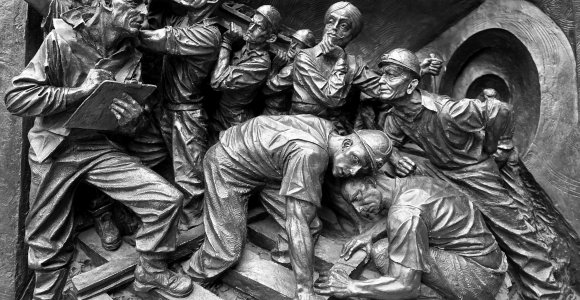
Sacrificing our Humanity to Change the World

Sacrificing our Humanity

Herb Montgomery | February 24, 2023

To listen to this week’s eSight as a podcast episode click here.


These legends of Jesus’ temptations in the wilderness can still inform the lives of Jesus followers working to shape our world in more just and compassionate ways. We’ll need to interpret them differently than the original audience did, but we can still interpret them in life-giving ways for our society.


Our reading this week is from the gospel of Matthew:

Then Jesus was led by the Spirit into the wilderness to be tempted by the devil. After fasting forty days and forty nights, he was hungry. The tempter came to him and said, If you are the Son of God, tell these stones to become bread.”

Jesus answered, It is written: Man shall not live on bread alone, but on every word that comes from the mouth of God.’”

Then the devil took him to the holy city and had him stand on the highest point of the temple. If you are the Son of God,” he said, throw yourself down. For it is written:

  He will command his angels concerning you,

and they will lift you up in their hands,

so that you will not strike your foot against a stone.’”

Jesus answered him, It is also written: Do not put the Lord your God to the test.’”

Again, the devil took him to a very high mountain and showed him all the kingdoms of the world and their splendor. All this I will give you,” he said, if you will bow down and worship me.”

Jesus said to him, Away from me, Satan! For it is written: Worship the Lord your God, and serve him only.’”

Then the devil left him, and angels came and attended him. (Matthew 4:1-11)

This week marks the beginning of Lent. This is the Christian season leading up to Easter and its celebration of the undoing, reversing and overcoming of the state murder of Jesus and the resurrection.

The stories of Jesus’ temptations are legends that were part of the earliest traditions in the Jesus communities of the first century. In each version that we have today, Jesus quotes from Deuteronomy. The gospel authors use the Septuagint version of the Hebrew scriptures for these quotations. As I’ve written recently, it’s helpful to remember that Matthew’s purpose in drawing parallels between Moses and Jesus is to characterize Jesus as a liberator.

As we discussed last week, Jesus does not replace Moses as a new lawgiver, but is a present day Moses. As Moses was a liberator, Jesus is another liberator. This time the people aren’t liberated from Egyptian slavery but from Roman imperialism destroying rural Jewish communities. It’s helpful to hold this in mind with each temptation if we are to harvest any relevance for us as we work to shape our world into a safe, compassionate, just home for everyone in the face of contemporary systemic injustice.

Moses and Israel were tempted for forty years in the wilderness in their liberation myth. Similarly, in the temptation narratives, Jesus is tempted for 40 days in the wilderness, He is another liberator.

The first temptation in Matthew comes in the context of Jesus’ extreme hunger from his extended fast. “Living for bread alone” speaks to the Jewish elites’ complicity with Roman empire and their hoping for power, property and privilege. “Bread for today” was their highest priority regardless of what it might set in motion for the Jewish poor and marginalized tomorrow. Rural Jewish farming communities dotted through the countryside were the most deeply impacted by the choices of the urban elite and wealthy. Rome promised the elites wealth and positions of influence or power, but that would all come at a price that paid by the masses.

This strikes a similar chord today. In our capitalist system, how many times are people’s long-term wellbeing traded for the short-term profit margins of wealthy corporate investors or CEOs? Too often, the bottom line is the highest priority: profit is king. I think most about the environmental devastation that will get worse in the next decades if something doesn’t change. Just making more capital isn’t life-giving, and growth for growth’s sake is cancerous. Growth needs to happen in a responsible way. That’s why I think the message of not living for bread alone but by those things that are life-giving in the long term I think still can speak to us today.

What other things can you think of that are often sacrificed for short-term gain? This temptation paints a picture of Jesus as one whose liberation wouldn’t involve short-term gains that sacrificed the community’s long-term life. His liberation would be holistically life-giving.

The second temptation may be harder for us to draw present societal applications for. It’s hard for me to get my head around the devil taking Jesus to the pinnacle of the temple and tempting him to place God in a position to perform a miracle to save Jesus’ life. One thing that helps here is not to think of the temple as solely religious. It was the center of the Jewish religion, but it was also the seat of the temple state, so with this temptation, it’s more helpful to think of the temple as a state capital.

These verses ultimately speak to me of the temptation to sacrifice oneself for the cause, assuming that good will ultimately result from that sacrifice. Jesus was tempted to throw himself off the pinnacle in the hopes that God would intervene. How many times since then have people in justice movements been inspired to put their own wellbeing in jeopardy and sacrifice themselves to try and awaken the consciences of their oppressors? I think there is a place for certain types of sacrifice for specific causes, but what I’m referring to here is the way that some movement leaders call others to become sacrificial lambs to reach the “hearts and minds” of those harming them.

I think of how pastors have pled with some of my Christian LGBTQ friends to keep showing up in unsafe religious environments each week to model something (I don’t know what) for bigoted Christians in the hopes that their hearts will be changed. This doesn’t take into account the real life harms these spaces impose on these LGBTQ Christians. As a dear friend of mine used to say in Ben Kenobi tones, “These aren’t the sacrificial lambs you’re looking for.”

My friends have callings and dreams and hopes for their lives and shouldn’t have to waste their years simply justifying their existence. They exist. They are here. The question for straight , cisgender Christians is how will we choose to relate to our fellow Christians whether they are different from us or not?

I think of the critiques of feminist scholars like Joanne Carlson Brown and Rebecca Parker, who have spent a lot of energy critiquing certain expressions of self-sacrifice, taught by well-meaning Christians, that prioritize and center oppressors and abusers to the detriment of survivors and victims.

I will be quoting at length here from Brown’s and Parker’s classic essay “For God So Loved the World?” It’s in dialogue with statements made by Martin Luther King, Jr. Again, it’s lengthy, and worth the extended read:

“In liberation and critical theologies the suffering of Jesus becomes a symbol for the conflicts that occur when people fight for new and more just social forms. The old must pass away before the new comes, and in its death throes the old lashes out against the new.”

I agree. But as Brown and Parker go on to explain, this concept often then turns into unhealthy passive acceptance and unhealthy forms of self-sacrifice having a greater purpose and meaning.

“The martyrs of the revolution are the sign that the beast is dying. Their blood gives hope, because it reveals the crisis that is at hand. Furthermore, violence against the vanguards of a new age is to be accepted. Acceptance witnesses against the perpetrator of violence and ennobles the victim. Martin Luther King, Jr., for example, accepted the inevitability of the violence directed against the civil rights movement and saw it as the responsibility of people in the movement to bear the suffering in order to transform the situation. [Italics added for emphasis]

‘Suffering can be a most creative and powerful social force…. The nonviolent say that suffering becomes a powerful social force when you willingly accept that violence on yourself, so that self-suffering stands at the center of the nonviolent movement and the individuals involved are able to suffer in a creative manner, feeling that unearned suffering is redemptive, and that suffering may serve to transform the social situation.’ (Martin Luther King, Jr., quoted. in A Testament of Hope, ed. James Washington (New York: Harper & Row, 1986, 47)

King’s view is similar to the “moral influence” theory of the atonement: unjust suffering has the power to move the hearts of perpetrators of violence. The problem with this theology is that it asks people to suffer for the sake of helping evildoers see their evil ways. It puts concern for the evildoer ahead of concern for the victim of evil. It makes victims the servants of the evildoers’ salvation.” (Brown and Parker, For God So Loved the World?, p. 14-15)

This teaching has proven not only harmful but also lethal for victims of abuse.

Another source worth listening to on this point is womanist scholar Delores Williams, author of Sisters in the Wilderness. Commenting in response to Brown and Parker’s essay, Williams states, “Their critique of Martin Luther Kings, Jr.’s idea of the value of suffering of the oppressed in oppressed-oppressor confrontations accords with my assumption that African-American Christian women can, through their religion and its leaders, be led passively to accept their own oppression and suffering—if the women are taught that suffering is redemptive” (p. 176-177).

In the paragraphs that follow, Williams discusses the ways that Brown’s and Parker’s critiques resonate with the womanist god-talk Williams affirms about Jesus.

Social location matters. The privileged, the propertied, and the powerful may at times need to lean into some sacrifices to live into life-giving ways for and with those who are presently being harmed by systemic injustice. But to call even these forms of sacrifice “self sacrifice” is a misnomer. When the powerful, propertied, and privileges practice this kind of sacrifice, their humanity, their self, is being reclaimed, not sacrificed. Some sacrifices put us back in touch with our selves.

In our story this week, Matthew’s Jesus recognizes a system where the marginalized are already being sacrificed. In this second temptation, this Jesus does not ask them to sacrifice themselves further. His liberation will be a restoring and reclaiming of one’s humanity, not a sacrificing of it. We don’t need to tempt fate, God, or the consciences of our oppressors in ways that are lethal to oppressed communities. To trust the moral conscience of oppressors or abusers is dangerous business.

Lastly Jesus sees a vision of the kingdoms of the world—if he would just bow down to the tempter. In Matthew, Jesus will liberate not by obtaining imperial power or rule as in this last temptation, but by standing up for the humanity of the downtrodden, the marginalized, the underprivileged, and the excluded. For this Jesus, worshipping God and God only was synonymous with loving one’s neighbor as one’s self and practicing the golden rule.

Today, I believe these legends of Jesus’ temptations in the wilderness can still inform the lives of Jesus followers working to shape our world in more just and compassionate ways. We’ll need to interpret them differently than the original audience did, but we can still interpret them in life-giving ways for our society.

How do these three temptations resonate with you?

HeartGroup Application

1. Share something that spoke to you from this week’s eSight/Podcast episode with your HeartGroup.

2. How do these three temptations resonate with you? Share with your group.

3. What can you do this week, big or small, to continue setting in motion the work of shaping our world into a safe, compassionate, just home for everyone?

Thanks for checking in with us, today.

You can find Renewed Heart Ministries on Twitter, Facebook and Instagram. If you haven’t done so already, please follow us on your chosen social media platforms for our daily posts. Also, if you enjoy listening to the Jesus for Everyone podcast, please like and subscribe to the JFE podcast thro  ugh the podcast platform you use and consider taking some time to give us a review. This helps others find our podcast as well.

Also I want to share that we are partnering in a new weekly YouTube show called “Just Talking.” Each week, Todd Leonard and I will be talking about the gospel lectionary reading for the upcoming weekend. We’ll be talking about each reading in the context of love, inclusion, and societal justice. Our hope is that our talking will be just talking (as in justice) and that during our brief conversations each week you’ll be inspired to also do more than just talking.

If you teach from the lectionary each week, or if you’re just looking for some thoughts on the Jesus story from a more progressive perspective within the context of social justice, check it out, you might like it. Todd is brilliant in his discernment of how the Jesus story can speak into our lives today as we work together toward shaping our world into a just, safe and compassionate home for everyone.  He’s worth listening to.

You can find JustTalking each week on YouTube at youtube.com/@herbandtoddjusttalking. Please Like, Subscribe, hit the Notification button, and leave us a Comment.

And if you’d like to reach us here at Renewed Heart Ministries through email, you can reach us at info@renewedheartministries.com.

My new book, Finding Jesus: A story of a fundamentalist preacher who unexpectedly discovered the social, political, and economic teachings of the Gospels is now also available at renewedheartministries.com

Right where you are, keep living in love, choosing compassion, taking action, and working toward justice.

I love each of you dearly,

I’ll see you next week.


Now Available at Renewed Heart Ministries!

It’s here!  Herb’s new book Finding Jesus: A story of a fundamentalist preacher who unexpectedly discovered the social, political, and economic teachings of the Gospels, is available at renewedheartministries.com.

Here is just a taste of what people are saying:

“Herb has spent the last decade reading scripture closely. He also reads the world around us, thinks carefully with theologians and sociologists, and wonders how the most meaningful stories of his faith can inspire us to live with more heart, attention, and care for others in our time. For those who’ve ever felt alone in the process of applying the wisdom of Jesus to the world in which we live, Herb offers signposts for the journey and the reminder that this is not a journey we take alone. Read Finding Jesus with others, and be transformed together.” Dr. Keisha Mckenzie, Auburn Theological Seminary

“In Finding Jesus, Herb Montgomery unleashes the revolutionary Jesus and his kin-dom manifesto from the shackles of the domesticated religion of empire.  Within these pages we discover that rather than being a fire insurance policy to keep good boys and girls out of hell, Jesus often becomes the fiery enemy of good boys and girls who refuse to bring economic justice to the poor, quality healthcare to the underserved, and equal employment to people of color or same-sex orientation.  Because what the biblical narratives of Jesus reveal is that any future human society—heavenly or otherwise—will only be as  good as the one that we’re making right here and now. There is no future tranquil city with streets of gold when there is suffering on the asphalt right outside our front door today.  Finding Jesus invites us to pray ‘thy kingdom come, thy will be done on earth as it is in heaven’ on our feet as we follow our this liberator into the magnificent struggle of bringing the love and justice of God to all—right here, right now.”—Todd Leonard, pastor of Glendale City Church, Glendale CA.

“Herb Montgomery’s teachings have been deeply influential to me. This book shares the story of how he came to view the teachings of Jesus through the lens of nonviolence, liberation for all, and a call to a shared table. It’s an important read, especially for those of us who come from backgrounds where the myth of redemptive violence and individual (rather than collective) salvation was the focus.” – Daneen Akers, author of Holy Troublemakers & Unconventional Saints and co-director/producer of Seventh-Gay Adventists: A Film about Faith, Identity & Belonging

“So often Christians think about Jesus through the lens of Paul’s theology and don’t focus on the actual person and teachings of Jesus. This book is different. Here you find a challenging present-day application of Jesus’ teachings about the Kingdom of God and the Gospel. Rediscover why this Rabbi incited fear in the hearts of religious and political leaders two millennia ago. Herb’s book calls forth a moral vision based on the principles of Jesus’ vision of liberation. Finding Jesus helps us see that these teachings are just as disruptive today as they were when Jesus first articulated them.” Alicia Johnston, author of The Bible & LGBTQ Adventists.

“Herb Montgomery is a pastor for pastors, a teacher for teachers and a scholar for scholars. Part memoir and part theological reflection, Finding Jesus is a helpful and hope-filled guide to a deeper understanding of who Jesus is and who he can be. Herb’s tone is accessible and welcoming, while also challenging and fresh. This book is helpful for anyone who wants a new and fresh perspective on following Jesus.”— Traci Smith, author of Faithful Families

Get your copy today at renewedheartministries.com


Are you receiving all of RHM’s free resources each week?

Begin each day being inspired toward love, compassion, action, and justice. Free Sign-Up HERE.

Choosing the Common Good

illustrates the common good

Herb Montgomery | October 30, 2022

To listen to this week’s eSight as a podcast episode click here.


“Is my Jesus-following contributing to harmful policies toward those who are different from me? Or does my Jesus following move me to listen to those whose experiences in our communities are vastly different from my own, those whom our system makes vulnerable to harm rather than safe?”


I reading this week is from the gospel of Luke:

“Jesus entered Jericho and was passing through. A man was there by the name of Zacchaeus; he was a chief tax collector and was wealthy. He wanted to see who Jesus was, but because he was short he could not see over the crowd. So he ran ahead and climbed a sycamore-fig tree to see him, since Jesus was coming that way.

When Jesus reached the spot, he looked up and said to him, Zacchaeus, come down immediately. I must stay at your house today.’ So he came down at once and welcomed him gladly.

All the people saw this and began to mutter, He has gone to be the guest of a sinner.’

But Zacchaeus stood up and said, Look! Here and now I give half of my possessions to the poor, and if I have cheated anybody out of anything, I will pay back four times the amount.’

Jesus said to him, Today salvation has come to this house, because this man, too, is a son of Abraham. For the Son of Man came to seek and to save the lost.’” (Luke 19:1-10)

We miss a lot in this story if we don’t understand it in terms of how much Roman imperialism harmed the masses in Judea and southern Galilee. Roman occupation benefitted the elite who had become wealthy to the detriment of others and through the Roman economic system. But for many others, Rome drastically changed the economic landscape and how Rome’s client rulers acted in their region.

In this week’s story, Zacchaeus is a tax collector for Roman imperialism and has become rich through his work.

To understand this context more, read this month’s Renewed Heart Ministries book of the month, Richard Horsley’s book Jesus and Empire: The Kingdom of God and the New World Disorder.

Horsley brings to our attention what Roman taxation looked like for many in Jesus’ region:

In one of the most serious omissions, studies of the historical Jesus have failed to investigate the fundamental social forms within Galilean society. The Galileans among whom Jesus worked, indeed the vast majority of people in any traditional agrarian society, would have been embedded in households and villages. Villages were communities of families or households engaged in subsistence agriculture (and/or fishing), a substantial percentage of whose produce was expropriated by their rulers. These rulers intervened in village affairs fairs mainly to extract their tax revenues.” (Kindle Locations 788-789)

Because of heavy Roman taxation, former land owners had become peasant farmers on lands that used to belong to their families. Their role in the economic system became especially oppressive.

“As the productive economic base of the Jerusalem Temple and priesthood and of the Herodian capital cities of Sepphoris and Tiberias in Galilee, the peasants’ role was to render up produce in tithes, taxes, and tribute for the rulers’ support.” (Kindle Locations 516-517)

The placement of Herod Antipas as a client ruler of the Roman empire marked a first in the history of Roman imperialism for this region: a “king” representing Rome lived directly in Galilee. This brought an “unprecedented rigor in the collection of taxes” (Horsley).

Horsley’s research demonstrates that the political climate among the people in response to this deep economic oppression inspired their reimagining the liberation themes and stories within the Hebrew tradition and then expressed in various forms of resistance.

“Judean and Galilean peasants were cultivating their own popular version of Israelite tradition that, far more than the version accepted in Jerusalem, emphasized stories of liberation from oppressive rule . . .” (Kindle Locations 519-520)

“In order to protect their own minimal subsistence, the always marginal peasants regularly sequestered portions of their crops before the tax collectors arrived or found various ways of sabotaging the exploitative practices of their rulers.” (Kindle Locations 700-702)

Roman imperialism through economic oppression also meant that Jesus’ society began to break down:

“Roman conquest and imposition of client rulers, with the resulting multiple layers of taxes and socially disintegrative economic and cultural practices, set the conditions of and for Jesus’ mission and other, parallel movements. In generating and articulating his program, moreover, Jesus drew thoroughly on Israelite traditions of opposition to imperial and oppressive domestic rulers. There is no need to debate whether he was ‘apocalyptic,’ because both Jesus and the apocalypses produced by scribal groups shared the widespread common Israelite pattern of God’s judgment against foreign rulers as a prerequisite of restoration of the subject people, a pattern dictated by the recurrent circumstances of Israelite peoples under imperial rule. In this regard Jesus stands together with activist Pharisees and other teachers and administrators who formed resistance groups such as the Fourth Philosophy. They stand on precisely the same grounds in rejecting the tribute to Rome: they owe exclusive loyalty to God as their only ruler and lord. Surely the vast majority of Judeans and Galileans believed that, and attempted to resist Roman exploitation in whatever ways they could whenever they could.” (Kindle Locations 1339-1346)

We must read this week’s story within this context. This backdrop also gives new insights into the political, economic, and social meaning of the gospels. Jesus’ preaching, teaching, and demonstrations of the “kingdom of God,” the rule of God, or God’s just future must be understood as an answer to the people’s desire for liberation from Roman rule and imperialism.

In our story this week, conviction has come home to Zacchaeus who has participated in the empire and become personally wealthy from systems that were to blame for the disintegration of his own Jewish society. This is a story of repentance and change that manifests through economic and political change for Zacchaeus here and now, not after death. Life as usual doesn’t continue on for Zacchaeus. No: Zacchaeus choosing to embrace Jesus’ program meant him choosing to let go of his ill-gotten wealth and use it for reparations and restoration after the harm Roman imperialism had done. He is rejecting the kingdom of Rome for the rule of the God of the Torah, not just religiously, but also politically, economically, and socially in concrete ways for his community.

In response to this holistic change, Jesus states, “Today, salvation has come to this house.”

As Rev. Dr. Wilda Gafney insightfully comments:

“Riches may buffer some of the hardships of life, but one can have all the wealth in the world and still be deeply lost.” (In A Woman’s Lectionary for the Whole Church, Year W, p. 278)

What does following the Jesus of these gospel stories mean for us, today? This Jesus prioritized the marginalized and disenfranchised. This Jesus called those complicit with social harm, like Zacchaeus, to join his program of liberation?

Today, some who claim the name of Jesus are responsible for the political, social and economic harm being perpetrated against LGBTQ people. Some Christians have chosen to put women’s lives in jeopardy because of their shallow understandings of women’s healthcare needs and basic human rights. My own Appalachian communities have been harmed through politics that Christians have been duped into supporting (i.e. “pro-life” being the opposite of life-giving, as an example), and also Christians have not educated themselves out of forms of Christianity that make them especially vulnerable to political manipulation.

Yes, Zacchaeus’ story has something to say to those whose wealth has come to them through harming others. It also has something to say to all Jesus followers who live in other forms of social privilege. This story speaks deeply to me. I am not wealthy, but I am white, straight, cisgender, male, and have middle-class privilege. Reading this story, I ask myself: Is my Jesus-following contributing to harmful policies toward those who are different from me? Or does my Jesus following move me to listen to those whose experiences in our communities are vastly different from my own, those whom our system makes vulnerable to harm rather than safe? The story of Zacchaeus calls me to question ways in which I, too, am complicit in the harm of others and can choose change.

I and others who share my social location can do better, and our doing better is not an act of charity. It’s the work that Zacchaeus did, of reclaiming our own humanity through acknowledging, valuing, and honoring the humanity of others.

The lessons are deep and life changing this week, and I’m thankful for them.

What would it take today for those who live in social locations of privilege to hear the words, “Today, salvation has come to this house.”

HeartGroup Application

1. Share something that spoke to you from this week’s eSight/Podcast episode with your HeartGroup.

2. In our story, Zacchaeus chooses not only to change, but to also make reparations for harms he has committed in the past? Discuss the kinds of reparation you believe we as a society should be making with your group.

3. What can you do this week, big or small, to continue setting in motion the work of shaping our world into a safe, compassionate, just home for everyone?

Thanks for checking in with us, today.

You can find Renewed Heart Ministries on Twitter, Facebook and Instagram. If you haven’t done so already, please follow us on your chosen social media platforms for our daily posts. Also, if you enjoy listening to the Jesus for Everyone podcast, please like and subscribe to the JFE podcast through the podcast platform you use and consider taking some time to give us a review. This helps others find our podcast as well.

And if you’d like to reach out to us through email, you can reach us at info@renewedheartministries.com.

Right where you are, keep living in love, choosing compassion, taking action, and working toward justice.

I love each of you dearly,

I’ll see you next week


Begin each day being inspired toward love, compassion, action, and justice.

Go to renewedheartministries.com and click “sign up.”

Free Sign-Up at:

https://renewedheartministries.org/Contact-forms?form=EmailSignUp

or Follow us on Facebook, Twitter and Instagram.

Faith and Political Harm

Herb Montgomery | September 30, 2022

To listen to this week’s eSight as a podcast episode click here.


“The Jesus of the gospels cared about the concrete harm being done to the marginalized and exploited. And our faith in this kind of Jesus should move us to do the same. Is our faith making us complicit with the mountains of harm done to those our present system makes vulnerable? Is our faith inspiring us to work today toward moving our mountains into the sea?”


Our reading this week is from the gospel of Luke:

The apostles said to the Lord, Increase our faith!”

He replied, If you have faith as small as a mustard seed, you can say to this mulberry tree, Be uprooted and planted in the sea,’ and it will obey you.”

“Suppose one of you has a slave plowing or looking after the sheep. Will he say to the slave when he comes in from the field, Come along now and sit down to eat? Wont he rather say, Prepare my supper, get yourself ready and wait on me while I eat and drink; after that you may eat and drink? Will he thank the slave because he did what he was told to do? So you also, when you have done everything you were told to do, should say, We are unworthy slaves; we have only done our duty.’” (Luke 17:5-10)

There is a lot to unpack in this week’s reading.

Let’s begin with the language of throwing trees into the sea. Luke’s version of the Jesus story substitutes the mulberry tree for what other gospels call a mountain:

Truly I tell you, if anyone says to this mountain, Go, throw yourself into the sea,’ and does not doubt in their heart but believes that what they say will happen, it will be done for them. (Mark 11:23; see also Matthew 17:20; 21:21)

Jesus said, “If two make peace with each other in a single house, they will say to the mountain, ‘Move from here!’ and it will move.” (Gospel of Thomas 48)

When you say, ‘Mountain, move from here!’ it will move.” (Gospel of Thomas 106:2)

The language of throwing trees and/or mountains into the sea had a rich political history in the Hebrew scriptures. As Isaiah wrote, “every mountain and hill” would be “made low” (Isaiah 40:4)

I agree with Richard Horsley, who explains, “To hear this parable, however, we must again remove some of the Christian theological wax from our ears” (Richard A. Horsley, Jesus and Empire: The Kingdom of God and the New World Disorder, Kindle Location 1203). We first must understand the political and economic context in which this language was used in the Jesus story.

Jesus used this language in the justice tradition of the Hebrew prophets. His community, the Jewish community, was subjugated by Rome. In Roman fashion, the empire had installed its own client ruler, Herod, to have direct control of the region, and Herod had in turn appointed the High Priests of the temple (known as Herod’s Temple) from elite families from Jerusalem and surrounding regions.

All of this meant the people were heavily economically oppressed. Not only did Rome tax the people through Herod and the Temple High Priest, but Herod also heavily taxed the people for expensive building projects to honor Caesar and to fund his reign of terror, which kept the populace in line and prevented rebellions. On top of this, the Temple itself demanded tithes and offerings. Instead of being a kind of wealth redistribution to the poor, these tithes and offerings tended only to make the wealthy elite richer.

It is in this context that we must understand the image of throwing a mountain into the sea. In the prophetic tradition, mountains represented political and social orders. In the gospels, the mountain being thrown into the sea was associated with the Temple State, which had become a proxy for Rome when, after Herod’s death, Rome began directly determining who the priests and the High Priest would be. Talking about throwing a mountain into the sea in that era would have been associated with the oppressive social, economic, and political system represented by the temple mount rulers in the hilly city of Jerusalem.

To quote Horsley again:

“The high priests are hardly ‘Jewish leaders.’ [Editor’s note: Horsley is not implying that the leaders were not Jewish ethnically. He’s suggesting that they represented the interest of Rome, not of Jewish liberation or independence from Rome.] . . . Neither in this episode nor in Mark as a whole is there any suggestion of the replacement of ‘Judaism’ by ‘Christianity.’ . . . Here, as throughout Mark’s story, the fundamental conflict lies between rulers and ruled, not ‘Judaism’ and ‘Christianity.’” (Richard A. Horsley, Jesus and Empire: The Kingdom of God and the New World Disorder, Kindle Locations 1203-1207)

In his insightful commentaries, Ched Myers agrees that the metaphor of throwing mountains into seas referred to Roman oppression, directly or indirectly through the Temple state acting as a Roman client.

“As impossible as it may seem, Mark insists that the overwhelming power and legitimacy of both the Roman ‘legion’ and the Jewish ‘mountain’ will meet their end—if the disciples truly believe in the possibility of a new order.” (Ched Myers, Binding the Strong Man, p. 305)

“Faith is here defined as the political imagination that insists on the possibility of a society freed from the powers, whether Roman militarism or the Judean aristocracy.” (Ched Myers, Say to This Mountain”: Mark’s Story of Discipleship, p. 149)

In the same way that peasants could not imagine a world without feudalism, we today find it difficult to imagine a world without capitalism, and Jesus’ followers could not imagine a world without Roman imperial rule.

Some in Jesus’ audience that day didn’t want a world without Roman imperial rule, much as capitalists today who benefit from capitalism therefore defend the way things are. The wealthy elite in Jesus’ audience were benefitting from Roman rule, and it’s to them that Jesus’ next words are aimed.

We can read the “slave” language in this week’s reading differently: I don’t accept that Jesus is calling his disciples to perceive themselves as unworthy slaves who have only done their duty. This way of perceiving oneself is damaging, not life-giving.

But repeatedly in Luke 17, Jesus’ audience keeps changing. These changes are not only frequent, they also happen rapidly with no warning. If we interpret this language as aimed at the ruling elite in Jesus’ society rather than to the disciples, another meaning becomes possible.

The last phrase gives us a clue: “We have only done our duty.” The original language of the text suggests that this concept of duty could involve the obligations of indebtedness.

Creditors don’t thank debtors for paying back their loans. They demand it. The wealthy elite at this time had become wealthy through the misfortune of others. Heavy taxation had pushed many landowners to their limits: if they had one bad year or crop failure, they’d have to take loans. Being already on the edge, any other misfortune, which was common, would push these landowners into default. Many of the wealthy landowners in Jesus’ society were creditors who had gained even more land because the original landowners had defaulted on their debts and lost their land to their creditors. The original owers had become debt-slaves, working on land that used to belong to them. In this context, those who were wealthy esteemed themselves through the typical lens of classism as being superior to those who had lost out.

Jesus turns this estimate of others as inferior back onto the elite, and accuses them of holding a similar status in relation to Rome. They were acting, he says, not as the liberated and independent worshippers of YHWH, but as the servants/slaves of the Roman Empire.

This rhetoric becomes a painful challenge, then. Is Rome going to thank them for their service and client slavery? No. Rome looks at them as inferior, conquered, and subjugated. They have traded faithfulness to God for faithfulness to Rome. Rather than being favored children of Abraham, elites have chosen the status of an unworthy slave only fulfilling the obligations of their debt to the Roman Empire.

Reading through this lens, we could paraphrase this passage this way: “So you wealthy elite, when you have done everything you were told to do by your Roman overseers, should say, We are unworthy slaves; we have only done our duty.’”

Jesus is seeking to wake the elites up to the reality of what they are doing to others by humiliating them with their classist estimation of others and the world around them.

There are other places in the gospels that refer to disciples as slaves. I interpret our reading this week as naming the elites as slaves of Roman imperialism. I’m also thankful that even the language of referring to disciples as slaves was ultimately replaced in the Jesus story. By the time of the last canonical gospel to be written the author of the gospel of John abandons the reference to disciples as slaves:

“I no longer call you slaves, because a slave does not know his masters business. Instead, I have called you friends, for everything that I learned from my Father I have made known to you.” (John 15:15)

Nonetheless, I find this week’s slave language to be much more life-giving when applied not to disciples, but to the client rulers or “slaves” of the Roman Empire in Galilee, Samaria, Judea and the surrounding regions. It calls me to question my own investment in the way things are today and what capitalism causes me to trade or give up so I can survive in this system.

Jesus calls his listeners to be careful about how they esteem and treat others, because how they were treating others was how Rome was treating them.

What all of this says to me is that the Jesus of the gospels did not separate his politics from his religion. He allowed his faith and his perception of God to inform his politics in relation how others were being exploited and harmed. Remember: all theology is political, because all politics should ask who is benefiting and who is being harmed. The Jesus of the gospels cared about the concrete harm being done to the marginalized and exploited. And our faith in this kind of Jesus should move us to do the same.

Is our faith making us complicit with the mountains of harm done to those our present system makes vulnerable?

Is our faith inspiring us to work today toward moving our mountains into the sea?

HeartGroup Application

1. Share something that spoke to you from this week’s eSight/Podcast episode with your HeartGroup.

2. What concrete harm being done to the marginalized and exploited in our societal context is on your heart this week? Share with your group.

3.  What can you do this week, big or small, to continue setting in motion the work of shaping our world into a safe, compassionate, just home for everyone?

Thanks for checking in with us, today.

You can find Renewed Heart Ministries on Twitter, Facebook and Instagram. If you haven’t done so already, please follow us on your chosen social media platforms for our daily posts.  Also, if you enjoy listening to the Jesus for Everyone podcast, please like and subscribe to the JFE podcast through the podcast platform you use and consider taking some time to give us a review. This helps others find our podcast as well.

And if you’d like to reach out to us through email, you can reach us at info@renewedheartministries.com.

Right where you are, keep living in love, choosing compassion, taking action, and working toward justice.

I love each of you dearly,

I’ll see you next week


Begin each day being inspired toward love, compassion, action, and justice.

Go to renewedheartministries.com and click “sign up.”

Free Sign-Up at:

https://renewedheartministries.org/Contact-forms?form=EmailSignUp

or Follow us on Facebook, Twitter and Instagram.