
Transparency and the Vilification of Darkness

night sky


“What the passage from John describes is the desire to avoid the light of justice for fear of harmful actions toward others being exposed, actions that benefit some at the expense of others. We read about some hiding in the shadows for fear of being discovered, maybe held accountable, and most definitely being stopped. It’s about them coopting the darkness, which is not inherently evil, and using the darkness not for the life giving purposes of which it is intended, but to hide so they can continue doing harm.”


Herb Montgomery | March 12, 2021

This week’s reading is from the gospel of John,

“Just as Moses lifted up the snake in the wilderness, so the Son of Man must be lifted up, that everyone who believes may have eternal life in him. For God so loved the world that he gave his one and only Son, that whoever believes in him shall not perish but have eternal life. For God did not send his Son into the world to condemn the world, but to save the world through him. Whoever believes in him is not condemned, but whoever does not believe stands condemned already because they have not believed in the name of God’s one and only Son. This is the verdict: Light has come into the world, but people loved darkness instead of light because their deeds were evil. Everyone who does evil hates the light, and will not come into the light for fear that their deeds will be exposed. But whoever lives by the truth comes into the light, so that it may be seen plainly that what they have done has been done in the sight of God.” (John 3:14-21)

The phrase in this passage that speaks most to me now is in verse 20: “Everyone who does evil hates the light, and will not come into the light for fear that their deeds will be exposed.” This passage speaks to us of transparency versus hiding. Let’s unpack this a bit with an example from current events.

U.S. President Biden recently released an unclassified version of the National Intelligence report on the 2018 killing of Jamal Khashoggi, a Washington Post journalist. The report finds Saudi Crown Prince Mohammed bin Salman approved Khashoggi’s killing.

By contrast, the previous administration had refused to release this report. In the language of our passage this week, they had refused to let the report come to light because the deeds it exposed were deeply evil. Bob Woodward reports in his book Rage that Trump even bragged about protecting the Saudi prince. “I saved his ass,” Trump told Woodward, while many in the U.S. were calling for justice after Khashoggi’s murder. Trump continued, “I was able to get Congress to leave him alone. I was able to get them to stop.”

This week’s passage from John’s gospel includes language that has been interpreted to blame Jewish people for Jesus’ death. I reject this anti-semitic interpretation. What the Jesus narrative does demonstrate is a universal dynamic of classism. The elite in Jesus’ society were threatened by his teachings, while most of the people loved his gospel to the poor, oppressed, and marginalized.

In Luke’s version of the Jesus story we read,

“When the scribes and chief priests realized that he had told this parable against them, they wanted to lay hands on him at that very hour, but they feared the people. (Luke 20:19, emphasis added, cf. Luke 4:18-19)

In much the same way, Miguel A. De La Torre writes, global elites today see liberation theology as a threat:

“I am amazed at the misinformation surrounding liberation theology . . . Why is this theological perspective deemed so dangerous? Why have governments, including that of the United States, committed so many resources to bring about its obliteration? . . . Liberation theology is so dangerous because it disrupts a religious and political worldview that supports social structures that privilege the few at the expense of the many. Ignorance of the causes of oppression is crucial to maintaining this worldview. But as the consciousness of the oppressed begins to be raised, as they begin to see with their own eyes that their repressive conditions are contrary to the will of God, the power and privilege of the few who benefit from the status quo is threatened.” (Miguel A. De La Torre, Liberation Theology for Armchair Theologians, Introduction)

In Jesus’ society it was not the people in general who rejected light for fear of being exposed, but, certain people, the elites, those in positions of power and privilege who “loved darkness instead of light because their deeds were evil.”

In my home state of West Virginia, we are now in the midst of our 2021 legislative session. The Republican party won a supermajority in both houses of the West Virginia legislature in last November’s election. Now an alarming trend is developing.

Over half a dozen bills moving through the halls of legislature either remove all requirements for public disclosure of meetings and information, or make agency information private and not subject to the Freedom of Information Act. That’s not how government that claims to derive its power from the consent of those it represents should work. Government should be transparent. Everyone should be able to know what is being done, and be able to keep those who represent them accountable. It makes one wonder what is being hidden, what is being kept out of the light of public consciousness.

I want to offer a word of caution regarding the phrase in our passage about “loving darkness.”
The vilification of darkness in the gospels is problematic today. However innocent the original intent may have been of the gospel authors, equating darkness with evil has been a deep part of White supremacism. White supremacists have used Biblical passages to equate whiteness with goodness and superiority and blackness with evil or inferiority. Equating blackness with evil is how colonists imagined God and holiness as white and therefore, Black and Brown people as something else. This seed has borne deeply harmful and destructive fruit in the lives of all who are not White. (In different ways it has also damaged White people. One cannot advance supremacism and be unscathed.)

I’ve noticed that the Rev. Dr. Wil Gafney uses the language of “gloom” or “shadow” instead of “darkness.” After all, there is nothing inherently evil about darkness and we need a balance of both light and darkness in our lives for health. The darkness of the womb is where we were all given life. Darkness is where we rest and heal, and some forms of life only grow in darkness. Again, it’s about balance: both light and darkness in a dance, so to speak, with neither overcoming the other. We can speak of the goodness of the light without vilifying darkness. Darkness calls us to the goodness of rest and recovery. Light calls us to wake and to get to work. We need both. (For more on this see Rev. Dr. Gafney’s Embracing the Light & the Darkness in the Age of Black Lives Matter and Dark and Light: Wil Gafney on White Supremacy in Biblical Interpretation)

What the passage from John describes is the desire to avoid the light of justice for fear of harmful actions toward others being exposed, actions that benefit some at the expense of others. We read about some hiding in the shadows for fear of being discovered, maybe held accountable, and most definitely being stopped. It’s about them coopting the darkness, which is not inherently evil, and using the darkness not for the life giving purposes of which it is intended, but to hide so they can continue doing harm.

A just society requires accountability, and accountability requires investigation. Those who have something to lose deeply fear investigation. Keep the tax returns hidden, they might say. Don’t set up a committee to investigate January 6, 2021, or broaden an investigation’s scope to dilute its power of discovery and make it more likely that some things stay hidden. Don’t release investigative reports, or at least don’t make them public. Watch for where you see those in positions of power and privilege seeking to keep their actions out of public consciousness in these ways.

In the Jesus story, Jesus emerged as a Galilean prophet of the poor, calling for life giving changes within his own society. He called for the redistribution of wealth, the inclusion of the marginalized, and the politics of compassion and protective justice toward those most vulnerable to being harmed by the then present system. For this reason, the powerful who were benefiting from the harm being done to others tried to hide. After all, when public consciousness is raised, change isn’t very far behind, and change is what those benefiting from the status quo most desperately want to stop.

In John’s story, the powerful elite succeed. Jesus is silenced through execution. Those with too much to lose interrupted his salvific work with a Roman cross, murdering him for earthly, political reasons, not cosmic theological ones. As we near the season of celebrating the resurrection across Christendom, we’ll discuss this further. For now, watch for where you see hiding and obfuscation. Don’t allow the shadows to be used for harm. Call for transparency, and affirm and support it wherever you see it being practiced.

HeartGroup Application

We at RHM are continuing to ask all HeartGroups not to meet together physically at this time. Please stay virtually connected and practice physical distancing. When you do go out, please keep a six-foot distance between you and others, wear a mask, and continue to wash your hands to stop the spread of the virus.

This is also a time where we can practice the resource-sharing and mutual aid found in the gospels. Make sure the others in your group have what they need. This is a time to work together and prioritize protecting those most vulnerable among us.

1. Share something that spoke to you from this week’s eSight/Podcast episode with your HeartGroup.

2. Share with the group a story from your own experience that teaches the value of transparency, either within secular society or faith communities.

3. What can you do this week, big or small, to continue setting in motion the work of shaping our world into a safe, compassionate, just home for everyone?

Thanks for checking in with us, today.

Right where you are, keep living in love, choosing compassion, taking action, and working toward justice.

I love each of you dearly,

I’ll see you next week
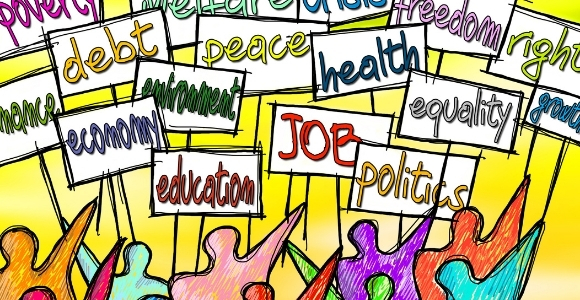
Jesus and Protest

cartoon of protesters

Herb Montgomery | March 5, 2021

This week’s reading is John 2:13-22. I prefer Mark’s version of this story:

“On reaching Jerusalem, Jesus entered the temple courts and began driving out those who were buying and selling there. He overturned the tables of the money changers and the benches of those selling doves, and would not allow anyone to carry merchandise through the temple courts. And as he taught them, he said, “Is it not written: ‘My house will be called a house of prayer for all nations’? But you have made it ‘a den of robbers.’” The chief priests and the teachers of the law heard this and began looking for a way to kill him, for they feared him, because the whole crowd was amazed at his teaching. (Mark 11:15-18)

Most scholars believe that out of the four canonical gospels we have today, Mark was written the earliest and John the latest. In the passage for this week, Mark’s author conflates and places in the mouth of Jesus two passages from the Hebrew scriptures, one from Isaiah and the other from Jeremiah:

“These I will bring to my holy mountain
and give them joy in my house of prayer.
Their burnt offerings and sacrifices
will be accepted on my altar;
for my house will be called
a house of prayer for all nations.” (Isaiah 56:7)

And:

“Has this house, which bears my Name, become a den of robbers to you? But I have been watching! declares the LORD.” (Jeremiah 7:11)

In Mark’s gospel, the Temple in Jerusalem was the capital building of the Temple state. The Temple state, centered in Jerusalem, was not a purely religious system as we think of Christian churches today: there was no separation of church and state in Jesus’ culture. The Temple state was a religious, political, social, and economic system that governed all aspects of Jewish society. It’s telling that in the revolt leading up to the Jewish-Roman war of 66-69 C.E., when the rebels took over the temple, the scene was not like a church or a synagogue, but rather a banking institution. The rebels found the debt records for the poor and burned them. In one sense, it was a religious act for those who considered faithfulness to the Jubilee [debt cancellation] of the Torah to be faithfulness to the God of the Torah. But it was also an economic and political act too.

By the time John’s gospel was written, the story of Jesus and the Temple has evolved. It has become concerned not with a system that exploits the poor but with one that defiles religious space. The writer’s emphasis is not on the Temple as a building at the center of a system that perpetuates poverty, but on the Temple as a symbol for Jesus’ body which would be crucified and then resurrected (John 2:14, 19-20).

I understand why so many people have focused on John’s version of the story recently. Many Christians have begun their stride toward the Easter holiday and its focus on the death and resurrection of the Christ. I find Mark’s political and economic emphasis on the systemic exploitation of the poor much more helpful at this time in the U.S., however.

It’s important to connect the context of Jesus’ temple protest in Mark with his other acts and statements that day:

“As he taught, Jesus said, ‘Watch out for the teachers of the law. They like to walk around in flowing robes and be greeted with respect in the marketplaces, and have the most important seats in the synagogues and the places of honor at banquets. They devour widows’ houses and for a show make lengthy prayers. These men will be punished most severely.” (Mark 12:38-40)

Jesus’ concern here is the economic exploitation of the most vulnerable: how widows are being forced into poverty. He is not concerned that something is being done incorrectly in the temple’s worship system.

Mark continues:

“Jesus sat down opposite the place where the offerings were put and watched the crowd putting their money into the temple treasury. Many rich people threw in large amounts. But a poor widow came and put in two very small copper coins, worth only a few cents. Calling his disciples to him, Jesus said, “Truly I tell you, this poor widow has put more into the treasury than all the others. They all gave out of their wealth; but she, out of her poverty, put in everything—all she had to live on.”

This statement is not praise for the widow as so many Christians interpret it today. No, Jesus is critiquing a system that leaves widows with nothing left to live on!

This story ends with:

“As Jesus was leaving the temple, one of his disciples said to him, ‘Look, Teacher! What massive stones! What magnificent buildings!’ ‘Do you see all these great buildings?’ replied Jesus. ‘Not one stone here will be left on another; every one will be thrown down.’ (Mark 12:41-13.2)

In Mark, Jesus is not speaking about his own death and resurrection as he is in John. He is speaking about how exploitative systems are not sustainable and will eventually crumble under the weight of their own injustice.
The present economic system of consumption and massive profit at others’ expense is unsustainable ecologically. Jeff Bezos has once again become the richest person in the world, with a net worth of $191.2 billion in the midst of a pandemic with an economic displacement worse than during the Great Depression. I think, too, of President Biden’s reluctance to cancel student debt even though it was one of his campaign pledges. But what stands out to me most is how immigration in the U.S. has been handled over the last four years and I hope that the next four will bring desperately needed change.

The U.S. immigration system has a long racist history. Rather than America becoming a multiracial democracy, its immigration system is designed to keep it as a country where White people are still the majority and where those White lives matter more than the lives of those who are not White. (For a detailed, yet easy to understand recounting of the racial history of immigration in the U.S. see Kelly Brown Douglass’ Stand Your Ground: Black Bodies and the Justice of God.)

Over the past four years, for example, we have seen the immoral crime of the U.S. terrorizing families by ripping children away from their parents just because they sought asylum here. Words from Emma Lazarus’s famous 1883 sonnet “The New Colossus”—“Give me your tired, your poor, Your huddled masses yearning to breathe free”—have been eclipsed by White nationalism and White supremacy. If ever there were a setting in which Jesus followers should follow Jesus in flipping the tables of a system that was irreparably harming those who were already vulnerable, family separation was it. Some Christians actually did respond. But not many.

I’m thankful to see the Biden administration moving toward change on this issue. I’m thankful to see it using more inclusive language, such as “noncitizens” and “undocumented noncitizen” instead of “alien” or “illegal alien,” referring to the “integration” of immigrants into society instead of their “assimilation,” and abandoning language that dehumanized immigrants or was racist.

This is undoubtedly a step toward a welcoming America. And while I’m thankful for these beginnings, I want to see more than linguistic changes, too. It’s going to take real policy change, real action to turn around the Trump administration’s hostile stance and inhuman response to immigrants. We have a chance to do something fundamentally different. My hope is that we transition away from the immigration policies of the past that endeavored to protect Whiteness, and instead take genuine steps to affirm the future of America as a multiracial democracy where every voice matters and everyone, regardless of race, religion, net worth, ability, gender, orientation, or gender expression can have a seat at the table. I know these changes don’t ever happen fast enough, and we have the potential at this moment to leap forward.

My favorite part of Mark’s story this week is actually found in Mark 11:

“Jesus entered Jerusalem and went into the temple courts. He looked around at everything, but since it was already late, he went out to Bethany with the Twelve.” (Mark 11:11)

Jesus’ temple protest was supposed happen the first day Jesus entered Jerusalem, but by the time he arrived at the temple courtyard, it was too late in the day and there were not enough people in the temple courtyard for his protest to make much of a difference. So Mark states he goes back to Bethany with his disciples, spends the night, and comes back the following day.

This makes me wonder about the effectiveness of our own protest. When we do protest, how do we make it matter? How do we make it count?

Again, change for those being harmed never happens fast enough. But in each of our circles of influence we have today and all the potential for change today brings. Each day we still can move a more just, safe, compassionate, inclusive future closer.

Let’s do it.

HeartGroup Application

We at RHM are continuing to ask all HeartGroups not to meet together physically at this time. Please stay virtually connected and practice physical distancing. When you do go out, please keep a six-foot distance between you and others, wear a mask, and continue to wash your hands to stop the spread of the virus.

This is also a time where we can practice the resource-sharing and mutual aid found in the gospels. Make sure the others in your group have what they need. This is a time to work together and prioritize protecting those most vulnerable among us.

1. Share something that spoke to you from this week’s eSight/Podcast episode with your HeartGroup.

2. Share three characteristics you feel a protest must possess in order to be effective in our social climate, today.

3. What can you do this week, big or small, to continue setting in motion the work of shaping our world into a safe, compassionate, just home for everyone?

Thanks for checking in with us, today.

Right where you are, keep living in love, choosing compassion, taking action, and working toward justice.

I love each of you dearly,

I’ll see you next week

Gaining the World, Losing One’s Humanity

man alone on beach

Herb Montgomery | February 26, 2021

In Mark’s gospel we read,

“He then began to teach them that the Son of Man must suffer many things and be rejected by the elders, the chief priests and the teachers of the law, and that he must be killed and after three days rise again. He spoke plainly about this, and Peter took him aside and began to rebuke him. But when Jesus turned and looked at his disciples, he rebuked Peter. ‘Get behind me, Satan!’ he said. ‘You do not have in mind the concerns of God, but merely human concerns.’ Then he called the crowd to him along with his disciples and said: “Whoever wants to be my disciple must deny themselves and take up their cross and follow me. For whoever wants to save their life will lose it, but whoever loses their life for me and for the gospel will save it. What good is it for someone to gain the whole world, yet forfeit their soul? Or what can anyone give in exchange for their soul? If anyone is ashamed of me and my words in this adulterous and sinful generation, the Son of Man will be ashamed of them when he comes in his Father’s glory with the holy angels.” (Mark 8:31-38)

Those controlling an unjust status quo have always used violence to force the silence of those who call for distributively just change and equitable transformation of society. In Jesus’ society, Rome maintained social “peace” by terrorizing inhabitants with the threat of a militarized, heavy handed backlash if any group disrupted the smooth functioning of the Pax Romana.

That is the political or social context in which we must understand the above passage. Jesus was facing two options: remain silent and avoid Rome’s violent response, i.e. crucifixion, or stand in the tradition of past Hebrew prophets and speak his truth to the unjust, exploitative, clients of Rome controlling the temple state. With this context, we can most safely reclaim and understand the “must” language of the passage we read today.

As Jesus saw vulnerable people in his society being harmed, he could not remain silent without losing hold, to some degree, of his own humanity. He must speak out. And speak out he did in the temple courtyard through both rhetoric and flipping the moneychangers’ tables. It is the must that must hold priority in our understanding. The reason Jesus “must suffer” the political consequences of speaking out was that he could not remain silent. I imagine he could not picture any other way. This to me speaks of his courage: he knows the cost of his upcoming temple protest, and he chooses to speak out anyway.

This gives us insight into life-giving ways to interpret the language of “taking up the cross and following” Jesus. Interpreting the cross as self-sacrifice that Jesus modeled and that we must follow too has borne destructive, harmful fruit in multiple vulnerable communities, especially women in Christian circles. In these circles, taking up one’s cross has come to mean remaining silent: Be like Jesus. Take up your cross. Just silently bear the injustice you are suffering. But this is not at all what we see Jesus doing in the story.

In the story, Jesus is refusing to be silent and bear suffering. He is speaking out, despite knowing that a cross may very well be the backlash he receives for doing so. I do not believe that Jesus would have taught the oppressed, whose lives and selves were already being sacrificed by those in power and whose humanity was already being denied, to choose self-sacrifice and denial of their humanity. Jesus instead gave them a way to affirm their humanity, worth, and value; to stand up and speak out, even in the face of the threat of death.

The other phrase in this passage that speaks to me at this moment in American society is “What does it profit a person if they gain the world but lose their self.” At the time of this writing, I was watching the second impeachment trial of former president Donald Trump. Over the last four years, every time I have thought that this is the moment Republican lawmakers will wake from their spell, break from their path, and do what’s right, they have instead sunk to lower depths. But my concern is not partisan politics. My concern is humanity. One party has dug in and placed their own political, re-election aspirations over and against the common good, the good of the country, basic humanity including their own, and even against democracy itself.

Ultimately, Republican Senators voted not to convict the former president, despite how much evidence piled up over. They mis-judged that their own futures would be better if they just buried their heads in the sand . Yet what’s at stake is larger than democracy. As Jesus called his followers, we’re called to find and reclaim our humanity. To Republicans who have kept following Trump down paths that none of them should have followed, this is the moment to turn around. What does it profit a person if they gain the whole world and yet, in doing so, lose their souls?

My heart hurts as I watch the resoluteness of so many refusing to do what is right. In the spirt of our passage from Mark on doing what is right even if one is threatened with a cross, I was moved by two significant moments from the impeachment trial. The first moment was Chaplain Barry Black’s reference in his prayer at beginning of the trial to a hymn that was my favorite when I was a teenager, Once to Every Man and Nation. Second was Representative Jamie Raskin’s adaptation of Thomas Paine’s words in The Crisis at the very end of the prosecution’s case. I’ll end this article this week with both quotes:

“Once to ev’ry man and nation
Comes the moment to decide,
In the strife of truth and falsehood,
For the good or evil side.” —James Russell Lowell

“These are the times that try men and women’s souls. The summer soldier and the sunshine patriot will shrink at this moment from the service of their cause and their country; but everyone who stands with us now, will win the love and the favor and affection of every man and every woman for all time. Tyranny, like hell, is not easily conquered; but we have this saving consolation: the more difficult the struggle, the more glorious in the end will be our victory.” —Thomas Paine

HeartGroup Application

We at RHM are continuing to ask all HeartGroups not to meet together physically at this time. Please stay virtually connected and practice physical distancing. When you do go out, please keep a six-foot distance between you and others, wear a mask, and continue to wash your hands to stop the spread of the virus.

This is also a time where we can practice the resource-sharing and mutual aid found in the gospels. Make sure the others in your group have what they need. This is a time to work together and prioritize protecting those most vulnerable among us.

1. Share something that spoke to you from this week’s eSight/Podcast episode with your HeartGroup.

2. Have you ever had to make a decision between staying silent and speaking out? Share your experience and any possible lessons learned with your group.

3. What can you do this week, big or small, to continue setting in motion the work of shaping our world into a safe, compassionate, just home for everyone?

Thanks for checking in with us, today.

Right where you are, keep living in love, choosing compassion, taking action, and working toward justice.

I love each of you dearly,

I’ll see you next week
The Falling and Rising of Many

Herb Montgomery | January 22, 2021


“This is the intrinsic reason why our collective thriving depends on raising up some in society while those who have gained too much power, privilege, property, or profit must fall back down. Ancient societies also knew this.”


In the gospel of Luke, we read these words about the child Jesus:

“Then Simeon blessed them and said to Mary, his mother: ‘This child is destined to cause the falling and rising of many in Israel.’” (Luke 2:34)

We mentioned this passage briefly in part 9 of our Advent series last month. This small statement offers insights that are worth a closer look.

In physics, we typically speak of things rising first and then falling: what goes up must come down. But this passage isn’t talking about physics. It’s talking about pulling some people downward economically, politically, and socially while raising or lifting up others. It harkens back to the language in Mary’s Magnificat in Luke 1:

“ . . . he has scattered those who are proud in their inmost thoughts.
He has brought down rulers from their thrones
but has lifted up the humble.
He has filled the hungry with good things
but has sent the rich away empty.” (Luke 1:46-55)

These are passages about wealth disparity, not wealth alone.

Last March, Renewed Heart Ministries’ monthly recommended reading was Kate Pickett’s and Richard Wilkinson’s book The Spirit Level: Why Greater Equality Makes Societies Stronger. In page after page of statistics, Pickett and Wilkinson show that once a society reaches a certain level of wealth, the amount quickly becomes irrelevant. What determines the overall health of that society is the degree of equity or disparity that exists there, whether the distance between the haves and have-nots is great or limited. Inequity disproportionally impacts people in regards to education, health care, crime, substance abuse, mental health, and much, much more.

In a different book, Behave, Robert Sapolsky shows that social economic inequity, over time, even damages individuals and the communities they comprise biologically.

This is the intrinsic reason why our collective thriving depends on raising up some in society while those who have gained too much power, privilege, property, or profit must fall back down. Ancient societies also knew this, and the jubilee in the Torah is just one practice they developed to demonstrate it.

I think of those like Jeff Bezos, who became the world’s first centi-billionaire during a global pandemic where many have suffered losses of unimaginable magnitude. A dear friend of mine, for example, just lost a brother-in-law to COVID. He just had just become a father 11 months ago, and died on Christmas day. We are now over 19 million cases, with many hospitals overrun, and an unnecessarily 333,000 now dead.

What could the “pulling down and raising up of many” mean for us today?


When Everyone Has Enough

Chapter 6 of Luke’s gospel continues the theme of redistribution or balancing of resources in Jesus’ community. This was a society where an elite few had more than they could possibly ever need while a multitude of others were being bled dry economically. Their thriving was impossible, their very survival was being threatened as well, and many who had once had modest means were pushed into poverty, much like America’s shrinking middle class today.

Consider how these words would have been heard in that context:

“Looking at his disciples, he said:

Blessed are you who are poor,
for yours is the kingdom of God.
Blessed are you who hunger now,
for you will be satisfied.
Blessed are you who weep now,
for you will laugh.
Blessed are you when people hate you,
when they exclude you and insult you
and reject your name as evil,
because of the Son of Man.
Rejoice in that day and leap for joy, because great is your reward in heaven. For that is how their ancestors treated the prophets.

But woe to you who are rich,
for you have already received your comfort.
Woe to you who are well fed now,
for you will go hungry.
Woe to you who laugh now,
for you will mourn and weep.
Woe to you when everyone speaks well of you,
for that is how their ancestors treated the false prophets. (Luke 6:20-26)

So much can be said about these words! Notice the parallel to “falling and rising” from Simeon’s words to Mary and Joseph. Here, the poor, the hungry, those whom the present unjust system had reduced to tears, and those labelled trouble-makers for speaking out against injustice are being lifted up in Jesus’ vision for a just community. And those the present system has left rich at others’ expense; those well-fed because others go hungry; those rejoicing because of their great, disproportionate wealth, and those whom the system praised would now be brought back down. All of these groups would experience a fall from their places of privilege as their community came back into balance: no one would have too much while others didn’t have enough.

I was once troubled by the idea of the well-fed going hungry. I want to be careful not to interpret this passage in a way that body shames anyone, including myself. In that context, “well-fed” had a political-economic meaning—similar to the elites being referred to as “fat cats.” But some experience hunger at the beginning of a healthy weight loss journey. Not all hunger is bad. In the same way, the elite will experience temporary hunger whenever society is brought back into balance. They may even weep and morn as they see billions of their net-worth lost on their balance sheets as society itself is rebalanced. A return to social equity always feels like “loss” for those who are privileged and powerful. This is why Jesus’ vision of a just society was so threatening. It also explains why that group felt his voice must be silenced and he must be removed from among the poor, those who hunger and thirsted for things to be put right.

Yet Jesus’ teachings of economic redistribution was part of his Jewish heritage and sacred text.


Economic Falling and Rising in the Torah

In the book of Leviticus we read:

“Count off seven sabbath years—seven times seven years—so that the seven sabbath years amount to a period of forty-nine years. Then have the trumpet sounded everywhere on the tenth day of the seventh month; on the Day of Atonement sound the trumpet throughout your land. Consecrate the fiftieth year and proclaim liberty throughout the land to all its inhabitants. It shall be a jubilee for you; each of you is to return to your family property and to your own clan. The fiftieth year shall be a jubilee for you; do not sow and do not reap what grows of itself or harvest the untended vines. For it is a jubilee and is to be holy for you; eat only what is taken directly from the fields. In this Year of Jubilee everyone is to return to their own property.” (Leviticus 25:8-13)

This jubilee year, also referred to as the year of the Lord’s favor, was an additional sabbatical year when slaves were released, debts were forgiven, and property/land was restored to the original families of ownership (see Isaiah 61:1-2).

Deuteronomy 15 states, “However, there need be no poor people among you, for in the land the LORD your God is giving you to possess as your inheritance, he will richly bless you, if only you fully obey the LORD your God and are careful to follow all these commands I am giving you today.”

These economic laws were intended to be protective. They limited both extremes, preventing anyone from amassing too much or losing too much and therefore risking poverty. These offered a type of “falling and rising” that pulled those at the top back down and lifted those at the bottom, all to prevent societal disparities and inequities becoming too great. These laws were not utopian by any means. They assumed disparities and inequities as both inevitable and damaging, damaging to the degree that the growing society’s disparities needed to be limited so that its potential for damage and harm would also be limited. Redistribution of amassed wealth in this context mitigated harm. (See Debt jubilee: will our debts be written off?, written last March to wrestle with the concept of jubilee and the pandemic’s economic challenges.)

It’s telling that out of all the passages the author of Luke’s gospel could have chosen from the Hebrew scriptures to summarize Jesus work, they chose Isaiah 62:

“The Spirit of the Lord is on me,
because he has anointed me
to proclaim good news to the poor.
He has sent me to proclaim freedom for the prisoners
and recovery of sight for the blind,
to set the oppressed free,
to proclaim the year of the Lord’s favor.” (Luke 4:18-19, emphasis added.)

What could limits toward amassing too much wealth look like in our context today?

What could limits on poverty through redistribution of that amassed, superfluous wealth look like?

Could this redistribution, which will be seen as a threat to the elite, be life-giving to the masses?

Do we find support for redistribution in the Jesus story and in the Jewish sacred texts?

These are questions worth wrestling with as we enter this new year.


HeartGroup Application

We at RHM are continuing to ask all HeartGroups not to meet together physically at this time. Please stay virtually connected and practice physical distancing. When you do go out, please keep a six-foot distance between you and others, wear a mask, and continue to wash your hands to stop the spread of the virus.

This is also a time where we can practice the resource-sharing and mutual aid found in the gospels. Make sure the others in your group have what they need. This is a time to work together and prioritize protecting those most vulnerable among us.

1. Share something that spoke to you from this week’s eSight/Podcast episode with your HeartGroup.

2. What are some of the subtle differences between equality and equity? Discuss what social, racial, and economic equity would look like in our society.

3. What can you do this week, big or small, to continue setting in motion the work of shaping our world into a safe, compassionate, just home for everyone?

Thanks for checking in with us, today.

Right where you are, keep living in love, choosing compassion, taking action, and working toward justice.

I love each of you dearly,

I’ll see you next week

Desecrating Sacred Spaces

Herb Montgomery | January 15, 2021

Washington D.C. U.S. Capitol Building


“As a White Jesus follower, all of these things weigh on me. The red-flag-warning parallels between our own story and the warning Jesus gave; the values acted on in last week’s events; the disparity between how law enforcement responded to the mob and how they respond to Black people; and lastly the disparities in our ability to analyze the actions of those at the U.S. the Capitol building on January 6, all deeply concern me and are a call, as in the above passage, to reflect, and again take life-giving, life-saving action. I pray it gives you cause to reflect and act too.”


In Mark’s gospel we read:

“When you see ‘the abomination that causes desolation’ standing where it does not belong—let the reader understand—then let those who are in Judea flee to the mountains.” (Mark 13:14, emphasis added.)

Jesus here is describing the desecration of sacred space as a red-alert warning to his followers. And before we write this passage off stating that the temple of which the passage is referring was religious “sacred” space, remember there was no separation of church and state in Jesus’ culture as we know that separation today. The temple was both religious and civic sacred space, the capitol of the Temple state that governed Jesus’ society as well. This speaks volumes to me in the wake of what we recently witnessed at the U.S. Capitol and at state capitols across this country. Within U.S. civic religion, many today consider the U.S. Capitol to be civic “sacred” space. I think of my Christian siblings who have so vocally supported President Trump over the last four years. And I question whether they will succeed or fail to see the events last week as yet another of the long list of red-flag-warnings within our context today. Let’s unpack this a bit.

The passage above is drawing the phrase “abomination that causes desolation” from Daniel and 1 Maccabees. This phrase originally referred to events that took place in the early 2nd Century B.C.E. The historical desecration this language originally referred to was Antiochus IV Epiphanes violating the Temple’s altar of burnt offering with an image of Zeus fashioned in Antiochus’ likeness.

Mark picks up this language to describe the events that led to the desecration and destruction of Jerusalem and the temple in 70 C.E. The language is apocalyptic and would have been familiar to Mark’s intended Jewish and Christian audience.

Disparity of Values

In this section of Mark’s gospel, Jesus is warning of false Messiahs and their deception of the people:

“At that time if anyone says to you, ‘Look, here is the Messiah!’ or, ‘Look, there he is!’ do not believe it. For false messiahs and false prophets will appear and perform signs and wonders to deceive, if possible, even the elect.” (Mark 12:21-23)

Here in the U.S., poor White people have a long history of being duped by false messianic political figures who stoke their worst fears, play to their own bigotry, and appeal to a base set of desires that ultimately prove to be death-dealing for them and often society at large.

This history goes all the way back to Bacon’s rebellion in 1675, when the elite hoped to protect their superior status and economic position by driving a wedge between Black enslaved people and poor whites. Having prevented these groups from forming an alliance, the elites then offered poor whites a “racial bribe:” special privileges that Black people would never receive.

In The New Jim Crow, Michelle Alexander writes, “White settlers were allowed greater access to Native American lands, white servants were allowed to police slaves through slave patrols and militias, and barriers were created so that free labor would not be placed in competition with slave labor. These measures effectively eliminated the risk of future alliances between black slaves and poor whites.” (p. 24) Poor whites now had a personal stake in a racialized system of injustice. Their plight did not improve much, but at least they were higher up than the Black slaves. Alexander adds: “Once the elite split the labor force, poor whites responded to the logic of their situation and sought ways to expand their racially privileged position” (pp. 24-25).

Today, elites in the U.S. are still driving wedges between the poor and working classes, and these wedges are along racist, sexist, homophobic, biphobic, and transphobic lines. James Baldwin wrote in The Fire Next Time, “I imagine one of the reasons people cling to their hates so stubbornly is because they sense, once hate is gone, they will be forced to deal with pain.” White Jesus followers today, rich or poor, must reclaim his warning against false messiahs as a call to examine our own pain. It can be for us a spring board to evaluating our own actions, determining whether they are rooted in truth and are holy and life-giving, or are profane and based in deception, bribery, and death-dealing.

What we saw at the Capitol building last week was a matter of people acting out their values. People who had been deceived into thinking they were fighting for “freedom” and against “tyranny” were actually fighting for four more years of bigotry, lies, autocracy, and a downward spiral into a cult of personality. Too few of us have developed the ability to think critically about what others tell us, and the people at the Capitol have been manipulated by political powers, wealthy elites, powerful corporations, and a president who doesn’t know how to emotionally deal with losing. These were not protestors calling for justice. They were an out-of-control mob deceived about the character of their actions, and deceived about the character of the man they choose to follow. If you trust and follow people who lie, cheat, show themselves to be bragging bullies, your end will be harm to yourself and others.

Disparity of Treatment

I watched the news the day after the mob stormed the Capitol and wondered why greater precautions weren’t taken. The crowd’s intentions were well known in advance. If Black Lives Matters groups had planned a protest at the Capitol building (as they have in the past) the National Guard would have been lining the steps of the Capitol building. Yet this White crowd of thousands of followers of the President overran the complex. Those who don’t believe White privilege exists in the U.S. need to take a step back and consider the stark disparity between security preparations in D.C. on January 6 and policing at any justice rally or protest.

I remember peacefully protesting with my 8th grade daughter in Baltimore in response to the murder of Freddie Gray years ago. Military sniper riffles were pointed at the crowd my daughter and I stood in at the rally on the lawn in front of Baltimore’s city hall. But on January 6 , police were pictured removing barriers blocking the mob and they took selfies with those who broke into the Capitol. Black people, people like those I stood with in Baltimore, would have all been shot. Law enforcement officers kill Black people in this country for nothing.

It was painful for me to watch the disparity in responses on January 6. I can’t imagine how painful it was for my non-White friends. It’s not that I want those involved in last week’s mob to meet the same level of lethal force, but that I want those crying out for racial justice to meet with the same level of self-restraint.

Last July, the President of the United States declared that anyone defacing or destroying federal property would be punished to the highest extent of the law. On January 6, that same president told those who desecrated and destroyed federal property that he loved them and they were “very special” people. It was never about protecting property but about the skin-color of those calling for change.

Disparity of Analysis

Lastly, the disparities in analysis by certain news outlets in our country is also heavy on my heart. I have listened to people I know personally referred to as “thugs,” “terrorists,” “rioters,” and “looters” over the past year. But these same news outlets called those involved in last week’s riots “patriots” and “freedom fighters.”

One of those involved was one of West Virginia’s very own: newly elected state official Delegate Derrick Evans (see Newly Elected Del. Derrick Evans Live-Streams Storming Of U.S. Capitol, A Newly Elected West Virginia Delegate Was Part Of The Pro-Trump Mob That Stormed The Capitol, and West Virginia lawmaker among rioters in Capitol). Another state legislator, W.V. State Senator Mike Azinger, a Republican from Wood county was also at the rally on January 6. Senator Azinger has since stated, “It was inspiring to be there and I hope he [Trump] calls us back.” (W.Va. senator who went to D.C. rally that turned into mob scene hopes Trump ‘calls us back’)

Our local state Senator, Sen. Stephan Baldwin (D), pastor of the Ronceverte Presbyterian Church released the following statement on behalf of West Virginia’s Senate Minority Caucus:

“Today, our children must know that this is not how democracy works. Democracy is determined by ballots, not bullets. Democracy rests on the peaceful transfer of power because of free and fair elections. We do not inflict violence on those with whom we disagree. We condemn today’s attack on democracy because this is a nation of laws, order, and decency.

All of those who participated in today’s attack on the capitol, especially those who unlawfully entered the building and perpetrated acts of violence, should be prosecuted fully by the law that undergirds our democracy.

We understand that an incoming delegate, Derrick Evans, videoed himself participating in such acts. There is no place for him in the WV Legislature.

When our state was born, it took tremendous strength to carve West Virginia out of a divided nation. We are divided again today. It will take all our better angels to heal us. We pledge to do our part in the halls of the West Virginia Capitol, and we call on all citizens to do their part. Check on your neighbors, help someone in need, engage with those who are different from you. That is how we will summon the strength needed to right this country again. By loving our neighbors throughout these majestic and grand hills of West Virginia.”

At the time that I write this, we here in WV are still waiting to see how Del. Derrick Evan’s actions will be evaluated and responded to. Some here who so strongly condemned the peaceful racial justice protests of last summer are calling him a hero.

As a White Jesus follower, all of these things weigh on me. The red-flag-warning parallels between our own story and the warning Jesus gave; the values acted on in this week’s events; the disparity between how law enforcement responded to the mob and how they respond to Black people; and lastly the disparities in our ability to analyze the actions of those at the U.S. the Capitol building on January 6, all deeply concern me and are a call, as in the above passage, to reflect, and again take life-giving, life-saving action.

I pray it gives you cause to reflect and act too.

HeartGroup Application

*****

We at RHM are continuing to ask all HeartGroups not to meet together physically at this time. Please stay virtually connected and practice physical distancing. When you do go out, please keep a six-foot distance between you and others, wear a mask, and continue to wash your hands to stop the spread of the virus.

This is also a time where we can practice the resource-sharing and mutual aid found in the gospels. Make sure the others in your group have what they need. This is a time to work together and prioritize protecting those most vulnerable among us.

*****

1. Share something that spoke to you from this week’s eSight/Podcast episode with your HeartGroup.

2. What do the disparities mentioned above speak of to you? Discuss with your HeartGroup.

3. What can you do this week, big or small, to continue setting in motion the work of shaping our world into a safe, compassionate, just home for everyone?

Thanks for checking in with us, today.

Right where you are, keep living in love, choosing compassion, taking action, and working toward justice.

I love each of you dearly,

I’ll see you next week

You Will Judge the Twelve Tribes of Israel

A long table set for a meal

Photo by Francois Pistorius on Unsplash

by Herb Montgomery | February 8, 2018


“Our saying this week tells us that another world is possible . . . Our challenge is to shape a society that reflects a set of values that shape our world into a safe, compassionate, just home for us all—a world where each of us has a seat at the table, regardless of our ability, age, race, gender, orientation, gender identity or expression; each of us seated at the table, each person having a say in the world we are creating, all with a preferential option for the most vulnerable among us.”


Featured Text:

“You who have followed me will sit on thrones judging the twelve tribes of Israel.” (Q 22:28, 30)

Companion Texts:

Matthew 19:28: “Jesus said to them, ‘Truly I tell you, at the renewal of all things, when the Son of Man sits on his glorious throne, you who have followed me will also sit on twelve thrones, judging the twelve tribes of Israel.’”

Luke 22:28-30: “You are those who have stood by me in my trials. And I confer on you a kingdom, just as my Father conferred one on me, so that you may eat and drink at my table in my kingdom and sit on thrones, judging the twelve tribes of Israel.”

In the book of Judges, judges were liberating revolutionaries.

In this week’s saying, the “judging” indicates governance. The ancient Hebrew hope was not the same as the hope of many sectors of Christianity today. Many Christians today have their hearts fixed on one day becoming a disembodied soul in some distant realm of heavenly bliss. The ancient Hebrews were much more concerned with this life than with an afterlife. They hoped that someday Messiah would come and all oppression, all injustice, all violence, and the earth would be put right. Our saying this week reflects this earthly hope.

What also strikes me about this week’s saying is the use of the word “thrones.” Few other words would seem more out of harmony with the ethical teachings we have looked at in the gospels so far. But just two verses earlier we find these words:

Luke 22:25-26: “Jesus said to them, ‘The kings of the Gentiles lord it over them; and those who exercise authority over them call themselves benefactors. But you are not to be like that. Instead, the greatest among you should be like the youngest, and the one who rules like the one who serves.’”

I, like some of you, am not interested in thrones, in having another person on a throne over me or being on one myself over others. What I do resonate with are more egalitarian, democratic, nonhierarchical, voluntary, non coercive forms of organizing human communities. As I’ve often remarked in this series, one of Jesus’ most foundational solutions to the individualism we face in our society today is community. His community is not one where someone sits on a throne and others bow. It’s a community where we each take responsibility for taking care of each other.

As I contemplated this week’s saying a bit further, however, it hit me. Jesus doesn’t use the singular word “throne.” He uses the plural word “thrones.” Now the idea behind this saying could have been akin to the model in Deuteronomy where the Hebrew men were to “choose some wise, understanding and respected men [sic] from each of your tribes, and I [Moses] will set them over you.” So the men did just that. The men they chose were appointed to have authority over the people at large “as commanders of thousands, of hundreds, of fifties and of tens and as tribal officials” (see Deuteronomy 1:13-15). The gospel of Matthew seems to agree with this model in that it mentions twelve specific thrones, sat on by twelve male disciples, over twelve Jewish tribes.

But in Luke we get a different image for this word “thrones,” one not limited to a hierarchal twelve. In Luke, these thrones are associated with eating and drinking and having a seat at Jesus’ table. This calls us to consider Jesus’ table fellowship in Luke’s gospel.

Luke 5:29-30: “Then Levi held a great banquet for Jesus at his house, and a large crowd of tax collectors and others were eating with them. But the Pharisees and the teachers of the law who belonged to their sect complained to his disciples, ‘Why do you eat and drink with tax collectors and sinners?’”

Luke 14:12-14: “Then Jesus said to his host, ‘When you give a luncheon or dinner, do not invite your friends, your brothers or sisters, your relatives, or your rich neighbors; if you do, they may invite you back and so you will be repaid. But when you give a banquet, invite the poor, the crippled, the lame, the blind, and you will be blessed.’”

Luke 15:2: “But the Pharisees and the teachers of the law muttered, ‘This man welcomes sinners and eats with them.’”

In the gospel of Luke, Jesus shares a table with people who faced religious, political and economic exclusion every day and were pushed to the margins and undersides of their society. Jon Sobrino, referring to how religion is used to do the same today, writes:

“The name of God is used as religious justification for oppressing others, and this is what must be unmasked . . . It is not difficult, then, to understand Jesus’ anger at the way religious people manipulate his God. (And maybe here is the place to think about the manipulation of theology, its ideologizing role, in tolerating—not to mention encouraging—the oppression of others in the name of God.) . . . When piety is used to go against creatureliness, religion becomes an oppressive mechanism. The creator who comes in conflict with creatures is a false God and false gods make even the pious inhuman.” (Jesus the Liberator, p. 168-170)

Jesus welcomed to the table those who were being denied a place there. Shirley Chisholm, who in 1968 became the first black woman in the U.S. Congress, often chided, “If they don’t give you a seat at the table, bring a folding chair.” She, being “unbought and unbossed,” was a force to be reckoned with in New York City as she advocated for the disenfranchised people in her district during her 14 years in Congress. We see that same solidarity with people who face various forms of oppression in the Jesus of the gospels.

Jesus associates with the marginalized, seats them at a table where they were welcomed to “eat and drink,” and also gives them thrones. Luke describes many thrones, an image that would make much more sense if we are called to care for each other. Each of us, in our own way, sits on a throne from which we set in motion the kind of world we will all experience together. Today we might use the word democracy. In Luke, we don’t find a king on a throne, but a people on many thrones, together determining a world where the meek are not walked over and where the poor are given the kingdom, the hungry are fed, and poverty is eliminated (see Acts 4:34).

This is a world described from the bottom up. Every person welcome at the table. Every person on a throne. Every person’s voice heard. Every person’s story valued. Every person experiencing worth.

Our society still associates the seat at the table with power today. One of the reasons people are excluded from the table in our society is to limit their say in the kind of world that those in power are shaping. Take the history of voting in the U.S. as an example. Originally only men who owned property were allowed to vote. Thomas Paine was one of the earliest voices stating that this was not right, and that the vote should also include those who did not own property, too. Eventually White women won the ability to vote. We still see efforts to exclude people of color from voting today.

If history teaches us anything, it’s that those whom we exclude today are those we will seek to exterminate tomorrow. Whatever world we create out of that exclusive table will invariably be unsafe, unjust, and heartless for those not allowed to sit at the table from the start. Consider the vote again. The U.S. out of all many-throned (democratic) nations has the lowest voter turnout. We don’t have a holiday so that working people can vote. And there are numerous other efforts made to “intrinsically” limit who gets a say. Noam Chomsky has repeatedly stated over the last few years that the poorest 70% of society is “literally disenfranchised.”

 “Their political representatives simply pay no attention to them, so it doesn’t matter what they think…This is a plutocracy, not a democracy . . . As you move up the [income] scale, you get a little bit more influence. When you get to the very top, [that’s where] policy’s made.”

This helps explain why most of the economic gains made over the past three decades have gone to the top 1%. The number of those who get a “throne” or seat at the table, a say in how things operate, is very limited. The top 1% are making the decisions.

Our saying this week tells us that another world is possible. Even anarchists, who are anti-hierarchy, believe that social society should have some form of voluntary organization. Our challenge is to shape a society that reflects a set of values that shape our world into a safe, compassionate, just home for us all—a world where each of us has a seat at the table, regardless of our ability, age, race, gender, orientation, gender identity or expression; each of us seated at the table, each person having a say in the world we are creating, all with a preferential option for the most vulnerable among us. In this world, there are self-determining “thrones” for everyone.

“You who have followed me will sit on thrones judging the twelve tribes of Israel.” (Q 22:28, 30)

HeartGroup Application

Last summer I had the pleasure of meeting of Rev. Otis Moss III of Trinity United Church of Christ. Each week, this historic community sends out a weekly email devotional and this past week’s devotional moved me deeply. It’s a reminder of the importance of community. It begins with the African proverb, “If you want to go quickly, go alone. If you want to go far, go together.” It continues, “One of the great tragedies of our time is that we live in an individualistic culture that teaches us that our ultimate value is not in what we give to the world, but in what we have and what we achieve. Our value must be derived from individual hard work, persistence, and determination! Then, along our path we find that this is a myth. We discover that we need others, and that ‘to go far,’ we must travel together . . . We all have the sacred responsibility to support one another. We all share the divine responsibility of ensuring that everyone in our community is growing, thriving, and prospering.”

I want to share with you Trinity UCC’s Prayer and weekly action with you as well, because I think that they have intrinsic value for you as well.

1. For the next seven days, I want you to take time each day to pray this very simple but profound prayer:

“Lord, help us to realize that our lives are dependent on each other. Help us to use the gifts You have given us to do justice, love mercy, and walk humbly with You. Amen.”

Also, I’d like you to journal how this prayer changes your own focus throughout the week.

2. Share with your HeartGroup how this prayer impacted your week.

3. Lastly, their weekly action:

“Find an organization that is engaged in work that you feel is important, and join them.”

Do this in your local community and share with your HeartGroup what you experience by doing so.

Another world is possible.

Keep living in love, survival, resistance, liberation, reparation, and transformation.

Thanks for checking in with us this week.

I love each of you dearly,

I’ll see you next week.