
More Precious than Many Sparrows

Sparrow sitting on a barbed wire

by Herb Montgomery

Featured Text:

“Are not five sparrows sold for two cents? And yet not one of them will fall to earth without your Father’s care. But even the hairs of your head all are numbered. Do not be afraid, you are worth more than many sparrows.” (Q 12:6-7)

Companion Text:

Matthew 10:29-31: “Are not two sparrows sold for a penny? Yet not one of them will fall to the ground outside your Father’s care. And even the very hairs of your head are all numbered. So don’t be afraid; you are worth more than many sparrows.”

Luke 12:6-7: “Are not five sparrows sold for two pennies? Yet not one of them is forgotten by God. Indeed, the very hairs of your head are all numbered. Don’t be afraid; you are worth more than many sparrows.”

Self Affirming Nonviolence

We lose a lot when we remove this week’s saying from its context and either read it in a vacuum or read it in our modern context.

The original context of Matthew and Luke is last week’s saying: Jesus is warning against following militaristic resistance. He wants to win his audience to nonviolent forms of resistance. Today, and then, people considering using nonviolence as a means of creating societal change ask whether it will work and at what cost it might fail. To put it simply, “Will I die?”

Jesus doesn’t use pie-in-the-sky promises of success to gain a following toward his form of resistance. Sparrows die. But they are valuable and so are we. Jesus reminds his followers not to remain passive but to remember how valuable they are. He affirms their worth, hopes to foster self-affirmation, and encourages them to value courage to stand up for themselves or for others who are being abused.

It is a fearful thing to resist and stand up to one’s oppressors. It can be even more terrifying to do so while commited to doing so nonviolently. Sparrows were of the lowest value in the market place, and yet Jesus’ God cared even about them. And if the sparrows were cared about, how much more were the people Jesus taught? Every hair of their head was accounted for.

History does tell us that the people chose a more violent form of resistance and Rome’s backlash was merciless. But we are not at that part of the story yet.

In this saying, Jesus is seeking to win his followers to nonviolent direct action.

When faced with a choice between passively enduring suffering and engaging the work of nonviolent resistance and direct action, Jesus encourages,

Standing up is worth it.

You are valuable.

YOU are worth it.

Stand up, and don’t remain silent.

Jesus message in the context of the last two eSights is:

  1. Don’t keep silent. (https://renewedheartministries.org/Esights/01-27-2017)
  2. Don’t use violent means of speaking out but nonviolent ones. Nonviolence offers your best chances of survival (https://renewedheartministries.org/Esights/02-10-2017)
  3. You are valuable, you are worth standing up for.

Some teach that Jesus’ nonviolence is characterized by passive self-denial or self-sacrifice. But this is not true when one considers the tactics of cheek defiance, naked shaming, and refusal to play by the oppressor’s rules (see https://renewedheartministries.org/Esights/02-19-2016).

Jesus’ nonviolence is a way for those on the underside of a society to stand up and affirm their selves, selves that are already being denied by their oppressors. It is self-affirming resistance to violence. It is standing up and refusing to let go of one’s hold on life, even if one is threatened with a cross for taking that stand.

As Joan Carlson Brown and Rebecca Parker write in Christianity, Patriarchy and Abuse: “It is not the acceptance of suffering that gives life; it is commitment to life that gives life. The question, moreover, is not Am I willing to suffer? but Do I desire fully to live? This distinction is subtle and, to some, specious, but in the end it makes a great difference in how people interpret and respond to suffering.” (p.18)

Jesus’s Use of Nature and James Robinson’s Claim of an Illiterate Jesus

Jesus’ reference to the ravens here and elsewhere, his reference to lilies and grass, his illustrations of considering the indiscriminate sunshine and rainfall all bring to mind James Robinson’s claim for a the literacy rates of first century social prophets of which Jesus would have been a part of.

James Robinson in his book The Gospel of Jesus makes the claim:

“Practically no Galilean Aramaic of the first century has survived in writing, no doubt in large part because the native population was for all practical purposes illiterate.

“Jesus was immersed in Jewish culture, for he would have soaked up the oral traditions of his village. Since we are flooded with written material, not to speak of video images, it is difficult for us to imagine the extent to which oral material lived on in an illiterate premodern population.”

Speaking of literate Essenes, Robinson continues:

“All this learnedness is very different from what is found among Jesus and his immediate followers, who not only were not learned scholars, but were largely illiterate—they could not have read the scrolls if they had seen them!”

Robinson goes on to suggest that Luke’s literate Jesus (e.g. Luke 4) emerged when the church itself ceased to be full of the poor and illiterate, and became populated by a more literate population. The writing down of the gospels was not even possible for the illiterate early followers. Whether Jesus could read or not, it is quite evident that his followers could not and were deeply dependent on the oral tradition.

This explains why Jesus often referred to what we witness in nature as evidence of his teachings rather than using only literary passages from the Torah or other sacred writings as proof.

Today, everything taught in Christianity is compared to what’s in a book, the Bible. But this was not an option for Jesus when his followers (and possibly Jesus as well) could not read. Jesus called upon his followers to look around at nature and consider the evidence before their eyes. Here was a God who caused the sun to shine on the just and the unjust, the rain to fall on the good and the evil. His teachings are rooted in oral stories with most characters being the same class as most of his audience: poor working class. Jesus didn’t refer them to a book, he called them to consider the evidence they could observe.

This is similar to today’s scientific method of deriving conclusions from what one witnesses. Jesus took note of what he saw in nature, and discerned a picture of YHWH not exclusively based on a book of writings that he had heard in the synagogue, but also deeply informed by the evidence of the natural world.

Militant Nonviolence 

In our last eSight I shared a lengthy portion of Walter Wink’s book Jesus and Nonviolence. This week I want to share just a few more gems for your contemplation.

“Nonviolence is not the final objective. Nonviolence is a lifestyle. The final objective is humanity. It is life.”

“Why then does [Jesus] counsel these already humiliated people to turn the other cheek? Because this action robs the oppressor of the power to humiliate. The person who turns the other cheek is saying, in effect, ‘Try again. Your first blow failed to achieve its intended effect. I deny you the power to humiliate me. I am a human being just like you. Your status does not alter that fact. You cannot demean me.’”

“A proper translation of Jesus’ teaching would then be, ‘Don’t strike back at evil (or, one who has done you evil) in kind.’ ‘Do not retaliate against violence with violence.’ The Scholars Version is brilliant: ‘Don’t react violently against the one who is evil.’ Jesus was no less committed to opposing evil than the anti-Roman Roman resistance fighters. The only difference was over the means to be used: how one should fight evil. There are three general responses to evil: (1) passivity, (2) violent opposition, and 3) the third way of militant non-violence articulated by Jesus.”

“The issue is not, ‘What must I do in order to secure my salvation?’ but rather, ‘What does God require of me in response to the needs of others?’ It is not, ‘How can I be virtuous?’ But ‘How can I participate in the struggle of the oppressed for a more just world?’”

“Jesus abhors both passivity and violence as responses to evil. His is a third alternative not even touched by these options. Antistenai cannot be construed to mean submission.”

“Neutrality in a situation of oppression always supports the status quo. Reduction of conflict by means of a phony “peace” is not a Christian goal. Justice is the goal, and that may require an acceleration of conflict as a necessary stage in forcing those in power to bring about genuine change.”

“Violence is not an absolute evil to be avoided at all costs. It is not even the main problem, but only the presenting symptom of an unjust society. And peace is not the highest good; it is rather the outcome of a just social order.”

“Violence simply is not radical enough, since it generally changes only the rulers but not the rules. What use is a revolution that fails to address the fundamental problem: the existence of domination in all its forms, and the myth of redemptive violence that perpetuates it?”

Remember what we read last week, and stop to consider how valuable you are. You are worth standing up for. You are valuable.

“Are not five sparrows sold for two cents? And yet not one of them will fall to earth without your Father’s care. But even the hairs of your head all are numbered. Do not be afraid, you are worth more than many sparrows.” Q 12:6-7

HeartGroup Application

  1. What difference does it make to interpret Jesus’ nonviolence as self-denial for those on the underside of society or self-affirmation? What damage does the message of self-denial do for those whose self is already being denied by those subjugating them?
  2. What difference does it make to define Jesus nonviolence as militant, nonviolent resistance rather than as passive nonresistance? Discuss these differences with your group.
  3. What difference does it make to define Jesus’s teachings as the way of life that might inspire being threatened with a cross, and defining Jesus’ teachings as a way of death that uses a cross as a path to life? What difference does this make for victims, especially victims of interpersonal relational violence or domestic violence?

I’m so glad you checked in with us this week. There is a lot to consider in this week’s saying for sure. Keep living in love, and keep up your vigilant work of survival, resistance, liberation, restoration, and transformation, engaging the work of making our world a safe, compassionate, just home for us all.

I love each of you dearly.

I’ll see you next week.

Proclaiming What Was Whispered

Women's March on Washington 2017

by Herb Montgomery

#SilenceIsViolence
Why We Cannot Be Silent

Featured Text:

“Nothing is covered up that will not be exposed, and hidden that will not be known. What I say to you in the dark, speak in the light; and what you hear whispered in the ear, proclaim on the housetops.” Q 12:2-3

Companion Texts:

Matthew 10:26-27: “So do not be afraid of them, for there is nothing concealed that will not be disclosed, or hidden that will not be made known. What I tell you in the dark, speak in the daylight; what is whispered in your ear, proclaim from the roofs.”

Luke 12:2-3: “There is nothing concealed that will not be disclosed, or hidden that will not be made known. What you have said in the dark will be heard in the daylight, and what you have whispered in the ear in the inner rooms will be proclaimed from the roofs.”

Gospel of Thomas 5:2; 6:4-6; 33:1: “Jesus says: For there is nothing hidden that will not become revealed for everything is disclosed in view of the truth . . . For there is nothing hidden that will not become revealed. And there is nothing covered that will remain undisclosed . . . Jesus says: What you will hear with your ear proclaim from your rooftops.”

Our saying for this week is one that I return to often. I find great encouragement in the words of Thomas Carlyle: “For if there be a Faith, from of old, it is this, as we often repeat, that no Lie can live for ever” (The French Revolution, A History; Part 1, Book 6, Chapter 3). I truly do hope that truth and light will ultimately win, and I think Matthew’s and Luke’s use of this saying has much to offer us this week.

Matthew

In Matthew’s gospel, this week’s saying is in chapter 10, where Jesus is seeking to inspire his followers as opposition mounts and their courage is starting to wane. At this moment, Jesus calls them not to fear but to boldly speak out “from the rooftops.” The recent federal holiday, Martin Luther King Day, reminded me of how often King spoke negatively about “keeping silent.”

“We will have to repent in this generation not merely for the hateful words and actions of the bad people but for the appalling silence of the good people. Human progress never rolls in on wheels of inevitability; it comes through the tireless efforts of men willing to be co-workers with God, and without this hard work, time itself becomes an ally of the forces of social stagnation.” (Letter from a Birmingham Jail [1963])

“And some of us who have already begun to break the silence of the night have found that the calling to speak is often a vocation of agony, but we must speak. We must speak with all the humility that is appropriate to our limited vision, but we must speak.” (Beyond Vietnam: A Time to Break Silence [1967])

“There comes a time when silence becomes betrayal.” (Why I Am Opposed to the War in Vietnam [1967])

“Now, of course, one of the difficulties in speaking out today grows the fact that there are those who are seeking to equate dissent with disloyalty. It’s a dark day in our nation when high-level authorities will seek to use every method to silence dissent. But something is happening, and people are not going to be silenced. The truth must be told . . .” (Ibid.)

“Deep down in our non-violent creed is the conviction there are some things so dear, some things so precious, some things so eternally true, that they’re worth dying for. And if a man happens to be 36 years old, as I happen to be, some great truth stands before the door of his life — some great opportunity to stand up for that which is right. A man might be afraid his home will get bombed, or he’s afraid that he will lose his job, or he’s afraid that he will get shot, or beat down by state troopers, and he may go on and live until he’s 80. He’s just as dead at 36 as he would be at 80. The cessation of breathing in his life is merely the belated announcement of an earlier death of the spirit. He died . . . A man dies when he refuses to stand up for that which is right. A man dies when he refuses to stand up for justice. A man dies when he refuses to take a stand for that which is true. So we’re going to stand up amid horses. We’re going to stand up right here in Alabama, amid the billy-clubs. We’re going to stand up right here in Alabama amid police dogs, if they have them. We’re going to stand up amid tear gas! We’re going to stand up amid anything they can muster up, letting the world know that we are determined to be free!” (Sermon in Selma, Alabama; March 8, 1965; the day after “Bloody Sunday,” on which civil rights protesters were attacked and beaten by police on the Edmund Pettus Bridge.)

In the 1st Century, Jesus emerged among the Jewish economically impoverished and politically oppressed. He came in the wake of Hillel’s golden rule, and applied it to the poor. He came announcing the “rule of God” which Jesus repeatedly defined as people taking care of people. He called the rich to redistribute their wealth, and inspired the poor to share or pool what meager resources they had among themselves for their survival. People were to prioritize each other over and above power, property, profits, possessions, prosperity, and privilege.

This message always produces enemies. Over the Christmas holidays, I shared what I considered to be a very mild presentation on our responsibility to the poor. However, I was speaking to a very wealthy congregation, and repeatedly I received the question of whether or not I found the topic of helping the poor to be very popular. My response was that popularity is irrelevant. Popular or not, helping the poor is what our Jesus taught. If our gospel is not good news to the poor, then we must question whether our Jesus is the same as the one in the biblical story.

We must get this right. Jesus’ preferential option for the economically oppressed of his day is our springboard as we apply his teachings to our lives today and to all who are oppressed, marginalized, subjugated, and disinherited. Today, whether it’s age, ability, education, gender, sex, orientation, race, gender identity and expression, or whatever that becomes a basis for oppression, marginalization, exclusion, or discrimination, Jesus’ followers are called to solidarity. We’re called to walk alongside whomever is being subjugated and do the work of survival, resistance, liberation, restoration, and transformation with them.

Yes, breaking our silence in these areas is at times very unpopular. The social pressure may be immensely strong to just avert one’s gaze, shut one’s mouth, and go along to get along, but as Dr. King said the day after Bloody Sunday, the moment we begin to be silent about the oppression that any part of the human family faces, that is the moment something inside of us begins to die. For me, solidarity is not purely altruistic. It is not what reclaims the humanity of those on the undersides of our society; it also reclaims my own humanity. We are part of each other. And that is the reality I desire to lean into.

I do get feedback from time to time—some may call it hate-mail; I think that’s a little too strong—questioning why I speak out with the groups I choose to stand in solidarity with. I speak out because I cannot keep silent. The personal cost is great, yes, but I would rather lose acquaintances than be the shell of a dead person, or, as we heard from Jesus a couple weeks ago, like the “whitewashed tombs, which look beautiful on the outside but on the inside are full of the bones of the dead and everything unclean” (Matthew 23:27).

So I take this week’s saying very seriously. Come what may, we simply cannot keep silent.

Luke

Luke’s encouragement is a little different from Matthew’s. What Luke does is to point Jesus’ words toward the hypocrisy of the religious teachers of that day. He encourages Jesus’ followers with the hope that others’ hypocrisy will one day be uncovered. Luke’s saying isn’t a call to speak out. It’s rather a call to endure and to keep holding on. One day, Luke says, the truth will come to light.

Luke’s version of the saying brings to mind King’s own optimism and Carlyle’s statement that “No lie can live forever”:

“Somehow the arc of the moral universe is long but it bends toward justice. We shall overcome because Carlyle is right: ‘No lie can live forever.’ We shall overcome because William Cullen Bryant is right: ‘Truth crushed to earth will rise again.’ We shall overcome because James Russell Lowell is right: ‘Truth forever on the scaffold, wrong forever on the throne. Yet, that scaffold sways the future and behind the dim unknown standeth God within the shadow, keeping watch above his own.’ With this faith we will be able to hue out of the mountain of despair a stone of hope. With this faith we will be able to transform the jangling discords of our nation into a beautiful symphony of brotherhood. With this faith we will be able to speed up the day. And in the words of prophecy,

‘Every valley shall be exalted and every mountain and hill shall be made low. The rough places will be made plain and the crooked places straight, and the glory of the Lord shall be revealed and all flesh shall see it together.’

“This will be a great day. This will be a marvelous hour. And at that moment, figuratively speaking in biblical words: ‘The morning stars will sing together and the sons of God will shout for joy.’” (Second sermon at Temple of Israel of Hollywood; February 26, 1965)

What I believe we must guard against in King’s words as well as Luke’s is the mistake of embracing inevitability in all of this. Not all truth rises. Some truths are lost forever. And when truth does rise, it doesn’t rise on its own. Truth rises when others choose to resurrect it and lies fade when we choose to pursue the truth.

Human progress does not roll on the “wheels of inevitability.” It can be delayed; it can be prevented. It can be abandoned, and it can be chosen. We can choose whether to become a compassionate, just people who live healthy, mutually interdependent lives with one another and our planet, or take a path of extinction. We can choose to embrace truth, justice, and compassion, or we can choose the path of individualistic, independent survival in a zero-sum system, one where for one to win another must lose.

In Matthew’s gospel, Jesus describes two paths: “Wide is the gate and broad is the road that leads to destruction . . . But small is the gate and narrow the road that leads to life . . .” (Matthew 7:13,14) The redactors of the Torah chose similar language: “This day I call the heavens and the earth as witnesses against you that I have set before you life and death, blessings and curses. Now choose life, so that you and your children may live” (Deuteronomy 30:19).

Today, we too must choose between a path of life or death. Shaping this world into a just, compassionate, safe, home for us all is only an impossible task if we choose to believe it to be! This world is what we collectively choose to make it and each of us has a part to play. This is where I believe Jesus’ teachings still hold relevance for us today. The world has changed since he taught his followers, but we still tend to dominate one another rather than care for each another. Jesus envisioned a world where people take care of people and that world is still available for us to choose. He showed the way, and the results of our choice will be seen in our collective future and the future of our children. We are in this together, along with the generations that have come before us and the generations who will come after us.

In light of this week’s saying, seek truth, compassion, and justice. Then make the choice not to remain silent. Name truth. What you have discovered in the dark, bring out into the light so that others may hear and speak it, too. Proclaim it from the rooftops! It is in our “speaking in the light” what we have “heard in the dark” that we make true the statement, “Nothing is covered up that will not be exposed.”

Nothing is covered up that will not be exposed, and hidden that will not be known. What I say to you in the dark, speak in the light; and what you hear whispered in the ear, proclaim on the housetops. Q 12:2-3

HeartGroup Application

In the gospels, Jesus spends his life resisting and teaching others how to resist those elements in his society that marginalize, discriminate, and push down vulnerable people. James H. Cone in his classic volume God of the Oppressed correctly states:

“Any interpretation of the gospel in any historical period that fails to see Jesus as the Liberator of the oppressed is heretical. Any view of the gospel that fails to understand the Church as that community whose work and consciousness are defined by the community of the oppressed is not Christian and is thus heretical. Within this context the issue of heresy must be debated.” (p. 35)

In Luke 4:18-19, we find this claim:

“The Spirit of the Lord is on me,

because he has anointed me

to proclaim good news to the poor.

He has sent me to proclaim freedom for the prisoners

and recovery of sight for the blind,

to set the oppressed free,

to proclaim the year of the Lord’s favor.”

  1. This week, together, pick one of the themes in the above passage and commit the next week to exploring what it meant in its original cultural context.

“good news to the poor”

“freedom for the prisoners”

“recovery of sight for those in darkness”

“setting the oppressed free”

“year of all debts cancelled.”

2. As you explore on your own throughout the week, also explore what possible application these themes may hold today. What does the theme you are exploring mean in today’s socio-economic-political context?

3. As you come back together, discuss what you have discovered with each other and decide what action, you can take as a group and as followers of Jesus today. How can you make the world a safer, more just, more compassionate home for everyone?

Thank you for joining us this week. Wherever this finds you, my hope is that your heart is encouraged and renewed to engage with others in our continuing work of survival, resistance, liberation, restoration, and transformation. Keep living in love, a love characterized by justice for the oppressed, mercy for the subjugated and marginalized, and faithfulness in our commitment to be people who choose to take care of people. (cf. Matthew 23:23)

I love each one of you dearly.

I’ll see you next week.

Wisdom’s Judgment on This Generation

Memorial candlesby Herb Montgomery

Featured Text:

“Therefore also Wisdom said: I will send them prophets and sages, and some of them they will kill and persecute, so that a settling of accounts for the blood of all the prophets poured out from the founding of the world may be required of this generation, from the blood of Abel to the blood of Zechariah, murdered between the sacrificial altar and the House. Yes, I tell you, an accounting will be required of this generation!” (Q 11:49-51)

Companion Texts:

Matthew 23:34-36: “Therefore I am sending you prophets and sages and teachers. Some of them you will kill and crucify; others you will flog in your synagogues and pursue from town to town. And so upon you will come all the righteous blood that has been shed on earth, from the blood of righteous Abel to the blood of Zechariah son of Berekiah, whom you murdered between the temple and the altar. Truly I tell you, all this will come on this generation.”

Luke 11:49-51: “Because of this, God in his wisdom said, ‘I will send them prophets and apostles, some of whom they will kill and others they will persecute.’ Therefore this generation will be held responsible for the blood of all the prophets that has been shed since the beginning of the world, from the blood of Abel to the blood of Zechariah, who was killed between the altar and the sanctuary. Yes, I tell you, this generation will be held responsible for it all.”

Context! Context! Context!

As we begin this week, we must not remove this week’s saying from its context. This week’s saying has a long, anti-Semitic history with Christians using it to persecute, marginalize, and even execute Jewish people. But Jesus was not a Christian. Jesus was a Jew standing firmly in the long line of Jewish prophets who pronounced judgments for societal injustice on their generations. So first we must see the Jewishness of this week’s saying. Only then will we be able to rightly critique how Christianity has co-opted it and sorely abused it.

We must also keep in mind that Matthew’s and Luke’s versions of this saying were both written after the catastrophic events that took place in their generation in Jerusalem. These are post-trauma writings designed to explain and understand what has just happened for the Jewish people.

I do not believe that the Romans destroyed Jerusalem because the Jews rejected Jesus as their Messiah. I believe that all human civilizations give themselves an expiration date when the elites’ abuses of the proletariat become the policy of the day. Social abuse eventually catches up with us, and all empires that become characterized by exploitation and economic disparity eventually meet their demise. People long abused rise up. Revolutions occur. Power shifts. The path toward this end for Jerusalem (that would later happen with Rome, as well) is what we are witnessing in this week’s saying.

We know from Josephus that ultimately the lower, poorer classes in Judea and Galilee did rise up and violently revolt. First they revolted against oppression from their own people, and took over the elite’s centralized control of the temple. Then they revolted against Rome in the Jewish-Roman war. This overreach led to Rome’s inhumane backlash in the annihilation of Jerusalem.

In this week’s saying, Jesus warns that if the people continue their socio-economic exploitative path, then just as the prophets had warned before him, that generation would see catastrophic results.

This week’s saying connects us with the Hebrew economic prophets (e.g. Isaiah, Amos, Ezekiel, Jeremiah), who were rejected and in some cases murdered because of their societal critiques. Here in America, during the 1960s, we saw a similar history of repressing calls for change from those whose voices threatened the status quo and those in positions of power and privilege. Some historians refer to the 60s as the era of assassinations. Among those who were murdered were President John F. Kennedy (1963), el-Hajj Malik el-Shabazz (Malcolm X; 1965), and Dr. Martin Luther King, Jr. (1968).

Our world has a long history of removing those who threaten our societal structures and the exploitation and injustice that those structures enable. Jesus’ societal structure had its own victims, as ours does. His generation was once again rejecting the call to change, and Jesus was about to have his name added to the long list of prophets and poets who weren’t afraid to name the oppressions of their time or stand in solidarity with those being marginalized and subjugated—even if they ended up losing their life for the dream of an world that is a safe, just, compassionate home for us all.

In the Hebrew scriptures, Abel is the first voice in the narratives to be silenced. He represented the nomadic class in the Mediterranean, Middle East, and Northern Africa. His social group was a minority: itinerant shepherd wanderers who moved from place to place as herdsmen. Cain, Abel’s brother, belonged to a larger, more established, and more powerful class of tillers of the soil. They represented those who sought to control land ownership because of their need to work the land. They were the ones who chased off vagabond herdsmen like Abel. In a time when civilization transitioned from wandering hunters and gatherers to more centralized, localized cities, the tillers of the ground were the pivotal population. Abel would have represented the people oppressed by the tillers of the ground, and at the end of this story, Cain is made to wander like his brother to learn what the wanderers’ life was like. His banishment gives him firsthand knowledge of what it’s like to walk a mile in the shoes of those whom the society was pressing down so that others might find a way up. (For more on this, see the article I wrote at the end of 2014 entitled No More Sacrifice.)

Thousands of years later, Zechariah is the last prophetic voice in the Hebrew Masoretic text to be silenced for speaking out against those in positions of power. (The Masoretic collection of Hebrew scriptures ends with 2 Chronicles; see 2 Chronicles 24:20) Zechariah’s history is complex and so is the political agenda of the narratives his name is mentioned in. For our saying this week, it’s enough to recognize that he was one of the bookends of those within Jewish history who had the courage to critique those in power.

As 2016 closed, the book on my nightstand was My Sister, My Brother; Womanist and Xodus God Talk by Karen Baker-Fletcher and Garth Kasimu Baker-Fletcher. In the chapter entitled “Womanist Reflections on Jesus as Dust and Spirit,” Karen writes:

“The only way to erase those who have died unjustly is to erase memory, but not even memory can be erased permanently” (p. 90).

It is important to remember and never forget the names of those who have given their lives to the work of transforming our world into a safe, compassionate, just home for all. Author Susan Jacoby tells us that early 19th Century freethinkers observed the birthdays of freethinkers in the century before them as a ritual that shaped them and inspired them to continue the causes and dreams of those who had travelled that path before them. They remembered them together.

A friend of mine, Charlie Kraybill, curates the Marginal Mennonite Society (MMS) in New York. One thing I appreciate about MMS is their continual work to keep alive the memory of Anabaptists and other historical figures who have worked toward societal transformation. They continually commemorate the dates on which Anabaptists were executed in the 1600s and the dates on which relevant historical figures were either born or died. This is a way of keeping both their memory and our common work alive.

Karen Baker-Fletcher, as a Christian womanist, reflects on Toni Morrison’s text Beloved and its characters’ belief that Jesus is the greatest “ancestor”:

“Whoever Beloved is, Stamp Paid observes that she is a reminder that people ‘who die bad won’t stay in the ground’ — not ‘Jesus Christ Himself.’ Reflecting African pre-Christian and African American Christian worldviews, he suggests Jesus is one of many who will not stay buried because they have died violently. Jesus is one of millions of persecuted ancestors who live in the margins of everyday consciousness. Moving beyond Morrison’s text, one might consider that the ground itself will not hold the blood of murder. Just as the earth cried out at Cain’s slaying of Abel, so it continues to cry out across the centuries against injustice.

Christian womanists might argue that in the ancestral community of Moses, Zipporah, Jethro, Nat Turner, Harriet Tubman, and Sojourner Truth, Christ perfectly embodies the power of the God of Moses, ‘I Am,’ Being-Itself. Jesus Christ as the greatest of the ancestors sustains community.” (p. 91)

Keeping alive the memories of those who have died violently at the hands of unjust systems throughout scriptures and history, and remembering not just the Hebrew Prophets but also more contemporary figures and Jesus as the greatest of them can impact how we engage the ritual of communion.

Communion is a shared meal around an egalitarian table, not a hierarchical structure as is the case in too many churches today. It is not a social pyramid or exclusive circle, but a shared table where we keep alive the memory of those who have been broken and spilled out by unjust systems. This ritual motivates and shapes us today. The very elements of the broken bread and spilled wine, the food we share with one another, could be reclaimed into a very powerful transforming ritual of memory.

Co-opting Memory

Lastly this week, I want to talk about co-opting memory. We spoke last week of unjust systems that make memorials to those they have killed: making memorials is much easier than doing the hard work of actually transforming our world. There is a difference between us keeping alive the memory of those who have gone before us and the systems we seek to change co-opting the memory of those it has executed.

Vincent Harding’s book Martin Luther King: An Inconvenient Hero is a great read on how the United States has done this with the memory of Dr. Martin Luther King, Jr. Martin Luther King Day is complicated. On one side, we see the work of those such as Coretta Scott King to preserve Martin’s memory. On the other hand, we see the system King critiqued co-opting him while keeping the changes he called for at arms’ length.

During his life, King called for an abandonment of capitalism and a move toward democratic socialism. He called for the rejection of militarism and violence as the weapons of a global economic capitalist agenda. He fought tirelessly against systemic racism in its many forms. The FBI deemed him to be the greatest domestic threat to America. And yet today he is one of America’s heroes. Not much has changed economically since the days of King’s critiques, and precious little has changed racially. Yet King is memorialized by a government that would still be voicing the loudest criticism of him if he were still alive.

I do believe King should be kept alive in our memory as one of our great transformative ancestors. I also believe that his memory has been co-opted by the very system he sought and failed to change. The next time social protest erupts, watch how quickly critics pull Dr. King off the shelf to try and silence those speaking out.

Martin Luther King Day has just been celebrated by the most violent, militaristic, and capitalist power on the globe and the wealth disparity between the rich and poor and between White people and people of color continues to grow steadily. Last week’s and this week’s saying give us much to consider today.

“Therefore also Wisdom said: I will send them prophets and sages, and some of them they will kill and persecute, so that a settling of accounts for the blood of all the prophets poured out from the founding of the world may be required of this generation, from the blood of Abel to the blood of Zechariah, murdered between the sacrificial altar and the House. Yes, I tell you, an accounting will be required of this generation!” (Q 11:49-51)

HeartGroup Application

This week, I’d like your group to read this article first published in 2013:

Now That He Is Safely Dead: Silencing the Voice of Martin Luther King, Jr.

  1. Discuss the article with your group.
  2. Discuss how the article relates to last week’s saying and this week’s saying, and possible applications to events transpiring in our world today.
  3. What new ways of perceiving has this awakened for you and what actions do you feel called to engage in? Pick one of those actions and do it this week.

Wherever this week finds you, press close to your community. We are in this together. As we preserve the memories of those who have gone before us and these memories spur us onto action in our lives today, together we can sustain the work needed to make those changes happen.

Thank you for checking in this week.

Keep living love, justice, faithfulness, and mercy, transforming our world in both small and large ways into a safer, more compassionate home for us all.

I love each of you dearly.

I’ll see you next week.
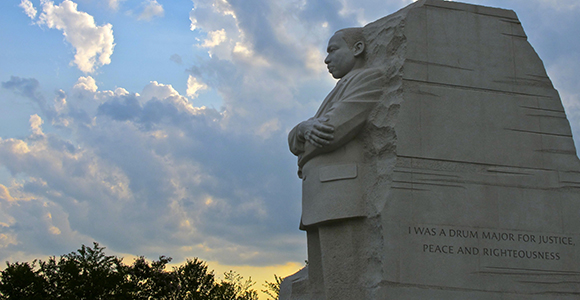
Woes against the Exegetes of the Law

King monument in D.C.

by Herb Montgomery

Featured Text:

“And woe to you exegetes of the Law for you bind burdens and load on the backs of people, but you yourselves do not want to lift your finger to move them. Woe to you, exegetes of the Law, for you shut the kingdom of God from people; you did not go in, nor let in those trying to get in. Woe to you for you built the tombs of the prophets, but your forefathers killed them. Thus you witness against yourselves that you are sons of your forefathers.” (Q 11:46b, 52, 47-48)

Companion Texts:

Matthew 23:4: “They tie up heavy, cumbersome loads and put them on other people’s shoulders, but they themselves are not willing to lift a finger to move them.”

Matthew 23:13: “Woe to you, teachers of the law and Pharisees, you hypocrites! You shut the door of the kingdom of heaven in people’s faces. You yourselves do not enter, nor will you let those enter who are trying to.”

Matthew 23:29-32: “Woe to you, teachers of the law and Pharisees, you hypocrites! You build tombs for the prophets and decorate the graves of the righteous. And you say, ‘If we had lived in the days of our ancestors, we would not have taken part with them in shedding the blood of the prophets.’ So you testify against yourselves that you are the descendants of those who murdered the prophets. Fill up, then, the measure of the sin of your ancestors!”

Luke 11:46: “Jesus replied, ‘And you experts in the law, woe to you, because you load people down with burdens they can hardly carry, and you yourselves will not lift one finger to help them.’”

Luke 11:52: “Woe to you experts in the law, because you have taken away the key to knowledge. You yourselves have not entered, and you have hindered those who were entering.”

Luke 11:47-48: “Woe to you, because you build tombs for the prophets, and it was your ancestors who killed them. So you testify that you approve of what your ancestors did; they killed the prophets, and you build their tombs.”

Gospel of Thomas 39:1-2: “Jesus says: The Pharisees and the scribes have received the keys of knowledge, but they have hidden them. Neither have they entered, nor have they allowed to enter those who wish to.’”

A century before the destruction of Jerusalem in 70 CE, Hillel the Elder, a Pharisee, described the entire Torah in terms of the Golden Rule: “What is hateful to thee, do not unto thy fellow man: this is the whole Law; the rest is mere commentary” (Shab. 31a). Hillel’s contemporary, Shammai, sought to protect Jewish identity through strict interpretations of the Torah and its purity codes that shored up divisions between Jews and Gentiles.

After Hillel’s death and during the days when Jesus taught, the school of Shammai had the upper hand among the working class’s religious teachers in Galilee and Judea. Jesus’ teachings have few parallels with Shammai and have much in common with Hillel, but some elements, in solidarity with the poorer sectors of Jewish society, are unique to Jesus himself. The Pharisees resonated deeply with the working class in Jesus’ day. And I believe that much of Jesus’ critique of the teachers and leaders was directed toward the school of Shammai, not the school of Hillel. Jesus’ critique of the Shammai Pharisees in the saying we’re considering this week could just as easily have been made by Hillel a generation before.

This week, also keep in mind Matthew’s use of phrase “Kingdom of Heaven.” Luke prefers the phrase “keys to knowledge.” Either way, what we have witnessed from the Jesus of Sayings Gospel Q is a focus on the here and now, not the hereafter. Matthew’s gospel is a very Jewish, Galilean telling of the Jesus story, and many today have noticed that rather than using the phrase “Kingdom of God”, Matthew’s gospel replaces the word “God” with “Heaven.” Remember this: the Jesus of Q is concerned much less with people gaining access to a post mortem cosmic heavenly realm that keeps them passive in the face of injustice now, and much more passionate about announcing the arrival of the Kingdom of God or the Kingdom of Heaven here on earth today. This Jesus is less concerned with getting people to heaven at some point in the future and much more focused on bringing the liberation of heaven into people’s lives now.

We must critique versions of Christianity that are radically privatized and/or intentionally removed from all social politics, and we must also critique interpretations of Jesus’ teachings that are opiates for the oppressed and encourage them to be passive in the face of injustice.

The most striking potential connection between our sayings this week and the Pharisees’ view of the school of Shammai is the warning about “exegetes of the Law” who “bind burdens and load on the backs of people” and “do not want to lift your finger to move them.” The exegetes of the school of Shammai were meticulous in adhering to the purity codes (as we saw last week, cf. Matthew 23:23; Luke 11:42), but not very concerned about the economic burdens facing the poor among their constituents. Actually, that’s a bit of a misnomer. They were very concerned about the poverty of the poor, but attached moral significance and value to it. If you were poor, you must have broken the purity codes somewhere and YHWH was punishing you. This was a way of interpreting Deuteronomy 28: if you were poor, you weren’t being exploited by the wealthy, you were morally inferior to those whom YHWH was blessing for adhering to the Torah.

This jumps out at me in three ways. First, it is blames people for their oppression. Second, as many today do in relation to America’s economic and military status on our globe, religious people often attribute wealth to being “blessed by God” rather than reaping the fruit of stolen or hoarded resources gained by exploiting others. Manifest destiny and the long continuing history of colonialism are examples. And third, Christianity has done both social good and social harm, like the school of Shammai. All religions can be a powerful force for good, survival, resistance, and liberation, or they can be used instead to oppress, marginalize, exclude, and extricate. The choice is ours.

I’m happy to be able to say that the Pharisees and rabbis later rejected the school of Shammai as harmful and chose Hillel’s golden-rule-based interpretation of the Torah instead. The internal struggle among the Pharisees that we glimpse in our saying this week was resolved on the side of compassion and love rather than sacrifice in the first century (cf. Hosea 6:6).

Jesus and the Pharisees of the school of Hillel had much in common. Consider the interaction between Jesus and a follower of Hillel in Mark’s gospel:

“Well said, teacher,” the man replied. “You are right in saying that God is one and there is no other but him. To love him with all your heart, with all your understanding and with all your strength, and to love your neighbor as yourself is more important than all burnt offerings and sacrifices.” When Jesus saw that he had answered wisely, he said to him, “You are not far from the kingdom of God.” And from then on no one dared ask him any more questions. (Mark 12:32-34 cf. Hosea 6:6 & Matthew 9:13; 12:7)

Those who subscribed to the school of Shammai’s Torah interpretations would have been very put off, and perhaps even angered, by some of Jesus’ more inclusive choices (such as Luke 15). They were refusing to enter into what Jesus called the reign of God and they did their best to use their influence to obstruct the way for everyone around them and call that way dangerous as well.

Jesus’ last rebuke about being the children of those who killed the prophets calls to mind the work of Vincent Harding about the national holiday for Martin Luther King, Jr., and the Reagan Administration co-opting his memory. In Martin Luther King: The Inconvenient Hero, Vincent Harding uses Carl Wendell Hines, Jr.’s poem:

Now that he is safely dead

Let us praise him

build monuments to his glory

sing hosannas to his name.

Dead men make such convenient heroes: They

cannot rise

to challenge the images

we would fashion from their lives

And besides,

it is easier to build monuments

than to make a better world.

So, now that he is safely dead

we, with eased consciences

will teach our children

that he was a great man… knowing

that the cause for which he lived

is still a cause

and the dream for which he died

is still a dream,

a dead man’s dream.

These words, first written about Malcolm X, and then applied to King, could also be applied to the Hebrew prophets and to Jesus as well.  And they offer much to consider in the context of Monday being Dr. Martin Luther King, Jr. day.

This year, let’s not simply build monuments for those whom the system has silenced and we have silenced too. Let’s instead make the choice to engage in the hard work of making a better world.

And woe to you exegetes of the Law for you bind burdens and load on the backs of people, but you yourselves do not want to lift your finger to move them. Woe to you, exegetes of the Law, for you shut the kingdom of God from people; you did not go in, nor let in those trying to get in. Woe to you for you built the tombs of the prophets, but your forefathers killed them. Thus you witness against yourselves that you are sons of your forefathers. (Q 11:46b, 52, 47-48)

HeartGroup Application

Last week, I asked your groups to re-center your focus on compassion and justice, and to pick a practice that would facilitate this refocusing. This week, lean further into that same exercise.

  1. Brainstorm another activity you can engage this week as a group in that promotes justice and compassion within your group and in your surrounding community.
  2. Map out what this will require of each of you and commit to action between this week and next.
  3. When you come back together, share with each other your experiences from following through.

This year, like every year, is packed with our potential to make our world a safer, more just, more compassionate home for all of us. Each of us can do something big or small in our circles of influence. Reach out this week and make action your choice.

Thanks for checking in with us this week.

Keep living in love, and in the words of our saying last week, a love that finds expression through living in justice, mercy and faithfulness to the marginalized and exploited, as well.

I love each of you dearly.

I’ll see you next week.

Woes against the Pharisees

Making 2017 a year of compassion and justice. 

black and white image of hands unitedby Herb Montgomery

Featured Text:

“Woe for you, Pharisees, for you tithe mint and dill and cumin, and give up justice and mercy and faithfulness. But these one had to do, without giving up those. Woe to you, Pharisees, for you purify the outside of the cup and dish, but inside they are full of plunder and dissipation. Purify the inside of the cup, its outside pure. Woe to you, Pharisees, for you love the place of honor at banquets and the front seat in the synagogues and accolades in the markets. Woe to you, Pharisees, for you are like indistinct tombs, and people walking on top are unaware.” (Q 11:39a, 42, 39b, 41, 43-44)

Companion Texts:

Matthew 23:23, 25–27, 6–7: “‘Woe to you, teachers of the law and Pharisees, you hypocrites! You give a tenth of your spices—mint, dill and cumin. But you have neglected the more important matters of the law—justice, mercy and faithfulness. You should have practiced the latter, without neglecting the former . . . Woe to you, teachers of the law and Pharisees, you hypocrites! You clean the outside of the cup and dish, but inside they are full of greed and self–indulgence. Blind Pharisee! First clean the inside of the cup and dish, and then the outside also will be clean. Woe to you, teachers of the law and Pharisees, you hypocrites! You are like whitewashed tombs, which look beautiful on the outside but on the inside are full of the bones of the dead and everything unclean . . . [The Pharisees] love the place of honor at banquets and the most important seats in the synagogues; they love to be greeted with respect in the marketplaces and to have people call them ‘Rabbi.’”

Luke 11:42, 39, 41, 43–44: “Woe to you Pharisees, because you give God a tenth of your mint, rue and all other kinds of garden herbs, but you neglect justice and the love of God. You should have practiced the latter without leaving the former undone . . . Then the Lord said to him, “Now then, you Pharisees clean the outside of the cup and dish, but inside you are full of greed and wickedness . . . But now as for what is inside you—be generous to the poor, and everything will be clean for you . . . Woe to you Pharisees, because you love the most important seats in the synagogues and respectful greetings in the marketplaces . . . Woe to you, because you are like unmarked graves, which people walk over without knowing it.”

Gospel of Thomas 89:1-2: “Jesus says: ’Why do you wash the outside of the cup? Do you not understand that the one who created the inside is also the one who created the outside?’”

What a zinger to start off the new year with!

This saying in Sayings Q is Jesus’ rant against some of the Pharisees. I do not believe this rant to be against all the Pharisees. Many of those who comprised the teaching Pharisees were wise, honest, good people, including the apostle Paul who joined the followers of Jesus later, and perhaps also Jesus himself. The Pharisees were made up of two groups: those of the school of Hillel and those of the school of Shammai. I believe it was the school of Shammai, which Judaism ultimately rejected too, that Jesus is railing against in this saying. Jesus taught much of what the school of Hillel taught (except Hillel’s economic protections of the rich and his socially unjust teachings on divorce for women). As Jesus was raised as a poor, working class Jew, he may also have been raised by parents who resonated deeply with the school of Hillel interpreting the Torah through the lens of the golden rule.

Also, there is nothing anti-Jewish in this week’s saying. Jesus is standing in the very long tradition of the Hebrew prophets in calling religious and political leaders to justice, mercy, and faithfulness. Consider the following from Isaiah:

“Stop bringing meaningless offerings!

Your incense is detestable to me.

New Moons, Sabbaths and convocations—

I cannot bear your evil assemblies.

Your New Moon feasts and your appointed festivals

I hate with all my being.

They have become a burden to me;

I am weary of bearing them.

When you spread out your hands in prayer,

I will hide my eyes from you;

even if you offer many prayers,

I will not listen.

Your hands are full of blood;

wash and make yourselves clean.

Take your evil deeds

out of my sight!

Stop doing wrong,

learn to do right!

Seek justice,

liberate the oppressed.

Defend the cause of the fatherless,

plead the case of the widow.” (Isaiah 1:13-14)


There are also these words from the book of Amos:


“Hear this, you who trample the needy

and do away with the poor of the land,

saying,

‘When will the New Moon be over

that we may sell grain,

and the Sabbath be ended

that we may market wheat?’—

skimping on the measure,

boosting the price

and cheating with dishonest scales,

buying the poor with silver

and the needy for a pair of sandals,

selling even the sweepings with the wheat.” (Amos 8:4-6)

In the same book, the prophet speaks for God when he says:

“I hate, I despise your religious festivals;

I cannot stand your assemblies.

Even though you bring me burnt offerings and grain offerings,

I will not accept them.

Though you bring choice fellowship offerings,

I will have no regard for them.

Away with the noise of your songs!

I will not listen to the music of your harps.

But let justice roll on like a river,

righteousness like a never-failing stream!” (Amos 5:21-24)

Jesus, like the Jewish prophets before him in Judaism, is prioritizing and centering justice for the oppressed, mercy for the less fortunate and disinherited, and faithfulness to the marginalized and downtrodden over and above religious ritual, worship, and festivals.

Ritual can be done in such a way that shapes us into people who actively work toward justice and compassion for the oppressed of our world. But if it doesn’t shape us into active agents of liberation for the oppressed (see Luke 4:18-19), ritual has very little meaning. I resonate deeply with the priorities found in Isaiah, Amos, and this week’s saying from Jesus.

In these gospels, Jesus contrasts conscientious tithing of the most minute items in the market with neglected justice, mercy, and faithfulness toward the poor. He contrasts the external ritual purity rituals (washing hands, etc.) with being generous toward the poor. He then calls to account those who love making a show, receiving accolades, but being inwardly “dead bones.” Remember as we have seen over and over again this year, the reign of Jesus’ God looked like people taking responsibility for taking care of other people.

The Jewish Jesus-followers in the early church preserved a similar statement rooted in Jesus’ teachings:

“Religion that God our Father accepts as pure and faultless is this: to look after orphans and widows in their distress.” (James 1:27)

As someone who doesn’t have much taste for most things “religious” but who resonates with the values of Jesus, I love this statement. I shared this quotation from Marcus Borg two weeks ago, but it bears repeating here as we begin our new year.

“For Jesus, compassion had a radical sociopolitical meaning. In his teaching and table fellowship, and in the shape of his movement, the purity system was subverted and an alternative social vision affirmed. The politics of purity was replaced by a politics of compassion.” (Meeting Jesus Again for the First Time, p. 58)

Jesus, much like the Pharisee Hillel a generation before him, taught a politics of compassion, and he taught it very specifically in terms of compassion and justice for the poor, oppressed, and marginalized.

What If We Did What Jesus Taught?

What would Christianity look like today if we began to filter every religious thing we do, even our ritual and liturgies, through the filter of justice and compassion?

Consider the following from the book of James:

“Listen, my dear brothers and sisters: Has not God chosen those who are poor in the eyes of the world . . .” (James 2:5)

“If one of you says to them, ‘Go in peace; keep warm and well fed,’ but does nothing about their physical needs, what good is it? In the same way, faith by itself, if it is not accompanied by action, is dead.” (James 2:16-17)

“But someone will say, ‘You have faith; I have deeds.’ Show me your faith without deeds, and I will show you my faith by what I do.” (James 2:18)

I love the book of James because it is the only New Testament commentary we have on Jesus’ Sermon on the Mount. Rather than following Paul’s more cosmic Christ, the author expounds on Jesus’ actual teachings and helps other Jewish Jesus followers to practice them.

An experiment that I have engaged in over the last two years is a practice of making central in my teaching the golden rule, the Sermon on the Mount, and how we relate to one another. I have placed matters of dogma, worship, and less practical theology on the periphery. I firmly believe that you and I are made in the image of the divine. That means that, in this life, the closest I will ever come to the Divine, is YOU! This is what I believe the author of 1 John is trying to get at in this verse:

“If we say we love God yet hate a brother or sister, we are liars. For if we do not love a fellow believer, whom we have seen, we cannot love God, whom we have not seen.” (1 John 4:20)

This means that my actions toward others is my faith and don’t just reflect it. My actions are what I believe. God-talk can become very theoretical and pointlessly argumentative as well! It is only when we acknowledge that each of us has a piece of the puzzle and we need to respect each person’s piece that God-talk can bear any good fruit. I want my faith to bear fruit and my focus to be right here on Planet Earth with you.

What would happen if we began to prioritize our religious practices according to how those practices express compassion and justice in the lives of others?

As this year begins, let’s contemplate prioritizing matters of justice, compassion, and faithfulness to our fellow humans above all else:

Woe for you, Pharisees, for you tithe mint and dill and cumin, and give up justice and mercy and faithfulness. But these one had to do, without giving up those. Woe to you, Pharisees, for you purify the outside of the cup and dish, but inside they are full of plunder and dissipation. Purify the inside of the cup, its outside pure. Woe to you, Pharisees, for you love the place of honor at banquets and the front seat in the synagogues and accolades in the markets. Woe to you, Pharisees, for you are like indistinct tombs, and people walking on top are unaware.” (Q 11:39a, 42, 39b, 41, 43-44)

HeartGroup Application

  1. As we begin a new year, sit down with your HeartGroup and talk about whether your group needs to start centralizing justice and compassion or can simply reaffirm that you are already practicing it.
  2. Discuss what it would look like to make justice and compassion more central for your group and what it looks like to grow your focus on compassion and justice.
  3. Map out a few things you can do this week, to kick off 2017: actions you can take as a group that emphasize and affirm your focus as Jesus followers on justice, compassion, and making our world a safer home for us all.

Happy New Year to each of you.

I’m glad you’re here journeying alongside us.

Let’s make 2017 the year for living in love, resistance, survival, liberation, restoration, and transformation.

I love each of you dearly.

We are in this together.

I’ll see you next week.

The Jaundiced Eye Darkens the Body’s Light 

by Herb Montgomery

An eye with rainbow coloring

Featured Text:

“The lamp of the body is the eye. If your eye is generous, your whole body is radiant; but if your eye is jaundiced, your whole body is dark. So if the light within you is dark, how great must the darkness be!” (Q 11:34-35)

Companion Texts:

Matthew 6:22-23: “The eye is the lamp of the body. If your eyes are healthy, your whole body will be full of light. But if your eyes are unhealthy, your whole body will be full of darkness. If then the light within you is darkness, how great is that darkness!”

Luke 11:34-35: “Your eye is the lamp of your body. When your eyes are healthy, your whole body also is full of light. But when they are unhealthy, your body also is full of darkness. See to it, then, that the light within you is not darkness.”

Gospel of Thomas 24:3: “Light exists inside a person of light, and he shines on the whole world. If he does not shine, there is darkness.”

To begin, our saying this week uses metaphors that are rooted in ableism.  Fish don’t know they’re wet.  Able-bodied people often don’t realize how ableist they are being. But acknowledge it we must, for this is a first step toward change. Naming injustice is a primary step toward action that reverses injustice. “In ableist societies, able-bodiedness is viewed as the norm; people with disabilities are understood as those that deviate from that norm. Disability is seen as something to overcome or to fix, for example, through medical intervention. The ableist worldview holds that disability is an error or a failing rather than a consequence of human diversity, akin to race, ethnicity, sexual orientation, or gender.” (https://en.wikipedia.org/wiki/Ableism)

With this in mind, let’s look at what this week’s saying was attempting to teach.

Lamp of the Body is the Eye

In 1st Century Jewish culture, people believed that a person possessed either light or darkness within them: “The human spirit is the lamp of YHWH that sheds light on one’s inmost being” (Proverbs 22:27). In our saying this week, Jesus uses the eyes as a symbol for determining whether what is inside his listeners is truly light or really darkness. “Many people believed that light was emitted from the eye, enabling one to see, rather than that light was admitted through the eye. Although here Jesus compares the eye to a lamp, he speaks of ‘diseased’ eyes which fail to admit light.” (IVP Bible Background Commentary: New Testament; Matthew 6:22-23 cf. 11:34-36)

When one steps back into the cultural context of this week’s saying, the meaning is rather simple: what you see when you look at others determines whether what is inside of you is “light” or “dark.” Two people can look at the same person and see very different things, based on what their eyes are trained to see.

A fun, literary example is found in Sir Arthur Conan Doyle’s stories about Sherlock Holmes. As a private investigator, Sherlock’s eyes and powers of observation are well trained to see much more than others around him see. In our saying this week, Jesus is teaching his listeners about a specific power of observation that he desired his followers to become proficient in: the ability to look at others who share our world with us through the lens of generosity.

Generosity

When you look at others, what do you see? Is it typically positive by default? Do you give people the benefit of a doubt? Do you assume the best about them? Or is your eye judgmental, maybe critical, or even condemnatory?

Jesus spoke positively of having an eye that was “single,” “generous,” or “healthy.”

A healthy eye sees others generously. And it is singular, too, in the sense that one is persistent in generously extending the image of God to everyone that one encounters. A person with a healthy eye remembers the truth in the Jewish story that an angel walks before each of us declaring “Behold the image of God.” Being disrespectful or to humiliate anyone bearing the Divine image is a denial, in that person, of the Divine whose image they bear. These acts were also seen as a defacement of the Divine image. To lie about another person was to deny the very existence of God. The school of Hillel in the first century taught that murder was both a civil violation and a sacrilege of that which was sacred. The Hebrews’ sacred text taught that when we shed human blood, the act is regarded as diminishing the corporate divine image within humanity. In the Hebrew creation story found in the second chapter of Genesis, humanity begins with the whole of humanity in one person. This was believed to have taught that the taking of a human life is equivalent to annihilating the entire world. The opposite was held to also be true—to save one life was to save the entire world. (Remember the ending scenes of the film Schindler’s List.) This applied to slaves and to non-Jews as well. The Jewish religion of the Rabbis became inseparable from the practice of the golden rule to others and practicing the golden rule became the touchstone of one’s religious worship of the Divine.

This is listening for and seeing God in the Other. According to Genesis, all persons bear the image of God (see Genesis 9:6). In the Christian New Testament we find this passage: “Whoever claims to love God yet hates a brother or sister is a liar. For whoever does not love their brother and sister, whom they have seen, cannot love God, whom they have not seen” (1John 4:20). If every person bears the image of God, I’m called to see and to listen to God in you, whoever you are. If we generously kept in mind the view that every person we meet bears the image of God, how different our world might be.

In addition to this, Matthew’s context builds on this generous view with a focus on economic generosity: Jesus’ vision of a world where people take responsibility for taking care of one another. “Jesus speaks literally of a ‘single’ eye versus a ‘bad‘ or ‘evil‘ one. A ‘single‘ eye normally meant a generous one. A ‘bad‘ eye in that culture could mean either a diseased one or a stingy one. Such eyes become a symbol for the worthlessness of a stingy person.” (IVP Bible Background Commentary: New Testament; Matthew 6:22-23 cf. Luke 11:34-36)

Luke adds another statement to this emphasis on resources. A few passages later, Jesus states, “Now then, you Pharisees clean the outside of the cup and dish, but inside you are full of greed and wickedness. You foolish people! Did not the one who made the outside make the inside also? But now as for what is inside you—be generous to the poor, and everything will be clean for you.” (Luke 11:39-41)

In both of these gospels, this saying refers to serving other people. Again, Jesus’ new world is defined primarily by people taking care of people. Later New Testament letters include these words: “If anyone has material possessions and sees a brother or sister in need but has no pity on them, how can the love of God be in that person?” (1 John 3:17)

In addition, Jesus’ generosity goes far beyond economic generosity. It also encompasses the whole person. The media plays a part in this for us. When people of color, especially men, are victims of police brutality, the media goes to work to criminalize them so as to bias how the rest of us see them. (See How News Networks Criminalize Black Victims of Police Violence.) Contrast this with how the media characterized Brock Turner, a rapist, and put the highest possible spin on his character to the masses. Just this week, Ta-Nehisi Coates, author of the article My President Was Black, was interviewed on the Daily Show with Trevor Noah. In the interview Cotes contrasted the path it took for Obama to become president and the path Trump took to do the same:

“If I have to jump six feet to get to the same place you have to jump two feet for, that’s how racism works . . . to be president he [Obama] had to be scholarly, intelligent, president of the Harvard Law Review, the product of some of our greatest educational institutions, capable of talking to two different worlds. Donald Trump had to be rich and white. That was it. That’s the difference.” (See the interview here.)

What we chose to see when we look at another person should be more than skin deep. What we choose to see and what we choose to believe about a person will directly impact our thoughts, feelings, opinions and attitudes toward them and ultimately our behavior. This is possibly why in this week’s saying, Jesus says that what we see in another determines whether we truly possess light instead of darkness.

The very first thing we should choose to see and believe in each person we encounter is that they are of inestimable worth simply because they are a part of the human web. This applies not to just individuals, but also to the entire planet. As Oscar Romero taught, “We are not three worlds [First World, Second World, and Third World], we are one world.”

In Jesus’ worldview, God indiscriminately causes the sun to shine and the rain to fall:

“ . . . He causes his sun to rise on the evil and the good, and sends rain on the righteous and the unrighteous.” (Matthew 5:45)

“ . . . he is kind to the ungrateful and wicked.” (Luke 6:35)

Jesus called his followers to relate to genuine political and economic enemies with love that seeks to transform them from oppressing the lower classes. Yet some White Christians today still discriminate against others based on their skin color, and some Evangelical business owners discriminate in whom they bake cupcakes and pizzas for.

If the sun shines on a person, if the rain falls on a person, we are called to see them as a bearer of the image of the Divine, to look for God in them, regardless of how much we feel tempted to “Other” them as instead. We are all connected.

Yes, we are different, and those differences should be seen and celebrated, but we are all still part of one another and in this together. When we fail to celebrate each other, when we choose to neglect this basic step in how we are seeing others, it does not matter what we claim to be—light bearer or reflector—the light we claim to possess is actually darkness.

With these thoughts in mind, let us contemplate our saying this week:

“The lamp of the body is the eye. If your eye is generous, your whole body is radiant; but if your eye is jaundiced, your whole body is dark. So if the light within you is dark, how great must the darkness be!” (Q 11:34-35)

HeartGroup Application

In the book I wrote over a decade ago now (Finding the Father) I proposed that what a person believes about God determines how they think and feel toward God, especially in the context of the spiritual abuse many theists within Christianity have suffered. I proposed that however we choose to see a God ultimately affects how we choose to behave and what type of a person, as a worshipper of that God, we will become.

This week I want to draw our heads out of the clouds for a moment and place our feet firmly on planet Earth. Apply this week’s principles to how you relate to other people. What we choose to believe about others, what we choose to see when we look at another, will determine our thoughts, feelings, attitudes, opinions, and our behavior in relation to them.

Jesus taught that one cannot live out indiscriminate justice, faith, and love toward others without it impacting how one begins to perceive others. We start with the behavior of simply listening to the experiences of those who are not like us. A Buddhist friend of mine introduced me to this saying, and I believe it teaches the same universal truth that we are seeing in the sayings of Jesus this week:

“Some people live closely guarded lives, fearful of encountering someone or something that might shatter their insecure spiritual foundation. This attitude, however, is not the fault of religion but of their own limited understanding. True Dharma leads in exactly the opposite direction. It enables one to integrate all the many diverse experiences of life into a meaningful and coherent whole, thereby banishing fear and insecurity completely.” Lama Thubten Yeshe, (Daily Wisdom: 365 Buddhist Inspirations)

Jesus’ saying invites us to do the same, to “integrate all the many diverse experiences of life into a meaningful and coherent whole, thereby banishing fear and insecurity completely.”

If the sun shines on them, if the rain falls on them, we have a mandate from the saying of Jesus to imitate Jesus’ God as we interact with them.

  1.   List ways that you can begin making space in your life to listen to those who are different from yourself, especially those whom the present status quo does not benefit. If the sun and rain are for all, prioritize listening to those whom society prevents the sun and rain from reaching. Try actual conversations (where your posture is one of simply listening), following people on Twitter, listening to podcasts, and reading books by authors from a different walk through life than your own.
  2. With as much honesty as you can achieve, contrast the ways you now choose to negatively see some people and write the positive assumptions that you could choose instead. Pay close attention to how these assumptions would affect how you think, feel, and relate to those people.
  3. As a group, begin making space for voices that are different. One of the ways HeartGroups can do this well is by asking others to simply come and share their experience with the group. I have been invited to go and share at a very warm and welcoming interfaith fellowship in my home town. HeartGroups can do the same. We can look for things we have in common with others, like the universal values of compassion and justice. And we could benefit from comparing and valuing our differences, viewing them in the light of intrinsic fruit.

What does it mean for you to begin listening for and looking for God in the other?

Wherever this finds you this week, I’m glad you’re here. Keep living in love, loving with the equity of the sun and the rain, with a preferential option of those being prevented from accessing what meant for all equally.

This will be our last eSight/podcast for 2016. We’ll be back in two weeks. Have a happy holidays and we here at RHM wish you a very happy new year.

I love each of you dearly.

See you in 2017.

The Light on the Lampstand 

by Herb Montgomery

a man lassoing a light bulb

“No one lights a lamp and puts it in a hidden place‚ but on the lampstand, and it gives light for everyone in the house.” Q 11:33

Companion Texts:

Matthew 5:14-16: “You are the light of the world. A town built on a hill cannot be hidden. Neither do people light a lamp and put it under a bowl. Instead they put it on its stand, and it gives light to everyone in the house. In the same way, let your light shine before others, that they may see your good deeds and glorify your Father in heaven.”

Luke 11:33: “No one lights a lamp and puts it in a place where it will be hidden, or under a bowl. Instead they put it on its stand, so that those who come in may see the light.”

Gospel of Thomas 33:2-3: “For no one lights a lamp and puts it under a bushel, nor does he put it in a hidden place. Rather, he puts it on a lampstand, so that everyone who comes in and goes out will see its light.”

This week’s saying appears in all three of the gospels we have been using as our companion texts this year. Matthew and Thomas both focus on the followers of Jesus’ teachings being light. Luke, as we will see next week, warns about what we call light really being the spreading of darkness. We’ll discuss the relevance of Luke’s saying to today’s western Christianity in more detail in our next eSight.

Matthew’s Focus

What I want us to notice first this week is an emphasis that some would be uncomfortable with. The focus of the saying is not on Jesus being the light of the world, but rather on Jesus’ followers being a source of light for the world (John 8:12; Matthew 5:14). In Luke, Jesus is warning about those who claim to be light becoming a source of darkness in the world. How often have status quo complicit Christians been found on the wrong side of history!

The statement is just as troubling for those who object, “Jesus is the light of the world, not us.” This objection comes from a desire to uplift Jesus to hero status, a position some people feel is threatened if we focus on being the light rather than pointing to Jesus as light.

Another possible root of discomfort with this saying is the belief that we are incapable of doing anything good and that Jesus has to do it all. This is a destructive belief taught in some sectors of Christianity that, too often, is used to lull Christians back to a position of passivity after they have been convicted or moved to action. I witnessed this recently when speaking on the Sermon on the Mount. After my presentation, the pastor got up and told the congregation that everything I had just spoken of (what Jesus taught in the Sermon the Mount) was impossible for any of us to do and Jesus must do it for us.

But we have the power to think and to do.

We have the power to make choices.

I have wondered why many atheists accomplish more in societal justice than some fundamentalist Christians do. Womanist writers such as Alice Walker have rightly captured the same universal truth that the Jesus of Sayings Gospel Q also taught: “We are the ones we’ve been waiting on.”

Jesus in Sayings Gospel Q is not preaching “Sit back and let me do everything.”

Jesus focuses on creating a community rooted in ethics and values that center the experiences of the vulnerable and marginalized in his own society and that call his community to make better choices. He believes that those following him can actually do better. They can be different. He shows them the way, casting before their mind’s eye what a path that is genuinely, holistically better can look like. In her volume Sisters in the Wilderness: The Challenge of Womanist God- Talk, writes:

“It seems more intelligent and more scriptural to understand that redemption had to do with God, through Jesus, giving humankind new vision to see the resources for positive, abundant relational life. Redemption had to do with God, through the ministerial vision, giving humankind the ethical thought and practice upon which to build positive, productive quality of life. Hence, the kingdom of God theme in the ministerial vision of Jesus does not point to death; it is not something one has to die to reach. Rather, the kingdom of God is a metaphor of hope God gives those attempting to right the relations between self and self, between self and others, between self and God as prescribed in the sermon on the mount, in the golden rule and in the commandment to show love above all else.” (pp. 130-131, emphasis added)

This way Jesus showed his followers is a way of survival, resistance, liberation, transformation, and restoration. In short, it is salvation. Not a post-mortem non-smoking section salvation, but a present, concrete, life-right-now salvation rooted in the context of community, together.

Luke’s Emphasis

Luke doesn’t focus exclusively on Jesus’ followers being the light of the world. Luke jumps straight to the absurdity of hiding a recently lit lamp when the obvious intent of lighting the lamp in the first place is to share the light with everybody.

At this stage of Luke’s version of the Jesus story, pressure is beginning to mount. The number of those positively resonating with Jesus’ teachings continues to grow, and the elite class in society begins to feel the threat of the momentum among the economically exploited. This saying may also reflect a temptation growing in Jesus himself to hide his own light. When those in places of privilege begin to feel threatened, they can be quite effective at threatening those they deem responsible.

Jesus was choosing life, and encouraging and showing others how to thrive, survive, and transform the world into a just and compassionate home for all. And his vision of life involved changes for those benefiting by the way life was structured in Jerusalem. Jesus was choosing life, and he was about to be threatened with death if he did not lie down, roll over, and go back into the shadows.

In the volume Christianity, Patriarchy and Abuse edited by Joanne Carlson Brown and Carole R. Bohn, Joanne Carlson Brown and Rebecca Parker wrote:

“It is not the acceptance of suffering that gives life; it is commitment to life that gives life. The question, moreover, is not Am I willing to suffer? but Do I desire fully to live? This distinction is subtle and, to some, specious, but in the end it makes a great difference in how people interpret and respond to suffering.” (p. 18)

Jesus was not choosing a path of death. Jesus was choosing life. And when beginning to feel threatened and pressured to hide his light, Jesus made the courageous choice to hold on, to not let go. The cross was not Jesus’ path to life. The cross was what the status quo responded to Jesus with. It was the cross and the fear of death that the elites used to intimidate Jesus into letting go of his hold on life. And Jesus kept holding on. He could see where what he was teaching and the sector of society he was choosing to side with would lead, and he had the courage to keep doing it. He choose not to hide his light, but share light, just like he spoke of power and resources, with everyone.

Your Light 

Luke and Matthew both ask: What does taking hold of life look like to you? Does your taking hold of life cause others around you to feel their own place of privilege in society is threatened? Jesus shared his vision of a world where everyone thrives with equity, with justice, with compassion. The Jewish concept of shalom describes a wholeness that involves everyone. Genuine shalom is not present till we all together have shalom, and not just us, but also every living thing. But in a world where one believes only a limited number of people can thrive, someone else taking hold of life threatens one’s own thriving because resources are limited. Someone in this position does not believe the earth provides enough for every person’s need, as Gandhi taught. They believe that there is not enough to go around, and that if we each let go of our hoarded power and possessions, we will go without. Jesus instead imagined a world where we all have enough together.

Does a fear of loss keep you from shining your light? Is there something that intimidates you into hiding your light under a basket rather than sharing unquantifiable light with everyone?

While recently reading Stephen Greenebaum’s The Interfaith Alternative: Embracing Spiritual Diversity, I was moved by these words and I share them with you this week:

“The truth is that none of us can control what kind of splash we will make in the world, let alone how big or small that splash will be. Perhaps our coming and our passing will cause no splash at all, just the smallest of ripples. To be a human being is to have an opportunity. But as we well know, it is not an ‘equal opportunity.’ Some people are born with great wealth and some in devastating poverty. Some are born with robust health and some must fight just to live from the moment they enter the world. And sometimes we stumble, no matter how hard we try. But life, all life, is an opportunity nonetheless. And it is what we do, or do not do, with that opportunity that defines us. For me, the clouds parted and I could make at least some sense of meaning when I could visualize a great scale with compassion and justice forming one side and self-centeredness and injustice the other. None of us knows how much we’ll be able to add to the scales, for that, to a large extent, is a matter of chance. But we do control, we alone, each of us, every day, to which side of the scale we will make that day’s contribution. It may be a mote of dust, a twig, a pebble or a huge boulder — again, the size of our contribution may be beyond our control — but whatever the size of our contribution, every day we add something to those scales: compassion and justice, or self-centeredness and injustice. I deeply believe that in the end it is not how much we add to the scales, but to which side of the scale we have added it.” (pp. 100-101)

This week, in the name of advancing compassion and justice in our world, may this week’s saying encourage you, even if others threaten you and attempt to silence your voice, to let your light shine.

“No one lights a lamp and puts it in a hidden place‚ but on the lampstand, and it gives light for everyone in the house.” Q 11:33

HeartGroup Application

Last week I asked you to brainstorm and to make a list as a group some of the goals you would like to accomplish in the coming year. In our work of compassion and justice, consider Greenebaum’s words above. Whatever the size of your group’s contribution, ensure that you’re contributing on the right side of the scales.

  1. Pick three goals from your list last week.
  2. Begin getting informed regarding each one. This could involve coming alongside those already at work in those areas of justice/compassion work.
  3. Once you feel comfortable with your level of understanding about each goal, to the degree that you feel you can, define what meeting each goal would look like in tangible, concrete ways.

    This last step may lead you to go back and pick another goal as well. That’s okay. However your list takes shape, make sure these are goals you are well informed about and that these are goals that can be defined by your group as a whole once that goal is met.

As this year is drawing to a close and another year is before us, I’m overwhelmed by how many of you are journeying with us. Thank you for showing up. I’m grateful to be on this journey with you, and know that together we can make a difference.

Till the only world that remains is a world where only love reigns.

I love each one of you dearly.

Keep living in love.

I’ll see you next week.

Sayings Gospel Q: Workers for the Harvest 

A picture of harvest, and reaping tools, but no laborersWhat do you want the next revolution to look like?

by Herb Montgomery

“He said to his disciples: The harvest is plentiful, but the workers are few. So ask the Lord of the harvest to dispatch workers into his harvest.” (Q 10:2)

Companion Texts

Luke 10:1-2: “After this the Lord appointed seventy-two others and sent them two by two ahead of him to every town and place where he was about to go. He told them, ‘The harvest is plentiful, but the workers are few. Ask the Lord of the harvest, therefore, to send out workers into his harvest field.’”

Matthew 9:35-38: “Jesus went through all the towns and villages, teaching in their synagogues, proclaiming the good news of the kingdom and healing every disease and sickness. When he saw the crowds, he had compassion on them, because they were harassed and helpless, like sheep without a shepherd. Then he said to his disciples, ‘The harvest is plentiful but the workers are few. Ask the Lord of the harvest, therefore, to send out workers into his harvest field.’”

Gospel of Thomas 73: “Jesus says: ‘The harvest is plentiful, but there are few workers. But beg the Lord that he may send workers into the harvest.’”

A Ripe Harvest; No Laborers

The image of a plentiful harvest and few laborers to reap it would have spoken volumes to the audience that Jesus’ teachings resonated with. In that audience would have been indentured farmers who now found themselves being little more than indentured slaves. They had used to own land, but now labored hard to survive from day to day on land that now belonged to their wealthy creditors.

It has been said that you can’t force a revolution, and all one can do is be ready and prepared for one.

The Jewish societies of 1st Century Galilee and Judea were brimming, boiling with the spirit of sometimes violent revolution, and things were about to boil over. The poor were becoming more and more exploited. The indentured farmers were becoming more and more enslaved. The laboring class was becoming more and more oppressed by a wealthy aristocracy. And political oppression from the Romans combined with economic oppression from the Jewish aristocracy and temple class was about to reach its limit.

The Jewish Roman war of 66-69 CE is evidence of this. This war didn’t just happen out of thin air. There was a long and slow build up that finally erupted, and the horrific outcome was the destruction of Jerusalem in 70 CE. Jesus’s saying this week is best understood with this historical backdrop. His efforts in Sayings Gospel Q are designed to avert failed revolution and the Roman backlash that was sure to come. Just like Hillel before him, Jesus was endeavoring to present a nonviolent revolution of restorative and transformative justice in the place of the divisive and violent revolution and the spirit of retribution that was growing in popularity at that time.

Revolution was brewing. The harvest was ripe. But finding those who understood the larger picture of what would result and how to avert catastrophe was a challenge. The numbers of those who sought out and taught the kind of revolution Jesus taught were few, according to this week’s saying. This different revolution was centered in voluntary wealth-redistribution, in resource sharing, mutual-aid, nonviolent enemy confrontation and transformation, restitution as a response to past injustices, and the restoration of justice to those presently being oppressed. It was rooted in the wealthy forgiving and cancelling debts, and the poor laboring class taking care of the sick and sharing of food with each other. In short, if embraced, it was a way of ordering society that would have revolutionized Jewish society as well as threatened the Roman way of life to its core.

The societal elements were ripe for this kind of harvest, but the workers, those who would labor a revolution characterized by these elements, were few.

Various Gospels

The fact that this saying survived to be included in the more platonic, introspective Gospel of Thomas is significant. This statement has an urgency even when removed from its Jerusalem context.

The gospel of Matthew, the first we know to have included this saying, situates it in a more sympathetic, compassionate context. Jesus is traversing the countryside, teaching and healing, and, on seeing the crowds, views the people as “harassed and helpless, like sheep without a shepherd.” More violent “shepherds” would surface in the coming years, and I can’t help but believe that Jesus understood the social dynamics in play and longed to save the “sheep” from being slaughtered.

Luke takes this saying and places a context of Jesus actually appointing and sending out seventy-two promoters, campaigners if you will, that would engage communities ahead of his arrival as he continued to travel and teach. These seventy-two campaigners would have been those who had already bought into the kind of society envisioned in Jesus’ “stump-speeches” later written in Sayings Gospel Q. As we’ve shared in previous weeks, the sayings in Sayings Gospel Q later became Matthew’s sermon on the mount and Luke’s sermon on the plain.

Second American Revolution

In our time, there are those who believe that a second American Revolution is coming. From those like George Orwell to those in more contemporary counter-cultural movements, some point to ever-worsening polls and people’s growing contempt for their governments as signs. The rumblings of our society suggest that a growing number of people are ripening for another American revolution. It’s not so far-fetched.

As with all revolutions, we have choices. We have an opportunity to shape what our revolution will look like. Could our society benefit in any way from a revolution characterized by some of the values and elements that the Jesus of sayings gospel Q offered? Voluntary wealth-redistribution, resource sharing, mutual-aid, nonviolent enemy confrontation and transformation, restitution as a response to past injustices, and the restoration of justice to those presently being oppressed: could this be a revolution we could live with? We could have a revolution where the wealthy choose to forgive or cancel of the debts of poor debtors, and a society where we take care of the sick together and ensure there is enough for everyone. We could have a safer, more compassionate, just world for us all.

This kind of revolution could begin in the hearts of humanity, allowing us to perceive one another and embrace our interconnectedness, our interdependence. It would transform our society. The reality is that it would also threaten our social elite classes. It could not be accomplished simply by replacing one hegemony with another.

John Lennon wrote, “You can say I’m just a dreamer, but I’m not the only one.” There have been others, in every generation, especially from the marginalized and subjugated classes, that have envisioned this kind of society and worked to garnish support to experiment with what a society like this could look like.

Even theologians, who too often have benefitted in societies of oppression, are also opening up to a different lens. Christians specifically are waking up to a whole new and more historically accurate way of reading the Jesus story itself.

Gustavo Gutierrez, in the 15th anniversary edition of his A Theology of Liberation, states quite correctly:

“Black, Hispanic, and Amerindian theologies in the United States, theologies arising in the complex contexts of Africa, Asia, and the South Pacific, and the especially fruitful thinking of those who have adopted the feminist perspective—all these have meant that for the first time in many centuries theology is being done outside the customary European and North American centers. The result in the so-called First World has been a new kind of dialogue between traditional thinking and new thinking. In addition, outside the Christian sphere efforts are underway to develop liberation theologies from Jewish and Muslim perspectives.”

Where might this revolution begin for us, today, right now? Perhaps with a simple choice from each of us. We can embrace a way of life where people take responsibility for taking care of each other as people taking care of people. This seems to me to be the root that, if really perceived and embraced, could threaten the whole domination structure.

Today, a harvest is ripening.

And, unlike in Jesus’s saying, there are many “laborers” teaching values that parallel and sometimes even center the values and ethics found in the sayings of Jesus in Q. Some of these laborers are within Christianity, but quite a few of them are not. It is this universal set of values that we must begin to recognize.

May it not be said of those who long for more holistic changes and have learned to recognize this universal set of values:

The harvest is plentiful, but the laborers are few. (Q 10.2)

HeartGroup Application

Often our texts this week are used to refer to evangelistic efforts within a Christian religious context where people labor to win as many converts as possible to one’s own religious beliefs. What does it begin to look like for you to take these texts out of that context and place them back within the revolutionary world of the 1st Century?

    1. What changes? (Make a list)
    2. Share with your HeartGroup which changes you feel are the most profound to you personally. Discuss together the practical difference that paradigm shifts such as these could make.
    3. Individually consider what these changes mean for you. Then, as a group, brainstorm how you can support one another as you each lean more deeply into these changes.

To each of you out there laboring for change, you’re not alone. Keep living out those values, living in love, setting in motion a different tomorrow. In the words of the late Howard Zinn, “What really matters are the countless small deeds of unknown people that lay the basis for the events of human history. These are the people who have made change in the past; they are responsible for making change in the future, too.” (Quoted in Requiem for the American Dream.)

Till the only world that remains is a world where only love reigns.

I love each of you, dearly.

I’ll see you next week.

More than a Prophet

(And the Inability of Those in “Fine Clothing”)

by Herb Montgomery

Man in Tux, adjusting cufflinks.“And when they had left, he began to talk to the crowds about John: ‘What did you go out into the wilderness to look at? A reed shaken by the wind? If not, what did you go out to see? A person arrayed in finery? Look, those wearing finery are in kings’ houses. But then what did you go out to see? A prophet? Yes, I tell you, even more than a prophet! This is the one about whom it has been written: Look, I am sending my messenger ahead of you, who will prepare your path in front of you. I tell you: There has not arisen among women’s offspring anyone who surpasses John. Yet the least significant in God’s kingdom is more than he.’” (Q 7:24-28)

Companion Texts:

Matthew 11:7-11: “As John’s disciples were leaving, Jesus began to speak to the crowd about John: ‘What did you go out into the wilderness to see? A reed swayed by the wind? If not, what did you go out to see? A man dressed in fine clothes? No, those who wear fine clothes are in kings’ palaces. Then what did you go out to see? A prophet? Yes, I tell you, and more than a prophet. This is the one about whom it is written: “I will send my messenger ahead of you, who will prepare your way before you.” Truly I tell you, among those born of women there has not risen anyone greater than John the Baptist; yet whoever is least in the kingdom of heaven is greater than he.’”

Luke 7:24-28: “After John’s messengers left, Jesus began to speak to the crowd about John: ‘What did you go out into the wilderness to see? A reed swayed by the wind? If not, what did you go out to see? A man dressed in fine clothes? No, those who wear expensive clothes and indulge in luxury are in palaces. But what did you go out to see? A prophet? Yes, I tell you, and more than a prophet. This is the one about whom it is written: “I will send my messenger ahead of you, who will prepare your way before you.” I tell you, among those born of women there is no one greater than John; yet the one who is least in the kingdom of God is greater than he.’”

Gospel of Thomas 78: “Jesus says, ‘Why did you go out to the countryside? To see a reed shaken by the wind, and to see a person dressed in soft clothing [like your] kings and your great/powerful persons? They are dressed in soft clothing and will not be able to recognize the truth.’”

In the Jewish tradition, the role of a prophet was to be a gadfly to those at the top of the Jewish domination system, both priests and kings. The common thread in their work was a call for justice for the oppressed, marginalized, vulnerable and exploited. The clearest example of this focus is Amos. Hebrew prophets were not prognosticators. Rather they were those who cast a imaginative vision of a future where all violence, injustice, and oppression were put right.

Yet John the Baptist was more than this. He emerged not by casting a vision for a distant hope, but by announcing that the vision long hoped for had arrived. It was here, now, today!

Last week we discussed the differences between the proclamations of John and the actual ministry of Jesus. In our saying this week, however, Jesus reveals deep respect for John and those who followed him. John was the “real deal” calling for social change now! And, he practiced what he preached. He did not come in “fine clothes” and “luxury” bringing good news to the exploited and subjugated. He had abandoned the luxury of the priestly aristocracy (in Luke John’s father was a priest). He was a voice, in solidarity with the exploited, crying out in the wilderness, to prepare the way for the coming that Isaiah had announced.

This connection to Isaiah’s (and Malachi’s) liberation theme was central to the community that cherished Sayings Gospel Q.

Isaiah 40:3: “A voice of one calling: ‘In the wilderness prepare the way for the LORD; make straight in the desert a highway for our God.’”

Isaiah 57:14: “And it will be said: ‘Build up, build up, prepare the road! Remove the obstacles out of the way of my people.’”

Isaiah 62:10: “Pass through, pass through the gates! Prepare the way for the people. Build up, build up the highway! Remove the stones. Raise a banner for the nations.”

Malachi 3:1: “I will send my messenger, who will prepare the way before me.”


Inability to Recognize The Truth

This saying appears in Gospel of Thomas as well as in the canonical texts. This gospel captures the inability of those benefited or “privileged” by the status quo to rightly characterize the movements of John and Jesus. Those who represent the institutional establishment, its apologists, and its complicit supporters do not internally resonate with a revolution: they aren’t in a position that enables them to recognize “good news” when it emerges.

In Mark, too, the Jesus movement isn’t perceived as good news by Herod, Caiaphas, or Pilate, but rather as a threat to each. The Gospel of Thomas expresses this universal truth explicitly when it states that these leaders “will not be able” to even “recognize the truth.” The truth could be all around them and they would either miss its significance or proclaim it as dangerous or even heretical. But the oppressed know good news when they hear it.

In matters of theology, and I would now also argue in economics and politics, it is important to listen to the perspectives and interpretations of those who don’t benefit from the present system. In matters of theology, as we have discussed in previous weeks, it is White, colonial, European, and patriarchal theologians that struggle to “recognize” liberating truth, and the Church desparately needs the voices of our liberation, Black liberation, feminist, womanist, and queer theologians. As a result of their places in the present society, they are best positioned to recognize what is genuine good news and what is the same old religious endorsement of exploitative systems that benefit some at the expense of the many or benefit the majority at exclusion and marginalization of a few.


Egalitarianism in the “Empire” of God

Also notice that even though John was “more than a prophet,” in Jesus’ subversive “empire,” those considered the most insignificant are esteemed even more than John. Why? This upends the customs of the empire of Rome, but it works because in Jesus’s new world people value and take care of people. Everyone is valued and that which dehumanizes or devalues is systematically dismantled. In Jesus’s new “kingdom,” every person is of equal worth and value. This value is based on their being not on their doing; their essence, not their performance. Their value is rooted in each person’s humanity.

Again, as we have said for the last three weeks, the Q community seemed to place special emphasis on rooting Jesus’s liberation in the “good news” of Isaiah and Malachi, a book written in the same era Isaiah was redacted.


What Does This Mean For Us Today?

We’ve discussed the egalitarian nature of Jesus’ social vision at length. What I’d like to focus on this week is the inability of those in “fine clothing” to “recognize the truth.” What does this mean?

This verse reminds me of comments I received the first time I wore blue jeans and a sports coat to a church service I was speaking at: people insisted that my clothes were not quite “fine” enough. It made me wonder whether there was a link between a congregation’s fine clothes and their complicity with a status quo that leaves many impoverished for elite benefits.

The “fine clothing” in this week’s saying represents an economic privilege: it is a symbol. That economic privilege is our spring board to other areas of social, political and religious privilege, too. Today, we can simultaneously exist in positions of privilege and disadvantage in multiple areas of our lives because of the social oppressions that influence our society. A white collar woman has a different set of privileges and disadvantages than a blue collar male. A man of color has a different social position than either White men and women or women of color. A White gay male will experience society differently than a straight man of color and a gay or bisexual man of color.

My most recent encounter with this dynamic was a discussion I had with two LGBT friends. One is a white collar professional while the other is an Appalachian blue collar laborer. Both have the same concerns right now about the protection of their rights in the U.S. Both favor individuals running for office that will stand up for their rights. Yet what surprised me was my professional friend’s inability to see the economic perspective of my blue collar friend. My white collar friend preferred candidates that are pro-LGBT and support corporatism. My blue collar friend supports candidates that are pro-LGBT and have more interventionist, pro-labor policies. I expected that much.

What surprised me was my white collar friend’s inability to understand my other friend’s priorities, even to the point of near insult and derision. Their final parting statement was, “Your candidate would have no significant effect on my life so why should I care about a candidate that won’t affect me at all.”

Politics can get ugly, and this is the season of ugliness here in the States. The intersections of our own privilege and our disadvantage is complex. Our privilege and disadvantage overlap and “intersect” on multiple levels in society and at some point we must ask “What is best for us all?” not just “What is best for me?”

How does this relate to our saying this week? In every area of our lives where we are in a position of privilege, or “wearing fine clothes,” our saying this week states that we are unable to see things as they are for those who are not like ourselves. Someone else’s truth is unrecognizable to us. In that very place, a humble posture of listening becomes important as we labor to transform our world into a safer, more just, more compassionate home for us all. We saw this vision last week in the words of Micah, “Everyone will sit under their own vine and under their own fig tree, and no one will make them afraid” (Micah 4:4). As we each listen to the stories of those whose experience differs from our own, we can learn to build communities where each person receives what is necessary for them to thrive and develop into the best version of themselves that they can be.

But it’s not easy. Our defenses are easily triggered. Listening takes practice.

We typically want to protect and preserve the “fine clothes” areas of our lives, and so listening to the experiences of others can be threatening. In these moments we must make the choice to lean into our discomfort rather than away from it. For it’s in these moments of discomfort that we discover oppressive paradigms and gain an opportunity to reject them.

To each of you who are taking stands and feeling the pressure of being “shaken in the wind,” may this week’s saying be an encouragement to you. Those in “fine clothing” may not recognize the value of what you are doing. But those whom you’re working alongside often will. Together, we can create a world where each of us are equally heard, listened to, valued, and understood.

“And when they had left, he began to talk to the crowds about John: ‘What did you go out into the wilderness to look at? A reed shaken by the wind? If not, what did you go out to see? A person arrayed in finery? Look, those wearing finery are in kings’ houses. But then what did you go out to see? A prophet? Yes, I tell you, even more than a prophet! This is the one about whom it has been written: “Look, I am sending my messenger ahead of you, who will prepare your path in front of you.” I tell you: There has not arisen among women’s offspring anyone who surpasses John. Yet the least significant in God’s kingdom is more than he.’” (Q 7:24-28)

HeartGroup Application 

This week, do two things with your group.

  1. First, list all the ways you are different from one another. This list will be rather long!
  2. Second, list all the ways in which you are the same or similar to each other. Then prioritize this list. Which areas of sameness are most important to each of you?
  3. Now, focus on that second list. In the light of the ways in which you’re the same, return to your first list and see if you have more respect for the areas that make your group different as well. Where our differences cause our experiences in society to also differ, maybe, just maybe, we can begin to reach out from our private experiences and stand in solidarity with others.


Thank you for joining us this week.

Keep living in love, till the only world that remains is a world where only love reigns.

I love each of you, dearly.

I’ll see you next week.

John’s Inquiry about the One to Come

(Healing versus Destruction)

woman helping homeless man on park benchby Herb Montgomery

“And John, on hearing about all these things, sending through his disciples, said to him: ‘Are you the one to come, or are we to expect someone else?’ And in reply he said to them: ‘Go report to John what you hear and see: The blind regain their sight and the lame walk around, the skin-diseased are cleansed and the deaf hear, and the dead are raised, and the poor are given good news. And blessed is whoever is not offended by me.’” (Q 7:18-23)

Companion Texts:

Matthew 11.2-6: “When John, who was in prison, heard about the deeds of the Messiah, he sent his disciples to ask him, ‘Are you the one who is to come, or should we expect someone else?’ Jesus replied, ‘Go back and report to John what you hear and see: The blind receive sight, the lame walk, those who have leprosy are cleansed, the deaf hear, the dead are raised, and the good news is proclaimed to the poor. Blessed is anyone who does not stumble on account of me.’”

Luke 7.18-23: “John’s disciples told him about all these things. Calling two of them, he sent them to the Lord to ask, ‘Are you the one who is to come, or should we expect someone else?’ When the men came to Jesus, they said, ‘John the Baptist sent us to you to ask, “Are you the one who is to come, or should we expect someone else?”’ At that very time Jesus cured many who had diseases, sicknesses and evil spirits, and gave sight to many who were blind. So he replied to the messengers, ‘Go back and report to John what you have seen and heard: The blind receive sight, the lame walk, those who have leprosy are cleansed, the deaf hear, the dead are raised, and the good news is proclaimed to the poor. Blessed is anyone who does not stumble on account of me.’”

Isaiah 35.5-6: Then will the eyes of the blind be opened and the ears of the deaf unstopped.  Then will the lame leap like a deer, and the mute tongue shout for joy. Water will gush forth in the wilderness and streams in the desert.”

As we discussed briefly last week, the story of the centurion, Jesus as a healer, and the liberation sayings of Jesus in the gospel narratives all led up to embracing Jesus as the “one to come.”

The blind regain their sight.

The lame walk around.

The skin-diseased are cleansed.

The deaf hear.

The dead are raised.

The poor receive good news. 

Jesus is the proof of these liberatory hopes and expectations. Yet there are two kinds of liberation here. One is physical, and the other is economic. Understanding this is one of the hooks that prevents me from simply throwing out the Jesus story. Yes, the Jesus story includes supernatural healing stories. Yet its primary focus is not Jesus the miracle worker, nor Jesus the magician, but rather the Jesus the liberator of the suffering, the poor, the oppressed, the disinherited, and the marginalized. Liberation is the genus of his ministry, and physical healing and economic healing are two distinct species.

It’s worth noting that the original Jesus followers were not postmodern, modern, or post Enlightenment people as we are. They were a product of their own times, and the Jewish world view they subscribed to most was a Jewish apocalyptic worldview. (I have written on the tenets of Jewish apocalypticism; please see An End of the World Savior versus Present Liberator.) As we’ve shared before, the apocalyptic worldview, influenced by Zoroastrianism, saw this world as the visible expression of a much larger, behind-the-scenes, cosmic conflict between forces of good and evil: earthly political and physical forces were only the extension of that cosmic conflict. Assyria, Egypt, Babylon, Greece, and Rome would all have been viewed by Jewish apocalypticists as simply the puppet-empires of YHWH’s and Israel’s cosmic enemies.

They applied this belief in cosmic war to physical illness and disabilities as well. They had no understanding of germ theory or physiology, or even the insight modern people have into anatomy. If someone was sick, for example, it was the work of unseen cosmic forces from which the person’s need was liberation. Healing, was not supernatural, but rather liberating, about an assumed relationship between a seen effect and its unseen cause.

For Jesus to be a liberator in the way that his original audience would have understood it, Jesus’ liberation had to include economic and political liberation. The fact that it also included physical healing classified Jesus as a complete liberator in an apocalyptic dualist sense as well. This would have been deeply significant in their 1st Century setting.

A Noteworthy Transition

There is a noteworthy difference between the traditional apocalyptic liberator and the Jesus of the Jesus story, however.

Sayings Gospel Q begins with John announcing a coming judgment.

“He said to the crowds coming to be‚ baptized: ‘Snakes’ litter! Who warned you to run from the impending rage? So bear fruit worthy of repentance, and do not presume to tell yourselves: We have as forefather Abraham! For I tell you: God can produce children for Abraham right out of these rocks! And the ax already lies at the root of the trees. So every tree not bearing healthy fruit is to be chopped down and thrown on the fire. I baptize you in water, but the one to come after me is more powerful than I, whose sandals I am not fit to take off. He will baptize you in Spirit and fire. His pitchfork is in his hand, and he will clear his threshing floor and gather the wheat into his granary, but the chaff he will burn on a fire that can never be put out.’” (Q 3:7-9; 16b-17)

Just as the apocalyptic world view viewed visible agents on earth as conduits of cosmic good or evil forces, John’s statement also looked forward to a dualistic judgment where the earthly oppressed conduits of cosmic good would be vindicated and liberated while their earthly oppressors, viewed as conduits of cosmic evil, would be judged, punished and destroyed. He foresaw liberation for the oppressed but vengeance on oppressors.

Sayings Gosepl Q shows a transition from John’s more punitive liberating judgment to Jesus’s restorative liberation: for Jesus, the humanity of both the oppressed and the oppressors would be restored. (See last week’s eSight to recall how this story relates to the story of the centurion.)

The liberation represented in the sayings of Jesus was not simply justice for the disinherited and vengeance on their enemies, but also a liberation marked by the healing or restoration of both sides, the subjugated as well as the subjugators. Jesus’s liberation called people away from the dehumanizing way of domination, where we endlessly create more and more effective ways of achieving power and control over others. He instead cast before our imaginations a world of mutual aid and resource sharing, where we together work to survive and then thrive as members of an interconnected human family.

When one couples this description of what the liberation of Jesus looked like—healing, restoration, liberation, and good news to the poor—with last week’s section of the gospel narrative, the point becomes stark. Jesus emerges not as a liberator wielding mass destruction on enemies, but as a liberator who works through restoration, healing, and even the nonviolent transformation of one’s enemies. It’s a humanizing liberation for all.

Granted, those who benefit from the way of domination (i.e. the dominators or those who participate in some way) don’t see this as good news today and didn’t in Jesus’s time either. As Peter Gomes stated in his book, The Scandalous Gospel of Jesus, Jesus’s statement that “The last will be first, and the first will be last,” “is counterintuitive to our cultural presuppositions [but] is invariably good news to those who are last, and at least problematic news to those who see themselves as first” (p. 42). What is good news to the people at the bottom of the social pyramid will never be perceived as good news to those at the top.

Jesus’s liberation was also problematic to those among the people who thought violent revolution was their only hope. A nonviolent revolution did not seem very promising in the 1st Century; remember, this was before Gandhi and others demonstrated nonviolence. Though it may seem otherwise, liberation rooted in enemy love and transformation rather than the mass destruction of one’s enemies is good news.

Matthew and Luke both use the narrative of John’s disciples to connect Jesus’ liberation of the poor and oppressed with the liberation Isaiah looked forward to. Matthew includes this theme in his expansion of Mark, and Luke expands this theme even more so in his own gospel. An example of Luke’s greater emphasis on liberation is the story only found in Luke from Luke 4:16-20 where Jesus (who by all cultural expectation should have been illiterate) actually reads from Isaiah itself (cf. Isaiah 61.1-2).

For Q, Matthew and Luke, Jesus is the long awaited arrival of the liberation that Israel had been looking forward to since the days of Isaiah. Isaiah 35.5-6 states, “Then will the eyes of the blind be opened and the ears of the deaf unstopped. Then will the lame leap like a deer, and the mute tongue shout for joy. Water will gush forth in the wilderness and streams in the desert.” But the nature or character of Isaiah’s liberation brought its own set of challenges, some of which we have mentioned this week. One element of the liberation found in Isaiah, which would have been and still is very puzzling for many, was the image of the suffering servant.

It’s important to realize that the Jesus of the gospels is not inventing nonviolence. He is simply taking the nonviolence in Isaiah seriously. He is leaning into it, exploring where it could lead if skillfully and intentionally applied to his own day and the dynamics between Rome and the Jewish poor.

Healing Versus Destruction

Today, we must be careful in both religious and secular settings not to describe the liberation we’re working toward as a vision of destroying people who oppose our work. Our goal is not to destroy our enemies but to transform them by winning them. John the Baptist’s “one to come” was a destroyer, separating humanity and bringing fire upon the chaff. But Jesus doesn’t quite line up with that description, and it causes John to question whether the people should be “looking for another.”Jesus teaches John that his liberation was quite different: it was to be a different “recompense.” Jesus’s liberating ministry is characterized by the healing, restoration and a radical change in the lives of those the status quo impoverished, for sure, but it was also to be a radical change in humanizing even the oppressors.

Rome had already made life a desert for the majority of Jewish citizens through violent oppression. Jesus did not come as another destroyer promising peace, but as a teacher showing the path toward liberation, life, and healing. He pointed the way to a world where, as Isaiah and Micah had hoped, there was enough for everyone.

“Many peoples will come and say, ‘Come, let us go up to the mountain of the LORD, to the temple of the God of Jacob. He will teach us his ways, so that we may walk in his paths.’ The law will go out from Zion, the word of the YWHW from Jerusalem. He will govern between the nations and will settle disputes for many peoples. They will beat their swords into plowshares and their spears into pruning hooks. Nation will not take up sword against nation, nor will they train for war anymore.” (Isaiah 2.3-4)

“Many nations will come and say, ‘Come, let us go up to the mountain of the LORD, to the temple of the God of Jacob. He will teach us his ways, so that we may walk in his paths.” The law will go out from Zion, the word of the LORD from Jerusalem. He will judge between many peoples and will settle disputes for strong nations far and wide. They will beat their swords into plowshares and their spears into pruning hooks. Nation will not take up sword against nation, nor will they train for war anymore. Everyone will sit under their own vine and under their own fig tree, and no one will make them afraid for the LORD Almighty has spoken. (Micah 4.2-4, emphasis added.)

This is a world that can be characterized as a safer, more just, more compassionate home for us all where all injustice, oppression and violence has been put right.

The question we’re returning to in this series is whether that vision cast by the Jewish Jesus in the 1st Century has any relevance to our world of corporatism, militarism, bigotry, and fear. Many in Jesus’s Galilean audience desperately longed for a change from Roman imperialist tyranny. And Jesus offered a path rooted in our interconnectedness with each other; a subversive way that called us to take up the work of making our world a safer home for us all.

To each of you on this path of healing and restoration as opposed to the path of destruction: may this week’s section of Q encourage and confirm you in the energy you invest in those around you:

“ . . . the blind receive sight, the lame walk, those who have leprosy are cleansed, the deaf hear, the dead are raised, and the good news is proclaimed to the poor . . . ” (Sayings Gospel Q 7:18-23)

Whatever portion of the work you are investing your time in, be of courage. Together we are making a difference in bringing liberation to the lives of those who are suffering.

HeartGroup Application

This week, go back and review John’s description of what he thought Jesus would be and the gospel writers’ description of what Jesus actually was.

  1. Try listing at least five contrasts between the two.
  2. Do you see these contrasting visions in contemporary religious groups of people who value the Jesus story? Which some communities do you see continuing John the Baptist’s work, warning of a coming destruction, living an ascetic life, and crying out repent? Which communities do you sense are focused on healing and liberation from suffering today? Which communities, like the one I grew up, are a hybrid of both?
  3. Discuss with your HeartGroup how you can lean into being a community centered in healing and restoration, and pick at least one action step from your discussion to begin implementing.

We are in this together, and there’s still so much work to do. Thank you for being on this journey of transformation and restoration, too. Keep living in love till the only world that remains is a world where only love reigns.

I love each of you.

I’ll see you next week.