Newton’s Amazingly Inaccurate Grace Myth by Herb Montgomery (Title by Keisha McKenzie)

2

“The Spirit of the Lord is on me…to set the oppressed free.” — Jesus (Luke 4.18)

I want to thank all of you for the overwhelmingly positive feedback I received from last week’s eSight.

I also want to thank Keisha McKenzie for her timely correction of my comments regarding John Newton.  For those who missed our exchange on Facebook, let me share it here.

Keisha pointed out:

“John Newton didn’t turn away from slaving ‘immediately’ after his conversion. He didn’t confess support for abolition for another 40 years. He converted to evangelicalism in 1748. Stopped active trading in 1754 (but only for medical reasons—he had a stroke). And he did not write against the slave trade until 1788. In other words, his private conversion had no impact on his relationship to the slave trade for 4 decades. Christianity switched no lights on for him regarding the relationship of white people and black people. For 40 years.”

Keisha went on to say, “we don’t have that kind of time to wait for the privately pious to become publicly concerned.”

And I agree.

According to historians, John Newton gave up profanity, gambling, and drinking after converting to evangelical Christianity in 1748, but continued to work in the slave trade. Although Newton did say, “I cannot consider myself to have been a believer in the full sense of the word, until a considerable time afterwards” (Out of the Depths, John Newton), what I want you to notice is that while he saw nothing fundamentally wrong with the slave trade for another forty years, the first fruit of his Christian life was in giving up swearing, gambling, and alcohol.I do not fault Newton for this; I fault the type of Christianity that Newton became a convert of. Notice, Newton applied to be ordained as a priest in 1757; studied Greek, Hebrew, and Syriac; was a lay minister, and was finally accepted and ordained in 1764.  Mind you, he still would not publicly speak out against the slave trade, of which he had been a part, for another twenty years.

In 1788, Newton published Thoughts Upon the Slave Trade (almost a decade after Newton’s famous hymn, Amazing Grace, was published).  He also apologized for “a confession, which … comes too late … It will always be a subject of humiliating reflection to me, that I was once an active instrument in a business at which my heart now shudders” (Bury the Chains, The British Struggle to Abolish Slavery, Adam Hochschild).

Newton later joined William Wilberforce in publicly working to end the African slave trade for the next twenty years. Still, he had privately been a “Christian” in the forty years leading up to this.

In last week’s eSight, I made the statement, “If one is privately a follower of Jesus, then one should publicly be involved in ending systems of oppression and privilege”. How does one privately become a Christian, publicly become a priest in the Church of England, but it takes twenty more years of being exposed to Jesus to publicly come out as believing that there is something fundamentally wrong with treating other humans as lesser beings or items of property?

I can speak somewhat to this, for this, to a degree, is my story too.

Before the night of August 27, 2010, when I encountered Jesus’ Sermon on the Mount, I too was reading the Bible through the conventional, domestic lens that had been handed to me by white, evangelical, male-dominated, Christian culture. It was this encounter that marked a beginning for me. There I was, encountering Jesus’ Sermon on the Mount alone in a hotel room after a radio interview on the second largest Christian radio station in America, and feeling as if I was meeting Jesus for the very first time. I want to be clear: This was only a beginning. I’m still discovering ways in which I think and interpret the world around me, ways of reading the Jesus story, that are the product of a conventional, domestic Christianity that serves the purposes of a privileged class rather than Jesus’ New World.

This is a Christianity focused more on post-mortem destinations than on healing the world around us in the here and now. [1]

This is a Christianity intent on escaping this world, judging it as too far gone, instead of following a Jesus who is “making everything new”.[2]

This is a Christianity that directs its devotees toward a private, personal, individual, “spiritual” relationship with God, while neglecting the need to be publicly engaged in confronting oppressive systems and cleansing the modern day “temples” of the privileged.

It’s a Christianity that allows its adherents to live respectable, religiously pious lives, rather than be put on crosses or lynched for standing against the status quo.

It’s a Christianity that doesn’t need the resurrection, because it will never find itself upon a cross.

It will never find itself on trial before the economic (Herod), political (Pilate), or religious (Caiaphas) social structures of the day, in danger of an execution that is being demanded by the democratic majority (the crowd).[3]

It has very little to do with changing the world around us, for it is too preoccupied with “getting off this rock”. It fails to embrace the life-giving truth found in an old Spiritual sung by African slaves under the yoke of their white owners, “I gotta home IN that rock”.

In short, what I’m discovering daily is that I’ve been wrong. As I listen to the theological voices of those who read the Jesus narrative through the lens of oppression (whether it be in matters of race, economics, gender, or orientation), I’m discovering that I’ve been wrong. The Jesus I was worshiping was very different from the one I’m encountering and learning to follow in the stories of Matthew, Mark, Luke, and John. The Jesus I was worshipping conveniently never changed the world of the oppressors who hold their tickets to heaven in one hand and their oppression in the other. In the end, it will not be my white, evangelical background that I will be able to credit. Just like John Newton, this background did not “turn the lights on” for me.  When I one day take my place at the Creator’s table, it will be the intersectional lenses of black stories, female voices, queer theologians, and the wisdom of those who walk in our societies without two pennies to rub together, that I will be able to thank for introducing this straight, white, cisgender male preacher to the Jesus of the Jesus narrative.

I still believe that a New World began in the first century.

I still believe that those to whom the announcement of this New World was entrusted allowed themselves to experience a radical change.

To this day, many of their progeny are still unaware that their course has even changed.

Others, while feeling strangely out of place in their own spiritual communities, sense that something has gone wrong and spend their lives trying to rediscover what has been lost.

Others simply feel that it’s all too far gone.

Yet, undeterred, the Spirit has continued to speak in every generation. The New World grows—regardless of creed, race, gender, or orientation—in those who were willing to listen to its whispering.

This holiday season, it strikes me that although much of what I’m discovering in the Jesus narrative is revolutionary to me personally, it is a narrative with a long history among this world’s oppressed. I am discovering a path that not only stretches far ahead of me, but far behind me as well (this is not a path we are called to blaze). This is a pathway that reaches all the way back to the Gospels and has woven its way, not through Imperial Christendom, but along its societal fringes instead. It is also a path that we (especially white Christian males like myself) are being invited to step onto today, so that in humility, we may be taught by those already on this path what it has always, truly meant to follow a liberating Jesus: a Jesus who has been standing all along in solidarity with those at the bottom of our societies.[4]

Happy holidays to each of you this week.

Till the only world that remains is a world where Love reigns;

I’ll see you next week.


1. Luke 9:2—“And he sent them out to proclaim the kingdom of God and to heal the sick.”

2. Rev. 21:5—“He who was seated on the throne said, ‘I am making everything new!’”

3. Mark 15.15—Wanting to satisfy the crowd, Pilate released Barabbas to them. He had Jesus flogged, and handed him over to be crucified.

4. Luke 6:20-26—“Looking at his disciples, he said: ‘Blessed are you who are poor, for yours is the kingdom of God. Blessed are you who hunger now, for you will be satisfied. Blessed are you who weep now, for you will laugh. Blessed are you when people hate you, when they exclude you and insult you and reject your name as evil, because of the Son of Man. Rejoice in that day and leap for joy, because great is your reward in heaven. For that is how their ancestors treated the prophets. But woe to you who are rich, for you have already received your comfort. Woe to you who are well fed now, for you will go hungry. Woe to you who laugh now, for you will mourn and weep. Woe to you when everyone speaks well of you, for that is how their ancestors treated the false prophets.’”

7 Reasons Why White Christians Should Be Standing in Solidarity Right Now With Their Brothers And Sisters Of Color by Herb Montgomery

blacklivesmatter

Over the last few weeks, I have witnessed a very disturbing pushback from individuals I respect. This pushback is against the Black Lives Matter movement born out of the stories of Eric Garner, Michael Brown, Tamir Rice and many more.

I’d like to offer a few reasons why I am convinced that as white Jesus followers, our place is beside our brothers and sisters within the Black Lives Matter movement.

1. Jesus’ New World Is Not Color Blind

Whenever racism is discussed, you will always have a few well-meaning people who seek to dismiss the conversation by saying, “I’m color blind. I don’t see color. There is no such thing as race. We are all part of the human race. The more we talk about this, the more we continue to keep racism alive.” Part of that statement is correct. Yes, we are all part of the human race, but the idea that talking about a problem somehow keeps the problem alive is misinformed at best. We can’t fix a problem without talking about it. Racism will not go away by ignoring it. Not to mention that there is a significant difference between a white person saying, “We are all part of the human race,” in an effort to shut down a discussion on racism, and a person of color saying, “We are all part of the human race,” in an effort to open up the discussion and address the blind spots of privileged white people. One is insensitive and perpetuates racism; the other does not.

My black friends will be the first to tell you that there is nothing wrong with seeing their color or their race. It’s part of who they are, and there is nothing wrong with their race that I shouldn’t see it. It’s a huge part of their identity. The problem is when we treat one another as “less than” based on their race. THAT is racism.

Racism is a social construct created to divide human beings from other human beings in order to privilege some at the cost of others. When monarchies were thrown down and people began to believe that “all men are created equal,” hierarchy could no longer to be rooted in the bloodlines of kings and queens. So hierarchy took a new form. A new idea was created. This idea was that some races are superior to others, and this is how hierarchical privilege lived on.

Jesus’ new world is a world where there will be equity and justice between the races. It will not be a world where race does not exist. And thank goodness we will not all be white.[1]

2. Jesus Was About Liberation

Out of all the Old Testament pictures of Yahweh that Jesus could have chosen, Jesus chose the Advocate God, the Liberator of the Oppressed.[2]

Jesus chose to stand in a deeply oppression-confronting, prophetic lineage.[3] Each of the prophets made his respective privileged class uncomfortable by calling for systemic change as each stood in solidarity with the oppressed.

James Cone, in his book God of the Oppressed, states, “Any interpretation of the gospel in any historical period that fails to see Jesus as the Liberator of the oppressed is heretical.” This has grave implications for us as Jesus followers. We are called to be liberators, too! This is why Cone goes on to say, “Any view of the gospel that fails to understand the Church as that community whose work and consciousness are defined by the community of the oppressed is not Christian and is thus heretical.” (Emphasis added.)

Gustavo Gutiérrez, in his landmark book, A Theology of Liberation wrote, “The gospel itself contains the seed of liberation from all things that oppress.”

3. Jesus’ Liberation Is From Systemic “Sin” As Well As Private

One of the deepest disconnects for many of my white friends is that they still are looking at these stories emerging from the black community as isolated and individual occurrences without connecting the dots. They want to debate the intricacies of each case individually without stepping back and looking at the big picture. If we will stop and listen first, we will discover that our fellow Christians of color overwhelmingly see these cases not as disconnected, but as one example after another of an entire systemic problem. The stories of Eric Garner, Michael Brown and Tamir Rice somehow hit the news and caught everyone’s attention, but they are not isolated occurrences. These stories are symbolic of the larger experiences—the daily experiences for people of color.

We follow a Jesus who came to liberate us from systemic sin as well as personal or private. I want to share two more statements from Gustavo Gutiérrez:

“Grace moves individually AND socially.” (Emphasis added.)

“Sin is evident in oppressive structures, in the exploitation of man by man, in the domination and slavery of peoples, races and social classes.”

When we focus on liberating individuals from personal sin while ignoring systemic sin, we create a reality that is deeply problematic. Let me try and illustrate why. Imagine systemic sin within a society as an automated locomotive train racing down the tracks. We are all on this train together. We as individuals may not participate personally in the operation of the train, yet we are still on the train with everyone else as it is moving along.

Someone can choose, privately or personally, to be a Jesus follower, but that person is still a member of a much larger society around him or her that is racing down a track. Just because the person is not racist doesn’t mean he or she is not on an automated train that is. As a white follower of Jesus in society, I may be completely unaware of how vastly unfair the societal structures are. Or, I may know, but choose in my private life to be different. But the train we are on is still moving us all together down the tracks.

Some will ask, “If we just focus just on healing hearts, won’t we heal the systems as well?” It’s a beautiful thought. It’s simply not that automatic. John Newton, the slave trader who wrote “Amazing Grace,” did not look at the slave trade after his conversion and simply say, “Eh, it will take care of itself if we keep converting souls.” No, he intuitively saw the difference between systems and the people who live within those systems. Just because he was converted didn’t mean the system had changed. He immediately went to work changing the social order of slave trading in his society. (*****This paragraph has been corrected here*****.)

If one is privately a follower of Jesus, than one should publicly be involved in ending systems of oppression and privilege. We must purposefully, as Jesus followers, be swimming against the current—swimming upstream, if you will forgive the mixing of metaphors. It’s not enough to be neutral; we must actually be anti-racist. We must be intentionally standing against present racial inequality, while putting on display a world that could be radically and racially different. That the current train is moving down the tracks and remaining neutral or privately non-racist isn’t enough. We must privately and publicly be anti-racists.

Neither is it anti-police to want law enforcement systems to be fair. Today, we live within an automated racist system (train) without racists (conductors). Therefore, if we are going to be following a liberating Jesus, we, like Jesus, must seek to take apart racist systems as well, even if we don’t personally think we ourselves are being racist.

As Peter Gomes stated, “Social sin does not differ from private sin: both stink in God’s nostrils.” Jesus came to heal us from more than individual and private sickness. We must not only embrace the private healing and shun the public healing. Jesus came not only to heal the heart but to heal our sick, social structures as well.[4] (I’ll come back to Jesus’ healing motif in #7.)

4. Jesus Shut It Down

In Mark’s gospel, we get a little tidbit that is most often overlooked.

“Then he entered Jerusalem and went into the temple; and when he had looked around at everything, as it was already late, he went out to Bethany with the twelve.” (Mark 11.11, emphasis added.)

When Jesus arrived at the temple, it was already too late in the day for his temple protest to accomplish his desired result. So he had to go back to Bethany, spend the night and come back the next day, when there would be a sufficient amount of people to make shutting down the temple sacrifices an effective demonstration. (Imagine if Jesus had had Twitter.)

Luke tells us that as a result of Jesus shutting down the temple, the priests began “looking for a way to put Jesus to death.” And it would not be long before the temple police showed up at night with swords and clubs to arrest Jesus.[5] (Talk about police brutality.) During Jesus’ trial, Jesus was even subjected to police brutality according to John’s gospel.  “When he had said this, one of the police standing nearby struck Jesus on the face, saying, “Is that how you answer the high priest?” (John 18.22 ) We can respond to this two ways. We can either say Jesus should have known how to talk to law enforcement respectfully, or we can see Jesus as not being disrespectful, but that there was a much more deeply systemic problem here with a very long history.

James Cone, again in his book God of the Oppressed, writes, “The only meaningful Christian response is to resist unjust suffering and to accept the painful consequence of that resistance.”

Jesus, in shutting down the temple, had “resisted” the oppression of unjust exploitation and ecclesiastical abuse, and now he must “accept the painful consequence of that resistance.” To their violence, he must respond by turning the other cheek. He must love his enemies—and even seek to restore them. He must do whatever it takes to endeavor to win them away from their own enslavement to systemic evil—even if it is through death and resurrection.

This is where the power, not of Jesus’ death, but of the resurrection of the Jesus narrative, takes center stage. Jesus’ death is nothing more than yet another lynching by those at the top of oppressive systems when their privileged way of life was threatened (economic via Herod, political via Pilate and religious via Caiaphas).

At the moment of Jesus’ lynching, Matthew tells us: “the temple was torn in two, from top to bottom” (Matthew 27.51).

The priests claimed God dwelt at the heart of their temple, at the heart of their system of oppression. But when the curtain that covered the central room of their temple, where they said God dwelt, was torn in two, it was seen that the room was empty. No “presence.” No “ark of the covenant.” Only an empty room, uncomfortably announcing the absence of God.

Now, place alongside this the story detail of the resurrection—where the torn curtain tells us where God was not. The resurrection tells us where God actually was. God is not at the heart of that system of oppression. The resurrection reveals that God was in solidarity with the one being lynched. Whether it is civic violence (Pilate), religious violence (Caiaphas) or economic violence (Herod), or what today is racial violence at the hands of law enforcement, the Jesus story puts on display that the presence of God is not found within the most exclusive holy places belonging to those systems of oppression. The true dwelling place of the presence is found in the one shamefully suspended, lynched on the “hanging tree” at the orders of those oppressive systems. In other words, God is standing, and always has stood, in solidarity with those our systemic injustice is oppressing. No matter what white theologians say, oppressive systems are not of divine origin, but actually capable of lynching God, too, if God were come as one among us and be viewed as an intrusive threat to such systems.

We have before us the story of an innocent man, born into poverty, who questioned authority and was unjustly executed because of it. Through religiosity, the story has lost its impact. Yet it is the story that is repeated in every Eric Garner.

“The cross was God’s critique of power—white power—with powerless love, snatching victory out of defeat.” (The Cross and the Lynching Tree.)

5. Jesus Taught Us How To Protest Civil Justice Issues Effectively

Jesus gave us three examples in the Sermon on the Mount of how to protest injustice both nonviolently and effectively. Please notice that “peaceful protest” and “nonviolent resistance” are not always the same. There is a subtle difference between passive nonresistance taught by those in positions of privilege because they would like to have their lives left undisturbed and what Jesus taught as nonviolent, de-centering and discomforting noncooperation that endeavors to disturb and wake up oppressors to their participation and perpetuation of systemic injustice. Let’s look at those three examples.

The first was the turning of the left cheek to be struck as a social equal instead of being humiliatingly backhandedly slapped on the right. This was a demeaning act whereby a supposed superior (master over slave, husband over wife, parent over a child, Roman over Jew, man over woman) purposed to humiliate and dehumanize. This is especially relevant in matters of race today. At its heart, racism dehumanizes, saying some races are “less human” than others. In Jesus’ example, a blow in retaliation would have most definitely invited escalating retribution. But in offering the left cheek, the one being dehumanized showed that the supposed inferior defiantly REFUSED to be humiliated in such a way. And with the left cheek now bared, the one struck was effectively stating that if a blow was to be given, it would have to be given on the proper cheek with a closed fist, which would have been an acknowledgement that the one struck was the social equal of his or her striker. Jesus is giving the one struck a nonviolent way to protest the intended dehumanization of the oppressor.

The second example was of standing stark naked in a court setting as if to “shame” an oppressor. Whether we like it or not, Jesus is endorsing in this example public nudity as a valid form of nonviolent protest.

And the last example is of putting the Roman soldier in the uncomfortable bind of causing him to break his own law by allowing the voluntary carrying of the conscripted burden a second mile.

In each of these examples, Jesus is putting the oppressed person in charge of the moment while exposing the exploitative system and decentering, shaming and discomforting the oppressors. Jesus was teaching nonviolent ways for oppressed people to take the initiative, to affirm their humanity, to expose and neutralize oppression. Jesus is demonstrating nonviolent ways in which people at the bottom of society or under the thumb of systemic oppression can learn to recover their humanity while at the same time reach out to redeem and restore those who are their “oppressors.” (I have written more about the cultural context of these three examples here. )

These were methods whereby oppressed people (such as the Jews under the Romans) could overthrow systems of injustice through waking their oppressors to their own victimhood to systemic injustice and winning their oppressors away from these systems to standing in solidarity with the oppressed.

This is what Martin Luther King refers to as the “double victory”:

“We shall match your capacity to inflict suffering by our capacity to endure suffering. We shall meet your physical force with soul force. Do to us what you will, and we shall continue to love you. We cannot in all good conscience obey your unjust laws because noncooperation with evil is as much a moral obligation as is cooperation with good. Throw us in jail, and we shall still love you. Bomb our homes and threaten our children, and we shall still love you. Send your hooded perpetrators of violence into our community at the midnight hour and beat us and leave us half dead, and we shall still love you. But be ye assured that we will wear you down by our capacity to suffer. One day we shall win freedom but not only for ourselves. We shall so appeal to your heart and conscience that we shall win you in the process and our victory will be a double victory.” (Christmas 1957.)

This is especially why white Christians most of all should be standing alongside people of color at this moment in America. It is time for white Christians to proclaim the liberating power of Jesus in putting on a display of how Jesus woke them up to their own victimhood to systemic injustice as perpetrators of racial inequality. It’s time for white Christians especially to put on display a Jesus who has set them free to now stand in solidarity with those their white forefathers disadvantaged, marginalized and oppressed. THIS is what it means to announce the new world that has arrived in Jesus.

We must not close our ears, as some have done, by saying, “Well, maybe there is something wrong, but they are destroying their own neighborhoods. How does that help?” I want to go on record that, as a Jesus follower, I do believe that nonviolent protest is a force more powerful than violent protest. But it’s not my place as the white person who is benefitting from systems of oppression to dictate how those who feel harmed express their frustration. As Dr. Martin Luther King said, “A riot is the language of the unheard.” Let’s assume King is right. What isn’t being heard? Yes, there are looters, but this happens every day on white Wall Street as well. We cannot use this as an excuse to tune out the legitimate groaning of a group of people who are trying to say that their experience in the world is very different than ours.

Those who benefit from white privilege must take great care not to do more damage by writing off the voice of the protestors because of a few who become violent. It smacks of what Broderick Greer tweeted recently: “So the loss of property is more important than the loss of Michael Brown’s life? #capitalism.” It is not the place of white Jesus followers to critique the voice of the black community who is giving voice to its oppression. A Jesus follower of color may do this, but as a white Jesus follower, I cannot. I am disqualified by my place of privilege within this system. No matter how sincere my critique may be, it comes across as only desiring to have my place of privilege not be made uncomfortable. As white Jesus followers, our place is to mourn with those who are mourning, lament with those who lament, march with those who march nonviolently, and to participate alongside people of color in nonviolent demonstrations. (The sit-ins of the ’60s have now become die-ins.) All the while continuing to ask ourselves, “What are we not hearing?” Before we judge, we must genuinely listen.

Again, I do believe nonviolence is a force more powerful. Yet it is not my place as a person of privilege to critique the oppressed. That only breeds further oppression. I’m not justifying violence protest; I’m simply saying we should care more about the voices who feel they are not being heard, voices who feel that their only option is violence. We should care more about the value of those voices than the value of our property.

6. Jesus’ “Kingdom” Is Not Of A Mere “Spiritual Nature”

When Jesus said to Pilate, “My Kingdom is not of this world” (John 18.36), he was not saying that his kingdom is “spiritual” rather than this worldly. This is the tragic mistake of dualism. Jesus’ kingdom is not “OF” this world—meaning, his kingdom is not from this world. It doesn’t operate the way kingdoms of this world operate. It’s a kingdom that is really an upside-down kingdom—an un-kingdom, so to speak.

Jesus also refers to it as the kingdom “of heaven.” He does not say that his kingdom was in heaven; rather, it was of or from heaven, and had come to earth.[6] And its arrival contained significant implications for the present social structures of his day. These implications are outlined in Jesus’ Sermon on the Mount. With this, Jesus was not telling of a future, post-mortem heaven one could be assured of by experiencing personal, private, individual spiritual renewal now; rather, Jesus announces that if you are hungry, weeping, morning, or hated because of the present system, this new world he had come to found was especially for you. It was a message of liberation now for the presently oppressed. The arrival of Jesus’ un-kingdom marked the beginning of a new world of restoration, liberation, redistribution and a rearrangement of how life on earth was structured. (See Luke 6.20–26.) (I give more detailed explanation of how Jesus’ Sermon on the Mount was announcing liberation to the oppressed here.) This is why Jesus’ followers of the first century were seen as such a threat to the elite and privileged of their day. If Jesus’ followers of the first century were endeavoring to only promote a “spiritual” kingdom, Rome would have never given it a second thought. But instead, those at the top of their social conventions felt especially threatened by this new Jesus movement.[7]

Some say, “Well, this all sounds too political.” Let me say “political” doesn’t go far enough. Not only does Jesus’ new world confront political systems, it confronts social systems, ecclesiastical (religious) systems and economic systems as well. Wherever there is oppression, Jesus stands in solidarity with the oppressed being the beacon of liberation from, yes, both private and social evil.

Notice how politically, socially, economically and ecclesiastically challenging the early Jesus movement really was.

In protest to calling Caesar “Lord” they proclaimed Jesus was “Lord.” (Acts 16.31.)

In protest to calling Caesar “Son of God” they proclaimed Jesus as “Son of God.” (Acts 9.20.)

In protest to calling “Pax Romana” (Peace through Rome), they proclaimed the “Pax Jesus Christo” (Peace through Jesus Christ). (Acts 10.36.)

In protest to Rome being called “Savior of the World,” they proclaimed Jesus as the “Savior of the World.” (1 John 4.14.)

Jesus called us to make disciples of the nations. We are not to only call individuals to follow Jesus, but systems, structures of the nations as well.[8]

“All nations” includes America. As Jesus followers, we are to call the nations to abandon their abuse of humanity and follow the teachings of Jesus as well. This is radically different than calling on America to enforce Christian values (often by the sword). This would be an abandonment of the teachings of Jesus by the Christians themselves who called for such. This is a call for America, as well as all nations, to no longer be conduits of oppression, to no longer depend on systems of injustice, but to submit themselves to the liberating new world that has arrived in Jesus, too.

7. Jesus Came To Heal The World

Jesus emphatically taught that his purpose in coming to this world was to heal it.[9]

Nowhere in the gospels do we ever find Jesus going around trying to get people to say a special prayer so they could go to heaven when they died. Jesus wasn’t focused on getting people to heaven later, but on bringing heaven into people’s lives in the here and now, today! For Jesus, salvation meant healing. And when he sent his first followers out themselves, he told them not only to proclaim the good news of a radically new world, but to “heal the sick” as well.[10] There are more sicknesses in this world than mere physical sickness. There is social sickness, ecclesiastical sickness, political sickness and economic sickness. (For more on this, you can check out the presentation I gave, A Time For Change, here.)

Jesus died to liberate us, not from the evils of a future, disembodied age, but to “set us free from the present evil age.” (Galatians 1.4.) White Christians—praise God for the exceptions—historically have been too busy saving people’s souls for eternity to even consider the bondage to social injustices and oppression that their potential converts are under in “the present.”

What Would Jesus Have You Do, Right Here, Right Now?

Some have said, “Why don’t we just focus on Syrian Christians who are suffering at the hands of ISIS in the Middle East, rather than civil, racial equality issues here in America?”

To those I would ask, “Why assume that racial inequality here is not affecting your brother and sister ‘Christians’ here?”

In all actuality, the question itself is born out of an experience only rooted in white theology. White theology is not the standard, default, “real” theology. There is no such thing. There is no such thing as just “theology.” All theology is done from someone’s vantage point. It is time we start naming what has passed as “theology” as really “white theology,” and allow other voices, other theologies that are speaking from different vantage points, to be heard.

ISIS is rebellion against the oppressive empires of the West that are associated with imperial Christiandom. Nonviolent noncooperation or protest was never something Jesus offered to empires as a means of defeating insurrectionists, but something Jesus offered insurrectionists as a powerful means of overthrowing oppressive empires. (I write more about this here.)

But most importantly, the fight with ISIS, for most of us in the States, is far, far away rather than right in front of us. The fact that we would rather identify with Syrian Christians thousands of miles away rather than our fellow black Christians right here is very telling. But Syrian Christians are a safe distance away. We will likely never meet them. We will likely never have to wrestle with their narratives. We can speak about our solidarity with them without ever having to bear a cross (or a lynching tree) with any of them.

Right before us is a very tangible but costly option. The stories of our black brothers and sisters are stories that we cannot project our own stories onto to justify our solidarity with them. These stories call us, like none other presently, to embrace what has too long been labeled, even among Christians, as “other,” as “equal but separate.” It’s time to embrace the liberating narrative of Jesus and to choose, in solidarity, to stand against the systemic racial injustice around us.

We do not look at physical sicknesses such as cancer and refuse to search for a cure, saying, “This will not be solved till Jesus’ return.” Why should we do this with social, political, ecclesiastical or economic sicknesses? Why should we do this with the cancer of systemic racism?

“As you go, proclaim this message: ‘The kingdom of heaven has come near.’ Heal the sick.”—Jesus, Matthew 10.7–8

“And until the white body writhes with red rage, until the white heart heaves with black tremors, until the white head bows before yellow dreams and tan schemes and olive screams for a different world, any communion claimed will be contrivance of denial. A theologian—speaking of resurrection, in a body not bearing the scars of their own ‘crucifixion’? Impossible!”—James Perkinson, White Theology

“White Christians that refuse to affirm that #BlackLivesMatter are rejecting the concrete option for Christian Solidarity in the way of Jesus.”—Drew G.I. Hart, @druhart on Twitter

“If your success is defined by being well adjusted to injustice and well adapted to indifference, then we don’t want successful leaders. We want great leaders who love the people enough and respect the people enough to be unbought, unbound, unafraid and unintimidated, to tell the truth.”—Dr. Cornel West

“True peace is not the absence of conflict but the presence of justice.”—Dr. Martin Luther King, Jr.

The resurrection assures us that we need not fear the consequences of our engagement against systemic injustice, racial or otherwise.  We stand in the victory of Christ over all injustice, a victory that has already been won.

Please accept my humble apology for departing from our Advent series this week. This is on my heart. And, really, isn’t the coming of the one who set the oppressed free really what Advent is all about?

I love each of you. I’ll see you next week.

Till the only world that remains is a world where love reigns …

#BlackLivesMatter
#HandsUpDontShoot
#ICantBreathe
#GodCantBreathe
#JesusCantBreathe
#SolidarityJesus
#JesusShutItDown

iStock_000053545016Large

[1] “He governs the world in righteousness and judges the peoples with equity.” (Psalms 9.8.)

“After this I looked, and there before me was a great multitude that no one could count, from every nation, tribe, people and language, standing before the throne and in front of the Lamb. They were wearing white robes and were holding palm branches in their hands.” (Revelation 7.9, emphasis added.)

[2] “The Spirit of the Lord is upon me, because he has anointed me to bring good news to the poor. He has sent me to proclaim release to the captives and recovery of sight to the blind, to let the oppressed go free.” (Luke 4.18, emphasis added.)

[3]“Open your mouth for the mute, for the rights of all the unfortunate. Open your mouth, judge righteously, and defend the rights of the afflicted and needy.” (Proverbs 31:8–9.)

“God judges in favor of the oppressed.” (Psalms 146:6–7.)

“Is not this the fast that I choose: to loose the bonds of injustice, to undo the thongs of the yoke, to let the oppressed go free, and to break every yoke?” (Isaiah 58:6.)

“How terrible it will be for those who make unfair laws, and those who write laws that make life hard for people.” (Isaiah 10:1.)

“Learn to do good; seek justice, rescue the oppressed.” (Isaiah 1.17.)

“I hate, I despise your festivals, and I take no delight in your solemn assemblies. Even though you offer me your burnt offerings and grain offerings, I will not accept them; and the offerings of well-being of your fatted animals I will not look upon. Take away from me the noise of your songs; I will not listen to the melody of your harps. But let justice roll down like waters, and righteousness like an ever-flowing stream.” (Amos 5.21–24.)

[4] “God did not send the son into the world to condemn the world [as the political party of the Pharisees were desiring] but that the world, through the son, might be healed.” (John 3.17; sozo means healed, emphasis added.)

[5] “Then Jesus said to the chief priests, the officers of the temple police and the elders who had come for him, ‘Have you come out with swords and clubs as if I were a bandit?’” (Luke 22.52, emphasis added.)

[6] “Your kingdom come, your will be done, on earth as it is in heaven.” (Matthew 6.10.)

“Blessed are the meek, for they will inherit the earth.” (Matthew 5.5.)

[7] “While they were searching for Paul and Silas to bring them out to the assembly, they attacked Jason’s house. When they could not find them, they dragged Jason and some believers before the city authorities, shouting, ‘These people who have been turning the world upside down have come here also, and Jason has entertained them as guests. They are all acting contrary to the decrees of the emperor, saying that there is another king named Jesus.’” (Acts 17.5–7, emphasis added.)

[8] Jesus came and said to them, “All authority in heaven and on earth has been given to me. Go therefore and make disciples of all the nations.” (Matthew 28.18–17, emphasis added.)

“That night the Lord stood near him and said, ‘Keep up your courage! For just as you have testified for me in Jerusalem, so you must bear witness also in Rome.’” (Acts 23.11, emphasis added.)

“Then I saw another angel flying in midheaven, with an eternal gospel to proclaim to those who live on the earth—to every nation and tribe and language and people.” (Revelation 14.6, emphasis added.)

“Great and amazing are your deeds, Lord God the Almighty! Just and true are your ways, King of the nations! Lord, who will not fear and glorify your name? For you alone are holy. All the nations will come and worship before you, for your judgments have been revealed.” (Revelation 15.3–4, emphasis added.)

“To him was given dominion and glory and kingship, that all the peoples, the nations and the languages should serve him. His dominion is an everlasting dominion that shall not pass away, and his kingship is one that shall never be destroyed.” (Daniel 7.13–14, emphasis added.)

“I saw no temple in the city, for its temple is the Lord God the Almighty and the Lamb … the nations will walk by its light, and the kings of the earth will bring their glory into it. Its gates will never be shut by day—and there will be no night there. People will bring into it the glory and the honor of the nations. … On either side of the river is the tree of life with its twelve kinds of fruit, producing its fruit each month; and the leaves of the tree are for the healing of the nations.” (Revelation 21.22–22.2, emphasis added.)

[9] “God did not send the son into the world to condemn the world [as the political party of the Pharisees were desiring] but that the world, through the son, might be healed.” (John 3.17; sozo means healed, emphasis added.)

[10] “Heal the sick, raise the dead, cleanse those who have leprosy, drive out demons. Freely you have received, freely give.” (Matthew 10.8, emphasis added.)

“And he sent them out to proclaim the kingdom of God and to heal the sick.” (Luke 9.2, emphasis added.)

Heal the sick who are there and tell them, ‘The kingdom of God has come near to you.’” (Luke 10.9, emphasis added.)


Immanuel: God in Solidarity with an Oppressed People by Herb Montgomery

carouselesight

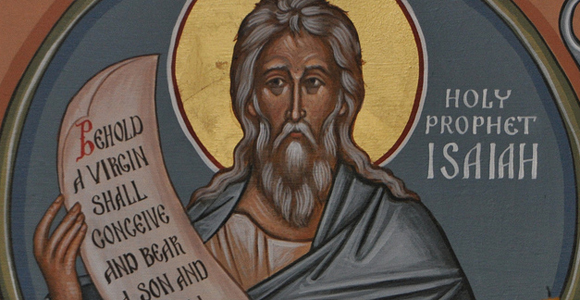
“All this took place to fulfill what had been spoken by the Lord through the prophet: ‘Look, the virgin shall conceive and bear a son, and they shall name him Emmanuel’” (Matthew 1.22–23).

This week I’d like to continue our liberation theme during this Advent season with one of the most controverted elements of the Jesus story. But before you put on your post-modern, naturalist worldview glasses, I’m asking you to put on your liberation from the pyramid of oppression and privilege spectacles instead. In other words, I’m asking you not to look first at what has come to be called “the virgin birth” scientifically, but to look at the “virgin birth” sociologically, first within the context in which the original audience of Matthew would have read it. What is the story truth here?

Matthew, writing largely for a Galilean audience, with a Galilean apologetic flavor, is here referring to a passage in accord with the Jewish culture of that time. Matthew reaches back into the Advocacy/Liberation God of the book of Isaiah, and here draws our attention to the words of Isaiah when Assyria was about to lay waste to Israel.

Then Isaiah said: “Hear then, O house of David! Is it too little for you to weary mortals, that you weary my God also? Therefore the Lord himself will give you a sign. Look, the young woman is with child and shall bear a son, and shall name him Immanuel” (Isaiah 7.13).

The name “Immanuel,” within this context, communicated that even though Israel was headed into a time of being deeply oppressed, they were not to lose hope. A God who would liberate them (much like the God of the Exodus narrative) was “with them.” Immanuel is a name given to a people within the context of the oppression/oppressor dynamic. Oppressors who conquer others always tout that the gods are on their side offering their victory over the oppressed as evidence. I offer the lie of Manifest Destiny as just one example. History (as well as the Civic religion) is written by the conquerors, not the conquered. It is within this context that Isaiah offers a people who are about to be oppressed, not to believe the Assyrian narrative that would justify their oppression, but to hold on tightly to the belief that God was actually “with us”—the oppressed—and deliverance would come. A modern day example would be those involved in the Black Lives Matter movement taking place in America as I write this. In times of longing for deep social change, it becomes imperative for those being oppressed to hold close in their heart the belief that God is standing in solidarity with them in their cause, not their oppressors.

This is what Immanuel means for an oppressed people within its original context. Even though we are victims of oppression, injustice, and violence, God is standing in solidarity with us, and the glory of liberation and what Dr. Martin Luther King called the “double victory” must not be lost sight of.

Read Isaiah’s words just a few chapters later through the lens of a Liberator God who is standing in solidarity with the oppressed, Immanuel. I’ll offer some brief commentary within brackets.

“A shoot shall come out from the stump of Jesse, and a branch shall grow out of his roots.

[This is a king that will arise from the bloodline of the kings of a conquered and oppressed people.]

The spirit of the LORD shall rest on him, the spirit of wisdom and understanding,  the spirit of counsel and might, the spirit of knowledge and the fear of the LORD. His delight shall be in the fear of the LORD.

[He will govern with justice and equity, in other words, as opposed to corruption, greed, and exploitative discrimination.]

 He shall not judge by what his eyes see, or decide by what his ears hear;

[He won’t govern according to the spin doctors who work for the oppressors.]

but with justice he shall judge the poor, and decide with equity for the meek of the earth;

[It would be well to remember this passage as Jesus quotes from it in the Sermon on the Mount when he assures us that in the new world he had come to found, the “meek will inherit the earth.”]

he shall strike the earth with the rod of his mouth, and with the breath of his lips he shall kill the wicked.”

[At this stage of Israel’s understanding, justice would come through killing Israel’s enemies. Jesus would turn this methodology on its head by teaching enemy love expressed through a restorative justice even for Israel’s oppressors. This is why many in Jesus’ day were looking for a messiah that would lead them in militaristic violence against the Romans. Jesus came with the problematic teaching of loving your enemies, saying God’s liberation from injustice, oppression, and violence was for the oppressors too. Jesus called the oppressed to see their oppressors as victims as well of a much larger systemic evil, in need also of being liberated from their participation. This is what makes Jesus’ teaching on nonviolent resistance so powerful. Jesus’ nonviolence has too often been coopted by oppressors, such as that which happened under King James VI in the King’s Authorized 1611 King James Version where Jesus’ words in Matthew 5.39 are grossly mistranslated as nonresistance. Too often Jesus’ words have been hijacked by the privileged to the keep the disadvantaged in their place. Jesus wasn’t teaching passive nonresistance. No, no! In Jesus’ sermon on the mount, Jesus gives three examples of nonviolent RESISTANCE as a powerful means of awakening the conscience of one’s oppressors calling upon them to abandon their participation in systemic injustice and to choose to stand in solidarity with those they once oppressed. It’s what King referred to in his sermon delivered at the Dexter Avenue Baptist Church in Montgomery, Alabama, at Christmas, 1957. Martin Luther King wrote it while in jail for committing nonviolent civil disobedience during the Montgomery bus boycott:

“To our most bitter opponents we say: ‘We shall match your capacity to inflict suffering by our capacity to endure suffering. We shall meet your physical force with soul force. Do to us what you will, and we shall continue to love you. We cannot in all good conscience obey your unjust laws because noncooperation with evil is as much a moral obligation as is cooperation with good. Throw us in jail, and we shall still love you. Bomb our homes and threaten our children, and we shall still love you. Send your hooded perpetrators of violence into our community at the midnight hour and beat us and leave us half dead, and we shall still love you. But be ye assured that we will wear you down by our capacity to suffer. One day we shall win freedom but not only for ourselves. We shall so appeal to your heart and conscience that we shall win you in the process and our victory will be a double victory.’”

Notice Isaiah’s description, which envisions this world with no more oppressor/oppressed.]

Justice shall be the belt around his [this one who would come through Jesse’s bloodline] waist, and faithfulness [to the covenant promises] the belt around his loins.

The wolf shall live with the lamb,

the leopard shall lie down with the kid,

the calf and the lion and the fatling together,

and a little child shall lead them.

The cow and the bear shall graze, their young shall lie down together;

and the lion shall eat straw like the ox.

The nursing child shall play over the hole of the asp,

and the weaned child shall put its hand on the adder’s den.

They will not hurt or destroy on all my holy mountain; for the earth will be full of the knowledge of the LORD as the waters cover the sea. (Isaiah 11.1–9)

No more injustice, no more violence, no more oppression.

John the revelator takes this passage from Isaiah and turns it on its head as well.

From his mouth comes a sharp sword with which to strike down the nations, and he will shepherd them with a staff of iron (Revelation 19.15.; notice that the sword is a verbal one, and that the striking of the nations with those words results in the nations becoming the sheep of this shepherd).

We miss so much when we only read the Jesus narrative through the conventional, domesticated lens of a Christianity that has been (with the exception of its first three hundred years) coopted and used by the oppressors (the Constantinian shift) and stolen from the oppressed. The Jesus Narrative was originally good news to the oppressed and seen as a threat to those at the top of sociological, privileged pyramids, a threat that from the very beginning must be removed (Luke 19.47).

Let’s take one more example from the Jesus narrative so we can contrast the two. We’ll be looking at Luke’s version of the Jesus story in Luke 12.

“Someone in the crowd said to him, ‘Teacher, tell my brother to divide the family inheritance with me.’ But he said to him, ‘Friend, who set me to be a judge or arbitrator over you?’ And he said to them, ‘Take care! Be on your guard against all kinds of greed; for one’s life does not consist in the abundance of possessions.’ Then he told them a parable: ‘The land of a rich man produced abundantly’” (Luke 12.13–16).

There are two ways of reading this story. One is through the lens of the oppressors. Let’s look at this first.

Many in positions of privilege interpret this story in a way that presents a Jesus that refused to intervene in “temporal matters.” “Jesus was about saving mankind’s soul,” they say. They misinterpret Jesus’ kingdom to be “not of this world.” And by this they mean to dualistically divide matters of systemic deliverance from the sins of injustice, oppression, and violence in the here and now from the work of “the gospel.” Their focus is purely on personal, private salvation, which typically is concerned solely with post-mortem destinations. Nothing is to be changed in this life. Injustice and oppression are interpreted as part of God’s purpose for this world. People aren’t to be treated with equality. Inequity is God’s way of developing character. Equity is not part of God’s purpose for this world. God’s focus is on saving your soul for heaven.

That’s one way this passage is interpreted. Strange how it just so happens to leave the world of the oppressors unchanged. Jesus’ revelation that the last shall be first and the first shall be last, in the here and now, is grossly missed.

The other interpretation of this story finds its source in looking through the lens of those who are oppressed. Jesus was not excusing himself from temporal matters. Far from it. His entire Sermon on the Mount is about the message that Jesus’ kingdom, although from/of heaven, has arrived here on earth and is about to restructure, redistribute, and restore. Jesus didn’t go around getting people to say a special prayer so they can go to heaven when they died. He sought to bring healing into people’s lives today. The story we have before us is of two wealthy brothers with a large inheritance that is being fought over. Jesus says, “I’ve not come to be the advocate of the wealthy against others who are wealthy.” He asks, “Who made me a judge between YOU?” i.e. an advocate for the rich. It’s as if Jesus is using the contemporary phrase today, “First World Problem.” Jesus had come as a liberator of the oppressed; he marked the return of the Advocate God to Israel. He, according to Isaiah, was to be an arbitrator. But Jesus was not to be an arbitrator for the rich between others who were rich. Jesus had come to be an arbitrator for the poor against the greed of the wealthy. Jesus came to be, not an arbitrator between those at the top of society’s privilege pyramids, but an arbitrator for those at the bottom of those pyramids between those at the top, standing in solidarity with those at the bottom. This is why Jesus tells the brother a story about a wealthy man (like himself) who was seeking to only acquire more and more, adding to his already existing wealth, rather than taking care of those who were hungry, poor, blind, and naked. Jesus is not rejecting being an arbitrator in temporal affairs. Jesus came to turn our temporal affairs on their heads (see Acts 17.6). Jesus is rejecting being an advocate between the greedy privileged against other who are privileged, saying I’ve not come to be YOUR arbitrator. I’ve come to be the arbitrator for the oppressed. I’ve come as Immanuel to those who are being marginalized, disadvantaged, the needy, the impoverished, the downtrodden, the abused, maltreated, ill-treated, subjugated, tyrannized, repressed, and crushed. I’ve come to reveal a God who is standing in solidarity with these. I have come to give these the hope of Immanuel. I’ve come to give them the ability to say with all hope and confidence, “God” is “with us.”

What is the Advent narrative saying to us?

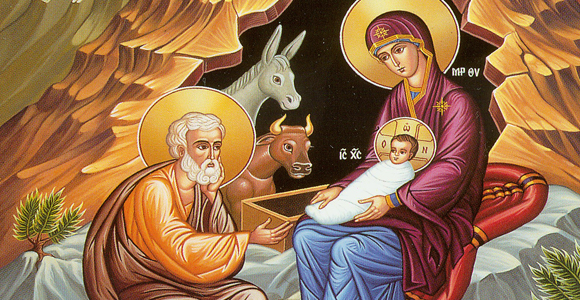
Whether this week you are marching, holding a sign that says, “Black Lives Matter,” whether you are being disfellowshipped this week from your spiritual community because of an orientation you did not choose and cannot change, whether you are continuously never taken seriously because you do not have the correct anatomical appendage, or you are facing an over-commercialized holiday season wondering how you are going to feed your children this Christmas much less give them the Christmas your heart longs to give them, too, you can gather around the manger and dare to believe that the babe who lies there really belongs to you. The baby lying there is Immanuel, the Liberator, the Advocate God, who has come to set the oppressed free, here, now. He is Immanuel, God with you.

HeartGroup Application

In James Cone’s book, God of the Oppressed, James tells of how Jesus was “the subject of Black Theology because he is the content of the hopes and dreams of black people. He was chosen by our grandparents, who saw in his liberating presence that he had chosen them and thus became the foundation of their struggle for freedom. He was their Truth, enabling them to know that white definitions of black humanity were lies.” James goes on to tell of traditions and practices among the slaves that, rooted in the Jesus story, kept them from losing themselves to the white dehumanization and degradation they were continually immersed in.

1. This week I want you to pick up the story of Jesus’ birth found in both Matthew and Luke. I want you to sit with Jesus asking him to change your lens. In matters of gender, race, orientation, and economic injustice, I want you to, in whatever areas of your life that you may experience some level of privilege, try reading this story while placing yourself in the shoes of someone less privileged than yourself. Do your best to read the story from their vantage place.

2. Journal what Jesus shows you.

3. Share what you discover with your upcoming HeartGroup.

This Advent, may you come to know that in whatever way you are “seeking first” the justice of Jesus’ new world, where things are “on earth” as they are “in heaven,” may the liberating, advocating, solidarity standing “Immanuel” give you strength, courage, and hope.

Till the only world that remains, is a world where Christ’s love reigns, may all those things out of harmony with love give way to a shoot of Jesse’s healing, transformative “equity” and “justice.”

The wolf will lay down with the lamb.

Immanuel, God with us.

I love each of you, see you next week.

What does the Advent mean if not Liberation? By Herb Montgomery

advent1

He has brought down the powerful from their thrones, and lifted up the lowly; he has filled the hungry with good things, and sent the rich away empty. He has helped his servant Israel, in remembrance of his mercy, according to the promise he made to our ancestors, to Abraham and to his descendants forever. – Mary; Luke 1.52–55

As the season of Advent has begun, I find myself, this year, not so much needing the story to be “true” as much as needing what the Jesus narrative promises to be possible. By this, I do not mean that I need heaven to be real. I do not mean that I need an afterlife to be possible to assure me that this is not all there is. I do not mean that I need even our origins to be explained. What I mean is that I need to know that a world where there is no oppression, injustice, and violence against an oppressed people by those who are advantaged and privileged is possible, here . . . now.

The Jesus narrative, with all its challenges to us today, is proclaiming that this new world has actually begun. I’m also well aware that when the Roman Empire coopted the Jesus movement in the fourth century, in what many scholars call “the Constantinian shift,” what the Jesus narrative says to those who are oppressed became eclipsed and largely lost as the church (those by whom the Jesus narrative was taught) would eventually become the Empire itself and almost irredeemably attach the name of Jesus to one of the most oppressive structures in the history of the Western world. Even with the protestant reformation, “Christianity” today continues to be one of the most oppressive voices in the West regarding issues of race, gender, sexuality, and economics. How has that which claimed the Jesus of the Jesus narrative to be its central object of reverence veered so far from what that Jesus taught in regards to liberation?

From all the pictures of God within the Jewish scriptures that this Jesus could have chosen to characterize his movement, he chose an advocate God who liberates the oppressed.

“The Spirit of the Lord is upon me, because he has anointed me to bring good news to the poor. He has sent me to proclaim release to the captives and recovery of sight to the blind, to let the oppressed go free, to proclaim the year of the Lord’s favor.” (Luke 4.1819, emphasis added.)

When John’s disciples came asking Jesus if he was really the one they had been looking for, this Jesus offers his work of liberation for those socially oppressed as the conclusive evidence.

He answered them, “Go and tell John what you have seen and heard: the blind receive their sight, the lame walk, the lepers are cleansed, the deaf hear, the dead are raised, the poor have good news brought to them” (Luke 7.22).

Remember, those who were blind, lame, and deaf were not considered objects of compassion, but “sinners” being punished by God and thus oppressed as well by those who were seeking this God’s favor. (We do this socially as well. One of the ways we become “friends” with someone is to show ourselves to be against those who they are against as well.) Jesus came, instead, announcing God’s favor for those who were being oppressed and calling for oppressors to embrace this radically new way of seeing God and to begin standing in solidarity with the oppressed as well.

Notwithstanding all of the challenges that the narrative of Jesus’ birth produces for us today, we can trace this picture of an advocate God of liberation all the way back to the words of Jesus’ mother Mary.

“He has brought down the powerful from their thrones, and lifted up the lowly; he has filled the hungry with good things, and sent the rich away empty. He has helped his servant Israel, in remembrance of his mercy, according to the promise he made to our ancestors, to Abraham and to his descendants forever” (Luke 1.5254).

Let’s unpack this.

He has brought down the powerful from their thrones, and lifted up the lowly

Mary first portrays the work of her son to be subversive to monarchy. Her son’s work would decenter a world that functions hierarchically where humans “reign” over other humans. We can see this in Jesus’ words to his disciples in Luke 22. “He said to them, “The kings of the Gentiles lord it over them; and those in authority over them are called benefactors. But not so with you; rather the greatest among you must become like the youngest, and the leader like one who serves. For who is greater, the one who is at the table or the one who serves? Is it not the one at the table? But I am among you as one who serves.” Jesus came announcing the possibility of a world that does not depend upon hierarchical structures for it to function. Hierarchy rules coercively; love inspires compellingly. Jesus came with the message that we can live together without being “ruled.” Jesus cast a vision of a world inspired by the beauty of egalitarian love (Matthew 23.8) where each person treats every other simply the way one would like to be treated (John 13.35; Matthew 7.12).

It might be said that today, at least here in America, we no longer practice monarchy but democracy. Nevertheless, even within democracy, hierarchy is still practiced. Privilege and advantage cause those of a different race, gender, orientation, or economic status to be “ruled over” by laws and policies written by white, wealthy, straight, cisgender males like myself. What does it mean, within a democracy, for the “powerful” to be pulled down “from their thrones?” Those who wear the name of this Jesus should not be supporting the status quo, but subverting it, pioneering a new way of “doing life,” calling those at “the top” of a nation founded on privilege to follow this “dethroning” Jesus as well. It is my belief that there is no better place for this to begin than within Ecclesiastical structures themselves. Until religious hierarchy ceases to be practiced and protected by those who say they are following Jesus, the church is betraying itself. Until those who claim the name of Jesus begin themselves to follow this “dethroning” Jesus, we cannot even begin to dream of (much less pioneer) a world that is truly different. New hierarchical structures will simply replace old ones. The names of the streets will be changed, yet the same old ways of mapping those streets will remain the same.

He has filled the hungry with good things, and sent the rich away empty.

It would be well to remember the words of Jesus in Luke’s version of the Jesus narrative in Luke 6.2026:

“Then he looked up at his disciples and said: ‘Blessed are you who are poor, for yours is the kingdom of God. Blessed are you who are hungry now, for you will be filled. Blessed are you who weep now, for you will laugh . . . But woe to you who are rich, for you have received your consolation. Woe to you who are full now, for you will be hungry. Woe to you who are laughing now, for you will mourn and weep.’”

Not as an outsider, but as one of us, Jesus had come to bring about a great reversal, a rearrangement, a redistribution of resources, here and now. Those who were presently poor, hungry, and weeping as a result of how the present society was arranged would be particularly blessed by the new world Jesus had come to found. Those who had been privileged, those who were rich, those who were well fed, those who rejoiced in the present structuring of resources would go hungry, would mourn, and weep.

Yes, Jesus came announcing good news to the disadvantaged, but it was not perceived to be good news by all. There were the few at the top of the political, economic, and ecclesiastical structures who viewed Jesus’ “good news” as a threat to be swiftly dealt with (see Mark 11.18 cf. John 11.4750).

As Peter Gomes in his book The Scandalous Gospel of Jesus writes, “Good news to some will almost inevitably be bad news to others. In order that the gospel in the New Testament might be made as palatable as possible to as many people as possible, its rough edges have been shorn off and the radical edge of Jesus’ preaching has been replaced by a respectable middle, of which ‘niceness’ is now God. When Jesus came preaching, it was to proclaim the end of things as they are and the breaking in of things that are to be: the status quo is not to be criticized; it is to be destroyed.”

And again,

“When the gospel says, ‘The last will be first, and the first will be last,’ despite the fact that it is counterintuitive to our cultural presuppositions, it is invariably good news to those who are last, and at least problematic news to those who see themselves as first” (Ibid.).

Today wealth and prosperity is taken as evidence of God’s blessing. Jesus did not teach this. Jesus taught that wealth and prosperity reveal an inequality in foundational structures that left some hungry while others were well fed. This new world pioneered by this Jesus was a world where “the hungry would be filled with good things,” and the stockpile reserves of the “rich would be sent away empty.”

He has helped his servant Israel, in remembrance of his mercy, according to the promise he made to our ancestors, to Abraham and to his descendants forever.

The great hope of the Hebrew people was not to die and go to heaven, but that some day, on earth, all oppression, violence, and injustice would be put right. This hope was held to be precious by a people whose history was one of being the sweatshop workers of Egypt, then the conquered natives of the Babylonian Empire, and presently the victims of Roman colonization.

What Mary is announcing is that her son would be the liberator of her people from the oppressive presence of the then present Superpower of the known world. What Mary as well as many of the others within the Jesus narrative do not perceive is that this Jesus, whenever followed, would be the liberator of all who are oppressed in every generation. One needs only think of Gandhi and Dr. Martin Luther King, Jr. for the evidence of this being true. What I find most ironic is that Gandhi, in being inspired to follow the teachings of Jesus in the “sermon on the mount,” found liberation from British Christians. And King, by doing the same, found liberation from white Christians in positions of privilege here in America.

What does this mean to us this Advent season?

For me, it means that as someone raised as Christian, I need to allow the Jesus narrative to confront me first and foremost, seeing that Christians have been, historically, oppressive first and foremost. As someone who is mostly white, I need to allow the Jesus narrative to confront me in matters of racism. As someone who is mostly male, I need to allow the Jesus narrative to confront me in matters of male privilege. As someone who is mostly straight, I need to allow the Jesus narrative to confront me in matters of LGBQ rights. As someone who is mostly cisgender, I need to allow the Jesus narrative to confront me in regards to the threatening reality that my transgender friends live within every day. As someone who is mostly wealthy by global standards, I need to allow the Jesus story to confront me in matters of economics, especially in regards to justice for the poor. As someone who is mostly privileged, I need to allow the Jesus narrative to wake me up to the degree to which I am participating in oppression, even unknowingly, and to allow the beauty of this Jesus to inspire me to compassion instead of fear, and love instead of self-protection, and a letting go, instead of the death-grip grasp on my life as it presently is.

Change doesn’t have to be scary. For those at the top, following Jesus will change everything. But the beauty of the world promised by the Jesus narrative, I choose to believe, is possible. And it’s the beauty of this new world that wins me, at a heart level, to allow my present world to be “turned upside down” (see Acts 17.6).

Will it be costly? Of course it will be. But it’s worth it.

“The kingdom of heaven [this new world] is like treasure hidden in a field, which someone found and hid; then in his joy he goes and sells all that he has and buys that field” (Matthew 13.44).

HeartGroup Application

1. As we begin this Advent season, let’s spend some time sitting with the living Jesus allowing him to open our eyes. As Rabbi Tarfon so eloquently stated, “Do not be daunted by the enormity of the world’s grief. Do justly, now. Love mercy, now. Walk humbly, now. You are not obligated to complete the work, but neither are you free to abandon it.”

2. As you contemplate the injustice of the present world as contrasted with the justice of the new world promised by the Jesus narrative (see Matthew 6.33), journal what Jesus inspires you with.

3. Share with your upcoming HeartGroup in what areas of the world around us that Jesus has inspired you to want to make a difference.

Until the only world that remains, is a world where love reigns, may this Advent season mark a furthering and deepening of the world that babe in Bethlehem came to found.

Together we can ensure a better world is yet to come.

I love each of you, and remember the advocating, liberating God we see in Jesus does too.

Happy Holidays and Tikkun Olam.

See you next week.

No More Sacrifice by Herb Montgomery

goat

“‘Abraham is our father,’ they answered. ‘If you were Abraham’s children,’ said Jesus, ‘then you would do what Abraham did. As it is, you are looking for a way to kill me . . . Abraham did not do such things. You are doing the works of your own father’”—Jesus, John 8.39–41.

This week, by request, I’d like to take a look at what I call Jesus’ “anti-sacrifice” portrayal of God. I’ll explain what I mean by this later on, but in order to get there, we are going to have to go as far back as we can and look at “sacrifice” not religiously, but sociologically.

Anthropologists have recognized a repeating pattern throughout human civilizations. Whenever we believe we are competing with one another for a limited amount of resources (as opposed to cooperating with one another where we believe there is enough for all), eventually the unity and cohesiveness of that society begins to pull apart. Competition and rivalry begin to threaten the health and longevity of that society.

What anthropologists have also noticed—and this they cannot explain—is that almost mysteriously, but very predictably, that society will then, instinctively, begin turning on its most vulnerable members and blaming them for the tension and trouble the society is beginning to encounter. This can either be a group or an individual person. Then something almost magical happens.

The unity of the society is instantly restored as everyone now coalesces around a common enemy. The tensions and trouble that were just previously threatening the cohesiveness of their society evaporate into thin air as this society discovers a new-found comradery and previous enemies become friends, as they all unite together around this group or person as their common enemy.

Typically this group or person is expelled from the community (either by being sent away or by being “lynched” via the angry mob) and life for the community goes on as usual. But before long, the tensions that once plagued the group through their rivalry with one another resurface and a new sacrifice is required. This unity that comes through sacrificing a common enemy is temporary and must be continually rekindled.

This is where many anthropologists believe religion was born. Rather than finding another victim to scapegoat, elders within a society sought to recreate and relive the original lynching through “ritual” rather than repeating the social mechanism of finding a common enemy in real life. Either another person was used (human sacrifice) to reenact the historical event or an animal was used. In either case, the story of the original lynching was reenacted and the community found unity here in coming together to celebrate together their sacred victory over the group or person they believed was their enemy. It would be well to remember that in reality the original victim was never truly guilty, but innocent, and was only perceived as being guilty by the hysterical or angry mob.

Thus, sacrifice in human history was born. Religious or ritual sacrifice, whether human or animal, was an attempt by the community to recreate the original unifying event. Whether a society sacrifices an animal or a human is not relevant. Those societies that sacrifice animals will soon sacrifice humans and eventually need to relive the event in real life through finding another enemy for the society to rally together against.

This is the way of sacrifice. Ritual animal leads to ritual human, which leads to actual human. It is the reversal of this trajectory that the God of the Hebrew and Christian scriptures has always sought to accomplish, though few have noticed this.

From the innocence of Abel, the nomadic herdsman, who was slain by his brother Cain, the tiller of the soil, all the way down to Zechariah the prophet, God has been seeking to cure humanity’s need for “sacrificing” others.

Now let’s take a look at Jesus.

Twice in the Gospel of Matthew Jesus uses this phrase.

“Go and learn what this means, ‘I desire mercy, not sacrifice’ (Matthew 9.13); But if you had known what this means, ‘I desire mercy and not sacrifice,’ you would not have condemned the innocent” (Matthew 12.7).

A point that we must take the time to note is that Jesus in Matthew 12 goes further than Matthew 9 saying that if we had understood that sacrifice is not of Divine origin but human, we would not have condemned the “innocent.”

Once sacrifice became ritualized, in other words, once it became religious, it was believed that God or the gods actually demanded or required this sacrifice to be done. This is the picture of God Jesus tirelessly seeks to refute. Remember, ritual animals lead to ritual humans leads to actual humans. This is the trajectory the God we see in Jesus is seeking to heal.

Jesus actually saw this in his unique reading of the Old Testament narratives. Jesus came to the conclusion that sacrifice is not of Divine origin, but human. Jesus teaches that God had never actually required sacrifice but had always been seeking to lead humanity away from it. Notice the following passages. We’ll start with the one Jesus actually quotes.

Hosea 6.6—“For I desire mercy, not sacrifice, and acknowledgment of God, rather than burnt offerings.”

Isaiah 1.11–12—“‘What to me is the multitude of your sacrifices?’ says the LORD; ‘I have had enough of burnt offerings of rams and the fat of fed beasts; I do not delight in the blood of bulls, or of lambs, or of goats. When you come to appear before me, who asked this from your hand?’”

Note this last question. God is actually implying that the origins of this practice are not to be found in Divine requirement. “Who asked you to even do this?” God says.

Psalms 40.6—“Sacrifice and offering you did not desire—my ears you have opened—burnt offerings and sin offerings you did not require.”

Jeremiah 7.22—“For in the day that I brought your ancestors out of the land of Egypt, I did not speak to them or command them concerning burnt offerings and sacrifices.”

This passage from Jeremiah is the most puzzling for many because it contradicts the entire book of Leviticus. Obviously God did command them concerning burnt offerings and sacrifices. How can Jeremiah’s God say He did not? The answer, I believe, can possibly be found in Leviticus 17.7:

Leviticus 17.7—So that they may no longer offer their sacrifices for goat-demons, to whom they prostitute themselves.

Just as with patriarchy, misogyny, slavery, racism and violence, the Hebrews were already practicing sacrifice when they came out of Egypt. The Egyptian sanctuaries even had a dual apartment structure of holy and most holy places. God is meeting the Hebrews where they are, and subversively, from within their own sacrificial practices seeking to lead them away from sacrifice. Remember, the sociological trajectory is ritual animal leads to ritual human, which leads to actual human. Within Leviticus, yes, God is giving instruction regarding sacrifices, but we have to ask ourselves, is this because there is a desire for sacrifices in the heart of God or is God making a concession and risking using sacrifice to try and reverse the trajectory away from actual human, away from ritual human, to ritual animal, and eventually no sacrifice at all?

Notice the author of Hebrews’ words about Christ:

Hebrews 10.5—“Therefore, when Christ came into the world, he said: ‘Sacrifice and offering you did not desire . . . with burnt offerings and sin offerings you were not pleased.’”

Some will ask, “What about Genesis? Didn’t God originate Sacrifice in Genesis?” You will be hard pressed to find one single verse where God originates and commands sacrifice. It’s just not there. It is true that Cain and Abel were making sacrifices, but this only proves that enough time had transpired for humans to have begun practicing sacrifice. Remember, when Cain departs after killing Abel, the earth is well populated (see Genesis 4.14, 16–17).

Some will say, “But didn’t God make clothing for Adam and Eve out of animal skins?” But the types of animals one uses to produce clothing from their skins are not the animals typically used in ritual sacrifices. You would not sacrifice a lamb to get clothing. You would simply shave its wool. In other words, there is no intrinsic connection between ritual sacrifice and the production of clothing. One does not imply the other.

Others will ask, “What about God’s acceptance of Abel’s sacrifice and God’s rejection of Cain’s?” Much is lost when we read stories from our context rather than the context of the original audience. This story was originally told within the context of Mesopotamian land owners (tillers of the ground) and nomadic herdsmen. Those in positions of privilege in this society were the “tillers of the ground.” They, for agricultural reasons, looked at land very differently than the nomadic herdsmen. The herdsmen believed the land belonged to everyone and was not to be privately owned. The herdsmen, being nomadic, were also the weaker of the two. The tillers of the ground were more permanent, thus more fortified and stronger. They were the more stable and they oppressed the migrant nomadic herdsmen as intruders on their property.

In the Cain and Abel story we find God taking the side of the oppressed, once again. We see God cursing the ground for Cain’s sake, turning Cain from a tiller of the ground, to a nomadic wanderer so that he too can learn to view life through the lens of being marginalized and oppressed.

Those who claim that Abel’s sacrifice was accepted because it contained blood and Cain’s didn’t must remember that Cain’s sacrifice would have been completely acceptable under the Levitical rules for grain, wine, and food offerings where there was no blood involved either. This was not a matter of “blood” being present or not, required by a God who required sacrifice. This is a story about the way of mercy rather than sacrifice. This is a story concerning liberation from oppression, about sacrifice, both ritual and sociological, and about societies being founded on the way of mercy rather than mutual hatred of a common enemy (tillers of the soil united against nomadic herdsmen).

This leads us to our featured passage this week.

John 8.39–41—“‘Abraham is our father,’ they answered. ‘If you were Abraham’s children,’ said Jesus, ‘Then you would do what Abraham did. As it is, you are looking for a way to kill me . . . Abraham did not do such things. You are doing the works of your own father.’”

Here Jesus is pulling back the veil, and showing the two trajectories side by side.

The human trajectory is this:

A) Actual lynching/sacrifice of common societal enemy

B) Ritual sacrifice of animal or human as an attempt to recreate the unity produced by original lynching.

C) Eventual need to find a common enemy again

This is the course of the escalating need for the ritual animal that becomes the need for a ritual human that eventually becomes the need for another actual human enemy for society to unify against.

The Abraham Trajectory is the exact opposite:

From ritual human sacrifice back to ritual animal sacrifice.

Jesus came to conclude this trajectory by leading the Hebrew people now away from even ritual animal sacrifice to no sacrifice whatsoever either ritually or sociologically. It is an anti-sacrifice understanding of God and each other, entirely.

If those to whom Jesus was speaking in John 8 would truly have been children of Abraham, they would have been on the trajectory away from ritual human, to ritual animal, with the aim of no sacrifice at all. But being children of the accuser, they then were moving in the opposite direction of Abraham. They were moving from ritual animal all the way down the trajectory to human sacrifice/lynching, i.e. the murder of Jesus.

It would also be well to note that there were those in a unique position of privilege that had everything to lose if Jerusalem embraced this revolutionary anti-sacrifice picture of God. Who were they? The priests, and especially the chief priest—Caiaphas. These were the ones who economically, socially, and politically benefitted from ritual sacrifices.

“The CHIEF PRIESTS and the teachers of the law heard this and began looking for a way to kill him, for they feared him, because the whole crowd was amazed at his teaching” (Mark 11.18, emphasis added).

So the CHIEF PRIESTS and the Pharisees called a meeting of the council. “If we let him go on like this, everyone will believe in him, and the Romans will come and destroy both our holy place and our nation.” [The favor of God and thus God’s protection of Jerusalem against Rome, they believed, was dependent on the sacrifice continually burning on the altar; see Josephus, War of the Jews, on the ceasing of the daily sacrifices.) But one of them, Caiaphas, who was high priest that year, said to them, “You know nothing at all! You do not understand that it is better for you to have one man die for the people than to have the whole nation destroyed” (John 11.47–50, emphasis added).

Here it is again. Here we see the human sacrificial trajectory of ritual animal, leading to ritual human, culminating in an actual human enemy that must be expelled. In this case it was Jesus who must now be killed.

Thus Luke tells us that it was “the officers of the TEMPLE POLICEwho came to arrest Jesus (Luke 22.52). Jesus’ interruption of the continual daily sacrifices in the temple would not be tolerated. It would also be well to remember, Jesus was not “cleansing the temple” so that sacrifices could continue in a purer from. No, Jesus was overturning tables and driving out the ritual sacrificial animals because “God desired mercy, not sacrifice.” This anti-sacrifice element to Jesus’ ministry was therefore anti-temple [where the sacrifices were made] as well as anti-priest [the ones who performed the sacrifices in the temple].

This would not be tolerated. This threat would be extinguished.

Just as a side note in recognizing the hints the Jesus story gives us so we will notice what is happening sociologically, we must not miss these two passages.

Luke 23.12—That day Herod and Pilate became friends—before this they had been enemies. (Emphasis added.)

This is the way of sacrifice, sociologically. Jesus has become not the ritual sacrifice, but the actual sociological one, the enemy around which even rival enemies within this society are now experiencing newfound unity and friendship.

Mark 15.15—“Wanting to satisfy the crowd, Pilate released Barabbas to them. He had Jesus flogged, and handed him over to be crucified” (emphasis added).

That which drives sociological sacrifice or lynching is always the angry mob, which gets swept up in the scapegoating mechanism.

Yet the story does not end in yet another lynching by yet another human society. Yes, on the evening of the “preparation day,” it looks as if the world will never change. But there is more to come. On the first day of the new week, God would stand in solidarity with Jesus as the lynched victim and inaugurate not just a new week, but a new world. God, in the Resurrection, would undo and reverse all that was accomplished through the crucifixion.

Paul would later say it like this:

“We tell you the Gospel: What God promised our ancestors [a world where all injustice, oppression, and violence is put right], he has fulfilled for us, their children, by raising up Jesus” (Acts 13.32–33).

In the resurrection, a new world had begun.

A world not founded on the way of sacrifice, but on the way of mercy. This was a new way of arranging human life, a way that Jesus had been modeling for the previous three years.

There is one final point that I’d like to point out this week before we close.

“At that moment the curtain of the temple was torn in two, from top to bottom” (Matthew 27.51).

I can’t end this week without drawing your attention to the contrast here.

The Priests claimed God dwelt at the heart of their temple, at the heart of their way of sacrifice. But when Jesus died at the hands of this system, the entire way of sacrifice was unmasked as being not of Divine origin, but actually being capable of sacrificing/lynching God too if God were to be viewed as an intrusive threat as well to society.

The resurrection placed alongside the torn curtain speaks to humanity that God is not at the heart of that system at all. We have mistaken where God actually is. When the temple veil was torn in two, there was no ark of the covenant (that had been long lost), there was no Shekinah Presence (that had long since departed). What was seen was the stark absence of God. Where was God? The resurrection reveals that God was, at that moment of sacrifice, in the One being sacrificed. The event marks the end of sacrificial systems that demand the death of those who are innocent, whether political relying on violence [Pilate], religious based on fear [Caiaphas], or economic driven by greed [Herod]. The Jesus story puts on display that the Presence of God is not found within the most exclusive holy places belonging to sacrificial systems. The true dwelling place of the Presence is found in the One shamefully suspended and sacrificed on a cursed tree at the orders of those sacrificial systems. In other words, God is standing, and always has stood, in solidarity with those our societies sacrifice.

HeartGroup Application

In the Book of Revelation, John looks and sees: “I saw no temple [the place of sacrifice] in the city . . .” (Revelation 21.22). When Heaven and Earth become reunited again, there will be no more sacrifice, whether ritual or actual, political, economic, or religious. The Resurrection is the start of this whole new world where, just like Jesus, we need not fear the consequences of our engagement against the sacrificial systems of our present societies. We stand in the victory of the Christ over all sacrifice, a victory that has already been won.

1. This week, spend some time contemplating with Jesus where you may be still participating in sociological sacrifice. Hardly anyone in the West still practices ritual sacrifice. Yet we practice sociological sacrifice every day. Ask Jesus to show you where you may be doing this as well.

2. Ask Jesus to give you the courage to no longer participate in the injustice, violence, and oppression of the way of sacrifice and follow the way of mercy instead. (Jesus’ clearest demonstrations on what this way of mercy actually looks like is found in the entire body of the Jesus stories of Matthew, Mark, Luke, and John. It is my belief that these stories are centered on Jesus’ radical teachings in Matthew 5–7.)

3. Share what Jesus shows you this week with your HeartGroup this upcoming week.

Till the only world that remains is a world where Christ’s love, and no more sacrifice, reigns, keep living in Love. A new world has begun. Let’s go enlarge its radically inclusive borders, through humble, servant, nonviolent, co-suffering, injustice-resisting, liberating love, one heart at a time.

I love each of you, and remember, the God we see in Jesus does too.

See you next week.

Herb

Liberian Christians, Ebola and the LGBT Community; Advocacy or Accusation? Holy or Demonic? by Herb Montgomery

111014

“But the Advocate, the Holy Spirit, whom the Father will send in my name, will teach you all things and will remind you of everything I have said to you.” — Jesus (John 14.26)

What many miss in John’s gospel is Jesus’ primary characterization of the Holy Spirit’s work as advocacy.

In John’s version of the Jesus story, Jesus actually contrasts two spirits within this narrative: the spirit of advocacy versus the spirit of accusation.

In chapter 8 of John’s gospel, Jesus says, “You belong to your father, the devil, and you want to carry out your father’s desires” (Vs 44). The Greek word here for “devil” is diabolou and it simply means “slanderer” (Mounce’s Greek Dictionary). Another title that is used in the Jesus stories is “the satan.” (And it’s a title, not a name.) The Greek word for “the satan” is satanas which means “accuser.”

There are two spirits in John’s story — the spirit of accusation (or scapegoating) and the spirit of advocacy. One is holy, the other is demonic.

Advocacy is defined as publically pleading for the rights or cause of those who are being oppressed. Accusation is defined as the act of making a charge or claim that someone has done something illegal or wrong.

A Modern Example of Scapegoating:  Liberian Christians Blame LGBT Community for Ebola.

A perfect example of the contrast between advocacy and accusation is found in what is transpiring presently in Liberia.

The Christian leaders of Liberia last week unanimously endorsed the following resolution:

That God is angry with Liberia, and that Ebola is a plague. Liberians have to pray and seek God’s forgiveness over corruption and immoral acts (such as homosexuality, etc.) that continue to penetrate our society. As Christians, we must repent and seek God’s forgiveness. 

Archbishop Lewis Zigler of Monrovia publically declared:

One of the major transgressions against God for which He may be punishing Liberia is the act of homosexuality. 

Leroy Ponpon, an LGBT activist, stated:

Since church ministers declared Ebola was a plague sent by God to punish sodomy in Liberia, the violence toward gays has escalated. They’re even asking for the death penalty. We’re living in fear.

The fact that people who claim the name of Jesus would imbibe this spirit is astounding. This is the exact treatment of others (not to mention the picture of God) Jesus worked so tirelessly and subversively to reverse. What about the prophets you may ask? Go back and read them. The prophets NEVER state that God was going to punish Israel for any actions of the oppressed. God’s punishments were always because of the unjust actions of those at the top of Israel’s privilege/disadvantaged social pyramid. In other words, plagues never came in the Hebrew narratives because of the actions of the oppressed minority at the bottom of society, but because of the exploitation and oppression against the oppressed minority by the privileged and normative majority. Even in the Hebrew stories, Yahweh’s plagues were always aimed at those at the top, the privileged, because Yahweh was standing in solidarity with the minority, defending those at the bottom.

Failure to understand this is what led the religious leaders in Jesus’ day to marginalize people as “sinners.” Failing to see which end of the social pyramid (top or bottom) brought the punishment of Yahweh, led the religious leaders to begin marginalizing and oppressing anyone they deemed was living contrary to the Torah. Living in constant fear of another punishment of Yahweh, the religious leaders became the moral police constantly governing the moral behavior of others, and sacrificing those they judged as “sinners.” Failing to understand which end of the social pyramid brought Yahweh’s plagues in the narratives, in their treatment of others whom they labeled as “sinners,” they became the oppressors. The very thing that brought the plagues of old, the reality they were so afraid of, they ended up recreating.

The God we see in Jesus, within the Jesus story, stands in solidarity with the oppressed and marginalized minority. In Jesus’ day (pre-Paul), “sinner” was a term used by Jews to refer to other Jews who were living contrary to the teachings of Moses. To label those who belonged to the oppressed minority as “sinners” only served to perpetuate their oppression. After all, they were viewed as sinners, under the condemnation of God. They deserved this ill treatment. They were ruining society. They were the enemy!

This entire social mechanism, rooted in very dangerous ways of seeing God, ourselves, and others, is what Jesus continually challenged. His embrace of the marginalized and outcast so deeply threatened the religious culture of his day that they believed he must be removed in order to prevent, in their minds, Yahweh from sending another punishment (John 11.48–50). This is where the wrong picture of God, as well as the marginalized, leads. We will ultimately kill even God. In fact we already have, both historically and in our treatment of those who are made in the image of God. What Liberia (and Christians here in America, too, I might add) must remember is that it wasn’t the gays who crucified Jesus. It was the religious people.

Last week, many around the globe celebrated Halloween. This is a time when all the monster stories are dragged out and retold. What I noticed this year is that all the stories of angry mobs, chasing down monsters with pitch-forks and raised torches, belong to a long tradition of celebrating the social mechanism of scapegoating and sacrificing innocent victims. And, as a good friend of mine, Keisha McKenzie, shared with me last week, “By contrast, the Death Dances of the Black Plague era and the costuming traditions that became Halloween put a face to the fearsome ‘Other’ and in so doing humanize it. Humanizing the monster is really re-humanizing ourselves, because the ‘monster’ was always human. Dehumanizing others, downgrading them from human to monster, is a highly effective way to dehumanize self.” (For more from Keisha on this check out her thoughts here: http://spectrummagazine.org/blog/2014/10/31/halloween-and-facing-our-shadow )

A Deeper Look At How Scapegoating/Accusation Works

Jesus said it most clearly, “If you had known what these words mean, ‘I desire mercy, not sacrifice,’ you would not have condemned the innocent” (Matthew 12.7).

“A scapegoat effect that can be acknowledged as such by the scapegoaters is no longer effective, it is no longer a scapegoat effect. The victim must be perceived as truly responsible for the troubles that come to an end when it is collectively put to death. The community could not be at peace with itself once more if it doubted the victim’s enormous capacity for evil.” — Rene Girard, The Girard Reader (p. 14)

“The victim cannot be perceived as innocent and impotent; he (or she, as the case may be) must be perceived if not necessarily as a culprit in our sense, at least as a creature truly responsible for all the disorders and ailments of the community . . . He is viewed as subversive of the communal order and as a threat to the well-being of the society. His continued presence is therefore undesirable and it must be destroyed or driven away by other gods, perhaps, or by the community itself.” — Rene Girard, The Girard Reader (p. 15)

“[Father, forgive them for they don’t know what they are doing.] Here, as with all the sayings of Jesus, it is crucial to avoid emptying what he says of its basic sense . . . He expresses the powerlessness of those caught up in the mimetic snowballing process [scapegoating] to see what moves and compels them. Persecutors think they are doing good, the right thing; they believe they are working for justice and truth; they believe they are saving their community.” — Rene Girard, I See Satan Fall Like Lightning (p. 126, Kindle Edition)

Today, people, especially Christians, are afraid. Many Christians (praise God for the exceptions) are much like the fearful religious leaders of Jesus’ day. From their conversions rooted in imaginings of hell, to the constant bombardment they receive from the pulpits of the apocalyptic, catastrophically nightmarish images tied to current cultural events — fear is the rule. But fear leads us to abandon the spirit of Advocacy and embrace the spirit of Accusation. And just as perfect love drives out all fear, perfect fear also drives out all love.

With the nightmarish events of the destruction of Jerusalem approaching on the horizon, remember Jesus had the courage to say, “And because of the increase of lawlessness [social chaos was coming], the love of many will grow cold [fear and the desire to have someone to blame]. But the one [whose love] endures to the end will be saved” (Matthew 24.12–13).

HeartGroup Application

  1. This week, spend some time sitting with Jesus asking Him to show you where and with whom you may be practicing the social mechanism of sacrificing others out of fear (see Matthew 12.7). Remember, we are all children of the same Divine Parents. Jesus rose again for us all. We are all going to have to learn to sit around the same family table once again.
  1. Journal what Jesus shows you.
  1. Share what you learn with your upcoming HeartGroup.

Advocacy or Accusation? There are two Spirits: one is holy, the other demonic. Which one will you embrace this week?

Till the only world that remains is a world where Christ’s love reigns, keep living in love.

I love each of you, and remember, God does, too.

I’ll see you next week.


Rejected Rejection by Herb Montgomery

pharisees

Jesus said to them, “Have you never read in the scriptures: ‘The stone that the builders rejected has become the cornerstone; this was the Lord’s doing, and it is amazing in our eyes’?” (Matthew 21.42)

First, I want to say a big thank you to all who have been praying for my recovery over the last three weeks. I’m back on my feet now after a pretty tough bout of pneumonia. Thanks for your love, support, prayers, and patience. I really appreciate your concern.

This week, I want to talk about Jesus, social rejection, and the divine rejection of the social rejection that we see in God, revealed through Jesus. This last type of rejection will make more sense as we continue.

Matthew 21 presents a series of parables that Jesus was sharing with the chief priests and Pharisees on the subject of their religious rejection of others to whom they felt morally superior.

“What do you think? A man had two sons; he went to the first and said, ‘Son, go and work in the vineyard today.’ He answered, ‘I will not’; but later he changed his mind and went. The father went to the second and said the same; and he answered, ‘I will go, sir’; but he did not go. Which of the two did the will of his father?” They said, “The first.” Jesus said to them, “Truly I tell you, the tax collectors and the prostitutes are going into the kingdom of God ahead of you. For John came to you in the way of justice and you did not believe him, but the tax collectors and the prostitutes believed him; and even after you saw it, you did not change your minds and believe him. (Matthew 21.28–32, emphasis added)

There are three points to keep in mind as we read these parables that will enable us to step into their context and receive their full impact.

  1. Jesus stood in solidarity with, and defended those whom the chief priests and Pharisees had judged as morally inferior and had socially rejected.
  1. Jesus’ choice to stand in solidarity with those the chief priests and Pharisees had discarded as “sinners” (Jews living in disobedience to the Torah) also caused the chief priests and Pharisees to reject Jesus as one of them.
  1. God was rejecting the rejection of the chief priests and Pharisees, not only of Jesus, but also of the people who were responding to Jesus, whom He was defending. According to Jesus, God was embracing Jesus and all of these religious rejects and founding a new world beginning with them. In other words, Jesus’ Kingdom was being founded on religious “rejects.”

Follow closely. Jesus said next:

“Listen to another parable. There was a landowner who planted a vineyard, put a fence around it, dug a wine press in it, and built a watchtower. Then he leased it to tenants and went to another country. When the harvest time had come, he sent his slaves to the tenants to collect his produce. But the tenants seized his slaves and beat one, killed another, and stoned another. Again he sent other slaves, more than the first; and they treated them in the same way. Finally he sent his son to them, saying, ‘They will respect my son.’ But when the tenants saw the son, they said to themselves, ‘This is the heir; come, let us kill him and get his inheritance.’ So they seized him, threw him out of the vineyard, and killed him. Now when the owner of the vineyard comes, what will he do to those tenants?”

They said to him, “He will put those wretches to a miserable death, and lease the vineyard to other tenants who will give him the produce at the harvest time.” Jesus said to them, “Have you never read in the scriptures: ‘The stone that the builders rejected has become the cornerstone; this was the Lord’s doing, and it is amazing in our eyes’? Therefore I tell you, the kingdom of God will be taken away from you and given to a people that produces the fruits of the kingdom. The one who stumbles over this stone will be broken to pieces; and it will crush anyone on whom it falls.” (Matthew 21.33–46, emphasis added)

I want to draw your attention to the phrase, “The stone that the builders rejected has become the cornerstone.” This is nothing unique, and certainly nothing new. From the founding of human society, societies have always been built on the rejection of, or scapegoating of, a single victim. Human societies find unity and cohesiveness in joining together against a common “enemy.” This enemy is accused of being responsible for societies stresses and conflicts. It’s the age old, “Us versus Them!” The rejection of a “stone” has always been the “cornerstone” of forming societies. Yet in a very real sense, there is something different about this time. In all the stories of history, legends, and myths, deities are always on the side of those who are doing the rejecting—the rejectors. In fact, the gods are the ones demanding that the victim be sacrificed/rejected! Yet in the Jesus story, the scapegoating mechanism is turned on its head. God, for the first time in all the stories, is in the One being rejected, showing the victims to innocent, over and against those who are endeavoring to found (or in this case preserve) a society on sacrificing, rejecting, a victim. (See Caiaphas’ statement in John 11.50)

In short, according to Jesus, the rejectors were about to be rejected. And this is a first! God, in Jesus, for the first time, is revealed as rejecting their rejection of the rejectors. Those who had been rejected were being taken up by God, shown to be being victimized and objectified, and then used by this same God to pioneer a new way of living life on planet Earth. This new way of doing life will be rooted in equality, justice, restoration, reconciliation, mercy and love. Jesus referred to this new way of orchestrating the world as the Kingdom. For those who were offended by this divine rejection of their rejection, those who endeavored to go against this “amazing,” unique, and original “doing of God,” would find themselves “broken to pieces and crushed.” As some have said, the grain of the universe is love and those who go against this grain receive within themselves the splinters of such a course.

The vineyard was in the process of being taken away from those who had abused and oppressed others through it—those who had chosen to go against the grain of love. Ironically, as those who had been abused and oppressed were actually responding to Jesus and aligning themselves “with the grain” (in a way unrecognizable to the chief priests and Pharisees), the vineyard was now being given to them because they could be entrusted with producing the right kind of fruit.

What does this mean for us today?

Maybe you have also been rejected for a number of reasons. Perhaps you don’t have the proper education. Maybe you don’t have the “privileged” skin color. Possibly you don’t belong to the right “income bracket.” Perhaps you’re not “from here.” Maybe you don’t have the “correct” gender or don’t even find yourself easily fitting within the accepted binary gender categories that society has constructed. Or maybe you have been rejected for possessing what has been labeled as a “non-normative” orientation.

The good news is that it doesn’t matter to God why you have been rejected. You are precious to the God we see in Jesus. To this God, the rejection you have experienced has been divinely discarded itself. It doesn’t matter whether your rejection has been social, political, economic, or religious. You’re the last people on the planet to turn others away because you know how it feels to be abandoned. If you would like to follow Jesus into this new world, remember, He was the original “reject!” This rejected Jesus, “scapegoated” by the religious of His own day, has founded a new world, one that operates very differently, yes, but also founded with “rejects.”

You—come to Him, a living stone, though REJECTED by mortals yet CHOSEN and PRECIOUS in God’s sight, and like living stones [also rejected by others but chosen by God and precious in His sight], let yourselves be built into a spiritual house, be a holy priesthood, and offer spiritual sacrifices acceptable to God through Jesus Christ. (1 Peter 2.4–5)

“The stone that the builders rejected has become the cornerstone.”—Jesus

“The kingdom of God will be taken away from you [the rejectors] and given to the people [the rejected] who produce the fruits of the kingdom.”—Jesus

If you have been rejected, in Jesus, God has rejected your rejection. You are precious to the God we find in Jesus and by this God, you are chosen.

To all the rejects, myself included, Jesus is saying the same thing that we find Him saying over and over again in the four gospels—“Follow Me.”


HeartGroup Application

Matthew ends this series of parables with the statement:

When the chief priests and the Pharisees heard his parables, they realized that he was speaking about them. They wanted to arrest him, but they feared the crowds, because they regarded him as a prophet. (Matthew 21.45–46)

This was the ultimate rejection of Jesus that would lead to His unjust crucifixion by them.

  1. This week, I want you to spend some time sitting with Jesus, contemplating the ways you have been rejected in your life. Write them down. Then I want you to imagine God taking each of one of these “rejections” and personally rejecting each one of them.
  1. Next, I want you to spend time sitting with Jesus, contemplating the ways you have rejected others at certain times in your life. Write them down. Then I want you to imagine God taking each of one of these “rejections” and personally rejecting each one of them as well.
  1. Then this coming week, share with your HeartGroup what Jesus showed you through this exercise.

I receive so many emails with such sad stories of how precious people, made in the image of God, have been rejected, especially by their religious communities. There are many ways in which individuals can be disregarded, not just religiously, but these seem to be the ones I hear from the most. To each of you, remember, Jesus was the original reject. You’re in good company. As a matter of fact, if you have ever felt unwanted by others for whatever reason, you are part of a precious group that Jesus called His tribe.

Wherever this message finds you this week, remember, I love you and God does, too. Keep living in love and loving like Jesus, till the only world that remains is the one where Christ’s love reigns. Now go and enlarge the Kingdom.

I’ll see you next week,
Herb

A Woman, a Ruler and Two Centers

threefish

Then Jesus told them a parable about their need to pray always and to not get discouraged. (Luke 18.1)

This week we are looking at the parable referred to by many as the parable of the unjust ruler and the importunate woman. I want to make it clear from the beginning that we will not look at this parable through a domesticated or conventional “Empire Approved” lens. There are key phrases and clues that cannot be missed, and these phrases tell us explicitly that this is not a parable concerning prayer by those in places of privilege; rather, it is a parable for those who are not merely passively disadvantaged, but who are being actively oppressed in their state of being disadvantaged.

First, here are those phrases and clues:

“A judge who neither feared God nor had respect for people.” – Luke 18.2 (The word for “judge” here does not mean someone who tries a case, but rather a magistrate or “ruler” who presides over the affairs of government.)

“A widow” – Luke 18.3 (Widows in this first century, patriarchal culture were among those who were oppressed by those at the top of the economic privilege-pyramid.)

“I will grant her justice” – Luke 18.5 (What this widow was pleading for was equity and what today would be called social justice.)

“Will not God grant justice to his chosen ones who cry to him day and night?” – Luke 18.7 (This phrase, cry to him day and night, would have harkened Jesus’ listeners back to Israel’s slavery in Egypt, when they also “groaned under their slavery, and cried out. Out of the slavery their cry for help rose up to God” (Exodus 2.23, emphasis added). Within the narrative of Exodus, God is portrayed as saying to Moses, “I have observed the misery of my people who are in Egypt; I have heard their cry on account of their taskmasters” (Exodus 3.7, emphasis added).

This is not a parable about praying over “first world problems.” These are not prayers by rulers or judges or those who receive their preference. This is not a prayer to get a promotion in an already high-paying job, or an “A” at an ivy league school, or that your favorite sitcom won’t get canceled this season. These are prayers from those who cry out to the “Advocate God” of the oppressed and disadvantaged that we see in the Jesus of Matthew, Mark, Luke and John. These are prayers for God to end oppression, violence and injustice against those who are marginalized, mistreated, stereotyped, mischaracterized, and whose plight is ignored. Jesus is saying to these people, keep crying out to God! Don’t give up! This is not a “pray only” parable either. This is a parable where the widow not only prays—she stands up to injustice with her continued prayers. Jesus is saying to the oppressed, “Keep pushing for justice, yes vertically, but also horizontally. And change will come! God is with you. Remember, God is an ‘Advocate God.’ And this God stands in solidarity with you.” Injustice, oppression and violence is a violation of everything that the God we see in Jesus is about. In Jesus we see this Advocate God engaged in a formidable struggle against all oppression, injustice, and violence. As I’ve said so many times before, yes, God loves even the perpetrators of oppression. Yet the God we see in Jesus seeks to overthrow injustice by winning over the perpetrators of injustice, by being the first to stand in solidarity with the oppressed. Yes, this God loves all, yet this God is also seeking to heal all, both oppressed and oppressor. This God is at work to heal the oppressors by setting them free from the systemic evil they themselves are victims of. And this God is seeking to heal those who are being oppressed by putting to right the very injustice that is crushing them.

The greatest proof I can give that the God we see in Jesus is an Advocate God for the oppressed, is the resurrection. Yes, I know that the historical reality of the resurrection is under fire from our scientifically naturalist worldview today. But stop for a moment, and catch the storied truth of the resurrection.

The good news that the early apostles proclaimed was not that someone had been crucified. That happened all the time to anyone who stood up to Roman oppression. Nor was it that someone who had died had come back to life. That, although strange to us today, would not have shocked anyone in the first century. They had all kinds of stories, both Jewish and Hellenistic, of people who had come back post-mortem. What shocked the Jewish and Roman world was that this Jesus, who was deemed a threat to the political, economic and religious privilege-pyramids, whom these systems had joined together in crushing/crucifying, had been chosen by God to stand in solidarity with him, and who had resurrected this same Jesus, and established this Jesus (along with his radical teachings about justice, equity, love, and mercy rather than sacrifice) as Lord. What had been prophesied by the prophets, that God would one day put to right all injustice, oppression, and violence, had now begun in the resurrection of Jesus the “Christ.”

It wasn’t about getting to heaven after one died. It was about turning the world “upside-down” (see Acts 17.6) and placing it right-side up once again.

The resurrection proves that God is not standing in solidarity with political super-powers (“manifest destiny”), nor is God standing within the most exclusive, most holy, central places of religious systems of sacrifice. Rather, the resurrection proves that God was standing with and revealed in the very one who had been crucified by these religious, economic, and political systems.

Yes, there is good in the world worth fighting for and worth saving (see John 3.17). And when we encounter sickness in this world, whether social, political, economic, or religious, the only remedy is to hear the gospel (good news) being proclaimed by the resurrection of this same Jesus who was crucified by these sicknesses.

In John’s gospel, Jesus tells Nicodemus, “Indeed, God did not send the Son into the world to condemn the world, but in order that the world might be [healed] through him” (John 3.17).

The Two Centers

The cross is the center of appeasement-based theology in the hands of those at the top of privilege-pyramids to take the gospel of the oppressed out at the knees. There is a reason why the resurrection of Jesus was the center of the apostle’s gospel in the book of Acts. The resurrection undoes and reverses the unjust act of the cross by systems of oppression. It is this reason, understood by the apostles, that places the resurrection at the center of all rightly-understood systems of liberation theology. Make no mistake, making the cross the center of one’s theological understanding speaks volumes about the character of the God at the heart of that theology. Yet placing the resurrection as God’s response to the crucifixion of Jesus by human hands also speaks volumes about the character of God at the heart of that theology. And both “centers” place their adherents on a trajectory concerning how they treat the marginalized.

It offers much to ponder for this week, for sure.

It’s time to revisit the Jesus story of Matthew, Mark, Luke, and John, as well as the preachings of those in the book of Acts, and abandon conventional, domesticated, “Empire-Approved” systems of interpretation.

The cross is the center of “how to get to heaven” gospels. The resurrection is the center of “how to bring heaven to earth once again” gospels.

May God guide us to hear what the story is really telling us, for the sake of our fellow humanity “crying out to God, day and night, for justice.”

HeartGroup Application

  1. This week I’d like you to go back and reread Matthew 5.1-11 and Luke 6.20-26. Contemplate which end of the privilege-pyramid (top or bottom) Jesus is saying the arrival of his Kingdom “blesses,” reversing their present state, and which end Jesus’ Kingdom will challenge. See if you can outline some of the changes Jesus is outlining for those at the top of our social constructs as well as those at the bottom.
  1. After you have made this outline, spend some time, sitting with Jesus, prayerfully contemplating these differences, and Journal what Jesus shares with you.
  1. Share what you discover with your HeartGroup this upcoming week.

Till the only world that remains is a world where Christ’s love reigns, keep living in love, loving like Jesus.

I love each and every one of you, and remember, God does too.

See you next week,

Herb

The Footsteps of the Prophets by Herb Montgomery

isaiahicon

“Blessed are you when people revile you and persecute you and utter all kinds of evil against you falsely on my account.”—Jesus (Matthew 5.11)

Luke’s version is even more pointed:

“Blessed are you when people hate you, and when they exclude you, revile you, and defame you on account of the Son of Man. Rejoice in that day and leap for joy, for surely your reward is great in heaven; for that is what their ancestors did to the prophets” (Luke 6.22–23; emphasis added).

The first question I’d like to ask is why were the prophets also treated this way?

The Prophets

Take a moment and look at what the prophets actually said and the reasons they were reviled becomes disturbingly clear.

In his judgment of Israel, Amos said:

Thus says the LORD:
For three transgressions of Israel,
and for four, I will not revoke the punishment;
because they sell the righteous for silver,
and the needy for a pair of sandals
they who trample the head of the poor into the dust of the earth,
and push the afflicted out of the way . . .
in the house of their God [the temple] they drink
wine bought with fines they imposed (Amos 2.6–8; emphasis added).


Isaiah spoke these words about Judah and Jerusalem:

Hear the word of the LORD, you rulers of Sodom!
Listen to the teaching of our God, you people of Gomorrah!
What to me is the multitude of your sacrifices? says the LORD;
I have had enough of burnt offerings of rams and the fat of fed beasts;
I do not delight in the blood of bulls, or of lambs, or of goats.
When you come to appear before me, who asked this from your hand?
Trample my courts no more; bringing offerings is futile; incense is an abomination to me.
New moon and sabbath and calling of convocation—I cannot endure solemn assemblies with iniquity.
Your new moons and your appointed festivals my soul hates;
they have become a burden to me, I am weary of bearing them. . . .
your hands are full of blood.
Wash yourselves; make yourselves clean. . . .
learn to do good;
seek justice,
rescue the oppressed,
defend the orphan,
plead for the widow (Isaiah 1.10–17; emphasis added).
And Jeremiah spoke thus against evil kings:

Thus says the LORD: Act with justice and righteousness, and deliver from the hand of the oppressor anyone who has been robbed. And do no wrong or violence to the alien, the orphan, and the widow, or shed innocent blood in this place. . . . But your eyes and heart are only on your dishonest gain, for shedding innocent blood, and for practicing oppression and violence (Jeremiah 22.3, 17; emphasis added).


For Jerusalem, Ezekiel and Micah had these words:

As I live, says the Lord GOD, your sister Sodom and her daughters have not done as you and your daughters have done. This was the guilt of your sister Sodom: she and her daughters had pride, excess of food, and prosperous ease, but did not aid the poor and needy (Ezekiel 16.48–49; emphasis added).


He has told you, O mortal, what is good;
and what does the LORD require of you
but to do justice,
and to love mercy [rather than sacrifice],
and to walk humbly with your God? (Micah 6.8)
What were the prophets known for?

Defending those who were oppressed from those who were in a position of privilege.

The prophets spoke against New Moon festivals, Sabbaths, the Temple, and sacrifice, and they spoke up for those who were oppressed by the religiously pious. This vocal opposition would be enough to get anyone in trouble.

In short, the prophets abandoned their own positions of privilege within Israel and Judah and made room for the voices of the oppressed to be heard. The prophets called those who practiced “holy” or “sacred” oppression, injustice, and violence to listen to the stories of those who were trodden upon. In His sermon on the mount, Jesus calls his followers to do the same.

The question we have to ask next is who was it, do you think, who reviled, persecuted, uttered all kinds of evil against, hated, excluded, and defamed the prophets?


The Privileged Who Feel Threatened

The answer is the same in every era. When men and women speak up for those who are oppressed, those in positions of privilege, practicing their “sacred” oppression, will treat these prophets who give a voice to the oppressed this same way.

The cross and resurrection prove throughout eternity that God stands not in solidarity with those religious systems that crucify others religiously, politically, or economically, but rather with those who are suspended shamefully upon crosses.

This is God. This is the God revealed through Jesus.

Persecution

And as Paul so eloquently wrote, “all who want to live a godly [god-like] life in Christ Jesus will be persecuted” (2 Timothy 3.12).

Make no mistake. If others persecute you, it does not always mean you are doing the right thing. You may just be obnoxious. Persecution does not equal being on the right path. But being on the right path does equal persecution.

The world we live in is comprised of those on the top and those on the bottom, the underdogs. And when you choose to stand in solidarity with the underdogs, you will be targeted by those on top. Again, experiencing persecution doesn’t mean you are doing everything right, but if you are not persecuted, you may need to ask yourself why. Are you fitting in too neatly with those at the top of this world’s pyramids of oppression?

Do not think that you are to go and seek out or try and produce persecution. No, no. But we should abandon our own positions of privilege and call out for the voices and stories of those who are oppressed to be heard. This act alone will ensure that persecution ensues.

This week, when you witness someone being oppressed, whether it’s someone who is poor, or someone who happens not to have the right color of skin, or someone who does not have the “correct” anatomical appendage, or someone whom society has deemed as possessing a non-normative orientation, stand up for them. Call for their stories to be heard, and then get out of the way and let those stories be told.

What will be the result? Ultimately, the result will be a world changed by Jesus. But along the way, you will be, according to Jesus, reviled, persecuted, hated, excluded, and defamed and have all kinds of evil spoken about you by those who have not yet abandoned their own positions of privilege, those who have not yet heard for themselves the stories of those who have been so grossly mischaracterized and wrongly depicted.

It will be scary at first, but have courage. You will quickly find you are not alone. You stand in a long line of those who have gone before—a line filled with martyrs, apostles, and prophets, at the beginning of which stands Jesus of Nazareth.


Peter Gomes

The following paragraph is from Peter Gomes, an American preacher and theologian, about whom it was said that he was, “one of the great preachers of our generation, and a living symbol of courage and conviction.” (Harvard Gazette. 1 March 2011) Peter understood what it meant to walk in the shoes of those who are oppressed for he belonged to at least two communities that experience oppression in our societies—one because of his race, the other because he was gay. Pay close attention to his profound recapturing of Jesus’ Kingdom.

“Good news to some will almost inevitably be bad news to others. In order that the gospel in the New Testament might be made as palatable as possible to as many people as possible, its rough edges have been shorn off and the radical edge of Jesus’ preaching has been replaced by a respectable middle, of which “niceness” is now God. When Jesus came preaching, it was to proclaim the ends of things as they are and the breaking in of things that are to be: the status quo is not to be criticized; it is to be destroyed.” (The Scandalous Gospel of Jesus)


Enemy Love 

Lastly, I would be amiss if I did not close with this reminder.

Right after Jesus pronounces a blessing on those who will create many enemies because they follow Him, Jesus says:

But I say to you that listen, Love your enemies, do good to those who hate you, bless those who curse you, pray for those who abuse you. If anyone strikes you on the cheek, offer the other also; and from anyone who takes away your coat, do not withhold even your shirt. Give to everyone who begs from you; and if anyone takes away your goods, do not ask for them again. Do to others as you would have them do to you. If you love those who love you, what credit is that to you? For even sinners love those who love them. If you do good to those who do good to you, what credit is that to you? For even sinners do the same. If you lend to those from whom you hope to receive, what credit is that to you? Even sinners lend to sinners, to receive as much again. But love your enemies, do good, and lend, expecting nothing in return. Your reward will be great, and you will be children of the Most High; for he is kind to the ungrateful and the wicked. Be merciful, just as your Father is merciful (Luke 6.23–36, #mercyratherthansacrifice).

Remember, we are not called to defeat those who benefit at the expense of others. We are called not to defeat them, but to win them. We are called to put on display the beauty of a world changed by Jesus. We are called to recognize where Jesus’ Kingdom is already at work, whether in principle or by name as well, and honor it. We are also called to inspire those who have not yet encountered and embraced Jesus’ revolution of justice, mercy, and love to rethink everything. We are to call for a reevaluation of the scripts we have been given and by which we currently play the game of life. And, lastly, we are called to challenge oppressive, unjust, and violent ways of seeing God, ourselves, and everyone else around us.

It’s what Dr. Martin Luther King, Jr. called winning the “double victory”:

“I’ve seen too much hate to want to hate, myself, and every time I see it, I say to myself, hate is too great a burden to bear. Somehow we must be able to stand up against our most bitter opponents and say: We shall match your capacity to inflict suffering by our capacity to endure suffering. We will meet your physical force with soul force. Do to us what you will and we will still love you. . . . But be assured that we’ll wear you down by our capacity to suffer, and one day we will win our freedom. We will not only win freedom for ourselves; we will appeal to your heart and conscience that we will win you in the process, and our victory will be a double victory (Martin Luther King Jr., A Christmas Sermon for Peace on Dec 24, 1967).

THIS is what it means to follow in the footsteps of apostles, prophets, and Jesus himself, according to Jesus’ Sermon on the Mount. Certainly there is more at the heart of following Jesus, but there is most definitely not less than standing up for the oppressed.

The time is now. Don’t wait for there to be an easier time, for that time will only come when you are no longer needed. Won’t you take a stand, too?

“If you’re neutral in situations of injustice you have chosen the side of the oppressor.” Desmond Tutu


HeartGroup Application

  1. Spend some time this week contemplating the following words of Jesus:

“The Son of Man must undergo great suffering, and be rejected by the elders, chief priests, and scribes, and be killed, and on the third day be raised.” Then he said to them all, “If any want to become my followers, let them deny themselves and take up their cross daily and follow me. For those who want to save their life will lose it, and those who lose their life for my sake will save it. What does it profit them if they gain the whole world, but lose or forfeit themselves?” (Luke 9.22–25)

  1. As you sit with Jesus this week with this passage, write down what insights, thoughts, questions, challenges, fears, or hopes Jesus may share with you.
  1. Share what you discover this week with your HeartGroup.

Wherever this finds you this week, may you—and may we all—stop striving to ascend to our own positions of privilege and begin, rather, speaking up for those for whose stories have yet to be heard. Till the only world that remains is a world where Christ’s love reigns.

I love each and every one of you. And, remember, God does, too.

See you next week.


Mercy Seeds by Herb Montgomery

acorn

“Blessed are the merciful, for they will receive mercy.” (Matthew 5.7)

It’s back-to-school season for most this time of year. And on our morning drive to drop off the kids this past week (I have three kids of three different ages being dropped off at three different schools this year) we’ve been batting back and forth different ideas concerning the Sermon on the Mount. We’ve had some good discussions, as we’ve tried to take the Beatitudes out of the economical context they were originally spoken in and apply their principles to the context of elementary, middle, and high school. What we’ve found is that the principles are pretty universal. Everywhere you find an underdog, or those being marginalized, the Sermon on the Mount becomes exceptionally pertinent.

From listening to my kids, too, I’ve come to the conclusion that there may be no better testing ground for the ethics of Jesus’ Sermon on the Mount, no greater context to experiment with the truth value of these teachings, than high school.  But that’s a side note.

What I want you to see in this week’s focus text is the intrinsic “reaping what we sow” principle, especially in the context of mercy. The previous verse spoke about hungering for justice. The justice Jesus taught was not retributive, but restorative—not punitive, but redemptive. And the mercy we are to practice is not out of harmony with this kind of justice, and it does not need to be brought into harmony with this type of justice. Restorative justice and the mercy we are talking about this week are simply two sides of the same coin. They are both expressions of the same thing: love.

Let’s take an example from Jesus’ cultural context first. Many people miss the economic context of Jesus’ words today. Let’s say we have a wealthy creditor in the first century and a debtor who has defaulted on a loan. The creditor has every legal right to foreclose. But Jesus asked creditors to stop and look at the circumstances of their debtors and to choose a more economically rehabilitative and restorative option than foreclosure.

Let’s look at it from the perspective of the debtor now. Let’s consider those that are being oppressed by an economic system that they can never possibly recover from. (Think of the global debt crisis between superpowers and developing countries around the world today.) The temptation is violent revolution, something to reset the scales of capitalism. A “year of jubilee” by force, if you will. I’m reminded of Gandhi’s words: “I object to violence because when it appears to do good, the good is only temporary; the evil it does is permanent.” Jesus is calling us to change the world through mercy.

What the Sermon on the Mount makes clear is that a new world (the Kingdom) is coming; and, in fact, it has already arrived. Jesus is Lord. And this new world is going to be a world where life is arranged very differently than the way it has been. This world, under the reign of love, is a “blessing” to those the present arrangement oppresses, and it will be a “blessing” to those who stand in solidarity with, and give a voice to, those who have been oppressed. Jesus is, in this week’s statement, giving us a way to this whole new world, this new creation—and that way is mercy.

For those who are being oppressed: set in motion mercy. I’m reminded of Dr. Martin Luther King, Jr.’s words in my favorite sermon ever preached: “So, if you’re seeking to develop a just society, they say, the important thing is to get there, and the means are really unimportant; any means will do so long as they get you there—they may be violent, they may be untruthful means; they may even be unjust means to a just end. There have been those who have argued this throughout history. But we will never have peace in the world until men everywhere recognize that ends are not cut off from means, because the means represent the ideal in the making, and the end in process, and ultimately you can’t reach good ends through evil means, because the means represent the seed and the end represents the tree” (A Christmas Sermon for Peace).

That may be the thing many revolutions miss. We are seeking to plant trees of justice without sowing the proper seeds: the seeds of mercy. For mercy awakens mercy, and mercy is the mother of justice.

For those who are in a position of privilege, even unknowingly: practice mercy.  Don’t justify injustice. Practice mercy and this new world, along with all the changes it will bring, will go much easier on you. Remember that the Sermon on the Mount is a blessing for some, but a curse for others (see Luke 6.24–25). This is the sermon that changes everything.

My kids are looking for the underdogs presently in each of their schools. Looking for those whom they can stand with, be an ally for, and make space for their voices to be heard. This week, whether it be in matters of economics, gender, race, social status, orientations, and/or normativity, I want to encourage you to be on the lookout for those disadvantaged by the present arrangement. I wonder whom Jesus will draw your attention to this week, whom you will get the opportunity to practice mercy toward, rather than sacrifice. And if you are oppressed, I know this part is the most difficult to believe, but the way to a world rooted in restored justice is not to passively enable continuation of the present injustice, but rather to direct restorative mercy that awakens in the hearts of those advantaged, and to listen to the voices of those who are not.

A new world is coming. It has already begun. Let’s go enlarge the Kingdom this week together.

HeartGroup Application

Whether you are in a position of privilege this week or a position of disadvantage, practice mercy. Experiment with it. Start out small and see what happens. As a person of privilege, it may open your eyes to a whole new world; I know it has for me. And I am very much still in that process. I can testify that the Sermon on the Mount has radically changed the way I see God, myself, and those—I’m ashamed to admit—that I used to condemn simply because they were different from me. Jesus’ Sermon on the Mount has changed everything for me. It has changed my life. I’m quite sure it has the power to do that for you, wherever it finds you, as well.

The oak tree is in the acorn. A just world is contained in the seeds of mercy, for the merciful will receive mercy.

1. This week, step outside of your normal routine and find an opportunity to practice mercy in a way that you wouldn’t normally.

2. Journal what happens as a result. If nothing happens, keep experimenting with it. If something beautiful does happen, write it down.

3. This upcoming week, share with your HeartGroup the stories of your experiments with Matthew 5.7 and the way of mercy.

Wherever you are right now reading this, keep living in love, loving like Jesus in the way he taught us to love, until the only world that remains is a world where Christ’s love reigns.

Next week, we’ll be looking at Matthew 5.11. And you won’t want to miss it.

I love each and every one of you. And remember, God does too.

See you next week.