Different Kinds of Christianity Produce Different Kinds of Fruit

Herb Montgomery; April 26, 2024 

If you’d like to listen to this week’s article in podcast version click on the image below:

Our reading this week is from the gospel of John.

“I am the true vine, and my Father is the gardener. He cuts off every branch in me that bears no fruit, while every branch that does bear fruit he prunes so that it will be even more fruitful. You are already clean because of the word I have spoken to you. Remain in me, as I also remain in you. No branch can bear fruit by itself; it must remain in the vine. Neither can you bear fruit unless you remain in me. 

“I am the vine; you are the branches. If you remain in me and I in you, you will bear much fruit; apart from me you can do nothing. If you do not remain in me, you are like a branch that is thrown away and withers; such branches are picked up, thrown into the fire and burned. If you remain in me and my words remain in you, ask whatever you wish, and it will be done for you. This is to my Father’s glory, that you bear much fruit, showing yourselves to be my disciples. (John 15:1-8)

This week’s saying belongs to a series of “I am” statements from the Johannine community. These sayings use various metaphors through which to imagine Jesus’ life work:

The bread of life (John 6)

The light of the world (John 8)

The pre-existent “I am” (John 8)

The good shepherd (John 10)

The resurrection and life (John 11)

The way, the truth, and the life (John 14)

The true vine (John 15)

Our reading this week is the last of these statements, about the true vine.

I want to talk about producing fruit in the Jesus story carefully. Today, we live in a social, political and economic context of global capitalism where producing fruit drives a wealthy class who profit off the never-ceasing labor and production of the working class. In this context we are taught that we are somehow less-than if we aren’t constantly producing. 

But you’re not less important if you produce less than others. It’s also okay to take a break. There is a time and place for producing and there is a time and place for just being. Too often the constant push to be producing, which most of the time profits others than ourselves, falls out of balance and our mental health and the quality of our lives suffer as a result. 

This week’s saying is about producing fruit, yes. And I would argue that it’s about producing a certain kind of fruit rather than the capitalist drive to always produce ever-increasing amounts of fruit for an unsustainable economy dependent upon never-ending growth. There has to be an ebb and flow, production and rest/recreation, not always producing.

The metaphor used in this week’s “I am” saying is a metaphor of plants, vines, canes, branches. The message is that beliefs held, ethics subscribed to, and values embraced intrinsically produce fruit in our lives. We’re called to asses whether the fruit being born out of these beliefs, ethics, and values is life-giving or death-dealing fruit.

And this imagery is not unique to John’s gospel. It’s found in the synoptics as well. Consider the following examples:

The ax is already at the root of the trees, and every tree that does not produce good fruit will be cut down and thrown into the fire. (Matthew 3:10; cf. Luke 3:9)

Produce fruit in keeping with repentance. (Matthew 3:8; cf. Luke 3:8)

Notice that these pssages discuss the nature of the fruit. The kind of fruit we are producing or what we are believing is producing is telling. Our fruit reveals the quality of whatever we are holding onto that produces that type of fruit. This is the litmus test offered in the synoptics. The test of whether something is good is not how many Bible verses prove it or even whether it’s Biblical at all. The test is what kind of fruit it’s producing in your life. In other words, what kind of human are your ethical beliefs shaping you into?

Consider how the gospels teach this point:

By their fruit you will recognize them. Do people pick grapes from thornbushes, or figs from thistles? Likewise, every good tree bears good fruit, but a bad tree bears bad fruit. A good tree cannot bear bad fruit, and a bad tree cannot bear good fruit. Every tree that does not bear good fruit is cut down and thrown into the fire. Thus, by their fruit you will recognize them. (Matthew 7:16-20)

No good tree bears bad fruit, nor does a bad tree bear good fruit. Each tree is recognized by its own fruit. People do not pick figs from thornbushes, or grapes from briers. (Luke 6:43-44)

Make a tree good and its fruit will be good, or make a tree bad and its fruit will be bad, for a tree is recognized by its fruit. (Matthew 12:33)

Textual gymnastics can show almost anything to be Biblical. But we have to ask whether our interpretations produce fruit that is healing, liberating, and life-giving.

I live in Appalachia. We have different kinds of Christianity here in these hollers. One kind is the evangelical, fundamentalist brand of Christianity, produces one kind of fruit in our communities. Another inclusive, progressive kind of Christianity is intentional about producing a different kind of fruit.

The fruit that certain kinds of Christianity we have here is to harm trans kids and other LGBTQ people; to remove the bodily autonomy and health care rights women have in society and treat women as second-class members in their faith communities while giving men more privileged leadership positions. Other harmful fruits grown in this kind of soil include bigotry and harm toward immigrants, even in the face of the wisdom found in the Hebrew Scriptures to “do no wrong or violence to the foreigner” (Jeremiah 22:3). This community also elects leaders who work to remove funding that helps the poor and unemployed. How could this align with the Jesus found in their gospel stories? That Jesus preached “good news to the poor” and taught those who have more than they need to care about and share with those who have less. 

There are also progressive kinds of Christians in Appalachia whose fruit is feeding the poor, speaking out and working for the healthcare rights and choices of women, the rights of LGBTQ folk and more. These kinds of Christianity want free school lunches for students knowing that many students live in counties where food is scarce. These kinds of Christianity want healthcare for all. These kinds of Christian communities are the ones that keep me from giving up on Christianity in its entirety here in Appalachia. They demonstrate that there is a way to interpret the Jesus of the Jesus story that produces fruit that is in harmony with the ethics we read of in the Jesus story.  

Another example is from a post I shared seven years ago now. Back in 2017, I shared a post from the good folks over at Queer Theology on Facebook on the fruit of affirming theology. It’s a great example of the principle we are considering this week. The fruit of anti-LGBTQ theology is depression, despair, suicide, fractured families, loss of faith, bullying and harassment, while the fruit of affirming theology is a return to faith, healing of relationships, vibrance and resurgence in church life. I think of Christian LGBTQ communities I’ve had the blessing of ministering to and fellowshipping with over the years and how these communities have repeatedly borne out demonstrated faith and dedication to following Jesus. And I will be forever indebted to the beautiful version of Jesus these communities introduced me to over a decade ago now. 

Christianity has often found itself at a crossroads when it comes to social engagement. Too often, historically, we have found ourselves on the death-dealing side of social issues and only making life-giving changes when the society outside of our faith communities pressures us to embrace its wisdom. We are at one of those cross-roads today, again. 

I don’t understand how so many Christians can support unChristlike, anti-sermon-on-the-mount policies, values, and politicians. I’m at a loss to explain it. Our choices will produce fruit. And by that fruit generations will assess whether Christianity has anything life-giving to offer. In Matthew, Jesus warns the elite and powerful class of his day (who were complicit in the harm of the vulnerable in his own society) of producing fruit that was out of harmony with a world that is safe, just, compassionate for everyone. Those words apply to Christianity, today, too: “I tell you that the kingdom of God will be taken away from you and given to a people who will produce its fruit.” (Matthew 21:43). Today, it is no secret that many kinds of Christianity are failing to produce the kind of fruit that makes this world a better place, fruit that is in harmony with the teachings of Jesus and the Jesus story. In fact they are producing thorns and thistles, instead. They are obstructing the kind of world their Jesus sought to create. We must be careful and intentional here. Otherwise, we will find ourselves fighting against the very people and movements who are bearing life-giving fruit. We can, if we choose, be a part of building a world that is just and safe for everyone. It will require change for some types of Christianity. And this change, in the end, will be worth all the effort it takes. 

Discussion Group Questions

1. Share something that spoke to you from this week’s eSight/Podcast episode with your discussion group.

2. List some of the life-giving societal fruit you feel Christians are contributing to society today. List some of the death-dealing societal fruit you feel Christians are contributing to society today. How can we change the death-dealing fruit? Share and discuss with your group.

3. What can you do this week, big or small, to continue setting in motion the work of shaping our world into a safe, compassionate, just home for everyone? 

Thanks for checking in with us, today.

I want to say a special thank you to all of our supporters out there. And if you would like to join them in supporting Renewed Heart Ministries’ work you can do so by going to renewedheartministries.com and clicking donate. 

My latest book Finding Jesus: A Fundamentalist Preacher Discovers the Socio-Political and Economic Teachings of the Gospels is available now on Amazon in paperback, Kindle and also on Audible in audio book format.

As always, you can find Renewed Heart Ministries each week on X (or Twitter), Facebook, Instagram and Meta’s Threads. If you haven’t done so already, please follow us on your chosen social media platforms for our daily posts. 

If you would like to listen to these articles each week in podcast form, you can find The Social Jesus podcast on all major podcast carriers. Also if you enjoy listening to The Social Jesus Podcast pllease take a moment to like and subscribe and if your podcast platform offers this option, consider taking some time to leave us a positive review. This helps others find our podcast as well.

You can watch our new YouTube show called “Just Talking” each week. Todd Leonard and I take a moment to talk about the gospel lectionary reading for the upcoming weekend. We’ll be talking about each reading in the context of love, inclusion, and societal justice. Our hope is that our talking will be just talking (as in justice) and that during our brief conversations each week you’ll be inspired to also do more than just talking. If you teach from the lectionary each week, or if you’re just looking for some thoughts on the Jesus story from a more progressive perspective within the context of social justice, check it out, you might like it. You can find JustTalking each week on YouTube at youtube.com/@herbandtoddjusttalking. Please Like, Subscribe, hit the Notification button, and leave us a comment.

And if you’d like to reach us here at Renewed Heart Ministries through email, you can reach us at info@renewedheartministries.com.

Right where you are, keep living in love, choosing compassion, taking action, and working toward justice.

I love each of you dearly,

I’ll see you next week.


Announcing a New Podcast from RHM!

The Social Jesus Podcast

A podcast where we talk about the intersection of faith and social justice and what a first century, prophet of the poor from Galilee might have to offer us today in our work of love, compassion and justice. 

This week:

Season 1 Episode 3: Different Kinds of Christianity Produce Different Kinds of Fruit

John 15:1-8

“Today, it is no secret that many kinds of Christianity are failing to produce the kind of fruit that makes this world a safer place for everyone. We can, if we choose, be a part of making our world a better place. It will require change for some types of Christianity. And this change, difficult as it may be, in the end, will be worth all the effort it takes.”

Listen at: 

https://the-social-jesus-podcast.simplecast.com/episodes/different-kinds-of-christianity-produce-different-kinds-of-fruit


New Episode of JustTalking!


Season 2, Episode 8: John 15.1-8. Lectionary B, Easter 5

Each week, we’ll be talking about the gospel lectionary reading for the upcoming weekend. We’ll be talking about each reading in the context of love, inclusion, and societal justice. Our hope is that our talking will be just talking (as in justice) and that during our brief conversations each week you’ll be inspired to also do more than just talking.

If you teach from the lectionary each week, or if you’re just looking for some thoughts on the Jesus story from a more progressive perspective within the context of social justice, check it out, you might like it.

You can find the latest show on YouTube at

Season 2, Episode 8: John 15.1-8. Lectionary B, Easter 5

 or (@herbandtoddjusttalking)

Please Like, Subscribe, hit the Notification button, and leave us a comment



Now Available on Amazon!

 

Finding Jesus: A Fundamentalist Preacher Discovers the Socio-Political & Economic Teachings of the Gospels.

by Herb Montgomery

Available now on Amazon!

After two successful decades of preaching a gospel of love within the Christian faith tradition Herb felt like something was missing. He went back to the gospels and began reading them through the interpretive lenses of various marginalized communities and what he found radically changed his life forever. The teachings of the Jesus in the gospel stories express a profound concern for justice, compassion, and the well-being of those in marginalized communities. This book navigates the intersections between faith and societal justice, and presents a compelling argument for a more socially compassionate and just expression of Christianity. Herb’s findings in his latest book are shared in the hopes that it will dramatically impact how you practice your Christianity, too.


Are you getting all of RHM’s Free Resources?

Free Sign Up Here

The Good Shepherd and a Socially Just World

Herb Montgomery | April 19, 2024

Our reading this fourth weekend of Easter is from the gospel of John:

“I am the good shepherd. The good shepherd lays down his life for the sheep. The hired hand is not the shepherd and does not own the sheep. So when he sees the wolf coming, he abandons the sheep and runs away. Then the wolf attacks the flock and scatters it. The man runs away because he is a hired hand and cares nothing for the sheep. 

I am the good shepherd; I know my sheep and my sheep know me—just as the Father knows me and I know the Father—and I lay down my life for the sheep. I have other sheep that are not of this sheep pen. I must bring them also. They too will listen to my voice, and there shall be one flock and one shepherd. The reason my Father loves me is that I lay down my life—only to take it up again. No one takes it from me, but I lay it down of my own accord. I have authority to lay it down and authority to take it up again. This command I received from my Father.” (John 10:11-18)

This reading lands in the center of what Jesus scholars have labelled the “I am statements” in John’s gospel. Jesus is: 

The bread of life (John 6)

The light of the world (John 8)

The pre-existent “I am” (John 8)

The good shepherd (John 10)

The resurrection and life (John 11)

The way, the truth, and the life (John 14)

The true vine (John 15)

Rita Nakashima Brock and Rebecca Ann Parker do an excellent job of documenting how, before the Christian faith tradition wedded the Roman Empire and while it was still socially oppressed by the Roman Empire, a very common image of Jesus in Christian art was Jesus as the shepherd. Our world was a pastoral landscape that Jesus the shepherd was restoring to paradise. 

Before Jesus is enthroned in imperial Christian theology, art, and the Christian imagination as imperial ruler or as a tortured victim of the crucifix, he was shepherd, teacher, and healer. We find this image in the canonical gospels. 

“Suppose one of you has a hundred sheep and loses one of them. Doesn’t he leave the ninety-nine in the open country and go after the lost sheep until he finds it? And when he finds it, he joyfully puts it on his shoulders and goes home. Then he calls his friends and neighbors together and says, ‘Rejoice with me; I have found my lost sheep.’” (Luke 15:4-6)

“What do you think? If a man owns a hundred sheep, and one of them wanders away, will he not leave the ninety-nine on the hills and go to look for the one that wandered off? And if he finds it, truly I tell you, he is happier about that one sheep than about the ninety-nine that did not wander off. In the same way your Father in heaven is not willing that any of these little ones should perish. (Matthew 18:12-14)

In Matthew’s gospel, the son of man of the apocalyptic book of Daniel also comes as a shepherd.

“When the Son of Man comes in his glory, and all the angels with him, he will sit on his glorious throne. All the nations will be gathered before him, and he will separate the people one from another as a shepherd separates the sheep from the goats. He will put the sheep on his right and the goats on his left. (Matthew 25:31-33)

The gospels repeatedly imagine the people Jesus ministers to as healer and teacher as sheep without a shepherd too:

“When Jesus landed and saw a large crowd, he had compassion on them, because they were like sheep without a shepherd.” (Mark 6:34) “ . . . the lost sheep of Israel.” (Matthew 10:6) “ . . . the lost sheep of Israel.” (Matthew 15:24)

The image of a shepherd and sheep also has deep roots in the Jewish wisdom and justice tradition of the Hebrew prophets:

“I will place over them one shepherd, my servant David, and he will tend them; he will tend them and be their shepherd. I the LORD will be their God, and my servant David will be prince among them. I the LORD have spoken. I will make a covenant of peace with them and rid the land of savage beasts so that they may live in the wilderness and sleep in the forests in safety. I will make them and the places surrounding my hill a blessing. I will send down showers in season; there will be showers of blessing. The trees will yield their fruit and the ground will yield its crops; the people will be secure in their land. They will know that I am the LORD, when I break the bars of their yoke and rescue them from the hands of those who enslaved them. They will no longer be plundered by the nations, nor will wild animals devour them. They will live in safety, and no one will make them afraid. I will provide for them a land renowned for its crops, and they will no longer be victims of famine in the land or bear the scorn of the nations. Then they will know that I, the LORD their God, am with them and that they, the Israelites, are my people, declares the Sovereign LORD. You are my sheep, the sheep of my pasture, and I am your God, declares the Sovereign LORD.” (Ezekiel 34:23-31)

Here in Ezekiel, this imagery is used to convey the ethics of a distributive justice for a society where the threat of violence, injustice, and oppression are no more and there is enough for everyone to thrive. The imagery of a Shepherd is used to portray our world as a paradise restored and a safe, compassionate, just home for everyone. 

Micah also uses this imagery for a similar purpose:

“But you, Bethlehem Ephrathah,

though you are small among the clans of Judah,

out of you will come for me 

one who will be ruler over Israel,

whose origins are from of old,

from ancient times . . . He will stand and shepherd his flock

in the strength of the LORD, in the majesty of the name of the LORD his God.

And they will live securely, for then his greatness

will reach to the ends of the earth.

  And he will be our peace . . .” (Micah 5:2-5, italics added for emphasis)

The shepherd brings social healing and teaches us the way of life: the path of love for one another where each of us makes sure we all have what we need.

In our reading this week, John’s gospel describes Jesus as a shepherd who is personally invested in the well-being of the sheep, more than a “hired worker” would be.

This Jesus also names “sheep of other folds” who are part of the restoration of paradise. I think the immediate meaning of this label is other Jesus communities that existed at the time the gospel was written, not just the Jesus community that recognized the apostleship of John, but also those who honored the apostleships of Mary Magdalene, Peter, and Thomas. John’s gospels does a good job here and in chapter 20 of making the Jesus movement tent big enough for each community. It was a time of development in the early church when some communities were competing with others for power, deeming themselves as the genuine Jesus community and other Jesus communities as less-than. Some churches today similarly claim to be the true church with other churches being some kind of counterfeit. And some religions seek to establish themselves as the only legitimate way to access the Divine rather than looking for the universal wisdom or the unique life-giving wisdom faith traditions have to offer to all of us. “Other sheep  not of this fold” who belong just as much as us and to whom we are connected is a much more life-giving way to look at others in our world. 

But John’s imagery of Jesus as shepherd still ends with a cross. In true Johannine fashion, the death of Jesus is not characterized as we read in Mark, Matthew, Luke and Acts, as an unjust state execution that is overcome by the resurrection. Here it is a mere portal to life that no one forces on Jesus but that he embraces freely so he might take his life back up again. 

I’ve spent a lot of time this Easter critiquing John’s version of the death of Jesus as contrasted with the synoptic gospels and the book of Acts. Here let me just say that the Johannine community’s interpretation of Jesus death, like most of the rest of John’s version of the Jesus story, is different than the synoptics’ version. (For a more detailed critique of interpretations of Jesus’ death that focus on his dying rather than the good news of the resurrection, see For God So Loved the World?)

We may all interpret the events of the Jesus story differently today. But what binds us together is commitment to the way of love, life, and justice as we perceive in the golden rule, the sermon on the mount, and the other ethical teachings and values of the Jesus of our stories. In the end, it’s not about how we read or interpret the supernatural or metaphysical elements of these ancient Jesus stories. The point of all these stories is that we learn again to relate to one another in a way that shapes our shared world into a safe, compassionate, just home for us all.

Discussion Group Questions

1. Share something that spoke to you from this week’s eSight/Podcast episode with your discussion group.

2. How does the imagery of Jesus as shepherd and this world as his pasture inform your own justice work today? Share and discuss with your group.

3. What can you do this week, big or small, to continue setting in motion the work of shaping our world into a safe, compassionate, just home for everyone? 

Thanks for checking in with us, today.

I want to say a special thank you to all of our supporters out there. And if you would like to join them in supporting Renewed Heart Ministries’ work you can do so by going to renewedheartministries.com and clicking donate. 

My latest book Finding Jesus: A Fundamentalist Preacher Discovers the Socio-Political and Economic Teachings of the Gospels is available now on Amazon in paperback, Kindle and also on Audible in audio book format.

As always, you can find Renewed Heart Ministries each week on X (or Twitter), Facebook, Instagram and Meta’s Threads. If you haven’t done so already, please follow us on your chosen social media platforms for our daily posts. Also, if you enjoy listening to The Social Jesus podcast, please like and subscribe to the SJ podcast through the podcast platform you use and consider taking some time to give us a review. This helps others find our podcast as well.

You can watch our new YouTube show called “Just Talking” each week. Todd Leonard and I take a moment to talk about the gospel lectionary reading for the upcoming weekend. We’ll be talking about each reading in the context of love, inclusion, and societal justice. Our hope is that our talking will be just talking (as in justice) and that during our brief conversations each week you’ll be inspired to also do more than just talking.

If you teach from the lectionary each week, or if you’re just looking for some thoughts on the Jesus story from a more progressive perspective within the context of social justice, check it out, you might like it. You can find JustTalking each week on YouTube at youtube.com/@herbandtoddjusttalking. Please Like, Subscribe, hit the Notification button, and leave us a comment.

And if you’d like to reach us here at Renewed Heart Ministries through email, you can reach us at info@renewedheartministries.com.

Right where you are, keep living in love, choosing compassion, taking action, and working toward justice.

I love each of you dearly,

I’ll see you next week.


Now Available on Amazon!


Finding Jesus: A Fundamentalist Preacher Discovers the Socio-Political & Economic Teachings of the Gospels.

by Herb Montgomery

Available now on Amazon!

After two successful decades of preaching a gospel of love within the Christian faith tradition Herb felt like something was missing. He went back to the gospels and began reading them through the interpretive lenses of various marginalized communities and what he found radically changed his life forever. The teachings of the Jesus in the gospel stories express a profound concern for justice, compassion, and the well-being of those in marginalized communities. This book navigates the intersections between faith and societal justice, and presents a compelling argument for a more socially compassionate and just expression of Christianity. Herb’s findings in his latest book are shared in the hopes that it will dramatically impact how you practice your Christianity, too.


New Episode of JustTalking!


Season 2, Episode 8: John 10.11-18. Lectionary B, Easter 4

Each week, we’ll be talking about the gospel lectionary reading for the upcoming weekend. We’ll be talking about each reading in the context of love, inclusion, and societal justice. Our hope is that our talking will be just talking (as in justice) and that during our brief conversations each week you’ll be inspired to also do more than just talking.

If you teach from the lectionary each week, or if you’re just looking for some thoughts on the Jesus story from a more progressive perspective within the context of social justice, check it out, you might like it.

You can find the latest show on YouTube at

Season 2, Episode 8: John 10.11-18. Lectionary B, Easter 4

 or (@herbandtoddjusttalking)

Please Like, Subscribe, hit the Notification button, and leave us a comment


Announcing a New Podcast from RHM!

The Social Jesus Podcast

A podcast where we talk about the intersection of faith and social justice and what a first century, prophet of the poor from Galilee might have to offer us today in our work of love, compassion and justice. 

This week:

Season 1 Episode 2: The Good Shepherd and a Socially Just World

John 10:11-18

“This imagery was used to convey the ethics of a distributive justice for a society where the threat of violence, injustice, and oppression are no more. Where there is enough for everyone to thrive, a world that is safe for everyone. Before Jesus was the Crucified in Christian theology he was the Shepherd. And this early shepherd imagery calls us to check the kind of world we are choosing to create for each other.”

Listen at: 

https://the-social-jesus-podcast.simplecast.com/episodes/good-shepherd-socially-just-world


Are you getting all of RHM’s Free Resources?

Free Sign Up Here

A Safe, Compassionate, Just Home for Everyone

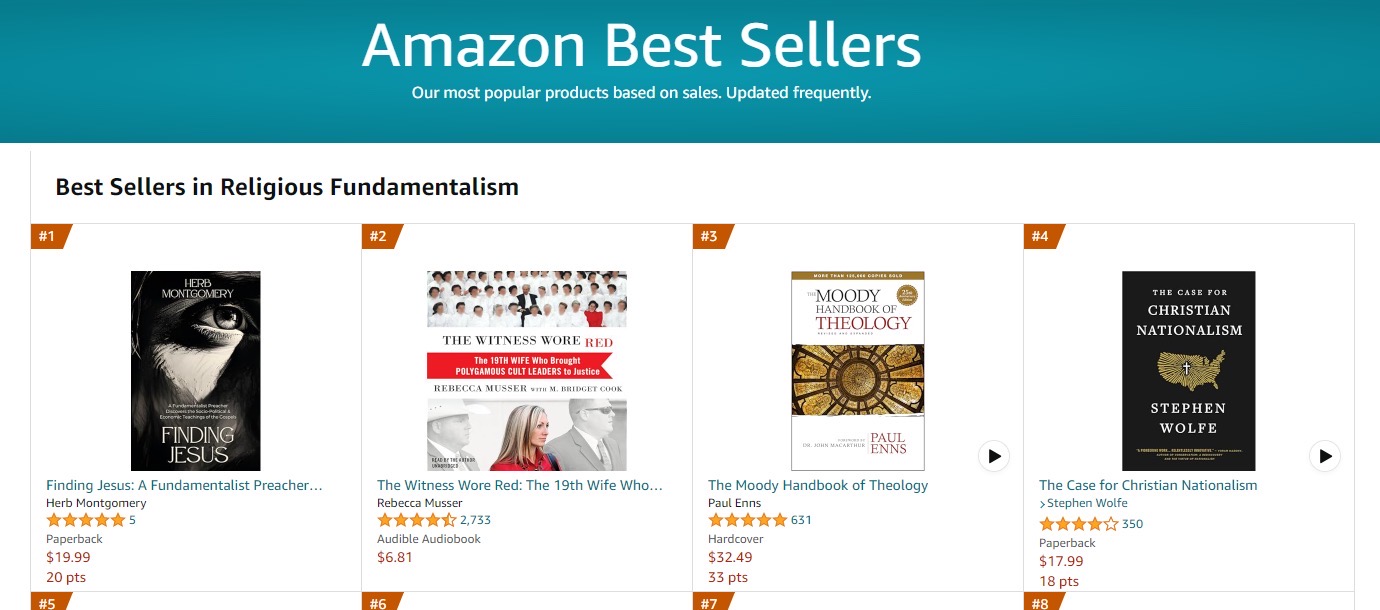
#1 Best Seller and New Release on Amazon!

Finding Jesus: A Fundamentalist Preacher Discovers the Socio-Political & Economic Teachings of the Gospels.
by Herb Montgomery

Available now on Amazon.

After two successful decades of preaching a gospel of love within the Christian faith tradition Herb felt like something was missing. He went back to the gospels and began reading them through the interpretive lenses of various marginalized communities and what he found radically changed his life forever. The teachings of the Jesus in the gospel stories express a profound concern for justice, compassion, and the well-being of those in marginalized communities. This book navigates the intersections between faith and societal justice, and presents a compelling argument for a more socially compassionate and just expression of Christianity. Herb’s findings in his latest book are shared in the hopes that it will dramatically impact how you practice your Christianity, too.

Finding Jesus by Herb Montgomery the #1 Best Seller in its category.

Get your copy on Amazon, today!


New Episode of JustTalking!

Season 1, Episode 50: Mark 1.9-15. Lectionary B, Lent 1

Each week, we’ll be talking about the gospel lectionary reading for the upcoming weekend. We’ll be talking about each reading in the context of love, inclusion, and societal justice. Our hope is that our talking will be just talking (as in justice) and that during our brief conversations each week you’ll be inspired to also do more than just talking.

If you teach from the lectionary each week, or if you’re just looking for some thoughts on the Jesus story from a more progressive perspective within the context of social justice, check it out, you might like it.

You can find the latest show on YouTube at

Season 1, Episode 50: Mark 1.9-15. Lectionary B, Lent 1

 or (@herbandtoddjusttalking)

Please Like, Subscribe, hit the Notification button, and leave us a comment

Thanks in advance for watching!


A Safe, Compassionate, Just Home for Everyone

Herb Montgomery | February 9, 2024

“The gospel has been twisted to be mostly religious in nature, but for the early Jesus followers, Jesus’ teachings were much more about how we choose to share space with one another here on earth.”

To listen to this week’s eSight as a podcast episode click here.

This image has an empty alt attribute; its file name is Jesus-For-Everyone-150x150.png

Our reading this week is from the gospel of Mark:

At that time Jesus came from Nazareth in Galilee and was baptized by John in the Jordan. Just as Jesus was coming up out of the water, he saw heaven being torn open and the Spirit descending on him like a dove. And a voice came from heaven: “You are my Son, whom I love; with you I am well pleased.”

At once the Spirit sent him out into the wilderness, and he was in the wilderness forty days, being tempted by Satan. He was with the wild animals, and angels attended him. 

After John was put in prison, Jesus went into Galilee, proclaiming the good news of God. “The time has come,” he said. “The kingdom of God has come near. Repent and believe the good news!” (Mark 1:9-15)

In our reading this week, we begin with Jesus traveling from the region of Galilee to the River Jordan to be baptized by John. Jesus heard something in John’s anti-establishment message and call to return to the Torah’s social justice principles that resonated with his own desire for Jewish renewal and his concern for how the Roman empire had coopted the Jewish Temple State and the scribal establishment in local synagogues. Scholars are torn as to whether Jesus actually began as a disciple of John’s, but his choice to be baptized by John affirmed that he resonated with John’s preaching enough to want to be baptized by John and be a part of John’s movement. We’ll see that this changes later, when John is imprisoned. 

Mark’s language around John’s baptism of Jesus was also meant to remind Mark’s original audience of language in Isaiah. Whether we date Mark’s gospel to shortly before Rome’s destruction of Jerusalem or shortly afterward, liberation from Roman occupation and oppression was the prevailing impulse among Mark’s listeners. Getting to heaven was not on the hearts and minds of Mark’s listeners. Getting out from under the thumb of Rome was. 

The language of the heavens being torn open harkens back to Isaiah 64:

  Oh, that you would rend the heavens and come down,

that the mountains would tremble before you! 

  As when fire sets twigs ablaze 

and causes water to boil,

come down to make your name known to your enemies 

and cause the nations to quake before you! 

  For when you did awesome things that we did not expect,

you came down, and the mountains trembled before you. 

Since ancient times no one has heard,

no ear has perceived,

no eye has seen any God besides you,

who acts on behalf of those who wait for him.

  You come to the help of those who gladly do right,

who remember your ways. (Isaiah 64:1-5)

The Spirit descending and declaring Jesus’s favor also harkens back to a passage in Isaiah:

  Here is my servant, whom I uphold,

my chosen one in whom I delight;

I will put my Spirit on him,

and he will bring justice to the nations . . . 

In faithfulness he will bring forth justice;

he will not falter or be discouraged 

till he establishes justice on earth. (Isaiah 42:1-4)

It seems the writer of Mark intended to associate the desire for liberation from Rome with Isaiah’s language of establishing of justice on the earth among the nations. That’s why this week’s story attaches these references to Jesus’ baptism. In Jesus, the early followers of Jesus perceived teachings that would end oppression and establish justice for all. 

After his baptism, Jesus immediately goes into the wilderness for forty days. Forty is a significant number in the Hebrew scriptures and other sacred Jewish literature. 

One example is Moses’ forty days and nights of fasting as he received the Torah:

“Moses was there with the LORD forty days and forty nights without eating bread or drinking water. And he wrote on the tablets the words of the covenant—the Ten Commandments.” (Exodus 34.28)

There are many more examples. Forty didn’t only refer to days and nights. The scriptures also named forty years, and measurements based on the number 40. The number 40 is used repeatedly in the Talmud and the history of the second Temple (see “The Number Forty”, The Jewish Encyclopedia)

But we shouldn’t gloss over Jesus’ time in the wilderness as narrative decoration. Jesus’ wilderness experience had special significance for his original Jewish followers. While in Mark, Jesus is tempted by the Satan (the Adversary), is among the wild animals, and is attended to by angels. Matthew and Luke later add that Jesus was fasting during this time, but Mark doesn’t elaborate on the temptations here. This version of the story doesn’t say there are three temptations. Nor does it detail them, as later version of the Jesus story do. What is also interesting is how Matthew and Luke overtly connect Jesus’ temptations with the language and liberation hopes of the apocalyptic book of Daniel chapter 7. Mark, the first gospel, begins this tradition much more subtly. 

Ched Myers tells us that the book of Daniel was “a Jewish resistance tract written just before the Maccabean revolt during brutal persecutions under the Hellenistic ruler Antiochus Epiphanes IV . . . By Mark’s era it was well established as a discourse of political protest” (Binding the Strong Man, p. 101). He goes on to state the way apocalyptic literature was used in Mark’s culture was to “fire the socio-political imagination of the oppressed. First, in renewing old symbols and reappropriating Hebrew narratives of liberation, it functioned as a ‘remembering.’ Secondly, it promoted a ‘creative envisioning’ of a future in which God restored justice and full humanity to all.”

Horsley writes, “Emperors were not divine . . . The apocalyptic imagination thus had a strengthening effect on people’s ability to endure, and even a motivating effect toward resistance and revolt.” (Jesus and Spiral of Violence: Popular Jewish Resistance in Roman Palestine, p. 144)

Howard Kee, writing of the disproportionate interest by Mark’s gospel in the book of Daniel states, 

“Daniel alone among all of the Old Testament books is quoted from every chapter; it is of the highest level of significance for the New Testament as a whole as a result of its overwhelming importance for Mark.” (Community of the New Age: Studies in Mark’s Gospel, p. 45)

The wild animals and angels in this week’s story would have brought to mind the liberation of the people from oppressive world empires in Daniel Chapter 7:

“In my vision at night I looked, and there before me was one like a son of man coming with the clouds of heaven. He approached the Ancient of Days and was led into his presence. He was given authority, glory and sovereign power; all nations and peoples of every language worshiped him. His dominion is an everlasting dominion that will not pass away, and his kingdom is one that will never be destroyed. (Daniel 7:13-14)

Speaking of one of the wild animals’ little horns, Daniel writes, 

“‘But the court will sit, and his [the oppressor’s] power will be taken away and completely destroyed forever. Then the sovereignty, power and greatness of all the kingdoms under heaven will be handed over to the holy people of the Most High. His [the son of man’s] kingdom will be an everlasting kingdom, and all rulers will worship and obey him.’” (Daniel 7:26-27, italics added.)

Matthew and Luke later expand this liberation theme by referencing Daniel’s visions in one of three temptations the Satan brought to Jesus:

“Again, the devil took him to a very high mountain and showed him all the kingdoms of the world [Daniel 7’s Wild Animals] and their splendor. ‘All this I will give you,’ he said, ‘if you will bow down and worship me.’” (Matthew 4:8-9)

“The devil led him up to a high place and showed him in an instant all the kingdoms of the world. And he said to him, “I will give you all their authority and splendor; it has been given to me, and I can give it to anyone I want to. If you worship me, it will all be yours.” (Luke 4:5-7)

In Mark’s version of the wilderness temptations, these connections to Daniel 7 and liberation from empires are much more subtle.

But John’s imprisonment brings us out of the wilderness. As I shared a few weeks ago, Herod, Rome’s agent in region, was deeply threatened by John’s justice preaching and the large crowds that were starting to follow him. Josephus writes, 

“John was a good man who had admonished the Jews to practice virtue and to treat each other justly, with due respect to God, and to join in the practice of baptism. John’s view was that correct behavior was a necessary preliminary to baptism, if baptism was to be acceptable to God. Baptism was not to gain pardon for sins committed but for the purification of the body, which had already been consecrated by righteousness. Herod became alarmed at the crowds that gathered around John, who aroused them to fever pitch with his sermons. Eloquence that had such a powerful effect on people might lead to sedition, since it seemed that the people were prepared to do everything he recommended.” (Josephus, History of the Jews, 18:116-119)

Once John is arrested, Jesus begins his own preaching of the gospel of the arrival of God’s just world named in Mark as “the kingdom.” Remember the gospel was a term used in the Roman empire (see The Gospel Jesus Taught). Myers explains:

“Roman propaganda focused on eulogizing Caesar as the ‘divine man.’ This ideological strategy is well documented in coins of the period, and of course in the later emperor cults of Asia Minor. The ascension to power of a new ruler was cause for ‘glad tidings,’ and celebrations and sacrifices always followed . . . [Deification of the emperor] gives euangelion [Rome’s gospel] its significance and power . . . Because the emperor is more than a common man, his ordinances are glad messages and his commands are sacred writings . . . He proclaims euangelia [gospel, glad tidings] through his appearance . . . the first euangelium is the news of his birth. As one ancient inscription puts it, ‘The birthday of the god was for the world the beginning of the joyful messages which have got forth because of him.’” (Binding the Strong Man, p. 123)

The gospel was a term from the Roman Empire. Once one begins to delve into Roman Caesar worship, it becomes beautifully obvious how Mark’s gospel was juxtaposing Jesus with Caesar and offering Jesus’ gospel of the kingdom as resistance, an alternative to the gospel of Rome, the peace of a just world contrasted with the pax Romana.

Jesus’ gospel of the kingdom was much more concerned with our concrete realities in this life than the afterlife. The socio-political and economic implications of Jesus’ gospel are profound and often overlooked. The kingdom has been twisted today to be mostly religious in nature, but for the early Jesus followers, Jesus gospel was political. By “political,” I mean how we choose to share space together here on earth. 

Jesus was announcing a just world that had “come near.” It had arrived and Jesus traversed the margins and edges of his society inviting all to be a part of it. Jesus’ just world expressed a profound concern for justice, compassion and the well-being of those the present system marginalized. His gospel still calls us to that today. 

Jesus’ gospel calls us to a more socially compassionate, socially just expression of Christianity. His gospel still has the power to radically impact how we choose to practice our Christianity today. Are we so heavenly minded that we are no earthly good? Or do we perceive in the Jesus story a life-giving path that informs us to take up the work of making our world a safe, compassionate, just home for everyone?

HeartGroup Application

1. Share something that spoke to you from this week’s eSight/Podcast episode with your HeartGroup.

2. How does the Jesus story shape your own work in making our world a safe, compassionate, just home for everyone? Share and discuss with your group.

3. What can you do this week, big or small, to continue setting in motion the work of shaping our world into a safe, compassionate, just home for everyone? 

Thanks for checking in with us, today.

I want to say a special thank you to all of our supporters out there. And if you would like to join them in supporting Renewed Heart Ministries’ work you can do so by going to renewedheartministries.com and clicking donate. 

I want to also say a special thank you this week to Quoir Publishing, Keith Giles who wrote the foreword to my latest book, all the special people on our launch team, and all of you who made this release a success. 

Finding Jesus: A Fundamentalist Preacher Discovers the Socio-Political and Economic Teachings of the Gospels is available now on Amazon in paperback, Kindle and soon also on Audible in audio book format.

As always, you can find Renewed Heart Ministries each week on X (or Twitter), Facebook, Instagram and Meta’s new Threads. If you haven’t done so already, please follow us on your chosen social media platforms for our daily posts. Also, if you enjoy listening to the Jesus for Everyone podcast, please like and subscribe to the JFE podcast through the podcast platform you use and consider taking some time to give us a review. This helps others find our podcast as well.

You can watch our new YouTube show called “Just Talking” each week. Todd Leonard and I take a moment to talk about the gospel lectionary reading for the upcoming weekend. We’ll be talking about each reading in the context of love, inclusion, and societal justice. Our hope is that our talking will be just talking (as in justice) and that during our brief conversations each week you’ll be inspired to also do more than just talking.

If you teach from the lectionary each week, or if you’re just looking for some thoughts on the Jesus story from a more progressive perspective within the context of social justice, check it out, you might like it. You can find JustTalking each week on YouTube at youtube.com/@herbandtoddjusttalking. Please Like, Subscribe, hit the Notification button, and leave us a comment.

And if you’d like to reach us here at Renewed Heart Ministries through email, you can reach us at info@renewedheartministries.com.

Right where you are, keep living in love, choosing compassion, taking action, and working toward justice.

I love each of you dearly,

I’ll see you next week.


Are you getting all of RHM’s Free Resources?

Free Sign Up Here

Conduits of Healing and Liberation

Finding Jesus Second Edition!

I have some exciting news!

I have just signed an agreement with a new book publisher (Quoir), and we are putting together a launch team for the second edition of Finding Jesus!

If you have been blessed by the first edition, and you would like to see this book have greater exposure to reach an even larger audience, I want to invite you to be a part of the launch team.  This second edition will be available in paperback, Kindle and an audio book available on Audible. And great news for those who already have a copy of the first edition, the first 25 people to sign up to be part of our launch team will also receive a FREE Audible copy of the audiobook for Finding Jesus.

To join the Finding Jesus launch team, all you need to do is three things:

1) Email us at RHM and put “Launch Team” in the subject line. We’ll email you a free advanced copy of the book

2) On February 6 go to Amazon and purchase your print copy. After purchasing and write a verified-purchaser review for Finding Jesus. (You’ll be able to do this on day one since you’ve already read the pdf copy.)

3) Share your review of Finding Jesus on your social media pages that day, also.

It’s pretty simple. That’s all. And if you already have copy of the first edition this is a great opportunity to get the audiobook version on Audible as soon as it is available.

If you would like to join our launch team, you can email us at info@renewedheartministries.com and just put in the subject of your email “Launch Team.”

Thank you in advance for being part of this special second edition publishing and ensuring this edition is a success. 


New Episode of JustTalking!

Season 1, Episode 49: Mark 1.29-39. Lectionary B, Epiphany 5

Each week, we’ll be talking about the gospel lectionary reading for the upcoming weekend. We’ll be talking about each reading in the context of love, inclusion, and societal justice. Our hope is that our talking will be just talking (as in justice) and that during our brief conversations each week you’ll be inspired to also do more than just talking.

If you teach from the lectionary each week, or if you’re just looking for some thoughts on the Jesus story from a more progressive perspective within the context of social justice, check it out, you might like it.

You can find the latest show on YouTube at

Season 1, Episode 49: Mark 1.29-39. Lectionary B, Epiphany 5

 or (@herbandtoddjusttalking)

Please Like, Subscribe, hit the Notification button, and leave us a comment

Thanks in advance for watching!


Conduits of Healing and Liberation

Herb Montgomery | February 2, 2024

“To those outside of Evangelicalism, it is quite puzzling how those who claim to follow Jesus can be so loyal to such a partisan, unChristlike ideology.”

To listen to this week’s eSight as a podcast episode click here.

This image has an empty alt attribute; its file name is Jesus-For-Everyone-150x150.png

Our reading this week is from the gospel of Mark:

As soon as they left the synagogue, they went with James and John to the home of Simon and Andrew. Simon’s mother-in-law was in bed with a fever, and they immediately told Jesus about her. So he went to her, took her hand and helped her up. The fever left her and she began to wait on them. 

That evening after sunset the people brought to Jesus all the sick and demon-possessed. The whole town gathered at the door, and Jesus healed many who had various diseases. He also drove out many demons, but he would not let the demons speak because they knew who he was.

Very early in the morning, while it was still dark, Jesus got up, left the house and went off to a solitary place, where he prayed. Simon and his companions went to look for him, and when they found him, they exclaimed: “Everyone is looking for you!” 

Jesus replied, “Let us go somewhere else—to the nearby villages—so I can preach there also. That is why I have come.” So he traveled throughout Galilee, preaching in their synagogues and driving out demons. (Mark 1:29-39)

A lot of subtle truths are being communicated in this week’s reading as we transition from Jesus’ inaugural acts to his ongoing mission. Immediately after Jesus’ inaugural exorcism, we encounter a story of healing. 

Historical Jesus scholars all agree that Jesus was characterized as a healer. Last week we saw that Jesus was associated with exorcism from the demons of Roman occupation, possession, and oppression. Similarly, Jesus’ healing was to be associated with both liberating the oppressed from Roman possession and the work of healing the vulnerable masses from harm done by Roman occupation. 

When we read these stories from our vantage point today, it’s easy to read these stories as individual occurrences of “Magic Jesus” as my friend Todd Leonard refers to them. But the stories in Mark were originally intended to be read politically, socially, and economically as signs of the arrival of God’s just world (the kingdom) and liberation from Roman oppression and harm to Jesus’ community. Mark’s Jesus is casting out the demons of Roman oppression and healing the people’s maladies that oppression has caused. 

There is also a subtle tension building between Jesus’ exorcisms in the Roman coopted synagogues (sacred space) and Jesus’ acts of healing and the restoration of the original intention of the Sabbath (sacred time). In this week’s story, Jesus heals Peter’s mother-in-law on the Sabbath and the people won’t come for healing until after sunset. As soon as the Sabbath hours are over, though, the rest of the town shows up at the door. In this story, the Sabbath is not a conduit of healing and restoration but a barrier that the people must wait out so they can come and be healed. This sets up the tension of healing on the Sabbath and the authority of the local powerbrokers that will come into even greater focus later in Mark. We’ll get to that in upcoming weeks. 

For now, we see the Sabbath had also been coopted. Healing was completely detached from it. If you were to be healed, it had to be outside of the Sabbath, after the Sabbath had passed. The Sabbath, which was originally a time of healing and restoration, had now become a day where healing was forbidden. So Restoring the Sabbath’s liberation value is also a subtle part of this story. 

Walter Brueggemann makes a modern application for the value of the Sabbath as we, too, find ourselves in contemporary systems of economic extraction:

“The way of mammon (capital, wealth) is the way of commodity that is the way of endless desire, endless productivity, and endless restlessness without any Sabbath.” (Sabbath as Resistance, p. 11)

“In our own contemporary context of the rat race of anxiety, the celebration of Sabbath is an act of both resistance and alternative. It is resistance because it is a visible insistence that our lives are not defined by the production and consumption of commodity goods. Such an act of resistance requires enormous intentionality and communal reinforcement amid the barrage of seductive pressures from the insatiable insistences of the market, with its intrusion into every part of our life from the family to the national budget . . . But Sabbath is not only resistance. It is alternative.” (Sabbath as Resistance, Preface)

In future weeks, we’ll discuss this tension between Jesus’ healings and the Sabbath as it continues to build in Mark’s stories. 

In the final part of our reading this week, Jesus withdraws from the crowds for some self-care. It’s an example of the balance that’s so vital to the sustainability of any justice work. And Jesus shares his own understanding of his mission in this version of the Jesus story:

“Let us go somewhere else—to the nearby villages—so I can preach [the gospel of the kingdom] there also. That is why I have come.”

Next Jesus embarks on an itinerant circuit throughout Galilee, preaching the gospel of the kingdom, or the good news of the arrival of God’s just world within the synagogues throughout Galilee. The story makes a point to specifically name that the gospel work includes “driving out demons.”

Preaching the arrival of God’s just world in the synagogues includes exorcisms performed in the synagogues. These exorcisms aren’t anti-synagogue, anti-Jewishness, or anti-Sabbath. Instead they’re opposing the Roman Empire coopting the synagogue and the Sabbath. They’re oppositng the complicity of those in power with the Roman Empire. They’re opposing the Empire’s possession of sacred places in both space and time. 

As I shared last week, whatever we make of it through our scientific lenses today, exorcism was a common practice in Jesus’ world. That practice typically gathered zero pushback from the establishment. But Jesus’ exorcisms in Mark’s gospel are different. Those in power push back against Jesus’ exorcisms immediately, and are threatened by them. This is because exorcism in Mark is a metaphor for exorcising Rome (see Mark 5:9):

Then the Pharisees went out and began to plot with the Herodians how they might kill Jesus. (Mark 3:6)

And the teachers of the law who came down from Jerusalem said, “He is possessed by Beelzebul! By the prince of demons he is driving out demons.” (Mark 3:22)

So what are we to make of Mark’s stories of exorcism and healing in our post-enlightenment world today?

Through rising Christian nationalism, a political party has coopted evangelical Christianity. Misinformation takes advantage of vulnerable White Christians through their personal biases and bigotries. Partisan fidelity has “possessed” evangelical Christianity to the point that, like those in the exorcism stories in Mark, they simply cannot free themselves. To those outside of Evangelicalism, it’s quite puzzling how those who claim to follow Jesus can be so loyal to such an unChristlike ideology. Evangelical Christianity today needs an “exorcism” from demons like White supremacy, Christian nationalism, heteropatriarchy, and authoritarian totalitarianism. Just as the injustices of the Roman empire coopted the Temple state in Jesus’ community, our societal demons today have possessed larger sectors of Christianity.

The good news in the Jesus story is that we see the Jesus movement grow from the margins of Galilee through nearby villages to “Jerusalem, and in all Judea and Samaria, and to the ends of the earth” (Acts 1:8). 

And today, whether we use Christian language to describe it as the kingdom, God’s just world, or the reign of God or use more accessible language about the way of distributive justice, the way of love, and the way of compassion and caring, our justice work can continue to grow, too. We may feel like our justice work is small, and it may be beset by contemporary obstacles, but we should never underestimate the power of local efforts toward making our communities a safer, more just place for everyone. We may feel like we are only working in a “nearby village,” but every act, big or small, has a ripple effect and we never know just how far those justice ripples will travel. Today, as Jesus followers, we too can “cast out” the demons of injustice and be conduits of healing to those injustice has harmed. 

HeartGroup Application

1. Share something that spoke to you from this week’s eSight/Podcast episode with your HeartGroup.

2. Where do we need systemic healing and liberation today? Share and discuss with your group.

3. What can you do this week, big or small, to continue setting in motion the work of shaping our world into a safe, compassionate, just home for everyone? 

Thanks for checking in with us, today.

I want to say a special thank you to all of our supporters out there. And if you would like to join them in supporting Renewed Heart Ministries’ work you can do so by going to renewedheartministries.com and clicking donate. 

I have some exciting news! I have just signed an agreement with a new book publisher (Quoir), and we are putting together a launch team for the second edition of Finding Jesus, coming out next week!

This second edition will be available in paperback, Kindle and an audiobook available on Audible. And great news for those who already have a copy of the first edition, the first 25 people to sign up to be part of our launch team will also receive a FREE Audible copy of the audiobook for Finding Jesus.

If you would like to join our launch team, you can email me at info@renewedheartministries.com and just put in the subject of your email “Launch Team.”

Thank you in advance for being part of this special second edition launch and ensuring this edition is a success.

You can find Renewed Heart Ministries on X (or Twitter), Facebook, Instagram and Meta’s new Threads. If you haven’t done so already, please follow us on your chosen social media platforms for our daily posts. Also, if you enjoy listening to the Jesus for Everyone podcast, please like and subscribe to the JFE podcast through the podcast platform you use and consider taking some time to give us a review. This helps others find our podcast as well.

You can watch our new YouTube show called “Just Talking” each week. Todd Leonard and I take a moment to talk about the gospel lectionary reading for the upcoming weekend. We’ll be talking about each reading in the context of love, inclusion, and societal justice. Our hope is that our talking will be just talking (as in justice) and that during our brief conversations each week you’ll be inspired to also do more than just talking.

If you teach from the lectionary each week, or if you’re just looking for some thoughts on the Jesus story from a more progressive perspective within the context of social justice, check it out, you might like it. You can find JustTalking each week on YouTube at youtube.com/@herbandtoddjusttalking. Please Like, Subscribe, hit the Notification button, and leave us a comment.

And if you’d like to reach us here at Renewed Heart Ministries through email, you can reach us at info@renewedheartministries.com.

Right where you are, keep living in love, choosing compassion, taking action, and working toward justice.

I love each of you dearly,

I’ll see you next week.


Are you getting all of RHM’s Free Resources?

Free Sign Up Here

Exorcism of a Man with an Unclean Spirit

Finding Jesus Second Edition!

I have some exciting news!

I have just signed an agreement with a new book publisher (Quoir), and we are putting together a launch team for the second edition of Finding Jesus, coming out next month!

If you have been blessed by the first edition, and you would like to see this book have greater exposure to reach an even larger audience, I want to invite you to be a part of the launch team.  This second edition will be available in paperback, Kindle and an audio book available on Audible. And great news for those who already have a copy of the first edition, the first 25 people to sign up to be part of our launch team will also receive a FREE Audible copy of the audiobook for Finding Jesus.

To join the Finding Jesus launch team, all you need to do is four things:

1) Go to Amazon and pre-order a copy of the second edition when pre-orders become available.

2) Read the pdf copy of the second edition of Finding Jesus that I will send you after your pre-order the book so that you’re ready on launch day.

3) On launch day go back to Amazon and write a review for Finding Jesus. (You’ll be able to do this on day one since you’ve already read the pdf copy.)

4) Share your review of Finding Jesus on your social media pages that day, also.

It’s pretty simple. That’s all. And if you already have copy of the first edition this is a great opportunity to get the audiobook version on Audible as soon as it is available.

If you would like to join our launch team, you can email me at info@renewedheartministries.com and just put in the subject of your email “Launch Team.”

Thank you in advance for being part of this special second edition publishing and ensuring this edition is a success. 


New Episode of JustTalking!

Season 1, Episode 48: Mark 1.21-28. Lectionary B, Epiphany 4

Each week, we’ll be talking about the gospel lectionary reading for the upcoming weekend. We’ll be talking about each reading in the context of love, inclusion, and societal justice. Our hope is that our talking will be just talking (as in justice) and that during our brief conversations each week you’ll be inspired to also do more than just talking.

If you teach from the lectionary each week, or if you’re just looking for some thoughts on the Jesus story from a more progressive perspective within the context of social justice, check it out, you might like it.

You can find the latest show on YouTube at

Season 1, Episode 48: Mark 1.21-28. Lectionary B, Epiphany 4

 or (@herbandtoddjusttalking)

Please Like, Subscribe, hit the Notification button, and leave us a comment

Thanks in advance for watching!


Exorcism of a Man with an Unclean Spirit

Herb Montgomery, January 26, 2024

To listen to this week’s eSight as a podcast episode click here.

This image has an empty alt attribute; its file name is Jesus-For-Everyone-150x150.png

“People of faith should always be involved working for justice to be practiced when people are being marginalized and dispossessed, and faith communities should never allow themselves to be overtaken and possessed by any single political party. We are to be about justice, compassion, inclusion and love, not unconditional loyalty one political party or politician.”

Our reading this week is from the gospel of Mark:

They went to Capernaum, and when the Sabbath came, Jesus went into the synagogue and began to teach. The people were amazed at his teaching, because he taught them as one who had a uthority, not as the teachers of the law. Immediately there was man in their synagogue who was possessed by an impure spirit who cried out, “Why do you meddle with us, Jesus of Nazareth? Have you come to destroy us? I know who you are—the holy one of God!”

“Be quiet!” said Jesus sternly. “Come out of him!” The impure spirit shook the man violently and came out of him with a shriek.

The people were all so amazed that they asked each other, “What is this? A new teaching—and with authority! He even gives orders to impure spirits and they obey him.” News about him spread quickly over the whole region of Galilee. (Mark 1:21-28)

Whenever we read the exorcism stories in the gospels, the first thing we need to remember is that these stories were not written to answer our modern scientific questions. These stories about Jesus were circulated by an oppressed community on the margins of the Roman empire. As difficult as it may be to temporarily park our attempts to rationalize these stories, we would do well to see them as the narratives of a community in a particular social or political location telling stories to communicate truths while still staying under the radar of the powers that be.

In all of the gospels, Jesus is characterized as an itinerant teacher. In the same gospels, Jesus is also an exorcist.

Rather than demythologizing this week’s story and trying to label it as a story of epilepsy or a mental disability, as modern Jesus scholarship often does, let’s leave the story as it is and instead look for how our reading functions within its original social context: a dangerous world, an oppressed community longing for liberation. Let’s see if there is any socio-political application we can make for our context today.

I also must admit the exorcist stories in the gospels are a bit triggering for me. I remember watching the horror movie The Exorcist on television late one night. I was just 9 years old and I was scarred for life! I still can’t tolerate movies or dramas that include the theme of this week’s story. 

In this part of Mark’s gospel, Jesus has begun teaching and called his initial followers. Then, his first public act is this exorcism on the Sabbath in the synagogue! 

The first act of Jesus in each gospel tells us a lot (see Luke 4:18-19.) Here in Mark, Jesus’ first supernatural act is an exorcism. Healers and exorcists were everywhere in the world for which the gospel of Mark was originally written, yet they did not provoke the wrath of the local authorities the way Jesus’ healings and exorcisms did. Others did the same activities Jesus did, but were not viewed as a threat by those in power. Jesus, on the other hand, experiences hostility from the authorities from his very first act. 

Then the Pharisees went out and began to plot with the Herodians how they might kill Jesus. (Mark 3:6)

And the teachers of the law who came down from Jerusalem said, “He is possessed by Beelzebul! By the prince of demons he is driving out demons.” (Mark 3:22)

In our story, Jesus comes from the wilderness or margins of his society to enter the local, central locations of sacred time (the Sabbath) and sacred space (the synagogue). I want to be clear, though. These stories are not a religious challenge to either the Sabbath or the synagogue. These stories are not anti-Semitic, though Christians have used them to harm Jewish people. Jesus never railed against the Sabbath as an institution. Nor did he ever preach against having synagogues. Rather his challenges were always aimed at those in positions of power over both sacred time and sacred space. Jesus also politically challenged those in power over the masses because of their complicity with the Roman empire. 

From the very start, we see Jesus contrasted with the scribal establishment. The people claim that Jesus is offering a “new teaching with authority.” The Greek word for authority relates to doing what one pleases without having to have someone else’s permission. Those in the scribal establishment were under the authority of Rome and knew well not do promote anything that threaten Rome’s leave or permission for them to exist. Synagogue leaders also answered to the priesthood power structure back at the capital of the temple state, the temple in Jerusalem. This priesthood answered to the High Priest who was chosen by the Roman empire and answered to both Herod (Rome’s agent) and to Caesar. 

The people also claim that Jesus’ authority was different and “not as the teachers of the law.” Jesus is standing outside of Roman permission, not answering to it. As the framing of Jesus’ first exorcism story, this gives us a hint as to how we should interpret these stories in the rest of Mark.

Again, I think that we should take this exorcism story symbolically, not literally. Jesus is liberating the people from that which has inhabited and “possessed” their sacred times and sacred spaces through the authority of Rome. No sooner does Jesus step into the status quo sacred space and authority structure than he meets this man. It’s a good hint that we are on the right track here: later in Mark’s gospel the author comes right out and tells us about another demon tormenting a man. 

“Then Jesus asked him, “What is your name?” “My name is Legion.” (Mark 5:9) 

The Roman Legion was the largest military unit of the Roman army. It often inhabited, “possessed,” or was stationed in areas known to cause problems for the Pax Romana.

The language of this story tells us that Jesus met with opposition from the possessed man immediately: “Immediately there was a man.” Jesus’ authority comes in conflict with the local authority of the scribal authority immediately. Jesus’ teachings are seen as a threat from the very beginning. Our story uses language from the Hebrew sacred text in the context of opposition to political power:

“No! We did it for fear that some day your descendants might say to ours, ‘What do you have to do with the LORD, the God of Israel?’” (Joshua 22:24)

“Then Jephthah sent messengers to the Ammonite king with the question: ‘What do you have against me that you have attacked my country?’” (Judges 11:12)

“She said to Elijah, ‘What do you have against me, man of God? Did you come to remind me of my sin and kill my son?’” (1 Kings 17:18)

And in our story we read: “Why do you meddle with us, Jesus of Nazareth? Have you come to destroy us?”

Even the demons’ naming Jesus as the holy one of God harkens back to those who stood up to corrupt power in the stories of old. Speaking of Elisha, Elisha’s host tells her husband, “‘I know that this man who often comes our way is a holy man of God’” (2 Kings 4:9). In our story, as in Elisha’s, this designated a prophet who spoke truth to power for the liberation of the people. Our author is giving Jesus prophetic status that the original audience should interpret as equal to that of ancient prophets like Elisha. 

There is also panic in the demons’ voice here. There is fear of disruption. How appropriate for when corrupt authority and power structures are threatened. Those who benefit from these structures fear disruption and change, and oppose change, while those being harmed rejoice. I hear this rejoicing in the people of our story: “The people were all so amazed that they asked each other, ‘What is this? A new teaching—and with authority!’”

The exorcism stories in Mark are to be seen through the apocalyptic lens of that time and place. The apocalyptic worldview sees the world dualistically, as a concrete material world and an unseen world filled with powers, demons, spirits. The concrete is connected with the spiritual and when there is conflict among the unseen, there is also conflict through their conduits in our seen world. This is how some of the ancients explained the existence of injustice, oppression and violence in our world. Jesus in our story in Mark is exorcising those “possessing” his people’s systems to prepare God’s creation for God’s just future, God’s coming rule, or, as the gospels name it, “the kingdom” where everyone is included and everyone has enough to thrive. 

So the inaugural exorcism in our story this week begins with the scribal establishment in the synagogue system of Jesus’ people. The man possessed is the establishment, and the demon is the Roman empire’s coopting of the establishment. Jesus here is not against the scribes, but against their complicity in Roman oppression of his people. In Mark, from the very beginning, we are to see the exorcism stories in this narrative not as private liberations of individual people, but as systemic acts of purging corruption. 

We will have this confirmed by the time we encounter the exorcism stories in Mark 3 and 5. In those chapters, those in power and authority accuse Jesus of exorcising demons in the name of the head demon Beelzebul and the demons themselves are blatantly associated with the Roman empire.

What applications can we make for our lives today?

Again, in Mark, exorcisms were a central action of Jesus:

“So he traveled throughout Galilee, preaching in their synagogues and driving out demons.” (Mark 1:39)

He also gave his followers the power to do the same:

“He appointed twelve that they might be with him and that he might send them out to preach and to have authority to drive out demons.” (Mark 3:14-15)

“Calling the Twelve to him, he began to send them out two by two and gave them authority over impure spirits.” (Mark 6:7)

When we look at these stories socially or politically, we are called to also call out and work for change in these areas where our communities are complicit in injustice, such as when our faith community being “possessed” and used by a political party. Outside of our faith communities, a system could be “possessed” when used by elites and the powerful at the expense of those they have made vulnerable. 

Politics is about how power and resources are shared among humans. People of faith should always be involved working for justice to be practiced when people are being marginalized and dispossessed, and faith communities should never allow themselves to be overtaken and possessed by any single political party. We are to be about justice, compassion, inclusion and love, not unconditional loyalty one political party or politician. 

We can be “exorcists,” as Jesus followers. Where is your Jesus following calling you to “cast out” injustice this week?

HeartGroup Application

1. Share something that spoke to you from this week’s eSight/Podcast episode with your HeartGroup.

2. What would a society shaped by love look like? Share and discuss with your group.

3. What can you do this week, big or small, to continue setting in motion the work of shaping our world into a safe, compassionate, just home for everyone? 

Thanks for checking in with us, today.

I want to say a special thank you to all of our supporters out there. And if you would like to join them in supporting Renewed Heart Ministries’ work you can do so by going to renewedheartministries.com and clicking donate. 

I have some exciting news! I have just signed an agreement with a new book publisher (Quoir), and we are putting together a launch team for the second edition of Finding Jesus, coming out next month!

If you have been blessed by the first edition, and you would like to see this book have greater exposure to reach an even larger audience, I want to invite you to be a part of the launch team.  This second edition will be available in paperback, Kindle and an audio book available on Audible. And great news for those who already have a copy of the first edition, the first 25 people to sign up to be part of our launch team will also receive a FREE Audible copy of the audiobook for Finding Jesus.

To join the Finding Jesus launch team, all you need to do is four things:

  1. Go to Amazon and pre-order a copy of the second edition when pre-orders become available.

2)  Read the pdf copy of the second edition of Finding Jesus that I will send you after your pre-order the book so that you’re ready on launch day.

3)  On launch day go back to Amazon and write a review for Finding Jesus. (You’ll be able to do this on day one since you’ve already read the pdf copy.)

4  Share your review of Finding Jesus on your social media pages that day, also.

It’s pretty simple. That’s all. And if you already have copy of the first edition this is a great opportunity to get the audiobook version on Audible as soon as it is available.

If you would like to join our launch team, you can email me at info@renewedheartministries.com and just put in the subject of your email “Launch Team.”

Thank you in advance for being part of this special second edition publishing and ensuring this edition is a success.

You can find Renewed Heart Ministries on X (or Twitter), Facebook, Instagram and Meta’s new Threads. If you haven’t done so already, please follow us on your chosen social media platforms for our daily posts. Also, if you enjoy listening to the Jesus for Everyone podcast, please like and subscribe to the JFE podcast through the podcast platform you use and consider taking some time to give us a review. This helps others find our podcast as well.

You can watch our new YouTube show called “Just Talking” each week. Todd Leonard and I take a moment to talk about the gospel lectionary reading for the upcoming weekend. We’ll be talking about each reading in the context of love, inclusion, and societal justice. Our hope is that our talking will be just talking (as in justice) and that during our brief conversations each week you’ll be inspired to also do more than just talking.

If you teach from the lectionary each week, or if you’re just looking for some thoughts on the Jesus story from a more progressive perspective within the context of social justice, check it out, you might like it. You can find JustTalking each week on YouTube at youtube.com/@herbandtoddjusttalking. Please Like, Subscribe, hit the Notification button, and leave us a comment.

And if you’d like to reach us here at Renewed Heart Ministries through email, you can reach us at info@renewedheartministries.com.

Right where you are, keep living in love, choosing compassion, taking action, and working toward justice.

I love each of you dearly,

I’ll see you next week.


Are you getting all of RHM’s Free Resources?

Free Sign Up Here

The Gospel Jesus Taught

Finding Jesus Second Edition!

I have some exciting news!

I have just signed an agreement with a new book publisher (Quoir), and we are putting together a launch team for the second edition of Finding Jesus, coming out next month!

If you have been blessed by the first edition, and you would like to see this book have greater exposure to reach an even larger audience, I want to invite you to be a part of the launch team.  This second edition will be available in paperback, Kindle and an audio book available on Audible. And great news for those who already have a copy of the first edition, the first 25 people to sign up to be part of our launch team will also receive a FREE Audible copy of the audiobook for Finding Jesus.

To join the Finding Jesus launch team, all you need to do is four things:

1) Go to Amazon and pre-order a copy of the second edition when pre-orders become available.

2) Read the pdf copy of the second edition of Finding Jesus that I will send you after your pre-order the book so that you’re ready on launch day.

3) On launch day go back to Amazon and write a review for Finding Jesus. (You’ll be able to do this on day one since you’ve already read the pdf copy.)

4) Share your review of Finding Jesus on your social media pages that day, also.

It’s pretty simple. That’s all. And if you already have copy of the first edition this is a great opportunity to get the audiobook version on Audible as soon as it is available.

If you would like to join our launch team, you can email me at info@renewedheartministries.com and just put in the subject of your email “Launch Team.”

Thank you in advance for being part of this special second edition publishing and ensuring this edition is a success. 


New Episode of JustTalking!

Season 1, Episode 47: Mark 1.14-20. Lectionary B, Epiphany 3

Each week, we’ll be talking about the gospel lectionary reading for the upcoming weekend. We’ll be talking about each reading in the context of love, inclusion, and societal justice. Our hope is that our talking will be just talking (as in justice) and that during our brief conversations each week you’ll be inspired to also do more than just talking.

If you teach from the lectionary each week, or if you’re just looking for some thoughts on the Jesus story from a more progressive perspective within the context of social justice, check it out, you might like it.

You can find the latest show on YouTube at

Season 1, Episode 47: Mark 1.14-20. Lectionary B, Epiphany 3

 or (@herbandtoddjusttalking)

Please Like, Subscribe, hit the Notification button, and leave us a comment

Thanks in advance for watching!


The Gospel Jesus Taught

Herb Montgomery, January 19, 2024

To listen to this week’s eSight as a podcast episode click here.

“It is much easier to preach a gospel about Jesus that says “God loves us,” than it is to venture to teach the gospel Jesus teaches in the stories calling on us to love each other.”

Our lectionary reading from the gospels for this coming weekend is from the gospel of Mark:

After John was put in prison, Jesus went into Galilee, proclaiming the good news of God. “The time has come,” he said. “The kingdom of God has come near. Repent and believe the good news!”

As Jesus walked beside the Sea of Galilee, he saw Simon and his brother Andrew casting a net into the lake, for they were fishermen. “Come, follow me,” Jesus said, “and I will send you out to fish for people.” At once they left their nets and followed him.

When he had gone a little farther, he saw James son of Zebedee and his brother John in a boat, preparing their nets. Without delay he called them, and they left their father Zebedee in the boat with the hired men and followed him. (Mark 1:14-20)

Every year around this time, I find myself writing on the themes in this passage. Take a look at two of my previous entries on Matthew’s and Luke’s versions of this passage, in 2022 and in 2023

Before we dive into the fishing metaphor, though, let’s explore how our reading begins. 

First, Herod has imprisoned John. Rome and Rome’s extensions are generally tolerant of things we consider today to be religious in nature. What Rome didn’t tolerate was anyone who became a social, political, or economic threat to Rome’s status quo and power structure. John didn’t get arrested because he was handing out tickets to heaven. He was arrested because he came to be seen as a threat the system. (In this December 2023 article, I mention Josephus’ description of how Herod viewed John the Baptist.)

After John is arrested, Jesus sets out preaching his gospel. Try and get inside the headspace of the gospel authors here. They aren’t describing a gospel about Jesus, like we would preach today. Instead they’re talking about the gospel Jesus himself taught. What was that gospel like?

The word “gospel” is not a Jewish term but a Roman one. When Rome would conquer a new territory, it would send out a messenger called an evangelist to go throughout the area announcing the gospel or “good news” that these people had just been conquered by their “savior” Caesar, “savior of the world,” and would now be subject of the Empire of Rome and the Pax Romana. Here are a few examples of how Rome used this term “gospel.”

“Even after the battle at Mantinea, which Thucydides has described, the one who first announced the victory had no other reward for his gospel [euangelion 

– singular] than a piece of meat sent by the magistrates from the public mess.” (Plutarch, Agesilaus, p. 33) 

“Accordingly, when [Aristodemus] had come near, he stretched out his hand and cried with a loud voice: ‘Hail, King Antigonus, we have conquered Ptolemy in a sea-fight, and now hold Cyprus, with 12,800 soldiers as prisoners of war.’ To this, Antigonus replied: ‘Hail to thee also, by Heaven! But for torturing us in this way, thou shalt undergo punishment; the reward for thy gospels [euangelion] thou shalt be some time in getting.’” (Plutarch, Demetrius, p. 17) 

“Why, as we are told, the Spartans merely sent meat from the public commons to the man who brought the gospel [euangelion] of the victory in Mantineia which Thucydides describes! And indeed the compilers of histories are, as it were, reporters of great exploits who are gifted with the faculty of felicitous speech, and achieve success in their writing through the beauty and force of their narration; and to them those who first encountered and recorded the events [euangelion] are indebted for a pleasing retelling of them” (Plutarch, Moralia [Glory of Athens], p. 347)

Unlike the gospel these messengers announced, Jesus’ gospel wasn’t about Rome but about what he referred to as “the kingdom.” In the kingdom or reign of God, there would be enough bread for everyone and all debts would be cancelled, all slaves set free, and land returned to its original owners (Matthew 6:11, Luke 4:18-19, and Matthew 5:45).

Jesus was also not merely announcing that God’s just future was coming. He was announcing that it had arrived, and the response he called for was for his listeners to “repent and believe the good news.” 

The phrase “repent and believe” is a difficult one for us Christians not to hear religiously as pertaining to the afterlife, but the Greek phrase is metanoesein kai pistos. Josephus uses this phrase when he tells us a story of visiting a Jewish brigand in prison for rebelling against Rome. Jospheus attempts to convince the rebel to leave that path and take up a more cooperative posture toward the empire. The phrase Josephus uses in his plea is for this brigand to “repent and believe/trust him” (metanoesein kai pistos emoi genesestha), and it’s the same language we read in Mark from Jesus’ gospel preaching (see Thackery’s The Life Of Flavius Josephus, p. 110).

So Jesus is preaching a gospel of the kingdom, not a gospel of Rome. He is not calling his listeners to repent of rebellion against Rome or to accept Rome’s governance, but rather for his listeners to repent (rethink their current path) of complicity with the status quo. He calls them to trust him and enter God’s just future now. 

It is in this context that we must understand Mark’s next narrative move of Jesus calling fishermen. We must set aside the Christian evangelism framing this passage has suffered since this story was told, and try to hear this passage as the original Jewish Jesus followers would have heard it.

First, this language of being fishers of people is not a metaphor for evangelism. Proselytizing was not widely practiced in most expressions of Judaism at this time. Though there were occasionally converts , most scholars today agree that Jews did not do much proselytizing in the 1st Century. 

Jesus was not calling to these Jewish fishermen to become proselytizers, then. Instead, the reference to fishing for people was a call to another kind of action in the justice tradition of the Hebrew prophets: joining Jesus in challenging harm being done to people in the here and now, not the hereafter.

In several Hebrew scriptures, fishing for people was about hooking or catching a certain kind of person, a powerful and unjust person, and removing them from the position of power where they were wielding harm.

Speaking of those who do harm within their positions of power, Jeremiah reads:

“But now I will send for many fishermen,” declares the LORD, “and they will catch them. After that I will send for many hunters, and they will hunt them down on every mountain and hill and from the crevices of the rocks. (Jeremiah 16:16)

Speaking of those who “oppress the poor and crush the needy,” Amos reads:

The Sovereign LORD has sworn by his holiness: “The time will surely come when you will be taken away with hooks, the last of you with fishhooks.” (Amos 4:2)

Speaking of the abusive Pharaoh, king of Egypt, Ezekiel reads:

In the tenth year, in the tenth month on the twelfth day, the word of the LORD came to me: “Son of man, set your face against Pharaoh king of Egypt and prophesy against him and against all Egypt. Speak to him and say: ‘This is what the Sovereign LORD says:

‘“I am against you, Pharaoh king of Egypt,

you great monster lying among your streams.

You say, “The Nile belongs to me;

I made it for myself.”

But I will put hooks in your jaws

and make the fish of your streams stick to your scales.

I will pull you out from among your streams,

with all the fish sticking to your scales.

I will leave you in the desert,

you and all the fish of your streams.

You will fall on the open field

and not be gathered or picked up.

I will give you as food

to the beasts of the earth and the birds of the sky.

Then all who live in Egypt will know that I am the LORD. (Ezekiel 29:1-6)

Ched Myers, in commentaries written on this week’s passage from Mark, writes:

“In the Hebrew Bible, the metaphor of ‘people like fish’ appears in prophetic censures of apostate Israel and of the rich and powerful: ‘I am now sending for many fishermen, says God, and they shall catch [the people of Israel]…’ (Jeremiah 16:16) ‘The time is surely coming upon you when they shall take you away with fishhooks…’ (Amos 4:2) ‘Thus says God: I am against you, Pharaoh king of Egypt…. I will put hooks in your jaws, and make the fish of your channels stick to your scales…’ (Ezekiel 29:3f) Jesus is, in other words, summoning working folk to join him in overturning the structures of power and privilege in the world!” (Ched Myers, Marie Dennis, Joseph Nangle, Cynthia Moe-Lobeda, Stuart Taylor; Say to This Mountain: Marks Story of Discipleship, p. 10)

“There is perhaps no expression more traditionally misunderstood than Jesus’ invitation to these workers to become ‘fishers of men.’ This metaphor, despite the grand old tradition of missionary interpretation, does not refer to the ‘saving of souls,’ as if Jesus were conferring on these men instant evangelist status. Rather the image is carefully chosen from Jeremiah 16:16, where it is used as a symbol of Yahweh’s censure of Israel. Elsewhere the ‘hooking of fish’ is a euphemism for judgment upon the rich (Amos 4:2) and powerful (Ezekiel 29:4). Taking this mandate for his own, Jesus is inviting common folk to join him in the struggle to overturn the existing order of power and privilege.” (Ched Myers, Binding the Strong Man: A Political Reading of Marks Story of Jesus, p. 132)

Jesus was calling these fishermen to join him hope, change, and participating in God’s just future. That just future begins with our challenging the existing order of power and privilege, specifically because of the harm that the status quo causes.

Love means caring for people and what they are suffering here and now. That’s why, as Cornel West often says, justice is what love looks like in public. While it is much easier to preach a gospel that says “God loves us,” it is a much more challenging venture to teach a gospel calling on people to love each other. Perhaps that’s why Jesus’ message in the gospels is rarely about God’s love toward us per se. (It is present at times, but is rarely emphasized and doesn’t even show up in the book of Acts, which is supposed to be about the gospel turning the world upside down.) 

Instead Jesus’ gospel repeats the call for us to love one another, neighbor, and even enemy. Love is not something we are to simply bask in, assured that we the objects of Divine affection. Love is the ethic that a God of love calls us to live by in our relations to each other. A gospel that is only about God’s unconditional love for us has historically served as guilt alleviation for those in positions of power and privilege. It helps those complicit in harm to rest at night. 

It doesn’t matter how much a gospel about Jesus talks about God’s love if it doesn’t include the call for us to love one another. I’m thinking specifically about distributive justice for others being harmed. Without that call, it may be a gospel about Jesus, but it’s not the same gospel that Jesus taught in the early stories. A gospel may include God’s universal and unconditional love, but if that gospel doesn’t result in adherents also loving their neighbors, then that gospel is “a resounding gong or a clanging cymbal” (1 Corinthians 13:1).

HeartGroup Application

1. Share something that spoke to you from this week’s eSight/Podcast episode with your HeartGroup.

2. What would a society shaped by love look like? Share and discuss with your group.

3. What can you do this week, big or small, to continue setting in motion the work of shaping our world into a safe, compassionate, just home for everyone? 

Thanks for checking in with us, today.

I want to say a special thank you to all of our supporters out there. And if you would like to join them in supporting Renewed Heart Ministries’ work you can do so by going to renewedheartministries.com and clicking donate. 

I have some exciting news! I have just signed an agreement with a new book publisher (Quoir), and we are putting together a launch team for the second edition of Finding Jesus, coming out next month!

If you have been blessed by the first edition, and you would like to see this book have greater exposure to reach an even larger audience, I want to invite you to be a part of the launch team.  This second edition will be available in paperback, Kindle and an audio book available on Audible. And great news for those who already have a copy of the first edition, the first 25 people to sign up to be part of our launch team will also receive a FREE Audible copy of the audiobook for Finding Jesus.

To join the Finding Jesus launch team, all you need to do is four things:

  1. Go to Amazon and pre-order a copy of the second edition when pre-orders become available.

2) Read the pdf copy of the second edition of Finding Jesus that I will send you after your pre-order the book so that you’re ready on launch day.

3) On launch day go back to Amazon and write a review for Finding Jesus. (You’ll be able to do this on day one since you’ve already read the pdf copy.)

4) Share your review of Finding Jesus on your social media pages that day, also.

It’s pretty simple. That’s all. And if you already have copy of the first edition this is a great opportunity to get the audiobook version on Audible as soon as it is available.

If you would like to join our launch team, you can email me at info@renewedheartministries.com and just put in the subject of your email “Launch Team.”

Thank you in advance for being part of this special second edition publishing and ensuring this edition is a success.

You can find Renewed Heart Ministries on X (or Twitter), Facebook, Instagram and Meta’s new Threads. If you haven’t done so already, please follow us on your chosen social media platforms for our daily posts. Also, if you enjoy listening to the Jesus for Everyone podcast, please like and subscribe to the JFE podcast through the podcast platform you use and consider taking some time to give us a review. This helps others find our podcast as well.

You can watch our new YouTube show called “Just Talking” each week. Todd Leonard and I take a moment to talk about the gospel lectionary reading for the upcoming weekend. We’ll be talking about each reading in the context of love, inclusion, and societal justice. Our hope is that our talking will be just talking (as in justice) and that during our brief conversations each week you’ll be inspired to also do more than just talking.

If you teach from the lectionary each week, or if you’re just looking for some thoughts on the Jesus story from a more progressive perspective within the context of social justice, check it out, you might like it. You can find JustTalking each week on YouTube at youtube.com/@herbandtoddjusttalking. Please Like, Subscribe, hit the Notification button, and leave us a comment.

And if you’d like to reach us here at Renewed Heart Ministries through email, you can reach us at info@renewedheartministries.com.

Right where you are, keep living in love, choosing compassion, taking action, and working toward justice.

I love each of you dearly,

I’ll see you next week.


Are you receiving all of RHM’s free resources each week?

Begin each day being inspired toward love, compassion, action, and justice. Free Sign-Up HERE

Jacob’s Ladder

Finding Jesus Second Edition!

I have some exciting news!

I have just signed an agreement with a new book publisher (Quoir), and we are putting together a launch team for the second edition of Finding Jesus, coming out next month!

If you have been blessed by the first edition, and you would like to see this book have greater exposure to reach an even larger audience, I want to invite you to be a part of the launch team.  This second edition will be available in paperback, Kindle and an audio book available on Audible. And great news for those who already have a copy of the first edition, the first 25 people to sign up to be part of our launch team will also receive a FREE Audible copy of the audiobook for Finding Jesus.

To join the Finding Jesus launch team, all you need to do is four things:

1) Go to Amazon and pre-order a copy of the second edition when pre-orders become available.

2) Read the pdf copy of the second edition of Finding Jesus that I will send you after your pre-order the book so that you’re ready on launch day.

3) On launch day go back to Amazon and write a review for Finding Jesus. (You’ll be able to do this on day one since you’ve already read the pdf copy.)

4) Share your review of Finding Jesus on your social media pages that day, also.

It’s pretty simple. That’s all. And if you already have copy of the first edition this is a great opportunity to get the audiobook version on Audible as soon as it is available.

If you would like to join our launch team, you can email me at info@renewedheartministries.com and just put in the subject of your email “Launch Team.”

Thank you in advance for being part of this special second edition publishing and ensuring this edition is a success. 


New Episode of JustTalking!

Season 1, Episode 46: John 1.43-51. Lectionary B, Epiphany 2

Each week, we’ll be talking about the gospel lectionary reading for the upcoming weekend. We’ll be talking about each reading in the context of love, inclusion, and societal justice. Our hope is that our talking will be just talking (as in justice) and that during our brief conversations each week you’ll be inspired to also do more than just talking.

If you teach from the lectionary each week, or if you’re just looking for some thoughts on the Jesus story from a more progressive perspective within the context of social justice, check it out, you might like it.

You can find the latest show on YouTube at

Season 1, Episode 46: John 1.43-51. Lectionary B, Epiphany 2

 or (@herbandtoddjusttalking)

Please Like, Subscribe, hit the Notification button, and leave us a comment

Thanks in advance for watching!


Jacob’s Ladder

Herb Montgomery, January 12, 2024

To listen to this week’s eSight as a podcast episode click here.

“Are there places in our world where we’re struggling to believe there is hope for change? Where in our world do we need to be reassured that earth and heaven are still connected? Where do we still long for liberation from that which is causing harm? Whether we call it Jacob’s ladder, Jesus’ “kingdom,” God’s just future, or simply the way of justice and love, where are we longing for reassurance that a world of compassion and enough for everyone is still possible and still worth fighting for?”

Our reading this week is from the gospel of John:

The next day Jesus decided to leave for Galilee. Finding Philip, he said to him, “Follow me.”

Philip, like Andrew and Peter, was from the town of Bethsaida. Philip found Nathanael and told him, “We have found the one Moses wrote about in the Law, and about whom the prophets also wrote—Jesus of Nazareth, the son of Joseph.”

“Nazareth! Can anything good come from there?” Nathanael asked. 

“Come and see,” said Philip. 

When Jesus saw Nathanael approaching, he said of him, “Here truly is an Israelite in whom there is no deceit.”


“How do you know me?” Nathanael asked. 

Jesus answered, “I saw you while you were still under the fig tree before Philip called you.”


Then Nathanael declared, “Rabbi, you are the Son of God; you are the king of Israel.”

Jesus said, “You believe because I told you I saw you under the fig tree. You will see greater things than that.” He then added, “Very truly I tell you, you will see heaven open, and the angels of God ascending and descending on the Son of Man.” (John 1:43-50)

The first thing I always chuckle at in this passage is how it characterizes Jesus with a slight case of sarcasm. Philip has found Nathanael and told him about Jesus. Nathaniel’s response is “Can anything good come out of Nazareth?” No sugar coating, no niceties, just says things as he perceives them to be: no pretense. Jesus, meeting Nathaniel, claims Nathaniel doesn’t mince words just to be polite. Nathaniel’s not socially sensitive and doesn’t attempt to hide how he really thinks or feels about something or someone. He has “no deceit.”

Last semester my daughter had the privilege of playing Célimène in her university’s Creative Arts and Theater department production of Molière’s The Misanthrope. The play makes fun of French social hypocrisies like customs of niceness between members of aristocracy with little regard for what is actually true. The show centers around Célimène and Alceste’s relationship and asks whether Alceste is a hero for his uncompromising honestly devoid of all tact or is just a social fool. Alceste and Nathaniel from our reading this week remind me a lot of each other. 

Nathaniel doesn’t think deeply about what he’s saying about Nazareth or people who live there. He simply reveals his bigotry toward those people. It’s not honesty or freedom from deceit as Jesus subtly (sarcastically) points out here, but harmful bias.

This passage also reminds me that the early Jesus followers had no decision to “accept” Jesus as their personal, private “Savior.” Such an individualized approach had not crept into the Jesus community yet. Instead, the call that Jesus makes in all of the gospels is to follow him, not to accept a gift from him.

Consider the following passages from the gospels. I’ve added italics for emphasis: 

“Come, follow me,” Jesus said, “and I will send you out to fish for people.” (Mark 1:17)

As he walked along, he saw Levi son of Alphaeus sitting at the tax collector’s booth. “Follow me,” Jesus told him, and Levi got up and followed him. (Mark 2:14)

Jesus looked at him and loved him. “One thing you lack,” he said. “Go, sell everything you have and give to the poor, and you will have treasure in heaven. Then come, follow me.” (Mark 10:21)

“Come, follow me,” Jesus said, “and I will send you out to fish for people.” (Matthew 4:19)

But Jesus told him, “Follow me, and let the dead bury their own dead.” (Matthew 8:22)

As Jesus went on from there, he saw a man named Matthew sitting at the tax collector’s booth. “Follow me,” he told him, and Matthew got up and followed him. (Matthew 9:9)

Whoever does not take up their cross and follow me is not worthy of me. (Matthew 10:38)

Jesus answered, “If you want to be perfect, go, sell your possessions and give to the poor, and you will have treasure in heaven. Then come, follow me.” (Matthew 19:21)

After this, Jesus went out and saw a tax collector by the name of Levi sitting at his tax booth. “Follow me,” Jesus said to him. (Luke 5:27)

He said to another man, “Follow me.” But he replied, “Lord, first let me go and bury my father.” (Luke 9:59)

And whoever does not carry their cross and follow me cannot be my disciple. (Luke 14:27)

When Jesus heard this, he said to him, “You still lack one thing. Sell everything you have and give to the poor, and you will have treasure in heaven. Then come, follow me.” (Luke 18:22)

I share all of these passages so we can really get the impact of what the gospel call was. It was not to mentally assent and then go on living life as you always had. No, it was a radical departure from the status quo. You reordered your life to follow Jesus and his teachings, specifically his teachings about the “kingdom,” a way of being human together that was rooted in the Golden Rule, enemy love, nonviolence, resource-sharing, wealth redistribution as restoration and reparations, and more. It was a social vision where people committed to taking care of one another as the objects of God’s love and making sure each person had what they needed to thrive. It was about love of neighbor and a preferential option for those the present system marginalized. 

As this new year begins, this is a good time for all of us to take a little inventory of what it means to be a Jesus follower today. It’s more than worshipping Jesus. It’s more than accepting him. It’s more than trusting Jesus the way we trust an insurance company. It’s about following him and his vision for what life could look like here on earth, and working toward shaping our world into a safe, compassionate, just home for everyone. Love of neighbor means seeing your fellow human, whomever they are, as part of yourself and all of us together as part of the human family. It means committing to be a part of what is best for us all. 

Lastly in our reading this week, Jesus speaks to Nathaniel about seeing the heavens open. There is a reference to Jacob’s ladder, and to the apocalyptic Son of Man.

The “heaven opening” language is the same language the synoptic gospel authors used to tell the stories of Jesus’ baptism:

Just as Jesus was coming up out of the water, he saw heaven being torn open and the Spirit descending on him like a dove. (Mark 1:10, italics added.)

As soon as Jesus was baptized, he went up out of the water. At that moment heaven was opened, and he saw the Spirit of God descending like a dove and alighting on him. (Matthew 3:16, italics added.)

When all the people were being baptized, Jesus was baptized too. And as he was praying, heaven was opened. (Luke 3:21, italics added.)

The synoptic gospel authors connected Jesus’ baptism to the imagery in Isaiah 42 that describes one who would establish justice in the earth and in whose name, as the Christmas carol “O Holy Night” reminds us, “all oppression would cease.” In undoing our systems of economic extraction, this “chosen one” would end violence and bring “peace on earth.” 

“Here is my servant, whom I uphold,

my chosen one in whom I delight;

I will put my Spirit on him,

and he will bring justice to the nations.” (Isaiah 42:1)

John’s gospel connects this baptism imagery with imagery from Genesis of Jacob’s ladder:

He [Jacob] had a dream in which he saw a stairway resting on the earth, with its top reaching to heaven, and the angels of God were ascending and descending on it. (Genesis 28:12)

John’s author conflates the imagery of Jacob’s ladder with Jewish apocalyptic imagery of the Son of Man in Daniel chapter 7. In Daniel 7, the Son of Man would bring liberation from injustice, oppression, and violence of the world’s empires and bring about a new way of shaping human communities:

In my vision at night I looked, and there before me was one like a son of man, coming with the clouds of heaven. He approached the Ancient of Days and was led into his presence. He was given authority, glory and sovereign power; all nations and peoples of every language worshiped him. His dominion is an everlasting dominion that will not pass away, and his kingdom is one that will never be destroyed… 

As I watched, this horn was waging war against the holy people and defeating them, until the Ancient of Days came and pronounced judgment in favor of the holy people of the Most High, and the time came when they possessed the kingdom

“But the court will sit, and his power will be taken away and completely destroyed forever. Then the sovereignty, power and greatness of all the kingdoms under heaven will be handed over to the holy people of the Most High. His kingdom will be an everlasting kingdom, and all rulers will worship and obey him.” (Daniel 7:13-14, 21-22, 26-27, italics added)

These are ancient Jewish liberation texts in which the people long to be delivered from their imperial oppressors. 

What John’s Jesus is doing for Nathaniel in this week’s passage is connecting the images of Jacob’s ladder and the Son of Man and telling Nathaniel that he’s going to see it all! Jacob’s ladder assured Jacob, who longed for deliverance from his brother Esau whom he had wronged and from whom he was fleeing for his life. Jacob was on the run, an exile. After Jerusalem and her temple were no more, the people for whom John’s gospel was written felt like exiles too. So this passage offers them the same assurance once given to Jacob: that earth and heaven are still connected. All is not lost and the world can still be made right. Violence can end. Oppression can cease. And injustice can be made right. 

This leads me to a possible application for us in this new year, too. 

Are there places in our world where we’re struggling to believe there is hope for change? Where in our world do we need to be reassured that earth and heaven are still connected? Where do we still long for liberation from that which is causing harm? Whether we call it Jacob’s ladder, Jesus’ “kingdom,” God’s just future, or simply the way of justice and love, where are we longing for reassurance that a world of compassion and enough for everyone is still possible and still worth fighting for?

As 2024 begins, may we each take a moment to remember that earth and heaven are still part of one another. In this new year, may our daily lives be the lived prayer, “Your kingdom come, your will be done, on earth as it is in heaven.” (Matthew 6:10)

HeartGroup Application

1. Share something that spoke to you from this week’s eSight/Podcast episode with your HeartGroup.

2. What does it mean for you to “follow” Jesus? Share and discuss with your group.

3. What can you do this week, big or small, to continue setting in motion the work of shaping our world into a safe, compassionate, just home for everyone?

Thanks for checking in with us, today.

I want to say a special thank you to all of our supporters out there. And if you would like to join them in supporting Renewed Heart Ministries’ work you can do so by going to renewedheartministries.com and clicking donate. 

You can find Renewed Heart Ministries on X (or Twitter), Facebook, Instagram and Meta’s new Threads. If you haven’t done so already, please follow us on your chosen social media platforms for our daily posts. Also, if you enjoy listening to the Jesus for Everyone podcast, please like and subscribe to the JFE podcast through the podcast platform you use and consider taking some time to give us a review. This helps others find our podcast as well.

You can watch our new YouTube show called “Just Talking” each week. Todd Leonard and I take a moment to talk about the gospel lectionary reading for the upcoming weekend. We’ll be talking about each reading in the context of love, inclusion, and societal justice. Our hope is that our talking will be just talking (as in justice) and that during our brief conversations each week you’ll be inspired to also do more than just talking.

If you teach from the lectionary each week, or if you’re just looking for some thoughts on the Jesus story from a more progressive perspective within the context of social justice, check it out, you might like it. You can find JustTalking each week on YouTube at youtube.com/@herbandtoddjusttalking. Please Like, Subscribe, hit the Notification button, and leave us a comment.

And if you’d like to reach us here at Renewed Heart Ministries through email, you can reach us at info@renewedheartministries.com.

My latest book, Finding Jesus: A story of a fundamentalist preacher who unexpectedly discovered the social, political, and economic teachings of the Gospels is now also available at renewedheartministries.com

Right where you are, keep living in love, choosing compassion, taking action, and working toward justice.

I love each of you dearly,

I’ll see you next week.


Are you receiving all of RHM’s free resources each week?

Begin each day being inspired toward love, compassion, action, and justice. Free Sign-Up HERE

Epiphany, Baptism, Solidarity and Justice

Thank You to All of Our Supporters

Logo and Website


New Episode of JustTalking!

Season 1, Episode 45: Matthew 2.1-12 & Mark 1.4-11. Lectionary B, Epiphany 1

Each week, we’ll be talking about the gospel lectionary reading for the upcoming weekend. We’ll be talking about each reading in the context of love, inclusion, and societal justice. Our hope is that our talking will be just talking (as in justice) and that during our brief conversations each week you’ll be inspired to also do more than just talking.

If you teach from the lectionary each week, or if you’re just looking for some thoughts on the Jesus story from a more progressive perspective within the context of social justice, check it out, you might like it.

You can find the latest show on YouTube at

Season 1, Episode 45: Matthew 2.1-12 & Mark 1.4-11. Lectionary B, Epiphany 1

 or (@herbandtoddjusttalking)

Please Like, Subscribe, hit the Notification button, and leave us a comment

Thanks in advance for watching!


Epiphany, Baptism, Solidarity and Justice

Herb Montgomery | January 5, 2024

To listen to this week’s eSight as a podcast episode click here.


“Wherever we are working for justice in our world today, these stories remind us of the biblical witness that we are not alone. The God of the Exodus stories, the Hebrew prophets, and the Jesus of the gospels has always stood in unflinching solidarity with whichever communities and voices throughout the ages have cried out for liberation and justice. And we are with that God too, whenever we are standing in that same solidarity.”

This weekend our readings from the gospels are from Matthew and Mark. Let’s begin with Matthew’s story of the epiphany:

After Jesus was born in Bethlehem in Judea, during the time of King Herod, Magi from the east came to Jerusalem and asked, “Where is the one who has been born king of the Jews? We saw his star when it rose and have come to worship him.” 

When King Herod heard this he was disturbed, and all Jerusalem with him. When he had called together all the people’s chief priests and teachers of the law, he asked them where the Messiah was to be born. “In Bethlehem in Judea,” they replied, “for this is what the prophet has written: 

‘“But you, Bethlehem, in the land of Judah,

are by no means least among the rulers of Judah;

for out of you will come a ruler 

who will shepherd my people Israel.’”

Then Herod called the Magi secretly and found out from them the exact time the star had appeared. He sent them to Bethlehem and said, “Go and search carefully for the child. As soon as you find him, report to me, so that I too may go and worship him.” 

After they had heard the king, they went on their way, and the star they had seen when it rose went ahead of them until it stopped over the place where the child was. When they saw the star, they were overjoyed. On coming to the house, they saw the child with his mother Mary, and they bowed down and worshiped him. Then they opened their treasures and presented him with gifts of gold, frankincense and myrrh. And having been warned in a dream not to go back to Herod, they returned to their country by another route. (Matthew 2:1-12) 

The first thing to note is how the author of Matthew appropriates and incorporates a famous Roman mythic event into the narrative of the birth of Jesus to lay the foundation for contrasting Jesus and his kingdom with Caesar and the Pax Romana.

The event that Matthew’s author lifts from Roman storytelling is related to the Julian Star. In July of 44 BCE, a comet appeared in the night sky for seven days. The Romans interpreted it as a sign that the recently assassinated Julius Caesar was divine, and so it came to be known as the Julian Star or the Star of Julius Caesar. Caesar Augustus even put this star on the back of the Roman coins he made to bolster his claim that he was the “son of the Divine Caesar Julius.”

Publius Ovidius Naso wrote in Metamorphoses:

“Then Jupiter, the Father, spoke…”Take up Caesar’s spirit from his murdered corpse, and change it into a star, so that the deified Julius may always look down from his high temple on our Capitol and forum.” He had barely finished, when gentle Venus stood in the midst of the Senate, seen by no one, and took up the newly freed spirit of her Caesar from his body, and preventing it from vanishing into the air, carried it towards the glorious stars. As she carried it, she felt it glow and take fire, and loosed it from her breast: it climbed higher than the moon, and drawing behind it a fiery tail, shone as a star.” (Ovid, Metamorphoses, 15:745–842)

Here in Matthew’s birth narrative of Jesus, the author states that another star (comet) appears, not at a caesar’s death as a token of his divinity, but at Jesus’ birth as confirmation of the claim that this child will grow up to be special too.

But those who follow the star are not Romans. They are Rome’s closest enemies: Persians “from the east.” Would their presence be interpreted as Herod conspiring with Rome’s enemies? What did they mean when they said “king,” and how would such talk impact Herod’s standing with Rome if it escalated and was reported back? What is the narrative purpose of Jesus being recognized by Rome’s enemies? What is the narrative purpose of baby Jesus being the victim of attempted murder by Rome’s servant Herod, who was in charge of maintaining the Pax Roman in this region?

There is no stable in Bethlehem in this passage. The Magi find Mary and the baby Jesus at a house in Bethlehem. 

Who were these visitors? In The Liberation of Christmas: The Infancy Narratives in Social Context, Richard Horsley explains that the Magi were the royal advisers and priests to Eastern Kings (Medes and Persians) (p. 57). This is no story of the personal piety of individual “wise men.” When we understand this story in its historical context, we can see it was filled with political tension, and the Persian characters call our attention back to another ancient liberation figure in Jewish history: Cyrus. First, here are a few verses from Isaiah 44:24-45:25 regarding Cyrus as Jerusalem’s liberator:

“This is what the LORD says—

your Redeemer, who formed you in the womb:

I am the LORD, . . .

who carries out the words of his servants 

and fulfills the predictions of his messengers,

who says of Jerusalem, ‘It shall be inhabited,’

of the towns of Judah, ‘They shall be rebuilt,’

and of their ruins, ‘I will restore them,’

  who says to the watery deep, ‘Be dry,

and I will dry up your streams,’ 

  who says of Cyrus, ‘He is my shepherd 

and will accomplish all that I please;

he will say of Jerusalem, “Let it be rebuilt,”

and of the temple, “Let its foundations be laid.’”

“This is what the LORD says to his anointed,

to Cyrus, whose right hand I take hold of 

to subdue nations before him 

and to strip kings of their armor,

to open doors before him 

so that gates will not be shut: 

  I will go before you

and will level the mountains;

I will break down gates of bronze 

and cut through bars of iron.

  I will give you hidden treasures,

riches stored in secret places,

so that you may know that I am the LORD,

the God of Israel, who summons you by name.

  For the sake of Jacob my servant,

of Israel my chosen,

I summon you by name 

and bestow on you a title of honor, . . . 

I will raise up Cyrus in my righteousness:

I will make all his ways straight.

He will rebuild my city

and set my exiles free,

but not for a price or reward,

says the LORD Almighty . . .”

What is fascinating to me is that Cyrus has his own birth narrative, too. When Cyrus was born, the Median Magi, royal advisors to Cyrus’ grandfather King Astyages, interpreted the strange dreams Astyages was having to foretell that baby Cyrus would grow up to usurp Astyages’ throne and become a great king and conqueror himself. We know today that King Astyages was the last king of the Median Empire. But at the time, feeling threatened like Herod in our story, Astyages tries to have baby Cyrus killed. The Jerusalem audience for whom Matthew was written would have understood the Persian Cyrus as more than the usurper of the Median throne. He not only became king of the Persian Empire but also liberated the Jewish people and authorized their return from the diaspora to rebuild Jerusalem (see Isaiah 44 and 45 above.) 

Here in Matthew, then, as with baby Cyrus of old, Magi from the East show up to recognize Jesus and proclaiming that this baby boy will grow up to be “king” and liberator too.

All of these political details speak of the liberation hopes of the marginalized living under Roman oppression for whom the Gospel of Matthew was written. With the Matthean star, Jesus was to be placed on the same playing field as the Caesars. Through the presence of the Magi, Jesus was to be interpreted as a second Cyrus and a conduit of liberation for the oppressed. And just as Cyrus was a threat to Astyages long ago, Jesus now would be interpreted as a threat to the powerful, privileged, and propertied (including Herod and Herod’s household), a usurper of the status quo, with liberation effects rippling all the way back to Rome. 

The entire Epiphany narrative in Matthew speaks of liberation and justice for those pushed to the undersides and edges of their society. It calls us to work alongside those same communities today and to work for change, for justice, for a world that is a safe, compassionate, and inclusive home for all. 

Let’s now take a brief look at Mark’s story of Jesus baptism, since it also is part of the lectionary readings this coming weekend.

And so John the Baptist appeared in the wilderness, preaching a baptism of repentance for the forgiveness of sins. The whole Judean countryside and all the people of Jerusalem went out to him. Confessing their sins, they were baptized by him in the Jordan River. John wore clothing made of camel’s hair, with a leather belt around his waist, and he ate locusts and wild honey. And this was his message: “After me comes the one more powerful than I, the straps of whose sandals I am not worthy to stoop down and untie. I baptize you with water, but he will baptize you with the Holy Spirit.”

At that time Jesus came from Nazareth in Galilee and was baptized by John in the Jordan. Just as Jesus was coming up out of the water, he saw heaven being torn open and the Spirit descending on him like a dove. And a voice came from heaven: “You are my Son, whom I love; with you I am well pleased.” (Mark 1:4-11)

My favorite part of Mark’s version of Jesus’ baptism is the way Jesus’ baptism is tied to these words that Mark’s audience would recognized from Isaiah:

“Here is my servant, whom I uphold,

my chosen one in whom I delight;

I will put my Spirit on him,

and he will bring justice to the nations.

  He will not shout or cry out,

or raise his voice in the streets. 

  A bruised reed he will not break,

and a smoldering wick he will not snuff out.

In faithfulness he will bring forth justice;

  he will not falter or be discouraged 

till he establishes justice on earth.

In his teaching the islands will put their hope.” (Isaiah 42:1-4)

The purpose of this delight, this upholding, this chosen-ness, is that this servant in whom YHWH delights and upon whom the Spirit descends will “bring justice to the nations.” It’s all for the purpose of “establishing justice on the earth.”

As this new year begins, and we reflect on the liberation themes of Epiphany and the establishment of justice in the themes of Jesus’ Baptism, where are we working for justice today? So many areas come to my mind. 

Wherever we are working for justice in our world today, these stories remind us of the biblical witness that we are not alone. The God of the Exodus stories, the Hebrew prophets, and the Jesus of the gospels has always stood in unflinching solidarity with whichever communities and voices throughout the ages have cried out for liberation and justice. And we are with that God too, whenever we are standing in that same solidarity. 

HeartGroup Application

1. Share something that spoke to you from this week’s eSight/Podcast episode with your HeartGroup.

2. How does the Jesus story inform your own justice work today? Share and discuss with your group.

3. What can you do this week, big or small, to continue setting in motion the work of shaping our world into a safe, compassionate, just home for everyone? 

Thanks for checking in with us, today.

I want to say a special thank you to all of our supporters out there. And if you would like to join them in supporting Renewed Heart Ministries’ work you can do so by going to renewedheartministries.com and clicking donate. 

You can find Renewed Heart Ministries on X (or Twitter), Facebook, Instagram and Meta’s new Threads. If you haven’t done so already, please follow us on your chosen social media platforms for our daily posts. Also, if you enjoy listening to the Jesus for Everyone podcast, please like and subscribe to the JFE podcast through the podcast platform you use and consider taking some time to give us a review. This helps others find our podcast as well.

You can watch our new YouTube show called “Just Talking” each week. Todd Leonard and I take a moment to talk about the gospel lectionary reading for the upcoming weekend. We’ll be talking about each reading in the context of love, inclusion, and societal justice. Our hope is that our talking will be just talking (as in justice) and that during our brief conversations each week you’ll be inspired to also do more than just talking.

If you teach from the lectionary each week, or if you’re just looking for some thoughts on the Jesus story from a more progressive perspective within the context of social justice, check it out, you might like it. You can find JustTalking each week on YouTube at youtube.com/@herbandtoddjusttalking. Please Like, Subscribe, hit the Notification button, and leave us a comment.

And if you’d like to reach us here at Renewed Heart Ministries through email, you can reach us at info@renewedheartministries.com.

My latest book, Finding Jesus: A story of a fundamentalist preacher who unexpectedly discovered the social, political, and economic teachings of the Gospels is now also available at renewedheartministries.com

Right where you are, keep living in love, choosing compassion, taking action, and working toward justice.

I love each of you dearly,

I’ll see you next week.


Now Available at Renewed Heart Ministries!

Herb’s latest book Finding Jesus: A story of a fundamentalist preacher who unexpectedly discovered the social, political, and economic teachings of the Gospels, is available at renewedheartministries.com.

Get your copy today at renewedheartministries.com


Are you receiving all of RHM’s free resources each week?

Begin each day being inspired toward love, compassion, action, and justice. Free Sign-Up HERE

Subversive Narratives of Advent

All Year-End donations are going matched!

Please see the various thank you offers following this week’s article, below.

Logo and Website


New Episode of JustTalking!

Season 1, Episode 44: Luke 1.25-38. Lectionary B, Advent 4

Each week, we’ll be talking about the gospel lectionary reading for the upcoming weekend. We’ll be talking about each reading in the context of love, inclusion, and societal justice. Our hope is that our talking will be just talking (as in justice) and that during our brief conversations each week you’ll be inspired to also do more than just talking.

If you teach from the lectionary each week, or if you’re just looking for some thoughts on the Jesus story from a more progressive perspective within the context of social justice, check it out, you might like it.

You can find the latest show on YouTube at

Season 1, Episode 44: Luke 1.25-38. Lectionary B, Advent 4

 or (@herbandtoddjusttalking)

Please Like, Subscribe, hit the Notification button, and leave us a comment

Thanks in advance for watching!


Subversive Narratives of Advent

Herb Montgomery | December 22, 2023

To listen to this week’s eSight as a podcast episode click here.

” The virgin birth narrative was an economic and political critique of Rome’s predation and extraction. It presented Jesus’ alternative social vision, the gospel of the kingdom rooted in the Golden rule, enemy love, nonviolence, resource-sharing, wealth redistribution as restoration and reparations, and more. It was a social vision where people committed to taking care of one another as the objects of God’s love and making sure each person had what they needed to thrive.”

Our reading this last weekend of Advent is found in the gospel of Luke. It is the story of the angel’s visit to Mary:

In the sixth month of Elizabeth’s pregnancy, God sent the angel Gabriel to Nazareth, a town in Galilee, to a virgin pledged to be married to a man named Joseph, a descendant of David. The virgin’s name was Mary. The angel went to her and said, “Greetings, you who are highly favored! The Lord is with you.” 

Mary was greatly troubled at his words and wondered what kind of greeting this might be. But the angel said to her, “Do not be afraid, Mary; you have found favor with God. You will conceive and give birth to a son, and you are to call him Jesus. He will be great and will be called the Son of the Most High. The Lord God will give him the throne of his father David, and he will reign over Jacob’s descendants forever; his kingdom will never end.”

“How will this be,” Mary asked the angel, “since I am a virgin?” 

The angel answered, “The Holy Spirit will come on you, and the power of the Most High will overshadow you. So the holy one to be born will be called the Son of God. Even Elizabeth your relative is going to have a child in her old age, and she who was said to be unable to conceive is in her sixth month. For no word from God will ever fail.”

“I am the Lord’s servant,” Mary answered. “May your word to me be fulfilled.” Then the angel left her. (Luke 1:26-38)

This is the only version of the Jesus story in our sacred canon where Jesus’ mother Mary is explicitly characterized as a “virgin.” Some translations hint at this status in Matthew, but here in Luke it is explicit. To wrap our heads around this narrative element, we need to first back up and look at the social context in which this story was originally written, and consider the larger themes of the gospel Luke for that audience. In our treatment of Rome this week, I’m deeply indebted to the work of Walter Brueggemann, specifically his book Tenacious Solidarity. If you would like to learn more about Rome’s system than we have space for this week, let me heartily suggest chapter 2 of that work.

In Rome’s economic system, money was extracted from the commoners and funneled into the various strata of the wealthy elite. This created a society in Judea where there was no middle class. The people were reduced to peasants who kept getting squeezed to become poorer, while the rich, wealthy elite continued to become richer. As Walter Brueggemann explains, systems of economic extraction are unsustainable. You can’t continue to squeeze the poor indefinitely. At some point the system breaks and we know that this system broke violently in the late 60s C.E. in Judea.

What we are reading in Luke this week happens while that overtaxation and economic predation was still going strong. The ruling elites of Jesus’ society (Herod, the priesthood, the scribes, the elders—the Temple State) were becoming wealthier and wealthier the more they complied with Rome’s extraction system. Through taxes, loans, and rents, the people became debtors, and then as debtors they were reduced to peasants. They lost their land through their inability to repay debts they’d incurred just to survive, and they became dependent on a system that continued to take from them. It was a downward economic spiral in which many of the people were helpless.

This is the social, economic and political context in which the gospel of Luke was written. And this is why in Luke’s gospel we meet Zacchaeus, a tax collector. Tax collectors were an integral part of this exploitative system, and they become wealthy themselves as a result. Luke introduces a few tax collectors (e.g. Luke 3:12, 5:27–30, 7:29, 34, 15:1, 18:10–13), but the most infamous of them is Zacchaeus. When Zacchaeus encounters Jesus’ teachings, he chooses to reject the system that made him wealthy and embraces a path of restoration and reparations instead (see Luke 19:10).

In Luke’s gospel we learn what moved Zacchaeus to change. It was Jesus’ teaching of “the Kingdom” as contrasted with the Roman Empire. Though the language of Kingdom is complicated and challenges readers today, its original audience would have understood it as a contrast to Rome’s system of imperial predation.

After all, Jesus’ ministry in Luke begins with him calling for all debts to be cancelled in the year of Jubilee, the year of the Lord’s favor (see Luke 4:18-19). Jesus’ gospel of the kingdom called for debts to be cancelled and for the Torah practices of land being given back to its original owner, indentured slaves being set free, and debt cancellation. This debt was how the system kept the masses permanently dependent and the few elites as continual recipients of funneled wealth. Jesus’ solution was simply to cancel all the debts as the Torah had taught. His “kingdom” wasn’t about saying a special prayer so you could go to heaven when you died. It was a life-giving system in the here and now as an alternative to Rome’s system of economic extraction.

In Luke’s gospel, we also encounter what we call today Mary’s Magnificat:

He has brought down rulers from their thrones 

but has lifted up the humble.

  He has filled the hungry with good things

but has sent the rich away empty. (Luke 1:52-53)

The words of Simeon are similar:

“This child is destined to cause the falling (elite, rich rulers) and rising (poor and hungry) of many in Israel.” (Luke 2:34)

Repeatedly in Luke, Jesus calls his listeners to reject Rome’s predatory system and embrace the Kingdom instead (see Luke 12:13-31). Jesus says things to those benefitting from Rome’s system like, “Watch out! Be on your guard against all kinds of greed; life does not consist in an abundance of possessions.” (Luke 12:15) 

The word for greed here is pleonexia. Thayer defines this as the covetousness or the desire to have more specifically what others have. It is the insatiable desire for what belongs to another. This is exactly what was happening at that time. The wealthy elite were insatiable, extracting everything the masses had to enrich themselves. The Roman power brokers ran after such things too, but Jesus tells his listeners, “Seek first his kingdom, and all that you need will be given to you” (Luke 12:31). Today we here in the U.S. live in a debt economy with many experiencing only subsistence living. I wonder how Luke’s gospel would read if it was written for us?

Further in Luke’s gospel, Jesus critiques his society. In Luke 14, he gives the parable of the banquet illustrating a preferential option for those societally marginalized. In the parable of the manager who cooked the books when his unsustainable situation ran out, Jesus declares that you can’t serve both God and money (Luke 16:13). This saying makes perfect sense in its social context. Luke 16 also includes the parable of the rich man and Lazarus, which ends by calling the living to listen to the law’s debt forgiveness and the prophets’ critique of economic extraction. 

This is the context in which we also need to understand Luke’s virgin birth. Jesus’ alternative vision for human society competed with the Roman system. And as difficult as it may be for post-Enlightenment minds to grapple with, if Jesus’ kingdom was to compete in that world, Jesus had to be put on the same standing as Caesar. Every Caesar around the time of Jesus (Julius, Augustus, Tiberius) was considered to be a son of God, or even divine themselves. In true Hellenistic fashion, they were each born of human mothers who had a one-night stand with one of Rome’s gods. Judaism’s culture at the time that Luke was written was a kind of purity culture. What better way for Jewish Jesus followers living under Rome to place Jesus on the same level of the Caesars, than for Jesus’ mother Mary to be a virgin who gave birth afer conceived miraculously and sexlessly by the Holy Spirit?

In our culture today, it is easy for us to fixate scientifically on the virgin birth story. But the narrative in Luke’s gospel is not a science presentation. Luke’s world was one where the supernatural was taken for granted. In that context, the virgin birth narrative was an economic and political critique of Rome’s predation and extraction. It presented Jesus’ alternative social vision, the gospel of the kingdom rooted in the Golden rule, enemy love, nonviolence, resource-sharing, wealth redistribution as restoration and reparations, and more. It was a social vision where people committed to taking care of one another as the objects of God’s love and making sure each person had what they needed to thrive. 

This brings me to our context today. Today we live in an economic system with a wealth gap that’s growing exponentially. It’s a complex system where the little that people have is being extracted from them more and more and channeled into the pockets of those who already have more than they could ever possible use.

This Advent, what is Jesus’ gospel of the kingdom in Luke saying to each of us? How is it calling us to take up the work of making our world a safe, compassionate, just home for all? Each of us is part of one another. Each bears the image of the Divine. And each is the object of a Divine love that Jesus’ kingdom calls us to participate in for them, too.

HeartGroup Application

1. Share something that spoke to you from this week’s eSight/Podcast episode with your HeartGroup.

2. As Advent wraps us and we move into Christmas, what beautiful things in our world do you see arriving at the present time? What social changes are you thankful for? What social changes presently taking place inspire you to keep working for change? Discuss with your group.

3. What can you do this week, big or small, to continue setting in motion the work of shaping our world into a safe, compassionate, just home for everyone?

Thanks for checking in with us, today.

I want to say a special thank you to all of our supporters out there. And if you would like to join them in supporting Renewed Heart Ministries’ work you can do so by going to renewedheartministries.com and clicking donate. 

You can find Renewed Heart Ministries on X (or Twitter), Facebook, Instagram and Meta’s new Threads. If you haven’t done so already, please follow us on your chosen social media platforms for our daily posts. Also, if you enjoy listening to the Jesus for Everyone podcast, please like and subscribe to the JFE podcast through the podcast platform you use and consider taking some time to give us a review. This helps others find our podcast as well.

You can watch our new YouTube show called “Just Talking” each week. Todd Leonard and I take a moment to talk about the gospel lectionary reading for the upcoming weekend. We’ll be talking about each reading in the context of love, inclusion, and societal justice. Our hope is that our talking will be just talking (as in justice) and that during our brief conversations each week you’ll be inspired to also do more than just talking.

If you teach from the lectionary each week, or if you’re just looking for some thoughts on the Jesus story from a more progressive perspective within the context of social justice, check it out, you might like it. You can find JustTalking each week on YouTube at youtube.com/@herbandtoddjusttalking. Please Like, Subscribe, hit the Notification button, and leave us a comment.

And if you’d like to reach us here at Renewed Heart Ministries through email, you can reach us at info@renewedheartministries.com.

My new book, Finding Jesus: A story of a fundamentalist preacher who unexpectedly discovered the social, political, and economic teachings of the Gospels is now also available at renewedheartministries.com

Right where you are, keep living in love, choosing compassion, taking action, and working toward justice.

I love each of you dearly,

I’ll see you next week.


Matching Donations for the Rest of 2023!

As 2023 is coming to a close, we are deeply thankful for each of our supporters.

To express that gratitude we have a lot to share.

First, all donations during these last two months of the year will be matched, dollar for dollar, making your support of Renewed Heart Ministries go twice as far.

“Donate.”

Also, to everyone how makes a special one-time donation in any amount to support our work this holiday season we will be giving away a free copy of The Bible & LGBTQ Adventists.

When making your donation all you have to do indicate you would like to take advantage of this offer by writing Free Book” either in the comments section of your online donation or in the memo of your check if you are mailing your donation.

“Donate.”

Lastly, its time for our annual Shared Table event once again. For all those who choose to become one of our monthly sustaining partners for 2024 by clicking the “Check this box to make it a monthly recurring donation” online, we will be sending out one our a handmade Renewed Heart Ministries Shared-Table Pottery Bowl made by Crystal and Herb as a thank you gift for your support. Becoming a monthly sustaining parter enables RHM to set our ministry project goals and budget for the coming year.

To become a monthly sustaining partner, go to renewedheartministries.com/donate and sign up for an automated recurring monthly donation of any amount by clicking the “Check this box to make it a monthly recurring donation” option. Or if you are using Paypal, select “Make this a monthly donation.”

We will be starting out the new year by sending out these lovely bowls as our gift to you to thank you for your sustaining support. Look for them to arrive during the months of January and February.

Our prayer is that whether displayed or used these bowls will be reminder of Jesus’ gospel of love, caring and shared table fellowship. They also make a great gift or conversation starter, as well.

If you are already one of our sustaining partners for 2024, we want to honor your existing continued support of Renewed  Heart Ministries, too. You’ll also receive one of our Shared Table Pottery Bowls as a thank you.

No matter how you choose to donate to support Renewed Heart Ministries’ work this holiday season, thank you for partnering with us to further Jesus’ vision of a world filled with compassion, love, and people committed to taking care of one another. Together we are working toward a safer, more compassionate, and just world both for today and for eternity.

From each of us here at RHM, thank you!

We wish you so much joy, peace, and blessings as 2023 comes to a close. Your support sustains our ongoing work in the coming year.

You can donate online by going to renewedheartministries.com and clicking “Donate.”

Or you can make a donation by mail at:

Renewed Heart Ministries
PO Box 1211
Lewisburg, WV 24901

In this coming year, together, we will continue to be a light in our world sharing Jesus’ gospel of love, justice and compassion.


Now Available at Renewed Heart Ministries!

Herb’s new book Finding Jesus: A story of a fundamentalist preacher who unexpectedly discovered the social, political, and economic teachings of the Gospels, is available at renewedheartministries.com.

Get your copy today at renewedheartministries.com


Are you receiving all of RHM’s free resources each week?

Begin each day being inspired toward love, compassion, action, and justice. Free Sign-Up HERE

Advent and the Joy of Working for a Better World

All Year-End donations are going matched!

Please see the various thank you offers following this week’s article, below.

Logo and Website


New Episode of JustTalking!

Season 1, Episode 43: John 1.6-8, 19-28. Lectionary B, Advent 3

Each week, we’ll be talking about the gospel lectionary reading for the upcoming weekend. We’ll be talking about each reading in the context of love, inclusion, and societal justice. Our hope is that our talking will be just talking (as in justice) and that during our brief conversations each week you’ll be inspired to also do more than just talking.

If you teach from the lectionary each week, or if you’re just looking for some thoughts on the Jesus story from a more progressive perspective within the context of social justice, check it out, you might like it.

You can find the latest show on YouTube at

Season 1, Episode 43: John 1.6-8, 19-28. Lectionary B, Advent 3

 or (@herbandtoddjusttalking)

Please Like, Subscribe, hit the Notification button, and leave us a comment

Thanks in advance for watching!


Advent and the Joy of Working for a Better World

Herb Montgomery | December 15, 2023

To listen to this week’s eSight as a podcast episode click here.

“As difficult as doing preparation work in the wilderness is at times, there is joy in knowing what it is you are preparing the way for. We are preparing the way for the advent of a world where love is our guiding principle. There is joy in that assurance, and our labors are not in vain.”

Our reading this month is from the gospel of John.

There was a man sent from God whose name was John. He came as a witness to testify concerning that light, so that through him all might believe. He himself was not the light; he came only as a witness to the light. 

Now this was John’s testimony when the Jewish leaders in Jerusalem sent priests and Levites to ask him who he was. He did not fail to confess, but confessed freely, “I am not the Messiah.”

They asked him, “Then who are you? Are you Elijah?” 

He said, “I am not.” 

“Are you the Prophet?” 

He answered, “No.” 

Finally they said, “Who are you? Give us an answer to take back to those who sent us. What do you say about yourself?” 

John replied in the words of Isaiah the prophet, “I am the voice of one calling in the wilderness, ‘Make straight the way for the Lord.’” 

Now the Pharisees who had been sent questioned him, “Why then do you baptize if you are not the Messiah, nor Elijah, nor the Prophet?” 

“I baptize with water,” John replied, “but among you stands one you do not know. He is the one who comes after me, the straps of whose sandals I am not worthy to untie.”

This all happened at Bethany on the other side of the Jordan, where John was baptizing. (John 1:6-8, 19-28)

Most scholars agree that John’s gospel was the last gospel in our canon to be written. Mark’s was the earliest, and Matthew and Luke were written between Mark and John. In Mark’s gospel John is a contemporary of Jesus. Jesus begins as one of John’s disciples and part of his Jewish reformation and renewal movement. Once John is imprisoned, Jesus begins his own renewal movement. One gets the impression that John’s followers and Jesus’ followers were in two related but separate movements, contemporaries and occasionally in competition.

John’s gospel presents John the Baptist as Jesus’ forerunner, the one who announced Jesus’ arrival. In Mark, Jesus is baptized by John, but as the gospels progresses, this fact becomes less and less emphasized until John’s gospel, which conveniently leaves out John’s role in Jesus’ baptism. It is cryptic about it, and this may reflect tensions that had developed between John’s followers and Jesus’s. If that’s the case, the Jesus community may not have wanted to see Jesus subordinated to John in any way in the gospels, even if only by implication.

John’s gospel seems to downgrade John the Baptist for the purpose of exalting Jesus. One example is how, in this gospel, John the Baptist rejects attempts to be identified as Messiah, the Prophet, or Elijah.

In Mark, Matthew and Luke, on the other hand, John the Baptist is dramatically associated with Elijah:

Jesus replied, “To be sure, Elijah does come first, and restores all things. Why then is it written that the Son of Man must suffer much and be rejected? But I tell you, Elijah has come, and they have done to him everything they wished, just as it is written about him.” (Mark 9:12-13)

And if you are willing to accept it, he is the Elijah who was to come. (Matthew 11:14)

And he will go on before the Lord, in the spirit and power of Elijah, to turn the hearts of the parents to their children and the disobedient to the wisdom of the righteous—to make ready a people prepared for the Lord.” (Luke 1:17, cf. Micah 4:5)

But in our reading this week, John the Baptist rejects being associated with any of these figures, including Elijah.

What I appreciate about the picture of John the Baptist that we get in the gospel of John is that it unequivocally locates John’s ministry. Each gospel tells us where John taught. 

When John is cornered in our reading by people demanding that he answer their questions about who he was, John’s response is:

“I am the voice of one calling in the wilderness, ‘Make straight the way for the Lord.’”

Last week I wrote at length about John’s ministry being in the wilderness as we considered the way John’s ministry is characterized in the gospel of Mark. If you haven’t already read that article, you’ll find it helpful as a foundation for what I’m about to say. (Read that article)

The wilderness in the gospels is contrasted with the central location of power: the temple state, centered in the temple as the capital in Jerusalem. John is characterized as working outside the centers of power, property, and privilege. Here I want to be very clear that this is not imagery that symbolizes some conflict between Christianity and Judaism. Rather, these are symbols of long standing within the Jewish society at that time. They represent Jewish voices in conflict with one another over what fidelity to the God of the Torah looked like in relation to economics, society and politics. These were all deeply religious matters in that culture, and religious fidelity demanded people live in certain economic, social, and political ways.

The symbols being contrasted, then, are those of priest and prophet. The priesthood represented those who had been coopted by Rome and were barely more than puppets of the absentee emperor, Caesar. Whoever held the position of high priest was designated as such by Rome, and the priesthood’s chief responsibility was to ensure that whatever actions took place in the Jewish temple state, those actions did not violate the Pax Romana. 

In contrast to this elite class in John’s society was the symbol of a prophet in the wilderness. This symbol stood in a long lineage with Hebrew prophets who continually called those in positions of power back to justice. Again, how the most vulnerable in society was taken care of or exploited was a matter of fidelity to their God. Faithfulness to God implied living justly in relation to one’s neighbor. Those who participated in the Hebrew prophetic justice tradition stood on the margins of their society, calling those at the center and those in positions of power and privilege to return to a path of distributive justice. 

This rich heritage of justice prophets is the heritage that John the Baptist is characterized with in each gospel. 

What does this say to us today?

For me it tells me to keep my ear to the ground and my eyes not on the establishment; to listen to those outside, on the edges, the margins, the undersides of society, and the calls for justice they are making. It brings to mind such movements today as the Poor People’s Campaign, or the Movement for Black Lives, or movements like we saw at Standing Rock calling for justice for indigenous communities and an end to the extraction and pollution of their lands. It brings to mind the recent Women’s March on Washington and movements for LGBTQ justice and inclusion. It brings to mind those today calling for justice for the thousands of innocent Palestinian lives being taken. Who is in the wilderness today? What justice needs are they raising awareness for? Or, in the language of this week’s passage, what is the “way” that they are preparing for God’s future of love, compassion, justice and safety to arrive, a world that is a safe, compassionate, just home for us all?

Who, in other words, are the John the Baptists of today? 

In our story, John was preparing the way for the one whom the synoptic gospel authors borrowed the words of Isaiah to describe:

“Here is my servant, whom I uphold,

my chosen one in whom I delight;

I will put my Spirit on him,

and he will bring justice to the nations.” (Isaiah 42:1, cf. Matthew 3:17; Mark 1:11; Luke 3:22)

Who today are preparing the way for justice to be brought to the nations?

Who are the ones on the edges, working within the grassroots of our communities preparing the way so that when justice is accomplished, it finds rich soil to take root and remain? 

In our story, when God’s just future arrived, it was crucified by the powerful, privileged and propertied. We have the ability today to write a different ending to the story, one that stands awake to the resurrection of God’s just future. 

But this season is not the season of Easter, yet. This season is advent. And this weekend’s theme is the joy of Advent. As difficult as doing preparation work in the wilderness is at times, there is joy in knowing what it is you are preparing the way for. We are preparing the way for the advent of a world where love is our guiding principle. There is joy in that assurance, and our labors are not in vain.

HeartGroup Application

1. Share something that spoke to you from this week’s eSight/Podcast episode with your HeartGroup.

2. Advent is that season where we take time again to reflect on the joy of the kind of world we are working toward. What joy are you finding in Advent this year? Share and discuss with your group.

3. What can you do this week, big or small, to continue setting in motion the work of shaping our world into a safe, compassionate, just home for everyone?

Thanks for checking in with us, today.

I want to say a special thank you to all of our supporters out there. And if you would like to join them in supporting Renewed Heart Ministries’ work you can do so by going to renewedheartministries.com and clicking donate. 

You can find Renewed Heart Ministries on X(Twitter), Facebook, Instagram and Threads. If you haven’t done so already, please follow us on your chosen social media platforms for our daily posts. Also, if you enjoy listening to the Jesus for Everyone podcast, please like and subscribe to the JFE podcast through the podcast platform you use and consider taking some time to give us a review. This helps others find our podcast as well.

You can watch our new YouTube show called “Just Talking” each week. Todd Leonard and I take a moment to talk about the gospel lectionary reading for the upcoming weekend. We’ll be talking about each reading in the context of love, inclusion, and societal justice. Our hope is that our talking will be just talking (as in justice) and that during our brief conversations each week you’ll be inspired to also do more than just talking.

If you teach from the lectionary each week, or if you’re just looking for some thoughts on the Jesus story from a more progressive perspective within the context of social justice, check it out, you might like it. You can find JustTalking each week on YouTube at youtube.com/@herbandtoddjusttalking. Please Like, Subscribe, hit the Notification button, and leave us a comment.

And if you’d like to reach us here at Renewed Heart Ministries through email, you can reach us at info@renewedheartministries.com.

My new book, Finding Jesus: A story of a fundamentalist preacher who unexpectedly discovered the social, political, and economic teachings of the Gospels is now also available at renewedheartministries.com

Right where you are, keep living in love, choosing compassion, taking action, and working toward justice.

I love each of you dearly,

I’ll see you next week.


Matching Donations for the Rest of 2023!

As 2023 is coming to a close, we are deeply thankful for each of our supporters.

To express that gratitude we have a lot to share.

First, all donations during these last two months of the year will be matched, dollar for dollar, making your support of Renewed Heart Ministries go twice as far.

“Donate.”

Also, to everyone how makes a special one-time donation in any amount to support our work this holiday season we will be giving away a free copy of The Bible & LGBTQ Adventists.

When making your donation all you have to do indicate you would like to take advantage of this offer by writing Free Book” either in the comments section of your online donation or in the memo of your check if you are mailing your donation.

“Donate.”

Lastly, its time for our annual Shared Table event once again. For all those who choose to become one of our monthly sustaining partners for 2024 by clicking the “Check this box to make it a monthly recurring donation” online, we will be sending out one our a handmade Renewed Heart Ministries Shared-Table Pottery Bowl made by Crystal and Herb as a thank you gift for your support. Becoming a monthly sustaining parter enables RHM to set our ministry project goals and budget for the coming year.

To become a monthly sustaining partner, go to renewedheartministries.com/donate and sign up for an automated recurring monthly donation of any amount by clicking the “Check this box to make it a monthly recurring donation” option. Or if you are using Paypal, select “Make this a monthly donation.”

We will be starting out the new year by sending out these lovely bowls as our gift to you to thank you for your sustaining support. Look for them to arrive during the months of January and February.

Our prayer is that whether displayed or used these bowls will be reminder of Jesus’ gospel of love, caring and shared table fellowship. They also make a great gift or conversation starter, as well.

If you are already one of our sustaining partners for 2024, we want to honor your existing continued support of Renewed  Heart Ministries, too. You’ll also receive one of our Shared Table Pottery Bowls as a thank you.

No matter how you choose to donate to support Renewed Heart Ministries’ work this holiday season, thank you for partnering with us to further Jesus’ vision of a world filled with compassion, love, and people committed to taking care of one another. Together we are working toward a safer, more compassionate, and just world both for today and for eternity.

From each of us here at RHM, thank you!

We wish you so much joy, peace, and blessings as 2023 comes to a close. Your support sustains our ongoing work in the coming year.

You can donate online by going to renewedheartministries.com and clicking “Donate.”

Or you can make a donation by mail at:

Renewed Heart Ministries
PO Box 1211
Lewisburg, WV 24901

In this coming year, together, we will continue to be a light in our world sharing Jesus’ gospel of love, justice and compassion.


Now Available at Renewed Heart Ministries!

Herb’s new book Finding Jesus: A story of a fundamentalist preacher who unexpectedly discovered the social, political, and economic teachings of the Gospels, is available at renewedheartministries.com.

Get your copy today at renewedheartministries.com


Are you receiving all of RHM’s free resources each week?

Begin each day being inspired toward love, compassion, action, and justice. Free Sign-Up HERE