When Working for Justice Feels Like Walking On Water

Thank you to all of our supporters.

If you would like to join them in supporting Renewed Heart Ministries’ work you can do so by clicking “donate” above.

New Episode of JustTalking!

Season 1, Episode 25: Matthew 14.22-33. Lectionary A, Proper 14

Each week, we’ll be talking about the gospel lectionary reading for the upcoming weekend. We’ll be talking about each reading in the context of love, inclusion, and societal justice. Our hope is that our talking will be just talking (as in justice) and that during our brief conversations each week you’ll be inspired to also do more than just talking.

If you teach from the lectionary each week, or if you’re just looking for some thoughts on the Jesus story from a more progressive perspective within the context of social justice, check it out, you might like it.

You can find the latest show on YouTube at https://youtu.be/Tx_GTZXvuF8

 or (@herbandtoddjusttalking)

Please Like, Subscribe, hit the Notification button, and leave us a comment

Thanks in advance for watching!


Herb Montgomery | August 11, 2022

To listen to this week’s eSight as a podcast episode click here.

“This story was not written for our time and place, but for an audience that looked at the world very differently . . . Nevertheless, for us today, this story  can be a very powerful metaphor.”

Our reading this week is from the gospel of Matthew:

Immediately Jesus made the disciples get into the boat and go on ahead of him to the other side, while he dismissed the crowd. After he had dismissed them, he went up on a mountainside by himself to pray. Later that night, he was there alone, and the boat was already a considerable distance from land, buffeted by the waves because the wind was against it. 

Shortly before dawn Jesus went out to them, walking on the lake. When the disciples saw him walking on the lake, they were terrified. “It’s a ghost,” they said, and cried out in fear. But Jesus immediately said to them: “Take courage! It is I. Don’t be afraid.” “Lord, if it’s you,” Peter replied, “tell me to come to you on the water.” “Come,” he said. Then Peter got down out of the boat, walked on the water and came toward Jesus. But when he saw the wind, he was afraid and, beginning to sink, cried out, “Lord, save me!” Immediately Jesus reached out his hand and caught him. “You of little faith,” he said, “why did you doubt?”

And when they climbed into the boat, the wind died down. Then those who were in the boat worshiped him, saying, “Truly you are the Son of God.” (Matthew 14:22-33)

The earliest canonical version of this story that we have is from the gospel of Mark (6:47-52). Matthew adds the detail of Peter following Jesus by walking on the water too. In Mark’s version, Peter’s attempt is absent. Also, in Mark’s earlier version, the disciples are left befuddled, in not-sure-what-to-think amazement (existemi, Mark 6:51). In Matthew, by contrast, the disciples affirm “Truly you are the Son of God.” We’ll talk about these two different endings in a moment.

First, let’s acknowledge how strange a story like this is to our post-enlightenment, science informed minds today. No one believes it’s possible for any of us to walk on water today. 

This story was not written for our time and place, but for an audience that looked at the world very differently. Let’s look at a few of the possible roots of this story in the Hebrew Scriptures. And let’s keep in mind that in the Matthean Jesus community of Jesus followers, most of the early Jesus followers would have been Jewish.

Describing the Divine, the book of Job reads, 

“[God] alone stretches out the heavens and treads on the waves of the sea.” (Job 9:8)

Compare this to Job 38:16: “Have you journeyed to the springs of the sea or walked in the recesses of the deep?”

Next consider Psalms 77:16-19:

The waters saw you, God,

the waters saw you and writhed;

the very depths were convulsed. 

  The clouds poured down water,

the heavens resounded with thunder;

your arrows flashed back and forth. 

  Your thunder was heard in the whirlwind,

your lightning lit up the world;

the earth trembled and quaked.

  Your path led through the sea,

your way through the mighty waters,

though your footprints were not seen. 

In this ancient story, the waters were parted so the people could follow God’s “way” through the sea, whereas in Matthew, Peter attempts to walk on the sea like Jesus.

Before Jesus, Second Maccabees describes the oppressor of the Jewish people, Antiochus:

“Not content with this, Antiochus dared to enter the most holy temple in all the world, guided by Menelaus, who had become a traitor both to the laws and to his country. He took the holy vessels with his polluted hands, and swept away with profane hands the votive offerings that other kings had made to enhance the glory and honor of the place. Antiochus was elated in spirit . . . Antiochus carried off eighteen hundred talents from the temple, and hurried away to Antioch, thinking in his arrogance that he could sail on the land and walk on the sea.” (2 Maccabees 5:15-21)

Let’s add to this background a Hellenist legend in the culture surrounding Matthew’s Jesus and the community in which he lived. In many Hellenistic stories, characters cross the seas rapidly by various magical means. One story is the story of Orion, son of the god Poseidon. Orion could walk on water. 

“Hesiod says that [Orion] was the son of Eurayle, the daughter of Minos, and of Poseidon, and that there was given him as a gift the power of walking on the waves as though upon the land.” (Eratosthenes, fragment 182, quoted in Eerdmans Commentary on the Bible, James D.G. Dunn and John W. Rogerson, editors)

As strange as this story may be to us today, it would not have been strange at all for those who originally heard it. The story would instead have signaled to the hearers of Matthew’s gospel just what claims the Matthean community was making about Jesus. This story ends with the disciples explicitly proclaiming that Jesus, like the Hellenists’ Orion was “truly the Son of God.”

Again, there is another difference in Matthew’s story: Peter’s attempt to follow Jesus in walking on water. And this is the part of the story that I believe can still speak to us, today. 

In the previous chapter of Matthew’s Jesus story, Jesus has just explained how his gospel of love for one another manifested in inclusion, justice, and shaping a community (“the kingdom”) safe for everyone (see our article from two weeks ago, Kingdom” Parables for Social Change), was considered by the elites, the powerful, propertied, and privileged of his society. They considered it and him to be a weed that must be quickly weeded out before it took over the hearts of the masses, or like a corrupting leaven that if not dealt with would transform the entire dough of their society.

For us today, the story of Jesus walking on water and Peter’s attempt to follow him on those rough seas can be a very powerful metaphor. There are times when following Jesus in working toward a world that is safe, compassionate, and just for everyone is hard. I don’t want to make it sound like it’s harder than it is. But I want to be honest about how difficult, at times, it is. Today, following Jesus means standing up to the winds and waves of racism, White supremacy, Christian nationalism, misogyny, patriarchy, homophobia, transphobia, biphobia, economic elitism, classism, ableism, xenophobia, and so many more. And though these societal issues are not directly named in the Jesus story, his story does model the principles of being a source of healing and life in our world when facing those things that do harm. The principles for how we are to respond are laid out in the Jesus story for us to apply in our time and context. 

When we seek to stand up against those things that do harm today the way Jesus stood up to systemic harm in his own society, we can find ourselves outside the boat at times. In those times, our material survival could be seen as impossible as walking on water. This is why in many grassroots communities of Jesus followers working toward some form of liberation the saying is often repeated, “God makes a way out of no way.” 

Sometimes following Jesus, making the world a better place, and even surviving economically, socially, or materially feels as impossible as walking on water. But that is what it means to choose to follow Jesus in his work. In moments like this, the words of this beautiful story mean something to me: 

“Take courage! It is I. Don’t be afraid.” 

And when Peter tried to follow, but because of the waves and the wind became afraid and found himself beginning to sink, he cried out, “Lord, save me!” The story says that immediately Jesus reached out his hand and caught him with the words, “You of little faith, why did you doubt?”

So this week, let’s be honest. Sometimes following Jesus in working for social change, whether within faith communities or outside of them, can be hard and even feel impossible. When we become afraid. That’s okay. You’re in the right story. Keep doing what you can. Don’t lose heart. Don’t give up. 

Together, even if at times it feels like we are being called to step out of the boat to walk on water, we are making a way out of no way. Together, we are not alone. We don’t know what tomorrow will hold. But I believe our efforts will pay off. 

HeartGroup Application

1. Share something that spoke to you from this week’s eSight/Podcast episode with your HeartGroup.

2. Think of times in your own experience when following the teachings of Jesus felt like getting out of the boat and walking on water for you? Share and discuss with your group.

3. What can you do this week, big or small, to continue setting in motion the work of shaping our world into a safe, compassionate, just home for everyone?

Thanks for checking in with us, today.

I want to say a special thank you to all of our supporters out there. And if you would like to join them in supporting Renewed Heart Ministries’ work you can do so by going to renewedheartministries.com and clicking donate. 

You can find Renewed Heart Ministries on Twitter, Facebook and Instagram. If you haven’t done so already, please follow us on your chosen social media platforms for our daily posts. Also, if you enjoy listening to the Jesus for Everyone podcast, please like and subscribe to the JFE podcast through the podcast platform you use and consider taking some time to give us a review. This helps others find our podcast as well.

Also I want to share that we are partnering in a new weekly YouTube show called “Just Talking.” Each week, Todd Leonard and I will be talking about the gospel lectionary reading for the upcoming weekend. We’ll be talking about each reading in the context of love, inclusion, and societal justice. Our hope is that our talking will be just talking (as in justice) and that during our brief conversations each week you’ll be inspired to also do more than just talking.

If you teach from the lectionary each week, or if you’re just looking for some thoughts on the Jesus story from a more progressive perspective within the context of social justice, check it out, you might like it. You can find JustTalking each week on YouTube at youtube.com/@herbandtoddjusttalking. Please Like, Subscribe, hit the Notification button, and leave us a comment.

And if you’d like to reach us here at Renewed Heart Ministries through email, you can reach us at info@renewedheartministries.com.

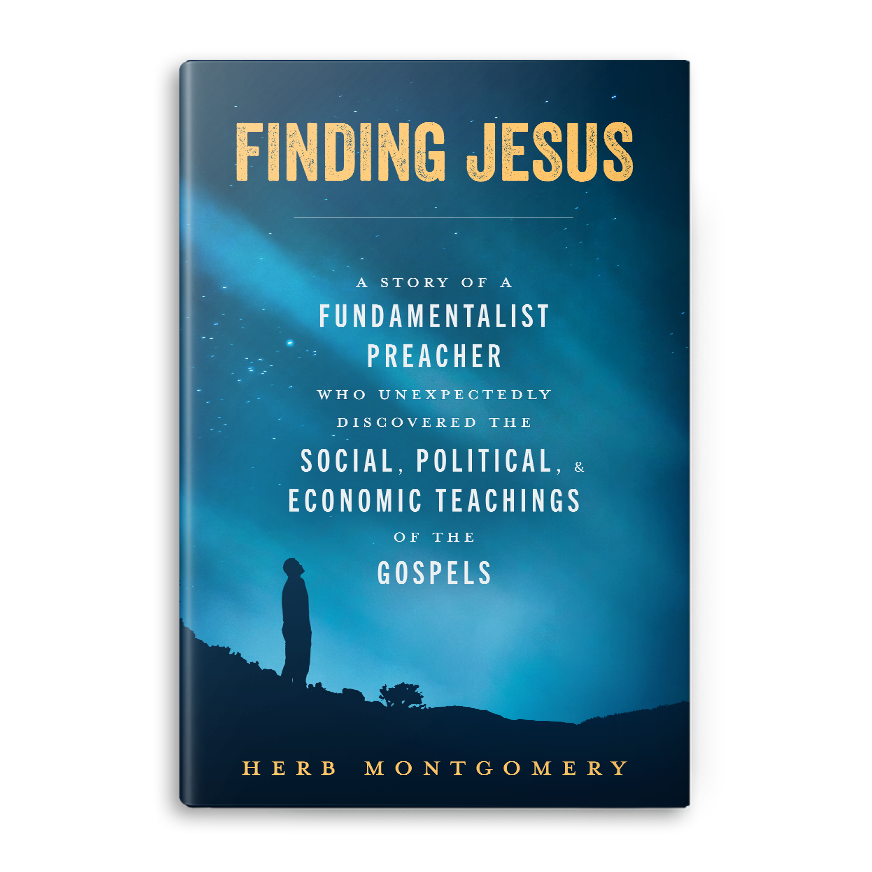
My new book, Finding Jesus: A story of a fundamentalist preacher who unexpectedly discovered the social, political, and economic teachings of the Gospels is now also available at renewedheartministries.com

Right where you are, keep living in love, choosing compassion, taking action, and working toward justice.

I love each of you dearly,

I’ll see you next week.
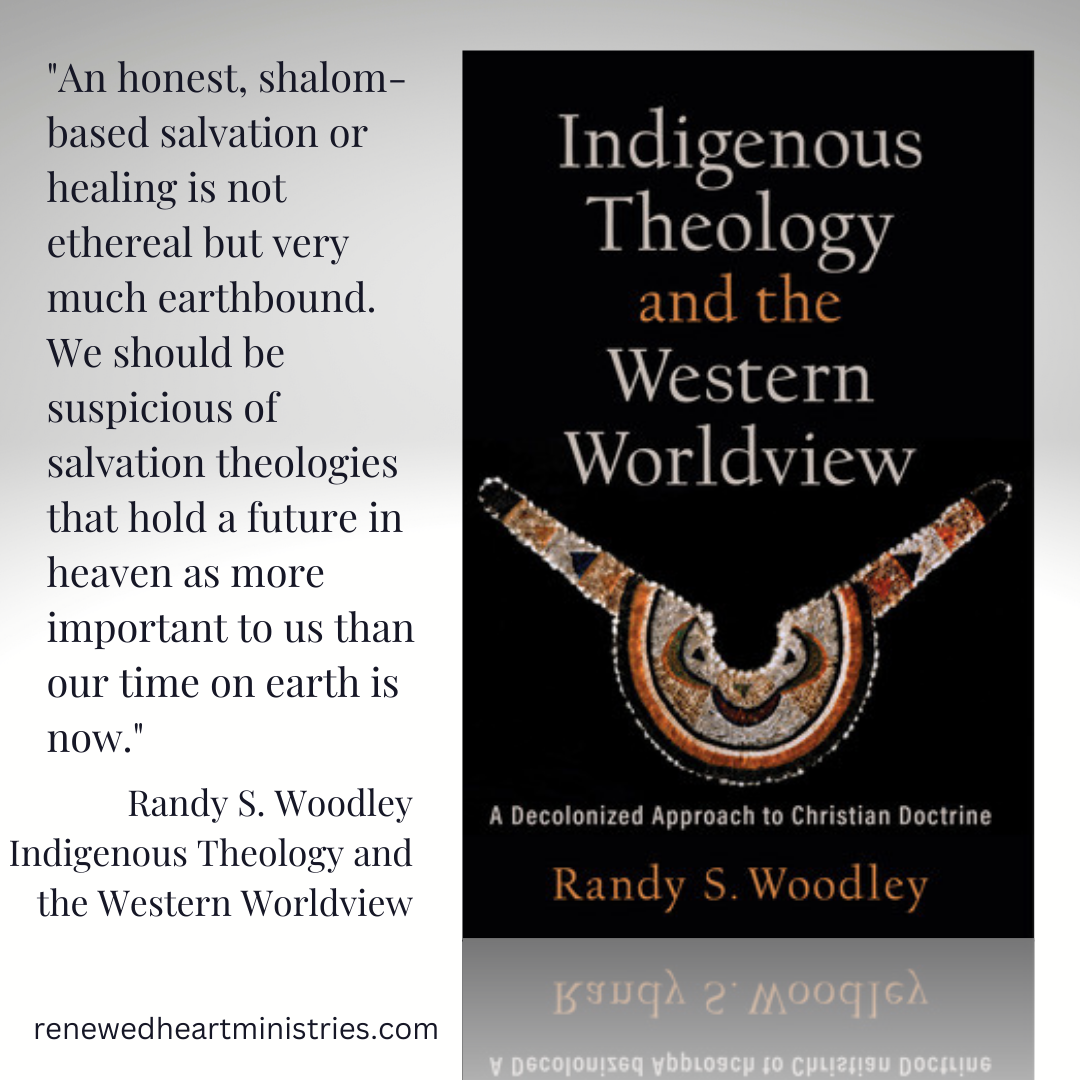


Now Available at Renewed Heart Ministries!

Herb’s new book Finding Jesus: A story of a fundamentalist preacher who unexpectedly discovered the social, political, and economic teachings of the Gospels, is available at renewedheartministries.com.

Get your copy today at renewedheartministries.com


Are you receiving all of RHM’s free resources each week?

Begin each day being inspired toward love, compassion, action, and justice. Free Sign-Up HERE

Refusing to Be Silent About Injustice

We want to say a special thank you to all of our supporters out there. If you would like to join them in supporting Renewed Heart Ministries’ work you can do so by going to renewedheartministries.com and clicking donate.


We’ll Be Back Next Week!

Each week, we’ll be talking about the gospel lectionary reading for the upcoming weekend. We’ll be talking about each reading in the context of love, inclusion, and societal justice. Our hope is that our talking will be just talking (as in justice) and that during our brief conversations each week you’ll be inspired to also do more than just talking.

If you teach from the lectionary each week, or if you’re just looking for some thoughts on the Jesus story from a more progressive perspective within the context of social justice, check it out, you might like it.

You can find the latest show on YouTube at https://youtu.be/MAYBXFTYygY

 or (@herbandtoddjusttalking)

Please Like, Subscribe, hit the Notification button, and leave us a comment

Thanks in advance for watching!


Herb Montgomery | June 23, 2023

To listen to this week’s eSight as a podcast episode click here.

“What does this passage have to say about how unsustainable our predatory and exploitative capitalist system today is, both environmentally and economically? What might our Gehenna look like today? Climate change scientists tell us that our Gehenna is coming too. Economic and environmental exploitation in the wake of the industrial revolution is unsustainable, period.”

This week’s reading is from the gospel of Matthew:

“The student is not above the teacher, nor a servant above his master. It is enough for students to be like their teachers, and servants like their masters. If the head of the house has been called Beelzebul, how much more the members of his household! 

“So do not be afraid of them, for there is nothing concealed that will not be disclosed, or hidden that will not be made known. What I tell you in the dark, speak in the daylight; what is whispered in your ear, proclaim from the roofs. Do not be afraid of those who kill the body but cannot kill the soul. Rather, be afraid of the One who can destroy both soul and body in Gehenna. Are not two sparrows sold for a penny? Yet not one of them will fall to the ground outside your Father’s care. And even the very hairs of your head are all numbered. So don’t be afraid; you are worth more than many sparrows.

“Whoever acknowledges me before others, I will also acknowledge before my Father in heaven. But whoever disowns me before others, I will disown before my Father in heaven.

“Do not suppose that I have come to bring peace to the earth. I did not come to bring peace, but a sword. For I have come to turn 

  ‘a man against his father,

a daughter against her mother,

a daughter-in-law against her mother-in-law—

  a man’s enemies will be the members of his own household.’ 

“Anyone who loves their father or mother more than me is not worthy of me; anyone who loves their son or daughter more than me is not worthy of me. Whoever does not take up their cross and follow me is not worthy of me. Whoever finds their life will lose it, and whoever loses their life for my sake will find it.” (Matthew 10:24-39)

This week’s reading reflects the struggles of the early Jesus community. When Matthew was written, Jesus followers were experiencing pushback and slander similar to what Jesus had experienced from those benefiting from the status quo. In our reading this week, the early Matthean community of Galilee hears Jesus encouraging them to expect being treated the same way he was treated as result of refusing to be silent about the thing Jesus also spoke out about (cf. Luke 4:18-19).

In this reading, they are encouraged to not fear those who can kill their bodies the same way they killed Jesus’ body. This community believed Jesus’ state murder and everything accomplished through his death had been overcome, undone, and reversed by God in the resurrection of Jesus. That’s why Jesus uses the language of killing the body but not killing the soul. What Jesus warns the listeners about next is being thrown whole into Gehenna. There would be no coming back from that. 

Let’s try to hear this language about Gehenna in its original Jewish context rather than in a modern Christian one. In the justice tradition of the Hebrew prophets, Gehenna had a rich history. Gehenna, the valley of the son of Hinnom, was a place where child sacrifice was practiced. Later it became a place where Gentile empires would raze Jerusalem and massacre the Jewish people. The reference in the gospels makes perfect sense: Matthew was written in the wake of Jerusalem being razed again, this time by Rome. Jerusalem’s total destruction  was what some Jews, including Jesus-followers, were trying to make sense of. Without the temple and without Jerusalem, it was as if the Jewish community had been thrown completely into Gehenna. 

Consider how Gehenna evolved in the scriptures:

“And [Ahaz, King of Judah] made offerings in THE VALLEY OF THE SON OF HINNOM, and made his sons pass through fire, according to the abominable practices of the nations whom the LORD drove out before the people of Israel.” (2 Chronicles 28:3)

“He made his son pass through fire in THE VALLEY OF THE SON OF HINNOM, practiced soothsaying and augury and sorcery, and dealt with mediums and with wizards. He did much evil in the sight of the LORD, provoking him to anger.” (2 Chronicles 33:6)

“And they go on building the high place of Topheth, which is in THE VALLEY OF THE SON OF HINNOM, to burn their sons and their daughters in the fire—which I did not command, nor did it come into my mind. Therefore, the days are surely coming, says the LORD, when it will no more be called Topheth, or THE VALLEY OF THE SON OF HINNOM, but THE VALLEY OF SLAUGHTER: for they will bury in Topheth until there is no more room.” (Jeremiah 7:31–32)

“The word that came to Jeremiah from the LORD: Stand in the gate of the LORD’S house, and proclaim there this word, and say, Hear the word of the LORD, all you people of Judah, you that enter these gates to worship the LORD. Thus says the LORD of hosts, the God of Israel: Amend your ways and your doings, and let me dwell with you in this place. Do not trust in these deceptive words: ‘This is the temple of the LORD, the temple of the LORD, the temple of the LORD.’ For if you truly amend your ways and your doings, if you truly act justly one with another, if you do not oppress the alien, the orphan, and the widow, or shed innocent blood in this place, and if you do not go after other gods to your own hurt, then I will dwell with you in this place, in the land that I gave of old to your ancestors forever and ever. Here you are, trusting in deceptive words to no avail. Will you steal, murder, commit adultery, swear falsely, make offerings to Baal, and go after other gods that you have not known, and then come and stand before me in this house, which is called by my name, and say, ‘We are safe!’—only to go on doing all these abominations? Has this house, which is called by my name, become a den of robbers in your sight? You know, I too am watching, says the LORD.” (Jeremiah 7:1–11, emphasis added.)

It’s telling that the gospel authors put Jeremiah’s words in Jesus’s mouth during his temple protest against exploitation of the poor. Jesus flips over the money changers’ tables, saying “You have made this house a den of robbers.” 

One last passage from Jeremiah:

“And go out to the VALLEY OF THE SON OF HINNOM (Gehenna) at the entry of the Potsherd Gate, and proclaim there the words that I tell you. You shall say: Hear the word of the LORD, O kings of Judah and inhabitants of Jerusalem. Thus says the LORD of hosts, the God of Israel: I am going to bring such disaster upon this place that the ears of everyone who hears of it will tingle. Because the people have forsaken me, and have profaned this place by making offerings in it to other gods whom neither they nor their ancestors nor the kings of Judah have known; and because they have filled this place with the blood of the innocent, and gone on building the high places of Baal to burn their children in the fire as burnt offerings to Baal, which I did not command or decree, nor did it enter my mind. Therefore the days are surely coming, says the LORD, when this place shall no more be called Topheth, OR THE VALLEY OF THE SON OF HINNOM, but THE VALLEY OF SLAUGHTER.” (Jeremiah 19:2–6)

I want to be clear. Jerusalem was not destroyed by Rome in 70 C.E . because God was punishing Jews for rejecting Jesus. This trope by Christians has had a long harmful history for Jewish people. The destruction of Jerusalem was instead brought about in the wake of the Jewish-Roman war of 66-69 C.E. This war resulted from the rich exploiting the poor and poor people revolting, taking over the temple, burning the records of their debt, and ultimately making Jerusalem their center of operations as they struck Rome itself. Their revolt provoked  the full weight of the Roman Empire coming down on their heads. 

In this week’s reading, then, the original audience would have heard Jesus encouraging them not to fear being killed for following him as he spoke out against the exploitation of the poor. They would have heard him advising them to fear remaining silent, to not go along with  exploitation that would plunge all of Jerusalem into a “Gehenna” at the hands of Rome. Again, it’s important to remember this was all written after the fact, with the community’s hindsight helping them to map social, political and economic causes for what they had just gone through.

What does this passage have to say about how unsustainable our predatory and exploitative capitalist system today is, both environmentally and economically? What might our Gehenna look like today? Climate change scientists tell us that our Gehenna is coming too. Economic and environmental exploitation in the wake of the industrial revolution is unsustainable, period.

Matthew’s community would have heard Jesus say that speaking out against injustice is divisive: it divides like a sword. And in that world, family ties were more than just relationships, they were also the means of economic survival. But for Jesus, preserving family ties was not a higher priority than speaking out against injustice or the harm being done to those their society had made vulnerable. 

Lastly, Jesus encourages his followers to take up their own crosses. I want to be very careful here. Too often Christians have told victims of abuse and injustice that they must simply bear their cross. This is effectively saying the opposite of our reading this week: it would mean to keep silent and passively bearing injustice. 

But in the context of our reading, remember that Jesus followers are threatened with the cross for speaking out against injustice. Bearing a cross is not inherent to following Jesus. A cross is only invoked when those with power and privilege become threatened by egalitarian change and threaten those calling for change if they don’t shut up. 

To people in that situation, Jesus is saying, don’t be silent. Speak out, resist, keep calling for change, even if they threaten you with a cross for doing so. It is better to take up one’s cross, to speak out against injustice and harm, than to lose your soul, your very being, who you are and your commitment to justice, by choosing to be silent in the face of injustice.

What does it mean to follow Jesus in the context of what we are facing today?

HeartGroup Application

1. Share something that spoke to you from this week’s eSight/Podcast episode with your HeartGroup.

2. In what ways to you choose to not be silent in the face of injustice today? Discuss with your group.

3. What can you do this week, big or small, to continue setting in motion the work of shaping our world into a safe, compassionate, just home for everyone?

Thanks for checking in with us, today.

I want to say a special thank you to all of our supporters out there. And if you would like to join them in supporting Renewed Heart Ministries’ work you can do so by going to renewedheartministries.com and clicking donate. 

You can find Renewed Heart Ministries on Twitter, Facebook and Instagram. If you haven’t done so already, please follow us on your chosen social media platforms for our daily posts. Also, if you enjoy listening to the Jesus for Everyone podcast, please like and subscribe to the JFE podcast through the podcast platform you use and consider taking some time to give us a review. This helps others find our podcast as well.

Also I want to share that we are partnering in a new weekly YouTube show called “Just Talking.” Each week, Todd Leonard and I will be talking about the gospel lectionary reading for the upcoming weekend. We’ll be talking about each reading in the context of love, inclusion, and societal justice. Our hope is that our talking will be just talking (as in justice) and that during our brief conversations each week you’ll be inspired to also do more than just talking.

If you teach from the lectionary each week, or if you’re just looking for some thoughts on the Jesus story from a more progressive perspective within the context of social justice, check it out, you might like it. You can find JustTalking each week on YouTube at youtube.com/@herbandtoddjusttalking. Please Like, Subscribe, hit the Notification button, and leave us a comment.

And if you’d like to reach us here at Renewed Heart Ministries through email, you can reach us at info@renewedheartministries.com.

My new book, Finding Jesus: A story of a fundamentalist preacher who unexpectedly discovered the social, political, and economic teachings of the Gospels is now also available at renewedheartministries.com

Right where you are, keep living in love, choosing compassion, taking action, and working toward justice.

I love each of you dearly,

I’ll see you next week.



Now Available at Renewed Heart Ministries!

Herb’s new book Finding Jesus: A story of a fundamentalist preacher who unexpectedly discovered the social, political, and economic teachings of the Gospels, is available at renewedheartministries.com.

Get your copy today at renewedheartministries.com


Are you receiving all of RHM’s free resources each week?

Begin each day being inspired toward love, compassion, action, and justice. Free Sign-Up HERE

A Different Iteration of our Present World

We want to say a special thank you to all of our supporters out there. If you would like to join them in supporting Renewed Heart Ministries’ work you can do so by going to renewedheartministries.com and clicking donate.


This Week’s Episode of Just Talking Available on YouTube

New Episode of “Just Talking” Now Online!

Season 1, Episode 17: Matthew 9.9-13, 18-26. Lectionary A, Proper 5

Each week, we’ll be talking about the gospel lectionary reading for the upcoming weekend. We’ll be talking about each reading in the context of love, inclusion, and societal justice. Our hope is that our talking will be just talking (as in justice) and that during our brief conversations each week you’ll be inspired to also do more than just talking.

If you teach from the lectionary each week, or if you’re just looking for some thoughts on the Jesus story from a more progressive perspective within the context of social justice, check it out, you might like it.

You can find the latest show on YouTube at https://youtu.be/MAYBXFTYygY

 or (@herbandtoddjusttalking)

Please Like, Subscribe, hit the Notification button, and leave us a comment

Thanks in advance for watching!


A Different Iteration of our Present World

Herb Montgomery | June 16, 2023

To listen to this week’s eSight as a podcast episode click here.

If we are choosing the unmentioned themes over the centerpiece of the Jesus stories, we have to ask ourselves why we are avoiding the central tenet of Jesus’ teachings in favor of a future or individual, privatized, and inward focus that leaves us unconcerned about social injustices and leaves our unjust systems unchallenged and unchanged.

Our reading this week is from the gospel of Matthew:

Jesus went through all the towns and villages, teaching in their synagogues, proclaiming the good news of the kingdom and healing every disease and sickness. When he saw the crowds, he had compassion on them, because they were troubled and helpless, like sheep without a shepherd. Then he said to his disciples, “The harvest is plentiful but the workers are few. Ask the Lord of the harvest, therefore, to send out workers into his harvest field.”

Jesus called his twelve disciples to him and gave them authority to drive out impure spirits and to heal every disease and sickness.

These are the names of the twelve apostles: first, Simon (who is called Peter) and his brother Andrew; James son of Zebedee, and his brother John; Philip and Bartholomew; Thomas and Matthew the tax collector; James son of Alphaeus, and Thaddaeus; Simon the Zealot and Judas Iscariot, who betrayed him.

These twelve Jesus sent out with the following instructions: “Do not go among the Gentiles or enter any town of the Samaritans. Go rather to the lost sheep of Israel. As you go, proclaim this message: ‘The kingdom of heaven has come near.’ Heal the sick, raise the dead, cleanse those who have leprosy, drive out demons. Freely you have received; freely give. (Matthew 9:35-10:8)

The first thing that jumps out at me in this week’s reading is the connection between the preaching of the kingdom and acts of healing. The kingdom was to be linked in people’s hearts with the act of healing and liberating them from whatever they were suffering in the here and now. To really get our heads around this, let’s first look at Jesus’ compassionate response to those who were troubled and helpless.

Our reading says that when Jesus saw the crowds, he “had compassion on them, because they were troubled and helpless,” like sheep without a shepherd. He then spoke to his disciples of a plentiful harvest with too few laborers to go out and get it. There is a lot to unpack here. 

The Christian church has historically used the image of a harvest as a metaphor for Christian evangelism. But that doesn’t work in this context. Why would Jesus respond to people being oppressed and being helpless by calling for more workers to save souls for heaven. There is a disconnect with this passage that I don’t often hear folks point out. “Harvest” in this passage speaks of something much different. 

First, Jesus’ people were troubled, harassed, pushed to the edges and undersides of the empire, and helpless to do anything about it! Jesus then speaks of a harvest. It helps to think of harvest through a more Jewish lens, one that Jesus himself would have used. A harvest metaphor makes a lot more sense given that context. 

In the Hebrew scriptures, the harvest was associated with justice: everyone receiving enough to thrive from the hand of the God of the Torah. In fact, the people weren’t even supposed to harvest the entirety of their fields so that those living in poverty could go and glean enough to survive (Leviticus 19:9-10, Leviticus 23:22, Deuteronomy 24:19-22).

When Jesus responds to people being troubled and helpless by saying that the harvest is plentiful, he’s confessing that everything needed for their thriving is present but that the people  are being prevented from accessing what they need. Picture a field full of grain but hungry people being prevented from being able to go into the field and harvest the grain they desperately need in order to be fed (see Matthew 12:1).

What Jesus was calling for was access to rights being denied. It was a call to society-wide justice in the face of an elite few who were prospering economically at the expense of the masses. Jesus’ God was sending sunshine and rain on all equally (Matthew 5:45), so if any did not experience what they needed to thrive, we must ask ourselves who was preventing them from receiving what they needed. What Jesus is calling for when he calls for workers for the harvest, then, is not evangelists religiously saving souls for post mortem bliss, but those who work for social justice.

The kingdom that Jesus preached is also associated in the reading with exorcisms and healings. In the book Journeys by Heart: A Christology of Erotic Power (this month’s recommended reading from RHM), Rita Nakashima Brock points out that, in the Jesus stories, exorcisms were associated with political liberation (Mark 5:9) while healing stories were often associated with social liberation (Mark 5:25). Again, the kingdom, whatever we make of it today, was about people experiencing a liberation marked by them receiving enough to thrive. The kingdom was Jesus’ vision of a world where no one had too much while others didn’t have enough.

Now let’s return to this kingdom theme in the Jesus stories. In the synoptics and the book of Acts, Jesus’ gospel was not about getting to heaven. And as important of a corrective to abusive religion as the idea has been, Jesus’ gospel was not about a God who loves you. Don’t misunderstand me here. Both heaven and God’s love are important themes and have been life-giving to many Christians. But they simply aren’t Jesus message in the synoptics or the book of Acts. In fact, in Acts, where the gospel goes out to all the world, the disciples do not mention hell, heaven as a destination for us, or Divine love. What the gospel does proclaim is “the kingdom.”

Consider the following passages. 

After John was put in prison, Jesus went into Galilee, proclaiming the good news of God. “The time has come,” he said. “The kingdom of God has come near. Repent and believe the good news [euangelion – gospel]!” (Mark 1:14-15)

Jesus went throughout Galilee, teaching in their synagogues, proclaiming the good news [euangelion] of the kingdom, and healing every disease and sickness among the people. (Matthew 4:23)

As you go, proclaim this message: ‘The kingdom of heaven has come near.’ Heal the sick, raise the dead, cleanse those who have leprosy, drive out demons. Freely you have received, freely give. (Matthew 10:7-8)

But he said, “I must proclaim the good news [euangelion] of the kingdom of God to the other towns also, because that is why I was sent.” (Luke 4:43)

Heal the sick who are there and tell them, ‘The kingdom of God has come near to you.’ (Luke 10:9)

So they set out and went from village to village, proclaiming the good news [euangelion] and healing people everywhere. (Luke 9:6)

But when they believed Philip as he proclaimed the good news of the kingdom of God and the name of Jesus Christ, they were baptized, both men and women. (Acts 8:12)

Paul entered the synagogue and spoke boldly there for three months, arguing persuasively about the kingdom of God. (Acts 19:8)

Now I know that none of you among whom I have gone about preaching the kingdom will ever see me again. (Acts 20:25)

They arranged to meet Paul on a certain day, and came in even larger numbers to the place where he was staying. He witnessed to them from morning till evening, explaining about the kingdom of God, and from the Law of Moses and from the Prophets he tried to persuade them about Jesus. (Acts 28.23)

For two whole years Paul stayed there in his own rented house and welcomed all who came to see him. He proclaimed the kingdom of God and taught about the Lord Jesus Christ—with all boldness and without hindrance. (Acts 28:30-31)

Today the language of kingdom is problematic. Many no longer believe a kingdom is the best way to organize human society, and many subscribe to some form of democracy, not a kingdom. Secondly, a kingdom is deeply patriarchal and not the best language for the egalitarian world Jesus envisioned in his teachings.

Today we can and should call it something else. Many do. One of my favorite alternatives is Kelly Brown Douglas’ language of “God’s just future already breaking into the present.” I’ve written at length on various life-giving ways we can envision Jesus’ kingdom in chapter 5 of my book Finding Jesus. Whatever we call it, Jesus’ kingdom preaching was about a world that is compassionate, safe, just home for all, especially prioritizing those our status quo is marginalizing and making vulnerable to harm.

Too often, when people speak of the gospel today, they’re aren’t referring to Jesus’ vision for a world where no one is harmed in the here and now. If they do, they receive the pushback of being “too political.” I find this sad. As Jesus followers we should not see people being harmed as a tool to be exploited by a political party, but as people who are objects of Divine value and worth, people who are being harmed, and people who we are called to care for. It’s fine to be passionate about heaven and God’s love, but not at the expense of Jesus’ kingdom. If we are choosing the unmentioned themes over the centerpiece of the Jesus stories, we have to ask ourselves why we are avoiding the central tenet of Jesus’ teachings in favor of a future or individual, privatized, and inward focus that leaves us unconcerned about social injustices and leaves our unjust systems unchallenged and unchanged. 

Jesus’ kingdom calls each of us to participate in choosing and creating a different iteration of our present world, a world that is a safe, compassionate, just home for all.

HeartGroup Application

1. Share something that spoke to you from this week’s eSight/Podcast episode with your HeartGroup.

2. How does this more “kingdom” focus in our passage this week shape your own Jesus following? Discuss with your group.

3. What can you do this week, big or small, to continue setting in motion the work of shaping our world into a safe, compassionate, just home for everyone?

Thanks for checking in with us, today.

I want to say a special thank you to all of our supporters out there. And if you would like to join them in supporting Renewed Heart Ministries’ work you can do so by going to renewedheartministries.com and clicking donate. 

You can find Renewed Heart Ministries on Twitter, Facebook and Instagram. If you haven’t done so already, please follow us on your chosen social media platforms for our daily posts. Also, if you enjoy listening to the Jesus for Everyone podcast, please like and subscribe to the JFE podcast through the podcast platform you use and consider taking some time to give us a review. This helps others find our podcast as well.

Also I want to share that we are partnering in a new weekly YouTube show called “Just Talking.” Each week, Todd Leonard and I will be talking about the gospel lectionary reading for the upcoming weekend. We’ll be talking about each reading in the context of love, inclusion, and societal justice. Our hope is that our talking will be just talking (as in justice) and that during our brief conversations each week you’ll be inspired to also do more than just talking.

If you teach from the lectionary each week, or if you’re just looking for some thoughts on the Jesus story from a more progressive perspective within the context of social justice, check it out, you might like it. You can find JustTalking each week on YouTube at youtube.com/@herbandtoddjusttalking. Please Like, Subscribe, hit the Notification button, and leave us a comment.

And if you’d like to reach us here at Renewed Heart Ministries through email, you can reach us at info@renewedheartministries.com.

My new book, Finding Jesus: A story of a fundamentalist preacher who unexpectedly discovered the social, political, and economic teachings of the Gospels is now also available at renewedheartministries.com

Right where you are, keep living in love, choosing compassion, taking action, and working toward justice.

I love each of you dearly,

I’ll see you next week.


Now Available at Renewed Heart Ministries!

Herb’s new book Finding Jesus: A story of a fundamentalist preacher who unexpectedly discovered the social, political, and economic teachings of the Gospels, is available at renewedheartministries.com.

Get your copy today at renewedheartministries.com


Are you receiving all of RHM’s free resources each week?

Begin each day being inspired toward love, compassion, action, and justice. Free Sign-Up HERE

A Unity That’s Big Enough

This Week’s Episode of Just Talking Available on YouTube

New Episode of “Just Talking” Now Online!

Season 1, Episode 14: John 17.1-11. Lectionary A, Easter 7

Each week, we’ll be talking about the gospel lectionary reading for the upcoming weekend. We’ll be talking about each reading in the context of love, inclusion, and societal justice. Our hope is that our talking will be just talking (as in justice) and that during our brief conversations each week you’ll be inspired to also do more than just talking.

If you teach from the lectionary each week, or if you’re just looking for some thoughts on the Jesus story from a more progressive perspective within the context of social justice, check it out, you might like it.

You can find the latest show on YouTube at https://youtu.be/NFukfGUUlEQ

 or (@herbandtoddjusttalking)

Please Like, Subscribe, hit the Notification button, and leave us a comment

Thanks in advance for watching!


Unity

Herb Montgomery | May 19, 2023

To listen to this week’s eSight as a podcast episode click here.


What we want is a unity that is safe for everyone. A unity that is compassionate. A unity that walks arm and arm with justice. A unity that’s big enough to wrap its arms around all our varied differences and call them “good.” A unity that at its heart holds the well-being of every member as its highest priority of value.


Our reading this week is from the gospel of John:

After Jesus said this, he looked toward heaven and prayed:

“Father, the hour has come. Glorify your Son, that your Son may glorify you.

For you granted him authority over all people that he might give eternal life to all those you have given him.

Now this is eternal life: that they know you, the only true God, and Jesus Christ, whom you have sent.

I have brought you glory on earth by finishing the work you gave me to do.

And now, Father, glorify me in your presence with the glory I had with you before the world began.

I have revealed you to those whom you gave me out of the world. They were yours; you gave them to me and they have obeyed your word.

Now they know that everything you have given me comes from you.

For I gave them the words you gave me and they accepted them. They knew with certainty that I came from you, and they believed that you sent me.

I pray for them. I am not praying for the world, but for those you have given me, for they are yours.

All I have is yours, and all you have is mine. And glory has come to me through them.

I will remain in the world no longer, but they are still in the world, and I am coming to you. Holy Father, protect them by the power of your name, the name you gave me, so that they may be one as we are one.” (John 17:1-11)

Our reading this week is John’s version of Jesus’ farewell prayer. This passage deeply influenced Christians during the fourth and fifth centuries C.E., and it became the basis of the discussions and conclusions that became the orthodox doctrinal understanding of Jesus’ relation to God.

When Jesus’ followers are referenced in this prayer, it’s difficult to discern whether the prayer is talking about Jesus’ first disciples before his crucifixion or the whole Johannine community in the century afterwards.

The prayer is unique to John’s gospel. Some consider this prayer to be the Johannine community’s equivalent of the “Lord’s Prayer” in the synoptic gospels. The key words, phrases, and expressions in this prayer are all uniquely Johannine.

Firstly, this community defined eternal life or salvation as a special knowledge. Consider the following passages from this week’s reading:

Now this is eternal life: that they know you… (John 17:3)

Now they know that everything you have given me comes from you. (John 17:7)

They knew with certainty… (John 17:8)

As an exercise, look up every time “knowing” is the important element emphasized in the book of John. When we acknowledge how central “knowing” was to the Johannine community’s version of the Jesus story, we discover the entire gospel is about gaining this knowing (gnosis) from Jesus. In fact, giving us this gnosis, the gospel of John tells us, is the entire reason Jesus came.

This is a very different emphasis from the one we read in Mark, Matthew and Luke.

Secondly, the early Johannine community didn’t treat a bodily resurrection as all that necessary for Jesus. In John 17, it is through the cross (death being the separating of the gnostic soul from the material body) that Jesus would be reunited with the Father. Looking to the cross and speaking to his Father, Jesus says, “I will remain in the world no longer . . . I am coming to you.”

This is one of the many reasons why a gnostic Jesus doesn’t quite fit the versions of Jesus we encounter in Mark, Matthew, and Luke. There would come to be deep divides and differences between later gnostic Christianity and what would become orthodox Christianity, and these divides were what led many Church Fathers to deem gnostic forms of Christianity as heretical.

The gospel of John later seeks to correct the implication of this prayer in Jesus’ statement to Mary at the tomb:

“Jesus said, “Do not hold on to me, for I have not yet ascended to the Father.” (John 20:17)

As I’ve shared as we’ve re-read the gospel of John, I prefer the more material Jesus we encounter Mark, Matthew, and Luke. There are still gems to mine from the gospel of John (the supremacy of Love is one), but I resonate much more with the synoptic Jesus, who is striving to make our concrete world, here and now, a safer, more compassionate, just home for everyone. I prefer that Jesus over the Johannine Jesus, who is primarily concerned with imparting a special knowledge that is the path or “way” and that ultimately liberates our spirits from our flesh.

I also find the synoptics speak more relevantly into our justice work today. If changing our present world is the goal, I’ll take Mark, Matthew and Luke. But if getting to heaven is the goal, then John’s gospel provides the most warm and fuzzy path to that end and it depends simply on knowing the Father the way Jesus came to reveal Him.

A third theme repeated in our reading this week is the theme of unity. Unity can be both life-giving and death-dealing. Like peace, unity based on silencing opposition or accommodating harm is death-dealing. And, like peace, unity that comes through justice, through ensuring everyone is being taken care of, is life-giving. As Ched Myers rightly states in his classic commentary on Mark, Binding the Strong Man, “We may rightly be suspicious of theologies of reconciliation that promote Christian unity at the price of political silence.”

I don’t believe that unity has to mean the homogeneous conformity of everyone involved. We can have unity alongside a beautiful, heterogeneous diversity where our differences are celebrated as the rich variations that we have as a human family, and where none are excluded or made to feel “less than” because they are different from those the present system prioritizes and privileges.

If we want unity, we should be working for justice. We don’t want a unity that comes at any cost, a unity that results from people who are being hurt being told to sit down and keep silent.

For many of us, unity now will have to come through reconciliation. And that reconciliation will have to come through restitution for past injustices and the transformation of our present system that corrects harms being committed. Unity depends on change, then. It has to follow present harms being remedied and made right. Until then, unity can’t be life-giving if it calls us to ignore or passively accept the concrete harms that have been and are being done to people made vulnerable in our society.

If we are praying for a unity that is the fruit of justice being restored and rooted in care that ensures everyone has what they need to thrive, then I’m all for it. But death-dealing unity that is mere silence in the midst of harm is not what I interpret our reading this week to promote.

What we want is a unity that is safe for everyone. A unity that is compassionate. A unity that walks arm and arm with justice. A unity that’s big enough to wrap its arms around all our varied differences and call them “good.” A unity that at its heart holds the well-being of every member as its highest priority of value.

If we, alongside the Jesus in this week’s reading, are praying for this kind of unity, then and only then can we say, “Amen.”

HeartGroup Application

1. Share something that spoke to you from this week’s eSight/Podcast episode with your HeartGroup.

2. What does unity mean for you? Share with your group.

3. What can you do this week, big or small, to continue setting in motion the work of shaping our world into a safe, compassionate, just home for everyone?

Thanks for checking in with us, today.

You can find Renewed Heart Ministries on Twitter, Facebook and Instagram. If you haven’t done so already, please follow us on your chosen social media platforms for our daily posts. Also, if you enjoy listening to the Jesus for Everyone podcast, please like and subscribe to the JFE podcast through the podcast platform you use and consider taking some time to give us a review. This helps others find our podcast as well.

Also I want to share that we are partnering in a new weekly YouTube show called “Just Talking.” Each week, Todd Leonard and I will be talking about the gospel lectionary reading for the upcoming weekend. We’ll be talking about each reading in the context of love, inclusion, and societal justice. Our hope is that our talking will be just talking (as in justice) and that during our brief conversations each week you’ll be inspired to also do more than just talking.

If you teach from the lectionary each week, or if you’re just looking for some thoughts on the Jesus story from a more progressive perspective within the context of social justice, check it out, you might like it. You can find JustTalking each week on YouTube at youtube.com/@herbandtoddjusttalking. Please Like, Subscribe, hit the Notification button, and leave us a comment.

And if you’d like to reach us here at Renewed Heart Ministries through email, you can reach us at info@renewedheartministries.com.

My new book, Finding Jesus: A story of a fundamentalist preacher who unexpectedly discovered the social, political, and economic teachings of the Gospels is now also available at renewedheartministries.com

Right where you are, keep living in love, choosing compassion, taking action, and working toward justice.

I love each of you dearly,

I’ll see you next week.


Now Available at Renewed Heart Ministries!

Herb’s new book Finding Jesus: A story of a fundamentalist preacher who unexpectedly discovered the social, political, and economic teachings of the Gospels, is available at renewedheartministries.com.

Get your copy today at renewedheartministries.com


Are you receiving all of RHM’s free resources each week?

Begin each day being inspired toward love, compassion, action, and justice. Free Sign-Up HERE

Loving What Jesus Taught

This Week’s Episode of Just Talking Available on YouTube

New Episode of “Just Talking” Now Online!

Season 1, Episode 13: John 14:15-21. Lectionary A, Easter 6

Each week, we’ll be talking about the gospel lectionary reading for the upcoming weekend. We’ll be talking about each reading in the context of love, inclusion, and societal justice. Our hope is that our talking will be just talking (as in justice) and that during our brief conversations each week you’ll be inspired to also do more than just talking.

If you teach from the lectionary each week, or if you’re just looking for some thoughts on the Jesus story from a more progressive perspective within the context of social justice, check it out, you might like it.

You can find the latest show on YouTube at https://youtu.be/QnXt34XGexc

 or (@herbandtoddjusttalking)

Please Like, Subscribe, hit the Notification button, and leave us a comment

Thanks in advance for watching!


Loving What Jesus Taught

Herb Montgomery | May 12, 2023

To listen to this week’s eSight as a podcast episode click here.

“I don’t want it to be said of me that what I loved was the hope of heaven, not Jesus, because loving Jesus means actually loving the things he taught and following them. And so, in the spirit of this week’s reading, I have to ask myself: do I really love Jesus—the political, social, economic Jesus of the gospels? Or am I simply addicted to the religious candy that my religion about Jesus offers, if I only believe?”

Our reading this week is from the gospel of John:

“If you love me, keep my commands. And I will ask the Father, and he will give you another advocate to help you and be with you forever—the Spirit of truth. The world cannot accept him, because it neither sees him nor knows him. But you know him, for he lives with you and will be in you. I will not leave you as orphans; I will come to you. Before long, the world will not see me anymore, but you will see me. Because I live, you also will live. On that day you will realize that I am in my Father, and you are in me, and I am in you. Whoever has my commands and keeps them is the one who loves me. The one who loves me will be loved by my Father, and I too will love them and show myself to them.” (John 14:15-21*)

I grew up hearing Christians interpret the Spirit as Advocate as an intermediary interposing between sinful humans and a holy God. Today, I reject any interpretation of this language that places humanity and divinity on polar opposites and a mediator in between. I experienced that bearing bad fruit in my own life and I believe it produces bad fruit societally as well.

This reading is from the Johannine community’s version of the Jesus story, and we should remember that as we consider this language. Repeatedly over the past few weeks, we have seen how the Johannine community characterized the Pharisees and Jewish leaders. We have also noted the tensions between Pharisaical Judaism and the early Gnosticism that the Johannine community was part of. 

Consider the following passages in John, where being removed from the synagogue is a penalty for Jewish people who follow the Johannine Jesus.

“His parents said this because they were afraid of the Jews; for the Jews had already agreed that anyone who confessed Jesus to be the Anointed would be put out of the synagogue.” (John 9:22)

“Nevertheless many, even of the authorities, believed in him. But because of the Pharisees they did not confess it, for fear that they would be put out of the synagogue.” (John 12:42)

John’s Jesus also repeats the warning in John 12, “They will put you out of the synagogues” (John 16:2).

In this context, characterizing the Spirit as an Advocate would have meant something to this community. The Spirit would not have mediated between them and God but between them and other members of their own religious communities. We must hold all of these references in John in tension with the fact that most of the history between Judaism and Christianity is not characterized by Jews persecuting Christians but by Christians persecuting Jews. The gospel of John was also written when Gentile Christians wanted to distance themselves from their Jewish siblings under the Roman Empire.

We find a different nuance in the synoptic gospels. The early Jesus community was comprised of those on the undersides and margins of their society who were in deep need of advocacy or justice socially, politically, and economically. This is the context in which I understand the work of the Spirit as Advocate to bear the most life-giving fruit. The synoptics characterize the Spirit as an Advocate between humans in matters of justice. For the original audiences of the synoptics, “advocate” would have called to mind actual legal proceedings that elites in Judea and also from the larger Roman society initated against Jesus’ followers:

“When they bring you to trial and hand you over, do not worry beforehand about what you are to say; but say whatever is given you at that time, for it is not you who speak, but the Holy Spirit.” (Mark 13:11)

“When they hand you over, do not worry about how you are to speak or what you are to say; for what you are to say will be given to you at that time; for it is not you who speak, but the Spirit of your Father speaking through you.” (Matthew 10:19-20)

“So make up your minds not to prepare your defense in advance; for I will give you words and a wisdom that none of your opponents will be able to withstand or contradict.” (Luke 21:14-15)

“When they bring you before the synagogues, the rulers, and the authorities, do not worry about how you are to defend yourselves or what you are to say; for the Holy Spirit will teach you at that very hour what you ought to say.” (Luke 12:11-12)

A representation of the Divine that places God against us with us in need of an Advocate before God ignores this context, the social context in which these passages were originally written. 

Lastly, in this week’s reading we see an important if-then statement: If you love Jesus, then follow his teachings. 

To be honest, it is a lot easier to revere Jesus and to worship Jesus in word and song than it is to choose every day to follow the ethics and values we find in the Jesus story. In the Jesus story we find a Jesus who taught inclusion of the marginalized, resource-sharing with the poor, wealth redistribution from the rich, nonviolent resistance for the oppressed, treating others the way we would like to be treated ourselves, and an ethic expressed through justice above all else. 

It’s much easier for privileged, powerful, and propertied Christians to religiously worship a Jesus who promises us a beautiful afterlife, than it is for us to socially, politically, and economically follow the ethics and values our Jesus taught as challenging but fruitful means of reshaping the injustices, oppressions and violence of our present society.

I’m reminded of the poem “A Dead Man’s Dream” by Carl Wendell Hines, Jr. Hines who wrote this poem in 1965 after the assassination of Malcolm X. After Martin Luther King, Jr., was assassinated in 1968 his poem also came to be associated with Dr. King.

“Now that he is safely dead,
Let us praise him.
Build monuments to his glory.
Sing Hosannas to his name.

Dead men make such convenient heroes.
For they cannot rise to challenge the images
That we might fashion from their lives.
It is easier to build monuments
Than to build a better world.

So now that he is safely dead,
We, with eased consciences will
Teach our children that he was a great man,
Knowing that the cause for which he
Lived is still a cause
And the dream for which he died is still a dream.
A dead man’s dream.”

To apply this poem to Jesus of Nazareth for Christians leads to some haunting questions. Have we simply built churches as monuments to Jesus? What images of Jesus that Christianity has shaped would Jesus challenge if he physically walked the earth today? Have we built a religion when we should have been building a different world, a safe, compassionate, just world big enough for all of our differences and where each us treat each other the way we would like to be treated? Have we taught the message of Jesus’ greatness while ignoring the truths he taught and the solidarity with the marginalized he modeled that made him so great?

The phrases that give me pause in this week’s reading are: “If you love me, keep my commands” and “Whoever has my commands and keeps them is the one who loves me.”

Forget a religion or gospel about Jesus for a moment. What was the gospel our Jesus himself taught in the story? Are the things we as Christians so passionate about the same things that Jesus was passionate about? Are the things this Jesus was so passionate about, the themes and truths that he taught and emphasized, the centerpieces of our teaching and action? 

Some Christians today are intentionally endeavoring to answer in the affirmative. There are also large portions of Christianity that are known instead for their hate and bigotry. For these Christians, the Jesus of the gospels (even John) is strangely silent on the issues they are most vocal about, and the themes Jesus focused most intently on would threaten their social privileges too much. This kind of Christianity has to avoid or deprioritize the gospels because within those stories we run headlong into Jesus’ teachings. 

I have to allow myself to be confronted by this contradiction regularly. It’s much easier for me to focus on the parts of the New Testament that subtly redirect me toward cosmological claims about Jesus rather than to Jesus’ call for obedience to his teachings. I don’t want it to be said of me that what I loved was the hope of heaven, not Jesus, because loving Jesus means actually loving the things he taught and following them. And so, in the spirit of this week’s reading, I have to ask myself: do I really love Jesus—the political, social, economic Jesus of the gospels? Or am I simply addicted to the religious candy that my religion about Jesus offers, if I only believe?

HeartGroup Application

1. Share something that spoke to you from this week’s eSight/Podcast episode with your HeartGroup.

2. What are some of the things Jesus taught that you love and choose to follow? Share with your group.

3. What can you do this week, big or small, to continue setting in motion the work of shaping our world into a safe, compassionate, just home for everyone?

Thanks for checking in with us, today.

You can find Renewed Heart Ministries on Twitter, Facebook and Instagram. If you haven’t done so already, please follow us on your chosen social media platforms for our daily posts. Also, if you enjoy listening to the Jesus for Everyone podcast, please like and subscribe to the JFE podcast through the podcast platform you use and consider taking some time to give us a review. This helps others find our podcast as well.

Also I want to share that we are partnering in a new weekly YouTube show called “Just Talking.” Each week, Todd Leonard and I will be talking about the gospel lectionary reading for the upcoming weekend. We’ll be talking about each reading in the context of love, inclusion, and societal justice. Our hope is that our talking will be just talking (as in justice) and that during our brief conversations each week you’ll be inspired to also do more than just talking.

If you teach from the lectionary each week, or if you’re just looking for some thoughts on the Jesus story from a more progressive perspective within the context of social justice, check it out, you might like it. You can find JustTalking each week on YouTube at youtube.com/@herbandtoddjusttalking. Please Like, Subscribe, hit the Notification button, and leave us a comment.

And if you’d like to reach us here at Renewed Heart Ministries through email, you can reach us at info@renewedheartministries.com.

My new book, Finding Jesus: A story of a fundamentalist preacher who unexpectedly discovered the social, political, and economic teachings of the Gospels is now also available at renewedheartministries.com

Right where you are, keep living in love, choosing compassion, taking action, and working toward justice.

I love each of you dearly,

I’ll see you next week.

*Scriptures taken from the Holy Bible, New International Version®, NIV®. Copyright © 1973, 1978, 1984, 2011 by Biblica, Inc.™ Used by permission of Zondervan. All rights reserved worldwide. www.zondervan.com The “NIV” and “New International Version” are trademarks registered in the United States Patent and Trademark Office by Biblica, Inc.™


Now Available at Renewed Heart Ministries!

Herb’s new book Finding Jesus: A story of a fundamentalist preacher who unexpectedly discovered the social, political, and economic teachings of the Gospels, is available at renewedheartministries.com.

Get your copy today at renewedheartministries.com


Are you receiving all of RHM’s free resources each week?

Begin each day being inspired toward love, compassion, action, and justice. Free Sign-Up HERE

Jesus as Liberation from Systemic Injustice

Herb Montgomery | February 17, 2023


To listen to this week’s eSight as a podcast episode click here.


“He was not creating a new religion, but rather seeking to spark a Jewish renewal movement. It makes much more historical sense to see Jesus working alongside Moses and Elijah, as a then-contemporary example of the works that Moses and Elijah had done . . . What difference does it make to see Jesus working in the spirit of Moses and Elijah rather than interpreting him as a replacement for Moses and Elijah?”


Our reading this week is from the gospel of Matthew:

After six days Jesus took with him Peter, James and John the brother of James, and led them up a high mountain by themselves. There he was transfigured before them. His face shone like the sun, and his clothes became as white as the light. Just then there appeared before them Moses and Elijah, talking with Jesus.

Peter said to Jesus, Lord, it is good for us to be here. If you wish, I will put up three shelters—one for you, one for Moses and one for Elijah.”

While he was still speaking, a bright cloud covered them, and a voice from the cloud said, This is my Son, whom I love; with him I am well pleased. Listen to him!” When the disciples heard this, they fell facedown to the ground, terrified. But Jesus came and touched them. Get up,” he said. Dont be afraid.” When they looked up, they saw no one except Jesus.

As they were coming down the mountain, Jesus instructed them, Dont tell anyone what you have seen, until the Son of Man has been raised from the dead.” (Matthew 17:1-9)

Allow me to geek out for just a moment. This week’s passage is packed with interesting liberation themes.

First though, the story of the transfiguration in the gospels is another example where Christian supersessionism, or replacement theology, has harmed Jewish people. Christian history and traditions are full of interpretations of this story in ways that turn away from Moses and Elijah and toward Jesus. They emphasize a Divine endorsement that points the disciples who followed the teachings of Moses and Elijah (the Law and prophets in these interpretations) to now follow Jesus instead!

I couldn’t disagree more with this way of interpreting this week’s story. 

Remember that Jesus was a Jew. His was a Jewish voice in a discussion with other Jewish voices from his society. He was not creating a new religion, but rather seeking to spark a Jewish renewal movement. It makes much more historical sense to see Jesus working alongside Moses and Elijah, as a then-contemporary example of the works that Moses and Elijah had done according to the Jewish legends about them.

What difference does it make to see Jesus working in the spirit of Moses and Elijah rather than interpreting him as a replacement for Moses and Elijah?

First, let’s talk about how the various transfiguration stories in the gospels emphasize Moses and Elijah differently. Mark’s gospel states, “There appeared before them Elijah and Moses, who were talking with Jesus” (Mark 9:4). Mathew reverses the order, placing Moses first: “Then there appeared before them Moses and Elijah, talking with Jesus.”

For Mark’s intended audience, it was important to emphasis Elijah. Shortly afterward, he characterized John the Baptist’s renewal movement as a fulfillment of Malachi’s prophecy: See, I will send the prophet Elijah to you before that great and dreadful day of the LORD comes. He will turn the hearts of the parents to their children, and the hearts of the children to their parents” (Malachi 4:5-6).

The prophet Elijah called out the apostasy of elites who he felt were leading the people away into harm. Elijah paralleled how Mark’s audience interpreted John the Baptist. In the spirit of Elijah, John called out the elite of his era, their complicity with the Roman Empire, and the destructive effects of that complicity on the small rural farming communities of Judea, Galilee, and surrounding regions, as well as the poor in more urban areas.

So I understand why Mark places Elijah first.

But our passage this week is from Matthew, and Matthew switches the order to emphasize Moses. There are so many parallels between the story of Moses on the mountain and Matthew’s story of Jesus on this mountain. Again, it is much more intrinsically life-giving to see Jesus’ and Moses’ liberation work as the primary parallel. The often repeated replacement theory is that, as Moses once gave commandments, so too Jesus gave commandments that we are to follow instead.

But Matthew’s intended audience would have interpreted Jesus’ teachings in harmony with the laws of Moses (see Matthew 5:17). Moses as lawgiver is not the primary parallel we should emphasize here. Rather we should recognize Moses as the one who stood for the Israelites’ liberation from Egyptian slavery. Moses the liberator from foreign oppression was the parallel to Jesus that Matthew’s gospel tried bring to mind for its audience of Jewish poor and rural farmers who desperately longed to be liberated from Roman oppression.

So Jesus doesn’t replace Moses. Jesus is another Moses. Jesus stood in relation to Roman oppression the way Moses stood in relation to Egyptian oppression in the Hebrew folklore.

Notice these parallels that Matthew creates to call to mind images of Moses:

“Then the LORD said to Moses, Come up to the LORD, you and Aaron, Nadab and Abihu . . .” (Exodus 24:1)

“Jesus took with him Peter, James and John the brother of James, and led them up a high mountain by themselves.” (Matthew 17:1)

“When Moses went up on the mountain, the cloud covered it, and the glory of the LORD settled on Mount Sinai. For six days the cloud covered the mountain, and on the seventh day the LORD called to Moses from within the cloud.” (Exodus 24:15-16)

“After six days Jesus took with him Peter, James and John the brother of James, and led them up a high mountain by themselves.” (Matthew 17:1)

“When Moses came down from Mount Sinai with the two tablets of the covenant law in his hands, he was not aware that his face was radiant because he had spoken with the LORD . . . his face was radiant . . . he put a veil over his face . . . his face was radiant . . .” (Exodus 34:29-35)

“After six days Jesus took with him Peter, James and John the brother of James, and led them up a high mountain by themselves. There he was transfigured before them. His face shone like the sun . . . ” (Matthew 17:1-2)

On the mount of transfiguration Jesus speaks with God face to face. This had only happened for two others in Hebrew folklore: Moses and Elijah.

“Since then, no prophet has risen in Israel like Moses, whom the LORD knew face to face” (Deuteronomy 34:10)

“There he went into a cave and spent the night. And the word of the LORD came to him: What are you doing here, Elijah?” He replied, I have been very zealous for the LORD God Almighty. The Israelites have rejected your covenant, torn down your altars, and put your prophets to death with the sword. I am the only one left, and now they are trying to kill me too.” The LORD said, Go out and stand on the mountain in the presence of the LORD, for the LORD is about to pass by.” Then a great and powerful wind tore the mountains apart and shattered the rocks before the LORD, but the LORD was not in the wind. After the wind there was an earthquake, but the LORD was not in the earthquake. After the earthquake came a fire, but the LORD was not in the fire. And after the fire came a gentle whisper. When Elijah heard it, he pulled his cloak over his face and went out and stood at the mouth of the cave. Then a voice said to him, What are you doing here, Elijah?” (1 Kings 19:9-13)

Unlike Mark, Matthew repeats the words that were spoken earlier to Jesus at his baptism. This would have reminded Mathew’s audience of a verse in Isaiah:

Here is my servant, whom I uphold,

my chosen one in whom I delight;

I will put my Spirit on him,

and he will bring justice to the nations.” (Isaiah 42:1)

And lastly, Moses and Elijah were both Hebrew heroes for whom, according to tradition, death did not have the last word.

“As they were walking along and talking together, suddenly a chariot of fire and horses of fire appeared and separated the two of them, and Elijah went up to heaven in a whirlwind.” (2 Kings 2:11)

“He buried [Moses] in Moab, in the valley opposite Beth Peor, but to this day no one knows where his grave is.” (Deuteronomy 34:6 cf. Jude 9)

Remember, the good news for early Jesus community members was not that Jesus had died, but that this Jesus, whom Rome crucified, God had brought back to life (see Acts 4:22; Acts 2:22-24; Acts 2:32-33; Acts 3:12-16; Acts 4:10-11; Acts 5:30-32; Acts 10:36-43; and Acts 13:35-38):

We tell you the good news: What God promised our ancestors he has fulfilled for us, their children, by raising up Jesus.” (Acts 13:32-33)

These early Jesus followers viewed his death as a Roman act of state violence to silence Jesus. But what was intended to stop Jesus only proved to be an interruption. The resurrection reversed, undid, and overcame everything accomplished through the death of Jesus, and this was the good news. The liberation of Jesus lived on in the lives of his followers who sought to spread his teachings of love, liberation, justice, inclusion, and peace.

Matthew’s version of the transfiguration was intended to inspire the gospel’s original audience with a vision of Jesus as a liberator.

A lot has changed in the world since then. Today, Rome is no more.

But now there are other systems of injustice in each of our societies that we need liberation from. How might the teachings of the Jewish prophet of the poor from Galilee inspire and liberate us today, as we, in our own way and context, work to shape our world into a safe, compassionate, just home for all?

Does Jesus liberate us from the concreted systems of injustice we suffer from in our daily lives here and now? Do Jesus’ teachings still have world-changing power and relevance for us today?

I believe they do.


HeartGroup Application

1. Share something that spoke to you from this week’s eSight/Podcast episode with your HeartGroup.

2. What difference does it make for you to interpret Jesus as working in the spirit of Moses and Elijah rather than interpreting him as a replacement for Moses and Elijah? Share with your group.

3. What can you do this week, big or small, to continue setting in motion the work of shaping our world into a safe, compassionate, just home for everyone? 

Thanks for checking in with us, today.

You can find Renewed Heart Ministries on Twitter, Facebook and Instagram. If you haven’t done so already, please follow us on your chosen social media platforms for our daily posts. Also, if you enjoy listening to the Jesus for Everyone podcast, please like and subscribe to the JFE podcast through the podcast platform you use and consider taking some time to give us a review. This helps others find our podcast as well.

Also I want to share that we are partnering in a new weekly YouTube show called “Just Talking.” Each week, Todd Leonard and I will be talking about the gospel lectionary reading for the upcoming weekend. We’ll be talking about each reading in the context of love, inclusion, and societal justice. Our hope is that our talking will be just talking (as in justice) and that during our brief conversations each week you’ll be inspired to also do more than just talking.

If you teach from the lectionary each week, or if you’re just looking for some thoughts on the Jesus story from a more progressive perspective within the context of social justice, check it out, you might like it. Todd is brilliant in his discernment of how the Jesus story can speak into our lives today as we work together toward shaping our world into a just, safe and compassionate home for everyone.  He’s worth listening to.

You can find JustTalking each week on YouTube at youtube.com/@herbandtoddjusttalking. Please Like, Subscribe, hit the Notification button, and leave us a comment.

And if you’d like to reach us here at Renewed Heart Ministries through email, you can reach us at info@renewedheartministries.com.

My new book, Finding Jesus: A story of a fundamentalist preacher who unexpectedly discovered the social, political, and economic teachings of the Gospels is now also available at renewedheartministries.com

Right where you are, keep living in love, choosing compassion, taking action, and working toward justice.

I love each of you dearly,

I’ll see you next week.


Now Available at Renewed Heart Ministries!

It’s here!  Herb’s new book Finding Jesus: A story of a fundamentalist preacher who unexpectedly discovered the social, political, and economic teachings of the Gospels, is available at renewedheartministries.com, just in time for the holidays!

Here is just a taste of what people are saying:

“Herb has spent the last decade reading scripture closely. He also reads the world around us, thinks carefully with theologians and sociologists, and wonders how the most meaningful stories of his faith can inspire us to live with more heart, attention, and care for others in our time. For those who’ve ever felt alone in the process of applying the wisdom of Jesus to the world in which we live, Herb offers signposts for the journey and the reminder that this is not a journey we take alone. Read Finding Jesus with others, and be transformed together.” Dr. Keisha Mckenzie, Auburn Theological Seminary

“In Finding Jesus, Herb Montgomery unleashes the revolutionary Jesus and his kin-dom manifesto from the shackles of the domesticated religion of empire.  Within these pages we discover that rather than being a fire insurance policy to keep good boys and girls out of hell, Jesus often becomes the fiery enemy of good boys and girls who refuse to bring economic justice to the poor, quality healthcare to the underserved, and equal employment to people of color or same-sex orientation.  Because what the biblical narratives of Jesus reveal is that any future human society—heavenly or otherwise—will only be as  good as the one that we’re making right here and now. There is no future tranquil city with streets of gold when there is suffering on the asphalt right outside our front door today.  Finding Jesus invites us to pray ‘thy kingdom come, thy will be done on earth as it is in heaven’ on our feet as we follow our this liberator into the magnificent struggle of bringing the love and justice of God to all—right here, right now.”—Todd Leonard, pastor of Glendale City Church, Glendale CA.

“Herb Montgomery’s teachings have been deeply influential to me. This book shares the story of how he came to view the teachings of Jesus through the lens of nonviolence, liberation for all, and a call to a shared table. It’s an important read, especially for those of us who come from backgrounds where the myth of redemptive violence and individual (rather than collective) salvation was the focus.” – Daneen Akers, author of Holy Troublemakers & Unconventional Saints and co-director/producer of Seventh-Gay Adventists: A Film about Faith, Identity & Belonging

“So often Christians think about Jesus through the lens of Paul’s theology and don’t focus on the actual person and teachings of Jesus. This book is different. Here you find a challenging present-day application of Jesus’ teachings about the Kingdom of God and the Gospel. Rediscover why this Rabbi incited fear in the hearts of religious and political leaders two millennia ago. Herb’s book calls forth a moral vision based on the principles of Jesus’ vision of liberation. Finding Jesus helps us see that these teachings are just as disruptive today as they were when Jesus first articulated them.” Alicia Johnston, author of The Bible & LGBTQ Adventists.

“Herb Montgomery is a pastor for pastors, a teacher for teachers and a scholar for scholars. Part memoir and part theological reflection, Finding Jesus is a helpful and hope-filled guide to a deeper understanding of who Jesus is and who he can be. Herb’s tone is accessible and welcoming, while also challenging and fresh. This book is helpful for anyone who wants a new and fresh perspective on following Jesus.”— Traci Smith, author of Faithful Families

Get your copy today at renewedheartministries.com


Are you receiving all of RHM’s free resources each week?

Begin each day being inspired toward love, compassion, action, and justice. Free Sign-Up HERE.


Safe-for-Everyone Interpretations and Practices

Safe-for-Everyone Interpretations and Practices

Herb Montgomery | February 3, 2023

To listen to this week’s eSight as a podcast episode click here.


“What does this mean for us? It means that we can do with the Jesus story today what those in the 1st Century were doing with the Torah. We can learn to interpret the Jesus story in life-giving ways, listening to the world around us and the harm previous interpretations have caused. We can think carefully, not just theologically but socially, politically, and economically . . . we can grapple with the ethics of the Jesus story in our cultural context today and find more life-giving ways of defining what it means to follow Jesus.”


Our reading this week is from the gospel of Matthew and continues the passage from last week.

You are the salt of the earth. But if the salt loses its saltiness, how can it be made salty again? It is no longer good for anything, except to be thrown out and trampled underfoot. You are the light of the world. A town built on a hill cannot be hidden. Neither do people light a lamp and put it under a bowl. Instead they put it on its stand, and it gives light to everyone in the house. In the same way, let your light shine before others, that they may see your good deeds and glorify your Father in heaven. Do not think that I have come to abolish the Law or the Prophets; I have not come to abolish them but to fulfill them. For truly I tell you, until heaven and earth disappear, not the smallest letter, not the least stroke of a pen, will by any means disappear from the Law until everything is accomplished. Therefore anyone who sets aside one of the least of these commands and teaches others accordingly will be called least in the kingdom of heaven, but whoever practices and teaches these commands will be called great in the kingdom of heaven. For I tell you that unless your righteousness surpasses that of the Pharisees and the teachers of the law, you will certainly not enter the kingdom of heaven. (Matthew 5:13-20)

This week’s reading is this gospel’s collection of sayings and teachings that reflects the concerns and experiences of many Galilean members of the Jewish Jesus community at the time of this gospel’s writing.

To understand the phrase “if the salt loses its saltiness,” understand how salt was harvested in the region at that time. When harvested, salt was mixed with impurities or other whitish rocks. These rocks were then ground up into pebbles and placed in a seasoning bag that could be stirred into pots as they were cooking. Once all the salt dissolved, one was left with pebbles that would not dissolve and that weren’t salt. This “gravel” was worth nothing but to be thrown out. When this passage was written, the Christian community must have been experiencing a waning that would have helped them resonate with this metaphor. Their salt was losing its potency.

The language of a light on a stand and a city on a hill is interesting. I side with those who date Matthew’s gospel to after Rome’s violent destruction of Jerusalem and its temple. The intended audience for this gospel, Jewish Jesus followers in a Hellenized region, would have had both Jewish and Christian concerns, anxieties, and struggles as they pieced together their purpose in life now that Jerusalem and the temple were no more. The temple state was gone.

So it’s interesting to me that Matthew’s author applies language that would have been associated with the old Jerusalem—“a city on a hill”—to Jesus followers. For the author, these Jewish followers of Jesus were to carry on the hopes and promises that had once centered Jerusalem and the temple there.

Consider these passages from the Hebrew prophets to understand what these believers could have been wrestling with now that Jerusalem and their temple were gone:

“I will restore your leaders as in days of old,

your rulers as at the beginning.

Afterward you will be called

the City of Righteousness,

the Faithful City.” (Isaiah 1:26)

“In that day this song will be sung in the land of Judah:

  We have a strong city;

God makes salvation

its walls and ramparts.” (Isaiah 26:1)

“Look on Zion, the city of our festivals;

your eyes will see Jerusalem,

a peaceful abode, a tent that will not be moved;

its stakes will never be pulled up,

nor any of its ropes broken.” (Isaiah 33:20)

“The children of your oppressors will come bowing before you;

all who despise you will bow down at your feet

and will call you the City of the LORD,

Zion of the Holy One of Israel.” (Isaiah 60:14)

“They will be called the Holy People,

the Redeemed of the LORD;

and you will be called Sought After,

the City No Longer Deserted.” (Isaiah 62:12)

“In the last days

  the mountain of the LORDS temple will be established

as the highest of the mountains;

it will be exalted above the hills,

and all nations will stream to it.”

“Many peoples will come and say,

  ‘Come, let us go up to the mountain of the LORD,

to the temple of the God of Jacob.

He will teach us his ways,

so that we may walk in his paths.”

The law will go out from Zion,

the word of the LORD from Jerusalem.” (Isaiah 2:2-3)

“These I will bring to my holy mountain

and give them joy in my house of prayer.

Their burnt offerings and sacrifices

will be accepted on my altar;

for my house will be called

a house of prayer for all nations.” (Isaiah 56:7)

It’s important to note that Matthew’s gospel refers to the community of Jewish Jesus followers as a city on hill because this encouragement to them to let their light shine could be the very beginning roots of the supersessionism or replacement theology we now live with today. Supersessionism is the teaching that the Christian Church has replaced the Jewish people as God’s chosen, covenantpeople.

Two things about this teaching should give us pause. First, Christian supersessionism has a long history of harming the Jewish community, and its replacement seeds can be traced all the way to the atrocities of the 20th Century Holocaust in Europe. Supersessionism is still dangerous and harmful today.

Second, it is exceptionalist to imagine replacing someone else as God’s chosen. This Christian belief sits at the heart of America’s history as well. America has referred to itself as a “city on a hill.” This rhetoric from our Christian theology that has its roots in our passage this week.

By all means, we should let the light of love and justice shine, but not at the expense of someone else. We don’t have to demonize others to let our own light shine. We are all God’s children, each of us. In all our beautiful diversity, we bear the image of the sacred Divine. Rather than dividing a world where some are “chosen” and others are not, history has shown us that it is much more life-giving to see us each as deeply connected members of the same human family. Our salvation, liberation, and thriving is deeply connected to and dependent on others’ salvation, liberation, and thriving. If there is such a thing as salvation, none of us are saved till all of us are saved.

I don’t believe the author of Matthew intended their words in this week’s passage to set in motion any harm. I can see in my mind’s eye their intention being to simply encourage a community whose temple and city lay in ruins. But making the Christian church the new “city on a hill” has nonetheless done immense harm through the centuries. Today, given that history, we can do better.

Toward the end of this passage, Jesus speaks of not doing away with the law and the prophets. Jesus’ focus on love and justice as the fulfillment of the law, like Hillel’s, would have been deeply meaningful to Matthew’s original audience. The tensions around debates over the perpetuity of the Torah for Jewish Jesus followers had arisen by the time this gospel was written. This offers us something meaningful today. The Jesus of the gospels led a Jewish renewal movement, not a replacement movement, and that Jewish renewal was built on the foundation of interpreting the Torah through the lens of the Jewish ethics of enemy love, inclusion and embrace of the outsider, economic justice for the poor, and more. This way of interpreting Torah was not antithetical to the Torah.

Consider the following passages from the Hebrew scriptures:

“If you come across your enemys ox or donkey wandering off, be sure to return it. If you see the donkey of someone who hates you fallen down under its load, do not leave it there; be sure you help them with it. (Exodus 23:4-5)

“If your enemy is hungry, give him food to eat;

if he is thirsty, give him water to drink.” (Proverbs 25:21)

“Do not gloat when your enemy falls;

when they stumble, do not let your heart rejoice.” (Proverbs 24:17)

Jesus’ way of interpreting the Torah was one among many. Jesus’ way contrasted with other interpretations that were more formal or that emphasized strict ritual observances to practice Torah faithfulness. But it was these interpretations that Jesus’ teachings contrasted with according to Matthew, not the Torah itself. Jesus’ way of defining faithfulness to the Torah would have also provided his followers with a meaningful alternative to the Temple rituals now they could no longer be practiced.

But, again, Jesus’ teachings were not the only teachings offering alternatives. Karen Armstrong gives another example:

In Rabbinic Judaism, the Jewish Axial Age came of age. The Golden Rule, compassion, and loving-kindness were central to this new Judaism; by the time the temple had been destroyed, some of the Pharisees already understood that they did not need a temple to worship God, as this Talmudic story makes clear:

It happened that R. Johanan ben Zakkai went out from Jerusalem, and R. Joshua followed him and saw the burnt ruins of the Temple and he said: ‘Woe is it that the place, where the sins of Israel find atonement, is laid waste.’ Then said R. Johanan, “Grieve not, we have an atonement equal to the Temple, the doing of loving deeds, as it is said, ‘I desire love and not sacrifice.” (Karen Armstrong, The Great Transformation: The Beginning of Our Religious Traditions, Kindle Locations 7507-7540)

What does this mean for us? It means that we can do with the Jesus story today what those in the 1st Century were doing with the Torah. We can learn to interpret the Jesus story in life-giving ways, listening to the world around us and the harm previous interpretations have caused. We can think carefully, not just theologically but socially, politically, and economically too.

Like those grappling with the Torah in the 1st Century, we can grapple with the ethics of the Jesus story in our cultural context today and find more life-giving ways of defining what it means to follow Jesus.

I’ll close this week with the inspiring words of the rest of above passage from Armstrong:

“Kindness was the key to the future; Jews must turn away from the violence and divisiveness of the war years and create a united community with ‘one body and one soul.’ When the community was integrated in love and mutual respect, God was with them, but when they quarreled with one another, he [sic] returned to heaven, where the angels chanted with ‘one voice and one melody.’ When two or three Jews sat and studied harmoniously together, the divine presence sat in their midst. Rabbi Akiba, who was killed by the Romans in 132 CE, taught that the commandment ‘Thou shalt love thy neighbor as thyself’ was ‘the great principle of the Torah.’ To show disrespect to any human being who had been created in Gods image was seen by the rabbis as a denial of God himself and tantamount to atheism. Murder was a sacrilege: ‘Scripture instructs us that whatsoever sheds human blood is regarded as if he had diminished the divine image.’ God had created only one man at the beginning of time to teach us that destroying only one human life was equivalent to annihilating the entire world, while to save a life redeemed the whole of humanity. To humiliate anybody—even a slave or a non-Jew—was equivalent to murder, a sacrilegious defacing of Gods image. To spread a scandalous, lying story about another person was to deny the existence of God. Religion was inseparable from the practice of habitual respect to all other human beings. You could not worship God unless you practiced the Golden Rule and honored your fellow humans, whoever they were.” (Karen Armstrong, The Great Transformation: The Beginning of Our Religious Traditions, Kindle Locations 7507-7540)

We could learn a lot from these Jewish traditions. In our own era today, Christians desperately need to transition to more loving, compassionate, and safe-for-everyone ways of practicing our own faith tradition.

It won’t be easy work. But in the end, I believe it will be worth it.

HeartGroup Application

1. Share something that spoke to you from this week’s eSight/Podcast episode with your HeartGroup.

2. What are some of your experiences with safe-for-everyone changes in interpretations for what it means to follow Jesus today? Share with your group.

3. What can you do this week, big or small, to continue setting in motion the work of shaping our world into a safe, compassionate, just home for everyone?

Thanks for checking in with us, today.

You can find Renewed Heart Ministries on Twitter, Facebook and Instagram. If you haven’t done so already, please follow us on your chosen social media platforms for our daily posts. Also, if you enjoy listening to the Jesus for Everyone podcast, please like and subscribe to the JFE podcast through the podcast platform you use and consider taking some time to give us a review. This helps others find our podcast as well.

And if you’d like to reach out to us through email, you can reach us at info@renewedheartministries.com.

My new book, Finding Jesus: A story of a fundamentalist preacher who unexpectedly discovered the social, political, and economic teachings of the Gospels is now available at renewedheartministries.com

Right where you are, keep living in love, choosing compassion, taking action, and working toward justice.

I love each of you dearly,

I’ll see you next week.


Now Available at Renewed Heart Ministries!

It’s here!  Herb’s new book Finding Jesus: A story of a fundamentalist preacher who unexpectedly discovered the social, political, and economic teachings of the Gospels, is available at renewedheartministries.com, just in time for the holidays!

Here is just a taste of what people are saying:

“Herb has spent the last decade reading scripture closely. He also reads the world around us, thinks carefully with theologians and sociologists, and wonders how the most meaningful stories of his faith can inspire us to live with more heart, attention, and care for others in our time. For those who’ve ever felt alone in the process of applying the wisdom of Jesus to the world in which we live, Herb offers signposts for the journey and the reminder that this is not a journey we take alone. Read Finding Jesus with others, and be transformed together.” Dr. Keisha Mckenzie, Auburn Theological Seminary

“In Finding Jesus, Herb Montgomery unleashes the revolutionary Jesus and his kin-dom manifesto from the shackles of the domesticated religion of empire.  Within these pages we discover that rather than being a fire insurance policy to keep good boys and girls out of hell, Jesus often becomes the fiery enemy of good boys and girls who refuse to bring economic justice to the poor, quality healthcare to the underserved, and equal employment to people of color or same-sex orientation.  Because what the biblical narratives of Jesus reveal is that any future human society—heavenly or otherwise—will only be as  good as the one that we’re making right here and now. There is no future tranquil city with streets of gold when there is suffering on the asphalt right outside our front door today.  Finding Jesus invites us to pray ‘thy kingdom come, thy will be done on earth as it is in heaven’ on our feet as we follow our this liberator into the magnificent struggle of bringing the love and justice of God to all—right here, right now.”—Todd Leonard, pastor of Glendale City Church, Glendale CA.

“Herb Montgomery’s teachings have been deeply influential to me. This book shares the story of how he came to view the teachings of Jesus through the lens of nonviolence, liberation for all, and a call to a shared table. It’s an important read, especially for those of us who come from backgrounds where the myth of redemptive violence and individual (rather than collective) salvation was the focus.” – Daneen Akers, author of Holy Troublemakers & Unconventional Saints and co-director/producer of Seventh-Gay Adventists: A Film about Faith, Identity & Belonging

“So often Christians think about Jesus through the lens of Paul’s theology and don’t focus on the actual person and teachings of Jesus. This book is different. Here you find a challenging present-day application of Jesus’ teachings about the Kingdom of God and the Gospel. Rediscover why this Rabbi incited fear in the hearts of religious and political leaders two millennia ago. Herb’s book calls forth a moral vision based on the principles of Jesus’ vision of liberation. Finding Jesus helps us see that these teachings are just as disruptive today as they were when Jesus first articulated them.” Alicia Johnston, author of The Bible & LGBTQ Adventists.

“Herb Montgomery is a pastor for pastors, a teacher for teachers and a scholar for scholars. Part memoir and part theological reflection, Finding Jesus is a helpful and hope-filled guide to a deeper understanding of who Jesus is and who he can be. Herb’s tone is accessible and welcoming, while also challenging and fresh. This book is helpful for anyone who wants a new and fresh perspective on following Jesus.”— Traci Smith, author of Faithful Families

Get your copy today at renewedheartministries.com


Are you receiving all of RHM’s free resources each week?

Begin each day being inspired toward love, compassion, action, and justice. Free Sign-Up HERE.

A New Iteration of Our Present World

Mountain view

Herb Montgomery | January 27, 2023

To listen to this week’s eSight as a podcast episode click here.


“Jesus’ words aren’t about leaving the status quo untouched and unchanged while we work on privatized, individual, spiritual virtues that give us a ticket to a postmortem heaven. These words are Jesus’ vision for a world here, now, today, where those presently being harmed are harmed no more.”


Our reading this week is from the gospel of Matthew.

Now when Jesus saw the crowds, he went up on a mountainside and sat down. His disciples came to him, and he began to teach them. He said:

Blessed are the poor in spirit,

for theirs is the kingdom of heaven.

  Blessed are those who mourn,

for they will be comforted.

  Blessed are the meek,

for they will inherit the earth.

  Blessed are those who hunger and thirst for righteousness,

for they will be filled.

  Blessed are the merciful,

for they will be shown mercy.

  Blessed are the pure in heart,

for they will see God.

  Blessed are the peacemakers,

for they will be called children of God.

  Blessed are those who are persecuted because of righteousness,

for theirs is the kingdom of heaven.

Blessed are you when people insult you, persecute you and falsely say all kinds of evil against you because of me.

Rejoice and be glad, because great is your reward in heaven, for in the same way they persecuted the prophets who were before you. (Matthew 5:1-12)

As we read Matthew’s sermon on the mount, I find it helpful to remember that these words are descriptive, not prescriptive. They are also about practicing a preferential option for people living in a different social location than the locations this world priorities, centers, and privileges. Let’s break these ideas down a bit.

First what do we mean by “descriptive, not prescriptive”? Jesus’ words have long been interpreted as rules or prescriptions in more privileged expressions of Christianity. These “beatitudes” or blessings have been read as spiritual virtues that Christians should foster in themselves so they can receive the referenced blessings: be poor in spirit, mourn for the “sins of the world” or one’s personal sins, practice meekness, hunger for righteousness, practice mercy, strive to be pure in one’s heart, be a peace keeper, and patiently and often passively endure under persecution. In this interpretation, we should practice all of these virtues for our whole lives, knowing that we will reap a reward.

I could not disagree with this interpretation more. And it’s deceptively slick! This interpretation, as it prescribes values Christians should practice, also distracts us, averting our minds from contemplating the social locations being contrasted and the political changes the passage could bring about. By focusing on prescribing virtues we are to develop individually, the social location of the privileged, powerful, and propertied is protected rather than being addressed or called into question. Jesus’ originally deeply political words have been replaced with a supposedly apolitical and benign interpretation that leaves our present systems of privilege and priority unquestioned, unchallenged, and thus unchanged.

To interpret these words descriptively means being concerned with the material, political harms people are presently suffering right now and not only focusing on future rewards. Let’s look at what that means, starting with the first blessing.

In the first blessing, Jesus called for a blessing on those who are “poor in spirit.” Who were these people?

Speaking of John the Baptist as a child, Luke’s gospel reads, “And the child grew and became strong in spirit; and he lived in the wilderness until he appeared publicly to Israel.” (Luke 1:80)

John the Baptist was “strong in spirit,” and contrasts with those Jesus describes as “poor in spirit.” Jesus is referring to those who have pushed down, pushed out, treated unfairly, or whose spirits have been broken by the systems of this world: those who have been so mistreated they don’t even have the spirit to fight back or work for change. In Jesus’ new version of our world, those whose spirit has been so beaten down, who have a poverty of spirit, are the ones who will be centered. Our present world instead blesses those who are strong in spirit, those who self-advocate, or stand up to injustice.  Strong in spirit can also apply to these who play the economic and political games of their era, also (although John’s strength of spirit would have been manifest in standing up to those systems.) It can apply to those who are motivated to get out of bed each day with initiative and the drive, for whatever purpose their spirit is set to.

Next, Jesus describes those who mourn. These are those to whom our present system brings the grief of loss. For those who mourn the way things are and things that have been taken from them, Jesus offers a new world especially for them.

The contrast resonates with me. Our present system rewards those who are assertive, confident, bold, assured, and decisive. Those who are meek get trampled. Jesus calls us to reshape our systems so that the meek are centered and taken care of.

To hunger and thirst for righteousness, those things that are right, means to long for a world of distributive justice where privilege is replaced with egalitarianism and we value our differences rather than sustain a valuation system and hierarchy that disenfranchises some members of our community. To hunger and thirst for righteousness is to hunger and thirst for a world that is a just, safe, compassionate home for all of us, with space large enough for all the ways we are different from one another.

Those who are pure in heart are those who have not allowed the present system to change them. I think of the elderly war protestor who stood alone night after night in front of the White House with a single candle lit in protest of the Vietnam war. When asked if he really thought his little candle would change anything, he responded, “I don’t do this every night to change them, I do this so that they don’t change me.”

Peacemakers are quite different from peace keepers. People who prioritize keeping the peace are those who don’t want to rock the boat: don’t cause a scene; don’t cause a stir. Leave things the way they are. Keep the peace. Peace makers instead realize that genuine peace is arrived at through distributive justice for all: a society where “everyone will sit under their own vine and under their own fig tree, and no one will make them afraid” (Micah 4:4). Peace is the fruit of this kind of justice. This blessing is pronounced upon those who desire peace for everyone and who therefore work toward a justice that bears that fruit. They disrupt the present system. When confronted with their own inability to make the changes that are necessary, they make those who do have the ability uncomfortable until they make the changes. They are peace makers, not peace keepers.

Lastly, Jesus calls for a world where those presently persecuted, insulted, and lied about are instead, blessed. But persecution by itself is not a safe indicator that one is on the right path. If people do not like you, it might be because you are a jerk.

So social location matters here. You have to ask yourself, where are the insults or criticisms coming from? Are those who on the undersides and margins of our society against you while those at the top in more centered, privileged social locations singing your praises? Then your life story is in stark contrast with the Jesus story we read in the gospels.

Are you standing in solidarity with and working alongside those on the margins and undersides of your society while those at the top and more centered, privileged social locations insult you, lie about you, and say all kinds of evil things about you? If so, then you’re standing in the right story.

Those at the center of society might respond to you harshly if your work threatens their privilege. Those who are benefited by the present system don’t want things to change. To them, you are evil. So again, it’s not enough to have folks speaking poorly of you. You have to ask who is speaking and what their social location is in our present system.

This way of reading the Sermon on the Mount descriptively is deeply political, social, and economic. It asks us to consider who our present system prioritizes and who it harms. Then it calls us to stand in solidarity with all those being harmed, and work for a world that “blesses” them instead. This is what liberation theologians refer to as practicing a preferential option. Who does our present system harm? These are those the sermon on the mount calls us to practice a preferential option for while we work toward a different world.

Jesus’ words aren’t about leaving the status quo untouched and unchanged while we work on privatized, individual, spiritual virtues that give us a ticket to a postmortem heaven. These words are Jesus’ vision for a world here, now, today, where those presently being harmed are harmed no more. But even more so, it’s a world where those presently being harmed are given everything they need, not only to survive, but to thrive. A world where their value, worth and humanity are embraced and supported.

If you were to rewrite this sermon on the mount today, which people would yours include?

HeartGroup Application

1. Share something that spoke to you from this week’s eSight/Podcast episode with your HeartGroup.

2. If you were to rewrite this sermon on the mount today, which people would yours include? Discuss with your group.

3. What can you do this week, big or small, to continue setting in motion the work of shaping our world into a safe, compassionate, just home for everyone?

Thanks for checking in with us, today.

You can find Renewed Heart Ministries on Twitter, Facebook and Instagram. If you haven’t done so already, please follow us on your chosen social media platforms for our daily posts. Also, if you enjoy listening to the Jesus for Everyone podcast, please like and subscribe to the JFE podcast through the podcast platform you use and consider taking some time to give us a review. This helps others find our podcast as well.

And if you’d like to reach out to us through email, you can reach us at info@renewedheartministries.com.

My new book, Finding Jesus: A story of a fundamentalist preacher who unexpectedly discovered the social, political, and economic teachings of the Gospels is now available at renewedheartministries.com

Right where you are, keep living in love, choosing compassion, taking action, and working toward justice.

I love each of you dearly,

I’ll see you next week.


Now Available at Renewed Heart Ministries!

It’s here!  Herb’s new book Finding Jesus: A story of a fundamentalist preacher who unexpectedly discovered the social, political, and economic teachings of the Gospels, is available at renewedheartministries.com, just in time for the holidays!

Here is just a taste of what people are saying:

“Herb has spent the last decade reading scripture closely. He also reads the world around us, thinks carefully with theologians and sociologists, and wonders how the most meaningful stories of his faith can inspire us to live with more heart, attention, and care for others in our time. For those who’ve ever felt alone in the process of applying the wisdom of Jesus to the world in which we live, Herb offers signposts for the journey and the reminder that this is not a journey we take alone. Read Finding Jesus with others, and be transformed together.” Dr. Keisha Mckenzie, Auburn Theological Seminary

“In Finding Jesus, Herb Montgomery unleashes the revolutionary Jesus and his kin-dom manifesto from the shackles of the domesticated religion of empire.  Within these pages we discover that rather than being a fire insurance policy to keep good boys and girls out of hell, Jesus often becomes the fiery enemy of good boys and girls who refuse to bring economic justice to the poor, quality healthcare to the underserved, and equal employment to people of color or same-sex orientation.  Because what the biblical narratives of Jesus reveal is that any future human society—heavenly or otherwise—will only be as  good as the one that we’re making right here and now. There is no future tranquil city with streets of gold when there is suffering on the asphalt right outside our front door today.  Finding Jesus invites us to pray ‘thy kingdom come, thy will be done on earth as it is in heaven’ on our feet as we follow our this liberator into the magnificent struggle of bringing the love and justice of God to all—right here, right now.”—Todd Leonard, pastor of Glendale City Church, Glendale CA.

“Herb Montgomery’s teachings have been deeply influential to me. This book shares the story of how he came to view the teachings of Jesus through the lens of nonviolence, liberation for all, and a call to a shared table. It’s an important read, especially for those of us who come from backgrounds where the myth of redemptive violence and individual (rather than collective) salvation was the focus.” – Daneen Akers, author of Holy Troublemakers & Unconventional Saints and co-director/producer of Seventh-Gay Adventists: A Film about Faith, Identity & Belonging

“So often Christians think about Jesus through the lens of Paul’s theology and don’t focus on the actual person and teachings of Jesus. This book is different. Here you find a challenging present-day application of Jesus’ teachings about the Kingdom of God and the Gospel. Rediscover why this Rabbi incited fear in the hearts of religious and political leaders two millennia ago. Herb’s book calls forth a moral vision based on the principles of Jesus’ vision of liberation. Finding Jesus helps us see that these teachings are just as disruptive today as they were when Jesus first articulated them.” Alicia Johnston, author of The Bible & LGBTQ Adventists.

“Herb Montgomery is a pastor for pastors, a teacher for teachers and a scholar for scholars. Part memoir and part theological reflection, Finding Jesus is a helpful and hope-filled guide to a deeper understanding of who Jesus is and who he can be. Herb’s tone is accessible and welcoming, while also challenging and fresh. This book is helpful for anyone who wants a new and fresh perspective on following Jesus.”— Traci Smith, author of Faithful Families

Get your copy today at renewedheartministries.com


Are you receiving all of RHM’s free resources each week?

Begin each day being inspired toward love, compassion, action, and justice. Free Sign-Up HERE.

When Healing Justice Comes Near

sunrise

Herb Montgomery | January 20, 2023

To listen to this week’s eSight as a podcast episode click here.


“Today we still have social sicknesses that desperately need healing justice. I think of the sicknesses of patriarchy and misogyny, of racism and White supremacy, of classism and victim blaming practiced toward poor people, of heterosexism and bigotry toward same-sex sexuality, and bigotry from certain cisgender people toward transgender or nonbinary people. Healing justice can still liberate today as it did in some of our most sacred, ancient stories.”


Our reading this week is from the gospel of Matthew:

When Jesus heard that John had been put in prison, he withdrew to Galilee. Leaving Nazareth, he went and lived in Capernaum, which was by the lake in the area of Zebulun and Naphtali— to fulfill what was said through the prophet Isaiah:

Land of Zebulun and land of Naphtali,

the Way of the Sea, beyond the Jordan,

Galilee of the Gentiles—

  the people living in darkness

have seen a great light;

on those living in the land of the shadow of death

a light has dawned.”

From that time on Jesus began to preach, Repent, for the kingdom of heaven has come near.”

As Jesus was walking beside the Sea of Galilee, he saw two brothers, Simon called Peter and his brother Andrew. They were casting a net into the lake, for they were fishermen. Come, follow me,” Jesus said, and I will send you out to fish for people.” At once they left their nets and followed him.

Going on from there, he saw two other brothers, James son of Zebedee and his brother John. They were in a boat with their father Zebedee, preparing their nets. Jesus called them, and immediately they left the boat and their father and followed him.

Jesus went throughout Galilee, teaching in their synagogues, proclaiming the good news of the kingdom, and healing every disease and sickness among the people. (Matthew 4:12-23)

This week’s reading starts with John the Baptist in prison. As we discussed two weeks ago, John preached against social and systemic injustices of his society. (See Breaking With the Way Things Are) Preachers don’t get imprisoned for handing out tickets to heaven. They’re imprisoned for calling for systemic, societal change that threatens those benefiting from the current status quo (see Letter from a Birmingham Jail).

When Jesus hears of John being arrested and put in prison, he leaves the area and goes to Galilee. The author associates this geographical shift with a passage from Isaiah. As much as I understand the rhetorical purpose of contrasting light and darkness for those who lived in the Middle East before electricity and modern lighting, we should now be careful with this language.

The authors of both Matthew and Isaiah were people of color. The Bible was not written by White people. Today, though, we live in the wake of a long history of White people demonizing darkness in ways that harm people whose skin color is darker than theirs. Whiteness and light  and darkness and Blackness have been closely associated in White supremacist polemics. Today it behooves us, given White degradation of Black people, to say unequivocally that we are all equal. Our differences reveal the rich diversity of the human family of which we are all a part. And our differences are to be celebrated, not used to create hegemony or a hierarchy of value.

This impacts how we talk about the Bible’s use of light and darkness, too. We don’t have to demonize the darkness to talk about the benefits of light. Light has intrinsic value and benefit. So does darkness. Darkness is not evil. It is life giving. Things grow in darkness, not just in light. In darkness, we rest and heal. Too much light can also harm.

We could perhaps reclaim the rhetoric of light and darkness today by speaking of balance between the light and the dark. Socially, making one difference supreme over another is death-dealing. As we need balance biologically, we need egalitarianism socially. Our call is not to lift up light over the darkness, but to work toward a world that is safe and just for us all; a place where each of us can feel at home. We are called to work toward a world that has room for all of our differences and is big enough for us all.

In our reading, with John now in prison, Jesus embarks on his own journey, preaching that the kingdom has arrived. This language, too, needs updating within our context. The language of a kingdom might have been meaningful when contrasted with the Roman empire and given the hopes for the renewal of David’s kingdom among 1st Century Jewish liberationists, but today we live in a multiracial, multi-gendered, richly diverse democracy.

Kingdoms are both patriarchal and hierarchical. What could Jesus’ “kingdom” be called in our democratic context today? Some have updated the language to call it the beloved community. Others refer to this change as God’s just future that is breaking through into our world here and now. Still others call it a kin-dom referring the kinship we all share being part of one another within our human family. (See Finding Jesus, Herb Montgomery, p. 53)  Here at Renewed Heart Ministries we call it making our world a safe, just compassionate home for all. Whatever one decides to call it, we are talking about changes here and now, not post mortem bliss in the future but life-giving healing and change from the violence, injustice, and oppression (hell on earth) that many people face on our planet, today.

Lastly in our reading this week, Jesus calls the disciples. Last week’s reading had these events taking place on the banks of the Jordan. This week, John has been arrested and the action takes place in Galilee instead. Each of the gospels have differences like this depending on the audiences and political purposes each was written for. Matthew was written for Galilean and primarily Jewish Jesus followers.

As we’ve discussed before, in several Hebrew scriptures, fishing for people was about hooking or catching a certain kind of person, a powerful and unjust person, and removing them from the position of power where they were wielding harm. It wasnt about saving souls so they could enjoy post mortem bliss, but about changing systemic injustice in the here and now.

Speaking of those who do harm within their positions of power, Jeremiah reads:

But now I will send for many fishermen,” declares the LORD, “and they will catch them. After that I will send for many hunters, and they will hunt them down on every mountain and hill and from the crevices of the rocks. (Jeremiah 16:16)

Speaking of those who oppress the poor and crush the needy,” Amos reads:

The Sovereign LORD has sworn by his holiness: “The time will surely come when you will be taken away with hooks, the last of you with fishhooks.” (Amos 4:2)

Speaking of the abusive Pharaoh, king of Egypt, Ezekiel reads:

In the tenth year, in the tenth month on the twelfth day, the word of the LORD came to me: “Son of man, set your face against Pharaoh king of Egypt and prophesy against him and against all Egypt. Speak to him and say: ‘This is what the Sovereign LORD says:

‘“I am against you, Pharaoh king of Egypt,

you great monster lying among your streams.

You say, “The Nile belongs to me;

I made it for myself.”

But I will put hooks in your jaws

and make the fish of your streams stick to your scales.

I will pull you out from among your streams,

with all the fish sticking to your scales.

I will leave you in the desert,

you and all the fish of your streams.

You will fall on the open field

and not be gathered or picked up.

I will give you as food

to the beasts of the earth and the birds of the sky.

Then all who live in Egypt will know that I am the LORD. (Ezekiel 29:1-6)

And commentators agree on this association:

In the Hebrew Bible, the metaphor of people like fish’ appears in prophetic censures of apostate Israel and of the rich and powerful: I am now sending for many fishermen, says God, and they shall catch [the people of Israel]…’ (Jeremiah 16:16) The time is surely coming upon you when they shall take you away with fishhooks…’ (Amos 4:2) Thus says God: I am against you, Pharaoh king of Egypt…. I will put hooks in your jaws, and make the fish of your channels stick to your scales…’ (Ezekiel 29:3f) Jesus is, in other words, summoning working folk to join him in overturning the structures of power and privilege in the world!” (Ched Myers, Marie Dennis, Joseph Nangle, Cynthia Moe-Lobeda, Stuart Taylor; Say to This Mountain: Marks Story of Discipleship, p. 10)

If this is a new interpretation for you, you may be interested in reading my brief article Decolonizing Fishing for People.

Our reading this week ends with Jesus’ Jewish renewal movement traversing through Galilee, teaching in synagogues and proclaiming the good news or “gospel” of the kingdom. The term “gospel” was taken from the Roman empire. Rome proclaimed a gospel each time it arrived to take over new regions. The gospel authors appropriate this term to contrast Rome’s approach with Jesus’ vision for ordering our world in ways that are life-giving for all.

Our passage characterizes Jesus’ way as being one of healing.

Today we still have social sicknesses that desperately need healing justice. I think of the sicknesses of patriarchy and misogyny, of racism and White supremacy, of classism and victim blaming practiced toward poor people, of heterosexism and bigotry toward same-sex sexuality, and bigotry from certain cisgender people toward transgender or nonbinary people.

This week, let’s choose to focus our following of Jesus on working to heal and eradicate these social diseases. Healing justice can still liberate today as it did in some of our most sacred, ancient stories. May it continue to do so through us, today.

HeartGroup Application

1. Share something that spoke to you from this week’s eSight/Podcast episode with your HeartGroup.

2. How has your Jesus following changed as a result of testing the fruit of your beliefs and actions by the condition of whether they are life-giving? Share with your group.

3. What can you do this week, big or small, to continue setting in motion the work of shaping our world into a safe, compassionate, just home for everyone?

Thanks for checking in with us, today.

You can find Renewed Heart Ministries on Twitter, Facebook and Instagram. If you haven’t done so already, please follow us on your chosen social media platforms for our daily posts. Also, if you enjoy listening to the Jesus for Everyone podcast, please like and subscribe to the JFE podcast through the podcast platform you use and consider taking some time to give us a review. This helps others find our podcast as well.

And if you’d like to reach out to us through email, you can reach us at info@renewedheartministries.com.

My new book, Finding Jesus: A story of a fundamentalist preacher who unexpectedly discovered the social, political, and economic teachings of the Gospels is now available at renewedheartministries.com

Right where you are, keep living in love, choosing compassion, taking action, and working toward justice.

I love each of you dearly,

I’ll see you next week.


Now Available at Renewed Heart Ministries!

It’s here!  Herb’s new book Finding Jesus: A story of a fundamentalist preacher who unexpectedly discovered the social, political, and economic teachings of the Gospels, is available at renewedheartministries.com, just in time for the holidays!

Here is just a taste of what people are saying:

“Herb has spent the last decade reading scripture closely. He also reads the world around us, thinks carefully with theologians and sociologists, and wonders how the most meaningful stories of his faith can inspire us to live with more heart, attention, and care for others in our time. For those who’ve ever felt alone in the process of applying the wisdom of Jesus to the world in which we live, Herb offers signposts for the journey and the reminder that this is not a journey we take alone. Read Finding Jesus with others, and be transformed together.” Dr. Keisha Mckenzie, Auburn Theological Seminary

“In Finding Jesus, Herb Montgomery unleashes the revolutionary Jesus and his kin-dom manifesto from the shackles of the domesticated religion of empire.  Within these pages we discover that rather than being a fire insurance policy to keep good boys and girls out of hell, Jesus often becomes the fiery enemy of good boys and girls who refuse to bring economic justice to the poor, quality healthcare to the underserved, and equal employment to people of color or same-sex orientation.  Because what the biblical narratives of Jesus reveal is that any future human society—heavenly or otherwise—will only be as  good as the one that we’re making right here and now. There is no future tranquil city with streets of gold when there is suffering on the asphalt right outside our front door today.  Finding Jesus invites us to pray ‘thy kingdom come, thy will be done on earth as it is in heaven’ on our feet as we follow our this liberator into the magnificent struggle of bringing the love and justice of God to all—right here, right now.”—Todd Leonard, pastor of Glendale City Church, Glendale CA.

“Herb Montgomery’s teachings have been deeply influential to me. This book shares the story of how he came to view the teachings of Jesus through the lens of nonviolence, liberation for all, and a call to a shared table. It’s an important read, especially for those of us who come from backgrounds where the myth of redemptive violence and individual (rather than collective) salvation was the focus.” – Daneen Akers, author of Holy Troublemakers & Unconventional Saints and co-director/producer of Seventh-Gay Adventists: A Film about Faith, Identity & Belonging

“So often Christians think about Jesus through the lens of Paul’s theology and don’t focus on the actual person and teachings of Jesus. This book is different. Here you find a challenging present-day application of Jesus’ teachings about the Kingdom of God and the Gospel. Rediscover why this Rabbi incited fear in the hearts of religious and political leaders two millennia ago. Herb’s book calls forth a moral vision based on the principles of Jesus’ vision of liberation. Finding Jesus helps us see that these teachings are just as disruptive today as they were when Jesus first articulated them.” Alicia Johnston, author of The Bible & LGBTQ Adventists.

“Herb Montgomery is a pastor for pastors, a teacher for teachers and a scholar for scholars. Part memoir and part theological reflection, Finding Jesus is a helpful and hope-filled guide to a deeper understanding of who Jesus is and who he can be. Herb’s tone is accessible and welcoming, while also challenging and fresh. This book is helpful for anyone who wants a new and fresh perspective on following Jesus.”— Traci Smith, author of Faithful Families

Get your copy today at renewedheartministries.com


Are you receiving all of RHM’s free resources each week?

Begin each day being inspired toward love, compassion, action, and justice. Free Sign-Up HERE.

Breaking With the Way Things Are

sunset road

Herb Montgomery | January 6, 2022

To listen to this week’s eSight as a podcast episode click here.


“That our participation in John’s baptism might symbolize that for us today gives me pause. Do I really want to break with the way things are? Do I really want change? How committed am I to that change? Am I committed enough to choose those differences in my daily life? All of this and more is on my heart as this new year begins. What changes will our choices and actions bring this new year?”


Happy New Year from all of us here at Renewed Heart Ministries!

Our reading this week, as we begin the new year, is from the gospel Matthew:

Then Jesus came from Galilee to the Jordan to be baptized by John. But John tried to deter him, saying, I need to be baptized by you, and do you come to me?”

Jesus replied, Let it be so now; it is proper for us to do this to fulfill all righteousness.” Then John consented.

As soon as Jesus was baptized, he went up out of the water. At that moment heaven was opened, and he saw the Spirit of God descending like a dove and alighting on him. And a voice from heaven said, This is my Son, whom I love; with him I am well pleased.” (Matthew 3:13-17)

The first thing we have to understand about this story is that the narrative details were designed for its original audience: people in Galilee. These details were designed to echo liberation and justice themes from other passages from the Hebrew scriptures. Three passages they’d have reminded that original audience of are from Isaiah and Psalms:

Oh, that you would rend the heavens and come down,

that the mountains would tremble before you!

  As when fire sets twigs ablaze

and causes water to boil,

come down to make your name known to your enemies

and cause the nations to quake before you! (Isaiah 64:1-2)

This passage is about being liberated from foreign oppression, and Matthew’s version of the Jesus story was written for people longing for liberation from Roman imperialism.

The kings of the earth rise up

and the rulers band together

against the LORD and against his anointed, saying,

I will proclaim the LORDS decree:

  He said to me, You are my son;

today I have become your father.

Therefore, you kings, be wise;

be warned, you rulers of the earth. (Psalms 2:2, 7, 10)

This verse would have reminded the Galileans of King David’s struggles against the empires around his country. It also hints at Jesus and his movement being a renewal movement of liberation and restoration in the context of Roman imperialism.

  Here is my servant, whom I uphold,

my chosen one in whom I delight;

I will put my Spirit on him,

and he will bring justice to the nations. (Isaiah 42:1)

This last passage speaks of a servant YHWH delights in as the conduit through which the nations experience justice. This association speaks to the early Jewish followers of Jesus’ belief that Jesus’ movement would begin their liberation from foreign oppression, right all injustice, and end all violence.

All of these connections to liberation and justice would have been made by those who originally heard this story read to them. What lessons might we draw from it today in our context?

First, before forming his own movement, Jesus participated in the renewal movement of John the Baptist. John’s movement called people to reject the present order, power structures, and the complicity with Roman imperialism embodied in Rome’s client overseers, Herod and his sons. John called the propertied, privileged, and powerful in his society to repent of participating with Roman oppression and be washed clean of acts of injustice through both water and restitution.

There are a lot of similarities between John’s movement and Jesus’. John was originally a mentor of Jesus. Both led a Jewish renewal movement. Like John, Jesus called for both individual repentance and social, community repentance. And in our reading this week Jesus participates in the baptism of repentance John practiced. I side with the scholars who see Jesus’ baptism as a genuine act of social repentance and a confession of past social mistakes of the society he belonged in relation to the teachings of the prophets. These societal injustices Jesus was rejecting could have been things such as complicity with Rome, injustice toward the poor, and/or the exclusion of those marginalized. His baptism by John signals his inward resolve to break away from the unjust power structures of his society and to choose a different path. Jesus’ baptism clearly rejects the social, political and economic order of Rome. As a Jewish man, Jesus isn’t rejecting his Judaism. He is rejecting the elites’ Jewish-Roman collaboration and he is canceling their approach to power and community life.

There are also some differences between Jesus’ movement and John’s. John’s movement is a forerunner movement: it announces that a change is coming! Jesus, on the other hand, announces that the time for change has already arrived: “The kingdom of God is in your midst” (Luke 17:21).

How does this relate to us today?

As this year begins, we need some honest reflection. We are living in the wake of harmful laws and social structures. Christianity in America has been complicit in or directly responsible for many of them. The legal assault on women’s bodily autonomy has roots in a patriarchal expression of Christianity that tries to regulate a woman’s choices and sexuality. Many LGBTQ folks have experienced harm at the hands of Christians. And while I’m deeply grateful for the recent Respect for Marriage Act, what stands out is the compromising exemptions that seem to say, “Fine, let them marry, but don’t involve us.” Certain Christians have loudly ensured that they don’t have to participate in social progress. I recently spoke with a pastor friend who still loses members every time his weekend sermon is about an issue of social salvation, things such as racial justice or economic justice for the poor, instead of on personal, individual (psychological) salvation.

What would it look like for Jesus followers today to participate, like Jesus, in a baptism that symbolized us breaking away from the injustices of systems in our society. What if we chose alignment and solidarity with efforts to bring about change? What could a baptism of social repentance look like for us?

Many Christians have a “Jesus-instead-of-us” religion based on the belief that Jesus died instead of us. We must be careful not to let that mean that Jesus was also righteous instead of us, that he was baptized instead of us, or that he lived a life of social concern instead of us.

To follow Jesus instead means to model our lives after the example of Jesus. I’m thinking specifically in the areas of the Golden Rule: neighborly love, solidarity with the marginalized, economic justice for the poor, egalitarianism toward women, nonviolent resistance, and more.

As we begin this new year, how can we renew our commitment to reshaping our world into a safe, compassionate, just home for everyone? How can we renew our dedication to creating a world that’s big enough for our many and varied differences, one where differences are celebrated rather than feared?

As this new year begins, I want to be baptized by John the Baptist, too! Not in the sense of traveling back in time to the banks of the Jordan, but in the sense that in my own social context, I want to, like Jesus, break with the way things are and be immersed in working toward change.

The Sermon on the Mount, remember, was not a prescription for how to make it through the pearly gates. The Sermon on the Mount announced changes breaking out in our world and invited all to participate in them. It was a pathway, not to heaven, but for a transformed earth. That transformation is hard work. But in the end, it’s worth it.

Matthew tells us that “People went out to John from Jerusalem and all Judea and the whole region of the Jordan. Confessing their sins, they were baptized by him in the Jordan River.” (Matthew 3:5-6)

Luke’s version clearly names these “sins” as social injustices:

What should we do then?” the crowd asked.

John answered, Anyone who has two shirts should share with the one who has none, and anyone who has food should do the same.”

Even tax collectors came to be baptized. Teacher,” they asked, what should we do?”

Dont collect any more than you are required to,” he told them.

Then some soldiers asked him, And what should we do?”

He replied, Dont extort money and dont accuse people falsely—be content with your pay.” (Luke 3:10-14)

I can understand why many preachers are reluctant to focus on the social elements of John’s (and Jesus) teaching and preaching. Pastors today find it much easier to talk about Jesus and John than to talk about the themes they both talked about.

Yet once you see the social emphasis of the gospel stories, it’s really hard to unsee. Now that we have, though, which social injustices might we include in our confessions and choices for change today?

What can it look like for us today to, like Jesus, break from the way things are and choose to follow a different way.

As the late Peter Gomes wrote in his book, The Scandalous Gospel of Jesus:

“When Jesus came preaching, it was to proclaim the end of things as they are and the breaking in of things that are to be: the status quo is not to be criticized; it is to be destroyed.” (p. 31)

That our participation in John’s baptism might symbolize that for us today gives me pause. Do I really want to break with the way things are? Do I really want change? How committed am I to that change? Am I committed enough to choose those differences in my daily life?

All of this and more is on my heart as this new year begins.

What changes will our choices and actions bring this new year?

HeartGroup Application

1. Share something that spoke to you from this week’s eSight/Podcast episode with your HeartGroup.

2. What hopes do you have for change in this new year? Discuss with your group.

3. What can you do this week, big or small, to continue setting in motion the work of shaping our world into a safe, compassionate, just home for everyone?

Thanks for checking in with us, today.

You can find Renewed Heart Ministries on Twitter, Facebook and Instagram. If you haven’t done so already, please follow us on your chosen social media platforms for our daily posts. Also, if you enjoy listening to the Jesus for Everyone podcast, please like and subscribe to the JFE podcast through the podcast platform you use and consider taking some time to give us a review. This helps others find our podcast as well.

And if you’d like to reach out to us through email, you can reach us at info@renewedheartministries.com.

My new book, Finding Jesus: A story of a fundamentalist preacher who unexpectedly discovered the social, political, and economic teachings of the Gospels is now available at renewedheartministries.com

Right where you are, keep living in love, choosing compassion, taking action, and working toward justice.

I love each of you dearly,

I’ll see you next week.


Now Available at Renewed Heart Ministries!

It’s here!  Herb’s new book Finding Jesus: A story of a fundamentalist preacher who unexpectedly discovered the social, political, and economic teachings of the Gospels, is available at renewedheartministries.com, just in time for the holidays!

Here is just a taste of what people are saying:

“Herb has spent the last decade reading scripture closely. He also reads the world around us, thinks carefully with theologians and sociologists, and wonders how the most meaningful stories of his faith can inspire us to live with more heart, attention, and care for others in our time. For those who’ve ever felt alone in the process of applying the wisdom of Jesus to the world in which we live, Herb offers signposts for the journey and the reminder that this is not a journey we take alone. Read Finding Jesus with others, and be transformed together.” Dr. Keisha Mckenzie, Auburn University

“In Finding Jesus, Herb Montgomery unleashes the revolutionary Jesus and his kin-dom manifesto from the shackles of the domesticated religion of empire.  Within these pages we discover that rather than being a fire insurance policy to keep good boys and girls out of hell, Jesus often becomes the fiery enemy of good boys and girls who refuse to bring economic justice to the poor, quality healthcare to the underserved, and equal employment to people of color or same-sex orientation.  Because what the biblical narratives of Jesus reveal is that any future human society—heavenly or otherwise—will only be as  good as the one that we’re making right here and now. There is no future tranquil city with streets of gold when there is suffering on the asphalt right outside our front door today.  Finding Jesus invites us to pray ‘thy kingdom come, thy will be done on earth as it is in heaven’ on our feet as we follow our this liberator into the magnificent struggle of bringing the love and justice of God to all—right here, right now.”—Todd Leonard, pastor of Glendale City Church, Glendale CA.

“Herb Montgomery’s teachings have been deeply influential to me. This book shares the story of how he came to view the teachings of Jesus through the lens of nonviolence, liberation for all, and a call to a shared table. It’s an important read, especially for those of us who come from backgrounds where the myth of redemptive violence and individual (rather than collective) salvation was the focus.” – Daneen Akers, author of Holy Troublemakers & Unconventional Saints and co-director/producer of Seventh-Gay Adventists: A Film about Faith, Identity & Belonging

“So often Christians think about Jesus through the lens of Paul’s theology and don’t focus on the actual person and teachings of Jesus. This book is different. Here you find a challenging present-day application of Jesus’ teachings about the Kingdom of God and the Gospel. Rediscover why this Rabbi incited fear in the hearts of religious and political leaders two millennia ago. Herb’s book calls forth a moral vision based on the principles of Jesus’ vision of liberation. Finding Jesus helps us see that these teachings are just as disruptive today as they were when Jesus first articulated them.” Alicia Johnston, author of The Bible & LGBTQ Adventists.

“Herb Montgomery is a pastor for pastors, a teacher for teachers and a scholar for scholars. Part memoir and part theological reflection, Finding Jesus is a helpful and hope-filled guide to a deeper understanding of who Jesus is and who he can be. Herb’s tone is accessible and welcoming, while also challenging and fresh. This book is helpful for anyone who wants a new and fresh perspective on following Jesus.”— Traci Smith, author of Faithful Families

Get your copy today at renewedheartministries.com


Are you receiving all of RHM’s free resources each week?

Begin each day being inspired toward love, compassion, action, and justice. Free Sign-Up at:

Contact forms